Hardcover. NY, Farrar, Straus and Giroux, 2nd pr, 2021, Book: Very Good, Dust Jacket: Very Good, Hardcover in a bright, unclipped dust jacket. 312 pages, color and b&w illustrations. A bristling and brilliant memoir of the mid-twentieth-century New York School of painters and their times by the renowned artist and critic Edith Schloss, who, from the early years, was a member of the group that shifted the center of the art world from Paris to New York. Schloss was born in Germany and moved to New York City during World War II. She became part of a thriving community of artists and intellectuals that included Elaine and Willem de Kooning, Larry Rivers, John Cage, and Frank O'Hara. She married the photographer and filmmaker Rudy Burckhardt. She was both a working artist and an incisive critic, and was a candid and gimlet-eyed witness of the close-knit community that was redefining the world of art. In Italy she spent time with Giorgio Morandi, Cy Twombly, Meret Oppenheim, and Francesca Woodman. Remainder dot to top edge otherwise clean.
Hardcover. Salem MA, Peabody Museum, 1st, 1981, Book: Very Good, Dust Jacket: Very Good, Hardcover in a bright, price clipped dust jacket. 192 pages with frontispiece, maps, color plates, black and white plates, figures, facsimiles and index. Admiral Henry Byam Martin's first command in the British Navy was Captain of the 50-gun frigate, H.M.S. Grampus, in the year 1846. He was ordered to a sail from Plymouth 'round the Horn to Hawaii for further orders. Those orders sent him to Tahiti for a full year, the fatal year in which the French subjugated the Tahitians by bloody force, made the island a "Protectorate" of France but allowed the glamorous Queen Pomare to be the titular ruler until they took it over completely, as a colony, in 1880. This Polynesian portion of Captain Martin's daily Journal has lain unnoticed in the depths of the British Museum until this publication. But it still sparkles with wit and with acute observations of the personalities and events of that critical year in the struggle between the French and English for the conquest of the Pacific and the hopeless struggles of the poor islanders to defend their homelands and their freedom. Inscription on front fly leaf, otherwise clean.
Hardcover. University AL, University of Alabama Press, 1st, 1981, Book: Very Good, Dust Jacket: Very Good, Hardcover, red cloth covers in a lightly worn dust jacket. Here are the passionate memoirs of the French Communard leader, a hero, saint and martyr to the socialists and anarchists battling the injustices of the Third Republic. 202 pages with a bibliography. Clean copy.
Hardcover. NY, A. S. Barnes & Co., reprint, 1854, Book: Very Good, Dust Jacket: None, Hardcover, embossed brown cloth with gilt decoration to cover, 437 pages, frontis. engraving of author. The first part contains two manuscripts that were sermons or addresses that the Rev. Walter Colton use when preaching in behalf of seamen. The author writes about: The Ocean in its Grandeur and Sublimity; The Sailor's Chivalric Devotion to Woman; Humanity of the Sailor; Navy Chaplains; Genoa and the Genoese; City of Pisa; We are Robbed of our Cigars; etc. The second part contains his writings about travel to France and Italy. Also includes his poetry, editorials, aphorisms, etc. Includes a memoir of the Rev. Walter Colton by Rev. Cheever. Light chip, wear to spine. Circulating library sticker on inside front cover otherwise clean. Covers with minor edgewear. Title page states 1854, copyright page is 1851.
Softcover. NY, Seven Stories Press, reprint, 2017, Book: Very Good, Dust Jacket: None, Softcover, 237 pages. On its 2008 publication in France, The Years came as a surprise. Though Ernaux had for years been hailed as a beloved, bestselling and award-winning author, The Years was in many ways a departure: both an intimate memoir "written" by entire generations, and a story of generations telling a very personal story. Like the generation before hers, the narrator eschews the "I" for the "we" (or "they", or "one") as if collective life were inextricably intertwined with a private life that in her parents' generation ceased to exist. She writes of her parents' generation (and could be writing of her own book): "From a common fund of hunger and fear, everything was told in the "we" and impersonal pronouns." Clean, bright copy.
Hardcover. Boston, Houghton Mifflin, 1st, 1947, Book: Very Good, Dust Jacket: Fair, Hardcover in a worn, chipped dust jacket. Drawings by Saul Steinberg. Mississippi author, and war correspondent, who toured the World during WWII for the US Army Service Forces (Supply). Foreword says "This book is a personal record. It has to do with a journey that I made in 1944-45 to Great Britain, France, Belgium, Corsica, Italy, Egypt, Palestine, Iraq, Iran, India, Burma, China."
Hardcover. NY, Houghton Mifflin Harcourt, 1st, 2019, Book: Very Good, Dust Jacket: Very Good, Hardcover in a bright, unclipped dust jacket. Nigel Hamilton's celebrated trilogy culminates with a story of triumph and tragedy. Just as FDR was proven right by the D-day landings he had championed, so was he found to be mortally ill in the spring of 1944. He was the architect of a victorious peace that he would not live to witness. Using hitherto unpublished documents and interviews, Hamilton rewrites the famous account of World War II strategy given by Winston Churchill in his memoirs. Seventy-five years after the D-day landings we finally get to see, close-up and in dramatic detail, who was responsible for rescuing, and insisting upon, the great American-led invasion of France in June 1944, and why the invasion was led by Eisenhower. As FDR's D-day triumph turns to personal tragedy, we watch with heartbreaking compassion the course of the disease, and how, in the months left him as US commander in chief, the dying president attempted at Hawaii, Quebec, and Yalta to prepare the United Nations for an American-backed postwar world order. Now we know: even on his deathbed, FDR was the war's great visionary.

 "The Loft Generation: From the de Koonings to Twombly: Portraits and Sketches 1942 2011 by: Schloss, Edith")
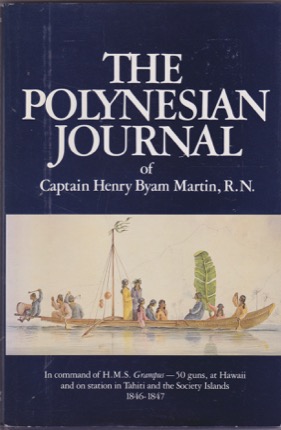
 "The Red Virgin: Memoirs of Louise Michel by: Michel Louise edited by Bullitt Lowry and Elizabeth Ellington Gunter")
 "The Sea and the Sailor; Notes on France and Italy, and Other Literary Remains. With a Memoir by Rev. Henry T. Cheeverby: Colton, Walter")
 "The Years by: Annie Ernaux")
 "This Is the Story by: David L. Cohn")
 "War And Peace: FDR's Final Odyssey: D-Day to Yalta, 1943")