Softcover. Rio de Janeiro, Liberia Francisco Alves, 1st, 1977, Softcover in pictorial wraps, 108 pages. Scholarly book on African-Brazilian religious cults in South America and Mexico. Clean copy
Hardcover. Geneva, Labor et Fides, 1st, 1960, Book: Very Good, Dust Jacket: None, Epitre aux Romains. Texte etabli par Jules-Marcel Nicole avec la collaboration de Pierre Marcel et de Michel Reveillaud. Edition nouvelle publiee par la Societe Calviniste de France. Hardcover, gold cloth stamped in gilt, 380 pages. FRENCH TEXT. Name on front fly leaf otherwise clean.
Hardcover. London, Oxford University Press, 1st, 1995, Book: Very Good, Dust Jacket: Near Fine, 499 pages. Hardcover. B/w illustrations throughout. Black cover boards, gilt title on spine. Dust jacket unclipped, excellent. Beautiful, like new condition. This is the first intellectual biography of Descartes in English; it offers a fundamental reassessment of all aspects of his life and work.
Hardcover. Leiden/NY, E.J. Brill, 1st, 1996, Book: Very Good, Dust Jacket: Very Good, Hardcover in a bright dust jacket, 376 pages. This volume consists of 21 papers delivered at an international Spinoza conference on Disguised and Overt Spinozism around 1700, held at the Erasmus University (Rotterdam) in October 1994. In these papers, scholars from Italy, France, Germany, Great Britain, the Netherlands and the United States examine the impact of Spinoza's philosophy on the European Republic of Letters, one generation after the death, in 1677, of the greatest philosopher in the history of the Netherlands. Clean copy.
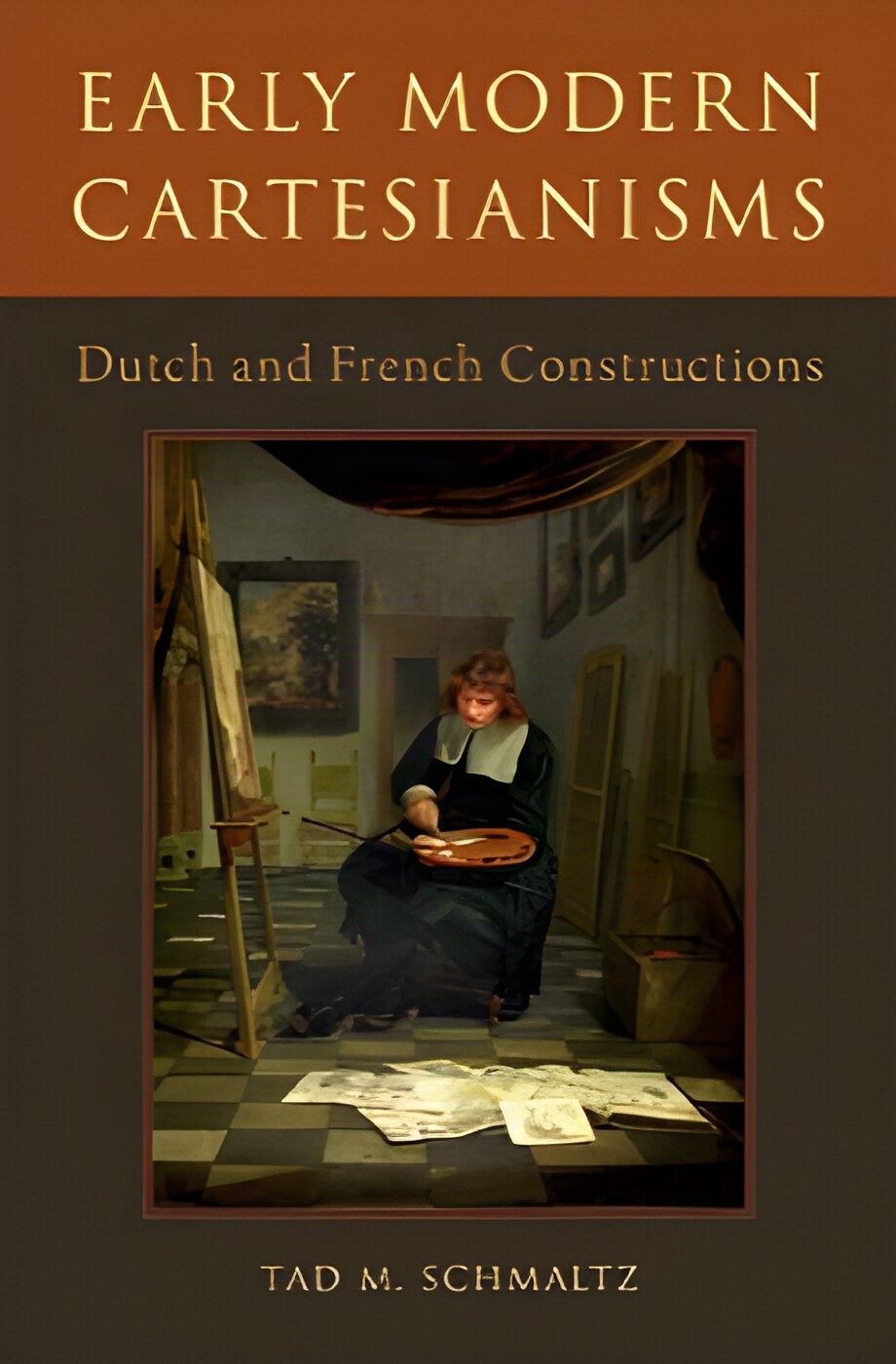
Hardcover. Oxford UK, Oxford University Press, 1st, 2016, Book: Very Good, Dust Jacket: Very Good, Hardcover in a bright dust jacket, 382 pages. This study addresses the need for a more current understanding of Cartesian philosophy by considering the different constructions of Descartes's thought that emerged in the Calvinist United Provinces (Netherlands) and Catholic France, the two main centers for early modern Cartesianism, during the period dating from the last decades of his life to the century or so following his death in 1650. It turns out that we must speak not of a single early modern Cartesianism rigidly defined in terms of Descartes's own authorial intentions, but rather of a loose collection of early modern Cartesianisms that involve a range of different positions on various sets of issues. Though more or less rooted in Descartes's somewhat open-ended views, these Cartesianisms evolved in different ways over time in response to different intellectual and social pressures. Chapters of this study are devoted to: the early modern Catholic and Calvinist condemnations of Descartes and the incompatible Cartesian responses to these; conflicting attitudes among early modern Cartesians toward ancient thought and modernity; competing early modern attempts to combine Descartes's views with those of Augustine; the different occasionalist accounts of causation within early modern Cartesianism; and the impact of various forms of early modern Cartesianism on both Dutch medicine and French physics. Name on front fly leaf, otherwise clean.
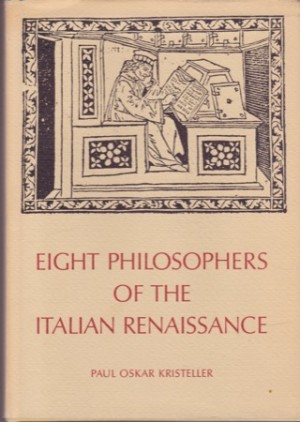
Hardcover. Stanford CA, Stanford University Press, 1st, 1964, Book: Very Good, Dust Jacket: Very Good, Hardcover in a bright dust jacket, 194 pages. Based upon the 1961 Arensberg Lectures, given at Stanford University, this collection of essays offers a genuinely unified interpretation of Italian Renaissance thought by describing and evaluating the philosophies of eight pivotal figures: 1). Francesco Petrarch. 2). Lorenzo Valla. 3). Marsilio Ficino. 4). Giovanni Pico della Mirandola. 5). Pietro Pomponazzi. 6). Bernardino Telesio. 7). Francesco Patrizi. 8). Giordano Bruno. With appendix: The medieval antecedents of Renaisssance Humanism, notes, bibliographical survey and index. Name on front fly leaf, otherwise clean.
Paris, Honore Champion, 1st thus, Book: Very Good, Dust Jacket: None, Hardcover, pale blue boards stamped in black and blue, 1086 pages. Translated to French by Pierre Coste, edited by Georges Moyal. Name on front fly leaf, otherwise clean.
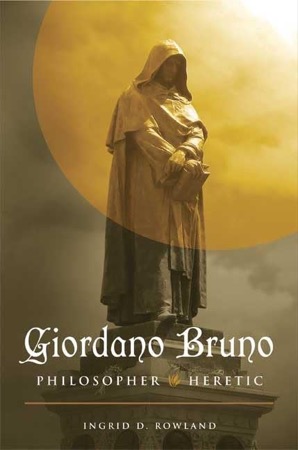
Hardcover. NY, Farrar, Straus and Giroux, 2nd pr., 2008, Book: Very Good, Dust Jacket: Very Good, Hardcover in a bright dust jacket, 335 pages. Giordano Bruno is one of the great figures of early modern Europe, and one of the least understood. Ingrid D. Rowland's pathbreaking life of Bruno establishes him once and for all as a peer of Erasmus, Shakespeare, and Galileo, a thinker whose vision of the world prefigures ours. By the time Bruno was burned at the stake as a heretic in 1600 on Rome's Campo dei Fiori, he had taught in Naples, Rome, Venice, Geneva, France, England, Germany, and the Prague of Emperor Rudolph II. His powers of memory and his provocative ideas about the infinity of the universe had attracted the attention of the pope, Queen Elizabeth and the Inquisition, which condemned him to death in Rome as part of a yearlong jubilee. Writing with great verve and sympathy for her protagonist, Rowland traces Bruno's wanderings through a sixteenth-century Europe where every certainty of religion and philosophy had been called into question and shows him valiantly defending his ideas (and his right to maintain them) to the very end. Clean copy.
Hardcover. Leiden/Boston, Brill, 1st, 1999, Book: Very Good, Dust Jacket: Very Good, Hardcover in a dust jacket, 332 pages. Volume 77 in the 'Studies in Medieval and Reformation Thought Series'. Through the examination of over 250 sermons by the most popular preacher in Paris before the Religious Wars, Francois Le Picart (1504-1556), this book offers a close look at religious mentalites in the French capital in these critical years and offers insight into changing definitions of orthodoxy and heresy.
Hardcover. Cambridge UK, Cambridge University Press, 1st, 2006, Book: Very Good, Dust Jacket: Very Good, Hardcover in a bright dust jacket, 767 pages. 'This book is a major new intellectual and cultural history of intolerance and toleration in early modern and early Enlightenment Europe. John Marshall offers an extensive study of late seventeenth-century practices of religious intolerance and toleration in England, Ireland, France, Piedmont and the Netherlands and of the arguments which John Locke and his associates made in defence of 'universal religious toleration'. He analyses early modern and early Enlightenment discussions of toleration; debates over toleration for Jews and Muslims as well as for Christians; the limits of toleration for the intolerant, atheists, 'libertines' and 'sodomites'; and the complex relationships between intolerance and resistance theories including Locke's own Treatises. This study is a significant contribution to the history of the 'republic of letters' of the 1680s and the development of early Enlightenment culture and will be essential reading for scholars of early modern European history, religion, political science, and philosophy.' Clean copy.
Softcover. Paris, Les Impressions Nouvelles, 1st thus, 1988, Book: Very Good, Dust Jacket: None, Softcover, 540 pages. FRENCH TEXT. Name on front fly leaf otherwise clean, tight copy.
Hardcover. Oxford UK, The Voltaire Foundation, 1st, 1991, Book: Very Good, Dust Jacket: None, Hardcover in blue cloth, gilt lettering on spine, 251 pages. As France moved from the seventeenth to the eighteenth century, it found itself in the grip of anglomanie - a fascination with new English ideas in the domains of science and philosophy. Chief among the English thinkers it enthusiastically embraced was John Locke. On his visits to France and in his personal correspondence, Locke interacted with prominent French thinkers, scientists and savants of the day, such as Charles Barbeyrac and Pierre Magnol, and his works engaged in a critical dialogue with those of Descartes. However, Locke has been feted to such an extent that his position in the history of ideas in France is often overlooked. In Locke in France 1688-1734, Ross Hutchison re-examines and re-contextualises the precise nature and extent of Locke's influence in France by exploring how his ideas were incorporated into contemporary French debates and controversies in the transitional period from the seventeenth to the eighteenth century. Hutchison highlights the various channels of dissemination which brought Locke to the attention of the French, including translations of his major works and his personal friendships with French Protestant exiles. Hutchison also presents case studies of interactions in which Lockean ideas played a dominant role in the evolution of French thought, ranging from political theory to the nature of language, theories of education, and the relation between soul and matter. Clean copy, no dust jacket.
Hardcover. Cambridge UK, Cambridge University Press, 1st, 1953, Book: Very Good, Dust Jacket: Good, Hardcover in a worn dust jacket with a chunk gone from rear panel, 309 pages. This book gives a complete account of all that Locke saw, did and heard during his four years in France. The entries vary from laconic jottings to detailed accounts - full of colour and wit - of life in Paris and the provinces. Locke's variety of interests presents a vivid and thorough account of France at that time. He observed and recorded the absolutism of Louis XIV and the poverty of the peasants, the growing persecution of the Protestants and the external manifestations of Catholicism, recent developments in science and technology - even agricultural methods and the system of taxes. So that this is a book for the general reader as well as for the student of Locke, the social historian and the historian of science. Three b&w plates including a map of his travels. Name on front fly leaf, rubber withdrawn stamp on copyright page, otherwise clean.
Softcover. Los Angeles, CA, Taschen, 1st, 2005, Book: Very Good, Dust Jacket: None, 192 pages. Softcover. Very clean, unmarked copy still in publishers shrink-wrap. Luis Bunuel, one of the most brilliant representatives of the surrealist movement, chose to make films and was able to make them with unflagging fidelity to his principles for fifty years. After an audacious Parisian showing of Un Chien Andalou in 1929 (Bunuel carried stones in his pockets in case he needed them to fend off the audience), Bunuel's subsequent career in Spain (Las Hurdes), Hollywood and Mexico (Los Olvidados, Robinson Crusoe, El, Nazarin) before returning to France (Diary of a Chambermaid, Belle de jour, The Discreet Charm of the Bourgeoisie, That Obscure Object of Desire), showed that the only subjects he cared to make films about were the three that are never supposed to be discussed in polite society: sex, religion, and politics.
Softcover. NY, W. W. Norton , reprint, 1984, Book: Very Good, Dust Jacket: None, Softcover, 339 pages. In Felix Gilbert's skilled analysis, the figures of Niccolo Machiavelli, whose writing changed the way people think about politics, and Francesco Guicciardini, whose History of Italy is one of the first classics of modern historical writing, provide important clues to interpreting the Renaissance. "Instead of treating these two great figures in isolation, Professor Gilbert puts them into the context of their times, into the stream of political thinking and historical writing of which they were a part. . . .His book is the fruit of years of writing of which they were a part. . . .His book is the fruit of years of original research among Florentine archives and of careful thought about the problems of Renaissance politics and historiography." Clean, bight copy.
Hardcover. Pittsburgh, Luke Loomis, 1st American, 1832, Book: Very Good, Dust Jacket: None, Hardcover, leather bound, 246 pages, marbled endpapers. The chronicles of a pastor in a small French village in the mid-to late 1700s. Leather with minor scarring, overall clean and tight copy. Red leather label with gilt title on spine.
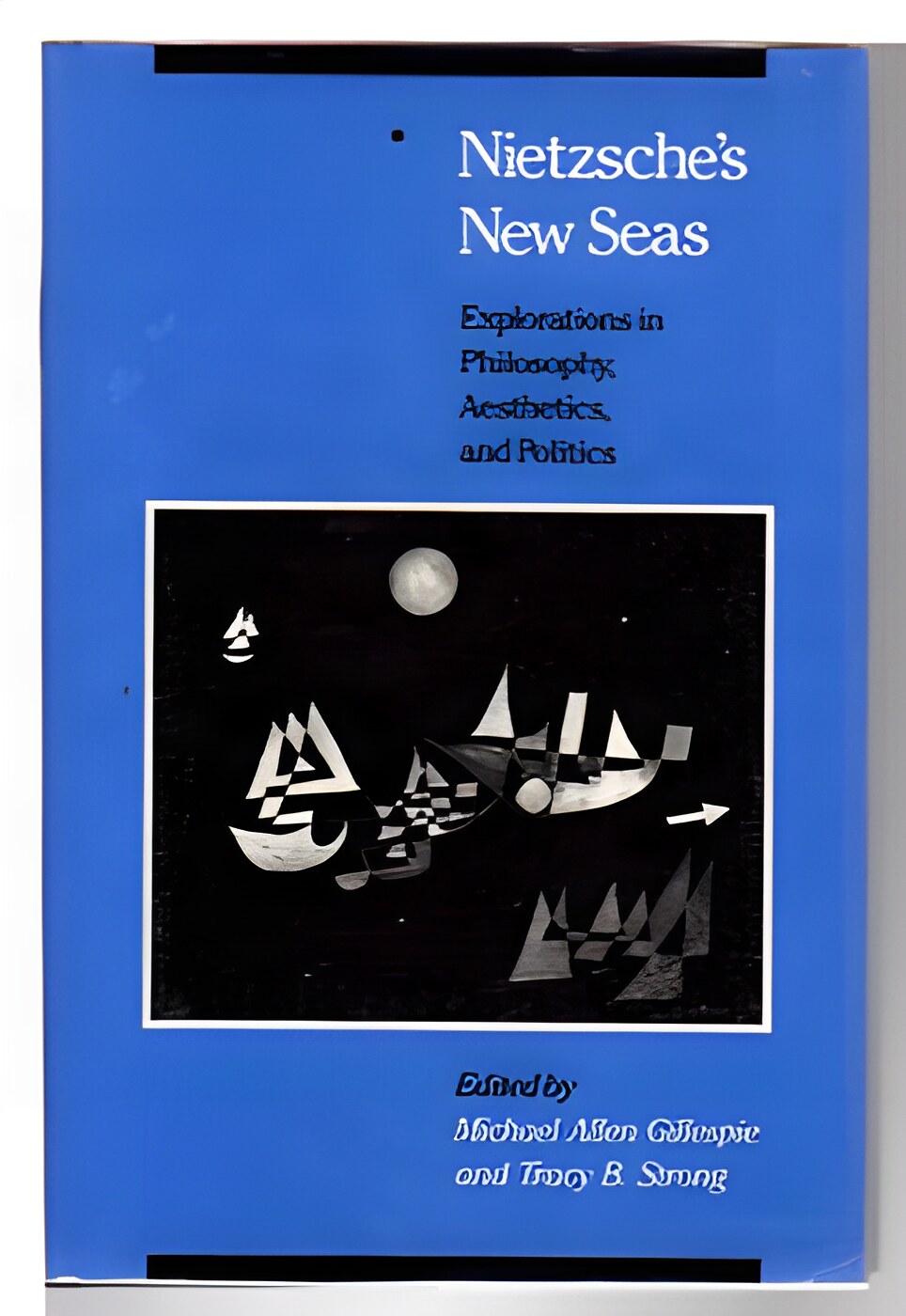
Softcover. Chjcago, University of Chicago Press, 2nd pr., 1991, Book: Very Good, Dust Jacket: None, Softcover, 240 pages. Nietzsche's New Seas makes available for the first time in English a representative sample of the best recent Nietzsche scholarship from Germany, France, and the United States. Michael Allen Gillespie and Tracy B. Strong have brought together scholars from a variety of disciplines--philosophy, history, literary criticism, and musicology--and from schools of thought that differ both methodologically and ideologically. The contributors--Karsten Harries, Robert Pippin, Eugen Fink, Hans-Georg Gadamer, Kurt Paul Janz, Sarah Kofman, Jean-Michel Rey, and the editors themselves--take a new approach to Nietzsche, one that begins with the claim that his enigmatic utterances can best be understood by examining the style or structure of his thought. Clean copy.
Softcover. Paris, Hachette Livre, reprint, nd, Book: Very Good, Dust Jacket: None, Softcover, 1084 pages, text in FRENCH. Clean, fresh copy. M. Pierre Bayle was a French philosopher, author, and lexicographer. Voltaire, in the prelude to his Poeme sur le desastre de Lisbonne, calls Bayle "le plus grand dialecticien qui ait jamais ecrit": the greatest dialectician to have ever written.
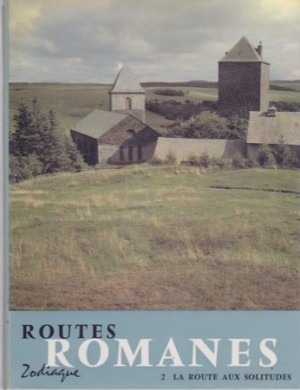
Hardcover. Paris, Zodiaque, 1st, 1984, Book: Very Good, Dust Jacket: Very Good, 334 pages plus index. Color, b&w gravure photographs, plans of churches, cathedrals, abbeys and monasteries in France. Text in French. Ribbon marker. Clean, tight copy in a bright dust jacket.
Hardcover. Paris, Zodiaque, 1st, 1982, Book: Very Good, Dust Jacket: Very Good, Hardcover, 407 pages plus index. Color and b&w gravure plates, plans of medieval churches of France. French text. A clean, tight copy in a bright dust jacket.
Paperback. Albany, NY, Education Department, Albany Institute of History and Art., revised, 1984, Book: Very Good, Dust Jacket: None, Softcover, 201 pages. Very little wear to cover. Inside is bright and clean with many b&w illustrations throughout.
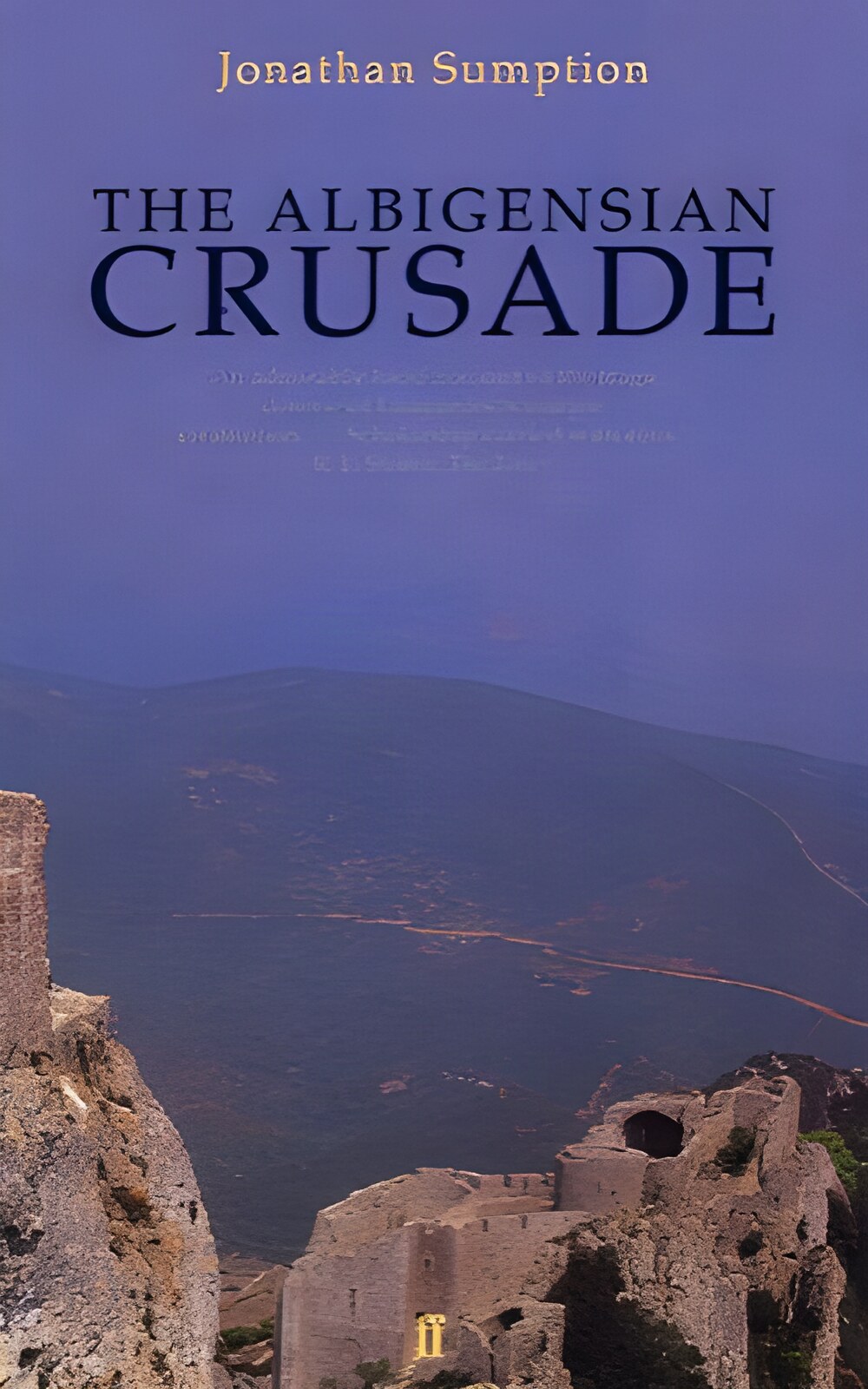
Softcover. UK, Faber & Faber, reprint, 1988, Book: Very Good, Dust Jacket: None, Softcover, 271 pages. In the twelfth century, Languedoc, in the far south, was among the most beautiful parts of France, far away from the world of the feudal north. However, it was in this rich region that a heresy of Eastern origin took hold, forcing the Catholic Church to confront a rival whose teachings questioned the foundations of Christian thought. These heretics, called Cathars, held a profoundly pessimistic view of the world that was based on the duality of all things, including good and evil: according to one heretic, "The one, the good God, made the invisible world, while the other, the evil God, made the visible one." Jonathan Sumption's acclaimed history examines the roots of this heresy as well as of the crusade the Church undertook in 1208 to stamp out the infidels, who ultimately were conquered by the Catholic armies. But this book does more than simply describe this terrible war; it reconstructs a lost world of great cultural richness, one that saw the creation in Languedoc of the troubadour tradition as well as the magnificent castles at Cabaret and Carcassonne. Clean copy.
Softcover. Urbana, University of Illinois Press, 1st, 2005, Book: Very Good, Dust Jacket: None, Softcover, 277 pages. Starting in the 1980s, anti-immigrant discourse shifted away from the "color" of immigrants to their religion and culture. It focused in particular on newcomers from Muslim countries--people feared both as terrorists and as products of tribal societies with values opposed to those of secular Western Europe. Leo Lucassen tackles the question of whether the integration process of these recent immigrants will fundamentally differ in the long run (over multiple generations) from the experiences of similar immigrant groups in the past. For comparison, Lucassen focuses on "large and problematic groups" from Western Europe's past (the Irish in the United Kingdom, the Poles in Germany, and the Italians in France) and demonstrates a number of structural similarities in the way migrants and their descendants integrated into these nation states. Lucassen emphasizes that the geographic sources of the "threat" have changed and that contemporaries tend to overemphasize the threat of each successive wave of immigrants, in part because the successfully incorporated immigrants of the past have become invisible in national histories. Clean copy.
Hardcover. NY, Walker & Company, 1st, 2000, Book: Very Good, Dust Jacket: Very Good, Hardcover in a bright, unclipped dust jacket. chronicles the Roman Catholic Church's crusade against--and ultimate annihilation of--the Albigenses, or Cathars, a group of heretical Christians who thrived in what is now the Languedoc region of Southern France. The Cathars held revolutionary beliefs that threatened the authority of the church. The world, they maintained, was not created by a benevolent God. Rather, it was the creation of a force of darkness, immanent in all things. They considered worldly authority a fraud, and authority based on some divine sanction, such as claimed by the church, outright hypocrisy. Innocent III, resolved to eradicate the Cathar threat to church authority, recruited the military powers of France, eager to expand their territory to the south. Together, they systematically exterminated the Cathars and their supporters in a series of crusades between 1209 and 1229. The Dominican-led Inquisition that ensued built upon this momentum of intolerance and tormented Europe for centuries to come. 333 pages, endpapers map.

 "Aluanda: A Look at Afro-Brazilian Cultsby: Frances O'Gorman")



 "Disguised and Overt Spinozism around 1700: Papers presented at the international colloquium held at Rotterdam 5-8 October 1994by: Bunge, Wiep van & Wim Klever (Ed.)")
 "Heresy and Orthodoxy in Sixteenth-Century Paris - Francois Le Picart and the Beginnings of the Catholic Reformationby: Taylor, Larissa Juliet")
 "John Locke, Toleration and Early Enlightenment Culture (Cambridge Studies in Early Modern British History)by: Marshall, John")
 "La Querelle d'Utrecht. Textes ?©tablis, traduits et annot?©s par Theo Verbeek. Pr?©face de Jean-Luc Marionby: Descartes, Ren?© und Martin Schoock")

 "Luis Bunuel: Chimera 1900-1983 (Directors)by: Krohn, Bill (Editor)")

 "Memoirs of John Frederic Oberlin, Pastor of Walbach in the Ban de La Rocheby: Rev. Luther Halsey (transl.)")
 "Routes Romanes - 2: La Route aux Solitudesby: Oursel, Raymond")
 "Seventeenth Century Albany: A Dutch Profile.by: Wilcoxen, Charlotte")
 "The Immigrant Threat: The Integration of Old and New Migrants in Western Europe since 1850 by: Leo Lucassen")
