Softcover. Cambridge MA, Harvard University Press, reprint, 1985, Book: Very Good, Dust Jacket: None, Softcover, 291 pages with index. A social history of Europe in all its aspects: economic, political, diplomatic military, colonial-expansionist. Crisply and succinctly written, it describes Europe not through a history of individual countries, but in a common context during the three quarters of a century between the death of Louis XIV and the industrial revolution in England and the social and political revolution in France. It presents the development of government, institutions, cities, economies, wars, and the circulation of ideas in terms of social pressures and needs, and stresses growth, interrelationships, and conflict of social classes as agents of historical change, paying particular attention to the role of popular, as well as upper- and middle-class, protest as a factor in that change. Clean, bright copy.
Softcover. West Lafayette IN, Purdue University Press , 1st, 2020, Book: Very Good, Dust Jacket: None, Softcover, 529 pages, b&w illustrations. Eva and Otto is a true story about German opposition and resistance to Hitler as revealed through the early lives of Eva Lewinski Pfister (1910-1991) and Otto Pfister (1900-1985). It is an intimate and epic account of two Germans-Eva born Jewish, Otto born Catholic-who worked with a little-known German political group that resisted and fought against Hitler in Germany before 1933 and then in exile in Paris before the German invasion of France in May 1940. After their improbable escapes from separate internment and imprisonment in Europe, Eva obtained refuge in America in October 1940 where she worked to rescue other endangered political refugees, including Otto, with the help of Eleanor Roosevelt. As revealed in recently declassified records, Eva and Otto later engaged in different secret assignments with the US Office of Strategic Services (OSS) in support of the Allied war effort. Despite their vastly different backgrounds, Eva and Otto gave each other hope and strength as they acted upon what they understood to be an ethical duty to help others threatened by fascism. The book provides a sobering insight into the personal risks and costs of a commitment to that duty. Their unusually beautiful writing-directed to each other in diaries and correspondence during two long periods of wartime separation-also reveals an unlikely and inspiring love story.
Hardcover. San Diego/NY, Harcourt Brace Jovanovich, 1st, 1988, Book: Very Good, Dust Jacket: Very Good, Hardcover in a bright, unclipped dust jacket, 274 pages, b&w photos. "A shy, bald, myopic, gay albino from an ethnic Pittsburgh suburb and a beautiful, convent-educated heiress from France: This is the story of Andry Warhol and 'the girl in Andy's soup,' Isabelle Collin Dufresne, also known as Ultra Violet. It is suggested that Dali, Dufresne's companion for five years, introduced her to Andy Warhol in 1963. 'Leave Dali', said Andy. 'He's too old'. Soon after, Isabelle metamorphosed into Ultra Violet becoming an intimate of Warhol's underground scene, here recollected. Clean copy.
Hardcover. Boston , MFA Publications, 1st, 2006, Book: Very Good, Dust Jacket: Very Good, Hardcover, 223 pages, Like new in publisher's shrink-wrap. 145 illustrations. Both a historical overview and an up-to-the-minute spectacular, "Fashion Show" explores the ever-fascinating world of Paris couture-the history of the Paris fashion industry from its beginnings through the mid-twentieth century.
Hardcover. New York, Crown, 1st, 1999, Book: Very Good, Dust Jacket: Good, Hardcover, 132 pages, illustrated throughout in b&w. INSCRIBED BY AUTHOR on title page. Previous owner's bookplate on front end paper, light shelf-wear and rubbing to dust jacket. Clean, tight copy. As a serviceman in Paris after World War II, Peter Miller served as a US Army Signal Corps photographer. By day, he would snap one-star generals greeting four-star generals, and the innumerable grip and grins of Congressmen visiting soldiers. By night, Miller traversed the city of light, capturing the resilient spirit of Parisians in the wake of the devastating war. Miller's photographs reflect the vision of a sparkling city while his recollections document the wonder and enchantment felt by a young man from Vermont. From pictures of the Latin Quarter brimming with American jazz and blues to alluring models on the runways of Christian Dior; from romantic courtships in the streets to hobos along the River Seine, Miller captures these sights and impressions in dynamic compositions and sensitive recollections that are striking, compassionate, and a joy to all lovers of the city of light.
Hardcover. London, Faber and Faber, 1st UK, 1976, Book: Very Good, Dust Jacket: None, Hardcover, black cloth with gilt and red title block on spine. 422 pages, b&w map. Light bump to top corner otherwise very good, clean copy. "An analysis That carries an indictment of the whole colonial system."
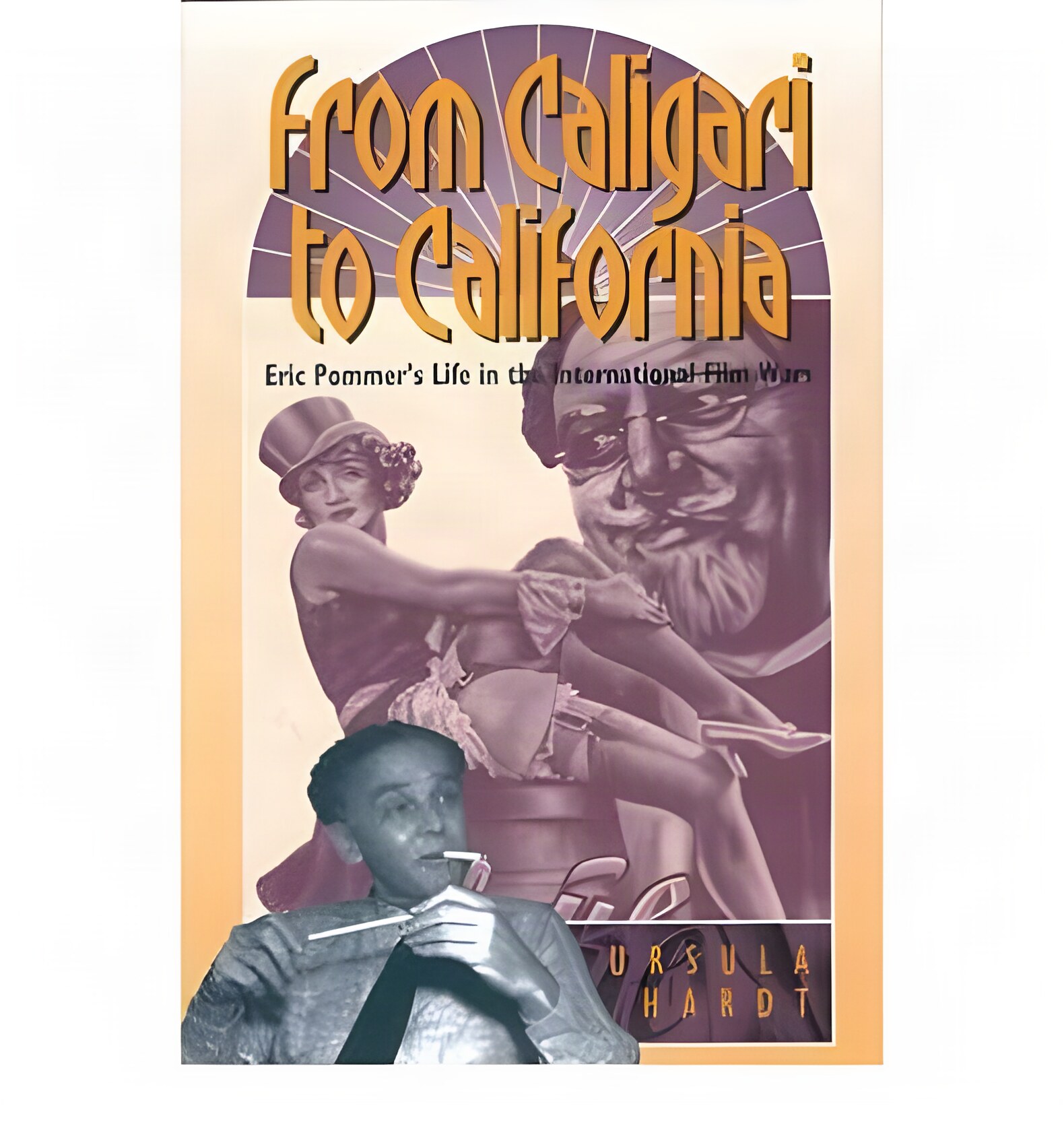
Softcover. Providence RI, Berghahn Books, 1st, 1996, Book: Very Good, Dust Jacket: None, Softcover, 256 pages. Known as one of the great producers and promoters of the film industry, Eric Pommer had a life-long commitment to German film - despite his emigration in 1933 - and worked in France and Britian, as well as the United States. As German producer, studio executive, and film politician in the pre-Hitler era Erich (later Eric) Pommer (1889-1966), a native of Germany, was an innovator and pioneer, a vital force in leading German cinema to international acclaim with successes such as The Cabinet of Dr Caligari, The Nibelungen and The Blue Angel. As Motion Picture Control Officer of the US Military Government he undertook , from 1946-49, the difficult task of rebuilding West Germany's film industry from the ashes of the Second World War. He succeeded brilliantly, but not without paying the hefty price of becoming embroiled in the turmoil of postwar German politics which made him many friends, but also many enemies. This book is the first detailed account in English of the remarkable career of Pommer who became a legend in his own lifetime. Clean copy.
Hardcover. New Haven CT, Yale University Press, 1st, 2015, Book: Very Good, Dust Jacket: Very Good, Hardcover in a bright dust jacket. 282 pages, illustrated in b&w and color. Although Surrealism is usually associated with the 1920s and 1930s, it remained a vital force in Paris throughout the postwar period. This important book offers the first detailed account in English of the trajectory of the French Surrealists in the 1950s and 1960s, giving particular emphasis to the significance of myth for the group in its reception of science fiction and its engagement with fantastic art. Offering new readings of the art and writings of the later generation of Surrealists, Gavin Parkinson demonstrates how they were connected to the larger cultural and political debates of the time. Whereas earlier Surrealist art and writing drew on psychoanalytic practices, younger Surrealists engaged with contemporary issues, ideas, and themes of the period of the Cold War and Algerian War such as parapsychology, space travel, fantastic art, increasing consumerism in Europe, emerging avant-gardes such as Nouveau Realisme, and the rise of the whole genre of conspiracy theory, from Nazi occultism to flying saucers. Futures of Surrealism offers a unique perspective on this brave new world. Clean copy.
Hardcover. Monte-Carlo, Andre Sauret, 1st, 1967, Book: Good, Dust Jacket: Very Good, INSCRIBED BY AUTHOR. French text. 156 pages, b&w and color illustrations throughout. Slightly warped. Foxing to top edge. Light edge wear to dust jacket; in brodart. Else a clean, tight copy.
Hardcover. New York, Arcade Publishing, 1st, 2005, Book: Very Good, Dust Jacket: Very Good, Hardcover, 440 pages, illustrations in color and b&w. Clean, unmarked copy with only minor wear to dust jacket. A pioneer of modern art and founder of Cubism, Georges Braque was a creative genius and tireless innovator, constantly pushing back the boundaries of the possible. In this magisterial work, Alex Danchev taps a wide range of new sources to reveal the heart and mind of one who helped usher in the greatest revolution in the ways of seeing since the Renaissance and changed the face of modern art. Chapters include: "Memories in anticipation:" The Confirmed Painter, "Mon vieux Wilbourg:" The Encounter with Picasso, "If I should Ide Out There:" The Great War, The prong of the rade" : Late Braque. And much more.
Hardcover. New York, Arcade Publishing, 1st, 2005, Book: Very Good, Dust Jacket: Very Good, Hardcover, 440 pages, illustrations in color and b&w. Clean, unmarked copy with only minor wear to dust jacket. A pioneer of modern art and founder of Cubism, Georges Braque was a creative genius and tireless innovator, constantly pushing back the boundaries of the possible. In this magisterial work, Alex Danchev taps a wide range of new sources to reveal the heart and mind of one who helped usher in the greatest revolution in the ways of seeing since the Renaissance and changed the face of modern art. Chapters include: "Memories in anticipation:" The Confirmed Painter, "Mon vieux Wilbourg:" The Encounter with Picasso, "If I should Ide Out There:" The Great War, The prong of the rade" : Late Braque. And much more.
Hardcover. New York, Tim Duggan Books, 1st, 2017, Book: Very Good, Dust Jacket: Very Good, Hardcover, 248 pages, b&w illustrations. The first great portrait photographer, a pioneering balloonist, the first person to take an aerial photograph, and the prime mover behind the first airmail service, Nadar was one of the original celebrity artist-entrepreneurs. A kind of 19th-century Andy Warhol, he knew everyone worth knowing and photographed them all, conferring on posterity psychologically compelling portraits of Manet, Sarah Bernhardt, Delacroix, Daumier and countless others--a priceless panorama of Parisian celebrity. Born Gaspard-Felix Tournachon, he adopted the pseudonym Nadar as a young bohemian, when he was a budding writer and cartoonist. Later he affixed the name Nadar to the facade of his opulent photographic studio in giant script, the illuminated letters ten feet tall, the whole sign fifty feet long, a garish red beacon on the boulevard. Nadar became known to all of Europe and even across the Atlantic when he launched "The Giant," a gas balloon the size of a twelve-story building, the largest of its time. With his daring exploits aboard his humongous balloon (including a catastrophic crash that made headlines around the world), he gave his friend Jules Verne the model for one of his most dynamic heroes.
Hardcover. Leiden/Boston, Brill, 1st, 1999, Book: Very Good, Dust Jacket: Very Good, Hardcover in a dust jacket, 332 pages. Volume 77 in the 'Studies in Medieval and Reformation Thought Series'. Through the examination of over 250 sermons by the most popular preacher in Paris before the Religious Wars, Francois Le Picart (1504-1556), this book offers a close look at religious mentalites in the French capital in these critical years and offers insight into changing definitions of orthodoxy and heresy.
NY, Random House, 1st US, 1968, Book: Very Good, Hardcover, black cloth stamped in green on front, gilt on spine. 313 pages. Lacouture's biography of Ho Chi Minh examines the North Vietnamese leader's political development from his early years in France, through World War Two, and up until 1968 when this book was first published. Lacouture doesn't avoid the negative aspects of his political career, but these negatives (e.g. harsh control of the starving North Vietnamese in the 50s) only help to put in perspective Vietnam's similarly harsh treatment by Western and Eastern powers alike. A former Le Monde correspondent, author has also written books on Vietnam and DeGaulle. Internally bright and clean.
Softcover. NY, Feral House, 1st, 2015, Book: Very Good, Dust Jacket: None, Softcover. 224 pages. The book Horizontal Collaboration encompasses the Jazz Age, Depression, World War and Occupation, and Liberation. It concludes with the shuttering of the licensed brothels in 1946, which some Parisian intellectuals thought was the final "destruction of French civilization". The term "Horizontal Collaboration" refers to the sexual liaisons between French civilians and German occupiers from 1940 to 1944. These were extremely widespread and included both individual wartime relationships in addition to prostitution. As Allied armies swept across the French countryside, thousands of young women?and some men?were savagely punished by the authorities or by vigilante crowds, becoming a source of deep national shame. Author Gordon redefines the pejorative term to mean something much broader: French men and women "horizontally collaborated" to overcome all social obstacles, divisions, and regulations. These obstacles include married and unmarried couples, straights and homosexuals, foreigners and locals, gun-toting soldiers and their vanquished subjects. The natural yearning for sexual pleasure equally corrupted all cohabitating partners. Clean copy in publisher's shrinkwrap.
Hardcover. Chiselbury, 1st, 2024, Book: Very Good, Dust Jacket: None, Hardcover in glossy pictorial boards, 356 pages. An amazing real-life story of espionage, of courage and resistance, and of friendship and love. It pulls back the veil on the hidden history of the struggle for the identity of the Resistance in France. The life of 'André' Joseph Scheinmann is more intriguing and compelling than any work of fiction. His true-life story of derring-do starts as a Jewish youth in Munich, whose family moves to France in 1933 to escape the Nazi tide. He joins the French army at the outbreak of WW2 and escapes from a prisoner-of war camp after the bitterly brief fight for France in the summer of 1940. André becomes a spy and saboteur for the British and Free French whilst working undercover as translator and liaison with the German high command at the Brittany headquarters of the French National Railroads. Summoned by the British, he clandestinely crosses the Channel for initiation and training as an MI6 agent in England. His network betrayed during his absence, he is arrested on his return to France. André then begins an even more perilous journey with interrogation in Gestapo prisons and the little-known Natzweiler concentration camp in Alsace, before being transferred to Dachau and Allach, ahead of the advancing Allies. Illustrated with over 120 vintage and color photographs and letters. Clean copy.
hardcover. NY, Philomel Books, 2nd pr., 1991, Book: Very Good, Dust Jacket: Very Good, Hardcover in a bright, unclipped dust jacket. Illustrated in color by Ted Lewin. Clean.
Hardcover. NY, Penguin Press, 1st, 2019, Book: Very Good, Dust Jacket: Very Good, Hardcover in a bright, unclipped dust jacket., 310 pages, color and b&w illustrations. In Montparnasse begins on the eve of the First World War and ends with the 1936 unveiling of Dali's Lobster Telephone. As those extraordinary years unfolded, the Surrealists found ever more innovative ways of exploring the interior life, and asking new questions about how to define art. In Montparnasse recounts how this artistic revolution came to be amidst the salons and cafes of that vibrant neighborhood. Sue Roe is both an incisive art critic of these pieces and a beguiling biographer with a fingertip feel for this compelling world. Beginning with Duchamp, Roe then takes us through the rise of the Dada movement, the birth of Surrealist photography with Man Ray, the creation of key works by Ernst, Cocteau, and others, through the arrival of Dali. On canvas and in their readymades and other works these artists juxtaposed objects never before seen together to make the viewer marvel at the ordinary--and at the workings of the subconscious. We see both how this art came to be and how the artists of Montparnasse lived. Roe puts us with Gertrude Stein in her box seat at the opening of The Rite of Spring; with Duchamp as he installs his famous urinal; at a Cocteau theatrical with Picasso and Coco Chanel; with Breton at a session with Freud; and with Man Ray as he romances Kiki de Montparnasse.
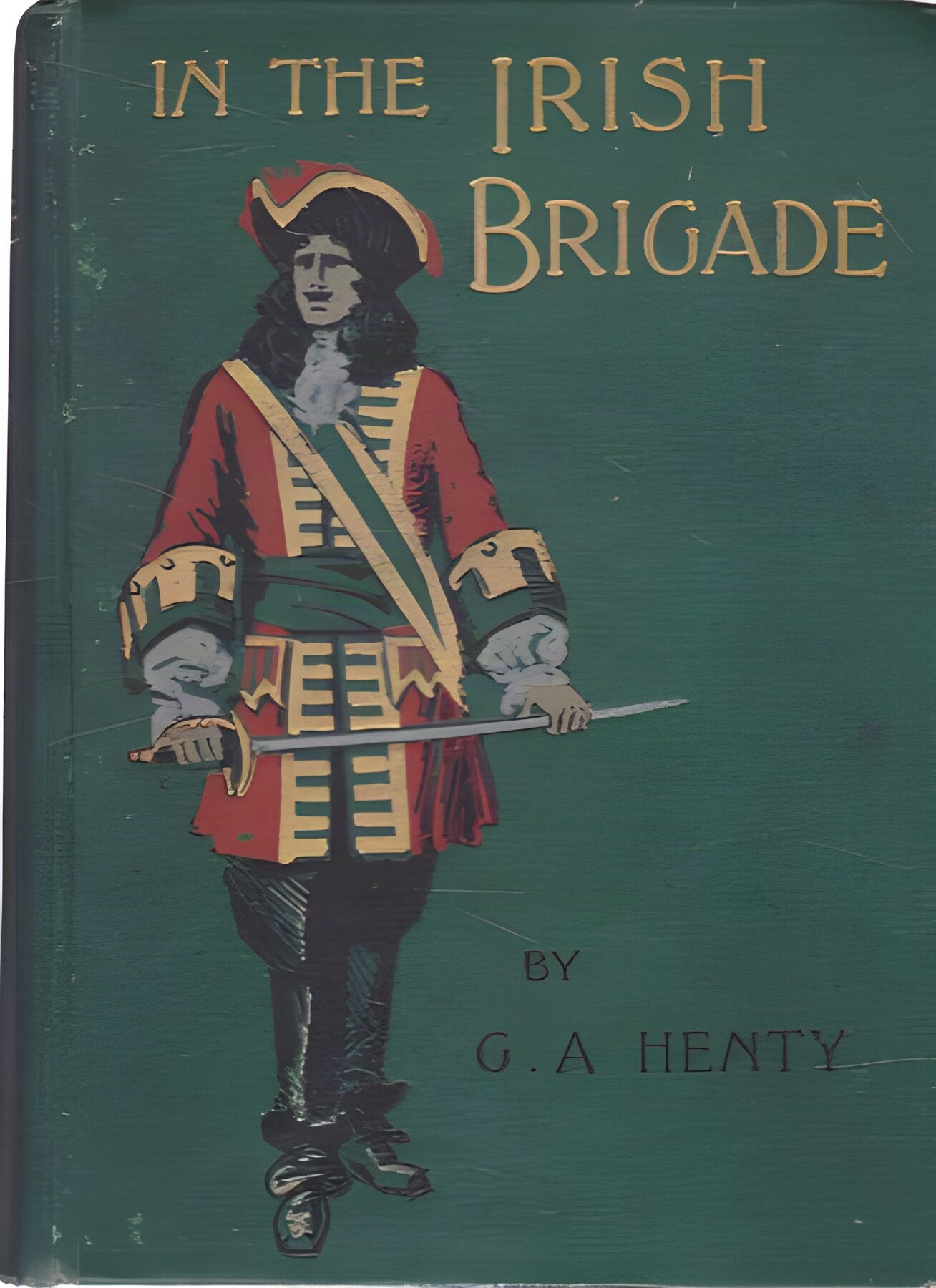
Hardcover. NY, Charles Scribner's Sons, 1st US, 1900, Book: Very Good, Dust Jacket: None, Hardcover, green cloth stamped in gilt and three colors, 384 pages plus publisher's ads in rear. 12 b&w illustrations by Charles Sheldon. Desmond Kennedy is a young Irish lad who left Ireland to join the Irish Brigade in the service of Louis XIV of France. In Paris he incurred the deadly hatred of a powerful courtier from whom he had rescued a young girl who had been kidnapped, and his perils are of absorbing interest. Captured in an attempted Jacobite invasion of Scotland, he escaped in a most extraordinary manner. As aid-de-camp to the Duke of Berwick he experienced thrilling adventures in Flanders. Transferred to the Army in Spain, he was nearly assassinated, but escaped to return, when peace was declared, to his native land, having received pardon and having recovered his estates. Previous owner's signature on a blank prelim page, otherwise clean.
Hardcover. NY, Warner Books, 1st, 2006, Book: Very Good, Dust Jacket: Very Good, Hardcover in a bright, unclipped dust jacket. The saucy and often humorous memoir of New York magazine food critic Gael Greene. From the glamorous restaurants of Manhattan to the culinary shrines of France, Greene's fierce wit and sensuous prose reveal the humor, obsession, and insatiable desires behind fine dining. Greene's love for life and food shine through in the pages of this book. From her midwestern roots to her position as a powerful critic for one of New York's most respected magazines, Greene brings readers on a quest to satisfy an insatiable hunger. 368 pages, b&w photos. Clean copy.
Hardcover. Chicago, Henry Regnery Company, 1st, 1950, Book: Very Good, Dust Jacket: Fair, Hardcover in a worn, chipped dust jacket. Map endpapers, 176 pages, b&w photos. The first book by a German general published in America after the war, a German account of the D-Day & Normandy 'invasion' by Allied forces; the author was Rommel's Chief-of-Staff and therefore had an inside view of Rommel's efforts to get Hitler to negotiate a peace in the face of overwhelming Allied superiority. Speidel was a career military officer and trained historian; a German nationalist, he disagreed with racist Nazi policies, was involved in the 20 July plot to kill Hitler, and was important in rebuilding Germany's army after the war. Clean copy.
Hardcover. NY, Harcourt, Brace & World, 1st, 1965, Book: Very Good, Dust Jacket: Good, Hardcover, 117 pages, in a worn, chipped dust jacket. Many B/W photos, Preface by Simone De Beauvoir, Index. White boards w/green cloth spine. Lightly bumped corners. This volume offers a glowing record of a great writer, of a city he loved, and of a literary epoch that came to an end with the outbreak of World War II. In a sequence of photographs taken in 1938 by distinguished French photographer Gisele Freund, interspersed with views of Paris taken in the thirties, and portraits of Joyce's friends and contemporaries, a man and his milieu come vividly alive.
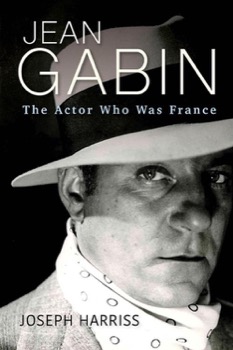
Hardcover. Lexington KY, University Press of Kentucky, 1st, 2023, Book: Very Good, Dust Jacket: Very Good, Hardcover in a bright dust jacket, 289 pages, b&w illustrations. The son of music hall performers, the Paris-born actor grew up in the entertainment business. His onscreen debut in the 1930's marked the beginning of many memorable roles in films such as La Grande Illusion (1937) and Emile Zola's La Bete Humaine (1938). His performances would earn him international recognition and establish his reputation as one of the greatest stars of film noir. Pausing his performances on screen, Gabin joined the Allied struggle of WWII. Serving under General Charles De Gaulle in the Free French Forces as a tank commander, Gabin was awarded several medals for his service. Upon his return to acting after the war, he became the embodiment of the uniquely French spirit a persona that would define his future roles. In Jean Gabin: The Actor Who Was France, Joseph Harriss tells the story of this French icon. This well-researched biography documents Gabin's life from his start as a reluctant singer and dancer in Parisian music halls to his rise to film superstardom. Clean copy.
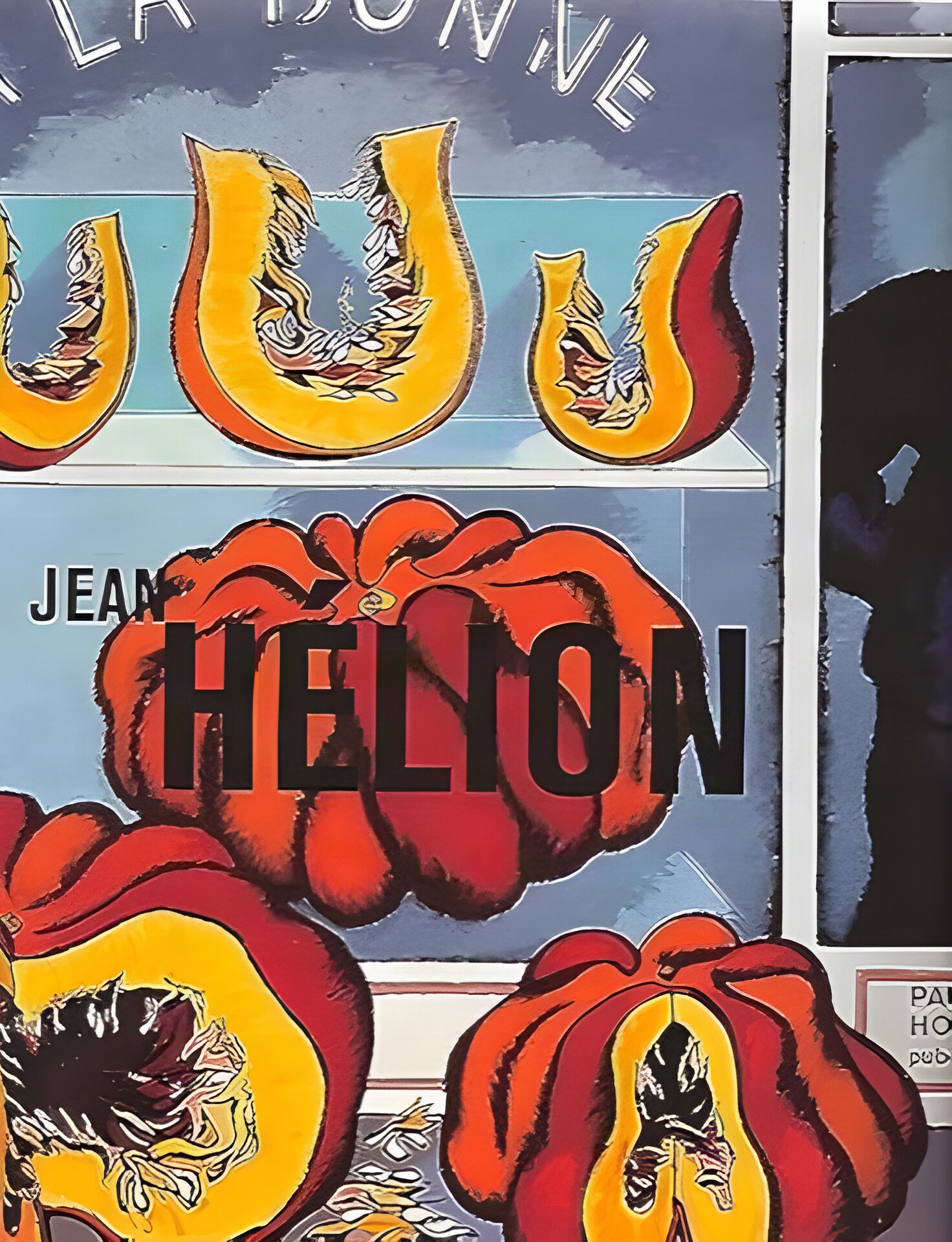
Softcover. Paris / London, Paul Holberton, 1st, 2004, Book: Very Good, Dust Jacket: None, Softcover, 216 pages in color. Jean Helion (1904-1987) became a leading member of the international Abstraction-Creation group in the early 1930s. He then took abstraction to New York, where he advised the avant-garde collector A. E. Gallatin on purchases for his Gallery of Living Art, a crucial influence on the early phases of the developing New York School. In France after World War II, however, he evolved a unique language of painting, employing people and objects that are both contructivist and naturalistic--his own language of signs populated by shop-window dummies, newspaper readers, and startling nudes. In his return to figuration he may be compared to his close friends Balthus and Alberto Giacometti, even though his style is unique. This book is the first in English on the artist for some thirty years. Mild crease to front cover, otherwise a clean, bright copy. DOMESTIC SHIPPING ONLY.


 "Eva and Otto: Resistance, Refugees, and Love in the Time of Hitlerby: Pfister, Tom; Pfister, Kathy; Pfister, Peter")

 "Fashion Show: Paris Styleby: Ward, Susan")
 "First Time I Saw Paris, The : Photographs and Memories from the City of Light (SIGNED COPY)by: Miller, Peter")

 "Futures of Surrealism Myth, Science Fiction and Fantastic Art in France 1936-1969 by: Parkinson, Gavin")
 "Gallibert (SIGNED COPY)by: Favre, Jean-Daniel and Jean Mouraille")
 "Georges Braque: A Lifeby: Danchev, Alex")
 "Georges Braque: A Lifeby: Danchev, Alex")
 "Great Nadar, The: The Man Behind the Cameraby: Begley, Adam")
 "Heresy and Orthodoxy in Sixteenth-Century Paris - Francois Le Picart and the Beginnings of the Catholic Reformationby: Taylor, Larissa Juliet")




 "I Wonder If I'll See a Whaleby: Weller, Frances Ward and Ted Lewin")
 "In Montparnasse: The Emergence of Surrealism in Paris, from Duchamp to Daliby: Sue Roe")
 "Insatiable: Tales from a Life of Delicious Excessby: Gael Greene")

 "James Joyce in Paris: His Final Yearsby: Freund, Gisele & V. B. Carleton")