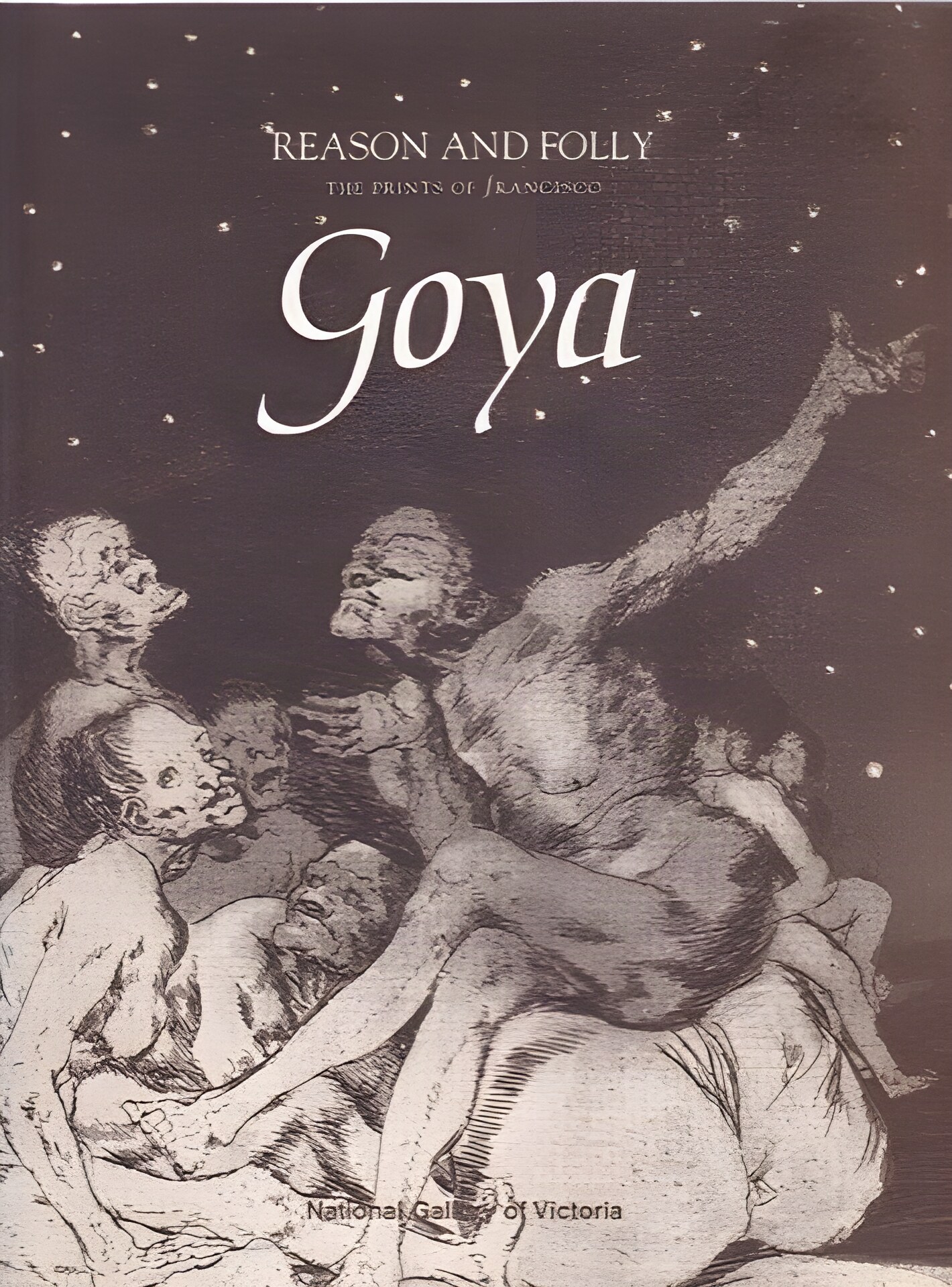
Softcover. Melbourne, National Gallery of Victoria, 1st, 1998, Book: Very Good, Dust Jacket: None, Softcover, 128 pages, profusely illustrated in b&w. The great Francesco Goya was pivotal to the development of European art. His engagement with dreams and fantasy link him to the Romantic era while his skeptical view of society, his questioning of the strictures of the Church and State, reflect Enlightenment attitudes familiar to contemporary viewers. His humane and shocking portrayal and denunciation of war still evokes an understanding and immediate response. This publication looks at the motivations of his art, to shine the light of Reason on human relations, and explores his patrons, his career and the times in which he lived. Clean, bright copy.
Softcover. Bowie MD, Heritage Books, reprint, 2001, Book: Very Good, Dust Jacket: None, Softcover, 425 pages. A facsimile reprint of the 1904 edition. Volume 1 ONLY. The present-day New York City neighborhood of Harlem was founded in the mid-17th century by Dutch Protestants, whose numbers included Huguenots (or their descendants) who had fled the counter-Reformation in France and the Walloon provinces of Artois, Cambresis, and Hainalt. Riker's Harlem is an extremely detailed historical and genealogical account of Harlem from its establishment by Kuyter and Stuyvesant between 1656 and 1660 to the end of the 17th century. Following several preliminary chapters on the Dutch and French context for the settlement of "New Haerlem," the author treats us to what seem like minute-by-minute accounts of its colonial development, including early efforts to settle the territory that became Harlem, the original land patents and their subsequent rearrangement, Indian wars, displacement of Dutch rule by the British in 1663 (and the brief reoccupation by Dutch forces in 1673), 17th-century village life, migrations to New Jersey, influx of Swedes, difficulties in assimilating English ways, and much, much more.
Softcover. Bowie MD, Heritage Books, reprint, 2001, Book: Very Good, Dust Jacket: None, Softcover, Pages 426-908 . A facsimile reprint of the 1904 edition. Volume 2 ONLY. The present-day New York City neighborhood of Harlem was founded in the mid-17th century by Dutch Protestants, whose numbers included Huguenots (or their descendants) who had fled the counter-Reformation in France and the Walloon provinces of Artois, Cambresis, and Hainalt. Riker's Harlem is an extremely detailed historical and genealogical account of Harlem from its establishment by Kuyter and Stuyvesant between 1656 and 1660 to the end of the 17th century. Following several preliminary chapters on the Dutch and French context for the settlement of "New Haerlem," the author treats us to what seem like minute-by-minute accounts of its colonial development, including early efforts to settle the territory that became Harlem, the original land patents and their subsequent rearrangement, Indian wars, displacement of Dutch rule by the British in 1663 (and the brief reoccupation by Dutch forces in 1673), 17th-century village life, migrations to New Jersey, influx of Swedes, difficulties in assimilating English ways, and much, much more.
Hardcover. teNeues, 1st, 2017, Book: Very Good, Dust Jacket: Very Good, Hardcover, 216 pages. Photographer Edward Quinn chronicles the sweet life of the French Riviera in the 1950s and 60s in this homage to the stylish celebrities who lived and loved on this chic coastline. Born in Dublin in 1920, Edward Quinn played Hawaiian guitar in Belfast, then went into the Royal Air Force. He eventually made his way to the Cote d'Azur, where he photographed world leaders, glamour girls and playboys, as well as figures from the worlds of art, music and literature. His most memorable work included images of an unknown Audrey Hepburn, Grace Kelly's first meeting with Prince Rainier, and a precocious Brigitte Bardot. His exacting eye showcased Picasso, T.S. Eliot, and Gary Cooper. With a polished technique and great patience and charm, Quinn caught some of the post-war Riviera's most memorable moments.
Hardcover. Casemate, 1st, 2010, Book: Very Good, Dust Jacket: Very Good, Hardcover in a bright dustjacket, 264 pages. Following the Allied breakout from the Normandy beachhead in July 1944, the vaunted German Army seemed on the verge of collapse. As British and US forces fanned out across northwestern France, enemy resistance unexpectedly dissolved into a headlong retreat to the German and Belgian borders. In early September an elated Allied High Command had every expectation of continuing their momentum to cripple the enemy's warmaking capability, by capturing the Ruhr industrial complex and plunging into the heart of Germany. After a brief pause to allow for resupply, Courtney Hodge's First Army prepared to punch through the ominous but largely outdated Westwall (Siegfried Line) surrounding Aachen. Drawing on primary Wehrmacht and US sources, including battle analysis and daily situation and after-action reports, The Roer River Battles provides insight into the desperate German efforts to keep a conquering enemy at the borders of their homeland. Tactical maps down to battalion level help clarify the very fluid nature of the combat. Combined, they serve to explain not just how, but why decisions were made and events unfolded, and how reality often differed from doctrine in one of the longest US campaigns of World War II.
Hardcover. New York, Harcourt Brace, 1st, 1934, Book: Good, Dust Jacket: None, Hardbound, red cloth with faded gilt lettering on spine, 237 pages. Black & white and color illustrations by Frank E. Schoonover. Mild soil to edges, covers. Historical fiction for young adults based on the life of Roland, warrior of France, nephew of Emperor Charlemagne. Clean copy.
Hardcover. Berkeley CA, University of California Press, 1st, 1999, Book: Very Good, Dust Jacket: Very Good, Hardcover, 156 pages. Between 1935 and 1938 the celebrated photographer Roman Vishniac explored the cities and villages of Eastern Europe, capturing life in the Jewish shtetlekh of Poland, Romania, Russia, and Hungary, communities that even then seemed threatened-not by destruction and extermination, which no one foresaw, but by change. Using a hidden camera and under difficult circumstances, Vishniac was able to take over sixteen thousand photographs; most were left with his father in a village in France for the duration of the war. With the publication of Children of a Vanished World, seventy of those photographs are available, thirty-six for the first time. The book is devoted to a subject Vishniac especially loved, and one whose mystery and spontaneity he captured with particular poignancy: children.
Hardcover. New York, Historical Committee Second Division Association/HIllman Press, 1st Edition, 1937, Book: Very Good, Dust Jacket: None, 412 pages. Hardcover. B/w illustrations/maps throughout. Blue cloth cover boards, gilt title on spine (faded) and front cover board, some agewear. Some light tanning to pages. Binding good. Spine straight. The story of the "American Regulars" in WWI.
Hardcover. NY, Abrams, 1st, 2005, Book: Very Good, Dust Jacket: Very Good, Hardcover, 192 pages. Shadows of War presents an astonishing collection of previously unpublished, unknown photographs of life at the front lines in the German war machine during World War II, taken by a common foot soldier. The work of a gifted amateur, Willi Rose's images present a powerful vision of a largely suppressed aspect of the war. These fractured glimpses of the world at war, from quotidian tasks and moments of leisure to scenes of death and destruction, reveal one man's experience of the epic flow of history. A miller in the years before World War II, Rose was drafted into the German army in October 1939 and served as a motorbike messenger on the front, first in France and then in Russia. He was wounded twice and was later captured by the Polish army, eventually returning home in June 1946. Throughout his military service, Rose sent home photographs that he took of the action, mostly along the Eastern Front. Discovered by his widow after his death, these images form a unique photographic document of one soldier's war.
Hardcover. NY, William Morrow , 1st, 1962, Book: Very Good, Dust Jacket: Very Good, Hardcover in a bright, price-clipped dust jacket, 215 pages. John Tunis vividly imagines the drama of Operation Dynamo, the evacuation of Allied forces from Dunkerque Sergeant Edward Williams of the Second Battalion was among the first British troops to land in France, just across the English Channel from his family in Dover, after the declaration of war in September of 1939. Battles have been few and far between since then, in what the Germans have been calling der Sitzkrieg--the sitting war. In May 1940, under the leadership of their new prime minister, Winston Churchill, the British are hoping to stem the tide of invasion along their southern border. But now, flanked to the east and west by German troops and cut off from the Allies further south, Sergeant Williams and his battalion must retreat to Dunkerque in the north, and escape by sea is their only hope. Clean copy.
Hardcover. NY, Abrams, 1st, 2005, Book: Very Good, Dust Jacket: Very Good, Hardcover, 240 pages. Steinberg's high-concept graphic art--epitomized by his oft-imitated cartoon map in which a Manhattan distended with self-importance shoves the continents of North America and Asia to the margins--is enchantingly showcased in this lavishly illustrated retrospective of his work for the New Yorker. Smith, a curator at the Frances Lehman Loeb Art Center at Vassar and author of Edward Steichen: The Early Years, surveys six decades of Steinberg's pieces, including all 89 New Yorker covers (in full color), cartoons, wartime sketches from overseas, evocative (but never literal-minded) illustrations for articles, and unpublished items from the artist's portfolio. The material is arranged thematically, examining such recurring motifs as cats, pedestals and rubber-stamped figures and documenting the turn to visual metaphor in Steinberg's later work, where symbolic graphic representations of sound, abstract relationships and existential conundrums replace the usual scenario-with-verbal-punch line cartoon setup. Smith's pithy biographical essay situates Steinberg as a self-conscious modernist who helped develop a distinctive New Yorker visual style, one with "a wry, informal wit... attuned to the jittery optimism of the Atomic Age." Steinberg's cartoons usually made readers think before they laughed, and so will this splendid memorial to a 20th-century artistic landmark.
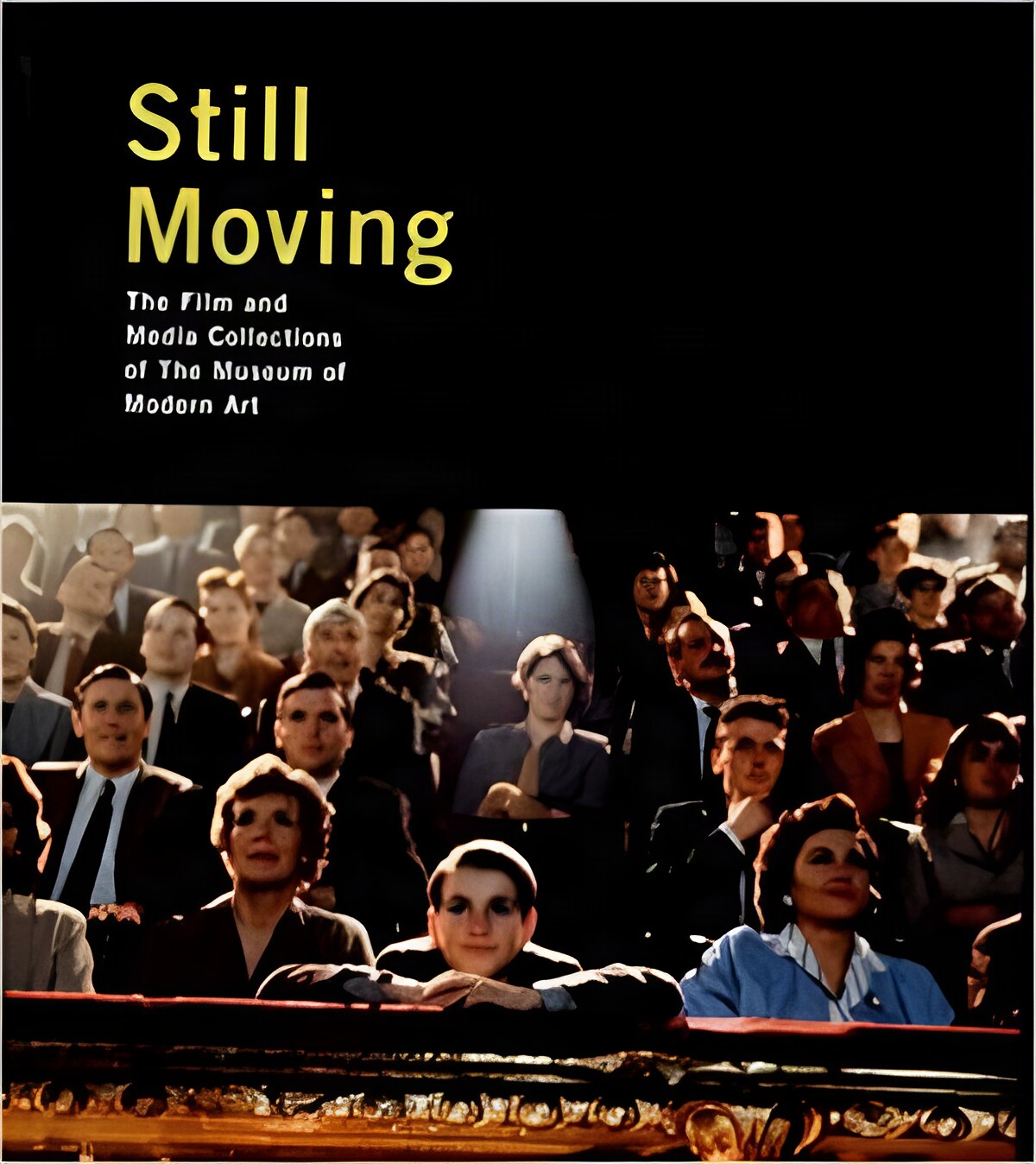
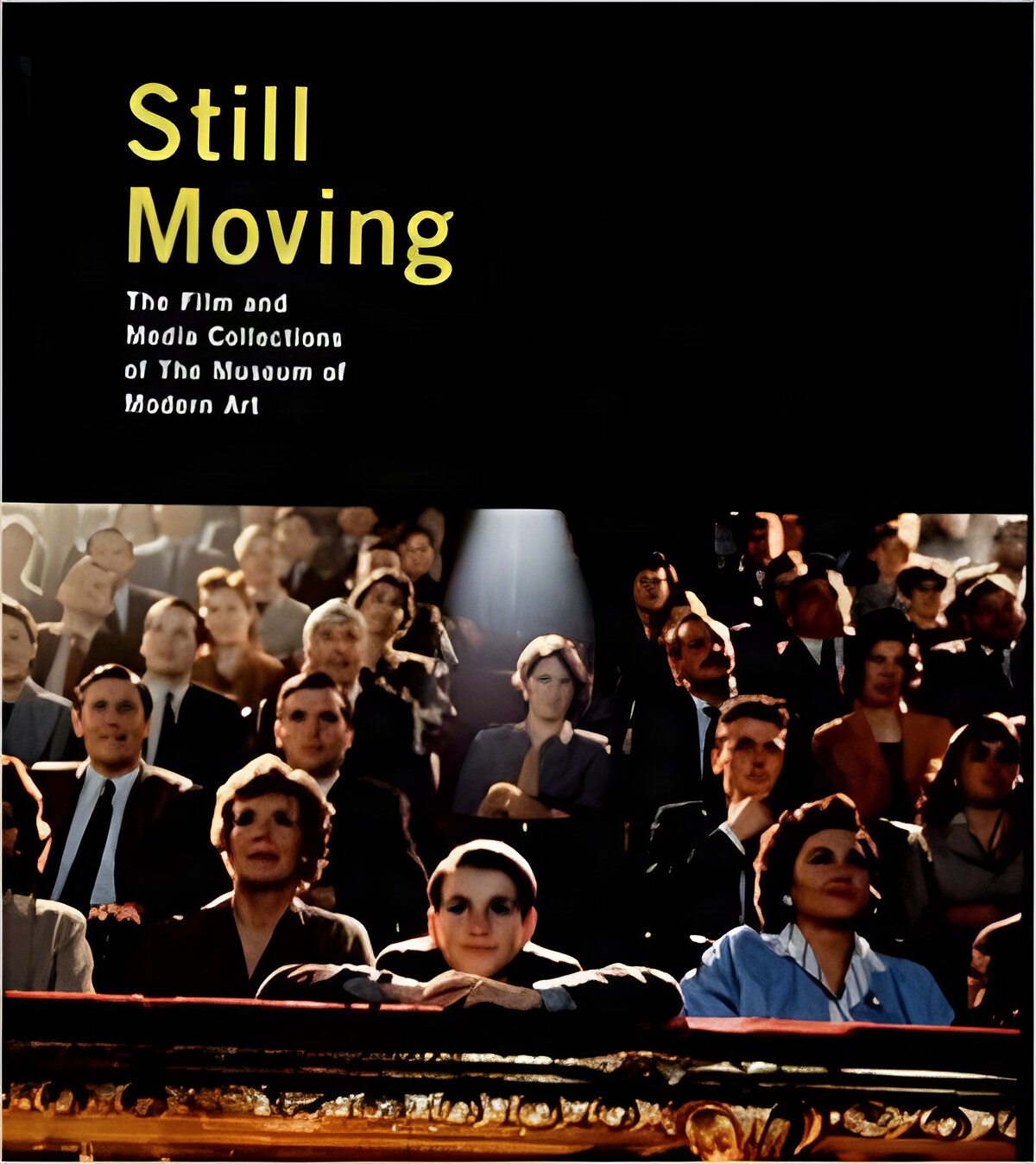
Hardcover. New York, The Museum of Modern Art, 1st, 2006, Book: Very Good, Dust Jacket: None, Hardcover, 375 pages, illustrated throughout in color and b&w. Clean, unmarked copy in excellent condition. 507 illustrations (108 in color, 399 in duotone). Founded in 1935, The Museum of Modern Art's Department of Film and Media is home to one of the most important moving-image archives in the world. Still Moving: The Film and Media Collections of The Museum of Modern Art marks the first time that MoMA has published a volume dedicated exclusively to these holdings. Drawn primarily from the Museum's vast library of film stills, the nearly 500 images in this book represent just a fraction of the department's renowned archive, including one of the world's most important collections of international silent cinema; classic early sound films from the United States, Great Britain, France, Germany, Italy, Russia, and Japan; extensive holdings of documentary and animation shorts and feature films; significant examples of Hollywood filmmaking from studios such as Warner Brothers, RKO, MGM, Twentieth Century-Fox, and Paramount; and more recent works by leading independent and avant-garde film and media artists.
Hardcover. New York, The Museum of Modern Art, New York, 1st, 2006, Book: Very Good, Dust Jacket: None, Hardcover, 375 pages, illustrated throughout in color and b&w. Clean, unmarked copy in excellent condition. 507 illustrations (108 in color, 399 in duotone). Founded in 1935, The Museum of Modern Art's Department of Film and Media is home to one of the most important moving-image archives in the world. Still Moving: The Film and Media Collections of The Museum of Modern Art marks the first time that MoMA has published a volume dedicated exclusively to these holdings. Drawn primarily from the Museum's vast library of film stills, the nearly 500 images in this book represent just a fraction of the department's renowned archive, including one of the world's most important collections of international silent cinema; classic early sound films from the United States, Great Britain, France, Germany, Italy, Russia, and Japan; extensive holdings of documentary and animation shorts and feature films; significant examples of Hollywood filmmaking from studios such as Warner Brothers, RKO, MGM, Twentieth Century-Fox, and Paramount; and more recent works by leading independent and avant-garde film and media artists.
Hardcover. Harrisburg, Stackpole Company, 1st, 1961, Book: Good, Dust Jacket: None, 322 pages. Hardcover. Features 16 pages of black & white photographs. Notations in red pencil on 2 maps - pages 92 and 97. Light wear to yellow cloth covers. No dust jacket.
Softcover. Chapel Hill NC, The University of North Carolina Press., 1st pbk, 2000, Book: Very Good, Dust Jacket: None, Softcover, 363 pages, b&w illustrations. Laura Wexler presents an incisive analysis of how the first American female photojournalists contributed to a "domestic vision" that reinforced the imperialism and racism of turn-of-the-century America. These women photographers, white and middle class, constructed images of war disguised as peace through a mechanism Wexler calls the "averted eye," which had its origins in the private domain of family photography. Wexler examines the work of Frances Benjamin Johnston, Gertrude Kasebier, Alice Austen, the Gerhard sisters, and Jessie Tarbox Beals. The book includes more than 150 photographs taken between 1898 and 1904, such as photos Johnston took aboard Admiral Dewey's flagship as it returned home from conquering Manila, Austen's photos of immigrants at Ellis Island, and Beals's images of the St. Louis World's Fair of 1904. In a groundbreaking approach to the study of photography, Wexler raises up these images as "texts" to be analyzed alongside other texts of the period for what they say about the discourses of power. Tender Violence is an important contribution not only to the fields of history of photography and gender studies but also to our growing understanding of U.S. imperialism during this period.
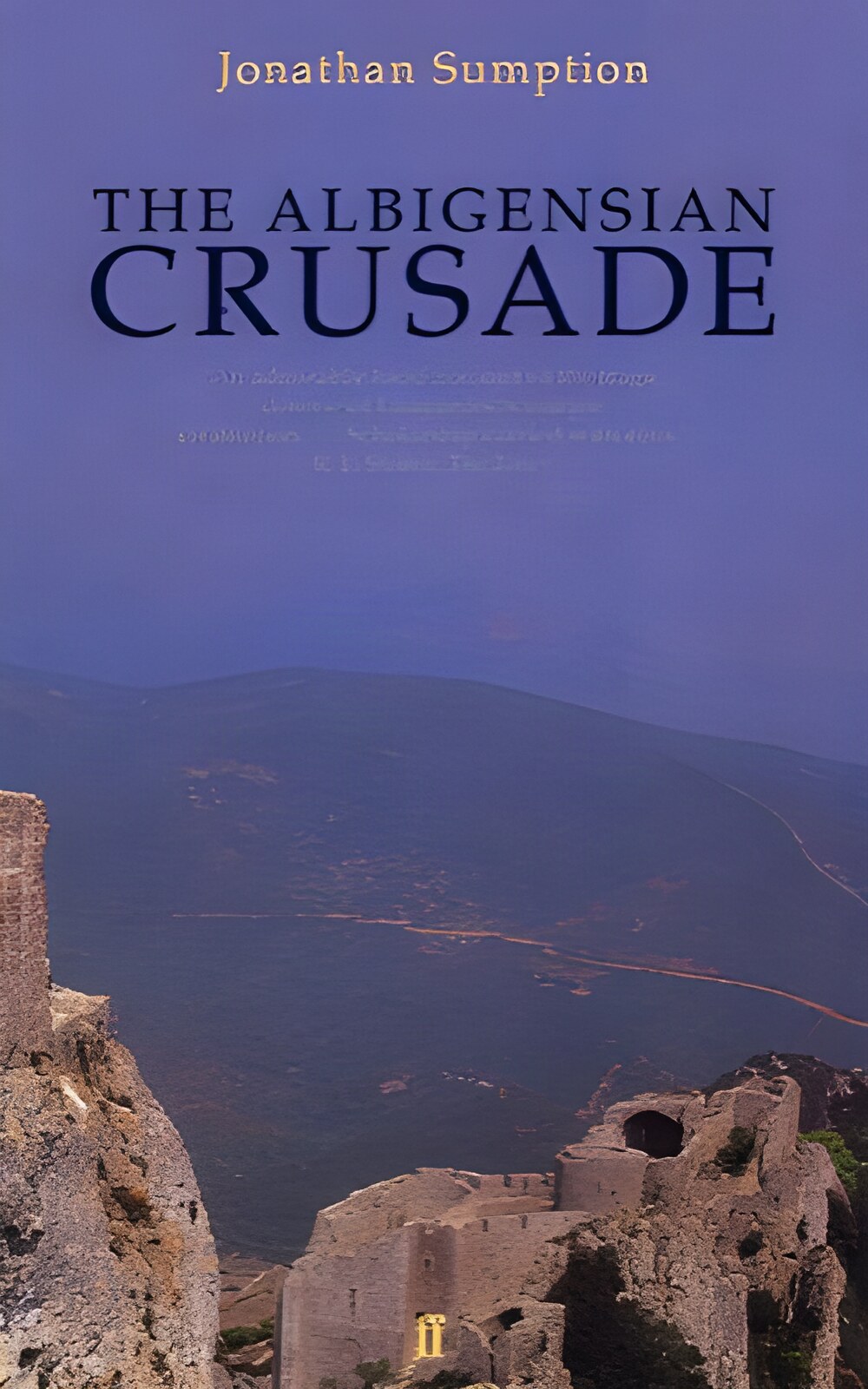
Softcover. UK, Faber & Faber, reprint, 1988, Book: Very Good, Dust Jacket: None, Softcover, 271 pages. In the twelfth century, Languedoc, in the far south, was among the most beautiful parts of France, far away from the world of the feudal north. However, it was in this rich region that a heresy of Eastern origin took hold, forcing the Catholic Church to confront a rival whose teachings questioned the foundations of Christian thought. These heretics, called Cathars, held a profoundly pessimistic view of the world that was based on the duality of all things, including good and evil: according to one heretic, "The one, the good God, made the invisible world, while the other, the evil God, made the visible one." Jonathan Sumption's acclaimed history examines the roots of this heresy as well as of the crusade the Church undertook in 1208 to stamp out the infidels, who ultimately were conquered by the Catholic armies. But this book does more than simply describe this terrible war; it reconstructs a lost world of great cultural richness, one that saw the creation in Languedoc of the troubadour tradition as well as the magnificent castles at Cabaret and Carcassonne. Clean copy.
Softcover. London, Tate Gallery, 1999, Book: Very Good, Dust Jacket: None, Softcover, 296 pages, illustrated in color and b&w. Wonderfully written and illustrated account of the work of the Bloomsbury artists, Vanessa Bell, Duncan Grant and Roger Fry. Contains detailed chronologies of their lives. Catalogue entries on two hundred works, all illustrated in color, bring out the chief characteristics of Bloomsbury painting--domestic, contemplative, sensuous, and essentially pacific. These are seen in landscapes, portraits, and still lifes set in London, Sussex, and the South of France, as well as in the abstract painting and applied art that placed these artists at the forefront of the avant-garde before the First World War. Portraits of family and friends--from Virginia Woolf and Maynard Keynes to Aldous Huxley and Edith Sitwell--highlight the cultural and social setting of the group. Essays by leading scholars provide further insights into the works and the changing critical reaction to them, exploring friendships and relationships both within and outside of Bloomsbury, as well as the movement's wider social, economic, and political. Clean, bright copy.
Softcover. Durham NC, Duke University Press, 1st, 2013, Book: Very Good, Dust Jacket: None, Softcover, 384 pages. Noel Burch and Genevieve Sellier adopt a sociocultural approach to films made in France before, during, and after World War II, paying particular attention to the Occupation years (1940-44). The authors contend that the films produced from the 1930s until 1956--when the state began to subsidize the movie industry, facilitating the emergence of an "auteur cinema"--are important, both as historical texts and as sources of entertainment. Citing more than 300 films and providing many in-depth interpretations, Burch and Sellier argue that films made in France between 1930 and 1956 created a national imaginary that equated masculinity with French identity. They track the changing representations of masculinity, explaining how the strong patriarch who saved fallen or troubled women from themselves in prewar films gave way to the impotent, unworthy, or incapable father figure of the Occupation. After the Liberation, the patriarch reemerged as protector and provider alongside assertive women who figured as threats not only to themselves but to society as a whole. Still in publisher's shrinkwrap.
Hardcover. NY/London, Verso, 1st, 2003, Book: Very Good, Dust Jacket: Very Good, Hardcover in a bright, unclipped dustjacket. The violence that has ravaged Algeria has often defied explanation. Regularly invoked in debates about political Islam, transitions to democracy, globalization, and the right of humanitarian interference, Algeria's tragedy has been reduced to a clash of stereotypes: Islamists vs.a secular state, terrorists vs. innocent civilians, or generals vs. a defenseless society. The prevalence of such simplistic representations has disabled public opinion inside as well as outside the country and contributed to the intractability of the conflict. This collection of essays offers a radical corrective to Western misconceptions. Rejecting essentialist and determinist approaches, Hugh Roberts explores the outlook and evolution of the various internal forces as they emerged--the Islamists, the Berberists, the factions within the army, and the regime in general--and he looks at external interests and actors. Clean copy.
Hardcover. London , Rupert Hart=Davis, 1st, 1968, Book: Very Good, Dust Jacket: Good, Hardcover in a dust jacket with light edgewear, 365 pages. An informal military history of the North American continent. The two major campaigns covered being the war with France for the possession of Canada & the American War of Independence. Service discipline in the British Army meant a bloody back, hence the nickname for the soldiers of the time. Name on front fly leaf, otherwise clean.
Hardcover. NY, Harper & Brothers, 1st, 1919, Book: Very Good, Dust Jacket: None, Hardcover, blue cloth covers stamped with a bright gilt design, 66 pages. Top edges gilt. Two color illustrations by Schoonover tipped in. A novel of a World War I soldier and Joan of Arc.
Hardcover. Dublin, Brett Smith, 1st thus, 1788, Book: Very Good, Dust Jacket: None, Hardcover, leather bound. 553 pages plus Index of Proper Names. Uncommon translation from Ireland. Hawkey was a Reverend and Master of the Free-School in Dundalk. "The Commentaries of his Wars in Gaul" is Julius Caesar's firsthand account of the Gallic Wars, written as a third-person narrative. In it Caesar describes the battles and intrigues that took place in the nine years he spent fighting the Germanic peoples and Celtic peoples in Gaul that opposed Roman conquest. The Gallic Wars were a series of military campaigns waged by the Roman proconsul Julius Caesar against several Gallic tribes. Rome's war against the Gallic tribes lasted from 58 BC to 50 BC and culminated in the decisive Battle of Alesia in 52 BC, in which a complete Roman victory resulted in the expansion of the Roman Republic over the whole of Gaul (mainly present-day France and Belgium). "His Commentaries of the Civil War" is an account written by Julius Caesar of his war against Gnaeus Pompeius and the Senate. It covers the events of 49-48 BC, from shortly before Caesar's invasion of Italy to Pompey's defeat at the Battle of Pharsalus and flight to Egypt with Caesar in pursuit. It closes with Pompey assassinated, Caesar attempting to mediate rival claims to the Egyptian throne, and the beginning of the Alexandrian War. Prelim pages gone so the book opens on the title page. Interior pages bright with no foxing, firm binding. Light wear to covers, front cover with partial split along spine, Otherwise clean.
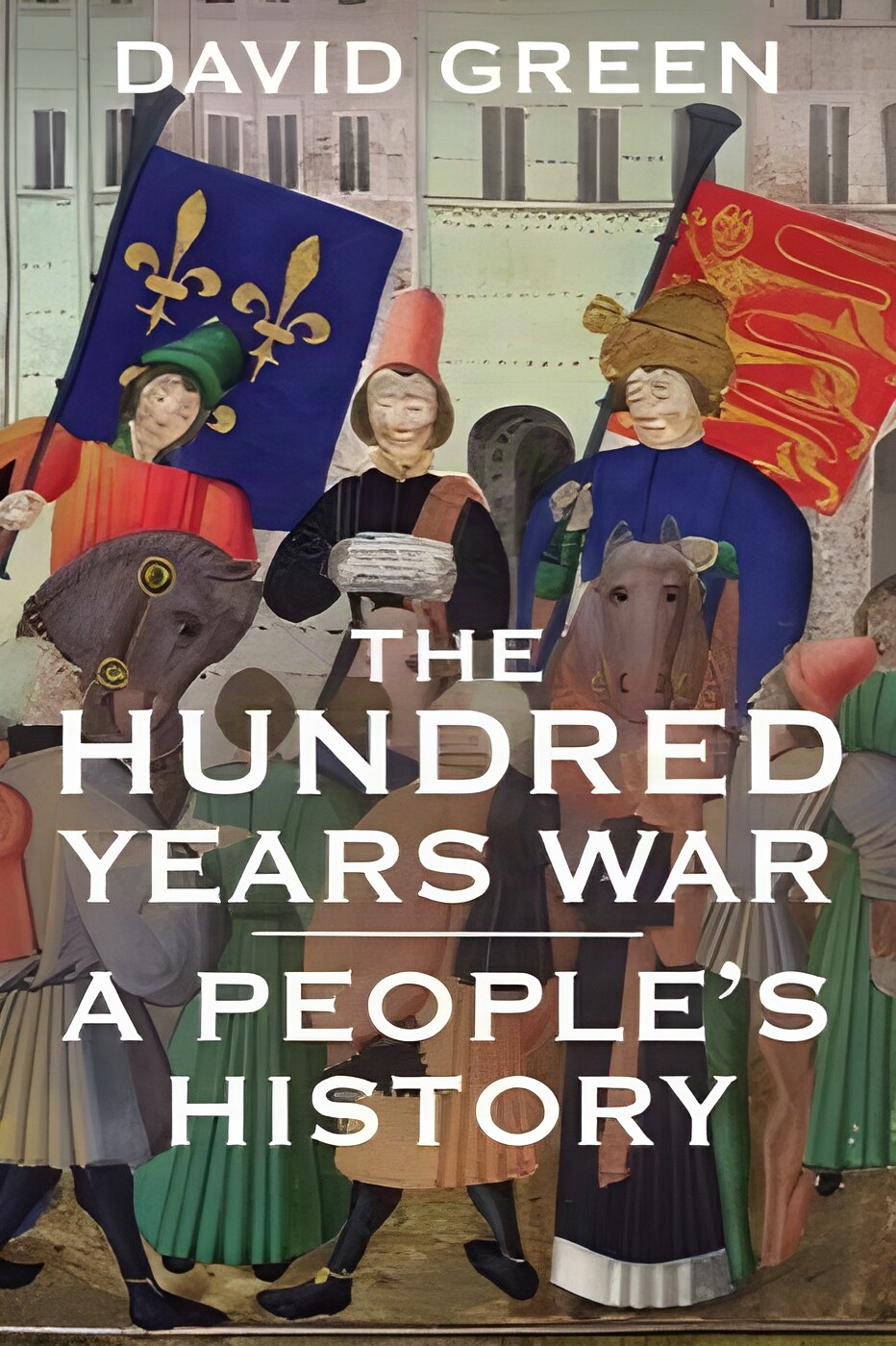
Softcover. New Haven CT, Yale University Press, 1st, 2014, Book: Very Good, Dust Jacket: Very Good, Softcover, 339 pages, b&w illustrations. The Hundred Years War (1337-1453) dominated life in England and France for well over a century. It became the defining feature of existence for generations. This sweeping book is the first to tell the human story of the longest military conflict in history. Historian David Green focuses on the ways the war affected different groups, among them knights, clerics, women, peasants, soldiers, peacemakers, and kings. He also explores how the long war altered governance in England and France and reshaped peoples' perceptions of themselves and of their national character. Clean copy.
Hardcover. Boston, Little, Brown and Company, 1st, 1957, Book: Very Good, Dust Jacket: None, Hardcover, blue cloth with gilt lettering on spine. Volume XI in The History of United States Naval Operations in World War II. 360 pages, illustrated with maps (one fold-out) and b&w photos. Gilt on spine with light fading, lacks dust jacket, dj flap copy pasted inside front cover, otherwise clean, tight copy.




 "Roer River Battles: Germany's Stand at the Westwall, 1944")
 "Roland the Warriorby: Collier/Frank Schoonover, Virginia M. and Jeanette Eaton")
 "Roman Vishniac: Children of a Vanished Worldby: Mara Vishniac Kohn/Roman Vishniac")
 "Second Division American Expeditionary Force in France 1917-1919by: Spaulding, Colonel Oliver Lyman, Colonel John Womack Wright")


 "Shadows of War: A German Soldier's Lost Photographs of World War IIby: Petra Bopp, Willi Rose , et al.")
 "Silence Over Dunkerqueby: Tunis, John R.")
 "Steinberg at the New Yorkerby: Smith/Saul Steinberg, Joel")
 "Street Without Joy - Indochina at War - 1946-54by: Fall, Bernard B.")
 "Tender Violence: Domestic Visions in an Age of U.S. Imperialism (Cultural Studies of the United States) by: Wexler, Laura")
 "The Art of Bloomsburyby: Shone, Richard")

 "The Battlefield: Algeria 1988 2002 Studies in a Broken Polity by: Roberts, Hugh")




 "The Gallic and Civil Wars of Caesarby: Rev. John Pullein Hawkey(transl.)")
 "The Invasion of France and Germany, 1944-1945: History of United States Naval Operations in World War II, Volume 11 by: Morison, Samuel Eliot")