Hardcover. France Loisirs , 1st, 1995, Book: Very Good, Dust Jacket: Very Good, Hardcover, 144 pages. Like new in publisher's shrink-wrap. Bastienne Schmidt's photographs are images of both life and death. Mercilessly direct, these pictures from Latin America - the fruits of intensive work over the past few years - bring to an existential fact of our lives, a truth we in western societies are only too happy to hide behind a facade of casual diversions and consumable "beauty"; the immediate presence of death. It takes courage to look at these pictures, for in the faces of these people from another culture we are confronted, violently and with an authenticity we cannot ignore, with the very destiny we refuse to accept. Moreover, Bastienne Schmidt shows us the naked truth that underlies not only our inability to look our own death in the face, but also our tendency to disregard the violent deaths of others, failing to recognize the value of "mere" life as we do, so long as they die far enough away from our own doorsteps.
Hardcover. NY, Grove Press, 1st US, 2005, Book: Very Good, Dust Jacket: Very Good, Hardcover in a bright, unclipped dust jacket. In 1753, Voltaire -- playwright, poet, philosopher, and one of the most feted figures in Europe -- was forced by Louis XV into exile, where he remained for the last twenty-five years of his life. These years heralded a startling new beginning for this remarkable man. Voltaire carved out a new and vibrant world in his isolation, becoming a successful entrepreneur and writing his masterpiece Candide. In Voltaire in Exile, Ian Davidson re-creates this period in the life of one of the giants of the Enlightenment. By painstakingly translating the rich correspondence between Voltaire and his family, members of the Court at Versailles, and the French intellectual elite, Davidson allows us to discover Voltaire the artist, the campaigner, the aesthete, the lover, the humorist. The result is a wonderfully vivid portrait of this extraordinarily funny, iconoclastic, complex, and, above all, ferociously intelligent individual. Clean copy.
Hardcover. NY, Thames & Hudson;, 1st, 2009, Book: Very Good, Dust Jacket: Very Good, Hardcover in a bright, unclipped dust jacket. The best pages from the sensational photo magazine published in France in the 1920s and 1930s. Established in Paris in 1928, VU combined stunning photography with dynamic layouts and first-rate reporting, creating a revolution in journalism and setting the stage for future photo magazines like Life, Stern, and Paris Match. For a weekly magazine that only published 665 issues (21 March 1928 -- 5 June 1940) VU left behind a remarkable legacy as revealed in these pages. There are eight main chapters: Page layouts; Faces; Photo stories; Photomontages; The rise of Hitler; Sensation and spectacle; Image innovations; Covers and each is crammed with spreads and covers from the magazine and lots of them are big enough to read the stories and captions (assuming you know French). VU was created by publisher Lucien Vogel with editor Carlo Rim and art editor Alexander Liberman (who became US Vogue's art editor and later creative director of Conde Nast) as a general interest picture weekly, some years before Life and Look in the US and Picture Post in Britain. They all took advantage of developing technologies of the day like wire transmission of photos and rotogravure printing. VU was the first though to use photos in a very creative way, especially with cover montages created by Liberman, no doubt influenced by Russian magazines of the twenties designed Rodchenko, Tellingater, Lissitzky and Stepanova.
Hardcover. NY, Thames & Hudson, 1st, 2009, Hardcover, 320 pages. The best pages from the sensational photo magazine published in France in the 1920s and 1930s. Established in Paris in 1928, VU combined stunning photography with dynamic layouts and first-rate reporting, creating a revolution in journalism and setting the stage for future photo magazines like Life, Stern, and Paris Match. VU covered a wide and eclectic range of subjects including politics, world affairs, social issues, discoveries, exploration, the arts, sports, and entertainment. It intended to be an illustrated journal of the week's events-a movie newsreel on paper-and published work by some of the most important photographers of the time: Robert Capa, Andre Kertesz, Henri Cartier-Bresson, Brassai, Man Ray, and more. This book gathers some of the best work from more than 600 issues of VU: covers, double-page spreads, and complete reports. It provides both a record of the prewar world of the twenties and thirties, and an unparalleled history of photojournalism in the early twentieth century. 200+ b&w illustrations
Rome, Franca May, 1st, 1975, Book: Very Good, Dust Jacket: Very Good, Black cardboard slip-case is VG with some wear. This is a written essay by the Italian author, Soavi of the art and world of Jean-Michel Folon. There are many full page full-color plates of the artist's paintings and serigraphs. This is also a visual essay (via color photos) of the farm in Burcy, near Paris, where the artist has his home and atelier. In all, twenty-eight of the artist's works are reproduced, most either taking up a full page, and some as two-page spreads.
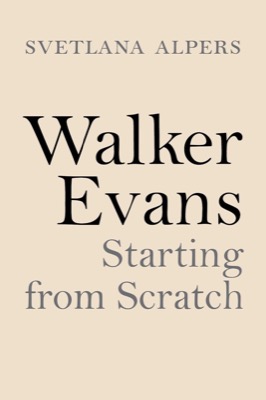
Hardcover. Princeton NJ, Princeton University Press, 1st, 2020, Book: Very Good, Dust Jacket: Very Good, Hardcocer in a bright dust jacket, 257 pages plus 143 b&w pages of photographs in the front of the book. Walker Evans (1903-75) was a great American artist photographing people and places in the United States in unforgettable ways. He is known for his work for the Farm Security Administration, addressing the Great Depression, but what he actually saw was the diversity of people and the damage of the long Civil War. In Walker Evans, renowned art historian Svetlana Alpers explores how Evans made his distinctive photographs. Delving into a lavish selection of Evans's work, Alpers uncovers rich parallels between his creative approach and those of numerous literary and cultural figures, locating Evans within the wide context of a truly international circle. Alpers demonstrates that Evans's practice relied on his camera choices and willingness to edit multiple versions of a shot, as well as his keen eye and his distant straight-on view of visual objects. Illustrating the vital role of Evans's dual love of text and images, Alpers places his writings in conversation with his photographs. She brings his techniques into dialogue with the work of a global cast of important artists--from Flaubert and Baudelaire to Elizabeth Bishop and William Faulkner--underscoring how Evans's travels abroad in such places as France and Cuba, along with his expansive literary and artistic tastes, informed his quintessentially American photographic style.
Hardcover. New York, Frances Foster Books/Farrar Straus and Giroux, 1st, 2007, Book: Very Good, Dust Jacket: Very Good, Hardcover in a very good dust jacket. Non-paginated. SIGNED WITH DRAWING BY PETER SIS ON COPYRIGHT PAGE. Full color illustrations. Clean, bright copy.
Hardcover. NY, Houghton Mifflin Harcourt, 1st, 2019, Book: Very Good, Dust Jacket: Very Good, Hardcover in a bright, unclipped dust jacket. Nigel Hamilton's celebrated trilogy culminates with a story of triumph and tragedy. Just as FDR was proven right by the D-day landings he had championed, so was he found to be mortally ill in the spring of 1944. He was the architect of a victorious peace that he would not live to witness. Using hitherto unpublished documents and interviews, Hamilton rewrites the famous account of World War II strategy given by Winston Churchill in his memoirs. Seventy-five years after the D-day landings we finally get to see, close-up and in dramatic detail, who was responsible for rescuing, and insisting upon, the great American-led invasion of France in June 1944, and why the invasion was led by Eisenhower. As FDR's D-day triumph turns to personal tragedy, we watch with heartbreaking compassion the course of the disease, and how, in the months left him as US commander in chief, the dying president attempted at Hawaii, Quebec, and Yalta to prepare the United Nations for an American-backed postwar world order. Now we know: even on his deathbed, FDR was the war's great visionary.
Hardcover. New Haven CT, Yale University Press, 1st thus, 1950, Book: Very Good, Dust Jacket: None, Hardcover. The Chronicles of America Vol. 54. 364 pages, b&w illustrations. Red gilt-decorated cloth, top edge gilt, no dust jacket as issued. Details the campaigns of the U.S. Armed Forces in all theaters of World War II, including Tunisia, France, Italy, the Philippines, and Guadalcanal. A very nice, tight, clean copy in excellent condition.
Hardcover. NY, Thames and Huson, 1st, 2007, Book: Very Good, Dust Jacket: Very Good, Hardcover, 256 pages. Published to accompany an exhibition at London's Imperial War Museum, this book features more than 250 superb full-color illustrations of hard-hitting propaganda and groundbreaking graphic art. It encompasses iconic images such as Alfred Leete's "Your Country Needs You" as well as additional material drawn from the world of advertising and documentary photographs of posters in situ. Through posters, the author examines the social, political, ethnic, and cultural aspirations of America, Britain, Ireland, Germany, France, the Netherlands, Belgium, Russia, Austria, Hungary, and the Czech Republic. Covering topics as diverse as advertising in World War I, the Bolshevik Revolution, the Spanish Civil War, Germany and Occupied Europe in World War II, anti-nuclear campaigns, and Vietnam, the book is comprehensive and highly analytical, yet accessible. 300 illustrations, 250 in color.
Hardcover. Santa Fe, Arena Editions, 1st, 1998, Book: Very Good, Dust Jacket: Very Good, 168 pages. Hardcover. Bright purple fabric covered covers with gilt title on spine. B/w illustrations throughout. Mylar covered dust jacket in good shape. Very clean inside. Former bookseller price tag on front flap. "Out of print". From the front flap: "This definitive retrospective monograph encompasses the period 1972 though 1997, and includes images from every genre Cratsley has pursued."
Hardcover. New York, Farrar, Straus and Giroux, 1st, 1998, Book: Very Good, Dust Jacket: Good, SIGNED BY AUTHOR/ILLUSTRATOR. Light wear to cover. Dust jacket has some some wear and bumped edge. Beautiful color illustrations throughout. A bright, clean copy.
Hardcover. NY, Dutton Caliber, 1st, 2022, Book: Very Good, Dust Jacket: Very Good, Hardcover in a bright dust jacket, 324 pages, b&w illustrations. When the P-51 Mustang began tearing across European skies in early 1944, the Allies had been losing the air war for years. Staggering numbers of bomber crews, both British and American, had been shot down and killed thanks to the Luftwaffe's superior fighter force. Not only did the air war appear grim, but any landing of troops in France was impossible while German fighters hunted overhead. But behind the scenes, a team of visionaries had begun to design a bold new type of airplane, one that could outrun and outmaneuver Germany's best. Wings of War is the incredible true story of the P-51 Mustang fighter and the unlikely crew of designers, engineers, test pilots, and army officers who brought it from the drafting table to the skies over World War II. This is hardly a straightforward tale of building an airplane--for years, the team was stymied by corruption within the defense industry and stonewalled by the Army Air Forces, who failed to understand the Mustang's potential. But when squadrons of Mustangs were finally unleashed over Hitler's empire, the Luftwaffe was decimated within months, clearing the skies for D-Day. Clean copy.
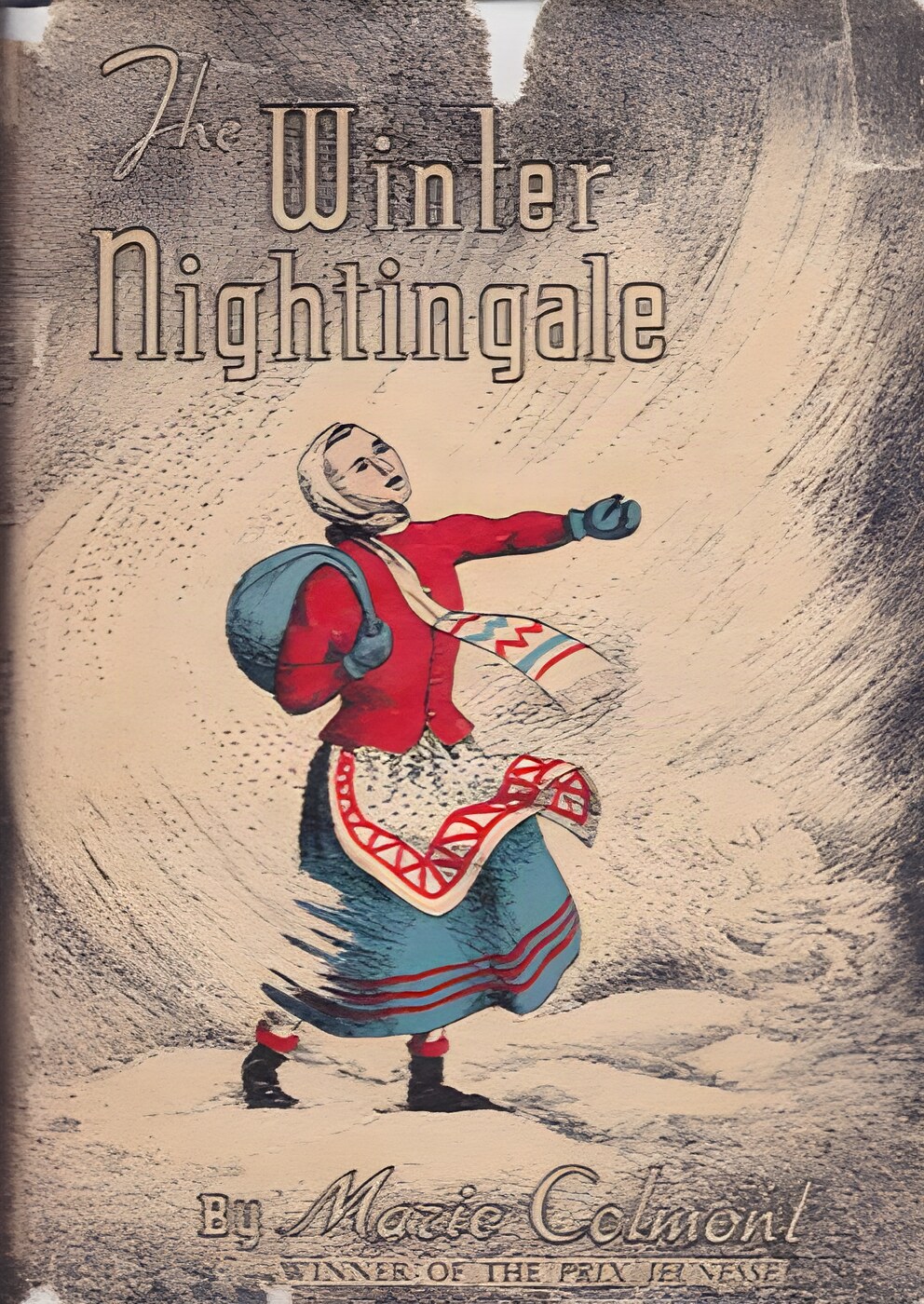
Hardcover. NY, Coward McCann, 1st US, 1937, Book: Very Good, Dust Jacket: Fair, Hardcover, 224 pages. Translated from French by Marion Saunders. Black & white illustrations by Lucile Blanch, winner of French award for juvenile fiction. Dj chipped, worn.
Hardcover. NY, Scribner, 2nd pr., 1997, Book: Very Good, Dust Jacket: Very Good, Hardcover, 475 pages, b&w photos, in a bright, unclipped dust jacket. Remainder line on bottom edge. A biography of Frances Marion, one of the earliest--and for many years the most successful--screenwriters in Hollywood. Cari Beauchamp masterfully combines biography with social and cultural history to examine the lives of Frances Marion and her many female colleagues who shaped filmmaking from 1912 through the 1940s.
Softcover. Bloomington, IN, Indiana University Press, 1st, 2015, Book: Very Good, Dust Jacket: None, 232 pages. Softcover. A very clean, unmarked copy with only minor edgewear. Black and white photographs throughout. The center of the art world before the war, Paris fired the Nazis' greed. The discovery of more than 1,500 prized paintings and drawings in a private Munich residence, as well as a recent movie about Allied attempts to recover European works of art, have brought Nazi plundering back into the headlines, but the thievery was far from being limited to works of art. From 1942 onwards, ordinary Parisian Jews-mostly poor families and recent immigrants from Eastern Europe-were robbed, not of sculptures or paintings, but of toys, saucepans, furniture, and sheets. Witnessing the Robbing of the Jews tells how this vast enterprise of plunder was implemented in the streets of Paris by analyzing images from an album of photographs found in the Federal Archives of Koblenz. Brought from Paris in 1945, the photographs were cataloged by the staff of the Munich Central Collecting Point. Beyond bearing witness to the petty acts of larceny, these images provide crucial information on how the Germans saw their work. They enable us to grasp the "Nazi gaze" and to confront the issue of the relation between greed and mass destruction.
Softcover. New Haven CT, Yale University Press, 1st, 2007, Book: Very Good, Dust Jacket: None, Softcover, 385 pages, b&w illustrations. Two epochal developments profoundly influenced the history of the Atlantic world between 1770 and 1870-the rise of women's rights activism and the drive to eliminate chattel slavery. The contributors to this volume, eminent scholars from a variety of disciplines, investigate the intertwining histories of abolitionism and feminism on both sides of the Atlantic during this dynamic century of change. They illuminate the many ways that the two movements developed together and influenced one another. Approaching a wide range of transnational topics, the authors ask how conceptions of slavery and gendered society differed in the United States, France, Germany, and Britain; how women's activism reached across national boundaries; how racial identities affected the boundaries of women's activism; and what was distinctive about African-American women's participation as activists. Their thought-provoking answers provide rich insights into the history of struggles for social justice across the Atlantic world. Sine faded. Clean copy.
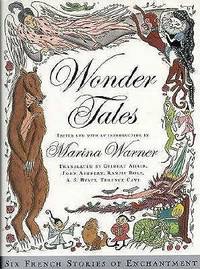
Hardcover. NY, Farrar Straus & Giroux, 1st, 1996, Book: Very Good, Dust Jacket: Very Good, Hardcover in a bright, unclipped dust jacket. For this beautiful anthology of six masterpiece Wonder Tales, Marine Warner invited the collaboration of five writers with a special sympathy for the French stories they render here in burnished, cunning, and amusing English. "The White Cat", "The Subtle Princess", "Bearskin", "Starlight", The Counterfeit Marquise", and "The Great Green Worm" are as unforgettable today as they were when they were first published centuries ago. Translated by Gilbert Adair, John Ashbery, Ranjit Bolt, A.S. Byatt and Terence Cave. with small black and white drawings by Sophie Herxheimer. Clean copy.
Hardcover. Menlo Park CA, Lane Book Co.,, 1st, 1960, Book: Good, Dust Jacket: Good, Hardcover. 64 pages. Contains black & white photography by Martin Litton and Frances Coleberd. A Sunset Junior Book. Tim and Maria Black live at Oak Valley Ranch, where their days pass in a gay mixture of fun and work. They go on hayrides, search for wildflowers, and at one point in the story Maria gets lost! Buck, a blacksmith, comes to work at Oak Valley. Buck discovers there is a great deal to learn from the children about the ranch. In return, he explains his trade to them and helps them care for their horses. Ex-library with usual markings and stamping. Some tape residue to covers and dust jacket.
Hardcover. NY, Skira, 1st, 2008, Book: Very Good, Dust Jacket: Very Good, Hardcover, 168 pages. Yves Clerc, a French painter born in 1947, has ammassed a body of work of over 240 very large and colorful canvases. This publication presents about 100 of them, mostly dedicated to the interpretation of well-known portraits, but also to flowers in vases, "fashion accessories" such as handbags and shoes, nudes, stuffed animals, and adorned women with enormous gowns.
Hardcover. NY, Skira, 1st, 2008, Book: Very Good, Dust Jacket: Very Good, Hardcover, 168 pages. Yves Clerc, a French painter born in 1947, has ammassed a body of work of over 240 very large and colorful canvases. This publication presents about 100 of them, mostly dedicated to the interpretation of well-known portraits, but also to flowers in vases, "fashion accessories" such as handbags and shoes, nudes, stuffed animals, and adorned women with enormous gowns.
Hardcover. New York, W. W. Norton & Company, 1st, 2010, Book: Very Good, Dust Jacket: Good, 160 pages. Hardcover with dust jacket. Clean, unmarked copy with minor wear to dust jacket. Also small tear with piece missing from dust jacket bottom fore edge front. The photographer Pierre Yves-Petit, who called himself "Yvon," wandered the streets of Paris between the world wars looking for the moment when the shifting light and clouds would perfectly reveal the city?s ephemeral, iconic beauty. The dramatic images of the city and its people that he made during those years would become the most popular postcards in France. Yvon?s Paris reproduces more than one hundred of his loveliest images, many made from recently discovered glass negatives.

 "Vivir la Muerte: Living With Death in Latin Americaby: Schmidt, Bastienne/Karl Steinorth, et al.")
 "Voltaire In Exile: The Last Years, 1753-78 by: Ian Davidson")
 "Vu: The Story of a Magazineby: C")

 "Vue Imprenable - Essays on the World of Folonby: Soavi, Giorgio")


 "Wall, The - Growing Up Behind the Iron Curtain (SIGNED WITH DRAWING)by: Sis, Peter")
 "War And Peace: FDR's Final Odyssey: D-Day to Yalta, 1943")

 "War Posters: Weapons of Mass Communicationby: James Aulich")

 "Wild Boy (SIGNED COPY)by: Gerstein, Mordicai (Author, Illustrator)")


 "Willy Ronisby: Jean-Claude Gautrant")

 "Without Consentby: Fyfield, Frances")
 "Without Lying Down: Frances Marion and the Powerful Women of Early Hollywoodby: Beauchamp, Cari")
 "Witnessing the Robbing of the Jews: A Photographic Album, Paris, 1940-1944by: Gensburger, Sarah")

 "Young Ranchers at Oak Valleyby: Nixon, Lucille M.")
 "Yves Clercby: Catherine Alestchenkoff and Pascal Bonafoux")
 "Yves Clercby: Catherine Alestchenkoff and Pascal Bonafoux")
 "Yvon's Parisby: Stevens, Robert")