Hardcover. Oxford UK, The Voltaire Foundation, 1st, 1991, Book: Very Good, Dust Jacket: None, Hardcover in blue cloth, gilt lettering on spine, 251 pages. As France moved from the seventeenth to the eighteenth century, it found itself in the grip of anglomanie - a fascination with new English ideas in the domains of science and philosophy. Chief among the English thinkers it enthusiastically embraced was John Locke. On his visits to France and in his personal correspondence, Locke interacted with prominent French thinkers, scientists and savants of the day, such as Charles Barbeyrac and Pierre Magnol, and his works engaged in a critical dialogue with those of Descartes. However, Locke has been feted to such an extent that his position in the history of ideas in France is often overlooked. In Locke in France 1688-1734, Ross Hutchison re-examines and re-contextualises the precise nature and extent of Locke's influence in France by exploring how his ideas were incorporated into contemporary French debates and controversies in the transitional period from the seventeenth to the eighteenth century. Hutchison highlights the various channels of dissemination which brought Locke to the attention of the French, including translations of his major works and his personal friendships with French Protestant exiles. Hutchison also presents case studies of interactions in which Lockean ideas played a dominant role in the evolution of French thought, ranging from political theory to the nature of language, theories of education, and the relation between soul and matter. Clean copy, no dust jacket.
Hardcover. Cambridge UK, Cambridge University Press, 1st, 1953, Book: Very Good, Dust Jacket: Good, Hardcover in a worn dust jacket with a chunk gone from rear panel, 309 pages. This book gives a complete account of all that Locke saw, did and heard during his four years in France. The entries vary from laconic jottings to detailed accounts - full of colour and wit - of life in Paris and the provinces. Locke's variety of interests presents a vivid and thorough account of France at that time. He observed and recorded the absolutism of Louis XIV and the poverty of the peasants, the growing persecution of the Protestants and the external manifestations of Catholicism, recent developments in science and technology - even agricultural methods and the system of taxes. So that this is a book for the general reader as well as for the student of Locke, the social historian and the historian of science. Three b&w plates including a map of his travels. Name on front fly leaf, rubber withdrawn stamp on copyright page, otherwise clean.
Hardcover. NY, Farrar, Straus and Giroux, 1st, 1971, Hardcover in a bright dust jacket, 378 pages. From dust jacket notes: "For most Americans, the Second World War started on December 7, 1941, and much of the fighting took place in strange, faraway places. For the British, the war started on September 3, 1939, and much of the action took place in the skies over England. In the spring of 1940, after months of uneasy calm, Germany invaded the Lowlands and conquered France within a few days, leaving England without her only meaningful ally on the Continent. A year would pass before the Soviet Union was drawn into the war, and eighteen months before the Japanese attacked Pearl Harbor. The United Kingdom, with a land area about the size of Wyoming, was alone, all alone, with only the Straits of Dover separating the island from Hitler's war machine. For six years Mollie Panter-Downes covered the war for The New Yorker magazine from her native England. Even at the height of the air war over London, when 'all that is best in the good life of civilized effort appears to be slowly and painfully keeling over,' she continued to file her fortnightly reports in an understated but dramatic fashion that reflected the fortitude of her fellow countrymen: 'The announcements of the first air-raid deaths are beginning to appear in the obituary columns of the morning papers. No mention is made of the cause of death, but the conventional phrase "very suddenly" is always used.' William Shawn, editor of The New Yorker, has assembled Miss Panter-Downes' 'Letter from London' columns into a consecutive, on-the-spot chronicle of the war in England."
Hardcover. NY, Criterion, 1st, 1961, Book: Very Good, Dust Jacket: Very Good, 159 pages, hardcover in a lightly edgeworn dust jacket. A story of the Underground Railroad. Previous owner's signature on front fly leaf.
Hardcover. Paris, Moutard, 1st, 1789, Book: Good, Dust Jacket: None, Hardcover, leatherbond, chipped and worn, marbled endpapers, 336 pages. Vol. 1 only (of 4). FRENCH TEXT. Interior pages very good. Anquetil (1723 - 1806) became prior of the abbey of La Roee, in Anjou, in 1759 and soon after was appointed director of the college of Senlis, where he taught history and theology. He published this work just on the eve of the French Revolution (the Approbation is dated 30 September 1788) and was imprisoned during the Terror for his troubles.
Hardcover. New York, WW Norton & Company, Inc, 1st Edition, 1968, Book: Very Good, Dust Jacket: Good, 678 pages. Hardcover. B/w illustrations throughout. A few specs of foxing to front flyleaf and back page, otherwise pages clean. Dust jacket has some agewear with a touch of chipping and foxing, one small tear on back dj. Decorated endpapers. Red cloth cover boards, gilt title on spine, some spots to covers.
Hardcover. Prestel, 1st, 1998, Book: Very Good, Hardcover, 167 pages. Louise Bourgeois: The Secret of the Cells is both a catalog of works by and a biography of the famous Parisian artist. Born in 1911, the now-octogenarian Bourgeois has shown widely throughout the world and to great critical acclaim, especially within the last decade. Bourgeois's personal history is vastly important in the content of her work, and this book takes readers on a journey from her affluent childhood in France, including family photographs, to her schooling under painter Fernand Leger to her eventual marriage and move to the United States, where she continued her long and varied career working primarily as a sculptor and installation artist. Bourgeois's abstract figurative sculptures range in materials from plaster, marble, and bronze to the more nontraditional latex, glass, thread, etc. Regardless of the medium, the work is imbued with a strong physicality that echoes the forms of the human body. Included in the book are discussions of Bourgeois's work in relation to other artists and movements such as Rodin, Brancusi, and primitivism. Bourgeois has been an inspiration to an entire generation of artists, not just because of her long and illustrious career but because her work has pushed so many boundaries. Louise Bourgeois: The Secret of the Cells is an informative and beautiful book with 77 color and 176 black-and-white images.
Hardcover. NY, St. Martins Press, 1st, 1984, Book: Very Good, Dust Jacket: Very Good, Hardcover, 145 pages. From the front dust jacket flap "Louise Dahl-Wolfe, one of the most celebrated photographers of the thirties, forties and fifties, was a uniquely American artist whose work had enormous ramifications for Horst, Avedon, Penn, and other great photographers who followed her. Working in the heydey of Harper's Bazaar with editor-in-chief Carmel Snow and renowned fashion editor Diana Vreeland, she came to fashion photography at a time when formal, sometimes stilted, European elegance was the norm and infused it with her fresh new vision - informal, intimate, and undeniably American". Preface by Frances McFadden.
Philadelphia, J. B. Lippincott, 1st, 1953, Book: Good, Dust Jacket: Good, Hardbound, 89 pages. Illustrated by Zhenya Gay. Light soiling to contents page. Previous owner's signature front endpaper. Stain to bottom corner of cover. Corners bumped. Dust jacket with chipping, creases. Small chunks missing top & bottom of spine. Brodart cover.
Hardcover. Paris, France, Vilo, 1st, 1967, Book: Good, Dust Jacket: None, 72 pages. Hardcover. FRENCH TEXT. B/w illustrations throughout. Decorated glossy cover boards, some chipping of lamination at spine and corners, a couple scratch marks. Previous owner's bookplate on front endpaper. Back cover boards slightly warped so it curls just a touch at top and bottom. Pages clean. Binding tight. A beautifully photo-illustrated volume featuring performance photos and portraits of the world-famous prima ballerina.
Softcover. Los Angeles, CA, Taschen, 1st, 2005, Book: Very Good, Dust Jacket: None, 192 pages. Softcover. Very clean, unmarked copy still in publishers shrink-wrap. Luis Bunuel, one of the most brilliant representatives of the surrealist movement, chose to make films and was able to make them with unflagging fidelity to his principles for fifty years. After an audacious Parisian showing of Un Chien Andalou in 1929 (Bunuel carried stones in his pockets in case he needed them to fend off the audience), Bunuel's subsequent career in Spain (Las Hurdes), Hollywood and Mexico (Los Olvidados, Robinson Crusoe, El, Nazarin) before returning to France (Diary of a Chambermaid, Belle de jour, The Discreet Charm of the Bourgeoisie, That Obscure Object of Desire), showed that the only subjects he cared to make films about were the three that are never supposed to be discussed in polite society: sex, religion, and politics.
Hardcover. New York, Robert M. McBride & Co., 5th pr., 1927, Book: Very Good, Dust Jacket: None, Hardcover, 173 pages. Illustrated with b&w plates. 12mo. Dark blue cloth, gilt titles on spine.
Softcover. NY, W. W. Norton , reprint, 1984, Book: Very Good, Dust Jacket: None, Softcover, 339 pages. In Felix Gilbert's skilled analysis, the figures of Niccolo Machiavelli, whose writing changed the way people think about politics, and Francesco Guicciardini, whose History of Italy is one of the first classics of modern historical writing, provide important clues to interpreting the Renaissance. "Instead of treating these two great figures in isolation, Professor Gilbert puts them into the context of their times, into the stream of political thinking and historical writing of which they were a part. . . .His book is the fruit of years of writing of which they were a part. . . .His book is the fruit of years of original research among Florentine archives and of careful thought about the problems of Renaissance politics and historiography." Clean, bight copy.
Hardcover. NY, Bloomsbury , 1st, 2016, Book: Very Good, Dust Jacket: Very Good, Hardcover, pictorial boards with wrap-around dust jacket band with title. 403 pages, color and b&w illustrations. Claude Monet's water lily paintings are among the most iconic and beloved works of art of the past century. Yet these entrancing images were created at a time of terrible private turmoil and sadness for the artist. The dramatic history behind these paintings is little known; Ross King's Mad Enchantment tells the full story for the first time and, in the process, presents a compelling and original portrait of one of our most popular and cherished artists. Clean, bright copy.
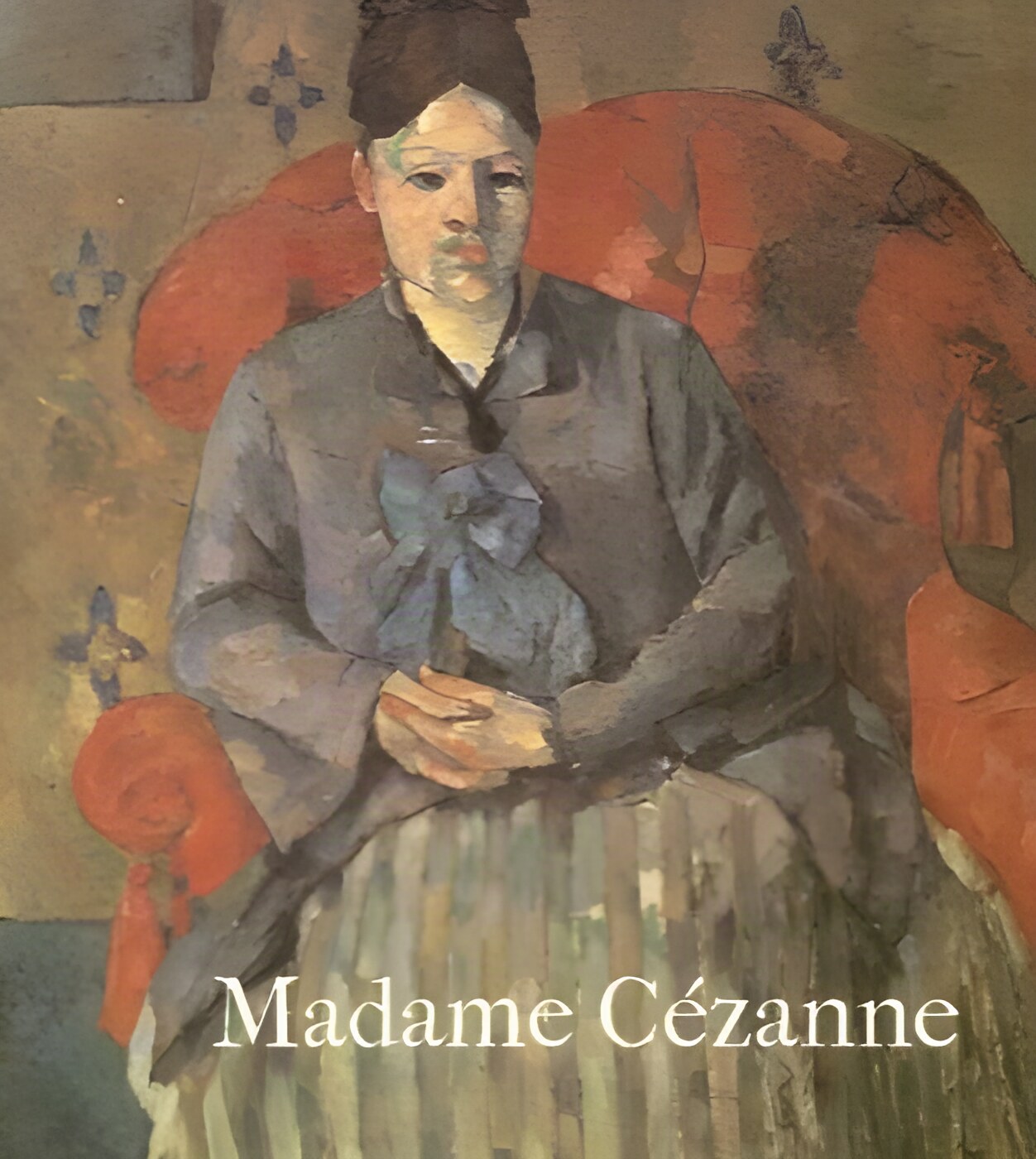
Hardcover. NY, Metropolitan Museum of Art, 1st, 2014, Book: Very Good, Dust Jacket: Very Good, Hardcover in a bright dust jacket, 240 pages. A new account of Cezanne's complex relationship with his wife, who served as the subject of some of his most iconic portraits. Paul Cezanne's (1839-1906) portraits of Hortense Fiquet (1850-1922), his wife and the subject of some of his iconic portraits, rank among the most powerful of their kind in French modernism. Yet, posterity has not been kind to Madame Cezanne. She was called a distraction, blamed for her husband's "lackluster" landscapes, and disdained for her impenetrable expression in the paintings. The reality is more complex, for while Fiquet may not have been the passion of Cezanne's lifetime, she was a willing accomplice, as model, mother of his only son, and unwavering partner against all odds. Still in publisher's shrinkwrap.
Hardcover. NY, St. Martin's Press, 1st, 2023, Book: Very Good, Dust Jacket: Very Good, Hardcover in a bright, unclipped dust jacket. 330 pages, b&w illustrations. Paris in the 1920s was bursting with talent in the worlds of art, design and literature. The city was at the forefront of everything new and exciting; there was no censorship; life and love were there for the taking. At its center was the gorgeous, seductive English socialite Nancy Cunard, scion of the famous shipping line. Her lovers were legion, but this book focuses on five of the most significant and a lifelong friendship. Her affairs with acclaimed writers Ezra Pound, Aldous Huxley, Michael Arlen and Louis Aragon were passionate and tempestuous, as was her romance with black jazz pianist Henry Crowder. Her friendship with the famous Irish novelist George Moore, her mother's lover and a man falsely rumored to be Nancy's father, was the longest-lasting of her life. Cunard's early years were ones of great wealth but also emotional deprivation. Her mother Lady Cunard, the American heiress Maud Alice Burke (who later changed her name to Emerald) became a reigning London hostess; Nancy, from an early age, was given to promiscuity and heavy drinking and preferred a life in the arts to one in the social sphere into which she had been born. Highly intelligent, a gifted poet and widely read, she founded a small press that published Samuel Beckett among others. A muse to many, she was also a courageous crusader against racism and fascism. She left Paris in 1933, at the end of its most glittering years and remained unafraid to live life on the edge until her death in 1965. Remainder dot top edge otherwise clean.
Hardcover. Penn State Press, 1st, 2012, Book: Very Good, Dust Jacket: Very Good, Hardcover, 324 pages. The name of the architect Victor Baltard is inseparable from the Halles Centrales of Paris, the complex of iron-and-glass pavilions built between 1854 and 1874 in the historic heart of the city. Making Modern Paris is the only comprehensive study to address systematically not only the role Baltard played in the markets' design and construction but also how the markets relate to the rest of Baltard's work and professional practice. Christopher Curtis Mead interprets the Central Markets as a cogent expression of Baltard's professional experience as he adjusted his academic training to new criteria of municipal administration, urban planning, and building technology. Considering his entire career over the three decades he worked for the Prefecture of the Seine, this investigation of how architectural and urban practice came together in Baltard's work offers a case study of the historical process that produced modern Paris between 1840 and 1870.
Hardcover. NY, William Morrow, 1st, 1970, Book: Very Good, Dust Jacket: Very Good, Hardcover, 350 pages, B&w frontispiece of Houssaye. A condensation of his six-volume Confessions. Entertaining observations of nineteenth century Parisian life, culture and government. Clean copy in a lightly worn dust jacket.
Softcover. New York, Delano Greenidge Editions, 1st, 2000, Book: Very Good, Dust Jacket: None, 104 pages. Softcover. Black and white photographs. Light edgewear to wrappers. May Ray's iconic black and white photographs, originally published in Paris and New York in 1934. Introduction in English with French, German, Spanish, and Italian translations. Includes bibliography.
Hardcover. La Fabrica, 1st, 2009, Book: Very Good, Dust Jacket: Very Good, Like new in publishers shrink-wrap. Hardcover, 391 pages, profusely illustrated. This excellent catalog contributes a wealth of new information, providing a valuable contribution to our understanding of Man Ray. The treasure trove of images and objects collected here is drawn from the large archives of the Man Ray Trust in Long Island, New York, and includes little known early works, documents and objects from his private life, working drawings and sketches for major works as well as innumerable familiar masterpieces.
Hardcover. NY, Whittlesey House, 4th pr., 1950, Book: Very Good, Dust Jacket: Very Good, Hardcover with a bright dust jacket that's price-clipped. 184 pages illustrated by Lee Townsend. Another story of Toby Clark and his Shetland Pony on a New England Farm. Clean copy.
NY, Abrams, 1st, 1988, Book: Very Good, Dust Jacket: Very Good, Hardcover, 120 pages, 93 b&w plates. This volume is a retrospective of the work of famed French photographer Marc Riboud. Photographs from Paris, China, Vietnam, and the Middle East are included. Printed in rich duotone, spanning the years from the early 1950s to the late 1980s. Clean, in a bright dust jacket.
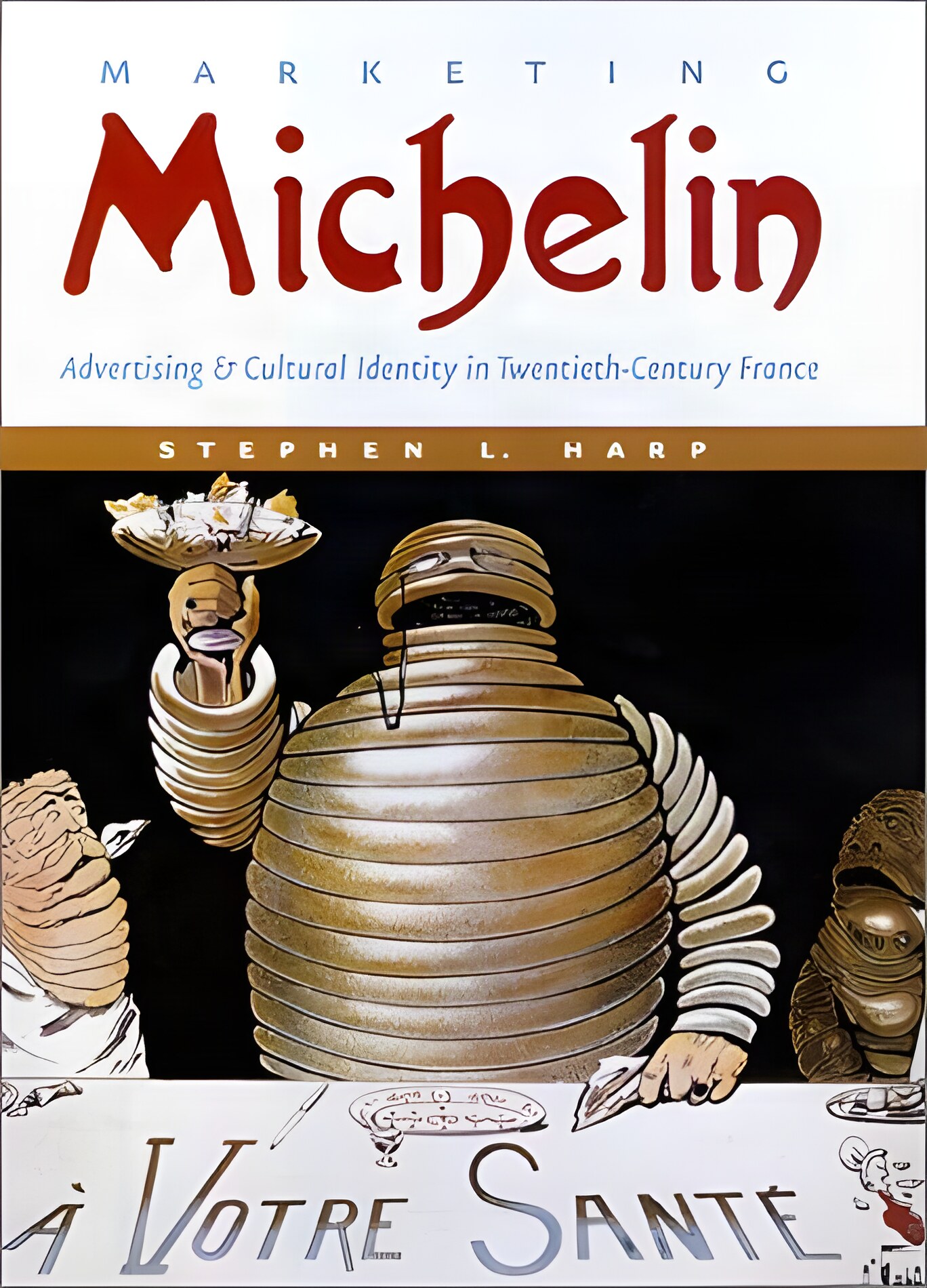
Hardcover. Baltimore, Johns Hopkins University Press, 1st, 2001, Book: Very Good, Dust Jacket: Very Good, Hardcover in a bright dust jacket, 356 pages. One of the world's largest tyre makers and an international corporation with interests in countries around the world, Michelin is also a uniquely French company, one that throughout its history has closely identified itself with the country's people and culture. In the process, it has helped shape the self-image of 20th-century France. This volume offers a provocative history of the company and its innovative advertising campaigns between 1898, when Bibendum - the company's iconic "Michelin Man" - was first introduced, to 1940, when France fell to the Nazis and the company's top executive, Edouard Michelin, died. Both events indelibly changed the company and the national context in which it operated. Clean copy.
Hardcover. New York, Aperture/SADEV, 1st, 1986, Book: Very Good, Dust Jacket: Very Good, Hardcover, 104 pages, b&w photographs, small format catalogue with extensive notes. A fine copy in the illustrated dust jacket. Bridges made aerial photographs of the earthworks in Peru, Yucatan and Chiapas, and in the U.S. in California, Arizona, New Mexico, Mississippi, South Dakota, as well as France and England. Preface by Haven O'More. Essays by Maria Reiche, Charles Gallenkamp, Lucy Lippard, Keith Critchlow. Clean, bright in an unclipped dust jacket.



 "London War Notes 1939-1945by: Mollie Panter Downes")
 "Looking for Orlando by: Brown, Frances Williams")
 "LOUIS XIV SA COUR ET LE REGENT- tome I onlyby: ANQUETIL Pierre Louis")




 "Louise Dahl-Wolfe: A Photographer's Scrapbookby: Louise Dahl-Wolfe")
 "Lucky Cat, Theby: Lockridge, Frances and Richard")


 "Ludmila Tcherina: Trag")


 "Luis Bunuel: Chimera 1900-1983 (Directors)by: Krohn, Bill (Editor)")
 "LURE OF THE RIVIERA, THEby: Gostling, Frances M.")



 "Making Modern Paris: Victor Baltard's Central Markets and the Urban Practice of Architecture (Buildings, Landscapes, and Societies) by: Mead, Christopher Curtis")
 "Man About Paris: the Confessions of Arsene Houssaye by: Knepler, Henry (Translated And Edited by)")
 "Man Ray, Paris Photographs 1920-34by: Ray, Man")
 "Man Ray: Despreocupado Pero No Indiferente / Unconcerned But Not Indifferent (English and Spanish Edition)by: Jacob, John P. and Noriko Fuku")

 "Marc Riboud: Photographs at Home and Abroad by: Riboud Marc")
 "Markings: Aerial Views of Sacred Landscapesby: Bridges, Marilyn")