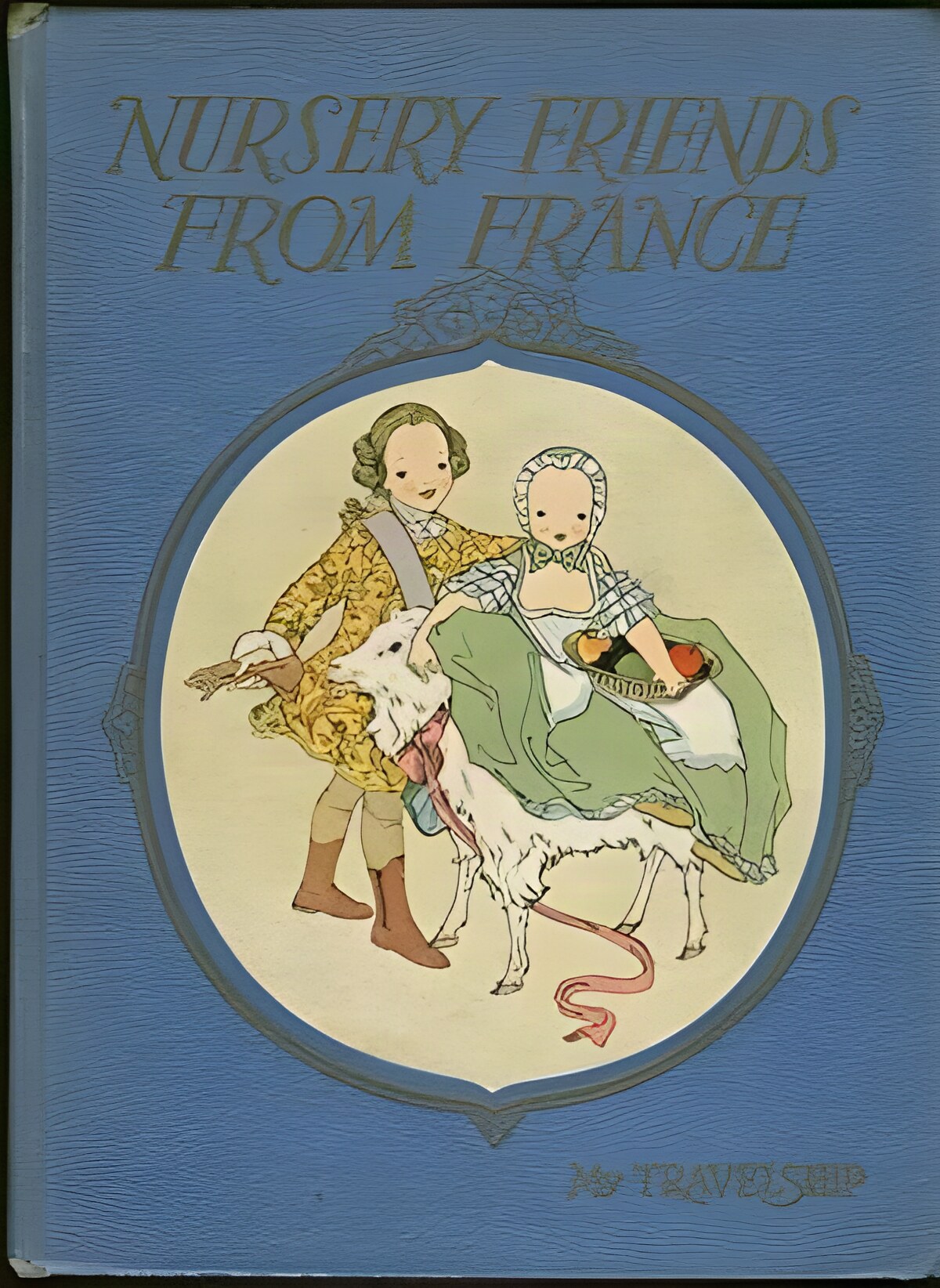
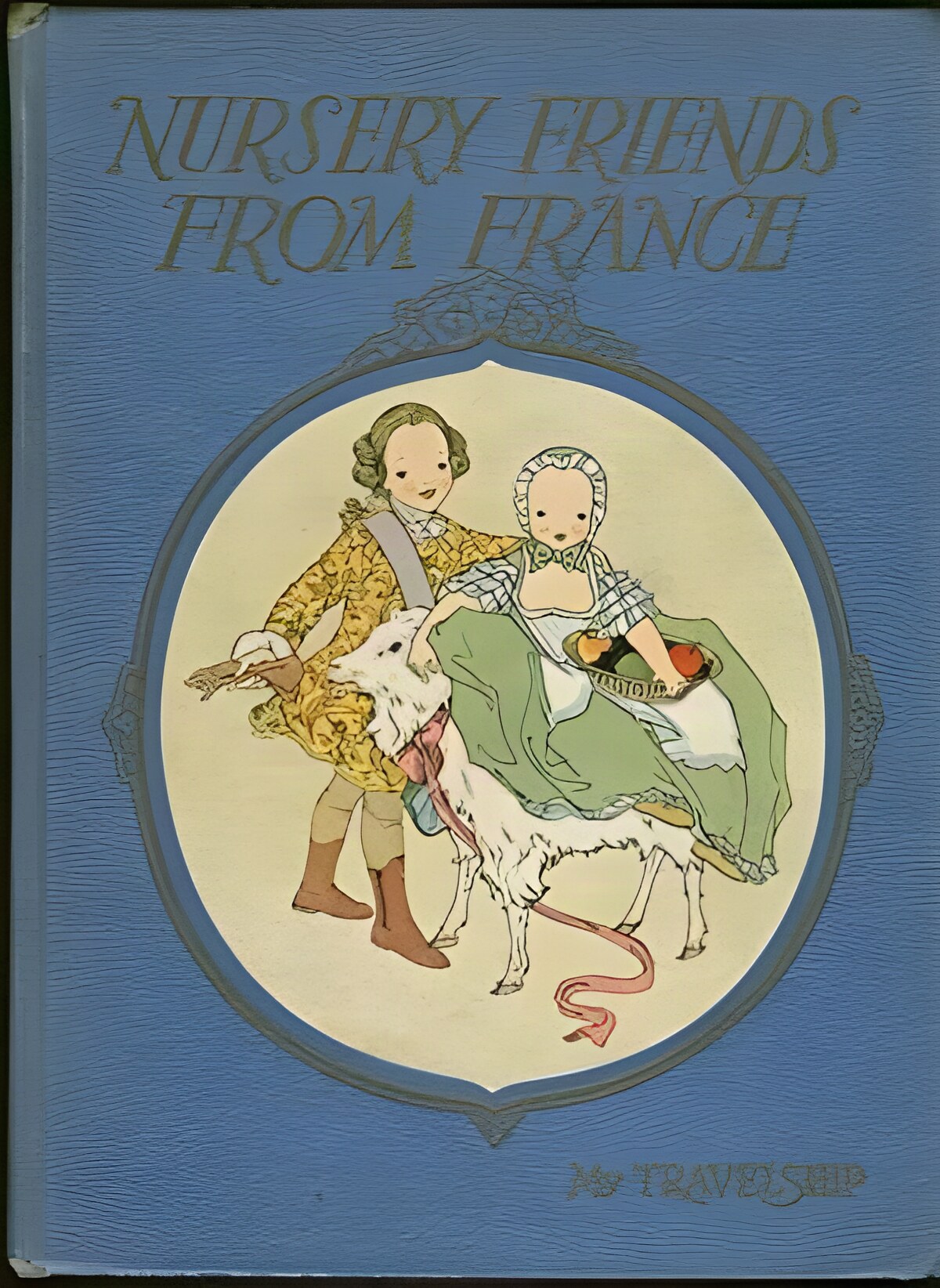
Hardcover. Chicago, Books House for Children, 2nd pr., 1927, Book: Very Good, Light blue textured covers with gilt titles to front and spine, set-in circular color illustrated plate with gilt embossed border, decorated endpapers, profusely illustrated with lovely color plates by Maud and Miska Petersham. Pages crisp and unmarked; a lovely collection of nursery rhymes. Illustrated title page. Each leaf with a color illustration. Part of the My Travelship series. First published in 1925, this is the 1927 reprint.
Hardcover. Chicago, Books House for Children, 28th pr., 1950, Book: Very Good, Light blue textured covers with gilt titles to front and spine, set-in circular color illustrated plate with gilt embossed border, decorated endpapers, profusely illustrated with lovely color plates by Maud and Miska Petersham. Light soiling and edgewewar to covers, pages crisp and unmarked; a lovely collection of nursery rhymes.
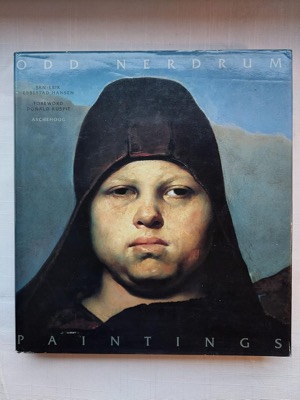
Hardcover. Oslo, Aschehoug & Co., 2nd Ed., 1996, Book: Very Good, Dust Jacket: Good, Large hardcover in a bright dust jacket with light edgewear. Foreword by Donald Kuspit. Illustrated throughout in color with reproductions of the paintings plus many close-up details. 11" square, 346 pages with approximately 130 color and 65 b&w illustrations. Translated by Francesca M. Nichols. Old Master Existensialism: Odd Nerdrum's Paintings: Nerdrum paints isolated figures ensconced in their isolation. His style is at once completely modern with aspects of the surreal subtlety evident, yet he is reminiscent of the old masters for his superb draftsmanship and the dark earth colors he uses. There are 3 short tears repairs to rear dj panel, taped on reverse. Otherwise a bright, clean copy. DOMESTIC SHIPPING ONLY.
Hardcover. Paris, Garnier Freres, reprint, nd, Book: Very Good, Dust Jacket: None, French text, 589 pages with 4 color gravures by M. E. Bayard bound in 1/2 leather. Calf spine with gilt decorations and title label, raised bands, top edge gilt, marbled boards and end papers.
Softcover. Paris, Hachette Livre, reprint, nd, Book: Very Good, Dust Jacket: None, Softcover, 1084 pages, text in FRENCH. Clean, fresh copy. M. Pierre Bayle was a French philosopher, author, and lexicographer. Voltaire, in the prelude to his Poeme sur le desastre de Lisbonne, calls Bayle "le plus grand dialecticien qui ait jamais ecrit": the greatest dialectician to have ever written.
NY, The Press of the American Institute of Architects., 1st, 1925, Book: Good, Dust Jacket: None, Hardcover. Complete with 24 watercolor prints and 44 plates. Loosely bound in case with cloth ties which has cracking along spine. Interior very good. Number 677 of 1000. Elephant folio 23" tall. "A Series of Historical Examples from Roman Times to the End of the XVIIIth Century." An appreciation of historic French infrastructure that survived WWI. Beautiful large color reproductions of original watercolors of bridges by Pierre Vignal; 35 black and white drawings by Louis C. Rosenberg & Samuel Chamberlain; 44 measured drawings, photographs, diagrams, and maps. DUE TO SIZE & WEIGHT, DOMESTIC SHIPPING ONLY.
Hardcover. New Haven CT, Yale University Press, 1st, 2018, Book: Very Good, Dust Jacket: None, Hardcover, 156 pages, no dj issued. An insightful new look at two renowned photographers, their interconnected legacies, and the vital documents of urban transformation that they created. In this comprehensive study, Kevin Moore examines the relationship between Eugene Atget (1857-1927) and Berenice Abbott (1898-1991) and the nuances of their individual photographic projects. Abbott and Atget met in Man Ray's Paris studio in the early 1920s. Atget, then in his sixties, was obsessively recording the streets, gardens, and courtyards of the 19th-century city--old Paris--as modernization transformed it. Abbott acquired much of Atget's work after his death and was a tireless advocate for its value. She later relocated to New York and emulated Atget in her systematic documentation of that city, culminating in the publication of the project Changing New York.
Hardcover. New Haven CT, Yale University Press, 1st, 2018, Book: Very Good, Dust Jacket: None, Hardcover, 156 pages, no dj issued. An insightful new look at two renowned photographers, their interconnected legacies, and the vital documents of urban transformation that they created. In this comprehensive study, Kevin Moore examines the relationship between Eugene Atget (1857-1927) and Berenice Abbott (1898-1991) and the nuances of their individual photographic projects. Abbott and Atget met in Man Ray's Paris studio in the early 1920s. Atget, then in his sixties, was obsessively recording the streets, gardens, and courtyards of the 19th-century city--old Paris--as modernization transformed it. Abbott acquired much of Atget's work after his death and was a tireless advocate for its value. She later relocated to New York and emulated Atget in her systematic documentation of that city, culminating in the publication of the project Changing New York.
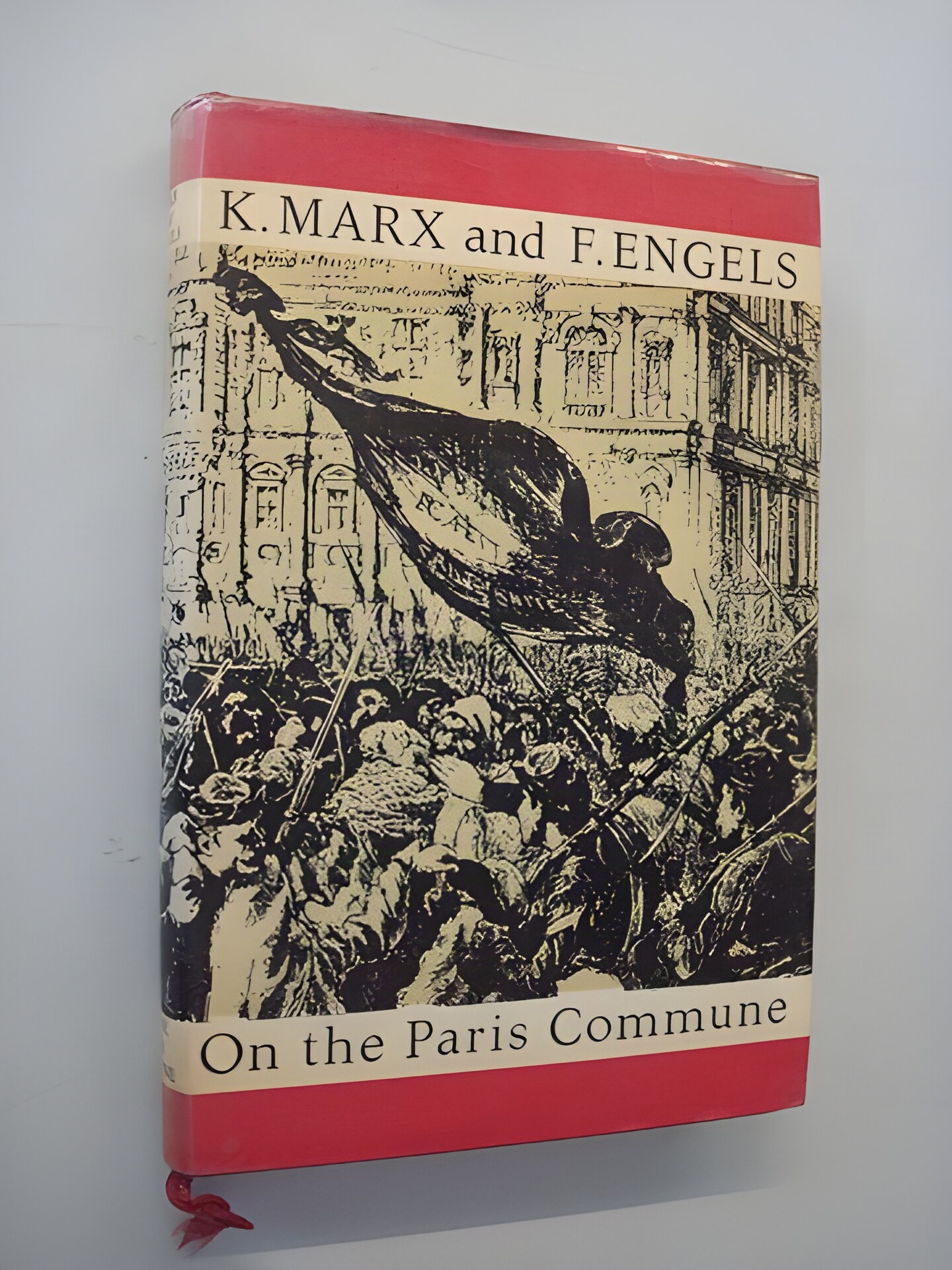
Hardcover. Moscow, Progress Publishers, 1st, 1971, Book: Very Good, Dust Jacket: Very Good, Hardcover in a bright dust jacket, 357 pages. "On March 18, 1871, the workers of Paris expelled the bourgeois rulers of the city and took power into their own hands , a shining achievement never to be forgotten. Ten days later, on March 28, they set up the Paris Commune, the world's first proletarian state. It was of an entirely new type, being governed by the people and for the people, with all its social and political measures taken in the interest of the working people, the working class above all." -from the Preface. First printing of this selection, published for the centenary of the Commune. With ribbon bookmark. Clean copy.
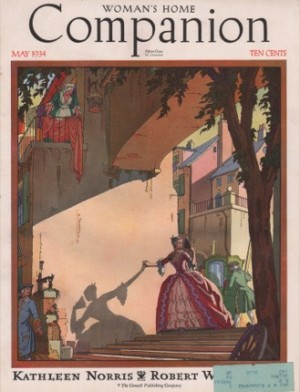
1934, Book: Very Good, Color art of French couple meeting in olden times. Watercolor art by T. M. Cleland. 10 X 13", small label. PLEASE NOTE: The image shown is a scan of the actual product you are purchasing. What you see is what you get. The sheet may have some imperfections beyond the cropped area shown. You are buying THIS PAGE ONLY- not the entire magazine. Your order will be placed carefully between stiff paper and an acetate overlay, then packed in a rigid cardboard sleeve to prevent bending.
Hardcover. Cambridge MA, Harvard University Press, 1st, 2018, Book: Very Good, Dust Jacket: Very Good, Hardcover in a bright dust jacket, 404 pages. The Napoleonic wars did not end with Waterloo. That famous battle was just the beginning of a long, complex transition to peace. After a massive invasion of France by more than a million soldiers from across Europe, the Allied powers insisted on a long-term occupation of the country to guarantee that the defeated nation rebuild itself and pay substantial reparations to its conquerors. Our Friends the Enemies provides the first comprehensive history of the post-Napoleonic occupation of France and its innovative approach to peacemaking. From 1815 to 1818, a multinational force of 150,000 men under the command of the Duke of Wellington occupied northeastern France. From military, political, and cultural perspectives, Christine Haynes reconstructs the experience of the occupiers and the occupied in Paris and across the French countryside. The occupation involved some violence, but it also promoted considerable exchange and reconciliation between the French and their former enemies. Clean copy.
Hardcover. NY, Lothrop, Lee & Shepard, 1st, 1942, Book: Very Good, Dust Jacket: Good, Hardcover, 64 pages illustrated by Marion Downer. "Learn to make animals, flowers, birds, people and all sorts of amusing objects by tying knots in a handkerchief." Dust jacket is edgeworn, book is bright and clean.
Hardcover. NY, Assouline, 1st, 1998, Book: Very Good, Dust Jacket: Very Good, Hardcover, 80 pages. Photos from the Rome-based hunters of famous faces and celebrities in the 1960s who inspired Fellini's LA Dolce Vita.
Softcover. NY, Sotheby's, 1st, 1997, Book: Very Good, Dust Jacket: None, Softcover, 131 lots, illustrated in color and b&w. Light wear to edges and spine, else in very nice condition.
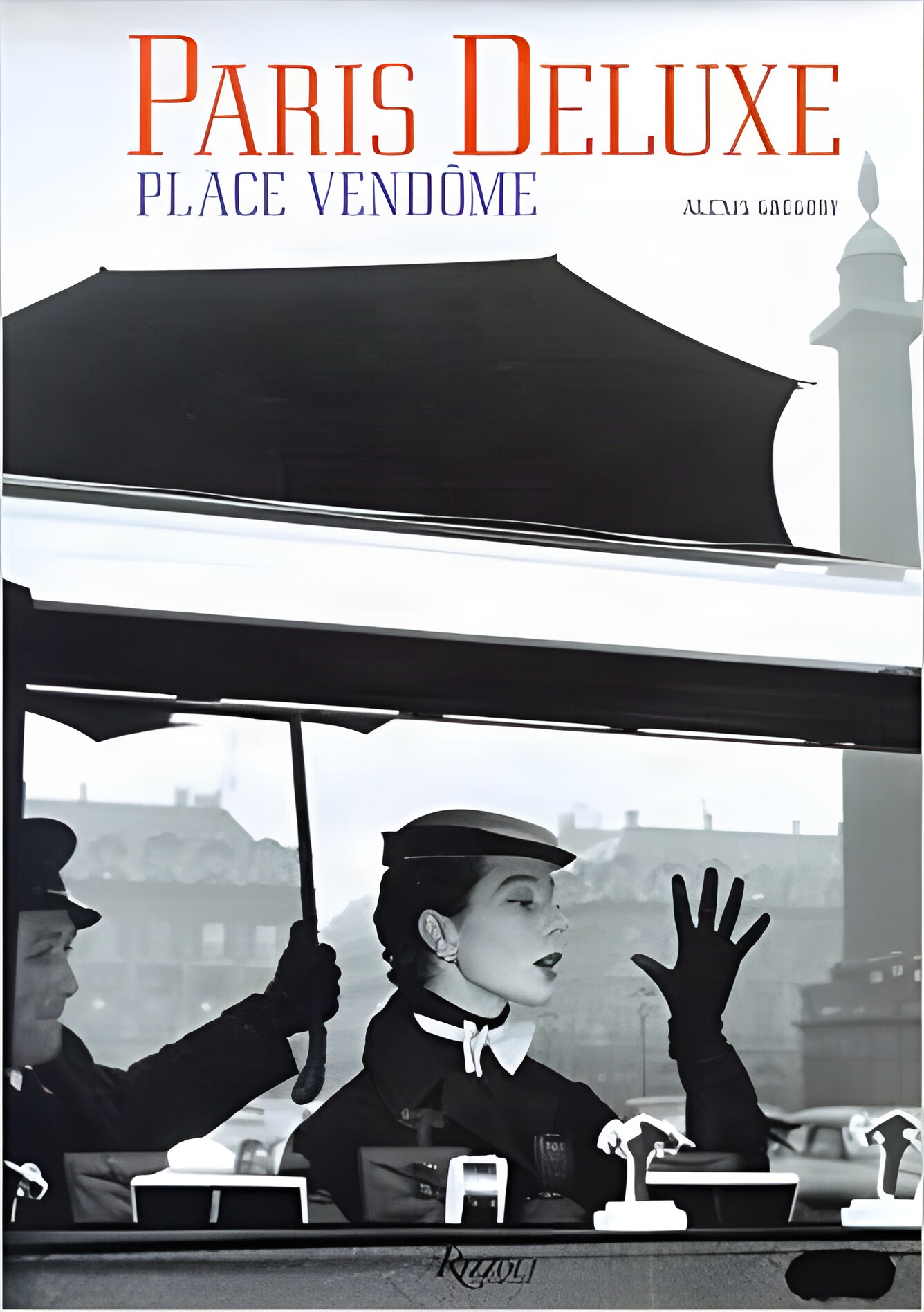
Hardcover. NY, Rizzoli, 1st, 1997, Book: Very Good, Dust Jacket: Very Good, Hardcover, 240 pages. In text and photographs, Paris Deluxe traces the history of the Place Vendome, from the square's beginnings as a high-risk property speculation, to its life in the twentieth century as Paris's center of fashion, jewelry, high finance, and art, a playground for international society that converges at the Paris Ritz, undoubtedly still the most elegant, expensive, and comfortable hotel in the world. The cast of extraordinary personalities who have left their marks on the square covers the spectrum from fashion and jewelry-- names like Coco Chanel, Elsa Schiaparelli, Frederic Worth, Cartier, Boucheron-- to financiers J.P. Morgan and John Law, and every prominent name in art and high society-- Edward, Prince of Wales, the Vanderbilts, Baroness Guy de Rothschild, Lillie Langtry, Rene Lalique and the Crozats, whose art collection was bought by Diderot for Catherine the Great.
Hardcover. NY, Holt Rinehart & Winston, 1st, 1981, Book: Very Good, Dust Jacket: Very Good, Hardcover in a bright dust jacket with minor edgewear, 294 pages. Depicts the German occupation of Paris during World War II from the perspectives of both the defeated Parisians and the victorius Germans, accompanied by 116 contemporary photographs in b&w, some color. Clean copy.
Hardcover. New York, Flammarion, 1st, 2014, Book: Very Good, Dust Jacket: Very Good, Hardcover, 304 pages. This homage to Paris by the great Magnum photographers reveals a multifaceted portrait of the city's effervescent character in 350 photographs. By documenting the everyday workings of the city, Magnum's photographers capture the essence of Parisian life.
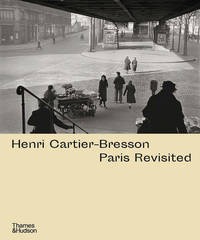
Hardcover. NY, Thames & Hudson, 1st, 2021, Book: Very Good, Dust Jacket: None, Hardcover, pictorial boards, 256 pages. Henri Cartier-Bresson was 'the eye of the 20th century' and one of the world's most acclaimed photographers. Paris was his home, on and off, for most of his life (1908-2004). The photographs he took of the city and its people manage to be both dreamlike and free of affectation. Here are around 160 photographs taken over a more than fifty-year career. Mostly in black and white, this selection reveals the strong influence on Cartier-Bresson of pioneering documentary photographer Eugene Atget (1857-1927), and the clear visual links with Surrealism that infused Cartier-Bresson's early pictures. After an apprenticeship with Cubist painter Andre Lhote, in 1932 Cartier-Bresson bought his first Leica, a small portable camera that allowed him to capture movement and the rhythms of daily life in Paris. Cartier-Bresson observed from close quarters the Liberation in August 1944 and the civil disturbances of May 1968. In between he also succeeded in capturing the faces of Parisians in their natural habitat, celebrated artists and writers and citizens alike. Remainder line to bottom edge, otherwise clean. DUE TO WEIGHT, DOMESTIC SHIPPING ONLY.
Hardcover. Paris, Editions de Lodi, 1st, 2001, Book: Very Good, Dust Jacket: Very Good, Hardcover, glossy boards in a matching bright dust jacket. Large format, 484 pages, FRENCH TEXT. A collection of over 500 historical photos of old Paris printed in sepia tone. Around 1832 Parisian-born Charles-Francois Bossu (1813-1879) shed his unfortunate last name (bossu means hunchback in French) and adopted the pseudonym Marville. After achieving moderate success as an illustrator of books and magazines, Marville shifted course in 1850 and took up photography, a medium that had been introduced 11 years earlier. His poetic urban views, detailed architectural studies, and picturesque landscapes quickly garnered praise.By the end of the 1850s, Marville had established a reputation as an accomplished and versatile photographer. From 1862, as official photographer for the city of Paris, he documented aspects of the radical modernization program that had been launched by Emperor Napoleon III and his chief urban planner, Baron Georges-Eugene Haussmann. In this capacity, Marville photographed the city's oldest quarters, and especially the narrow, winding streets slated for demolition. Even as he recorded the disappearance of Old Paris, Marville turned his camera on the new city that had begun to emerge. Many of his photographs celebrate its glamour and comforts, while other views of the city's desolate outskirts attest to the unsettling social and physical changes wrought by rapid modernization. Taken as a whole, Marville's photographs of Paris stand as one of the earliest and most powerful explorations of urban transformation on a grand scale. Clean, bright copy.
Hardcover. NY, Vendome Press, 1st, 1989, Book: Very Good, Dust Jacket: Very Good, Hardcover in a bright dust jacket, 208 pages. Best-selling French author Perrault provides moving personal reminiscences of his childhood in occupied Paris. The brief but eloquent narrative is accompanied by hundreds of previously unpublished photos from French and German archives, collected and cataloged by Parisian art historian Azema. Together, text and photos present a graphic portrait of everyday life, recording daily human struggles to find food and fuel, the psychological warfare waged by the occupiers, and the methods of German economic exploitation. As artists, the authors place special emphasis on the arts under the occupation and document the heroism of the writers' resistance. In sum, they show how Paris "kept alive a sense of the enemy."
Hardcover. New York , Mark Batty Publisher, 1st, 2005, Book: Very Good, Dust Jacket: Very Good, Hardcover in a bright dust jacket. 192 pages. Color photos of the Paris Metro features signs, graffitti, artworks, architecture. The text is in English.
Softcover. Koln GR, Taschen, reprint, 2004, Book: Very Good, Dust Jacket: None, Softcover, 240 pages, 233 b/w illustrations. This book is a photographers' homage to Paris's dramatic romantic and historic moments as well as everyday scenes. Themes include the street; parks & gardens; loves; bistros; Paisiennes; kids; on the move; insurrectionary Paris; the popular front; occupation - liberation. Clean copy.
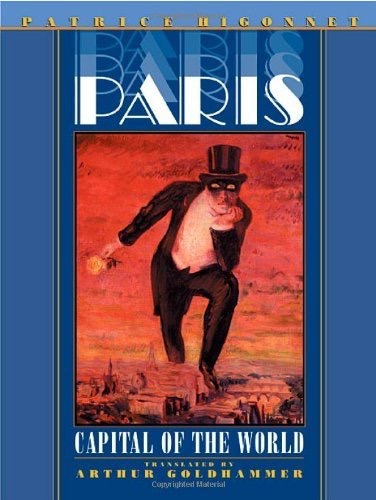
Hardcover. Cambridge MA, Harvard/Belknap Press, 1st, 2002, Book: Very Good, Dust Jacket: Very Good, Hardcover in a bright price-clipped dust jacket, 493 pages, illustrated in b&w and color. In an original and evocative journey through modern Paris from the mid-eighteenth century to World War II, Patrice Higonnet offers a delightful cultural portrait of a multifaceted, continually changing city. In examining the myths and counter-myths of Paris that have been created and re-created over time, Higonnet reveals a magical urban alchemy in which each era absorbs the myths and perceptions of Paris past, adapts them to the cultural imperatives of its own time, and feeds them back into the city, creating a new environment. Clean copy.



 "Old Bridges of France by: Emerson William and Georges Gromort")
 "Old Homes of Roxbury Township - Third in a Series of Books on the History of Roxbury Townshipby: Seraly, Ruthann/Frances Lyman")
 "Old Paris and Changing New York: Photographs by Eugene Atget and Berenice Abbottby: Kevin Moore")
 "Old Paris and Changing New York: Photographs by Eugene Atget and Berenice Abbottby: Kevin Moore")

 "Out Of a Handkerchief by: Jacobs, Frances E.")


 "Paparazzi: The Early Yearsby: Taroni, Francesca")
 "Paris in the Third Reich: A History of the German Occupation, 1940-1944 by: David Pryce-Jones")
 "Paris Magnumby: Hazan, Eric")
 "Paris sens dessus-dessous (Marville photographies 1852-1870)by: Mellot, Philippe")
 "Paris Under the Occupationby: Gilles Perrault")
 "Paris Undergroundby: Archer, Caroline")