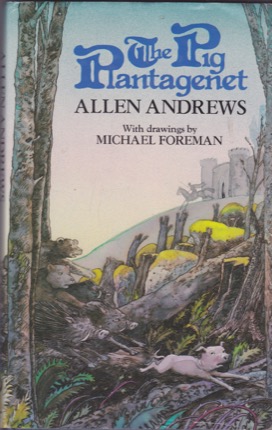
Hardcover. Chicago, Art Institute of Chicago, 1st, 2005, Book: Very Good, Dust Jacket: None, Hardcover, 100 pages. No dust jacket issued. Eugene Atget, Jacques Henri Lartigue, Andre Kertesz, Brassai, Henri Cartier- Bresson, Robert Doisneau? -some of the greatest photographers of Paris? were relatively unknown when they began their most innovative work. Not yet burdened with conventional career expectations, they found the city the perfect environment in which to invent and develop an entirely new approach to conceiving the photographic image. In the 1920s and 1930s, the generation of photographers after Atget responded not only to the physical city itself but also to a new sensibility of time as a spontaneous act. Masterworks by these now-famous visionaries of the medium are featured in this elegant book of photographs of Paris from the 1850s to the 1950s, drawn from the remarkable collection of the Art Institute of Chicago. Clean copy.
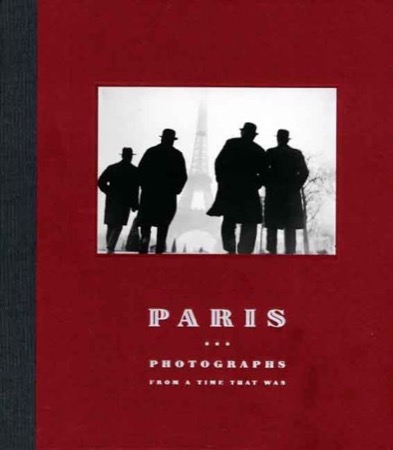
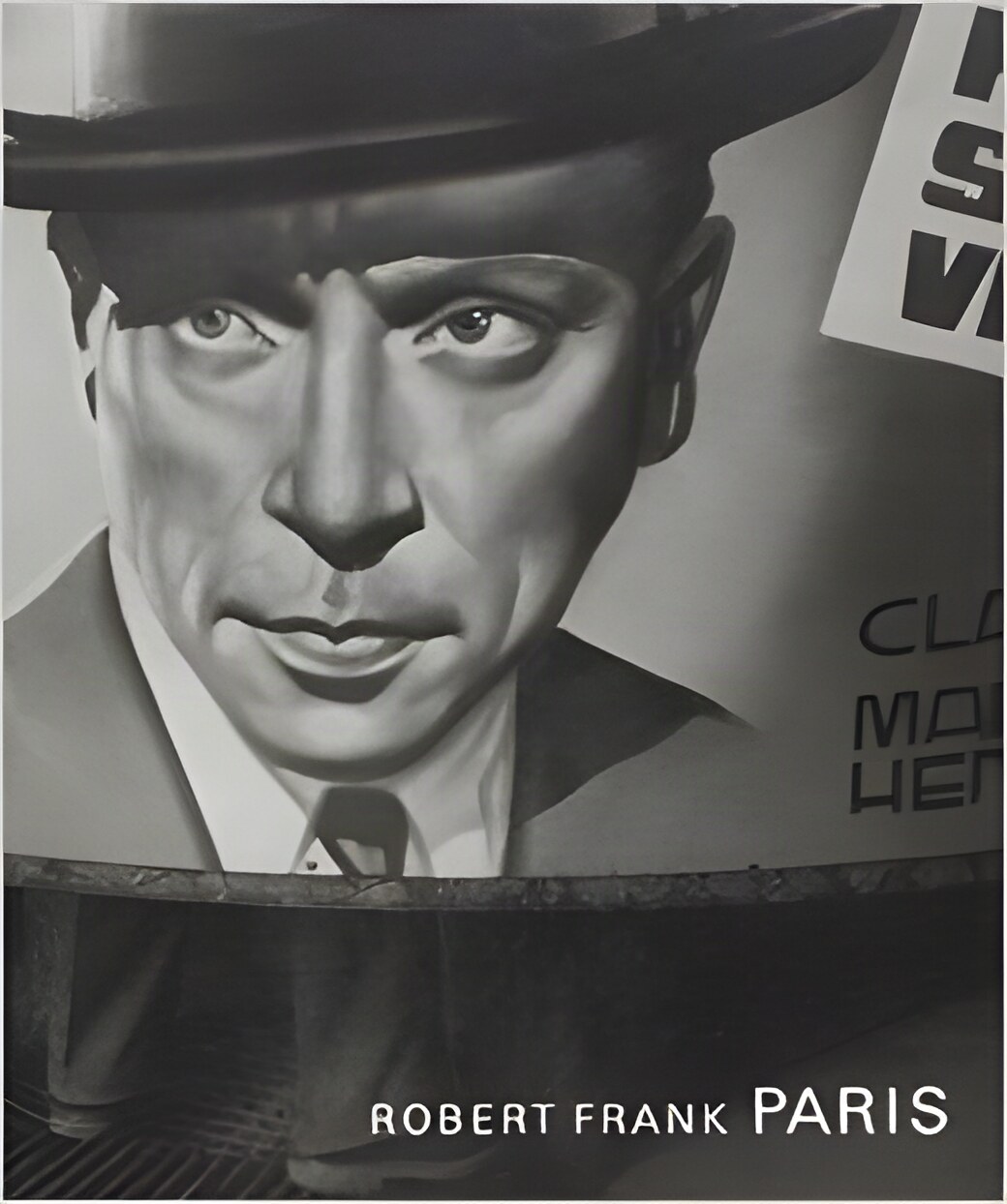
Softcover. Steidl, 2008, 2008, Book: Very Good, Dust Jacket: Very Good, Softcover. Like new in publisher's shrink-wrap. The publication of Paris marks the first time that the significant body of photographs which Robert Frank made in Paris in the early 1950s have been brought together in a single book. Having left Switzerland in 1924, this 1951 trip to France was only Frank's second return to Europe after he had settled in New York City in 1947, and some of the images he made during that visit have become iconic in the history of the medium. The 80 photographs reproduced here, which were selected by Frank and editor Ute Eskildsen, suggest that Frank's experience of the "new world" had sharpened his eye for European urbanism. He saw the city's streets as a stage for human activity and focused particularly on the flower sellers. His work clearly references Atget and invokes the tradition of the flaneur.
Hardcover. NY, Doubleday, 1st, 2019, Book: Very Good, Dust Jacket: Very Good, Hardcover in a bright dust jacket, 347 pages. In 1971 Deirdre Bair was a journalist and recently minted Ph.D. who managed to secure access to Nobel Prize-winning author Samuel Beckett. He agreed that she could be his biographer despite her never having written--or even read--a biography before. The next seven years comprised of intimate conversations, intercontinental research, and peculiar cat-and-mouse games. Battling an elusive Beckett and a string of jealous, misogynistic male writers, Bair persevered. She wrote Samuel Beckett: A Biography, which went on to win the National Book Award and propel Deirdre to her next subject: Simone de Beauvoir. The catch? De Beauvoir and Beckett despised each other--and lived essentially on the same street. Bair learned that what works in terms of process for one biography rarely applies to the next. Her seven-year relationship with the domineering and difficult de Beauvoir required a radical change in approach, yielding another groundbreaking literary profile and influencing Bair's own feminist beliefs. Parisian Lives draws on Bair's extensive notes from the period, including never-before-told anecdotes. This gripping memoir is full of personality and warmth and gives us an entirely new window on the all-too-human side of these legendary thinkers.
Softcover. Monte Carlo, Andre Sauret, 1st wraps, 1954, Book: Very Good, Dust Jacket: None, Softcover, illustrated card covers, French text, 13 color plates, b&w plates. Stamped #724 of 2,000 copies. Previous owner's stamp front end paper. Otherwise clean.
Hardcover. New York , Museum of Modern Art , 1st, 1988, Book: Very Good, Dust Jacket: Very Good, 151 pages, Hardcover with dust jacket. B&w illustrations. Unclipped dust jacket with minor edgewear.
Hardcover. NY, Aperture, 1st, 1994, Book: Very Good, Dust Jacket: Very Good, Hardcover, 143 pages. Illustrated with 113 black & white photographs. Clean, bright copy. An Intimate Portrait by Catherine Duncan. Critical Essay by Ute Eskildsen. From 1950 to 1976 Paul Strand embarked on a series of photographic journeys through France, Italy, the Hebrides, Egypt, Morocco, Romania, and Ghana. This volume is devoted to those photographs, made by Strand in the last twenty-six years of his career.
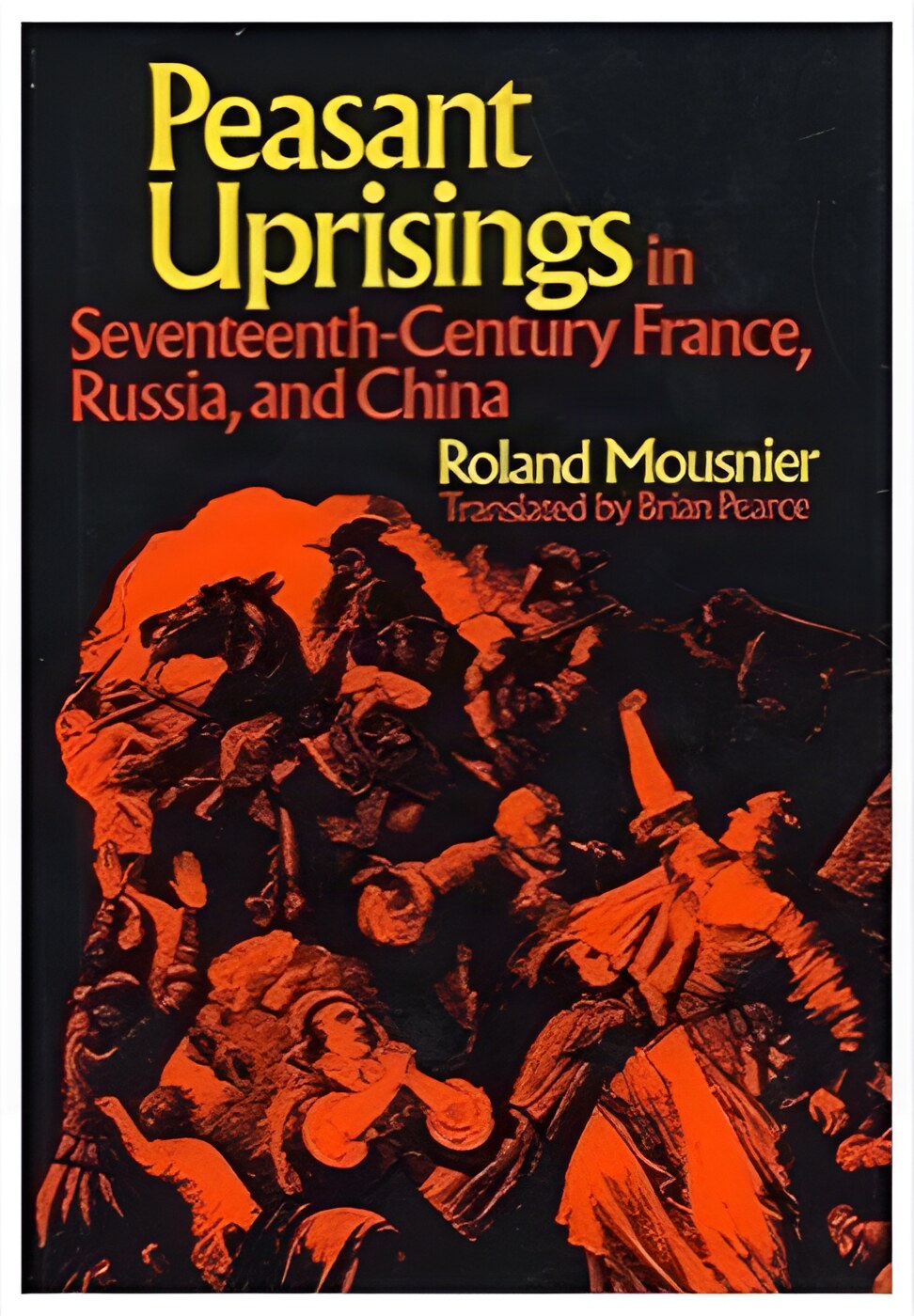
Hardcover. NY, Harper & Row, 1st US, 1970, Book: Very Good, Dust Jacket: Very Good, Hardcover in a lightly worn, price-clipped dust jacket, 358 pages. A close analysis of some of the typical peasant uprisings of the seventeenth century. The goal of the movements in France and China was a return to an older and more traditional society, rather than a profound transformation of the social structure. In Russia, however, the peasants attempted to overturn the rigid order of a two-class structure and replace it with a more democratic society. Clean copy.
Hardcover. London, Bantam Press, 1st, 1994, Book: Very Good, Dust Jacket: Very Good, Hardcover in a bright, unclipped dust jacket. SIGNED BY FYFIELD on title page. Sarah Fortune, first encountered in "Shadows on the Mirror", is sent to Merton-on-Sea in Norfolk to sort out the inheritance problems of the small town's premier family. But she discovers much more than just an ambiguously-worded will - and also has to confront the pain of her own past. Clean copy.
Hardcover. NY, Rizzoli, 1st, 2006, Book: Very Good, Dust Jacket: Very Good, Hardcover, 384 pages, profusely illustrated in color and b&w. This thought-provoking volume transports readers to France of the eighteenth, nineteenth, and twentieth centuries, beginning with Napoleon's love of perfume and the erotic importance he attached to it, through the lore and symbolism fragrance enjoyed in eighteenth and nineteenth-century Europe. By the early twentieth century, perfume's place as one of France's most important luxury industries was recognized and celebrated, and timeless fragrances--such as Chanel No. 5, Shalimar, Arpeges, and Joy--were launched. The distinctive bottles for these new essences and the art movements that inspired their design are detailed throughout the book, as are paintings, poetry, and literature that reveal the power of perfume and its ability to recall the past and evoke sensuality. According to nineteenth-century perfumer Eugene Rimmel, "the history of perfume is, in some manner, the history of civilization." Through fascinating text accompanied by gorgeous imagery, including packaging, labels, and advertisements, Perfume: Joy, Scandal, Sin explores perfume's impact on history, culture, society, art, and attitudes.
Hardcover. Nieuwkoop , B. de Graaf, 1st, 1964, Book: Very Good, Dust Jacket: None, Hardcover, dark green cloth covers with gilt lettering, 159 pages with b&w diagrams and illustrations. Subjects include: The base of perspective illussions, third dimension, euclid, anamorphoses, the concave surface of the retina, Schickhardt's problem, eccentric positions of the observer's eye, rotations of the eyeball, visual size, pleudo-perspective, axial construction, rebirth of central perspective, Leon Battista Alberti, Paolo Uccello, the oblique position, Piero della Francesca etc.
Hardcover. Paris, Tchou, 1st, 1966, Book: Very Good, Dust Jacket: None, 253 pages, b&w cartoon drawings by Copi. White cloth covers with black design. A collection of quotes from writers of the Surrealist movement in France. Long preface by Corvin. INSCRIBED BY BOTH AUTHOR AND ILLUSTRATOR (HIS WITH A SKETCH OF A BIRD) to Roger Shattuck, author and chronicler of the period. Publishers complimentary card laid in. Small tan stain to cloth at top of front cover, otherwise very good.
Hardcover. Paris, Maison Alred Mame, 1st thus, 1929, Book: Very Good, Dust Jacket: None, 160 pages, illustrated in color and b&w by JOB, featuring 16 gorgeous color plates. Blue cloth spine, color illustrated boards. French text. Previous owner's signature on front fly leaf, otherwise clean, very good.
Hardcover. Paris, Dorbon-Aine, 1st, n.d., Book: Very Good, Dust Jacket: None, Oblong hardcover, 66 pages. Color Illustrations by Paul Guignebault. FRENCH TEXT. Circa 1920.
Hardcover. Oxford, Clarendon Press, 1st , 1982, Book: Good, Dust Jacket: Good, Hardcover, 284 pages. Previous owner's signature on front fly leaf. Slight foxing to top edge. Dust jacket has price clipped from front flap. Dust jacket also shows minor shelf wear and fading to spine. Otherwise, tight clean copy.
Softcover. Paris, Musee de la Vie Romantique, 1st, 2001, Book: Very Good, Dust Jacket: None, 143 pages. Softcover. A very clean, unmarked copy with only minor edgewear. Black and white photographs throughout. French text.
Softcover. NY, Ziff-Davis Publications,, 1st, 1954, Book: Very Good, Dust Jacket: None, Softcover, magazine format. 250 pages of b&w and color photographs by various photographers from the previous year. Bright, clean copy. Photographers's Index. Among photographers: Garry Winogrand, Cornell Capa, Horace Bristol, Henri Cartier-Bresson, Izis, Angus McDougall, Philippe Halsman, Milton H. Greene, Takamasa Inamura, Ralph Ginzburg, Robert Doisneau, Bruce L. Davidson, Andreas Feininger, Francesco Scavullo, many others.
Hardcover. NY, Farrar Straus & Giroux, 1st US, 2023, Book: Very Good, Dust Jacket: Very Good, Hardcover in a bright, unclipped dust jacket, 588 pages, several color plates. Before Picasso became Picasso-the iconic artist now celebrated as one of France's leading figures-he was constantly surveilled by the French police. Amid political tensions in the spring of 1901, he was flagged as an anarchist by the security services-the first of many entries in an extensive case file. Though he soon emerged as the leader of the cubist avant-garde, and became increasingly wealthy as his reputation grew worldwide, Picasso's art was largely excluded from public collections in France for the next four decades. The genius who conceived Guernica in 1937 as a visceral statement against fascism was even denied French citizenship three years later, on the eve of the Nazi occupation. In a country where the police and the conservative Academie des Beaux-Arts represented two major pillars of the establishment at the time, Picasso faced a triple stigma-as a foreigner, a political radical, and an avant-garde artist. Picasso the Foreigner approaches the artist's career and art from an entirely new angle, making extensive use of fascinating and long-overlooked archival sources. In this groundbreaking narrative, Picasso emerges as an artist ahead of his time not only aesthetically but politically, one who ignored national modes in favor of contemporary cosmopolitan forms. Remainder dot to top edge, otherwise a bright, clean copy.
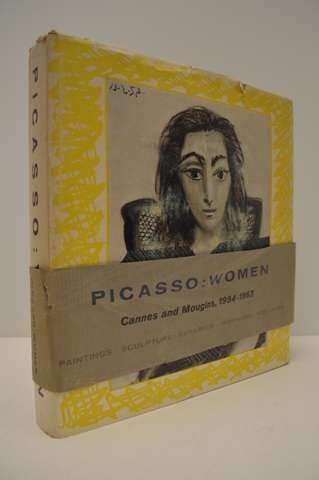
Hardcover. Paris, France / Amsterdam, Editions Cercle D'art / Abrams, 1st, 1967, Book: Very Good, Dust Jacket: Very Good, Hardcover in a bright dust jacket with the gray wrap-around band present. First English language edition, translated from the French by Humphrey Hare. Preface by Douglas Cooper. Thick folio. 11-1/4 in. x 12 in. 199 pages. Profusely illustrated with tipped-in color plate reproductions. (160 color mounted plates & 2 portraits in monochrome (including mounted frontis.). Sturdy and handsome joint publication with oatmeal cloth lettered with colorful letters by Picasso created specifically for the publication of this book. Clean copy. Due to size and weight, DOMESTIC SHIPPING ONLY.
Hardcover. Akron, OH, Saalfield, 1st thus, 1926, Book: Very Good, Dust Jacket: None, Non-paginated. Hardcover with no dust jacket. Profusely illustrated in b&w by Frances Brundage. A bright, clean copy.
Hardcover. Florence, Italy, Cantini, 1st, 1989, Book: Very Good, Dust Jacket: Very Good, 271 pages. Hardcover with dust jacket in SLIPCASE cover. ITALIAN TEXT. Color pictures. Previous owner's bookplate on end paper, otherwise clean, unmarked copy with only minor wear to dust jacket. Slipcase has some tape repair on bottom edge. Red cloth covers with gilt lettering on spine.
Hardcover. New Haven, Yale University Press, 1st US, 1992, Book: Very Good, Dust Jacket: Very Good, Hardcover, 240 pages, illustrated throughout in full color and b&w. Light edgewear to dust jacket, faint foxing to bottom edge. Clean, tight copy.
Hardcover. NY, Macmillan Company, 1st US, 1969, Book: Very Good, Dust Jacket: Very Good, Hardcover in a bright, unclipped dust jacket, 461 pages. Laval began his career as a socialist, but over time drifted far to the right. Following France's defeat and armistice with Germany in 1940, he served in prominent roles in Philippe Petain's Vichy Regime, first as the vice-president of the Council of Ministers from 11 July 1940 to 13 December 1940, and later as the head of government from 18 April 1942 to 20 August 1944. After the liberation of France in 1944, Laval was arrested by the French government under General Charles de Gaulle. In what was widely regarded as a flawed trial, Laval was found guilty of plotting against the security of the State and collaboration with the enemy, and after a thwarted suicide attempt, he was executed by firing squad. His manifold political activities left a complicated and controversial legacy, resulting in more than a dozen conflicting biographies of him. Name on front fly leaf, otherwise a bright, clean copy.
Hardcover. London, Hutchinson, 1st UK, 1980, Book: Very Good, Dust Jacket: Very Good, Hardcover in a bright dust jacket. 199 pages, illustrated in b&w by Michael Foreman. "Set in medieval France, the hero is - yes - a pig, a small but highly intelligent pig with a little boar blood lurking in his veins . . . When the feudal lords of Pitou decide with the farmers to rid the nearby forest of wild animals, it is Plantagenet (beloved of the farmer's daughter, Adele) who warns his cousin, the wild boar Grondin, of what is afoot . . . "




 "Parisian Lives: Samuel Beckett, Simone de Beauvoir, and Me: A Memoirby: Deirdre Bair")
 "Pascinby: Warnod, Andre")
 "Paul Cezanne: The Basel Sketchbooksby: Gowing, Lawrence")
 "Paul Strand: The World On My Doorstepby: Strand, Paul")
 "Perfectly Pure and Good (SIGNED COPY)by: Fyfield, Frances")
 "Perfume: Joy, Scandal, Sin - A Cultural History of Fragrance from 1750 to the Presentby: Stamelman, Richard")

 "Petite Folie Collectiveby: Corvin, Michel and Copi")
 "Petite Histoire de Franceby: Bainville, Jacques and JOB")
 "Petites Jacances: Chansons Berceuses Rondes et Jeuxby: Privas, Xavier & Francine Loree-Privas")
 "Philosophes and Post-Revolutionary France, Theby: Lough, John")
 "Photographies Hongroises: Des Romantismes Aux Avant-Gardesby: Marchessau, Daniel")
 "PHOTOGRAPHY ANNUAL. 1955 Edition. A Selection of the World's Greatest photographs by the Editors of Popular Photography.by: Bruce Downes (Ed. Popular Photography)")



 "Pied Piper of Hamelin, Theby: Browning, Robert")
 "Piero della Francesca (Italian Edition)by: Paolucci, Antonio")
 "Piero della Francescaby: Bertelli, Senior Carlo")