Hardcover. NY, Walker & Company, 1st, 2000, Book: Very Good, Dust Jacket: Very Good, Hardcover in a bright, unclipped dust jacket. chronicles the Roman Catholic Church's crusade against--and ultimate annihilation of--the Albigenses, or Cathars, a group of heretical Christians who thrived in what is now the Languedoc region of Southern France. The Cathars held revolutionary beliefs that threatened the authority of the church. The world, they maintained, was not created by a benevolent God. Rather, it was the creation of a force of darkness, immanent in all things. They considered worldly authority a fraud, and authority based on some divine sanction, such as claimed by the church, outright hypocrisy. Innocent III, resolved to eradicate the Cathar threat to church authority, recruited the military powers of France, eager to expand their territory to the south. Together, they systematically exterminated the Cathars and their supporters in a series of crusades between 1209 and 1229. The Dominican-led Inquisition that ensued built upon this momentum of intolerance and tormented Europe for centuries to come. 333 pages, endpapers map.
Hardcover. NY, E.P. Dutton, 1891, Book: Very Good, Dust Jacket: None, Hardcover, blue cloth covers with gilt decoration and lettering, 352 pages. Frontispiece portrait of poet, other b&w illustrations. Previous owner's notation on blank prelim page otherwise clean.
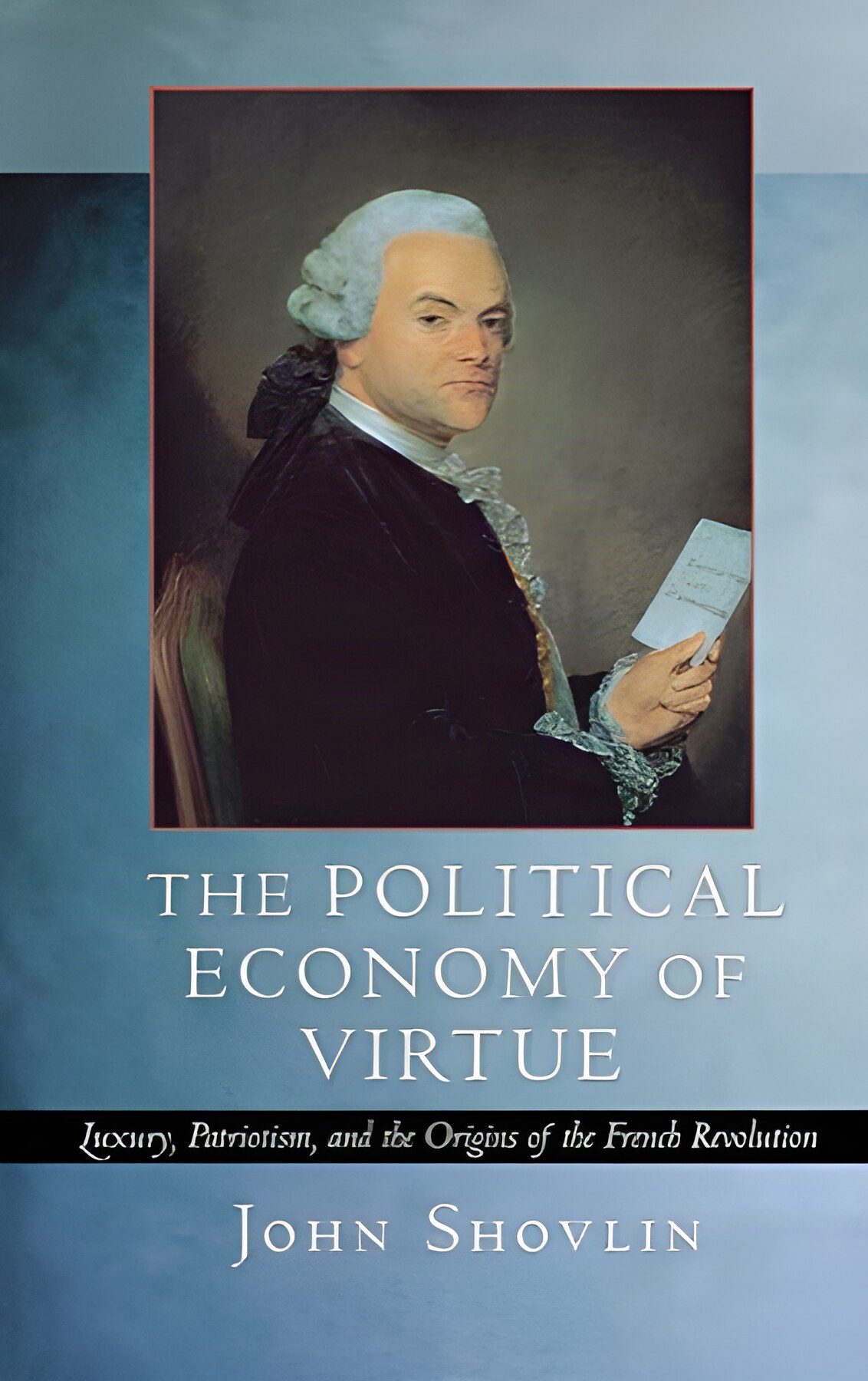
Softcover. Ithaca NY, Cornell University Press, 1st pbk., 2007, Book: Very Good, Dust Jacket: None, Softcover, 265 pages. Drawing on hundreds of political economic tracts published in France between the 1740s and the early nineteenth century, Shovlin shows how mid-level French elites (magistrates, clerics, lawyers, soldiers, landed gentlemen) sought to balance their interests and values with the need to regenerate a nation that had seemingly entered a period of decline. In their view, France's moral, political, and economic power depended not simply on expanding the national wealth but also on reviving civic spirit. The "political economy of virtue" held that luxury was the cause of the nation's economic and moral degeneration. When the monarchy failed to reform its political economic structures in the 1760s and 1770s, mid-level elites sought to eliminate the stranglehold of the plutocracy. Clean copy.
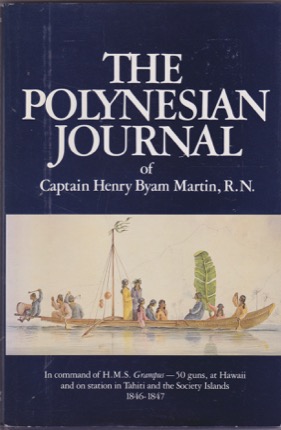
Hardcover. Salem MA, Peabody Museum, 1st, 1981, Book: Very Good, Dust Jacket: Very Good, Hardcover in a bright, price clipped dust jacket. 192 pages with frontispiece, maps, color plates, black and white plates, figures, facsimiles and index. Admiral Henry Byam Martin's first command in the British Navy was Captain of the 50-gun frigate, H.M.S. Grampus, in the year 1846. He was ordered to a sail from Plymouth 'round the Horn to Hawaii for further orders. Those orders sent him to Tahiti for a full year, the fatal year in which the French subjugated the Tahitians by bloody force, made the island a "Protectorate" of France but allowed the glamorous Queen Pomare to be the titular ruler until they took it over completely, as a colony, in 1880. This Polynesian portion of Captain Martin's daily Journal has lain unnoticed in the depths of the British Museum until this publication. But it still sparkles with wit and with acute observations of the personalities and events of that critical year in the struggle between the French and English for the conquest of the Pacific and the hopeless struggles of the poor islanders to defend their homelands and their freedom. Inscription on front fly leaf, otherwise clean.
Hardcover. NY, BlueBridge, 1st US, 2008, Book: Very Good, Dust Jacket: Very Good, Hardcover in a bright dust jacket, 246 pages. This narrative history masterfully weaves together the sweeping events surrounding what has become known as the "Babylonian captivity" of the popes into the broader story of 14th-Century Europe?one of the most turbulent times in the continent's history. It was a time of fear, ferocity, and religious agony, which saw the suppression of the Knights Templar and the Cathars, the first onslaught of the plague, and the beginning of the Hundred Years' War. The century also produced some of the greatest writers and artists in the western tradition, including Giotto, Boccaccio, Petrarch, and Chaucer. Central to this period was the movement of the papal seat from Rome to Avignon in the south of France, where seven successive popes held power from 1309 to 1377. The drama, intrigue, and tumult associated with the papacy in exile forms the perfect lens through which to clearly see a Europe making the transition from the Middle Ages to the Renaissance. Clean copy.
Hardcover. Stockport, UK, Dewi Lewis, 1st, 1996, Book: Very Good, Dust Jacket: Very Good, Hardcover in a dust jacket, 55 pages. 26 black & white photos. Life, Love, Death and Decay are the elements that Reverdot, one of France's leading photographers, carefully shapes using a sequence of extraordinary single images to create a flow thatechoes the unrelenting progress of Life Towards Decay. Reverdot's sixth book to date.
Hardcover. London, Allison & Busby Limited, 1st, 2011, Book: Very Good, Dust Jacket: Very Good, Hardcover in a bright, unclipped dust jacket. SIGNED BY MARSTON on the title page. As a train speeds over the Sankey Viaduct, the dead body of a man is hurled into the canal below. Inspector Robert Colbeck and Sergeant Victor Leeming take charge of their most complex and difficult case yet. Hampered by the fact that the corpse has nothing on him to indicate his identity, they are baffled until a young woman comes forward to explain that the murder victim, Gaston Chabal, is an engineer, working on a major rail link in France. As the case takes on an international dimension, problems accumulate. The detectives wonder if the murder is connected to a series of vicious attacks on the rail link that is being built by British navvies under the direction of a British construction engineer. Colbeck and Leeming have to survive personal danger, resistance from the French government, broadsides from their Superintendent, and many other setbacks before they solve the crime. Clean copy.
Hardcover. University AL, University of Alabama Press, 1st, 1981, Book: Very Good, Dust Jacket: Very Good, Hardcover, red cloth covers in a lightly worn dust jacket. Here are the passionate memoirs of the French Communard leader, a hero, saint and martyr to the socialists and anarchists battling the injustices of the Third Republic. 202 pages with a bibliography. Clean copy.
Softcover. Carbondale IL, Southern Illinois University Press, 1st, 1986, Book: Very Good, Dust Jacket: None, Softcover, 408 pages. Makes accessible to modern readers the 17th-century rhetorics of Thomas Hob-bes (1588-1677) and Bernard Lamy (1640-1715) Hobbes' A Briefe of the Art of Rhet-orique, the first English translation of Aristotle's rhetoric, reflects Hobbes' sense of rhetoric as a central instrument of self-defense in an increasingly frac-tious Commonwealth. In its approach to rhetoric, which Hobbes defines as "that Faculty by which wee understand what will serve our turne, concerning any subject, to winne beliefe in the hearer," the Briefe looks forward to Hobbes' great political works De Cive and Leviathan. Published anonymously in France as De l'art de parler, Lamy's rhetoric was translated immediately into English as The Art of Speaking. Lamy's long associa-tion with the Port Royalists made his works especially attractive to English readers because Port Royalists were en-gaged in a vicious quarrel with the Jesuits during the last half of the 17th century. Name at top of front cover and front fly leaf.
Hardcover. NY, William Sloane Associates, 2nd pr., 1964, Book: Very Good, Dust Jacket: Good, Hardcover, 256 pages. Bright, clean copy in a lightly soiled dust jacket. A man crossing a London street is killed. He is carrying four blackmail letters. Mostly set in France, the basis for the 1968 MGM film directed by Richard Thorpe.
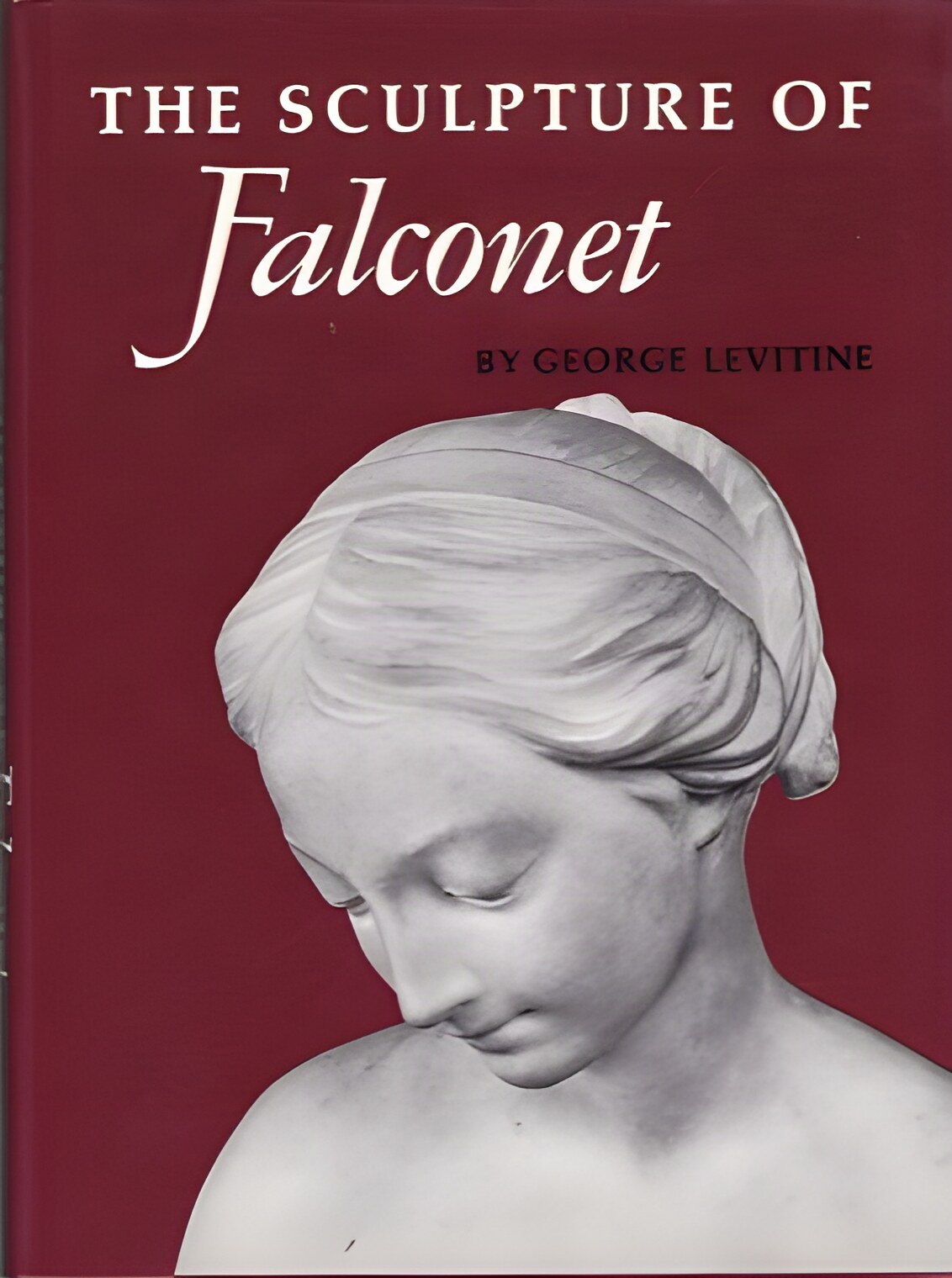
Hardcover. Greenwich CT, New York Graphic Society, 1st, 1972, Book: Very Good, Dust Jacket: Very Good, Hardcover, dark red cloth/dark red DJ. 144 pp. 108 bw plates. All of Falconet's major works and attributions are illustrated in gravure, with many details. Includes a translation from the French of Falconet's Reflections sur la sculpture by Eda Mezer Levitine.
Hardcover. NY, A. S. Barnes & Co., reprint, 1854, Book: Very Good, Dust Jacket: None, Hardcover, embossed brown cloth with gilt decoration to cover, 437 pages, frontis. engraving of author. The first part contains two manuscripts that were sermons or addresses that the Rev. Walter Colton use when preaching in behalf of seamen. The author writes about: The Ocean in its Grandeur and Sublimity; The Sailor's Chivalric Devotion to Woman; Humanity of the Sailor; Navy Chaplains; Genoa and the Genoese; City of Pisa; We are Robbed of our Cigars; etc. The second part contains his writings about travel to France and Italy. Also includes his poetry, editorials, aphorisms, etc. Includes a memoir of the Rev. Walter Colton by Rev. Cheever. Light chip, wear to spine. Circulating library sticker on inside front cover otherwise clean. Covers with minor edgewear. Title page states 1854, copyright page is 1851.
Hardcover. NY, Seabury, 1st US, 1977, Book: Very Good, Dust Jacket: Very Good, Hardcover in a bright dust jacket, 154 pages. Black & white illustrations by Anne Dalton. Clean copy.
Hardcover. NY, Harry N. Abrams, 1st, 1998, Book: Very Good, Dust Jacket: Very Good, Hardcover in a bright dust jacket. 120 pages illustrated in color. Since the first report of cave art (at Altamira in 1879), attempts have been made to explain the purpose of the mysterious drawings. Art for art's sake; totemism; hunting, destructive, or fertility magic; and modern structuralist theories have all been proposed. Clottes and Lewis-Williams propose a new theory emphasizing the shamanic aspects of Paleolithic cave paintings. After an unavoidably technical chapter providing the basics of shamanism, the authors examine Paleolithic paintings from across France and Spain, noting the use of animal figures, composite figures combining both human and animal characteristics, and geometric designs that are all common elements of shamanism. The bulk of the book is both fascinating and thought-provoking, and while it is not likely to be the last word on the subject, it is an important contribution to the field. Clean, bright copy.
Hardcover. Princeton NJ, Princeton University Press, 1st, 1995, Book: Very Good, Dust Jacket: Very Good, Hardcover in a bright dust jacket, 173 pages. Blandine Kriegel, at one time a collaborator with Michel Foucault, is one of France's foremost political theorists. This translation of her celebrated work L'Etat et les esclaves makes available for English-speaking readers her impassioned defense of the state. Published in France in 1979 and republished in 1989, this work challenged not only the anti-statism of the 1960s but also generations of romanticism in politics that, in Kriegel's view, inadvertently threatened the cause of liberty by refusing to distinguish between the despotic and the lawful state. In a work that addresses the urgent concerns of Europe and the contemporary world as a whole, Kriegel examines the background of modern liberal democracy in the late seventeenth and eighteenth centuries and argues cogently for the future of constitutional social-democracy. Clean copy.
Hardcover. NY, Farrar Straus & Giroux, 1st, 2006, Book: Very Good, Dust Jacket: Very Good, Hardcover in a bright, unclipped dust jacket. 441 pages, index, notes, glossary, chronology, b&w illustrations. A dramatic new interpretation of the French Revolution that draws troubling parallels with today's politic and religious fundamentalism.
Hardcover. NY, Random House, 1st, 1964, Book: Very Good, Dust Jacket: Good, Hardcover in a dust jacket with some fading, 461 pages. History of the six-year period between the fall of Robespierre and the rise of Napoleon Bonaparte. Bookplate on inside front cover, otherwise clean.
Hardcover. NY, Basic Books, 1st, 1978, Book: Very Good, Dust Jacket: Very Good, Hardcover in a bright dust jacket, 275 pages. Translated from the French by Olivier Bernier. Preface by Virgil Thomson. The autobiography of a Jewish painter who fled from Bolshevik Russia to Spain, moved to France and who was imprisoned during WWWII by the Germans and who moved eventually to the U.S.
Hardcover. Berkeley, University of California Press, 1st, 2006, Book: Very Good, Dust Jacket: Very Good, Hardcover in a bright, unclipped dust jacket, 385 pages, b&w illustrations. In this highly original history of the world's most famous bicycle race, Christopher S. Thompson, mining previously neglected sources and writing with infectious enthusiasm for his subject, tells the compelling story of the Tour de France from its creation in 1903 to the present. Weaving the words of racers, politicians, Tour organizers, and a host of other commentators together with a wide-ranging analysis of the culture surrounding the event including posters, songs, novels, films, and media coverage Thompson links the history of the Tour to key moments and themes in French history. He argues persuasively that this hugely popular sporting event has been instrumental in French attempts to grapple with the great challenges they have confronted during their tumultuous twentieth century from World Wars, political divisions, and class conflict to economic modernization, women's emancipation, and threats to public health. Name on half title page, otherwise clean.
Hardcover. NY, E. P. Dutton, 2nd pr., 1931, Book: Good, Dust Jacket: None, Hardcover, red cloth covers with gilt lettering (now partially faded). 320 pages, b&w plates. Chapters include: The Scientific detective; Human Monsters; Famous bandits; Crimes of the insane; Political crime; Some famous women criminals; The case of a spy - Mata Hari; The Death Penalty. Spine faded, otherwise, clean copy.
Hardcover. Hartford, Joel Barlow, 1st, 1787, Book: Very Good, Dust Jacket: None, 258 pages. Red leather covers with gilt lines along cover edges, and decorations on spine. Covers with light rubbing to edges and at corners. Title on spine in gilt on black. Marbled endpapers. Previous owners name on preliminary page and at top of title page. Includes Dedication to The King of France, and Introduction. All edges gilt.
Hardcover. NY, Random House, 1st, 1985, Book: Very Good, Dust Jacket: Very Good, Hardcover in a bright dust jacket, 487 pages, b&w illustrations. Napoleon's colorful but disastrous Russian campaign has been strangely neglected by American publishers. Bridging the gap between popular and scholarly history, historian Cate has written a thoroughly detailed and researched account that should also appeal to the lay reader. His writing is deliberately paced but dramatic and does far more justice to the extremely complex political and military situation of 1812 than Philippe de Segur's Napoleon's Russian Campaign (1965), the only other work available in the United States. Clean copy.
Hardcover. NY, Dodd Mead, 1st thus, 1928, Book: Very Good, Dust Jacket: Very Good, Hardcover, octavo, black cloth covered boards with elaborate gilt decoration, title and spine titles. 302 pages. Uncut edges. With twelve full page engravings, capitals and decorations by Frank C. Pape. In a black paper dust jacket with red decoration, with a chip to top of spine at front edge. The cover gilt is bright but there is some flecking/discoloration to the black cloth in areas. Interior is clean and bright.


 "The Poetical Works of Frances Ridley Havergalby: Frances Ridley Havergal")

 "The Proofby: Reverdot, Jean Philippe")
 "The Railway Viaduct: The Latest Case for The Railroad Detective (SIGNED COPY)by: Marston, Edward")
 "The Red Virgin: Memoirs of Louise Michel by: Michel Louise edited by Bullitt Lowry and Elizabeth Ellington Gunter")
![The Rhetorics of Thomas Hobbes and Bernard Lamyby: Harwood, John T. [Editor]](https://www.browsingisarousing.com/shop/images/The-Rhetorics-of-Thomas-Hobbes-and-Bernard-Lamy_by_Harwood-John-T.-Editor386560-440172.jpg "The Rhetorics of Thomas Hobbes and Bernard Lamyby: Harwood, John T. [Editor]")
 "The Scorpio Letters by: Canning, Victor")
 "The Sea and the Sailor; Notes on France and Italy, and Other Literary Remains. With a Memoir by Rev. Henry T. Cheeverby: Colton, Walter")
 "The Shadow of the Hawk and Other Stories by Marie de Franceby: Reeves, James")


 "The Terror: The Merciless War for Freedom in Revolutionary Franceby: Andress, David")


 "The Tour de France: A Cultural History by: Thompson, Christopher S.")
 "The Underworld of Paris: Secrets of the Surete by: Morain, Alfred")
 "The Use of Sacrificial Ideas in Greek Christian Writers from the FNew Testament to John Chrysostom: Patristic Monograph Series by: Young, Frances")


 "The Well of St. Clareby: France, Anatole & Pape, Frank")

