Hardcover. Berkeley, University of California Press, 1st, 2004, Book: Very Good, Dust Jacket: Very Good, Hardcover in a bright dust jacket, 474 pages. SIGNED BY ROUGHGARDEN and dated on the title page.In this innovative celebration of diversity and affirmation of individuality in animals and humans, Joan Roughgarden challenges accepted wisdom about gender identity and sexual orientation. A distinguished evolutionary biologist, Roughgarden takes on the medical establishment, the Bible, social science-and even Darwin himself. She leads the reader through a fascinating discussion of diversity in gender and sexuality among fish, reptiles, amphibians, birds, and mammals, including primates. Evolution's Rainbow explains how this diversity develops from the action of genes and hormones and how people come to differ from each other in all aspects of body and behavior. Roughgarden reconstructs primary science in light of feminist, gay, and transgender criticism and redefines our understanding of sex, gender, and sexuality. Witty, playful, and daring, this book will revolutionize our understanding of sexuality. Previous owner's inscription on the front fly leaf. Clean copy.
Hardcover. NY, Oxford University Press;, 1st, 1992, Book: Very Good, Dust Jacket: Very Good, Hardcover in a bright, unclipped dust jacket, 288 pages. As an essayist and Village Voice columnist, Gary Giddins is widely known as a preeminent jazz writer. Walter Clemons, writing in Newsweek, hailed him as "the best jazz critic now at work," praising his "elegant prose" and "encyclopedic knowledge." Yet he has won a devoted audience for his reflections on popular culture, books, and movies as well--including a marvelous essay on Jack Benny that Gay Talese selected for Best American Essays of 1987. In Faces in the Crowd, Giddins once again demonstrates his graceful style and sharp wit in a brilliant collection of critiques, assessments, and profiles of major figures in the culture of our century.
Hardcover. San Diego/NY, Harcourt Brace Jovanovich, 1st, 1988, Book: Very Good, Dust Jacket: Very Good, Hardcover in a bright, unclipped dust jacket, 274 pages, b&w photos. "A shy, bald, myopic, gay albino from an ethnic Pittsburgh suburb and a beautiful, convent-educated heiress from France: This is the story of Andry Warhol and 'the girl in Andy's soup,' Isabelle Collin Dufresne, also known as Ultra Violet. It is suggested that Dali, Dufresne's companion for five years, introduced her to Andy Warhol in 1963. 'Leave Dali', said Andy. 'He's too old'. Soon after, Isabelle metamorphosed into Ultra Violet becoming an intimate of Warhol's underground scene, here recollected. Clean copy.
Softcover. Bloomington IN, Indiana University Press, 1st, 2003, Book: Very Good, Dust Jacket: None, Softcover, 209 pages. This groundbreaking study explores the Harlem Renaissance as a literary phenomenon fundamentally shaped by same-sex-interested men. Christa Schwarz focuses on Countee Cullen, Langston Hughes, Claude McKay, and Richard Bruce Nugent and explores these writers' sexually dissident or gay literary voices. The portrayals of men-loving men in these writers' works vary significantly. Schwarz locates in the poetry of Cullen, Hughes, and McKay the employment of contemporary gay code words, deriving from the Greek discourse of homosexuality and from Walt Whitman. By contrast, Nugent-the only "out" gay Harlem Renaissance artist-portrayed men-loving men without reference to racial concepts or Whitmanesque codes. Schwarz argues for contemporary readings attuned to the complex relation between race, gender, and sexual orientation in Harlem Renaissance writing. Clean copy.
Boston, Houghton Mifflin, 1st , 1902, Book: Very Good, Dust Jacket: None, Hardcover, pictorial cloth covers, 143 pages. Black & white pictures by Albert Levering. Tear to top of plate opposite page 24. Spine lettering faded. Some browning to pages. Otherwise clean.
Hardcover. NY, Monacelli, 1st, 2006, Book: Very Good, Dust Jacket: Very Good, Hardcover, 160 pages. Driving the glossy shelter magazines -- Architectural Digest, House and Garden, and many more -- is an enduring fascination with other people's lives and houses. But the pristine photographs in these publications do not represent reality. In his "Households" series, artist and architect Mark Robbins has invented the "flip side" of interior design magazines: a compelling series of photographs of actual people in actual homes. A young family at a writers retreat, a gay couple in a Long Island beach house, a husband and wife in a family compound, a single parent in a city apartment: Robbins has photographed residents and environments that comment on contemporary life and relationships. Robbins's design and photography work, which bridges the fields of art and architecture, has long focused on the complex social and political forces that contribute to the built environment. The thoughtfully arranged compositions reinforce, undermine, and even confuse stereotypes; the collection as a whole comments on present-day customs and ways of life in all their complexity.
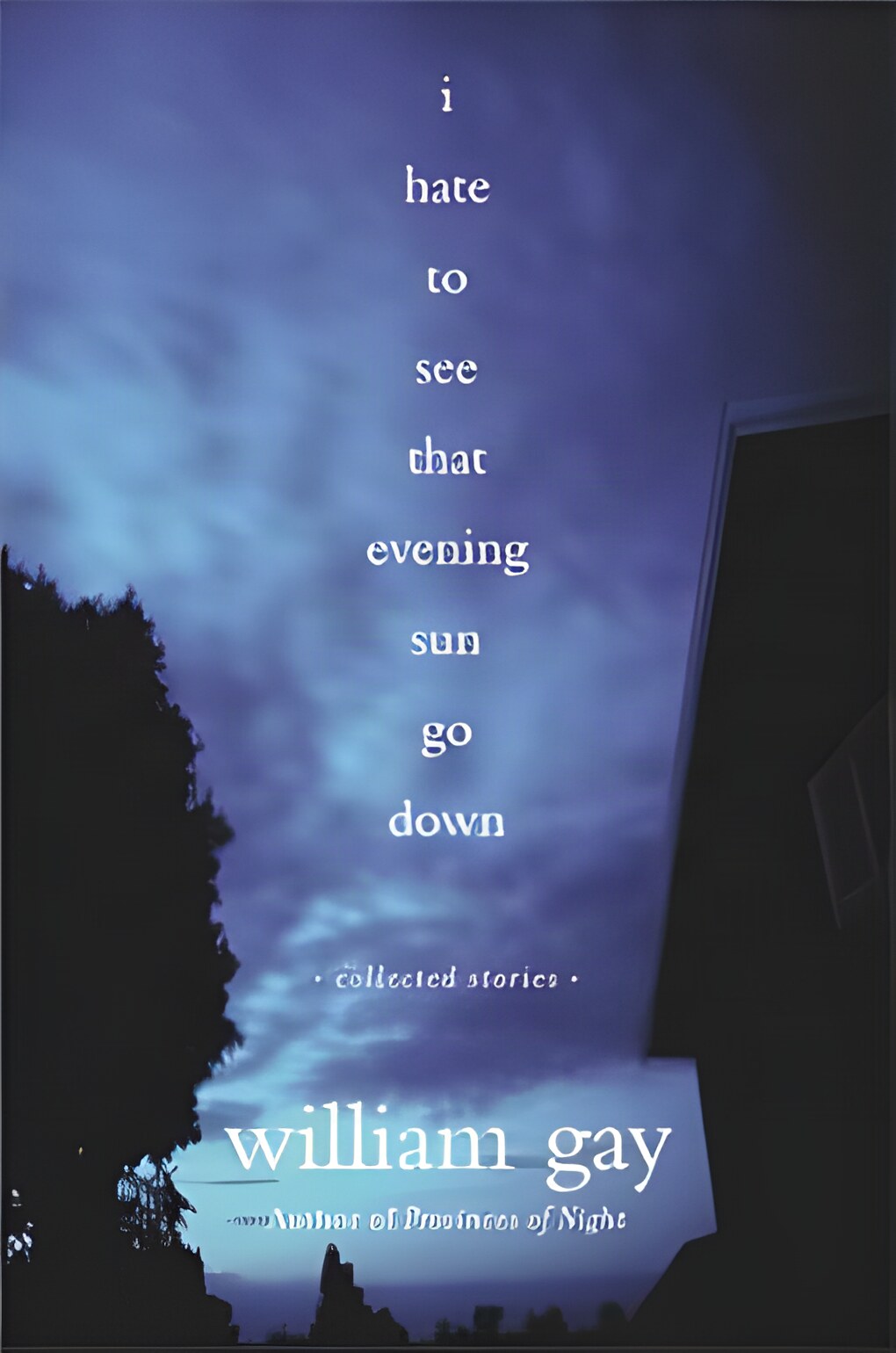
Hardcover. NY, Free Press, 1st, 2002, Book: Very Good, Dust Jacket: Very Good, Hardcover in a bright, unclipped dust jacket. Like Faulkner's Mississippi and Cormac McCarthy's American West, Gay's Tennessee is redolent of broken souls. Mining that same fertile soil, his debut collection, I Hate to See That Evening Sun Go Down, brings together thirteen stories charting the pathos of interior lives. Among the colorful people readers meet are: old man Meecham, who escapes from his nursing home only to find his son has rented their homestead to "white trash"; Quincy Nell Qualls, who not only falls in love with the town lothario but, pregnant, faces an inescapable end when he abandons her; Finis and Doneita Beasley, whose forty-year marriage is broken up by a dead dog; and Bobby Pettijohn -- awakened in the night by a search party after a body is discovered in his back woods. William Gay expertly sets these conflicted characters against lush backcountry scenery and defies our moral logic as we grow to love them for the weight of their human errors. Clean copy.
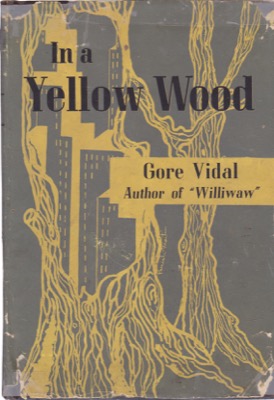
Hardcover. NY, E.P. Dutton, 1st, 1947, Book: Very Good, Dust Jacket: Poor, Hardcover in a very worn dust jacket with tape repairs. Black cloth with gilt lettering to spine. Vidal's second novel, a work with some gay aspects but one in which the author felt he played things a bit too safely. "Robert Holton has just returned from the torment and strife of war in Europe and settled in a solitary existence working for a New York stockbroking business The haunting memories of nights of love spent in Florence are suppressed as he struggles to succeed in an arid city." Book is tight and clean.
Hardcover. NY, E.P. Dutton, 1st, 1947, Book: Very Good, Dust Jacket: Good, Hardcover in a lightly worn dust jacket with tape repairs. Black cloth with gilt lettering to spine. Vidal's second novel, a work with some gay aspects but one in which the author felt he played things a bit too safely. "Robert Holton has just returned from the torment and strife of war in Europe and settled in a solitary existence working for a New York stockbroking business The haunting memories of nights of love spent in Florence are suppressed as he struggles to succeed in an arid city." Book is tight and clean. There is some light soil, foxing to the dust jacket.
Hardcover. NY, Viking Press, 1st, 1953, Book: Good, Dust Jacket: None, Hardcover in beige cloth stamped in red. Black & white illustrations by Gay. Previous owner's bookplate. Ex-lib, with light stamp to front fly leaf, residue to rear end papers. Humorous poetry for young readers.
Hardcover. New Haven CT, Yale University Press;, 1st, 2009, Book: Very Good, Dust Jacket: Very Good, Hardcover, 180 pages. John Gutmann (1905-1998) was one of America's most distinctive photographers. Born in Germany where he trained as an artist and art teacher, he fled the Nazis in 1933 and settled in San Francisco, reinventing himself as a photo-reporter. Gutmann captured images of American culture, celebrating signs of a vibrant democracy, however imperfect. His own status as an outsider--a Jew in Germany, a naturalized citizen in the United States--informed his focus on individuals from the Asian-American, African-American, and gay communities, as well as his photography in India, Burma, and China during World War II. This handsome book acknowledges Gutmann's place in the history of photography. Drawing on his archive of photographs and papers at the Center for Creative Photography, it presents both unfamiliar works and little-known contexts for his imagery, linking his photography to his passionate interest in painting and filmmaking, his collections of non-Western art and artifacts, and his pedagogy. In addition to a major essay by Sally Stein, the volume includes an introduction by Douglas R. Nickel, and an overview of the Gutmann archive by Amy Rule.
Hardcover. New Haven CT, Yale University Press;, 1st, 2009, Book: Very Good, Dust Jacket: Very Good, Hardcover, 180 pages. John Gutmann (1905-1998) was one of America's most distinctive photographers. Born in Germany where he trained as an artist and art teacher, he fled the Nazis in 1933 and settled in San Francisco, reinventing himself as a photo-reporter. Gutmann captured images of American culture, celebrating signs of a vibrant democracy, however imperfect. His own status as an outsider--a Jew in Germany, a naturalized citizen in the United States--informed his focus on individuals from the Asian-American, African-American, and gay communities, as well as his photography in India, Burma, and China during World War II. This handsome book acknowledges Gutmann's place in the history of photography. Drawing on his archive of photographs and papers at the Center for Creative Photography, it presents both unfamiliar works and little-known contexts for his imagery, linking his photography to his passionate interest in painting and filmmaking, his collections of non-Western art and artifacts, and his pedagogy. In addition to a major essay by Sally Stein, the volume includes an introduction by Douglas R. Nickel, and an overview of the Gutmann archive by Amy Rule.
Hardcover. University of Wisconsin Press, 1st, 2005, Book: Very Good, Dust Jacket: Very Good, Hardcover, 92 pages. Kings in Their Castles, a collective portrait of the gay urban community in America, offers a personal view of some of our leading artists, writers, filmmakers, composers, musicians, and designers. Among the celebrities Atwood photographs in their playful, revealing homes are Edward Albee, Todd Oldham, John Waters, Ross Bleckner, Joel Schumacher, Junior Vasquez, Michael Cunningham, Simon Doonan, Andrew Solomon, Ned Rorem, James Dale, David Del Tredici, Tommy Tune, John Ashbery, Edmund White, and John Bartlett. Atwood also documents the bohemians, beatniks, mavericks, and iconoclasts, an urban community that is slowly disappearing. Capturing whimsical, intimate moments of daily life and portraying the complexity and diversity of this loosely linked society, Atwood reveals some of the most intriguing characters and homes in gay America. These beautiful fine art prints--shifting between the pictorial and the theatrical--become both a witness and a celebration.
Hardcover. Gale Group, 1st, 2002, Book: Very Good, Dust Jacket: None, Hardcover, 195 pages, b&w illustrations. A scholarly examination of Camus's famous short novel. Like new, clean.
Hardcover. NY, Viking, 1st, 2019, Book: Very Good, Dust Jacket: Very Good, Hardcover in a bright, unclipped dust jacket, 422 pages. Poets of the twentieth century Elizabeth Bishop's friend James Merrill once observed that 'Elizabeth had more talent for life--and for poetry--than anyone else I've known.' This new biography reveals just how she learned to marry her talent for life with her talent for writing in order to create a brilliant array of poems, prose, and letters--a remarkable body of work that would make her one of America's most beloved and celebrated poets. In Love Unknown, Thomas Travisano tells the story of the famous poet and traveler's life. Bishop moved through extraordinary mid-twentieth century worlds with relationships among an extensive international array of literati, visual artists, musicians, scholars, and politicians -- along with a cosmopolitan gay underground that was then nearly invisible to the dominant culture. Drawing on fresh interviews and newly discovered manuscript materials, Travisano illuminates that the 'art of losing' that Bishop celebrated with such poignant irony in her poem 'One Art' --perhaps her most famous-- was linked in equal part to an 'art of finding,' Like new.
Philadelphia, J. B. Lippincott, 1st, 1953, Book: Good, Dust Jacket: Good, Hardbound, 89 pages. Illustrated by Zhenya Gay. Light soiling to contents page. Previous owner's signature front endpaper. Stain to bottom corner of cover. Corners bumped. Dust jacket with chipping, creases. Small chunks missing top & bottom of spine. Brodart cover.
Hardcover. US, Thames & Hudson, 1st, 2010, Book: Very Good, Dust Jacket: Very Good, 247 pages, illustrations in color and b&w. Clean, unmarked copy with only minor wear to dust jacket. Lucian Freud, perhaps the world's leading portrait painter, spent seven months painting a portrait of the art critic Martin Gayford. Gayford describes the process chronologically, from the day he arrived for the first sitting through to his meeting with the couple who bought the finished painting, and he vividly conveys what it is like to be on the inside of the process of creating a work of art. As Freud completes his portrait of Gayford, so the art critic produces his own portrait of the artist, giving a rare insight into Freud's working practice. Through their wide-ranging conversations, the reader learns not only about Freud's choice of models, lighting, setting, pose, and colors, but also about his likes and dislikes, his encounters and experiences, and the ways in which he approaches his relationship with each portrait subject. Gayford records Freud's observations on the work of Michelangelo, Vermeer, Titian, Chardin, Goya, van Gogh, Mondrian, and his great contemporary Francis Bacon. The book is full of revealing anecdotes about the people Freud has met in the course of his long career, including Max Ernst, Man Ray, Pablo Picasso, Henry Moore, George Orwell, W. H. Auden, Greta Garbo, and his grandfather Sigmund Freud.
Hardcover. NY, Hastings House, 1st, 1994, Book: Very Good, Dust Jacket: Very Good, Hardcover in a bright, unclipped dust jacket. 316 pages, b&w illustrations. Written by his ex-lover, business associate, and close friend, an explicit memoir offers a new perspective on the renowned celebrity photographer with a taste for kinky sex and drugs who died of AIDS in 1989. Fritscher's brutally frank memoir of his ex-lover, confidant, and colleague, drawn from the author's personal documents, seeks to strip away the notoriety surrounding the defiant photographer Robert Mapplethorpe. As editor and writer for the gay magazine Drummer, Fritscher was the first to publish Mapplethorpe's highly charged camera shots depicting a seamy world of "leathersex," sadomasochism, taboos, and fetishes. Here, Fritscher graphically portrays the masculine subculture of the homosexual community that Mapplethorpe inhabited until his death from AIDS in 1989, at age 42. He also discusses the censorship of Mapplethorpe's work within the mainstream gay community. Clean copy.
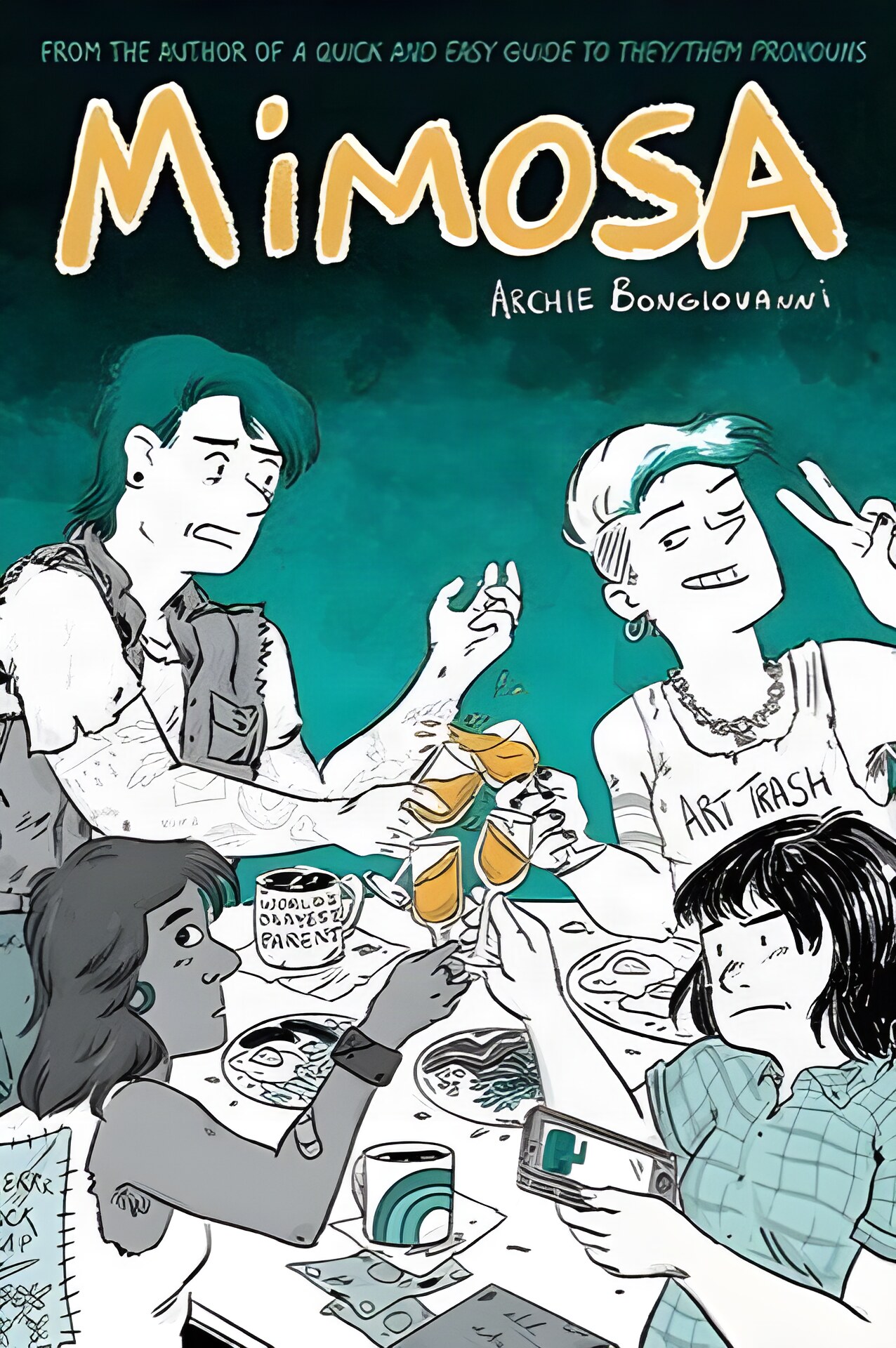
Hardcover. NY, Abrams, 1st, 2023, Book: Very Good, Dust Jacket: Very Good, Hardcover in a bright dust jacket, 265 pages, two-color comics throughout. Comics artist Archie Bongiovanni explores queerness in this shockingly frank and funny adult graphic novel. Best friends Chris, Jo, Elise, and Alex work hard to keep themselves afloat. Their regular brunches hold them together even as the rest of their lives threaten to fall completely apart. In an effort to avoid being the oldest gays at the party (like they are at every other queer event in Minneapolis), the crew decides to put on a new party called Grind!, a queer gathering specifically for folks in or over their dirty-thirties. Clean copy.
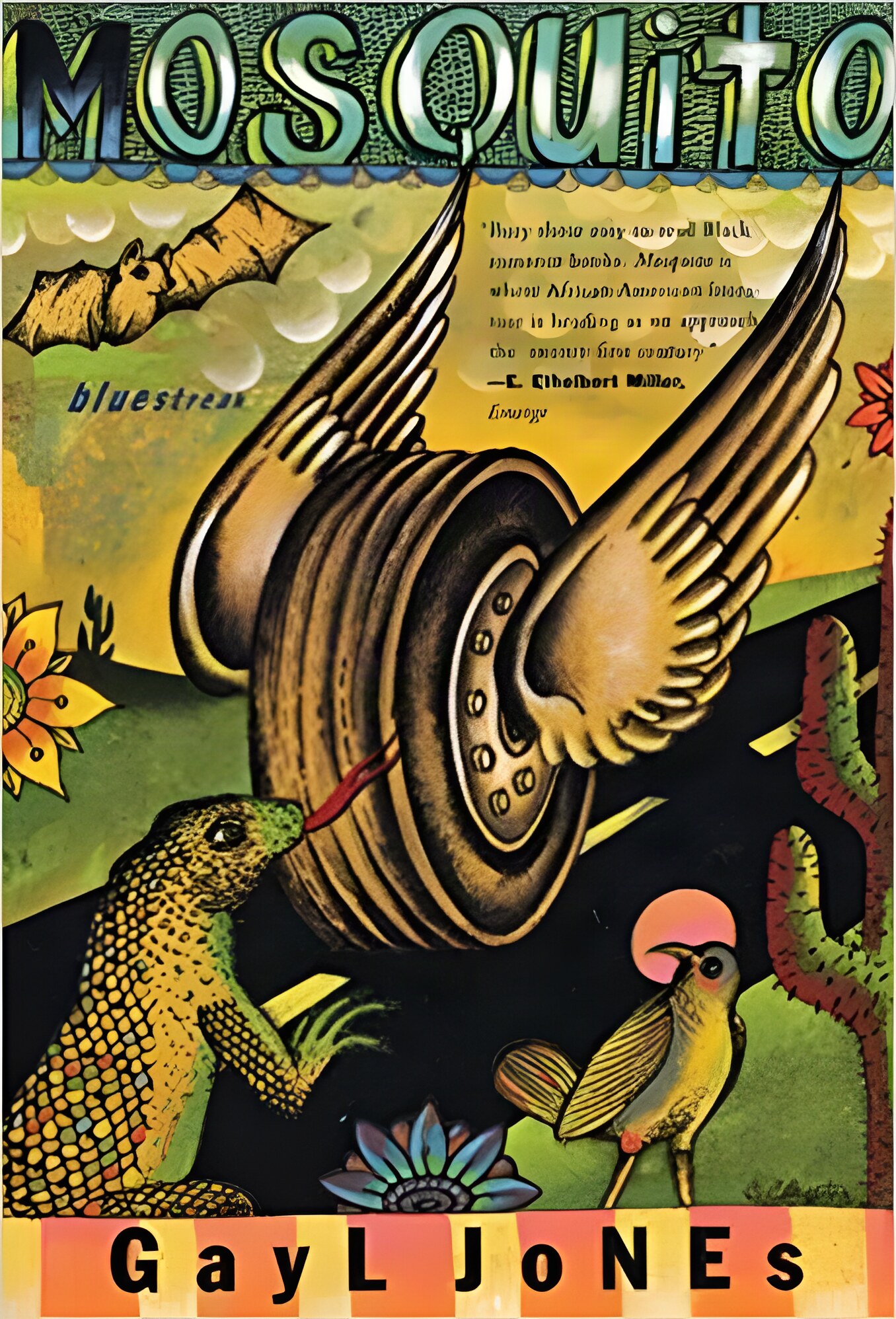
Softcover. Boston, Beacon Press, 1st, 1999, Book: Very Good, Dust Jacket: None, Softcover, illustrated wraps, 616 pages. Clean, bright copy. Sojourner Nadine Jane Johnson, also known as Mosquito, is an African-American truck driver. Set in a south Texas border town, Mosquito is the story of her accidental and yet growing involvement in "the new underground railroad," a sanctuary movement for Mexican immigrants. Mosquito's journey begins when she discovers Maria, a stowaway who nearly gives birth in the back of the truck; Maria will eventually name her baby Journal, a misspelled tribute to her unwitting benefactor Sojourner. Along the road, Mosquito introduces us to Delgadina, a Chicana bartender who fries cactus, writes haunting stories, and studies to become a detective - one of the most original and appealing characters in all of Jones's fiction. We also meet Monkey Bread, a childhood pal who is, improbably, assistant to a blonde star in Hollywood, where Mosquito pays her a memorable visit. As her understanding of the immigrants' need to forge new lives and identities deepens, so too does Mosquito's romance with Ray, a gentle revolutionary, philosopher, and, perhaps, a priest.
Hardcover. New York, Viking Press, 1st, 1935, Book: Very Good, Dust Jacket: None, Hardcover. 64 pages. Black & white lithographs by Zhenya Gay. Previous owner's signature, inscription on half title page. Soiling to end papers. Clear plastic protective cover, but no dust jacket. Spine faded.
Hardcover. New York, Viking Press, 1st, 1935, Book: Very Good, Dust Jacket: None, Hardcover. 64 pages. Black & white lithographs by Zhenya Gay. Covers with mild soil, rubbing. Clean copy.
Hardcover. London, John Lane, 1st, 1896, Book: Very Good, Dust Jacket: None, Hardcover, polished blue calf with ornate gilt rule to edges of both covers, spine with brown calf label with gilt lettering. Top edge gilt, blue and gray pattern endpapers. Decorative gilt design overall on spine. 107 pages, 6 etchings by E. Philip Pimlott. Edited by R.H. Case. A fine anthology of angling poetry, compiled by Buchan and published while he was still a student at Oxford. Sources include William Shakespeare, John Dennys, Phineas Fletcher, WilliamBrowne, Edmund Waller, John Floud, Sir Henry Wotton, Christopher Marlowe, Sir Walter Raleigh, William Basse, Izaak Walton, John Donne, John Chalkhill, Charles Cotton, John Bunyan, Alexander Pope, John Gay, James Thomson, John Armstrong, and others. Mild sunning to top edge of covers, ink name and short inscription dated '96 on first blank page. Otherwise clean and tight.
Hardcover. NY, Farrar, Straus and Giroux, 1st, 2010, Book: Very Good, Hardcover in a bright, unclipped dust jacket. In 1942, a timid, inexperienced twenty-one-year-old Lord reports to Atlantic City, New Jersey, to enlist in the US Army. This title tells the story of this young man's exposure to the terrors, dislocations, and horrors of armed conflict. Along the way he comes to terms with his own sexuality, experiences the thrill of first love and the chill of disillusionment with his fellow man, Clean copy.




 "Gay Voices of the Harlem Renaissance by: Schwarz, A.B. Christa")
 "Grimm Tales Made Gayby: Carryl/Albert Levering, Guy Wetmore")
 "Householdsby: Robbins, Mark")

 "Jingle Jangleby: Zhenya Gay")
 "John Gutmann: The Photographer at Workby: Sally Stein , Douglas R. Nickel, et al.")
 "John Gutmann: The Photographer at Workby: Sally Stein , Douglas R. Nickel, et al.")
 "Kings in Their Castles: Photographs of Queer Men at Homeby: Tom Atwood and Charles Kaiser")
 "Literary Masterpieces: The Stranger /Vol. 8by: Raymond Gay-Crosier / Albert Camus")

 "Lucky Cat, Theby: Lockridge, Frances and Richard")


 "Man with a Blue Scarf: On Sitting for a Portrait by Lucian Freudby: Gayford, Martin")
 "Mapplethorpe: Assault with a Deadly Camera by: Fritscher, Jack")
 "Mr. Tidy Pawsby: Sayers/Zhenya Gay, Frances Clarke")

![Musa Piscatrix [The Bodley Anthologies] by: Buchan, John (Ed.)](https://www.browsingisarousing.com/shop/images/Musa-Piscatrix-The-Bodley-Anthologies_by_Buchan-John-Ed.382686-429178.jpg "Musa Piscatrix [The Bodley Anthologies] by: Buchan, John (Ed.)")
![Musa Piscatrix [The Bodley Anthologies] by: Buchan, John (Ed.)](https://www.browsingisarousing.com/shop/images/Musa-Piscatrix-The-Bodley-Anthologies_by_Buchan-John-Ed.382686-429178_50_th.jpg)
![Musa Piscatrix [The Bodley Anthologies] by: Buchan, John (Ed.)](https://www.browsingisarousing.com/shop/images/Musa-Piscatrix-The-Bodley-Anthologies_by_Buchan-John-Ed.382686-429179_50_th.jpg)
 "My Queer War by: Lord, James")