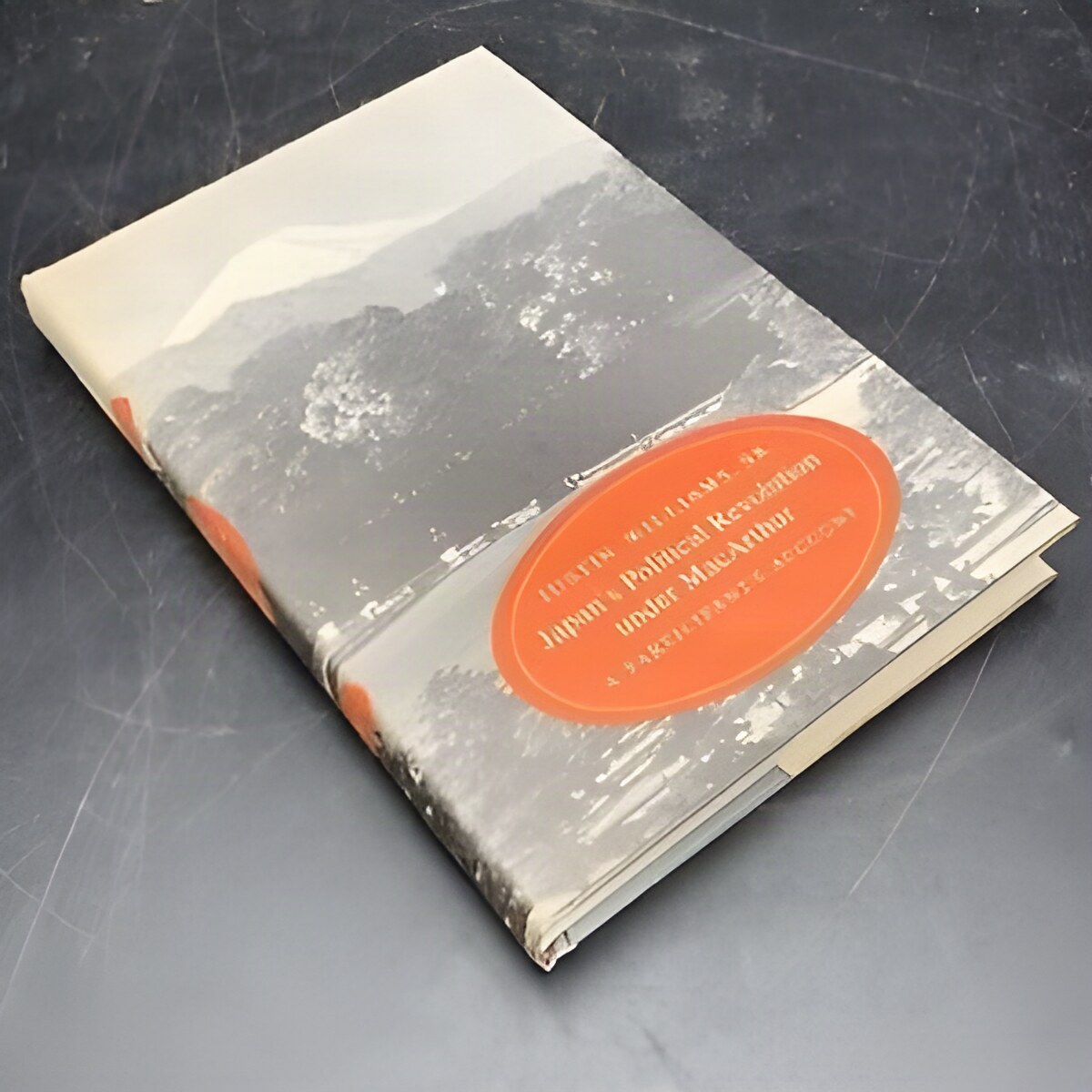
Hardcover. Athens GA, University of Georgia Press, 1st, 1979, Book: Very Good, Dust Jacket: Good, Hardcover in a dust jacket with light fading to spine, 305 pages, b&w illustrations. Notes, bibilography, index. Highly informed opinions concerning most of the controversial aspects of the Allied occupation of Japan and the adjustment of Japanese politicians to the democratic process. Name on front fly leaf, otherwise clean.
Hardcover. Athens, University of Georgia, 1st, 1998, Book: Very Good, Dust Jacket: Very Good, Hardcover, 316 pages, b&w photographs. Light rubbing to dust jacket, sticker residue on rear. Else a clean, tight copy. During the Gilded Age, Jekyll Island, Georgia, was one of the most exclusive resort destinations in the United States. Owned by the most elite and inaccessible social club in America, a group whose members included Rockefellers, Pulitzers, Vanderbilts, Goulds, and Morgans, this quiet refuge in the Golden Isles was the perfect winter getaway for the wealthy new industrial class of the snowbound North. In this delightful book, a companion volume to The Jekyll Island Club: Southern Haven for America's Millionaires, June Hall McCash focuses on the social club's members and the "cottages" they built near the clubhouse between 1888 and 1928. Illustrated with hundreds of never-before-published photographs from private family collections, The Jekyll Island Cottage Colony tells the stories of each home, the owners' connections with the island, and their interactions with one another.
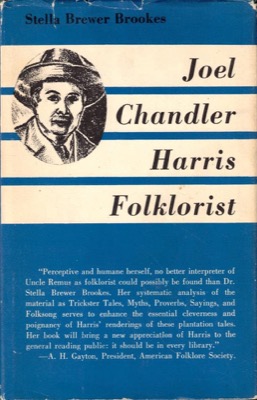
Hardcover. Athens GA, University of Georgia Press, 2nd pr., 1967, Book: Good, Dust Jacket: Good, Hardcover in a lightly worn dust jacket. 182 pages, 5 pages with red underlining. Brookes examines how Harris drew on his extensive knowledge of African American folklore and culture to create the characters in his work. Brookes classifies the Uncle Remus books under seven major categories: trickster tales, other "creeturs," myths, supernatural tales, proverbs, dialect, and songs.
Softcover. Athens GA, University of Georgia Press, reprint, 2001, Softcover, clean, unmarked pages. 415 pages, followed by a short Index. Fanny Kemble offers a gripping, first-hand account of life on a Southern plantation before the Civil War. Combining a keen observational style with a candid narrative voice, Kemble lays bare the complexities of plantation life, including the stark realities of slavery and the socio-economic hierarchies of antebellum Georgia. The journal entries provide an intimate glimpse into the daily lives of both the enslaved and the plantation owners, reflecting her deep moral convictions and growing abolitionist sentiments against a backdrop of genteel Southern culture. Fanny Kemble, a British actress and writer, was thrust into the world of the Southern elite through her marriage to a plantation owner, which provided her with unprecedented access to the intricacies of plantation management and its social fabric.
Hardcover. Boston, Little Brown , 1st, 1993, Book: Very Good, Dust Jacket: Very Good, Hardcover. 32 pages illustrated in color by Grifalconi, Bright, unclipped dust jacket. Sissy, a pensive, round-faced, soft-eyed little black girl, mopes around her Georgia farm feeling neglected, lonely and "all grumpy-like." She is missing her father, who ". . . had died back when I was a baby girl." But her understanding uncle emerges from the fields, sees her sadness, and makes her feel better by reminding her that "we all be family." Uncle Dan knows that, just like his crops, she needs a little watering, a little love , and a little attention to shake off her blues. Sissy's Uncle Dan is able to cheer the little girl up when he takes her into the corn fields and points out to her how each and every one of the ears of corn is different from the other.
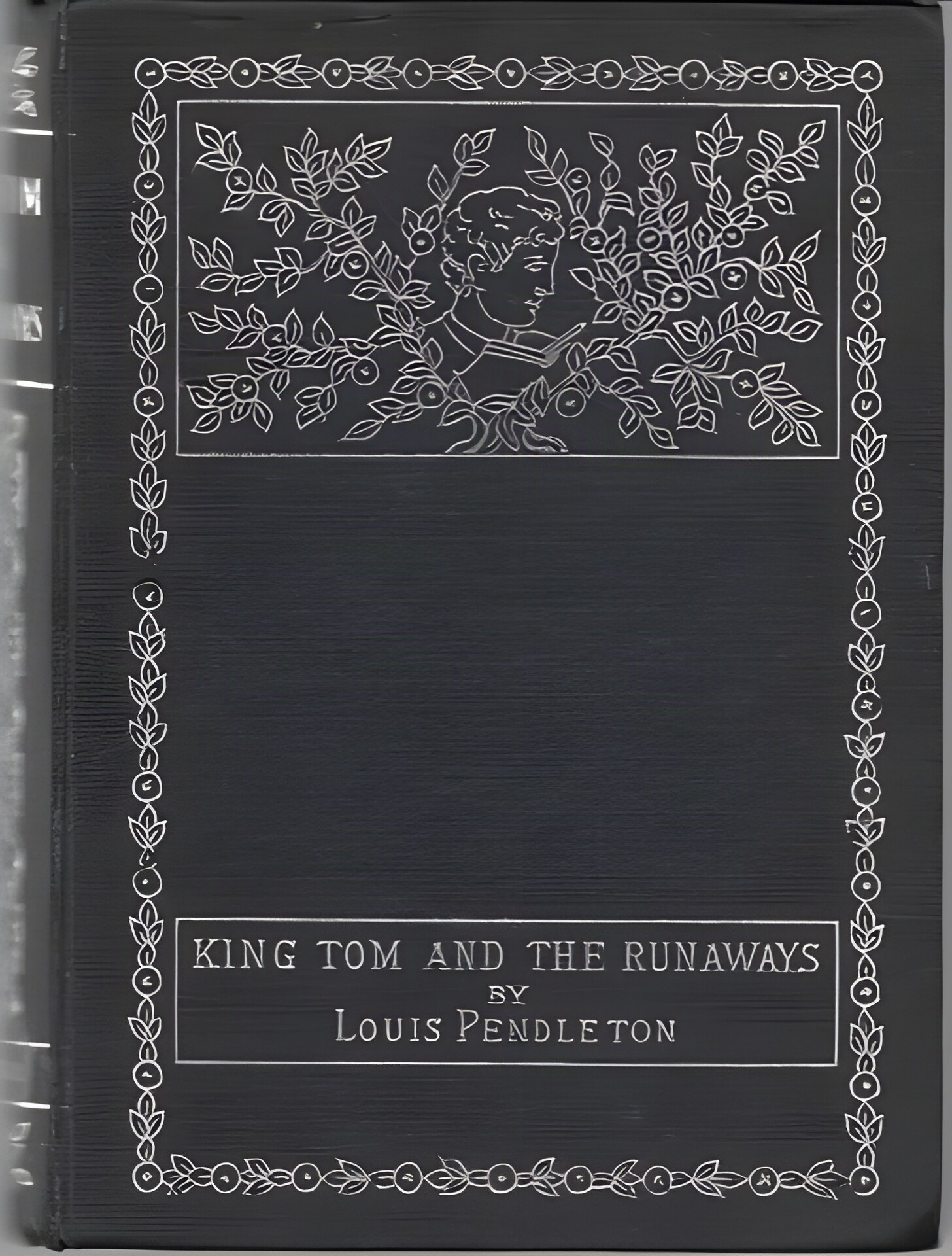
Hardcover. New York, D. Appleton and Co, 1st, 1890, Book: Very Good, Dust Jacket: None, 273 pages. Hardcover with no dust jacket. Silver gilt ornate decoration on front and spine. Previous owner's stamp on front fly leaf. Light soil on bottom spine, and light edgewear on edges. A period story set in the Okefenokee Swamp with illustrations by E.W. Kemble, including three images showing black people, and one scene of a dog fighting a cougar.
Hardcover. New York, Atheneum , 1st, 2003, Book: Very Good, Dust Jacket: Very Good, In the early 1950s, Katie Takeshima and her family live in Iowa, where her parents own a Japanese supermarket. When the store goes out of business in 1956, the family moves from Iowa to an apartment in Georgia, where Katie's parents work at a chicken hatchery with other Japanese families. Hardcover, 244 pages. Newbery Award winner. Very good pictorial dust jacket without award medal present, unclipped. SIGNED NEWBERY AWARD BOOKMARK ENCLOSED signed "Cynthia".
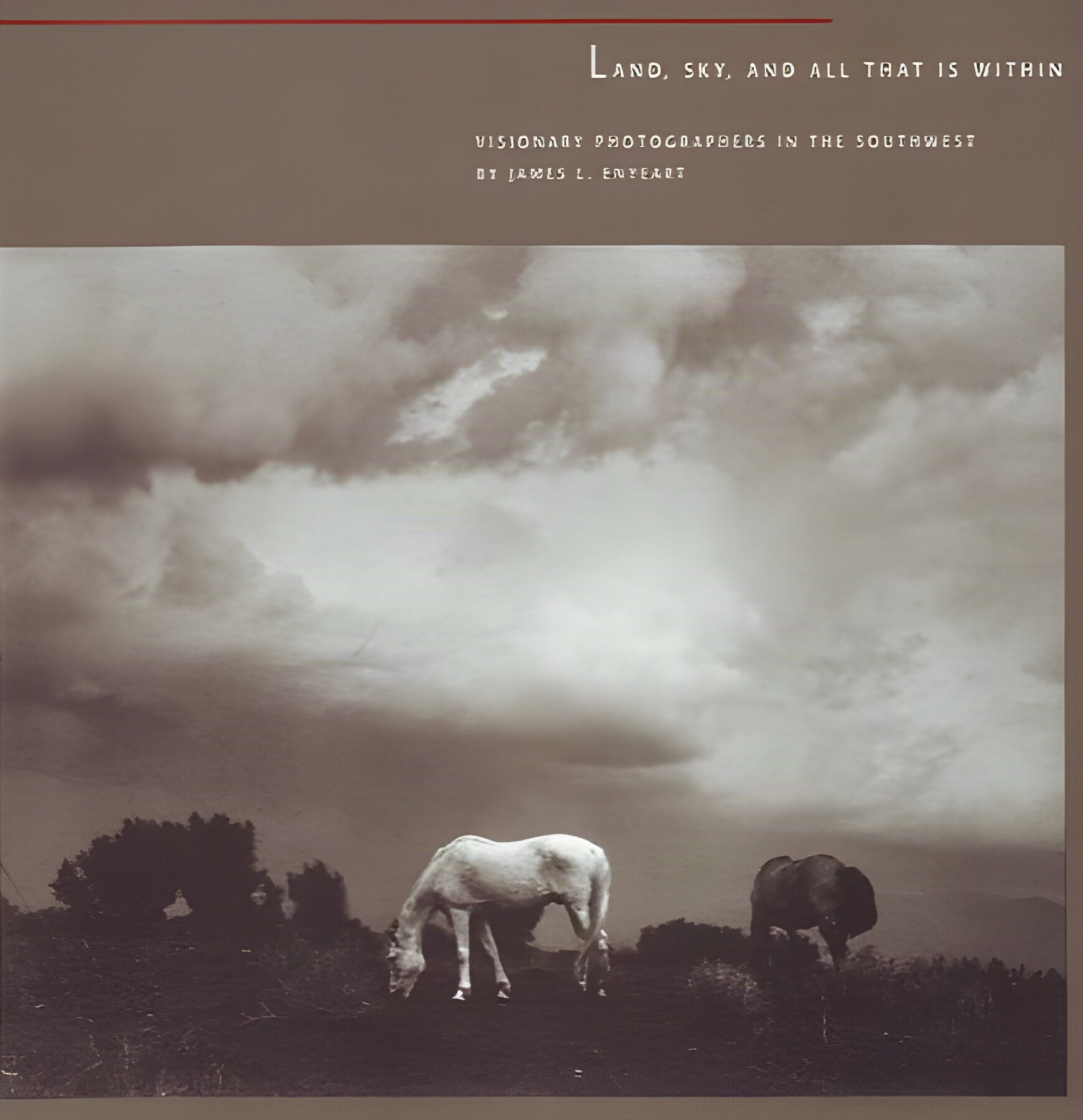
Softcover. Santa Fe, Museum of New Mexico Press, 1st, 1998, Book: Very Good, Dust Jacket: None, Softcover, 126 pages. The American Southwest has shaped the lives and work of many artists and literary figures over the last century--Georgia O'Keeffe, D. H. Lawrence, N. Scott Momaday, to name a few--individuals unquestionably drawn to the unrivaled landscape, moved to express its beauty through the written word or through their art, and forever altered by the experience. The survey of photographers and photography in the Southwest between 1870 and 1970 begins with Timothy O'Sullivan and other late nineteenth-century expedition photographers and ends with the color landscape photography of Eliot Porter. In between are Laura Gilpin's portraits of Navajos taken during the 1930s and the documentary images of rural Hispanic communities by Farm Security Administration photographers John Collier Jr. and Russell Lee in the 1940s. Nineteen photographers in all are represented--also including Ansel Adams, Paul Strand, Edward Weston--along with 102 photographs. Clean copy.
Hardcover. Athens GA, University of Georgia Press, 1st, 2015, Book: Very Good, Dust Jacket: Very Good, Hardcover in a bright dust jacket. 254 pages, b&w illustrations. George Alexander Grant is an unknown elder in the field of American landscape photography. Just as they did the work of his contemporaries Ansel Adams, Edward Weston, Eliot Porter, and others, millions of people viewed Grant's photographs; unlike those contemporaries, few even knew Grant's name. Landscapes for the People shares his story through his remarkable images and a compelling biography profiling patience, perseverance, dedication, and an unsurpassed love of the natural and historic places that Americans chose to preserve. A Pennsylvania native, Grant was introduced to the parks during the summer of 1922 and resolved to make parks work and photography his life. Seven years later, he received his dream job and spent the next quarter century visiting the four corners of the country to produce images in more than one hundred national parks, monuments, historic sites, battlefields, and other locations. He was there to visually document the dramatic expansion of the National Park Service during the New Deal, including the work of the Civilian Conservation Corps. Grant's images are the work of a master craftsman. His practiced eye for composition and exposure and his patience to capture subjects in their finest light are comparable to those of his more widely known contemporaries. Nearly fifty years after his death, and in concert with the 2016 centennial of the National Park Service, it is fitting that George Grant's photography be introduced to a new generation of Americans.
Softcover. Athens GA, University of Georgia Press, 1st, 2002, Book: Very Good, Dust Jacket: None, 76 pages, illustrated wraps. SIGNED BY JACKSON on title page.
Hardcover. New York, Georgia University Press, 1st, 1997, Book: Very Good, Dust Jacket: Very Good, 30 pages. Hardcover with dust jacket. Clean, tight copy.SIGNED BY LOPEZ on half title-page. Color illustrations by Tom Pohrt.
Hardcover. New York, Georgia University Press, 1st, 1997, Book: Very Good, Dust Jacket: Very Good, 30 pages. Hardcover with dust jacket. Clean, tight copy. SIGNED BY LOPEZ on title-page. Color illustrations by Tom Pohrt.
Hardcover. Baton Rouge, Louisiana State University, 1st Ed., 1986, Book: Very Good, Dust Jacket: Very Good, Hardcover in a bright dust jacket with a short closed tears. B&w photos, 297 pages. The first comprehensive intellectual biography of the Georgia writer, Lillian Smith, based on an extensive collection of autobiographical writings and correspondence, as well as on Smith's published books and articles. Smith is best known as an early critic of racial segregation and as a civil rights worker.
Hardcover. Baton Rouge, Louisiana State University Press, 1st, 2011, Book: Very Good, Dust Jacket: Very Good, Hardcover in a bright dust jacket, 175 pages, b&w illustrations. Vermont-native Twitchell sets out from his current home in Florida on the inauguration day of America's first black president to find the "real" South and to try to understand the truth about his illustrious ancestor. He travels in an RV from Georgia's Okefenokee Swamp across Alabama and Mississippi to Coushatta, Louisiana. As he drives through the heart of Dixie, Twitchell sorts through the prejudices he learned from his northern rearing. In searching for the culture he had held at arm's length for so long, he tours small-town southern life -- in campgrounds, cotton gins, churches, country fairs, and squirrel dog kennels -- and uncovers some fundamental truths along the way. Notably, he discovers that prejudices of race, class, and ideology are not limited by geography. As one man from Georgia mockingly summed up North versus South stereotypes, "Y'all are rude and we're stupid." Unexpectedly, Twitchell also uncovers facts about his great-grandfather and sheds new light on his family's past. An enlightening, humorous, and refreshingly honest search, Look Away, Dixieland reveals some of the differences and similarities that ultimately define us as a nation. Clean copy.
Hardcover. London, Chris Boot, 1st, 2009, Book: Very Good, Dust Jacket: None, Hardcover, 252 pages. In this volume, ten Magnum photographers turn their lenses on contemporary Georgia. Situated on the cusp of Russia and Asia, but with a European culture dating back to the 7th century BC, Georgia was forcibly incorporated into the Soviet Union in 1922. Its independence was restored in 1991, but it then suffered from civil war and a breakdown of its economic infrastructure. In the last decade, however, despite ongoing tensions in its relations with Russia, Georgia has mounted a spirited comeback. Magnum photographers Antoine d'Agata, Jonas Bendiksen, Thomas Dworzak, Martine Franck, Alex Majoli, Gueorgui Pinkhassov, Martin Parr, Paolo Pellegrin, Mark Power and Alec Soth visited the country during spring 2009, each pursuing their own theme (Alec Soth goes in search of the 'most beautiful woman in Georgia', for example). All found themselves enchanted by the Georgian people, something strongly conveyed in their photographs as well as in personal text journals which accompany the images. This well-designed volume also includes a fold-out map, marked with each photographer's journey; a chapter showing the best of Magnum photographers' work over 60 years (including by Magnum's founders Robert Capa from his visit to Georgia with John Steinbeck in 1948 and Henri Cartier-Bresson); and an illuminating introduction by the Paris-based New Yorker writer, and Georgia expert, Wendell Steavenson.
Hardcover. New York, D.A.P.//La Fabrica , 1st, 2013, Book: Very Good, Dust Jacket: Very Good, Hardcover, 192 pages. Like new in publisher's shrink-wrap. America's first female war correspondent, Margaret Bourke-White was also something of a media star, with the portrait of her decked out in flying gear, camera in hand, about to set off on a bombing raid, being a favorite pin-up among U.S. forces. Focusing on the work Bourke-White made in the 1930s and 40s in Czechoslovakia, Germany, Italy, the Soviet Union and the U.K., Moments in History presents 150 classic photographs alongside revelatory extracts from letters and publications in periodicals. Bourke-White traveled to the USSR when the first Five-Year Plan was being implemented; she documented the German invasion of the Soviet Union in 1941, and the Allied bombing of Germany. In the summer of 1945 she was commissioned by Life to make a photographic record of the destroyed German cities. She was present at the liberation of the Buchenwald concentration camp and the Leipzig-Thekla forced labor camp. She recorded the partition of India and the Korean War, and one of her most famous pictures of this period is "Gandhi," which shows the subject at his spinning wheel. Also included in the catalogue are some of the word-picture sequences Bourke-White did for Fortune and Life, as well as extracts from her correspondence with personalities from the worlds of politics and culture, such as Winston Churchill and Georgia O'Keeffe. Bourke-White wanted to be the "eyes of the age," and her pictures testify to (as she put it) her "unquenchable desire to be present when history is being made."
Hardcover. New York, Norton, 1st, 1994, Book: Very Good, Dust Jacket: Very Good, Hardcover, 159 pages. Black & white photography by Marjorie Content. Marjorie Content, a well-bred, intelligent woman who moved in artistic circles that included Georgia O'Keeffe and Jean Toomer (her last and worst husband), produced a body of sensitive black-and-white photographs in the 1920s and 1930s that were little known then but may reach a wider audience now. Quasha gathers them and a biographical essay in a lovely, pocketable volume that is a pleasure for those weary from hefting usually much heavier photography tomes. The pictures themselves are of familiar, early modernist types: close-ups of calla lilies and other plants, head-only portraits, and city vignettes. Quasha writes, "The photographs will not change our sense of photographic history . . . [but] will add to our understanding of what photography is capable of, especially in the lyric mode." More interesting, perhaps, is that Content exemplifies the kind of woman (more common in the past) who gives of herself to others and doesn't take her own work seriously enough, in spite of which she left behind a few lovely things that photography collections will cherish.
Hardcover. New Haven CT, Yale University Press, 2007, Book: Very Good, Dust Jacket: Very Good, Hardcover, 208 pages, color plates. Considered to be among the greatest early American modernists, the painter Marsden Hartley (1877-1943) traveled the United States and Europe in his search for a distinctive American aesthetic. His stay in New Mexico resulted in an extraordinary series of landscape paintings--created in New Mexico, New York, and Europe between 1918 and 1924--that show an evolution in style and thinking that is important for understanding both Hartley's oeuvre and American modernism in the postwar years. Marsden Hartley and the West examines this pivotal stage of the painter's career, drawing upon his writings and providing illustrations of rarely seen and previously unpublished works. The author considers Hartley's involvement with the Stieglitz circle and its "soil-and-spirit" philosophy, the Taos art colony, New York Dada, and the impact of historical events such as World War I. Within this setting she analyzes the pastels and oil paintings that suggest Hartley's increasingly ambivalent response to the land. Beginning with optimistic, naturalistic views, the New Mexico works grew progressively darker and more tumultuous, increasingly reflecting a sense of loss brought on by war. The paintings become a site where the landscapes of memory, self, and nation merge, while reflecting broader modernist debates about "American-ness" and a usable past.
Softcover. Bowie MD, Heritage Books, reprint, 2001, Book: Very Good, Dust Jacket: None, Two softcover volumes 391 & 392 pages. Volumes 1 and 2 complete, a facsimile reprint of the 1897 edition by Lippincott. This two-volume series takes the reader on a journey through the colonies of Virginia, Massachusetts, Connecticut, Rhode Island, New Hampshire, Pennsylvania, New Jersey, New York, Maryland, Carolina, and Georgia. The charm of the journey is in its variety, as the reader passes through communities of such striking individuality that they assume the character of different nations. Each colony has a set of opinions and laws peculiar to itself, and it is not uncommon to find the laws of one in contradiction with the laws of another. This text explores the settlement and history of each colony prior to the American Revolution. Topics include development of the colonies' government, laws, religion, schools, boundaries, industries, layout of the cities, fashions, homes, social activities, slavery, architecture, interaction with the Indians, and customs. At least one prominent person from each colony is discussed, amongst them, William Penn of Pennsylvania, John Smith of Virginia, George Calvert of Maryland, and General Oglethorpe of Georgia. Light sunning ti spines.Clean copies.
Hardcover. NY, Time Life, reprint, 1982, Book: Very Good, Dust Jacket: None, 389 pages. Hardcover with no dust jacket. Dark blue leather bound with gilt titles to front cover and spine. Embossed decoration on front cover. Gilt text block edges, red ribbon marker. Clean, tight copy. The commander of a Georgia regiment through much of the Civil War mused later in his memoirs that the heaviest burden fell not upon the man at the front, but upon the woman who waited and prayed for victory: "While the men were carried away with the drunkenness of the war, she dwelt in the stillness of her desolate home." Sallie Brock Putnam spoke for Southern womanhood. She was a native of Madison County, Virginia, and seems to have come from a family of good social standing. The book contains an unexpectedly full history of the Civil War; the author exhibits a strong grasp of strategy and tactics. But at its heart is an incisive eyewitness account of life in a capital that was swollen to four times its normal population by the exigencies of war. Brock's descriptions of Jefferson Davis' inauguration and the Richmond Bread Riot of 1863 are dramatic, but no more so than her accounts of nameless refugees, race relations, opportunistic merchants and blockade runners. Confederate prisons and family matters. In contrast to other female Southern writers of the period, she was more sober and factual, less gossipy and speculative. She wrote with shrewdness and maturity, and with a remarkable lack of self-pity and exaggeration. Yet the reader cannot miss her courage, sacrifice and suffering. Sallie Brock Putnam died in 1911.
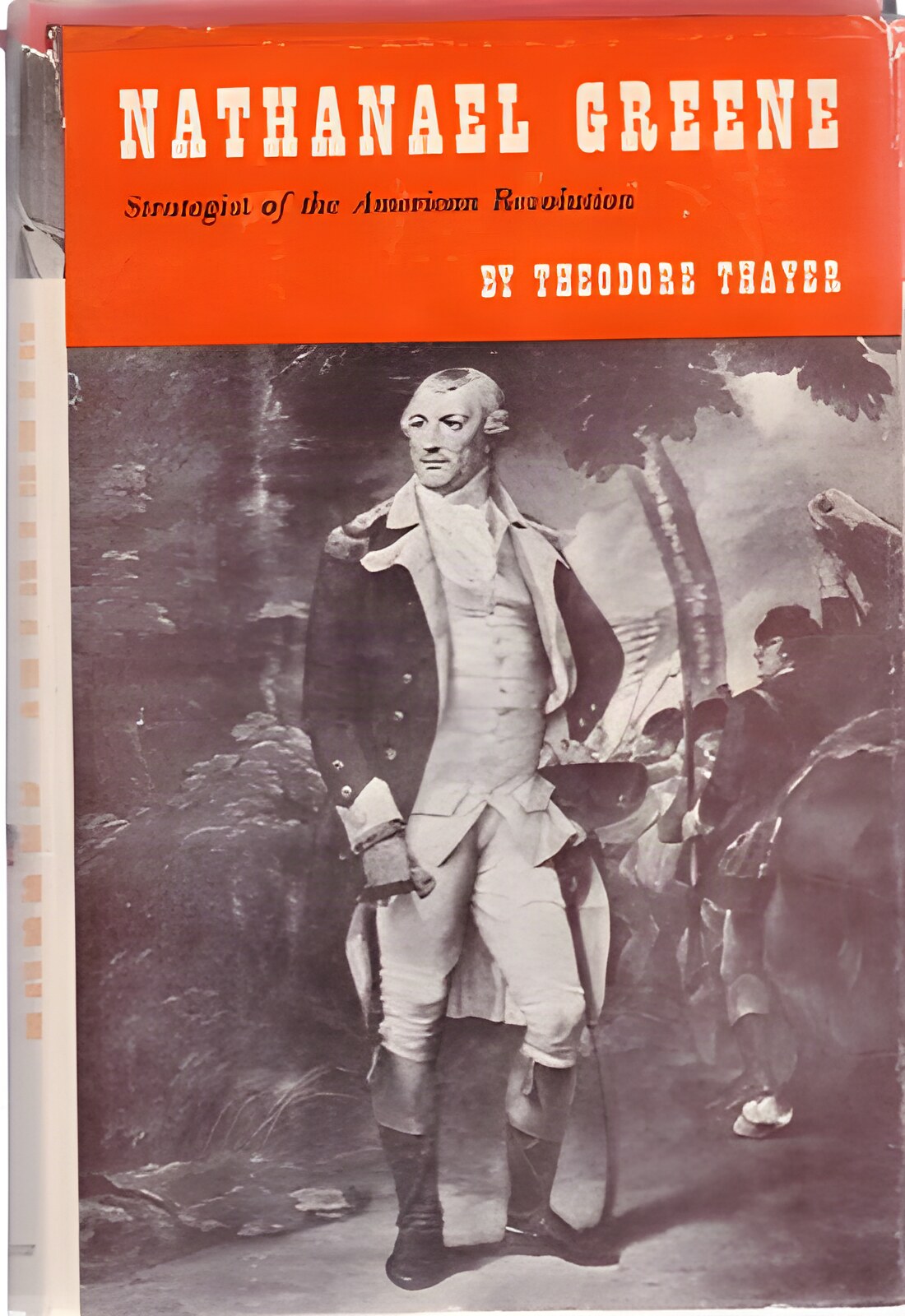
Hardcover. NY, Twayne Publishers, 1st, 1960, Book: Very Good, Dust Jacket: Good, Hardcover in a worn, faded dust jacket. 500 pages, b&w maps, index. Clean copy. Nathanael Greene, Major General in the Continental Army during the American Revolutionary War, known for his effective leadership in the Southern Campaign against British forces. He was born on August 7, 1742, in Rhode Island and died on June 19, 1786, in Georgia, leaving a legacy as one of George Washington's most trusted officers.
Hardcover. Washington DC, National Geographic Society, 1st, 1926, Book: Very Good, Dust Jacket: None, Original magazines July - December 1926, in a maroon pebbled hardcover binding. 776 pages. Magazines are dated and paged, with photographs and maps, but do not have covers, advertisements, etc. Includes: Fold-out color map of North and South Carolina, Georgia and Eastern Tennessee. Clean, bright volume. Clean. DOMESTIC SHIPPING ONLY.
Hardcover. NY, Doubleday Doran, 1st, 1929, Book: Very Good, Dust Jacket: None, Hardcover, blue cloth over boards with blue lettering on front cover and spine. Color frontis and b&w plates by W. C. Trout. A story set in the Caucasus Mountains follows the adventures of a Georgian boy named Gogi and his sister Keto. Bookplate on front fly leaf, otherwise clean. No dust jacket.
Hardcover. London, Thames & Hudson, 1st, 2001, Book: Very Good, Dust Jacket: Very Good, Hardcover, 192 pages. 106 illustrations 97 in color. Still in shrinkwrap. The first exploration of the art that Georgia O'Keeffe retained for her personal collection, including works that have never been publicly exhibited. Georgia O'Keeffe was one of America's preeminent artists and one of the first to experiment with abstract form, though she never abandoned her deep response to and observation of nature. An enormously popular artist, she became identified and respected as an independent American spirit through both her art and her life. At the time of her death in 1986, Georgia O'Keeffe owned more than half of the approximately 2,000 works she had produced during the eighty years she was active as an artist: some 400 works in oil, charcoal, pastel, pencil, and watercolor, as well as more than 700 sketches. For various reasons, she had always kept a portion of her art out of the public eye and these works were not published, exhibited, or available for purchase during her lifetime. Among the works that had been exhibited and sold over the years, some were repurchased by O'Keeffe as they became available. This book explores for the first time the significance of O'Keeffe's collection of her own work. Approximately 75 seminal works, dating from about 1910 through the 1960s and reproduced in full color, document the range and quality of the art that O'Keeffe either chose to retain in her estate or consciously distributed to institutions in her lifetime and as bequests.



 "Kinda Blueby: Grifalconi, Ann")

 "Leaving Saturn (SIGNED COPY)by: Jackson, Major")


 "Lessons From The Wolverine (SIGNED COPY)by: Lopez, Barry and Tom Pohrt")


 "Lessons From The Wolverine (SIGNED COPY)by: Lopez, Barry and Tom Porht")


 "Lillian Smith - A Southerner Confronting the Southby: Loveland, Anne C.")

 "Magnum Photos: Georgian Spring-A Magnum Journalby: Wendell Steavenson")
 "Margaret Bourke- White: moments in historyby: Quimby, Sean")

 "Marsden Hartley and the West: The Search for an American Modernism (Georgia O'Keefe Museum)by: Heather Hole and Barbara Buhler Lynes")


 "Mosby's Rangers (Collector's Library of the Civil War)by: Williamson, James J.")
 "National Geographic Magazine - Vol. L: July - December 1926 (Six Issues)by: National Geographic Society")
 "Noah's Grandchildrenby: Julier C. Chevalier")


 "O'Keeffe's O'Keeffes - The Artists Collectionby: Lynes, Barbara Buhler")