Hardcover. Taschen, 1st, 2008, Book: Very Good, Dust Jacket: Very Good, Hardcover, 580 pages. 1940-1949: Destruction and Reconstruction. This volume covers the 1940s, when fascism came to a climax and World War II led to the extensive destruction of Europe. But the second half of this decade was also a time of reconstruction, democratization, and the related search for new social values. Unlike in Nazi Germany, in fascist Italy Modernism was able to advance in architecture and design - as proved impressively by the buildings and designs by Carlo Mollino, Gian Luigi Banfi, Franco Albini, and Giuseppe Terragni that are documented herein. After the war, Organic Design emerged alongside the International style. This edition reflects upon the economic, social, and cultural problems of the time, but also shows how the force of the avant-garde continued to thrive in Italy, Switzerland, Scandinavia and the USA. Reports and features on modern industrial design and furniture, as well as domestic and business interiors stand side by side with articles about novel prefabricated houses. In publisher's shrink wrap. Due to size and weight, DOMESTIC SHIPPING ONLY.
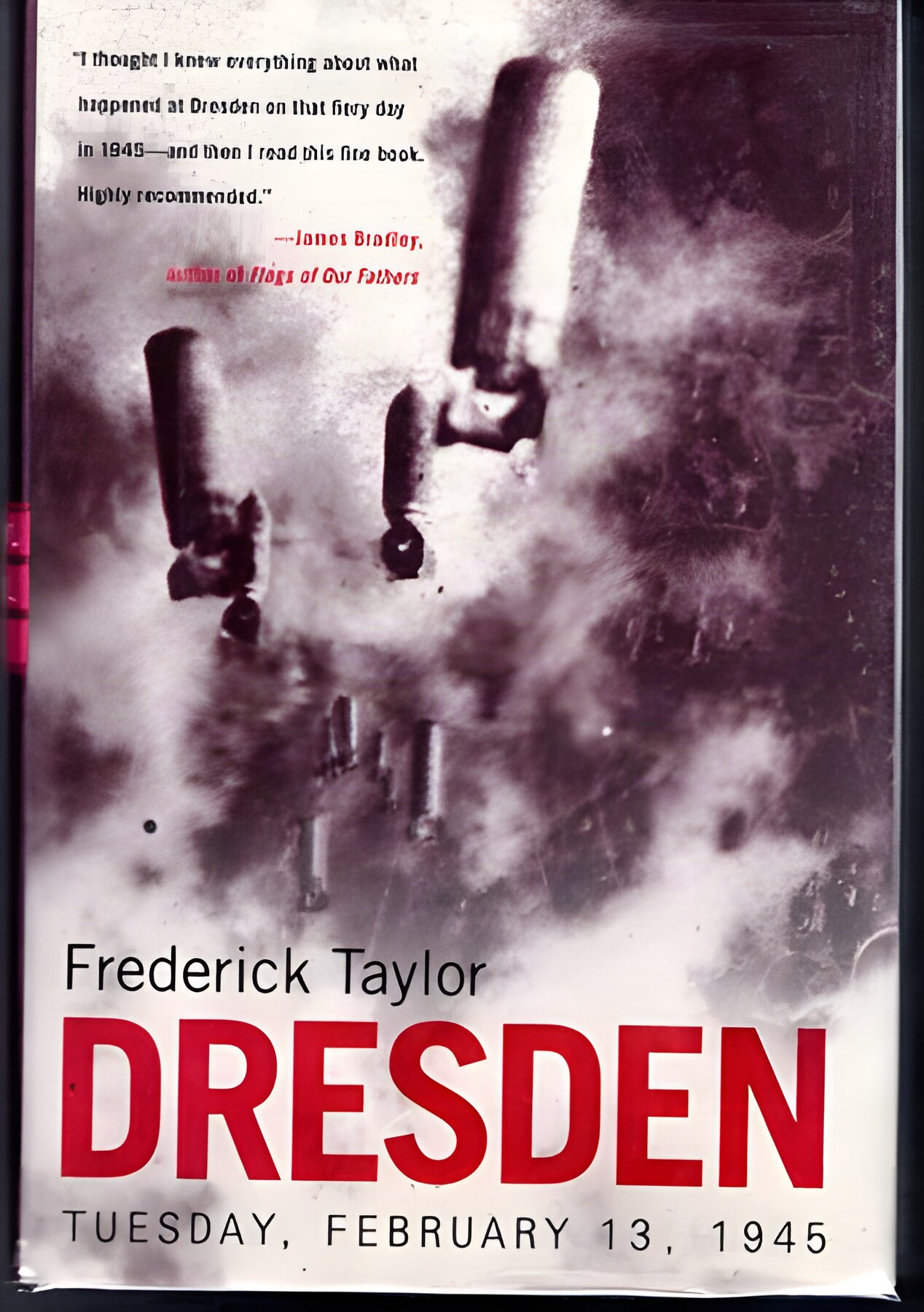
Hardcover. NY, HarperCollins, 1st, 2004, Book: Very Good, Dust Jacket: Very Good, Hardcover in a bright dust jacket, 518 pages with index. B&w illustrations. The allied bombing of Dresden created a massive fire that swept the city center, killing thousands of people and destroying its medieval heart. Debate began almost immediately: Was the destruction of this seemingly civilian city necessary militarily, or was it, some asked, equivalent to a war crime? Not just another in an endless parade of books on Dresden, Taylor's account may go a long way toward putting such questions to rest. It opens with the start, by British bombers, of the nighttime attack, and immediately turns to the past, meandering through several centuries of Dresden history, from its founding in the Middle Ages to the 20th century and the rise of the Nazis. Taylor, translator of The Goebbels Diaries, also covers the history of aerial bombardment and its international laws; gives glimpses of life under the Nazi regime; details the Allied bombing campaign against Germany; and, most excitingly, puts forth new information concerning Dresden's part in the German war effort, which turns out to be much greater than postwar information generally portrays. Clean copy.
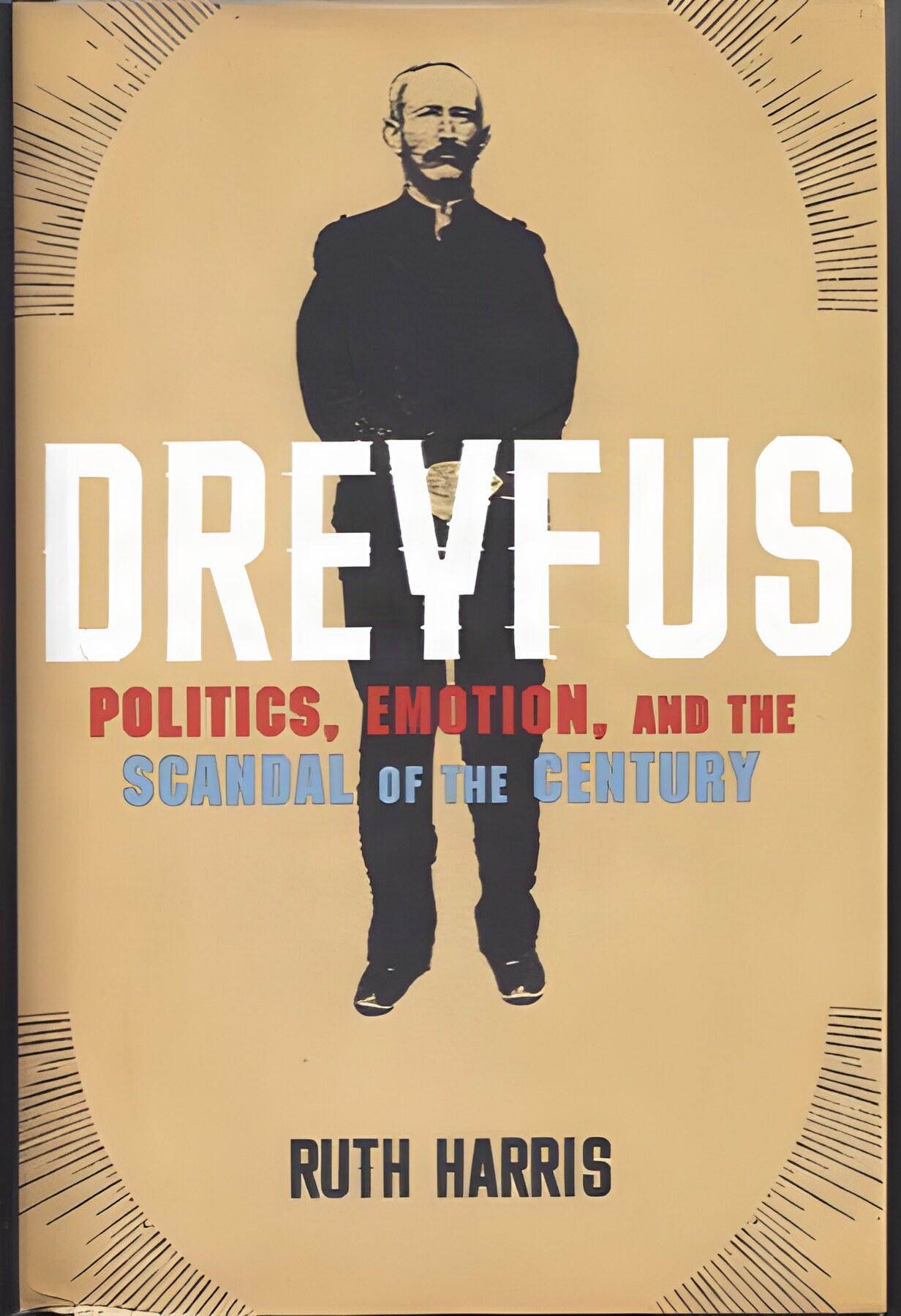
Hardcover. NY, Metropolitan Books, 1st, 2010, Book: Very Good, Dust Jacket: Very Good, Hardcover in a bright, unclipped dust jacket, 542 pages with index. In 1894, Alfred Dreyfus, a Jewish officer in the French army, was wrongfully convicted of being a spy for Germany and imprisoned on Devil's Island. Over the following years, attempts to correct this injustice tore France apart, inflicting wounds on the society which have never fully healed. But how did a fairly obscure miscarriage of justice come to break up families in bitterness, set off anti-Semitic riots across the French empire, and nearly trigger a coup d'etat? Drawing upon thousands of previously unread and unconsidered sources, prizewinning historian Ruth Harris goes beyond the conventional narrative of truth loving democrats uniting against proto-fascists. Instead, she offers the first in-depth history of both sides in the Affair, showing how complex interlocking influences--tensions within the military, the clashing demands of justice and nationalism, and a tangled web of friendships and family connections--shaped both the coalition working to free Dreyfus and the formidable alliances seeking to protect the reputation of the army that had convicted him. Clean copy.
Hardcover. Princeton NJ, Princeton University Press, 1st, 1994, Book: Very Good, Dust Jacket: Very Good, Hardcover in a bright dust jacket, 268 pages. The question of what it takes "to be a man" comes under scrutiny in this sharp, often playful, cultural critique of the German duel--the deadliest type of one-on-one combat in fin-de-siecle Europe. At a time when dueling was generally restricted to swords or had been abolished altogether in other nations, the custom of fighting to the death with pistols flourished among Germany's upper-class males, who took perverse comfort in defying their country's weakly enforced laws. From initial provocation to final death agony, Kevin McAleer describes with ironic humor the complex protocol of the German duel, inviting his reader into the disturbing mindset of its practitioners and the society that valued this socially important but ultimately absurd pastime. Clean copy.
Hardcover. Gottingen GR, Steidl, 1st, 2015, Book: Very Good, Dust Jacket: Very Good, Hardcover, 237 pages, b&w plates throughout. Hoppe traveled throughout Germany between 1925 and 1938, photographing movie stars, workers and peasants, the birth of the Autobahn, and the explosion of industrial building. This collection includes parts of his 1930 book "Deutsche Arbeit" and many photos never previously seen. Clean copy in a dust jacket.
Hardcover. Cambridge MA, Harvard University Press, 1st, 1969, Book: Very Good, Dust Jacket: Very Good, Hardcover in a bright dust jacket, 556 pages. Clean copy.
Softcover. Berkeley, University of California Press, reprint, 1978, Book: Very Good, Softcover, 640 pages. Max Weber's "Economy and Society" is the greatest sociological treatise written in this century. Published posthumously in Germany in the early 1920's, it has become a constitutive part of the modern sociological imagination. "Economy and Society" was the first strictly empirical comparison of social structures and normative orders in world-historical depth, containing the famous chapters on social action, religion, law, bureaucracy, charisma, the city, and the political community with its dimensions of class, status and power. "Economy and Society" is Weber's only major treatise for an educated general public. It was meant to be a broad introduction, but in its own way it is the most demanding textbook yet written by a sociologist. Clean copy.
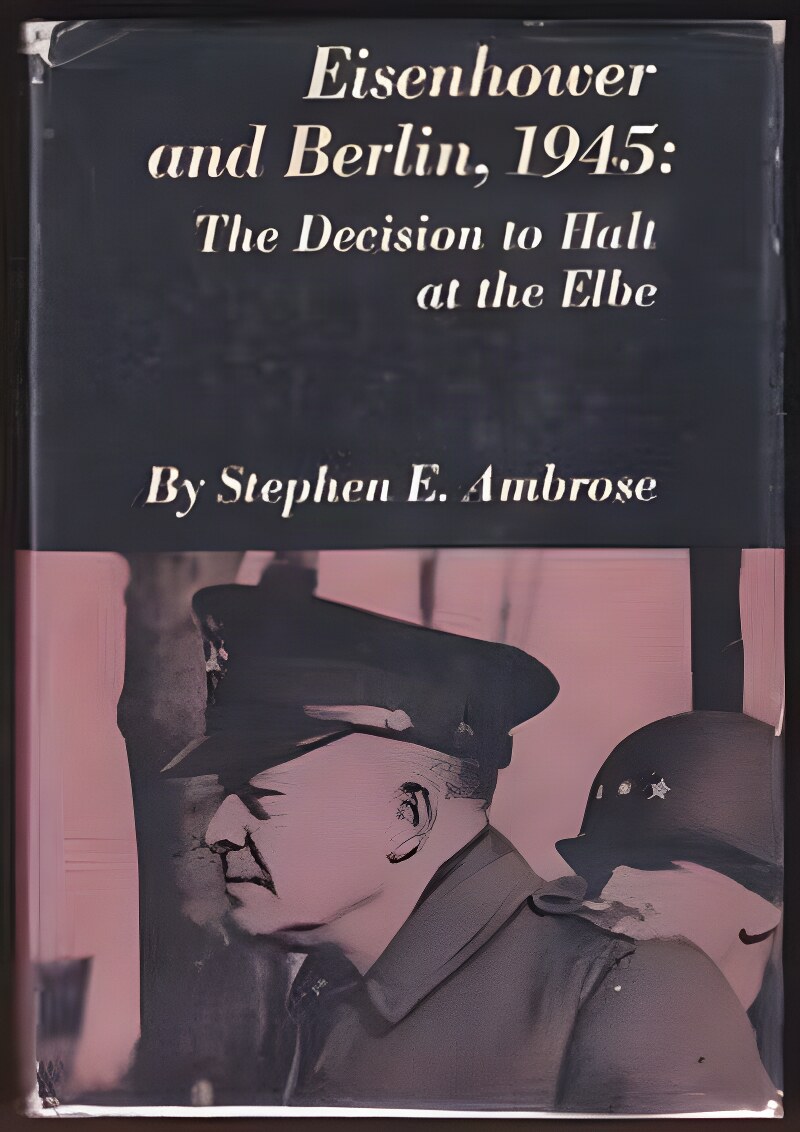
Hardcover. NY, W. W. Norton, 1st, 1967, Book: Very Good, Dust Jacket: Very Good, Hardcover in a worn, chipped dust jacket, 119 pages, maps, index. As WWII ground to a close, whose forces would be the first to reach Berlin? General Dwight David Eisenhower, supreme commander of the British and American armies, chose to halt at the Elbe River and leave Berlin to the Red Army. Could he have beaten the Russians to Berlin? If so, why didn't he? If he had, would the Berlin question have arisen? Would Germany have been divided as it was? Name on front fly leaf, otherwise clean.
Hardcover. Munchen GR%, C. Bertelsmann, 1st, 1992, Book: Very Good, Dust Jacket: Very Good, Hardcover, 255 pages, profusely illustrated with b&w photographs, text illustrations., maps, bibliog., Foreword by Lew Kopelew. GERMAN TEXT. Highly pictorial account of the disastrous German campaign 1942-43. Cllean copy.
Softcover. Germany, Hatje Cantz, 1st, 2011, Book: Very Good, Dust Jacket: None, 128 pages. Softcover. Like new in publisher's shrink-wrap. For the last 50 years, Erro has been creating paintings that make equal use of art history, cartoons, comic books, politics, popular culture and social tableaux. This publication features Erro's series Scapes, and for the first time, presents the entire 1968 Monster cycle--double portraits that contrast the official likenesses of celebrities with monstrously distorted visages.
Hardcover. NY, Random House, 1st, 1969, Book: Very Good, Dust Jacket: Very Good, Hardcover in a lightly worn dust jacket, 387 pages. These essays originated in a series of lectures and seminars held by the Graduate School of Contemporary European Studies and the Centre for the Advanced Study of Italian Society of the University of Reading in 1966-1967. The countries covered include Italy, Germany, Austria, Hungary, Rumania, Poland, Finland, Norway, Great Britain, France, Spain, and Portugal. Name on front fly leaf otherwise clean.
Softcover. West Lafayette IN, Purdue University Press , 1st, 2020, Book: Very Good, Dust Jacket: None, Softcover, 529 pages, b&w illustrations. Eva and Otto is a true story about German opposition and resistance to Hitler as revealed through the early lives of Eva Lewinski Pfister (1910-1991) and Otto Pfister (1900-1985). It is an intimate and epic account of two Germans-Eva born Jewish, Otto born Catholic-who worked with a little-known German political group that resisted and fought against Hitler in Germany before 1933 and then in exile in Paris before the German invasion of France in May 1940. After their improbable escapes from separate internment and imprisonment in Europe, Eva obtained refuge in America in October 1940 where she worked to rescue other endangered political refugees, including Otto, with the help of Eleanor Roosevelt. As revealed in recently declassified records, Eva and Otto later engaged in different secret assignments with the US Office of Strategic Services (OSS) in support of the Allied war effort. Despite their vastly different backgrounds, Eva and Otto gave each other hope and strength as they acted upon what they understood to be an ethical duty to help others threatened by fascism. The book provides a sobering insight into the personal risks and costs of a commitment to that duty. Their unusually beautiful writing-directed to each other in diaries and correspondence during two long periods of wartime separation-also reveals an unlikely and inspiring love story.
Hardcover. New York , Charles Scribner's Sons, 1st, 1972, Book: Very Good, Dust Jacket: Good, 176 pages, illustrated throughout in b&w. Dust jacket price clipped with slight rubbing, wear, sunning to edges and spine. Internally very good.
Hardcover. Princeton University Press , 1st, 1967, Book: Very Good, Dust Jacket: None, Hardcover, gray cloth-covered boards, gilt titles to spine on black ground, 350 pages., illustrated with tables. The book sets out to "describe the inception, organisation, and administration of the Nazi foreign labor program and the relationship of the program to the Nazi war economy and government". It uses captured documents as well as material published during the war. Spine slightly cocked, clean copy.
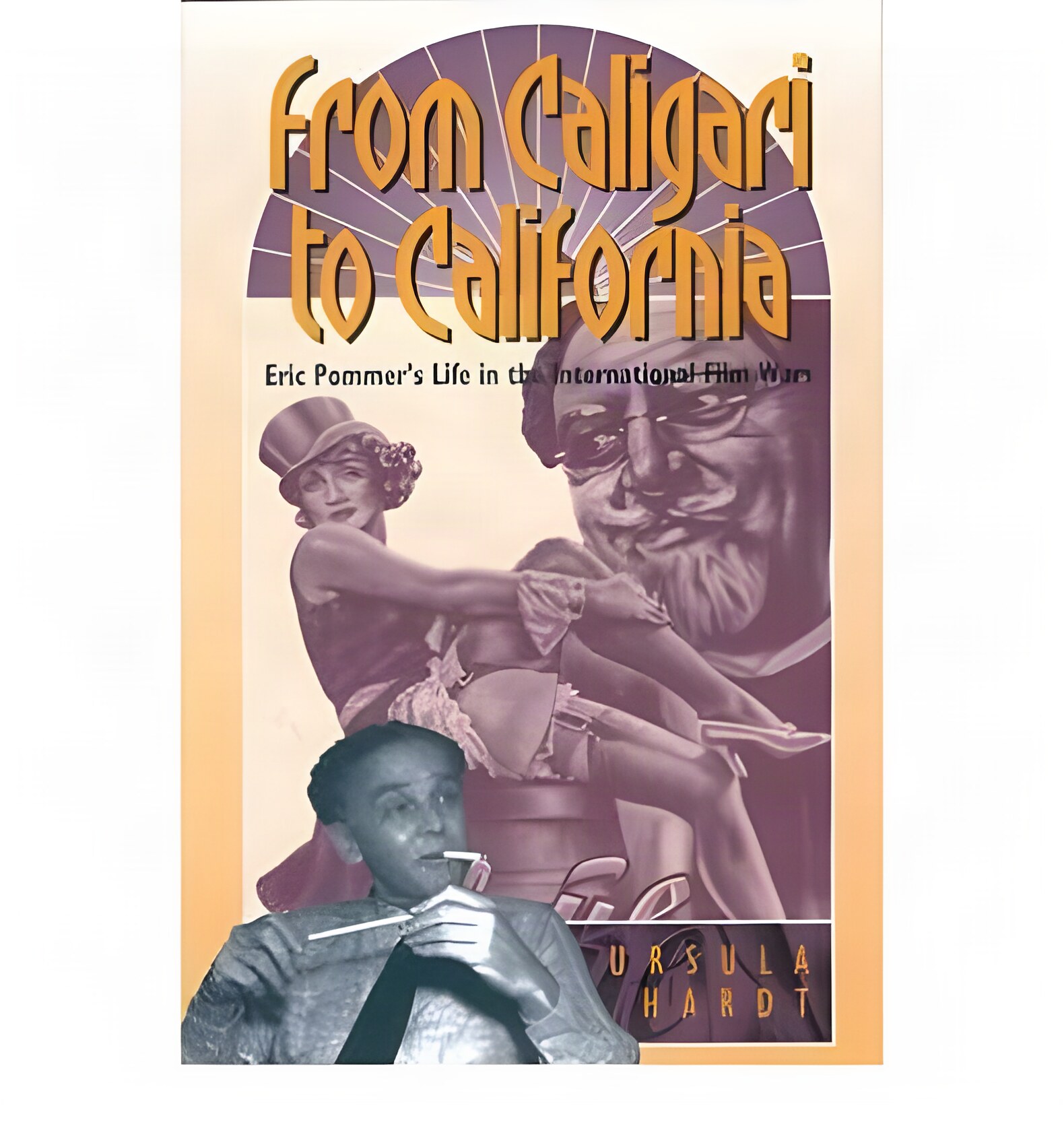
Softcover. Providence RI, Berghahn Books, 1st, 1996, Book: Very Good, Dust Jacket: None, Softcover, 256 pages. Known as one of the great producers and promoters of the film industry, Eric Pommer had a life-long commitment to German film - despite his emigration in 1933 - and worked in France and Britian, as well as the United States. As German producer, studio executive, and film politician in the pre-Hitler era Erich (later Eric) Pommer (1889-1966), a native of Germany, was an innovator and pioneer, a vital force in leading German cinema to international acclaim with successes such as The Cabinet of Dr Caligari, The Nibelungen and The Blue Angel. As Motion Picture Control Officer of the US Military Government he undertook , from 1946-49, the difficult task of rebuilding West Germany's film industry from the ashes of the Second World War. He succeeded brilliantly, but not without paying the hefty price of becoming embroiled in the turmoil of postwar German politics which made him many friends, but also many enemies. This book is the first detailed account in English of the remarkable career of Pommer who became a legend in his own lifetime. Clean copy.
Hardcover. Atglen, PA, Schiffer Military History Book, 1st, 2008, Book: Very Good, Dust Jacket: Very Good, 256 pages. Hardcover with dust jacket. Profusely illustrated with b&w photos. Clean, tight copy.
Hardcover. New York , George H. Doran, unknown, ND, Book: Very Good, Dust Jacket: None, Hardcover, red cloth, 249 pages. Faint foxing to edges, Previous owner's inscription on front end paper, else a clean, tight copy.
Hardcover. London, George Allen & Unwin, reprint, 1965, Book: Very Good, Dust Jacket: None, Hardcover, dark blue cloth, gilt lettering on spine. 184 pages, clean, bright copy. No dust jacket.
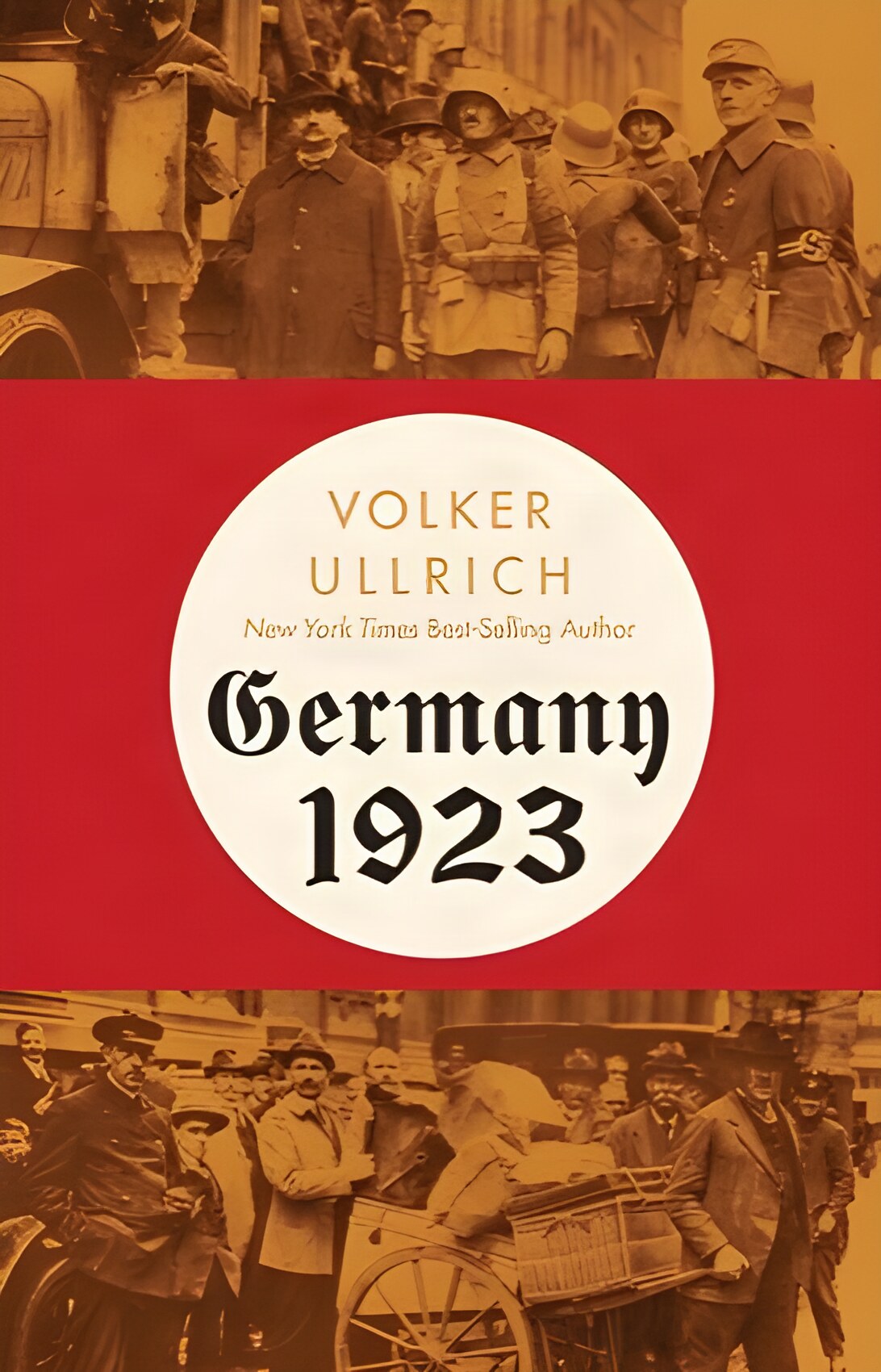
Hardcover. NY, Liveright, 1st, 2023, Book: Very Good, Dust Jacket: Very Good, Hardcover in a bright, unclipped dust jacket, 432 pages, b&w illustrations. As the great Austrian writer Stefan Zweig confided in his autobiography, written in exile, "I have a pretty thorough knowledge of history, but never, to my recollection, has it produced such madness in such gigantic proportions." He was referring to the situation in Germany in 1923. It was a "year of lunacy," defined by hyperinflation, a political system on the verge of collapse, and separatist movements that threatened Germany's territorial integrity. Most significantly, Adolf Hitler launched his infamous Beer Hall Putsch in Munich-a failed coup that nonetheless drew international attention and demonstrated the Nazis' ruthless determination to seize power. In Germany 1923, award-winning historian Volker Ullrich draws on letters, memoirs, newspaper articles, and other sources from the time to present a captivating new history of those explosive twelve months. Clean copy.
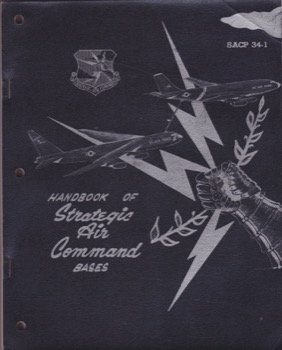
Softcover. Washington DC, United States Air Force, 1959, Book: Very Good, Dust Jacket: None, Softcover, unpaginated, approximately 300 stapled pages. A guide to the SAC's worldwide bases, circa 1959. 8 1/2 X 11", three hole punched. Profusely illustrated with b&w photos of airfields, barracks, NCO clubs, housing for airmen and other facilities covering bases in the states, England, Guam, Germany, etc. Also maps showing locations. Not classified in the early days of the Cold War. Front fly leaf with and introduction by Thomas Power, Commanding General.
Softcover. NY, Oxford University Press, 3rd pr., 2005, Book: Very Good, Dust Jacket: None, Softcover, 311 pages. Criminal punishment in America is harsh and degrading--more so than anywhere else in the liberal west. Executions and long prison terms are commonplace in America. Countries like France and Germany, by contrast, are systematically mild. European offenders are rarely sent to prison, and when they are, they serve far shorter terms than their American counterparts. Why is America so comparatively harsh? In this novel work of comparative legal history, James Whitman argues that the answer lies in America's triumphant embrace of a non-hierarchical social system and distrust of state power which have contributed to a law of punishment that is more willing to degrade offenders.
Hardcover. New York, State University of New York Press, 1st, 1991, Book: Very Good, Dust Jacket: Very Good, 233 pages. Hardcover. Dust jacket with light wear. Clean unmarked text.


 "E.O. Hoppe: The German Work: 1925-1938by: Phillip, Prodger")


 "Emil du Bois-Reymond (1818-1896)-Anton Dohrn (1840-1909): Briefwechsel. Hrsg. von Christiane Groeben in Zusammenarbeit mit Klaus Hierholzer. Mit einer historischen Einfuhrung von Ernst Floreyby:")
 "Entscheidung Stalingrad-Das Buch zur TV Reihe Der verdammte Krieg by: Guido Knopp")
 "Erroby: Schlicht, Esther; Hollein Max")

 "Eva and Otto: Resistance, Refugees, and Love in the Time of Hitlerby: Pfister, Tom; Pfister, Kathy; Pfister, Peter")
 "Felix Mendelssohn: His Life, His Family, His Musicby: Kupferberg, Herbert")
 "Flame of Freedom - The German struggle against Hitler, Theby: Zeller, Eberhard")
 "Foreign Labor in Nazi Germany by: Edward L. Homze")

 "German Fury in Belgium, Theby: Mokveld, L.")



 "Heidegger and the Project of Fundamental Ontologyby: Taminiaux, Jacques")