Hardcover. NY, Pantheon, 1st US, 1999, Book: Very Good, Dust Jacket: Very Good, Hardcover in a bright, unclipped dust jacket. A magisterial achievement: part biography, part history, part moral meditation on the resurrection of torture as an instrument of political power in the twentieth century, The Good Listener tells the story of Helen Bamber, a good but complex woman now in her seventies, who has spent her life battling to bring the dark side of history into the light. In almost every situation in our century where mankind has demonstrated its capacity to intensify evil--during the Nazi Holocaust, in Algeria, Chile, Africa, the USSR, and Israel, as well as in postwar Britain and Germany--Bamber has served as a witness, an expert, or a reproach, as well as a repository of our collective memory of debasement. Her father, a Polish Jew, had been so obsessed by the Fascist threat that he would read to Helen from Goebbels' speeches, teaching her how corrupting and manipulative language can be. She went to Bergen-Belsen after World War II had ended, and upon her return to London she dedicated herself to caring for the young survivors of the camp. So began Bamber's brave devotion to the grim and dangerous task of undoing the work of the torturer--culminating, after her participation as a central force in Amnesty International, in her establishment in England of the Foundation for the Care of Victims of Torture. Because Bamber's uncanny openness to others has been one of her great skills, Clean copy.
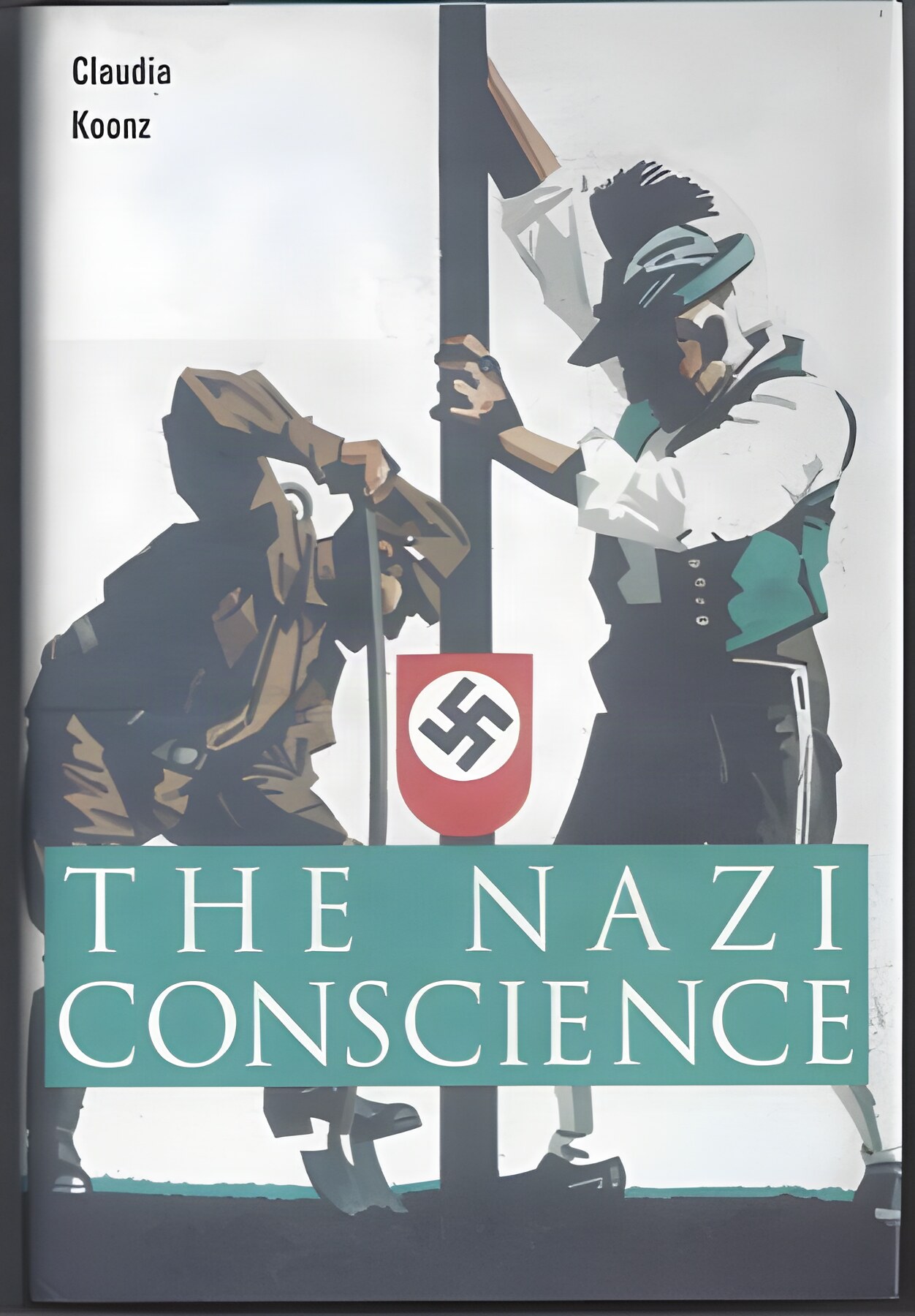
Hardcover. Cambridge MA, Harvard University Press, 1st, 2003, Book: Very Good, Dust Jacket: Very Good, Hardcover in a bright dust jacket, 362 pages. Hitler, Koonz says, understood the German people's need for a sense of coherence in the wake of what many saw as the degeneracy of the Weimar Republic--and 'he promised to rescue old-fashioned values of honor and dignity' by offering a secular faith to replace lost religious certainties. Koonz explores the promotion of these beliefs in German culture and law, and how they led to the catastrophe of the Holocaust, adding much to our understanding of how a civilized society could reach such infamous levels of violence. Clean copy.
Hardcover. NY, Verso, 1st, 2009, Hardcover in a bright, unclipped dust jacket, 561 pages. The New Old World looks at the history of the European Union, the core continental countries within it, and the issue of its further expansion into Asia. It opens with a consideration of the origins and outcomes of European integration since the Second World War, and how today's EU has been theorized across a range of contemporary disciplines. It then moves to more detailed accounts of political and cultural developments in the three principal states of the original Common Market-France, Germany and Italy. A third section explores the interrelated histories of Cyprus and Turkey that pose a leading geopolitical challenge to the Community. The book ends by tracing ideas of European unity from the Enlightenment to the present, and their bearing on the future of the Union. The New Old World offers a critical portrait of a continent now increasingly hailed as a moral and political example to the world at large. Clean copy.
Softcover. Cambridge University Press, reprint, 1992, Book: Very Good, Dust Jacket: None, Softcover, 386 pages, b&w illustrations. Between 1933 and 1945 the Nazi regime in Germany tried to restructure a "class" society along racial lines. This book deals with the ideas and institutions that underpinned this mission, and shows how Nazi policy affected various groups of people, both victims and beneficiaries. The book begins with a serious discussion of the origins of Nazi racial ideology, and then demonstrates the way in which this was translated into official policy. It deals with the systematic persecution not only of the Jews, but also with the fate of lesser-known groups such as Sinti and Roma, the mentally handicapped, the "asocial," and homosexuals. Clean copy.
Hardcover. NY, Alliance Book Corporation, 14th pr., 1939, Book: Very Good, Dust Jacket: None, Hardcover, light putty cloth with red lettering on spine, 300 pages. Anti-Nazi book written by ex-Nazi. Translated from German by E.W. Dickes. Front fly leaf with top inch cut out, other wise clean, tight copy.
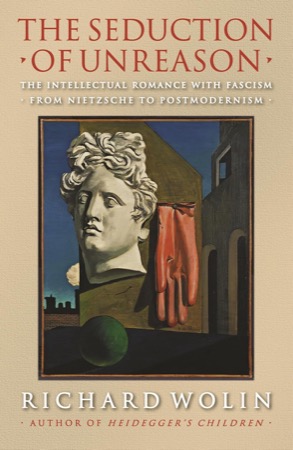
Hardcover. Princeton NJ, Princeton University Press, 1st, 2004, Book: Very Good, Dust Jacket: Very Good, Hardcover in a bright dust jacket, 375 pages. In probing chapters on C. G. Jung, Hans-Georg Gadamer, Georges Bataille, and Maurice Blanchot, Wolin discovers an unsettling commonality: during the 1930s, these thinkers leaned to the right and were tainted by a proverbial "fascination with fascism." Frustrated by democracy's shortcomings, they were seduced by fascism's grandiose promises of political regeneration. The dictatorships in Italy and Germany promised redemption from the uncertainties of political liberalism. But, from the beginning, there could be no doubting their brutal methods of racism, violence, and imperial conquest. Postmodernism's origins among the profascist literati of the 1930s reveal a dark political patrimony. The unspoken affinities between Counter-Enlightenment and postmodernism constitute the guiding thread of Wolin's suggestive narrative. In their mutual hostility toward reason and democracy, postmodernists and the advocates of Counter-Enlightenment betray a telltale strategic alliance--they cohabit the fraught terrain where far left and far right intersect. Clean copy.
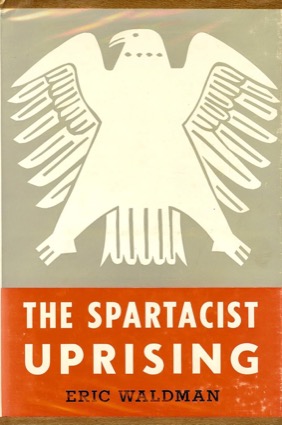
Hardcover. Milwaukee WI, Marquette University, 1st, 1958, Book: Very Good, Dust Jacket: Good, Hardcover in a bright dust jacket with a chip to the top front corner, 248 pages. This book explores the crisis of the German Socialist movement and its growth in intensity from the time of the open split of the Social Democratic Party during World War 1 until its climax in the bloody fighting between the radical left and the socialists during the so-called Spartacist Uprising of January 1919. Clean copy.
Hardcover. NY, Random House, 1st, 2013, Book: Very Good, Dust Jacket: Very Good, Hardcover in a bright, lightly worn dust jacket. 739 pages, index, b&w illustrations. The War That Ended Peace brings vividly to life the military leaders, politicians, diplomats, bankers, and the extended, interrelated family of crowned headsacross Europe who failed to stop the descent into war: in Germany, the mercurial Kaiser Wilhelm II and the chief of the German general staff, Von Moltke the Younger; in Austria-Hungary, Emperor Franz Joseph, a man who tried, through sheer hard work, to stave off the coming chaos in his empire; in Russia, Tsar Nicholas II and his wife; in Britain, King Edward VII, Prime Minister Herbert Asquith, and British admiral Jacky Fisher, the fierce advocate of naval reform who entered into the arms race with Germany that pushed the continent toward confrontation on land and sea. Clean copy.
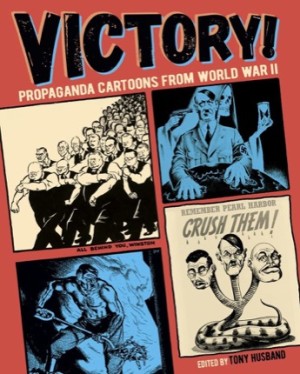
Softcover. London, Sirius, 1st, 2022, Book: Very Good, Dust Jacket: None, Softcover, 192 pages. Award-winning cartoonist Tony Husband tells the story of World War II through a selection of the era's finest political cartoons. Satire is one of the key weapons of war. Forget 'sticks and stones', each country uses cartoons to hit the enemy where it really hurts and to maintain morale on the home front. Each country brought their own unique style and this collection features work from Britain, the USA, Germany, Russia and Japan and features the work of some of World War II's greatest cartoonists including Bill Mauldin, Fougasse, Emett, David Low and Graham Laidler. Clean, bright copy.
Hardcover. Lawrence KS, University Press of Kansas , 1st, 2011, Book: Very Good, Dust Jacket: Very Good, Hardcover in a bright dust jacket, 386 pages, b&w illustrations. Inept leadership, inefficient campaigning, and enormous losses would seem to spell military disaster. Yet despite these factors, the Soviet Union won its war against Nazi Germany thanks to what Roger Reese calls its military effectiveness: its ability to put troops in the field even after previous forces had been decimated. Reese probes the human dimension of the Red Army in World War II through a close analysis of soldiers' experiences and attitudes concerning mobilization, motivation, and morale. In doing so, he illuminates the Soviets' remarkable ability to recruit and retain soldiers, revealing why so many were willing to fight in the service of a repressive regime--and how that service was crucial to the army's military effectiveness. He examines the various forms of voluntarism and motivations to serve-including the influences of patriotism and Soviet ideology-and shows that many fought simply out of loyalty to the idea of historic Russia and hatred for the invading Germans. He also considers the role of political officers within the ranks, the importance of commanders who could inspire their troops, the bonds of allegiance forged within small units, and persistent fears of Stalin's secret police. Clean copy.
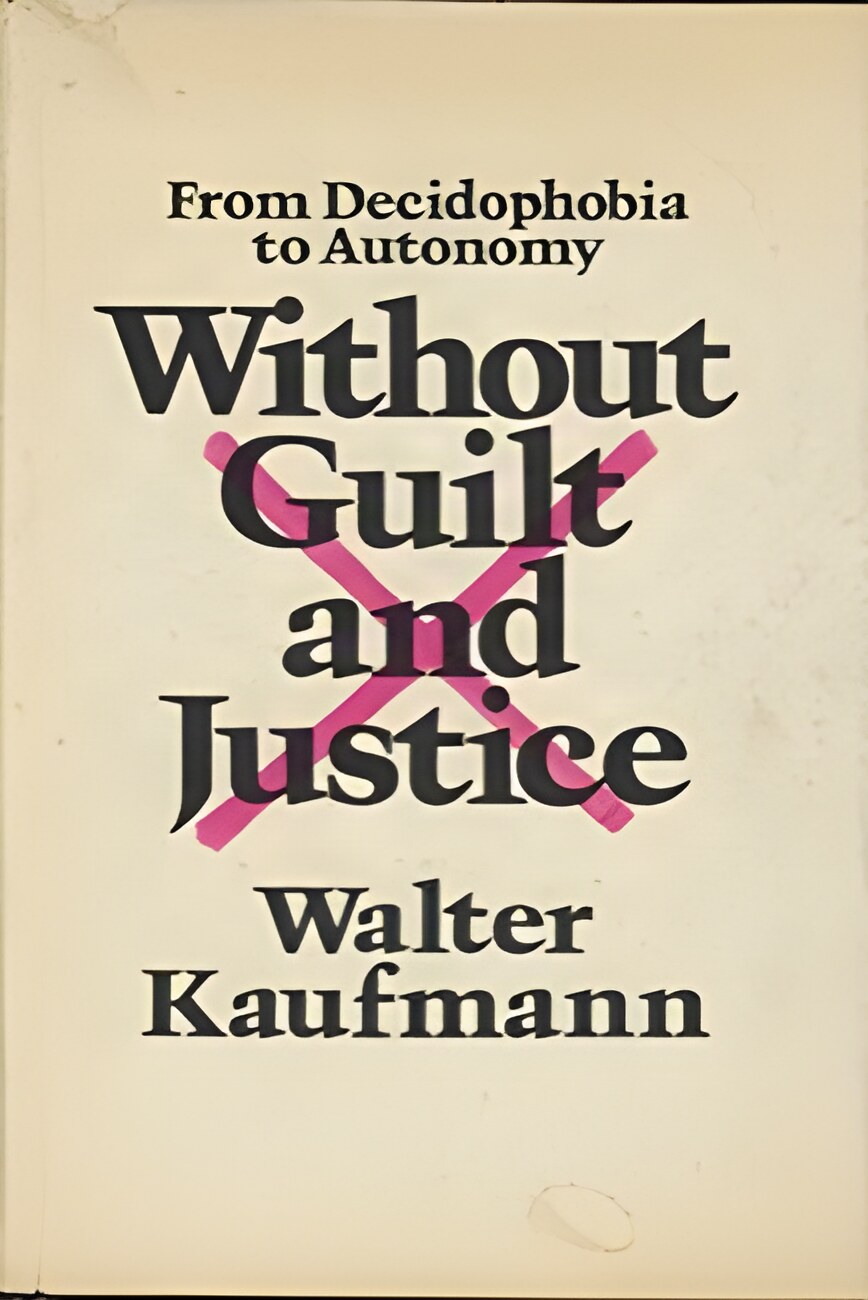
Hardcover. NY, Peter H. Wyden, 1st, 1973, Book: Good, Dust Jacket: Fair, Hardcover in a dust jacket that has a water stain to rear panel. Mild ripple to rear cloth, but book, text pages not affected. There is some foxing/tanning to top edge of text block. No markings. Walter Kaufmann in defining the conflicts in Germany that put Hitler in power, are very similar to our challenges today. A good read for people who want to understand underlying impulses in our culture.




 "Why Stalin's Soldiers Fought: the Red Army's Military Effectiveness in World War IIby: Roger R. Reese")