Hardcover. NY, Knopf, 1st, 2022, Book: Very Good, Dust Jacket: Very Good, Hardcover in a bright, unclipped dust jacket. A revelatory history of the transformational decade that followed World War II, when Germany raised itself put of the ashes of defeat, turned away from fascism, and reckoned with the corruption of its soul and the horrors of the Holocaust.
Hardcover. Cambridge MA, Harvard University Press, 1st US, 1996, Book: Very Good, Dust Jacket: Very Good, Hardcover in a bright dust jacket with minor edgewear, 468 pages. Biologists under Hitler combines exhaustive research with capsule biographies of key scientists to overturn certain assumptions about science under the Nazi regime. Biological research, for instance, was neither neglected nor underfunded during World War II; funding by the German Research Association (DFG) in fact increased tenfold between 1933 and 1938, and genetic research in particular flourished. Deichmann shows that the forced emigration of Jews had a less significant impact in biology than in other fields. Furthermore, she reveals that the widely observed decline in German biology after 1945 was not caused primarily by the Third Reich's science policy or by the expulsion of biologists but was due to the international isolation of German scientists as part of the legacy of National Socialism. Her book also provides overwhelming evidence of German scientists' conscious misrepresentation after the war of their wartime activities. In this regard, Deichmann's capsule biography of Konrad Lorenz is particularly telling. Clean copy.
Softcover. Baltimore, Johns Hopkins University Press, 1st, 1994, Book: Very Good, Dust Jacket: None, Softcover, 295 pages. The infamous Nuremberg Doctors' Trials of 1946-47 revealed horrifying crimes --ranging from grotesque medical experiments on humans to mass murder--committed by physicians and other health care workers in Nazi Germany. But far more common, argue the authors of Cleansing the Fatherland, were the doctors who profited professionally and financially from the killings but were never called to task--and, indeed, were actively shielded by colleagues in postwar German medical organizations. The authors examine the role of German physicians in such infamous operations as the "T 4" euthanasia program (code-named for the Berlin address of its headquarters at Number 4 Tiergartenstrasse). They also reveal details of countless lesser known killings--all ordered by doctors and all in the name of public health. Maladjusted adolescents, the handicapped, foreign laborers too illto work, even German civilians who suffered mental breakdowns after air raids were "selected for treatment." (One physician who persisted in speaking of "killings" was officially reprimanded for his "negative attitude.") The book also includes original documents--never before published in English--that give unique and chilling insight into the everyday workings of Nazi medicine. Clean copy.
Hardcover. Amsterdam, Schetern & Giltay, 1st, 1915, Book: Very Good, Dust Jacket: None, Hardcover, color illustrated boards, 190 pages. A collection of b&w (a few 2-color) political cartoons preceding WW I. Dutch text. Scarce.
Hardcover. Hamburg, Cigaretten Bilderdienst, 1st, 1933, Book: Good, Dust Jacket: None, Hardcover, tan cloth with embossed gilt design on front cover. 150 pages with 225 mounted black and white and color images. German text. There is a frontispiece portrait of Hitler and a few other similar panels. A monumental propaganda work on Herr Hitler, Der Fuhrer, 9" x 12", The quality of the photographs is excellent, but one giant picture at the end, which opens out to 6 solid pages all joined together showing "Standartenweihe im Luitpoldhain1933" A vast sea of Hitler's armed forces in a giant arena. All photographs were taken and carefully selected by Heinrich Hoffmann, Adolf Hitler's official photographer. Hoffmann's photography was used. A chilling piece of German history and a fascinating example of the NSDAP's propaganda machine. Volume shows some shelf wear, name on half-title page, good plus overall.
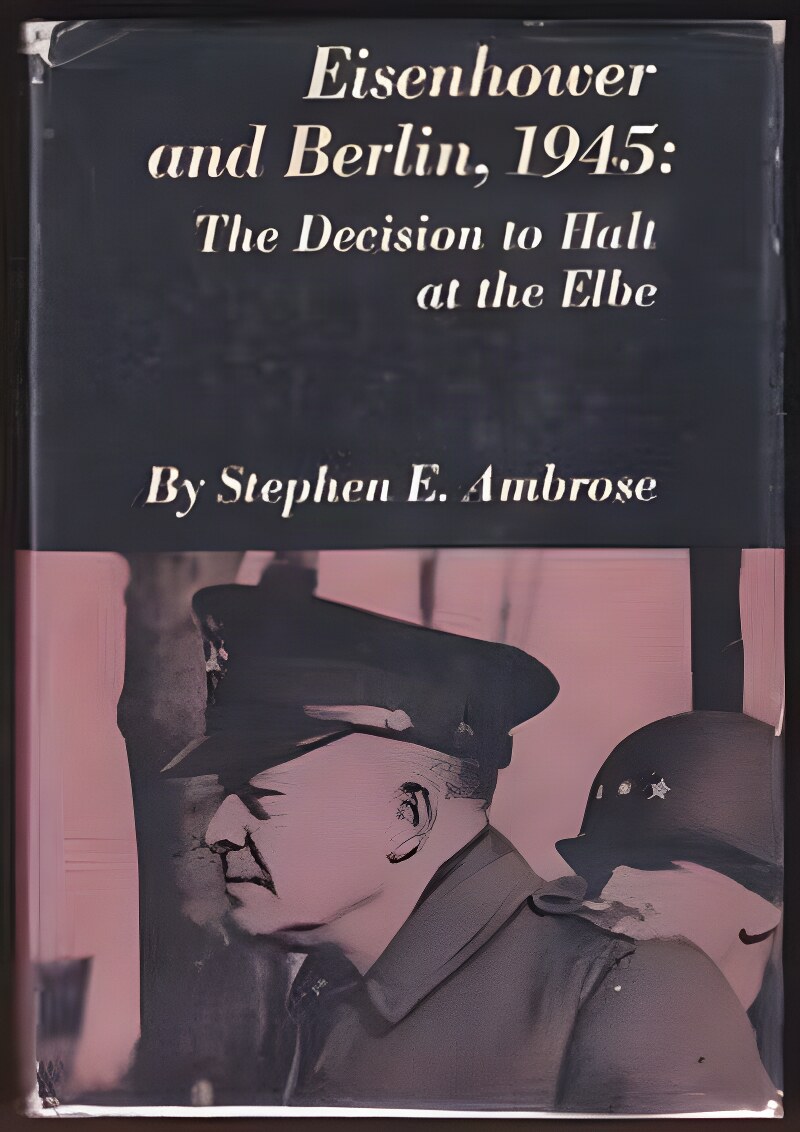
Hardcover. NY, W. W. Norton, 1st, 1967, Book: Very Good, Dust Jacket: Very Good, Hardcover in a worn, chipped dust jacket, 119 pages, maps, index. As WWII ground to a close, whose forces would be the first to reach Berlin? General Dwight David Eisenhower, supreme commander of the British and American armies, chose to halt at the Elbe River and leave Berlin to the Red Army. Could he have beaten the Russians to Berlin? If so, why didn't he? If he had, would the Berlin question have arisen? Would Germany have been divided as it was? Name on front fly leaf, otherwise clean.
Hardcover. Princeton University Press , 1st, 1967, Book: Very Good, Dust Jacket: None, Hardcover, gray cloth-covered boards, gilt titles to spine on black ground, 350 pages., illustrated with tables. The book sets out to "describe the inception, organisation, and administration of the Nazi foreign labor program and the relationship of the program to the Nazi war economy and government". It uses captured documents as well as material published during the war. Spine slightly cocked, clean copy.
Hardcover. London, George Allen & Unwin, reprint, 1965, Book: Very Good, Dust Jacket: None, Hardcover, dark blue cloth, gilt lettering on spine. 184 pages, clean, bright copy. No dust jacket.
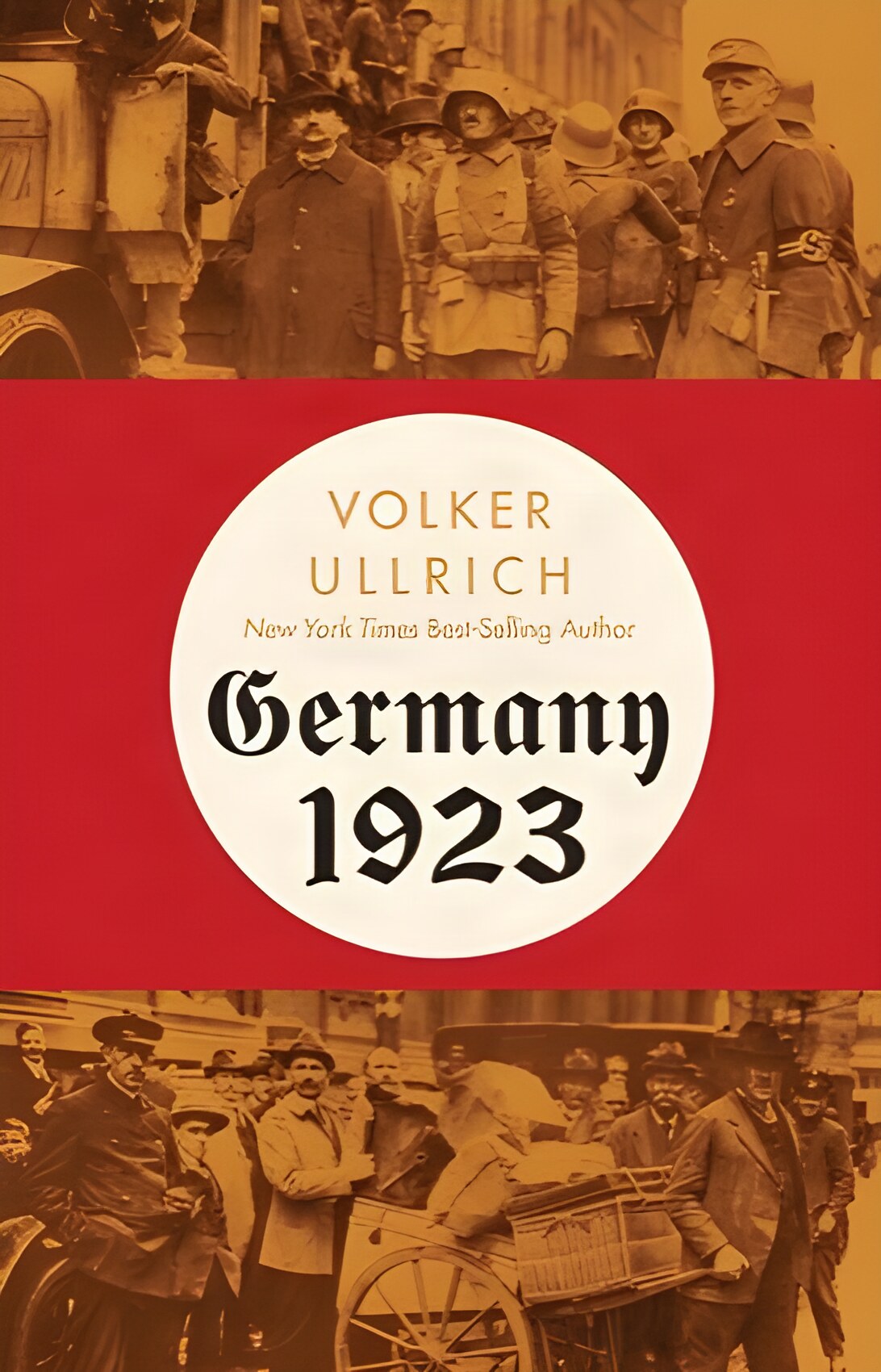
Hardcover. NY, Liveright, 1st, 2023, Book: Very Good, Dust Jacket: Very Good, Hardcover in a bright, unclipped dust jacket, 432 pages, b&w illustrations. As the great Austrian writer Stefan Zweig confided in his autobiography, written in exile, "I have a pretty thorough knowledge of history, but never, to my recollection, has it produced such madness in such gigantic proportions." He was referring to the situation in Germany in 1923. It was a "year of lunacy," defined by hyperinflation, a political system on the verge of collapse, and separatist movements that threatened Germany's territorial integrity. Most significantly, Adolf Hitler launched his infamous Beer Hall Putsch in Munich-a failed coup that nonetheless drew international attention and demonstrated the Nazis' ruthless determination to seize power. In Germany 1923, award-winning historian Volker Ullrich draws on letters, memoirs, newspaper articles, and other sources from the time to present a captivating new history of those explosive twelve months. Clean copy.
Hardcover. New York, State University of New York Press, 1st, 1991, Book: Very Good, Dust Jacket: Very Good, 233 pages. Hardcover. Dust jacket with light wear. Clean unmarked text.
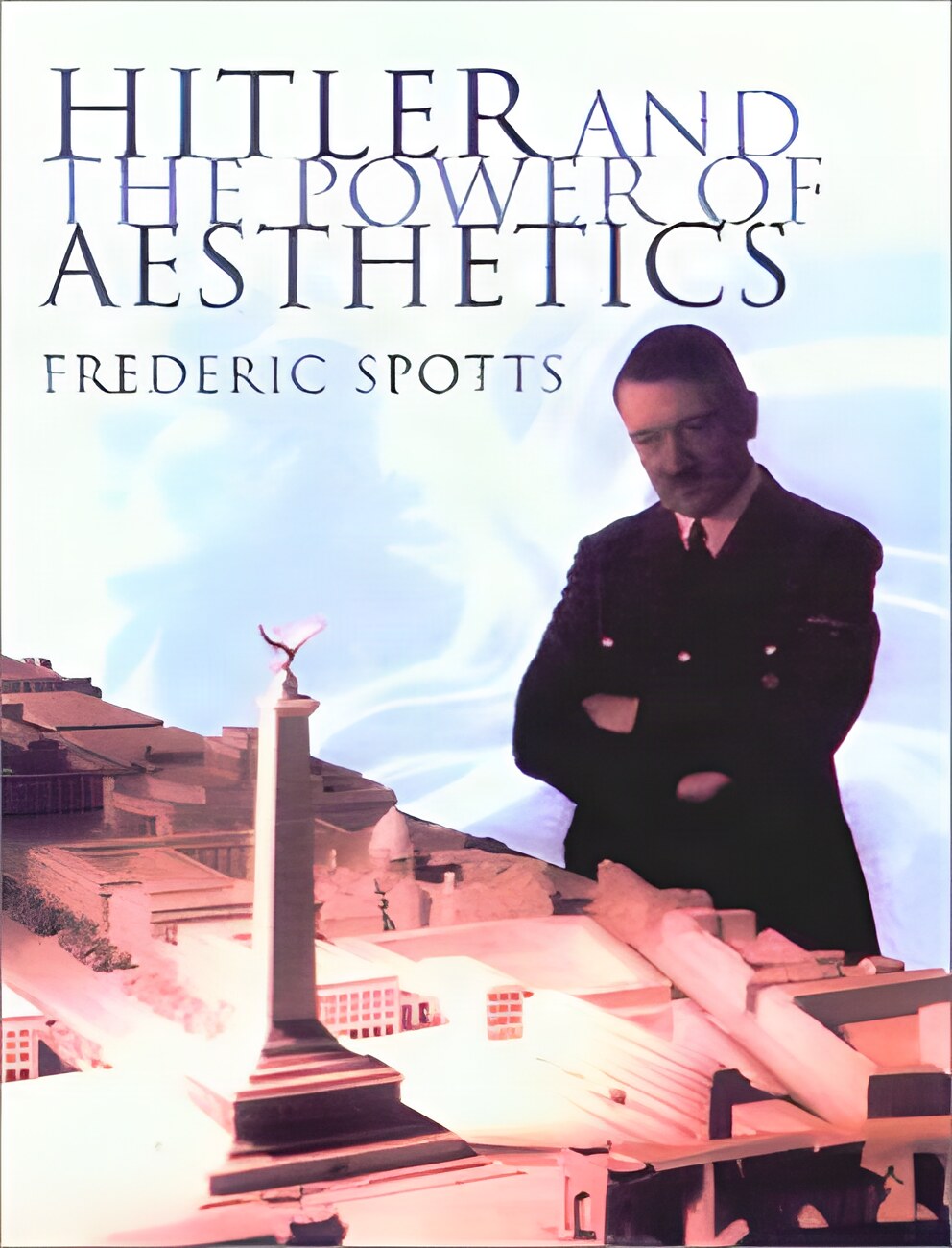
Hardcover. Woodstock NY, Overlook Press, 1st US, 2003, Book: Very Good, Dust Jacket: Very Good, Hardcover in a bright dust jacket, 456 pages with b&w and color illustrations. In Hitler and the Power of Aesthetics, acclaimed historian Frederic Spotts presents a startling reassessment of Hitler's aims and motivations. Spotts dismisses the traditional biographical view that Hitler was an "unperson," who had no life outside of politics, Spotts shows that Hitler's interest in the arts was as intense as his racism and his argument is punctuated with photographs and illustrations, including reproductions of Hitler's watercolors and drawings from his 1925 sketchbook. The book offers the first full analysis of Hitler's own work as a painter, as well as of his art collection. It also treats the entire range of his personal interests: from architecture, painting, symphony, opera, and sculpture, to the German autobahn system and the development of the Volkswagen. A riveting and highly original work, Hitler and the Power of Aesthetics provides a key to an understanding of the Third Reich which has, until now, been missing from biographies and studies of the arts in the Third Reich, as well as from political and military studies of Hitler. Clean copy.
Hardcover. Wilby UK, Michael Russell Publishing, 1st UK, 1997, Book: Very Good, Dust Jacket: Very Good, Hardcover in a bright dust jacket. 391 pages, b&w illustrations, translated from the German by G.T. Waddington. An insider's account of the turbulent rise and fall of Hitler's "Thousand Year Reich". Clean copy.
Hardcover. NY, Harper & Row, 1st, 1982, Book: Very Good, Dust Jacket: Very Good, Hardcover in a bright dust jacket, 385 pages, b&w photos. A fast-moving re-enactment of the thirty hours of Hitler's 1923 Munich beerhall putsch, based on newspaper reports, police documents, trial records, and the personal recollections of participants and eye-witnesses.
Softcover. New York, John Day Company, 1st Edition, 1933, Book: Very Good, Dust Jacket: None, 32 pages. Softcover pamphlet with French flaps. Tan wrapper with black title on front cover and text on back cover (see image). Staple bound. A couple of stray marks on front cover (see image). Some light tanning throughout from age. In amazing shape for its age.
Softcover. Brighton UK, Sussex Academic Press, 1st, 2010, Book: Very Good, Dust Jacket: None, Softcover, 283 pages. The first book to study the history of the Nazis in Britain. In September 1930, the Nazi Party newspaper, Volkischer Beobachter, sent its first representative to London. Soon afterwards, German residents in London established an Ortsgruppe, or local Nazi group, which provided Party members with a place to congregate and support the new movement. By 1933, more than 100 members belonged to the London group. The Nazis in pre-war London created a dilemma for the Foreign Office and the Home Office, who were divided as to how best to treat residents whose allegiance was to the German Reich. Some felt that all Nazi organizations should be banned, and Party Members should not be allowed to enter the UK. Others, including MI5, argued that it would be easier to keep track of Nazis if they were in-country. Previously unpublished German documents reveal the fates of German diplomats, journalists, and professionals, many of whom were interned in Britain or deported to Nazi Germany once war broke out on September 3, 1939. Clean copy.
Softcover. Chjcago, University of Chicago Press, 2nd pr., 1991, Book: Very Good, Dust Jacket: None, Softcover, 240 pages. Nietzsche's New Seas makes available for the first time in English a representative sample of the best recent Nietzsche scholarship from Germany, France, and the United States. Michael Allen Gillespie and Tracy B. Strong have brought together scholars from a variety of disciplines--philosophy, history, literary criticism, and musicology--and from schools of thought that differ both methodologically and ideologically. The contributors--Karsten Harries, Robert Pippin, Eugen Fink, Hans-Georg Gadamer, Kurt Paul Janz, Sarah Kofman, Jean-Michel Rey, and the editors themselves--take a new approach to Nietzsche, one that begins with the claim that his enigmatic utterances can best be understood by examining the style or structure of his thought. Clean copy.
Hardcover. NY, Macmillan Company, 1st US, 1969, Book: Very Good, Dust Jacket: Very Good, Hardcover in a bright, unclipped dust jacket, 461 pages. Laval began his career as a socialist, but over time drifted far to the right. Following France's defeat and armistice with Germany in 1940, he served in prominent roles in Philippe Petain's Vichy Regime, first as the vice-president of the Council of Ministers from 11 July 1940 to 13 December 1940, and later as the head of government from 18 April 1942 to 20 August 1944. After the liberation of France in 1944, Laval was arrested by the French government under General Charles de Gaulle. In what was widely regarded as a flawed trial, Laval was found guilty of plotting against the security of the State and collaboration with the enemy, and after a thwarted suicide attempt, he was executed by firing squad. His manifold political activities left a complicated and controversial legacy, resulting in more than a dozen conflicting biographies of him. Name on front fly leaf, otherwise a bright, clean copy.
Hardcover. Zurich/NY, Edition Stemmle, 1st, 1999, Book: Very Good, Dust Jacket: Very Good, Hardcover in a bright dustjacket. 223 pages. Foreword by James H. Billington. Text by Leah Bendavid-Val. Includes images by Max Alpert, Dmitri Debakov, Georgy Lipskerov, Max Penson, Leonid Shokin, Esther Burley, Jack Delano, Walker Evans, Dorothea Lange, Russell Lee, Gordon Parks, Marion Post Wolcott, Ben Shahn, and numerous others. Afterword by Philip Brookman and with biographies of the photographers. Clean copy.
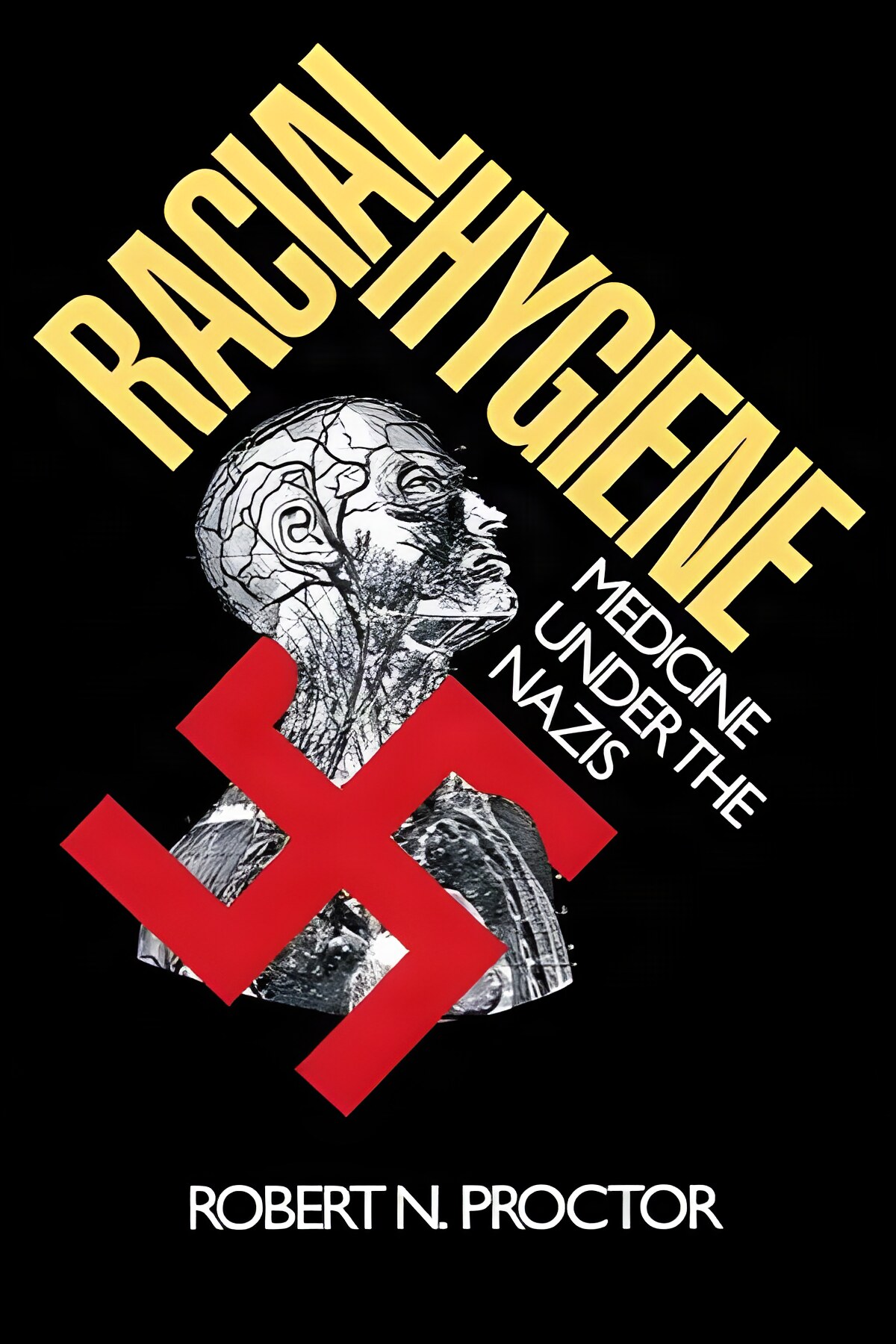
Softcover. Cambridge MA, Harvard University Press, 2nd pr., 1988, Book: Very Good, Dust Jacket: None, Softcover, 414 pages, b&w illustrations. Scholars exploring the history of science under the Nazis have generally concentrated on the Nazi destruction of science or the corruption of intellectual and liberal values. Racial Hygiene focuses on how scientists themselves participated in the construction of Nazi racial policy. Robert Proctor demonstrates that the common picture of a passive scientific community coerced into cooperation with the Nazis fails to grasp the reality of what actually happened-namely, that many of the political initiatives of the Nazis arose from within the scientific community, and that medical scientists actively designed and administered key elements of National Socialist policy. The book presents the most comprehensive account to date of German medical involvement in the sterilization and castration laws, the laws banning marriage between Jews and non-Jews, and the massive program to destroy "lives not worth living." The study traces attempts on the part of doctors to conceive of the "Jewish problem" as a "medical problem," and how medical journals openly discussed the need to find a "final solution" to Germany's Jewish and gypsy "problems." Clean, bright copy.
Hardcover. UK, Cambridge University Press, 1st, 1984, Book: Very Good, Dust Jacket: Good, Hardcover in a lightly worn dust jacket, 251 pages. In a unique application of critical theory to the study of the role of ideology in politics, Jeffrey Herf explores the paradox inherent in the German fascists' rejection of the rationalism of the Enlightenment while fully embracing modern technology. He documents evidence of a cultural tradition he calls 'reactionary modernism' found in the writings of German engineers and of the major intellectuals of the. Weimar right: Ernst Juenger, Oswald Spengler, Werner Sombart, Hans Freyer, Carl Schmitt, and Martin Heidegger. The book shows how German nationalism and later National Socialism created what Joseph Goebbels, Hitler's propaganda minister, called the 'steel-like romanticism of the twentieth century'. By associating technology with the Germans, rather than the Jews, with beautiful form rather than the formlessness of the market, and with a strong state rather than a predominance of economic values and institutions, these right-wing intellectuals reconciled Germany's strength with its romantic soul and national identity. Light pencil underlining to some pages, otherwise clean.
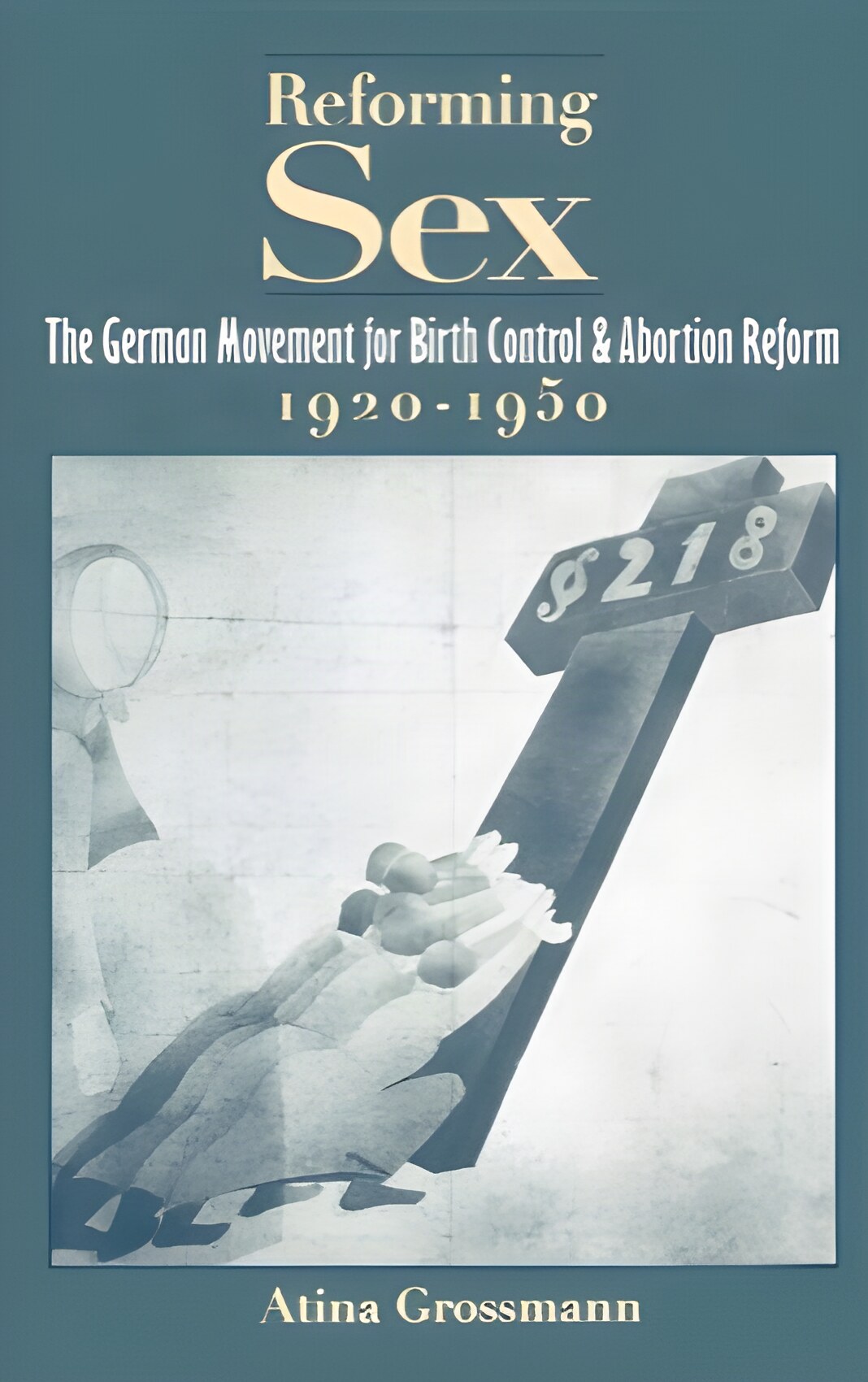
Hardcover. London/NY, Oxford University Press, 1st, 1995, Book: Very Good, Dust Jacket: Very Good, Hardcover in a bright dust jacket, 304 pages. Reforming Sex reconstructs the complicated history of a movement that has been romanticized as the harbinger of 1960s sexual radicalism and demonized as a precursor to Nazi racial policy, but mostly buried and obscured by Nazi book-burnings and repression. Relying on a broad range of sources--from police reports, films and personal interviews to sex manuals unearthed from library basements and secondhand book stores--the book analyzes a remarkable mass mobilization during the turbulent and innovative Weimar years of doctors and lay-people for women's right to abortion and public access to birth control and sex education. Clean copy.
Softcover. Cambridge MA, Belknap Press / Harvard, reprint, 1996, Book: Very Good, Dust Jacket: None, Softcover, 760 pages. Representing ten years of research into the history of the managerial business system, this book concentrates on patterns of growth and competitiveness in the United States, Germany, and Great Britain, tracing the evolution of large firms into multinational giants and orienting the late twentieth century's most important developments. Clean,bright copy.
Hardcover. NY, Knopf, 1st, 2012, Book: Very Good, Dust Jacket: Very Good, Hardcover in a bright, unclipped dust jacket. 418 pages, b&w illustrations. From the author of the best-selling One Minute to Midnight, a riveting account of the pivotal six-month period spanning the end of World War II, the dawn of the nuclear age, and the beginning of the Cold War. When Roosevelt, Stalin, and Churchill met in Yalta in February 1945, Hitler's armies were on the run and victory was imminent. The Big Three wanted to draft a blueprint for a lasting peace--but instead set the stage for a forty-four-year division of Europe into Soviet and western spheres of influence. After fighting side by side for nearly four years, their political alliance was rapidly fracturing. By the time the leaders met again in Potsdam in July 1945, Russians and Americans were squabbling over the future of Germany and Churchill was warning about an "iron curtain" being drawn down over the Continent. These six months witnessed some of the most dramatic moments of the twentieth century: the cataclysmic battle for Berlin, the death of Franklin Roosevelt, the discovery of the Nazi concentration camps, Churchill's electoral defeat, and the dropping of atomic bombs on Japan. While their armies linked up in the heart of Europe, the political leaders maneuvered for leverage: Stalin using his nation's wartime sacrifices to claim spoils, Churchill doing his best to halt Britain's waning influence, FDR trying to charm Stalin, Truman determined to stand up to an increasingly assertive Soviet superpower.
Softcover. Princeton NJ, Princeton University Press, 1st US, 2018, Book: Very Good, Dust Jacket: None, Softcover, 276 pages, b&w illustrations. Wry political fairy tales from a nineteenth-century politician that speak to our current times. Edouard Laboulaye (1811-1883), one of nineteenth-century France's most prominent politicians and an instrumental figure in establishing the Statue of Liberty, was also a prolific writer of fairy tales. Smack-Bam, or The Art of Governing Men brings together sixteen of Laboulaye's most artful stories in new translations. Filled with biting social commentary and strong notions of social justice, these rediscovered tales continue to impart lessons today. Inspired by folktales from such places as Estonia, Germany, Iceland, and Italy, Laboulaye's deceptively entertaining stories explore the relationships between society and the ruling class. Clean copy.




 "De Oorlog In Prent / Karikaturen Uit De Versehillende Landenby: Feith, Jan")
 "Deutschland erwacht Werden, Kampf und Sieg der NSDAPby: Bade, Wilfrid")
 "Foreign Labor in Nazi Germany by: Edward L. Homze")

 "Heidegger and the Project of Fundamental Ontologyby: Taminiaux, Jacques")


 "Nazi Culture: The Brown Darkness Over Germanyby: Josephson, Matthew")


 "Nazis in Pre War London 1930 1939: The Fate and Role of German Party Members and British Sympathizers by: James J. Barnes; Patience P. Barnes")




 "Scale and Scope: The Dynamics of Industrial Capitalismby: Alfred DuPont Chandler Jr.")
 "Six Months in 1945: FDR, Stalin, Churchill, and Truman--from World War to Cold Warby: Michael Dobbs")
 "Smack-Bam, or The Art of Governing Men: Political Fairy Tales of Edouard Laboulayeby: Edouard Laboulaye")