Hardcover. Cambridge UK, Cambridge University Press, 1st, 1987, Book: Very Good, Dust Jacket: Very Good, Hardcover in a bright dust jacket. 288 pages.This substantial and unusual volume is not an encyclopedic summary of names, dates, and images but a roughly chronological series of scholarly, sometimes provocative essays by specialists in various aspects of the medium's history. Contributors (identified only in the table of contents) are from France, Italy, Germany, Switzerland, England, and the United States. The chapters on photo-journalism, the illustrated press, and photography between the world wars are particularly informative, while high-quality illustrations from public and private collections worldwide convey photography's technical and aesthetic development and its ubiquity.
Hardcover. London, Souvenir Press, 1st, 1984, Book: Very Good, Dust Jacket: Very Good, Hardcover in a bright dust jacket, 251 pages. Illustrated with phtographs, line drawings and maps. Translated from the Dutch by Adrienne Dixon. The autobiography of a Dutch youth who "joined the German navy in a spirit of bravado, only to find himself trapped in the final, agonising throes of Germany's defeat." Subsequent tours in the French Foreign Legion and Korea led from his being a devotee of war to a confirmed pacifist. A fancnating life told with honesty and passion.
Softcover. NY, Farrar, Straus and Giroux, reprint, 1986, Book: Very Good, Dust Jacket: None, Softcover, 192 pages. Roman Vishniac's A Vanished World is an extraordinary record of the lives of German and Eastern European Jews in the years immediately preceding the Holocaust. Vishniac, a Russian Jew, began to take photographs of village life during World War I, when Russian Jews who lived near the front were accused of being German spies and were deported to Siberia. He later moved to Germany, where he witnessed the horrible events of Kristallnacht and the anti-Jewish legislation that allowed Hitler to declare his enemies stateless and therefore unworthy of international protection. As we study Vishniac's photographs--a surviving fraction of the more than 16,000 he took--we are aware that we are seeing the faces of those soon to die, witnessing a world that has all but perished. Yet that world, of shops and schools, of busy streets and quiet farms, remains with us if only as a ghostly memory, thanks in part to Vishniac's compassionate eye.
Hardcover. NY, Knopf, 1st, 2022, Book: Very Good, Dust Jacket: Very Good, Hardcover in a bright, unclipped dust jacket. A revelatory history of the transformational decade that followed World War II, when Germany raised itself put of the ashes of defeat, turned away from fascism, and reckoned with the corruption of its soul and the horrors of the Holocaust.
Atgen PA, Schiffer, 1st, 2017, Book: Very Good, Dust Jacket: Very Good, Hardcover in a bright dust jacket. 144 pages illustrated in color and b&w. In 1942, Ed Vebell landed with the US Army in North Africa and was recruited by Stars & Stripes, the US armed forces newspaper, as their official staff artist. Daily, he drew illustrations and reported on the progress of World War II throughout Europe. This book offers a selection of his sketches, drawings, paintings, and photographs from that time, and presents one artist's view of the war from North Africa, through the campaigns in Italy, France, and Germany. After the war, the author spent two weeks with the Russians in Berlin, and was then assigned as the courtroom artist during the Nuremberg War Crimes Trials. Along the way are Ed's reminiscences about such personalities as famed war correspondent and artist Bill Mauldin, singers Josephine Baker and Edith Piaf, Charles de Gaulle, Gen. Teddy Roosevelt Jr., and many others. Ed also reminisces about his two years photographing backstage at the Folies Bergere in Paris, as well as his time as an Olympic fencer. Clean copy.
Hardcover. Koln GR, Jablonka Galerie, 1st, 1999, Book: Very Good, Dust Jacket: Very Good, Hardcover, 40 pages, photographs and drawings in b&w by Warhol. Small format book for an exhibition held in Germany in the late 1990s. Dust jacket and book in excellent condition.
Hardcover. Koln GR, Jablonka Galerie, 1st, 1999, Book: Very Good, Dust Jacket: Very Good, Hardcover, 40 pages, photographs and drawings in b&w by Warhol. Small format book for an exhibition held in Germany in the late 1990s. Dust jacket and book in excellent condition.
Hardcover. Princeton NJ, Princeton University Press, 1st US, 2003, Book: Very Good, Dust Jacket: Very Good, Hardcover in a bright dust jacket, 378 pages. Translated by A.G. Bluden. Two of Germany's most provocative investigative historians examine the frightening role of young educated careerists in building the Holocaust's ideological and material infrastructure. Moving from the waning Weimar Republic to Auschwitz's fully operating gas chambers, Architects of Annihilation shows how the unthinkable technocratic "solutions" to Germany's wartime problems were not only thought but spelled out and implemented. Documenting the eager participation of some of the country's best and brightest, it rejects interpretations that identify only Nazi leaders as the perpetrators of the Holocaust. Clean copy.
Hardcover. NY, Norton, 1st, 1991, Book: Very Good, Dust Jacket: Very Good, Hardcover in a bright dust jacket, 352 pages. Shock waves from the fall of the Berlin Wall in November 1989 continue to pulse through German society. As the difficult process of reunification continues, it is worth recalling the revolutionary moment when immense crowds took to the streets of Leipzig and Berlin under the banner "We Are the People" and brought down one of the world's most oppressive dictatorships. Robert Darnton's eyewitness account of those historic days "is direct and vivid. His prose conveys the immediacy of the drama." He gives us a memorable cast of characters, from two experts on the repair of broken-down Trabis to the environmental councilor for the polluted city of Bitterfeld, and Isaak Behar, a Jew who managed to survive the Holocaust while hiding in wartime Berlin. With wit and insight Darnton takes us behind the scenes to meet "ordinary people grappling with great change, humanizing history."
Hardcover. Berlin GR, Nicolai, 1st, 1998, Book: Very Good, Dust Jacket: Very Good, Hardcover, 125 pages, b&w duotone photos throughout. Documents life in post-war Berlin. Essays by Edzard Reuter and Janos Frecot. GERMAN TEXT. Clean in a bright dust jacket.
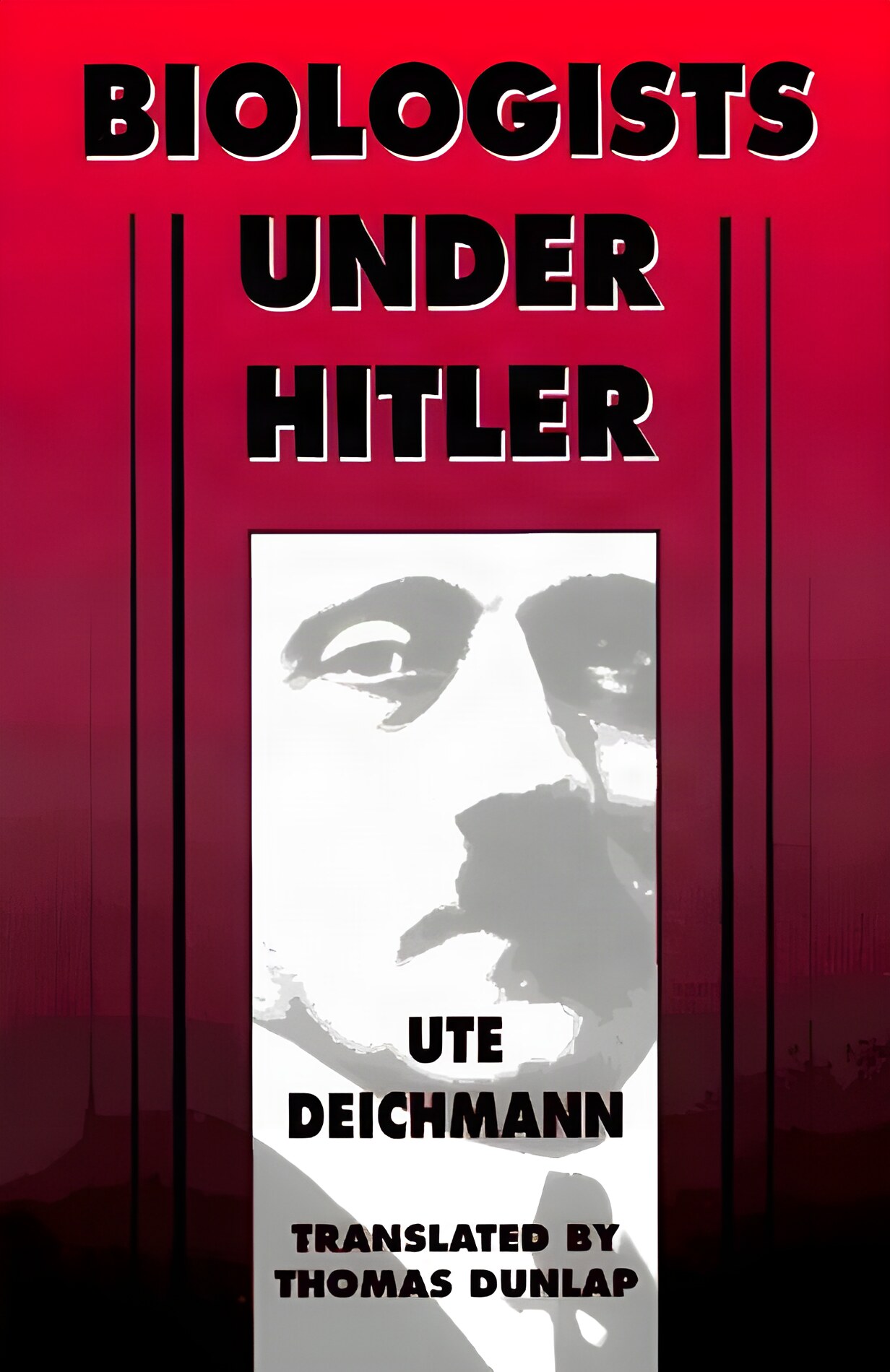
Hardcover. Cambridge MA, Harvard University Press, 1st US, 1996, Book: Very Good, Dust Jacket: Very Good, Hardcover in a bright dust jacket with minor edgewear, 468 pages. Biologists under Hitler combines exhaustive research with capsule biographies of key scientists to overturn certain assumptions about science under the Nazi regime. Biological research, for instance, was neither neglected nor underfunded during World War II; funding by the German Research Association (DFG) in fact increased tenfold between 1933 and 1938, and genetic research in particular flourished. Deichmann shows that the forced emigration of Jews had a less significant impact in biology than in other fields. Furthermore, she reveals that the widely observed decline in German biology after 1945 was not caused primarily by the Third Reich's science policy or by the expulsion of biologists but was due to the international isolation of German scientists as part of the legacy of National Socialism. Her book also provides overwhelming evidence of German scientists' conscious misrepresentation after the war of their wartime activities. In this regard, Deichmann's capsule biography of Konrad Lorenz is particularly telling. Clean copy.
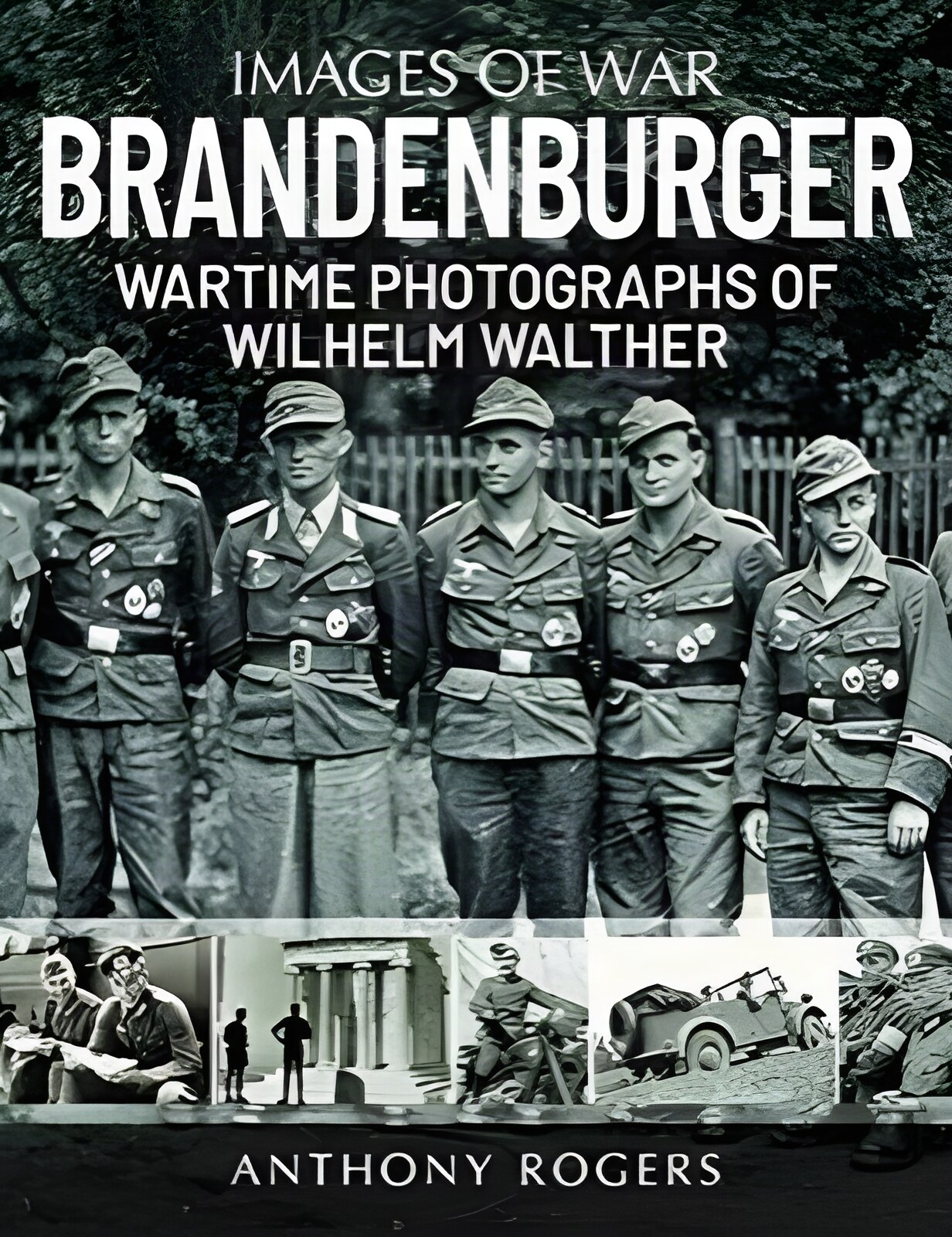
Softcover. London, Greenhill Books, 1st, 2022, Book: Very Good, Dust Jacket: None, Softcover, 159 pages. More than 200 images, together with the original German captions and English translations, portray the life and times of a career officer, from the German annexation of the Sudetenland in 1938, to operations in Russia, Greece and the Balkans during 1941-44. In comparison with other units of the Second World War, relatively little has been published about Germany's commando forces. This unique collection of rare images was sourced from the photograph album of Wilhelm Walther.
Hardcover. University of Missouri, 1st, 2007, Book: Very Good, Dust Jacket: Very Good, Hardcover, 288 pages. A "shooter" for the Associated Press for thirty-three years, Burroughs was assigned to the Washington bureau, and his photos appeared frequently in newspapers around the world, as well as on the covers of Life and other magazines. Close-ups of History is both an eyewitness account of history and a stirring professional memoir--a book that brings special moments into the viewfinder as Burroughs turns his trained photographer's eye to reflect his highly cultivated sense of news. These dramatic photographs testify to an incredible career launched at the end of World War II, and Burroughs's work in postwar Germany is especially poignant. He documented the remains of Hitler's office, ruined cities and displaced persons, and the Nuremberg trials. He also captured the beginning of the Cold War as the Soviets tried to take over Berlin and the German people struggled to hold the city for the West.
Hardcover. New York, Algonquin Books, 1st, 1990, Book: Very Good, Dust Jacket: Very Good, 183 pages. Hardcover with dust jacket. A very clean, unmarked copy with only minor wear to dust jacket edges. A tight copy.
Hardcover. Germany, Taschen, 1st, 2013, Book: Very Good, Dust Jacket: Very Good, 3-vol set in slip case. Hardcovers. Like new in publisher's shrink-wrap. Editor Dian Hanson traces the fascinating development of the genre from 1900 to 1969 in three compact, informative volumes. In Volume 1 you'll learn about the first magazines that appeared around 1900 in France, Germany, and the U.S., and follow the development of the genre through the First and Second World Wars. Covered are men's magazines masquerading as movie magazines, humor magazines, art magazines, nudist magazines, and "spicy" fiction. Volume 2 documents the proliferation of pin-up magazines following World War II, most notably a little item called Playboy that debuted in December 1953 and spawned dozens of imitators. This volume also charts the emergence of English men's magazines, fetish magazines, and the top five covergirls of the 1950s. Volume 3 begins with an explosion of new American pin-up magazines following the loosening of U.S. obscenity laws, and continues with French titles in decline, England going pervy; nudists going hippy, and Germany going pervy, hippy and political.
Hardcover. Taschen, 1st, 2008, Book: Very Good, Dust Jacket: Very Good, Hardcover, 580 pages. 1940-1949: Destruction and Reconstruction. This volume covers the 1940s, when fascism came to a climax and World War II led to the extensive destruction of Europe. But the second half of this decade was also a time of reconstruction, democratization, and the related search for new social values. Unlike in Nazi Germany, in fascist Italy Modernism was able to advance in architecture and design - as proved impressively by the buildings and designs by Carlo Mollino, Gian Luigi Banfi, Franco Albini, and Giuseppe Terragni that are documented herein. After the war, Organic Design emerged alongside the International style. This edition reflects upon the economic, social, and cultural problems of the time, but also shows how the force of the avant-garde continued to thrive in Italy, Switzerland, Scandinavia and the USA. Reports and features on modern industrial design and furniture, as well as domestic and business interiors stand side by side with articles about novel prefabricated houses. In publisher's shrink wrap. Due to size and weight, DOMESTIC SHIPPING ONLY.
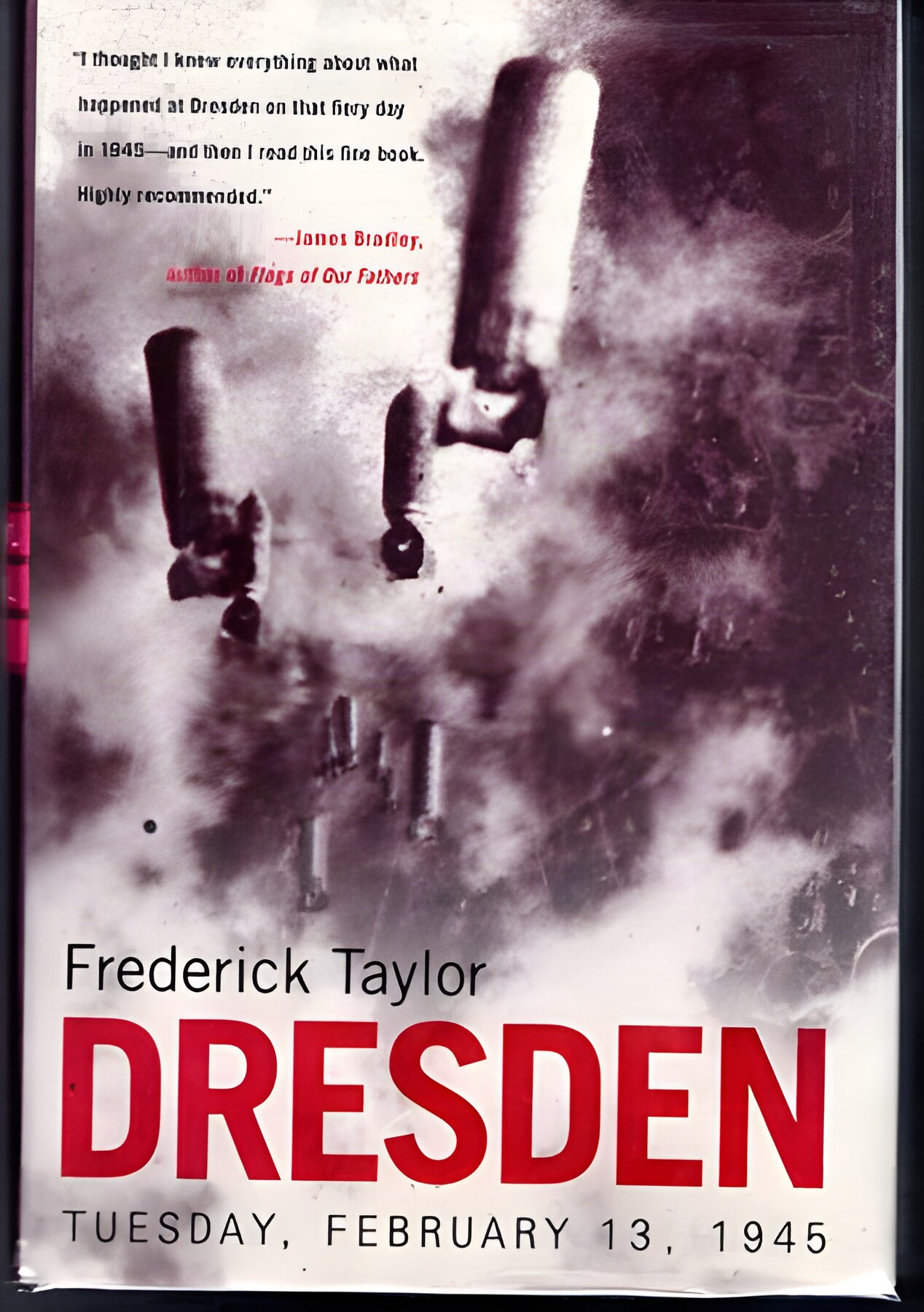
Hardcover. NY, HarperCollins, 1st, 2004, Book: Very Good, Dust Jacket: Very Good, Hardcover in a bright dust jacket, 518 pages with index. B&w illustrations. The allied bombing of Dresden created a massive fire that swept the city center, killing thousands of people and destroying its medieval heart. Debate began almost immediately: Was the destruction of this seemingly civilian city necessary militarily, or was it, some asked, equivalent to a war crime? Not just another in an endless parade of books on Dresden, Taylor's account may go a long way toward putting such questions to rest. It opens with the start, by British bombers, of the nighttime attack, and immediately turns to the past, meandering through several centuries of Dresden history, from its founding in the Middle Ages to the 20th century and the rise of the Nazis. Taylor, translator of The Goebbels Diaries, also covers the history of aerial bombardment and its international laws; gives glimpses of life under the Nazi regime; details the Allied bombing campaign against Germany; and, most excitingly, puts forth new information concerning Dresden's part in the German war effort, which turns out to be much greater than postwar information generally portrays. Clean copy.
Hardcover. London, Hutchinson, 1st, 2008, Book: Very Good, Dust Jacket: Very Good, 318 pages. Hardcover with dust jacket. SIGNED BY ATTENBOROUGH on title page, otherwise clean and tight copy. Pictures throughout. The long awaited autobiography by one of the world's best-loved actors and directors. The story begins in 1983 with a famously weeping Attenborough accepting two Oscars when his film Gandhi broke all previous records to win a total of eight Academy awards. Hawkins, 67, is Attenborough's publicist, confidante, co-producer and long-term business partner. Attenborough reflects on the highs and lows of a long life both in and out of the public gaze. Few know, for instance, that he once risked prison on a matter of conscience or that, as an air-gunner cameraman, he took part in bombing raids over Germany during the war. More poignantly, Attenborough will finally break his silence about his long-running friendship with Princess Diana, and the tsunami tragedy that robbed him of his eldest daughter and granddaughter in December 2004.
Softcover. West Lafayette IN, Purdue University Press , 1st, 2020, Book: Very Good, Dust Jacket: None, Softcover, 529 pages, b&w illustrations. Eva and Otto is a true story about German opposition and resistance to Hitler as revealed through the early lives of Eva Lewinski Pfister (1910-1991) and Otto Pfister (1900-1985). It is an intimate and epic account of two Germans-Eva born Jewish, Otto born Catholic-who worked with a little-known German political group that resisted and fought against Hitler in Germany before 1933 and then in exile in Paris before the German invasion of France in May 1940. After their improbable escapes from separate internment and imprisonment in Europe, Eva obtained refuge in America in October 1940 where she worked to rescue other endangered political refugees, including Otto, with the help of Eleanor Roosevelt. As revealed in recently declassified records, Eva and Otto later engaged in different secret assignments with the US Office of Strategic Services (OSS) in support of the Allied war effort. Despite their vastly different backgrounds, Eva and Otto gave each other hope and strength as they acted upon what they understood to be an ethical duty to help others threatened by fascism. The book provides a sobering insight into the personal risks and costs of a commitment to that duty. Their unusually beautiful writing-directed to each other in diaries and correspondence during two long periods of wartime separation-also reveals an unlikely and inspiring love story.
Softcover. Berkeley CA, University of California Press, 1st, 2001, Book: Near Fine, Dust Jacket: Near Fine, Still wrapped in plastic. Accompanied the exhibition "Expressionist Utopias" at the Los Angeles County Museum in 1993. In great condition. Color illustrations throughout. A nice, tight copy.The notion of utopia exists in every culture, capturing shared dreams and common goals. This book--prepared to accompany the exhibition Expressionist Utopias mounted at the Los Angeles County Museum in 1993--explores how the optimistic themes of utopia and fantasy sustained faith among artists and architects in the power of art to shape a better world during the tumultuous World War I era in Germany. The exhibition's curator, Timothy O. Benson along with David Frisby, Reinhold Heller, Anton Kaes, Wolf Prix, and Iain Boyd White present the diverse manifestations of the utopia metaphor in its progression throughout Expressionism from Arcadian to manmade utopias.
Hardcover. Princeton University Press , 1st, 1967, Book: Very Good, Dust Jacket: None, Hardcover, gray cloth-covered boards, gilt titles to spine on black ground, 350 pages., illustrated with tables. The book sets out to "describe the inception, organisation, and administration of the Nazi foreign labor program and the relationship of the program to the Nazi war economy and government". It uses captured documents as well as material published during the war. Spine slightly cocked, clean copy.
Gudensberg-Gleichen GR, Wartberg, 1st, 1998, Book: Very Good, Dust Jacket: None, Hardcover, pictorial boards, no dust jacket issued. 72 pages of b&w photos of Frankfurt and it's citizens in the 1950s. GERMAN TEXT.
Hardcover. Milan, Artvera's, 1st, 2012, Book: Very Good, Dust Jacket: None, Hardcover without dust jacket. Like new in publisher's shrink-wrap. This one-of-a-kind book brings the work of German Expressionist artist Friedrich Karl Gotsch (1900-1984) to a larger, well-deserved audience. Gotsch, whose paintings are in the collections of the Brooklyn Museum and the Museum of Modern Art in New York, trained at the Dresden School of Fine Arts in the early 1920s and was inspired by the works of Oskar Kokoschka and Edvard Munch. While his early paintings follow a straightforward Expressionist style, he truly came into his own after World War II, when his work became distinct and easily recognizable: The energy, contrasting primary colors, vivid outlines, and free brushwork combine to produce powerful, spellbinding images. In addition to stunning color reproductions of his work, this book includes essays on Gotsch's art and life, illuminating the artist's creative development and the cultural milieu and influences that inspired him.
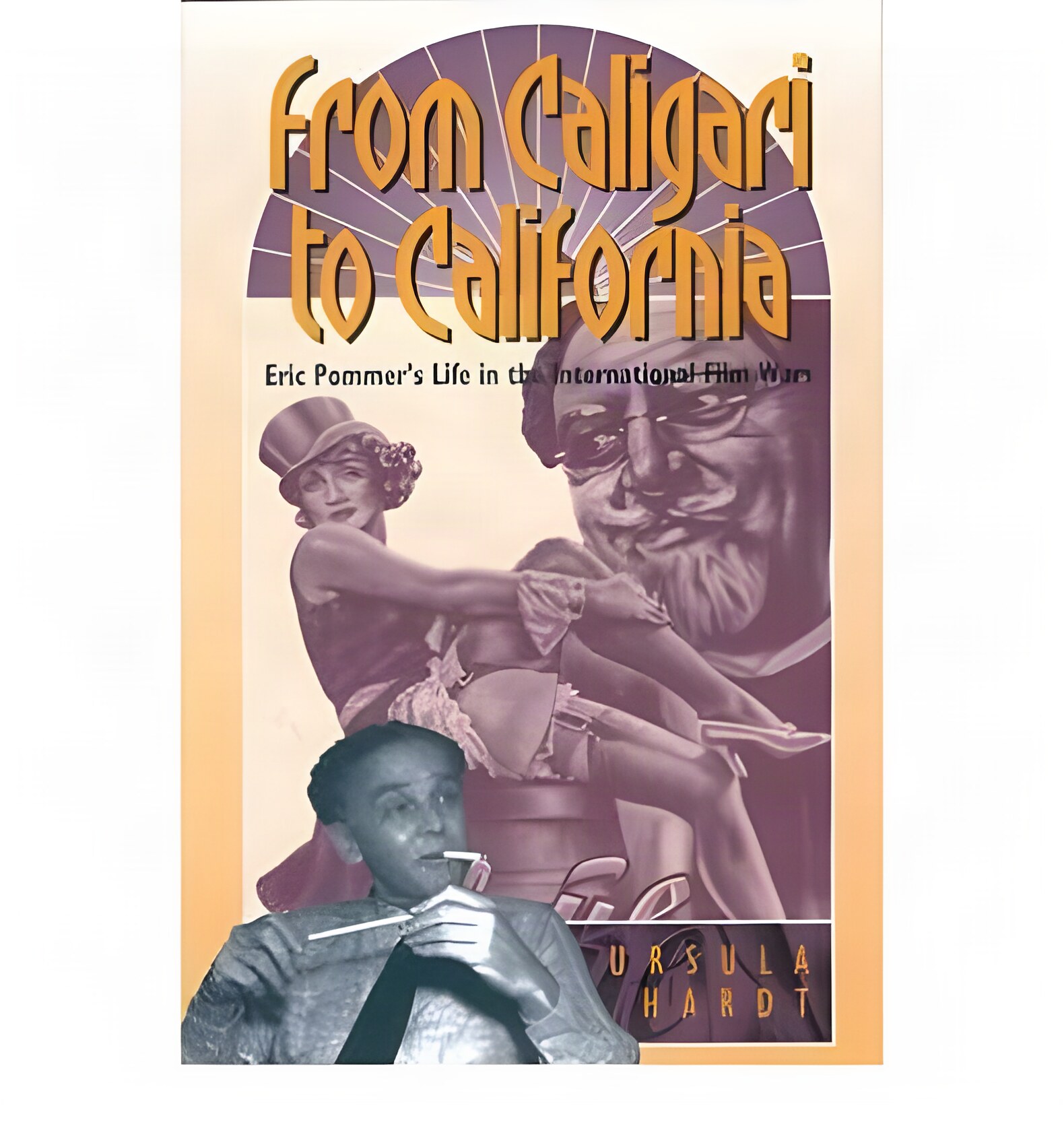
Softcover. Providence RI, Berghahn Books, 1st, 1996, Book: Very Good, Dust Jacket: None, Softcover, 256 pages. Known as one of the great producers and promoters of the film industry, Eric Pommer had a life-long commitment to German film - despite his emigration in 1933 - and worked in France and Britian, as well as the United States. As German producer, studio executive, and film politician in the pre-Hitler era Erich (later Eric) Pommer (1889-1966), a native of Germany, was an innovator and pioneer, a vital force in leading German cinema to international acclaim with successes such as The Cabinet of Dr Caligari, The Nibelungen and The Blue Angel. As Motion Picture Control Officer of the US Military Government he undertook , from 1946-49, the difficult task of rebuilding West Germany's film industry from the ashes of the Second World War. He succeeded brilliantly, but not without paying the hefty price of becoming embroiled in the turmoil of postwar German politics which made him many friends, but also many enemies. This book is the first detailed account in English of the remarkable career of Pommer who became a legend in his own lifetime. Clean copy.

 "A History of Photographyby: Jean-Claude Lemagny/ Andre Rouille")

 "A Vanished World by: Roman Vishniac (Author, Photographer), Elie Wiesel (Foreword)")


 "Andy Warhol: Modern Madonnaby: Warhol, Andy and Michael Luthy")
 "Andy Warhol: Modern Madonnaby: Warhol, Andy and Michael Luthy")

 "Berlin Journal, 1989-1990by: Robert Darnton")
 "BERLIN: PHOTOGRAPHIEN 1946-1949 (GERMAN EDITION)by: Ries, Henry")
 "Close-Ups of History: Three Decades through the Lens of an AP Photographerby: Henry Burroughs and Margaret Wohlgemuth Burroughs")
 "Countdown! 35 Daylight Missions Against Nazi Germanyby: Koger, Fred")
 "Dian Hanson's History of Pin-up Magazines Vol. 1-3by: Hanson, Dian (editor)")


 "Entirely up to you, Darling (SIGNED COPY)by: Attenborough, Richard; Hawkins, Diana")
 "Eva and Otto: Resistance, Refugees, and Love in the Time of Hitlerby: Pfister, Tom; Pfister, Kathy; Pfister, Peter")
 "Expressionist Utopias: Paradise, Metropolis, Architectural Fantasyby: Benson, Timothy O.")
 "Foreign Labor in Nazi Germany by: Edward L. Homze")
 "Frankfurt am Main : Bewegte Zeiten - Die 50er Jahreby: Klaus, Meier-Ude")