Hardcover. Boston, Little, Brown and Company, 1st, 1957, Book: Very Good, Dust Jacket: None, Hardcover, blue cloth with gilt lettering on spine. Volume XI in The History of United States Naval Operations in World War II. 360 pages, illustrated with maps (one fold-out) and b&w photos. Gilt on spine with light fading, lacks dust jacket, dj flap copy pasted inside front cover, otherwise clean, tight copy.
Hardcover. NY, Farrar, Straus and Giroux, 2nd pr, 2021, Book: Very Good, Dust Jacket: Very Good, Hardcover in a bright, unclipped dust jacket. 312 pages, color and b&w illustrations. A bristling and brilliant memoir of the mid-twentieth-century New York School of painters and their times by the renowned artist and critic Edith Schloss, who, from the early years, was a member of the group that shifted the center of the art world from Paris to New York. Schloss was born in Germany and moved to New York City during World War II. She became part of a thriving community of artists and intellectuals that included Elaine and Willem de Kooning, Larry Rivers, John Cage, and Frank O'Hara. She married the photographer and filmmaker Rudy Burckhardt. She was both a working artist and an incisive critic, and was a candid and gimlet-eyed witness of the close-knit community that was redefining the world of art. In Italy she spent time with Giorgio Morandi, Cy Twombly, Meret Oppenheim, and Francesca Woodman. Remainder dot to top edge otherwise clean.
Hardcover. NY, Verso, 1st, 2009, Hardcover in a bright, unclipped dust jacket, 561 pages. The New Old World looks at the history of the European Union, the core continental countries within it, and the issue of its further expansion into Asia. It opens with a consideration of the origins and outcomes of European integration since the Second World War, and how today's EU has been theorized across a range of contemporary disciplines. It then moves to more detailed accounts of political and cultural developments in the three principal states of the original Common Market-France, Germany and Italy. A third section explores the interrelated histories of Cyprus and Turkey that pose a leading geopolitical challenge to the Community. The book ends by tracing ideas of European unity from the Enlightenment to the present, and their bearing on the future of the Union. The New Old World offers a critical portrait of a continent now increasingly hailed as a moral and political example to the world at large. Clean copy.
Hardcover. NY, Norton, 1st US, 1985, Book: Very Good, Dust Jacket: Very Good, Hardcover in a bright dust jacket, 192 pages. The photos are breathtaking not necessarily for their quality - many are washed out and most of the subject matter is routine day to day military stuff - but for their rarity. While the Germans seem to have been at least as far advanced in the use of color photography as the Americans, there is still a paucity of color photography in the public record. That is being addressed by the various nations who took large amounts of color film in an official capacity, including the US, UK, Germany and Canada. The book's captions are adequate to the task, and there are good historical sections, as well as an introduction by Max Hastings as well as commentary by an actual German war correspondent. The strength of the book is in its ability to bring the participants of the subject campaign - the German invasion of Russia up to and including Stalingrad - to life. The use of a large format allows one to note small details of the photos, and relate to the subject matter on a personal level. Despite the lack of "action" shots, there is much to see in facial expressions, uniform details, and especially geography as the Russian steppe is shown in summer and winter, as well as the famous Russian mud (Rasputitsa) about which so much has been written.
Hardcover. NY, Alliance Book Corporation, 14th pr., 1939, Book: Very Good, Dust Jacket: None, Hardcover, light putty cloth with red lettering on spine, 300 pages. Anti-Nazi book written by ex-Nazi. Translated from German by E.W. Dickes. Front fly leaf with top inch cut out, other wise clean, tight copy.
Hardcover. NY, Free Press, 1st, 1995, Book: Very Good, Dust Jacket: Very Good, Hardcover in a bright, unclipped dust jacket. 368 pages, b&w illustrations. Neufeld, the curator of World War II history at the National Air and Space Museum in Washington, D.C., provides a well-written, comprehensively researched analysis of Nazi Germany's missile program and its antecedents. The German army became interested in rocket technology during the 1930s at the urging of Karl Becker, an engineer who believed a radical new weapon could deliver a psychological blow to an enemy. The construction of Peenemunde in 1936-37 provided a focal point for research and development that made guided missiles a reality despite Germany's limited material and scientific resources. Neufeld shows that while the rocket program was not Nazi in origin, its leaders readily compromised themselves by accepting National Socialism, especially in agreeing to the widespread use of slave labor. A more ambiguous legacy of Peenemunde is its rocket technology, which decisively shaped the second half of the 20th century. Clean copy.
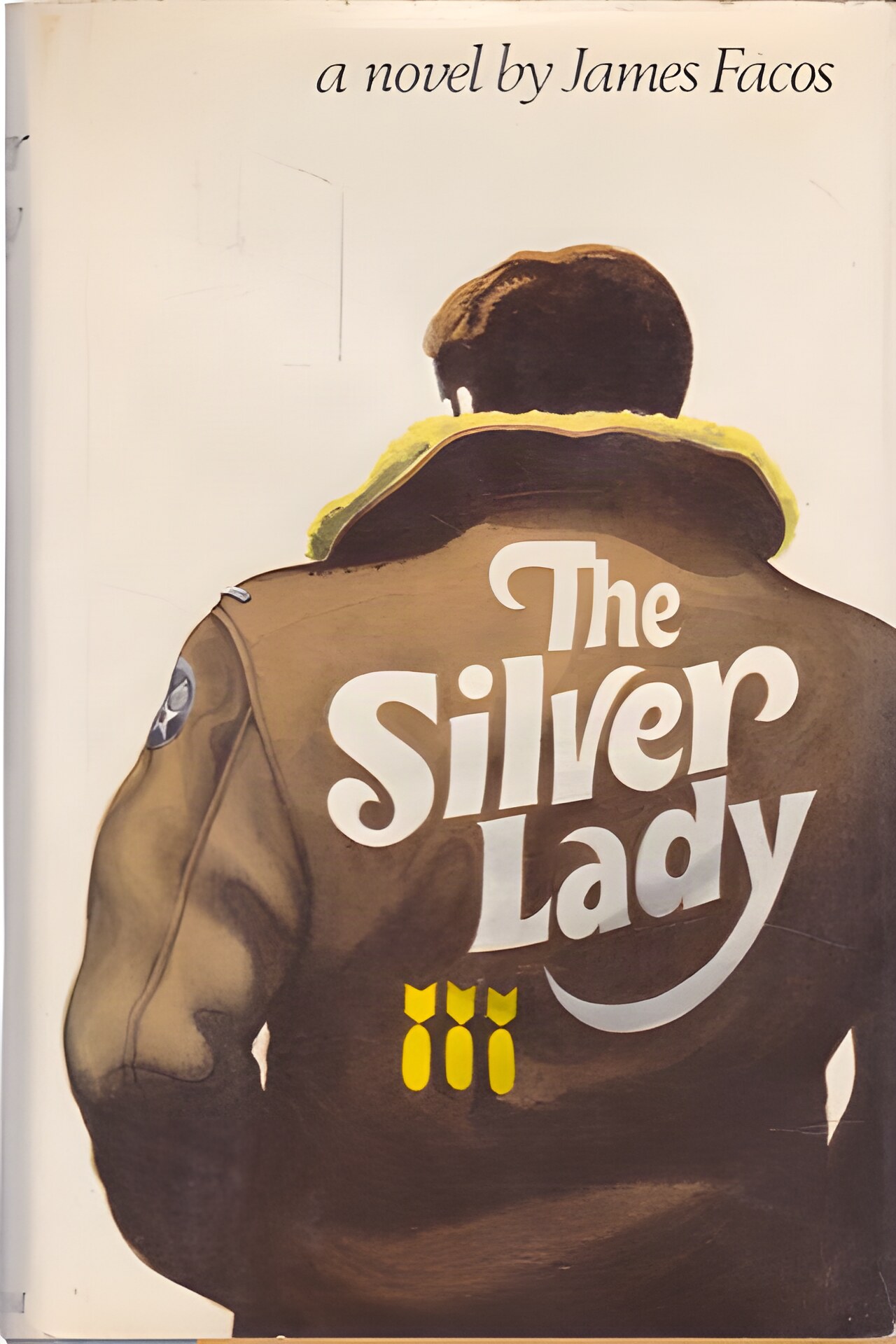
Hardcover. NY, Atheneum, 1st, 1972, Book: Very Good, Dust Jacket: Very Good, Hardcover in a bright, lightly worn dust jacket, 279 pages. James Facos evokes the tension, the triumph and the tragedy of an American bomber crew in England during the height of the war over Germany in 1944. Clean copy.
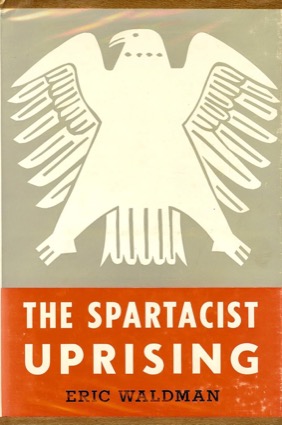
Hardcover. Milwaukee WI, Marquette University, 1st, 1958, Book: Very Good, Dust Jacket: Good, Hardcover in a bright dust jacket with a chip to the top front corner, 248 pages. This book explores the crisis of the German Socialist movement and its growth in intensity from the time of the open split of the Social Democratic Party during World War 1 until its climax in the bloody fighting between the radical left and the socialists during the so-called Spartacist Uprising of January 1919. Clean copy.
Hardcover. NY, Simon & Schuster, 1st, 2017, Book: Very Good, Dust Jacket: Very Good, Hardcover in a bright, unclipped dust jacket. In The Third Reich, Thomas Childers shows how the young Hitler became passionately political and anti-Semitic as he lived on the margins of society. Fueled by outrage at the punitive terms of the Versailles Treaty that ended the Great War, he found his voice and drew a following. As his views developed, Hitler attracted like-minded colleagues who formed the nucleus of the nascent Nazi party. The failed Munich putsch of 1923 and subsequent trial gave Hitler a platform for his views, which he skillfully exploited. Clean copy.
Softcover. Cambridge MA, Harvard University Press, reprint, 2011, Book: Very Good, Dust Jacket: None, Softcover, 997 pages, color and b&w illustrations. A deadly continental struggle, the Thirty Years War devastated seventeenth-century Europe, killing nearly a quarter of all Germans and laying waste to towns and countryside alike. Peter Wilson offers the first new history in a generation of a horrifying conflict that transformed the map of the modern world. When defiant Bohemians tossed the Habsburg emperor's envoys from the castle windows in Prague in 1618, the Holy Roman Empire struck back with a vengeance. Bohemia was ravaged by mercenary troops in the first battle of a conflagration that would engulf Europe from Spain to Sweden. The sweeping narrative encompasses dramatic events and unforgettable individuals-the sack of Magdeburg; the Dutch revolt; the Swedish militant king Gustavus Adolphus; the imperial generals, opportunistic Wallenstein and pious Tilly; and crafty diplomat Cardinal Richelieu. In a major reassessment, Wilson argues that religion was not the catalyst, but one element in a lethal stew of political, social, and dynastic forces that fed the conflict. By war's end a recognizably modern Europe had been created, but at what price? The Thirty Years War condemned the Germans to two centuries of internal division and international impotence and became a benchmark of brutality for centuries. As late as the 1960s, Germans placed it ahead of both world wars and the Black Death as their country's greatest disaster. Clean, bright copy.
Hardcover. NY, E. P. Dutton, reprint, 1977, Book: Very Good, Dust Jacket: Very Good, Hardcover in a bright dust jacket. David Irving's The Trail of the Fox is the best work on Rommel ever written. The circumstances around Rommel's involvement with the attempt on Hitler's life, which is the most speculated aspect of Rommel's life, and how the Gestapo came to believe Rommel was involved, have not been made clear in most of the historiography on Rommel. Irving pieces together what really happened most effectively. There are so many strengths of this book, of which the greatest is probably the fact Irving had access to Rommel's dairy and many of his letters, which he got permission from the family to view. Other items he found in collections in the United States, England, and Germany. Since he worked on this in the 1970's he also was able to interview a number of German officers who were still alive that knew and served with Rommel. The whole work is the way historical research should be done; totally reliant on primary source material, and ignores secondary sources that often use conjecture or just repeat incorrect narratives from earlier books. Every source is from people who fought the war; Germans, Italians, British, French and American officers who were in these campaigns and had either first hand observation of Rommel or were major participants like Eisenhower, Churchill, Goebbels, etc. Clean copy.
Hardcover. NY, Random House, 1st, 2013, Book: Very Good, Dust Jacket: Very Good, Hardcover in a bright, lightly worn dust jacket. 739 pages, index, b&w illustrations. The War That Ended Peace brings vividly to life the military leaders, politicians, diplomats, bankers, and the extended, interrelated family of crowned headsacross Europe who failed to stop the descent into war: in Germany, the mercurial Kaiser Wilhelm II and the chief of the German general staff, Von Moltke the Younger; in Austria-Hungary, Emperor Franz Joseph, a man who tried, through sheer hard work, to stave off the coming chaos in his empire; in Russia, Tsar Nicholas II and his wife; in Britain, King Edward VII, Prime Minister Herbert Asquith, and British admiral Jacky Fisher, the fierce advocate of naval reform who entered into the arms race with Germany that pushed the continent toward confrontation on land and sea. Clean copy.
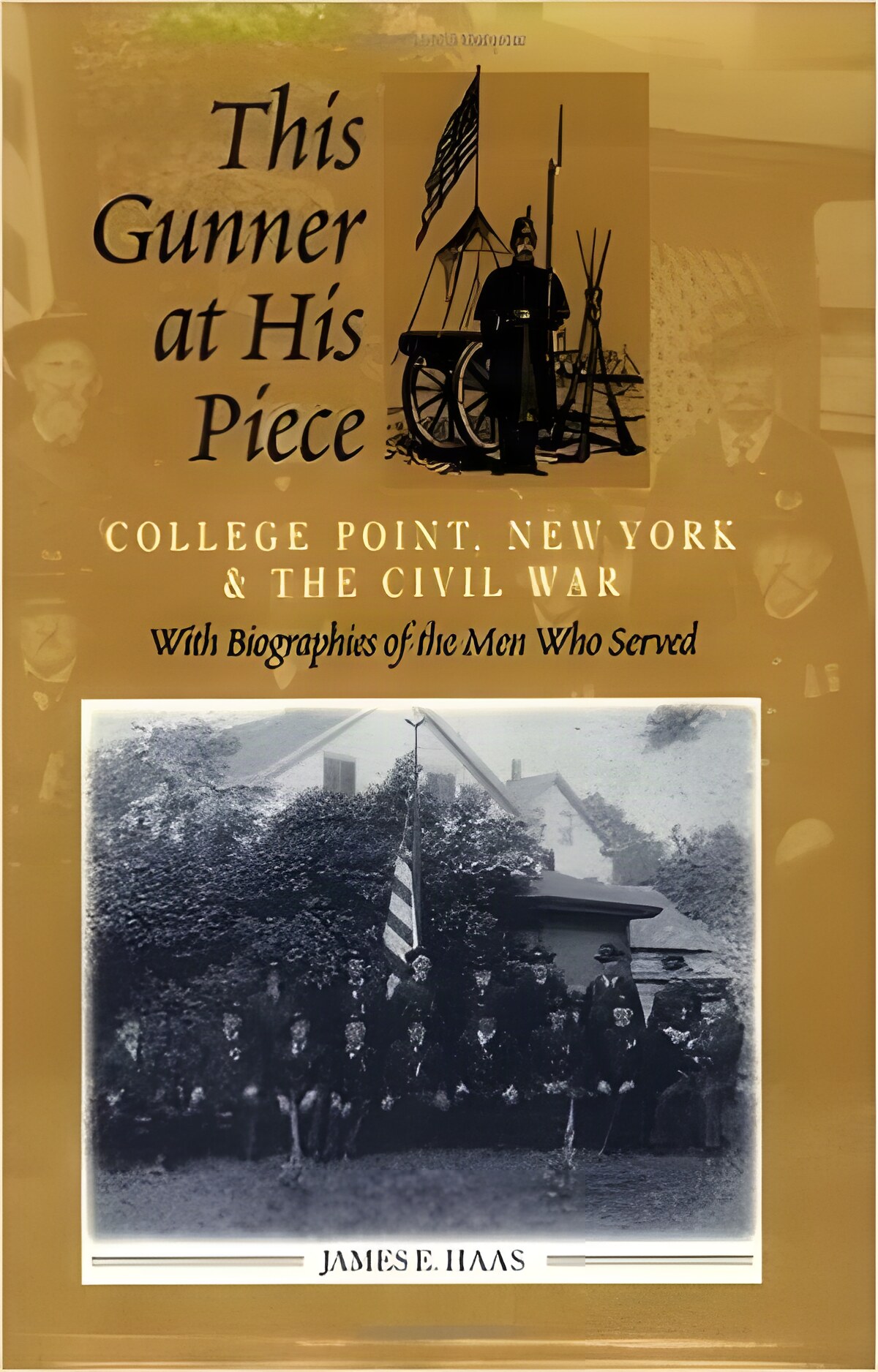
Softcover. Baltimore MD, Gateway Press, 1st, 2002, Book: Very Good, Dust Jacket: None, Softcover. 272 pages. INSCRIBED BY AUTHOR on the title page. 226 men with ties to College Point, New York took part in the Civil War. They served in 82 different Army units, and in the Navy, both on land and on sea. They were infantry men, engineers and artillerists, and one was a musician in the Marine Band. The majority claimed Germany as their country of birth, and 24 died in the service of their adopted homeland. This Gunner at His Piece tells their stories, before, during and after the American Civil War. Clean copy.
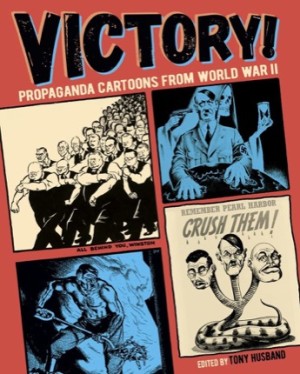
Softcover. London, Sirius, 1st, 2022, Book: Very Good, Dust Jacket: None, Softcover, 192 pages. Award-winning cartoonist Tony Husband tells the story of World War II through a selection of the era's finest political cartoons. Satire is one of the key weapons of war. Forget 'sticks and stones', each country uses cartoons to hit the enemy where it really hurts and to maintain morale on the home front. Each country brought their own unique style and this collection features work from Britain, the USA, Germany, Russia and Japan and features the work of some of World War II's greatest cartoonists including Bill Mauldin, Fougasse, Emett, David Low and Graham Laidler. Clean, bright copy.
Hardcover. NY, Thames and Huson, 1st, 2007, Book: Very Good, Dust Jacket: Very Good, Hardcover, 256 pages. Published to accompany an exhibition at London's Imperial War Museum, this book features more than 250 superb full-color illustrations of hard-hitting propaganda and groundbreaking graphic art. It encompasses iconic images such as Alfred Leete's "Your Country Needs You" as well as additional material drawn from the world of advertising and documentary photographs of posters in situ. Through posters, the author examines the social, political, ethnic, and cultural aspirations of America, Britain, Ireland, Germany, France, the Netherlands, Belgium, Russia, Austria, Hungary, and the Czech Republic. Covering topics as diverse as advertising in World War I, the Bolshevik Revolution, the Spanish Civil War, Germany and Occupied Europe in World War II, anti-nuclear campaigns, and Vietnam, the book is comprehensive and highly analytical, yet accessible. 300 illustrations, 250 in color.
Softcover. New York, Abbeville Press, 1st US, 1984, Book: Very Good, Dust Jacket: None, 160 pages, illustrated throughout in b&w. Previous owner's sticker on front end paper, light edgewear and soil to wrappers. Clean, tight copy. The pictures assembled here show how this artistic culture originated in the aftermath of the First World War and the unsettled early years of the Weimar Republic, uneasily balanced between revolutionary pretensions and the desire for order. The montage of images--photographs, paintings, drawings, collages, books, and film stills--evokes the period with shocking vividness.
Hardcover. Chicago, University Of Chicago Press, 1st, 2006, Book: Very Good, Dust Jacket: Very Good, Hardcover, pages. In When Buildings Speak,Anthony Alofsin explores the rich yet often overlooked architecture of the late Austro-Hungarian Empire and its successor states. He shows that several different styles emerged in this milieu during the late nineteenth and early twentieth centuries. Moreover, he contends that each of these styles communicates to us in a manner resembling language and its particular means of expression. Covering a wide range of buildings--from national theaters to crematoria, apartment buildings to warehouses, and sanatoria to postal savings banks--Alofsin proposes a new way of interpreting this language. He calls on viewers to read buildings in two ways: through their formal elements and through their political, social, and cultural contexts. By looking through Alofsin's eyes, readers can see how myriad nations sought to express their autonomy by tapping into the limitless possibilities of art and architectural styles. And such architecture can still speak very powerfully to us today about the contradictory issues affecting parts of the former Habsburg Empire.
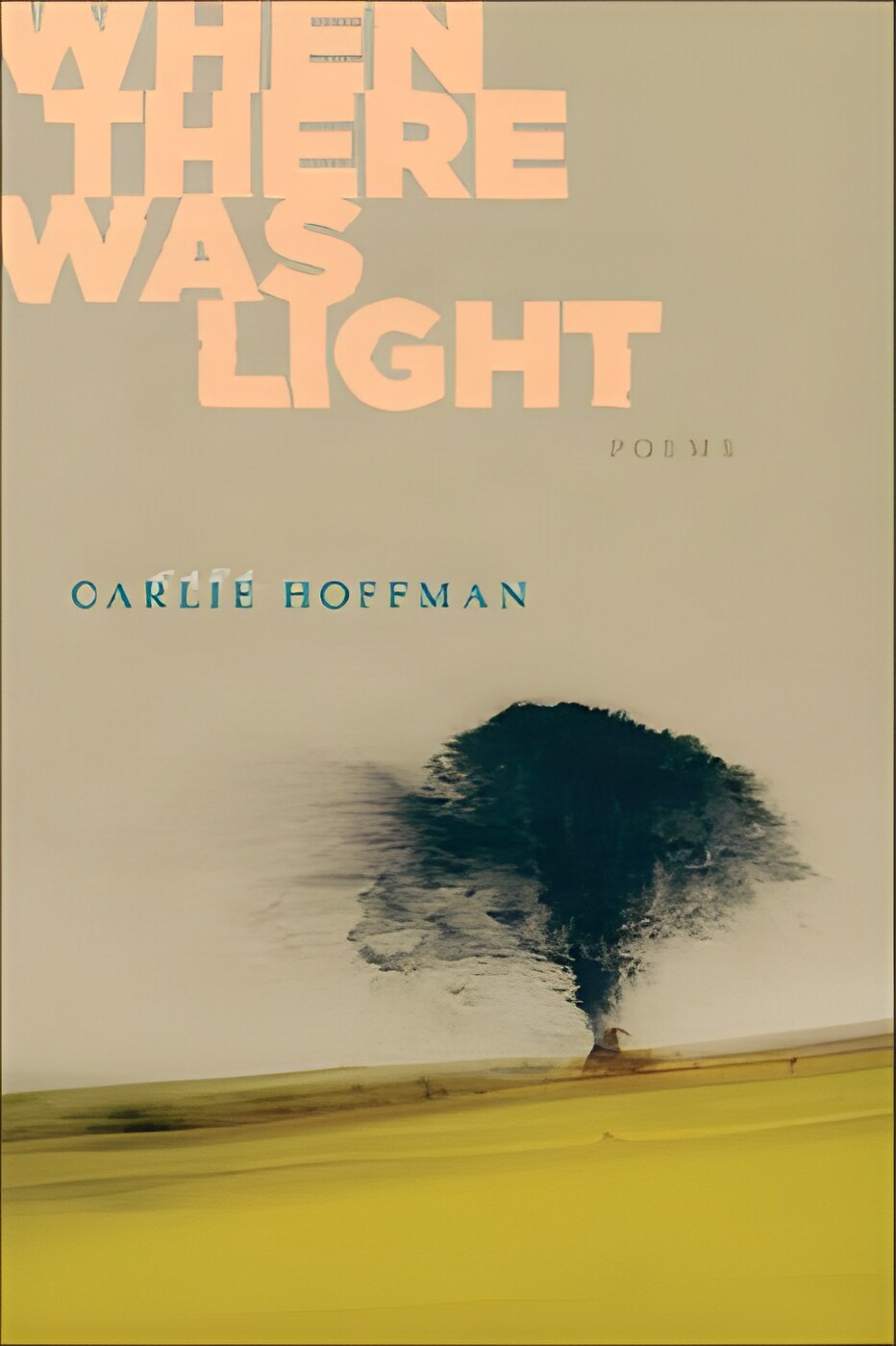
Softcover. NY, Four Way Books, 1st, 2023, Book: Very Good, Dust Jacket: None, Softcover, 66 pages. These poems map out a topography where global movements of diaspora and war live alongside personal reckonings: a house's foreclosure, parents' divorce, the indelible night spent drunk with a best friend "[lying] down inside a chronic row of corn." Here, her father's voice "is the stray dog barking / at the snow, believing the little strawberries grow wilder / against a field." In these pages, she points to Russia and Poland and Germany, saying, "It was / another time. My people / another time. The synagogues burn decades / of new snow." The brilliance of this collection illuminates the relationship between memory and language; "another time" means different, back then, gone and lost to us, and it means over and over, always, again. With this linguistic dexterity and lyrical tenderness, Hoffman's work bridges private and public histories, reminding us of the years cloaked in shadows and the years when there was light. Clean, bright copy.
Hardcover. Lawrence KS, University Press of Kansas , 1st, 2011, Book: Very Good, Dust Jacket: Very Good, Hardcover in a bright dust jacket, 386 pages, b&w illustrations. Inept leadership, inefficient campaigning, and enormous losses would seem to spell military disaster. Yet despite these factors, the Soviet Union won its war against Nazi Germany thanks to what Roger Reese calls its military effectiveness: its ability to put troops in the field even after previous forces had been decimated. Reese probes the human dimension of the Red Army in World War II through a close analysis of soldiers' experiences and attitudes concerning mobilization, motivation, and morale. In doing so, he illuminates the Soviets' remarkable ability to recruit and retain soldiers, revealing why so many were willing to fight in the service of a repressive regime--and how that service was crucial to the army's military effectiveness. He examines the various forms of voluntarism and motivations to serve-including the influences of patriotism and Soviet ideology-and shows that many fought simply out of loyalty to the idea of historic Russia and hatred for the invading Germans. He also considers the role of political officers within the ranks, the importance of commanders who could inspire their troops, the bonds of allegiance forged within small units, and persistent fears of Stalin's secret police. Clean copy.
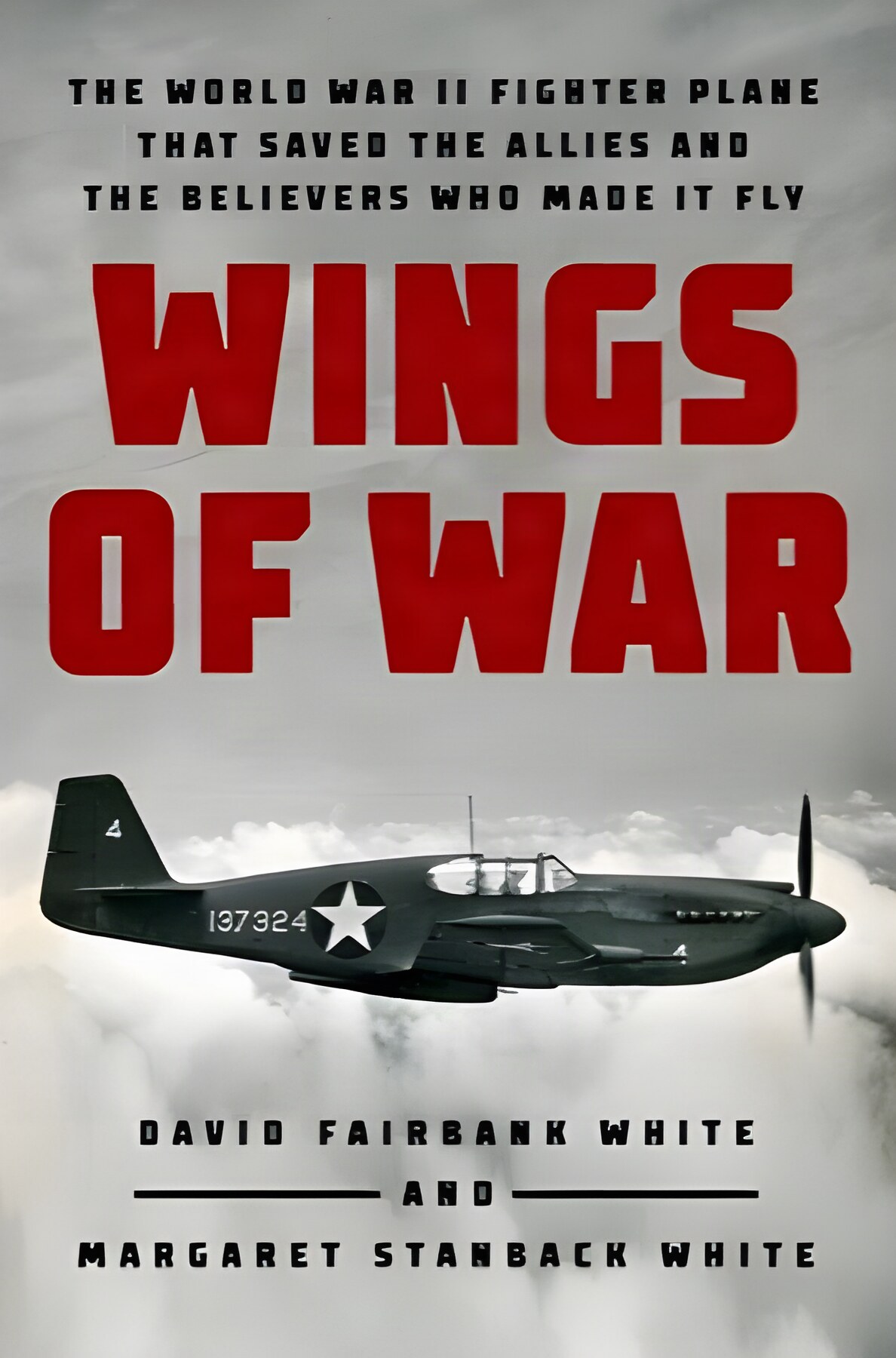
Hardcover. NY, Dutton Caliber, 1st, 2022, Book: Very Good, Dust Jacket: Very Good, Hardcover in a bright dust jacket, 324 pages, b&w illustrations. When the P-51 Mustang began tearing across European skies in early 1944, the Allies had been losing the air war for years. Staggering numbers of bomber crews, both British and American, had been shot down and killed thanks to the Luftwaffe's superior fighter force. Not only did the air war appear grim, but any landing of troops in France was impossible while German fighters hunted overhead. But behind the scenes, a team of visionaries had begun to design a bold new type of airplane, one that could outrun and outmaneuver Germany's best. Wings of War is the incredible true story of the P-51 Mustang fighter and the unlikely crew of designers, engineers, test pilots, and army officers who brought it from the drafting table to the skies over World War II. This is hardly a straightforward tale of building an airplane--for years, the team was stymied by corruption within the defense industry and stonewalled by the Army Air Forces, who failed to understand the Mustang's potential. But when squadrons of Mustangs were finally unleashed over Hitler's empire, the Luftwaffe was decimated within months, clearing the skies for D-Day. Clean copy.
Hardcover. Annapolis, Naval Institute Press, 1st, 1997, Book: Very Good, Dust Jacket: Very Good, 249 pages. Hardcover. Brick cloth boards with gilt titles to spine. Illustrated with photos in b/w. Dust jacket with light wear. Clean, unmarked copy.

 "The Invasion of France and Germany, 1944-1945: History of United States Naval Operations in World War II, Volume 11 by: Morison, Samuel Eliot")
 "The Loft Generation: From the de Koonings to Twombly: Portraits and Sketches 1942 2011 by: Schloss, Edith")
 "The Onslaught: The German Drive to Stalingrad : Documented in 150 Unpublished Colour Photographs by: Heinrich Von Einsiedel")

 "The Rocket and the Reich: Peenemunde and the Coming of the Ballistic Missile Eraby: Michael J. Neufeld")
 "The Third Reich: A History of Nazi Germany by: Childers, Thomas")
 "The Thirty Years War: Europe")
 "The Trail of the Fox: The Search for the True Field Marshal Rommel by: David Irving")



 "War Posters: Weapons of Mass Communicationby: James Aulich")
 "Weimar Years, The : A Culture Cut Shortby: Willett, John")
 "When Buildings Speak: Architecture as Language in the Habsburg Empire and Its Aftermath, 1867-1933by: Alofsin, Anthony")
 "Why Stalin's Soldiers Fought: the Red Army's Military Effectiveness in World War IIby: Roger R. Reese")