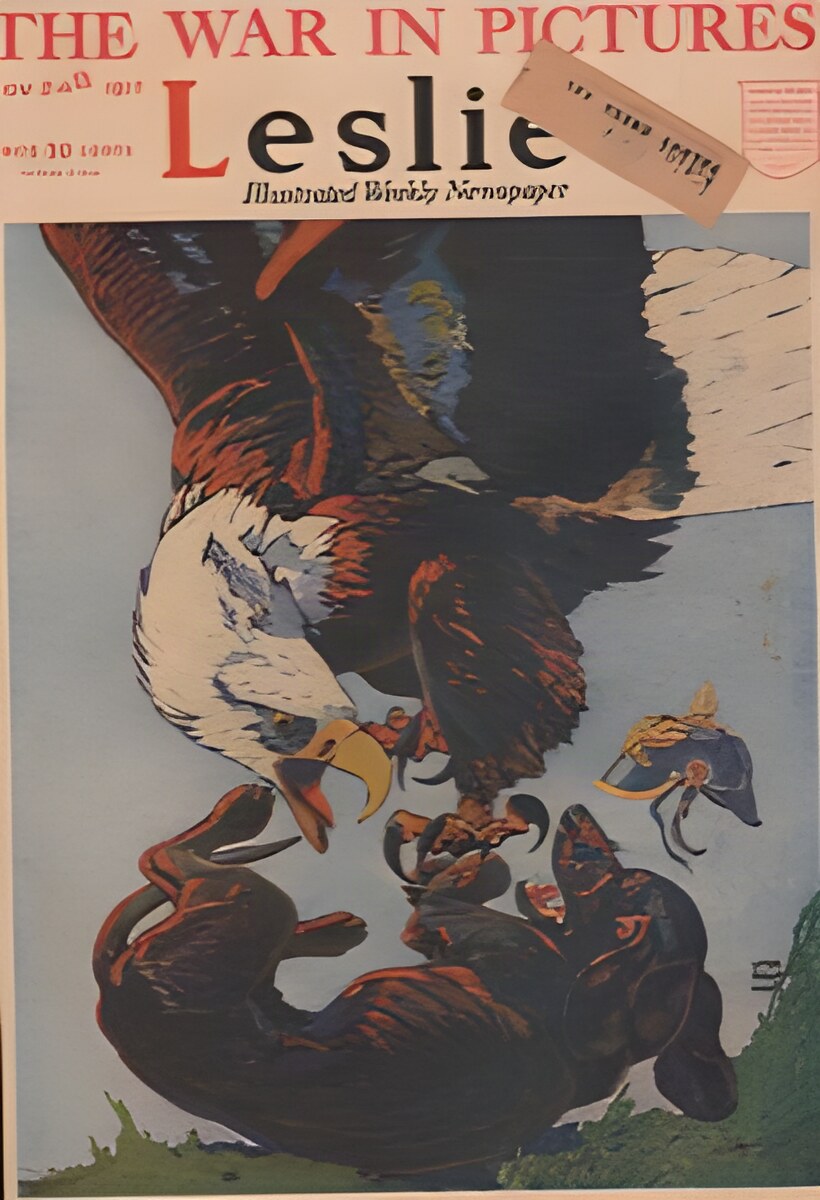
Eagle attacking dachshund, America vs, Germany WW1 allegory. Art by Lynn Bogue Hunt, 10.5 x 14", very good. Mailing label. PLEASE NOTE: The image shown is a scan of the actual product you are purchasing. What you see is what you get. The sheet may have some imperfections beyond the cropped area shown. You are buying THIS PAGE ONLY- not the entire magazine. Your order will be placed carefully between stiff paper and an acetate overlay, then packed in a rigid cardboard sleeve to prevent bending.
Hardcover. NY, Holt Rinehart & Winston, 1st, 1981, Book: Very Good, Dust Jacket: Very Good, Hardcover in a bright dust jacket with minor edgewear, 294 pages. Depicts the German occupation of Paris during World War II from the perspectives of both the defeated Parisians and the victorius Germans, accompanied by 116 contemporary photographs in b&w, some color. Clean copy.
Hardcover. NY, Library of America, 12th pr., Book: Very Good, Dust Jacket: Very Good, Hardcover in a bright dust jacket, 830 pages. Known in his lifetime primarily to readers of science fiction, Philip K. Dick is now seen as a uniquely visionary figure, a writer who, in editor Jonathan Lethems words, wielded a sardonic yet heartbroken acuity about the plight of being alive in the twentieth century, one that makes him a lonely hero to the readers who cherish him.This Library of America volume brings together four of Dicks most original novels. The Man in the High Castle (1962), which won the Hugo Award, describes an alternate world in which Japan and Germany have won World War II and America is divided into separate occupation zones. The dizzying The Three Stigmata of Palmer Eldritch (1965) posits a future in which competing hallucinogens proffer different brands of virtual reality, and an interplanetary drug tycoon can transform himself into a godlike figure transcending even physical death.Do Androids Dream of Electric Sheep? (1968), about a bounty hunter in search of escaped androids in a postapocalyptic society where status is measured by the possession of live animals and religious life is focused on a television personality, was the basis for the movie Blade Runner. Ubik (1969), with its future world of psychic espionage agents and cryonically frozen patients inhabiting an illusory half-life, pursues Dicks theme of simulated realities and false perceptions to ever more disturbing conclusions. Remainder mark to bottom edge, otherwise like new.
Hardcover. NY, Macmillan Company, 1st US, 1969, Book: Very Good, Dust Jacket: Very Good, Hardcover in a bright, unclipped dust jacket, 461 pages. Laval began his career as a socialist, but over time drifted far to the right. Following France's defeat and armistice with Germany in 1940, he served in prominent roles in Philippe Petain's Vichy Regime, first as the vice-president of the Council of Ministers from 11 July 1940 to 13 December 1940, and later as the head of government from 18 April 1942 to 20 August 1944. After the liberation of France in 1944, Laval was arrested by the French government under General Charles de Gaulle. In what was widely regarded as a flawed trial, Laval was found guilty of plotting against the security of the State and collaboration with the enemy, and after a thwarted suicide attempt, he was executed by firing squad. His manifold political activities left a complicated and controversial legacy, resulting in more than a dozen conflicting biographies of him. Name on front fly leaf, otherwise a bright, clean copy.
Hardcover. Lexington KY, University Press of Kentucky, 1st, 2014, Book: Very Good, Dust Jacket: Very Good, Hardcover, 320 pages, in a bright unclipped dust jacket, b&w illustrations. Pola Negri (1897-1987) rose from an impoverished childhood in Warsaw, Poland, to become one of early Hollywood's greatest stars. After tuberculosis ended her career as a ballerina in 1912, she turned to acting and worked under legendary directors Max Reinhardt and Ernst Lubitsch in Germany. Negri preceded Lubitsch to Hollywood, where she quickly became a fan favorite thanks to her beauty, talent, and diva personality. Known for her alluring sexuality and biting artistic edge, she starred in more than sixty films and defined the image of the cinematic femme fatale. Author Mariusz Kotowski brings the screen siren's story to English-speaking audiences for the first time in this fascinating biography. At the height of her fame, Negri often portrayed exotic and mysterious temptresses, headlining in such successes as The Spanish Dancer (1923) and Forbidden Paradise (1924), before returning to Europe in the 1930s. The devastating effects of World War II soon drove her back to the United States, where she starred in Hi Diddle Diddle (1943) and pursued her vaudeville career before retiring from the entertainment industry. Kotowski also illuminates Negri's dramatic personal life, detailing her numerous love affairs-including her engagement to Charlie Chaplin and her romance with Rudolph Valentino-as well as her multiple marriages. This long-overdue biography not only paints a detailed portrait of one classic Hollywood's most intriguing stars and the film industry's original Jezebel, but also explores the link between Hollywood and European cinema during the interwar years.
Softcover. New York, Rizzoli, 1st US, 1983, Book: Very Good, Dust Jacket: Very Good, Hardcover, 302 pages. Blue cloth cover with gilt lettering to spine, color illustrated dust jacket, 405 b&w and 80 color illustrations, stapled cardboard slipcase. Bottom right corner of cover slightly bumped. Very light wear to dust jacket edges; a very clean, tight copy. This book is the first to survey the whole i development of porcelain n Europe between the Napoleonic era and the First World War. The nineteenth century was a period of technological change and of artistic innovation: both these strands came together in the development of porcelain, which industrialization brought within the reach of the burgeoning middle classes of industrial Europe. While early in the century Neoclassicism had brought about a new purity of line and decoration, in Germany and in England taste demanded more elaborate styles and resulted in the emergence of the 'new Rococo' and later in the development of revived styles of decoration such as Minton's 'Majolica' and the work of studio potters. This book covers not only the great factories, Sevres, Limoges, Copenhagen, Meissen, but also the smaller producers in Holland, Italy and Spain and extends to the birth of Art Nouveau.
Hardcover. Germany, Steidl Publishers, 1st, 2008, Book: Very Good, Dust Jacket: None, 295 pages. Hardcover with no dust jacket. A clean, unmarked copy with only minor edgewear. Minor yellowing to textblock edges. Black and white photographs throughout. Richard Avedon, America's preeminent portraitist and fashion photographer, photographed the many faces of politics throughout his career. Portraits of Power brings together Avedon's political portraits for the first time. Juxtaposing images of elite government, media and labor officials with counter-cultural activists, writers and artists, as well as ordinary citizens caught up in national debates, it offers a five-decade taxonomy of politics and power by one of America's best-known artists. The book features several of Avedon's extended projects addressing these themes, including coverage of the civil rights debate in the early 1960s (published in 1964 in Nothing Personal); the American anti-war movement and the war in Vietnam from 1969-1971; portraits of the American power elite in 1976, produced for his groundbreaking Rolling Stone portfolio "The Family;" "Exiles: The Kennedy Court at the End of the American Century," a retrospective homage to the Camelot generation published in the New Yorker in 1993; and his final photo-essay, "Democracy," surveying the national mood during the politically fractious period prior to the 2004 presidential elections (published posthumously in the New Yorker in 2004).
Softcover. London, Imperial War Museums, 1st, 2014, Book: Very Good, Dust Jacket: None, 96 pages. Softcover. Very clean, unmarked copy with only minor edgewear. Posters of the First World War collects more than one hundred posters from America, Britain, France, Germany, and Italy that showcase renewed concern among the warring nations with national character and conduct.
Softcover. Germany, Steidl, 1st, 2015, Book: Very Good, Dust Jacket: None, 224 pages. Softcover. Very clean, unmarked copy still in publishers shrink-wrap. Adieu Saigon covers a varied range of imagery from Saigon, where Depardon photographed two wars and, on visits as recent as 2014, the unrecognizable, globalized city now called Ho Chi Minh. Depardon's work bears witness to a city in transition.
Softcover. Germany, Steidl, 1st, 2015, Book: Very Good, Dust Jacket: None, 224 pages. Softcover. Very clean, unmarked copy still in publishers shrink-wrap. Adieu Saigon covers a varied range of imagery from Saigon, where Depardon photographed two wars and, on visits as recent as 2014, the unrecognizable, globalized city now called Ho Chi Minh. Depardon's work bears witness to a city in transition.
Hardcover. Casemate, 1st, 2010, Book: Very Good, Dust Jacket: Very Good, Hardcover in a bright dustjacket, 264 pages. Following the Allied breakout from the Normandy beachhead in July 1944, the vaunted German Army seemed on the verge of collapse. As British and US forces fanned out across northwestern France, enemy resistance unexpectedly dissolved into a headlong retreat to the German and Belgian borders. In early September an elated Allied High Command had every expectation of continuing their momentum to cripple the enemy's warmaking capability, by capturing the Ruhr industrial complex and plunging into the heart of Germany. After a brief pause to allow for resupply, Courtney Hodge's First Army prepared to punch through the ominous but largely outdated Westwall (Siegfried Line) surrounding Aachen. Drawing on primary Wehrmacht and US sources, including battle analysis and daily situation and after-action reports, The Roer River Battles provides insight into the desperate German efforts to keep a conquering enemy at the borders of their homeland. Tactical maps down to battalion level help clarify the very fluid nature of the combat. Combined, they serve to explain not just how, but why decisions were made and events unfolded, and how reality often differed from doctrine in one of the longest US campaigns of World War II.
Hardcover. New Haven CT, Yale University Press, 3rd pr., 1979, Book: Very Good, Dust Jacket: Very Good, Hardcover in a bright dust jacket, 287 pages. The treatment of German physicists under the Nazi regime had far-reaching consequences both for the outcome of the Second World War and for the course of science for decades thereafter. Although this fact has been known from a few famous episodes, it has not been dealt with thoroughly by scholars because it involves two very different disciplines. Political historians have cautiously left it to historians of science, who in turn have shied away from it out of ignorance of the political intricacies. Alan D. Beyerchen here examines this history in detail, basing his research on archival materials in Germany and the United States and on tape-recorded interviews with leading physicists. At least twenty-five percent of Germany's academic physicists who were working in 1933 lost their positions during the Nazi period. The victims -- Jews and other "politically unreliable" persons -- included some of Germany's finest scientists. Those who remained faced opposition not only from Nazi officials but also from certain members of their own community, notably the Nobel laureates Philipp Lenard and Johannes Stark. Beyerchen describes the mechanisms of prejudice, the reaction to the dismissals, and the impact of the "Aryan physics" movement which ultimately failed. Clean copy.
Hardcover. NY, Abrams, 1st, 2005, Book: Very Good, Dust Jacket: Very Good, Hardcover, 192 pages. Shadows of War presents an astonishing collection of previously unpublished, unknown photographs of life at the front lines in the German war machine during World War II, taken by a common foot soldier. The work of a gifted amateur, Willi Rose's images present a powerful vision of a largely suppressed aspect of the war. These fractured glimpses of the world at war, from quotidian tasks and moments of leisure to scenes of death and destruction, reveal one man's experience of the epic flow of history. A miller in the years before World War II, Rose was drafted into the German army in October 1939 and served as a motorbike messenger on the front, first in France and then in Russia. He was wounded twice and was later captured by the Polish army, eventually returning home in June 1946. Throughout his military service, Rose sent home photographs that he took of the action, mostly along the Eastern Front. Discovered by his widow after his death, these images form a unique photographic document of one soldier's war.
Hardcover. NY, Farrar Straus Giroux, 1st, 1978, Hardcover in a bright dust jacket. Shosha is a hauntingly lyrical love story set in Jewish Warsaw on the eve of its annihilation. Aaron Greidinger, an aspiring Yiddish writer and the son of a distinguished Hasidic rabbi, struggles to be true to his art when faced with the chance at riches and a passport to America. But as he and the rest of the Writers' Club wait in horror for Nazi Germany to invade Poland, Aaron rediscovers Shosha, his childhood love-still living on Krochmalna Street, still mysteriously childlike herself-who has been waiting for him all these years. Singer's eleventh novel. Originally appeared in 1974 as Soul Expeditions in Yiddish in "The Jewish Daily Forward." Clean copy.
Hardcover. NY, Thames & Hudson, 1st, 2013, Book: Very Good, Dust Jacket: Very Good, Hardcover in a bright dust jacket, still in publisher's shrink wrap. Celebrates the height of Weimar cinema through images and commentaries on more than seventy of its finest films Between the First and Second World Wars, Germany under the Weimar Republic was the scene of one of the most creative periods in film history. Through the silent era to the early years of sound, the visual flair and technical innovation of its filmmakers set an international standard for the powerful possibilities of cinema as an art form, with movies such as The Cabinet of Dr. Caligari, Nosferatu, Metropolis, and M building a legacy that shaped the world of film. Here is a showcase of more than seventy films, selected to give a wide-ranging overview of Weimar cinema at its finest. Every genre is represented, from escapist comedies and musicals to gritty depictions of contemporary city life, from period dramas to fantastical visions of the future, with themes such as sexuality and social issues tackled by iconic stars like Marlene Dietrich and Louise Brooks. A wealth of film stills captures the bold vision of great directors like Fritz Lang and Ernst Lubitsch, while the text sets the historical scene and gives intriguing insights into what the films meant to the society that created them.
Hardcover. NY, Knopf, 1st, 2012, Book: Very Good, Dust Jacket: Very Good, Hardcover in a bright, unclipped dust jacket. 418 pages, b&w illustrations. From the author of the best-selling One Minute to Midnight, a riveting account of the pivotal six-month period spanning the end of World War II, the dawn of the nuclear age, and the beginning of the Cold War. When Roosevelt, Stalin, and Churchill met in Yalta in February 1945, Hitler's armies were on the run and victory was imminent. The Big Three wanted to draft a blueprint for a lasting peace--but instead set the stage for a forty-four-year division of Europe into Soviet and western spheres of influence. After fighting side by side for nearly four years, their political alliance was rapidly fracturing. By the time the leaders met again in Potsdam in July 1945, Russians and Americans were squabbling over the future of Germany and Churchill was warning about an "iron curtain" being drawn down over the Continent. These six months witnessed some of the most dramatic moments of the twentieth century: the cataclysmic battle for Berlin, the death of Franklin Roosevelt, the discovery of the Nazi concentration camps, Churchill's electoral defeat, and the dropping of atomic bombs on Japan. While their armies linked up in the heart of Europe, the political leaders maneuvered for leverage: Stalin using his nation's wartime sacrifices to claim spoils, Churchill doing his best to halt Britain's waning influence, FDR trying to charm Stalin, Truman determined to stand up to an increasingly assertive Soviet superpower.
Hardcover. Berlin GR, Weingarten, 1st, 1997, Book: Very Good, Dust Jacket: Very Good, Hardcover, 96 pages, b&w photos of Berlin street scenes from the 1920s and 30s. Text in English, German and French. Clean in a bright dust jacket.
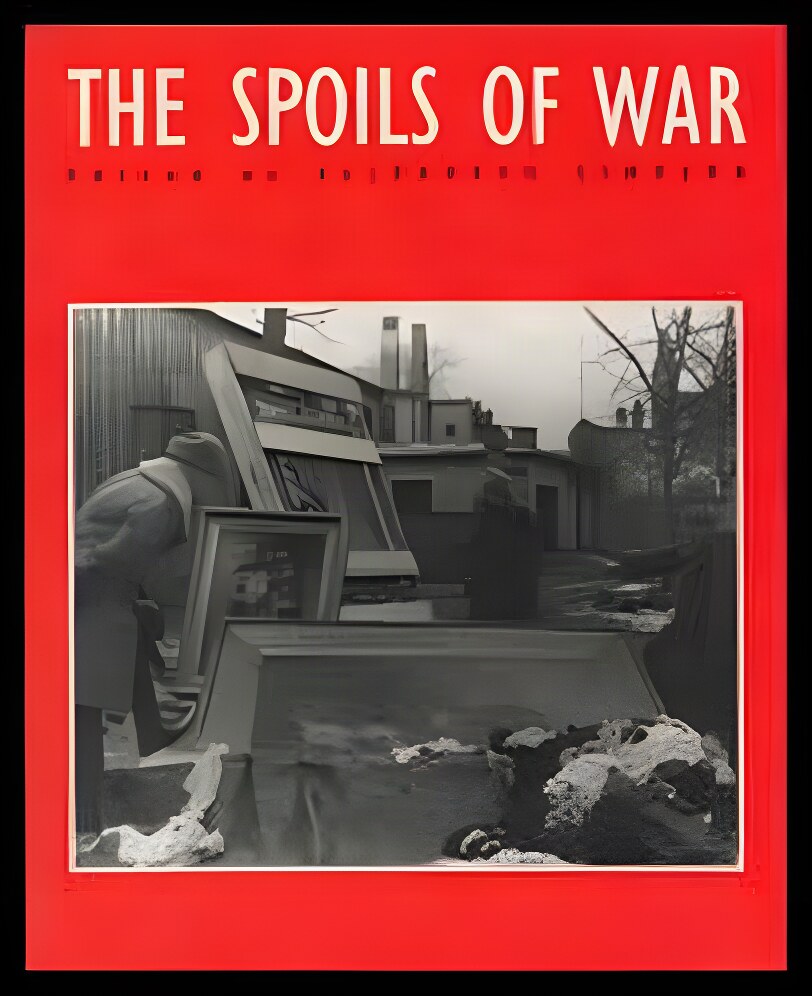
Softcover. New York, Harry N. Abrams, Inc., 1st, 1997, Book: Very Good, Dust Jacket: None, 336 pages. Softcover. Color and b/w illustrations throughout. Covers in excellent condition. Touch of foxing to top edge. Pages clean and bright. The ever-rapacious Nazis looted staggering quantities of great art and antiques from the nations they occupied. Much of it found its way back to Germany, and following the Allied victory, many thousands of rare (and some priceless) pieces were identified, and returned to the countries from which they had been taken. But not all of the paintings, statues, and archaeological treasures were recovered: Some were taken by Soviet troops and disappeared into Russia. Still others slipped into the black market in western Europe, and were snapped up by wealthy (if unprincipled) collectors. A 1995 symposium at the Bard Graduate Center for Studies in the Decorative Arts brought together European and American investigators and historians to discuss both the the Nazi thefts and the current state of knowledge of the whereabouts of the many still missing treasures. Those papers are reprinted here. While the pieces are detailed, dry, and likely to be of most interest to specialists, there are some extraordinary stories, most prominently the description of the recent rediscovery of ``Priam's treasure,'' excavated by Schliemann at Troy and hidden since WW II in a Russian museum. (123 illustrations, 25 in color).
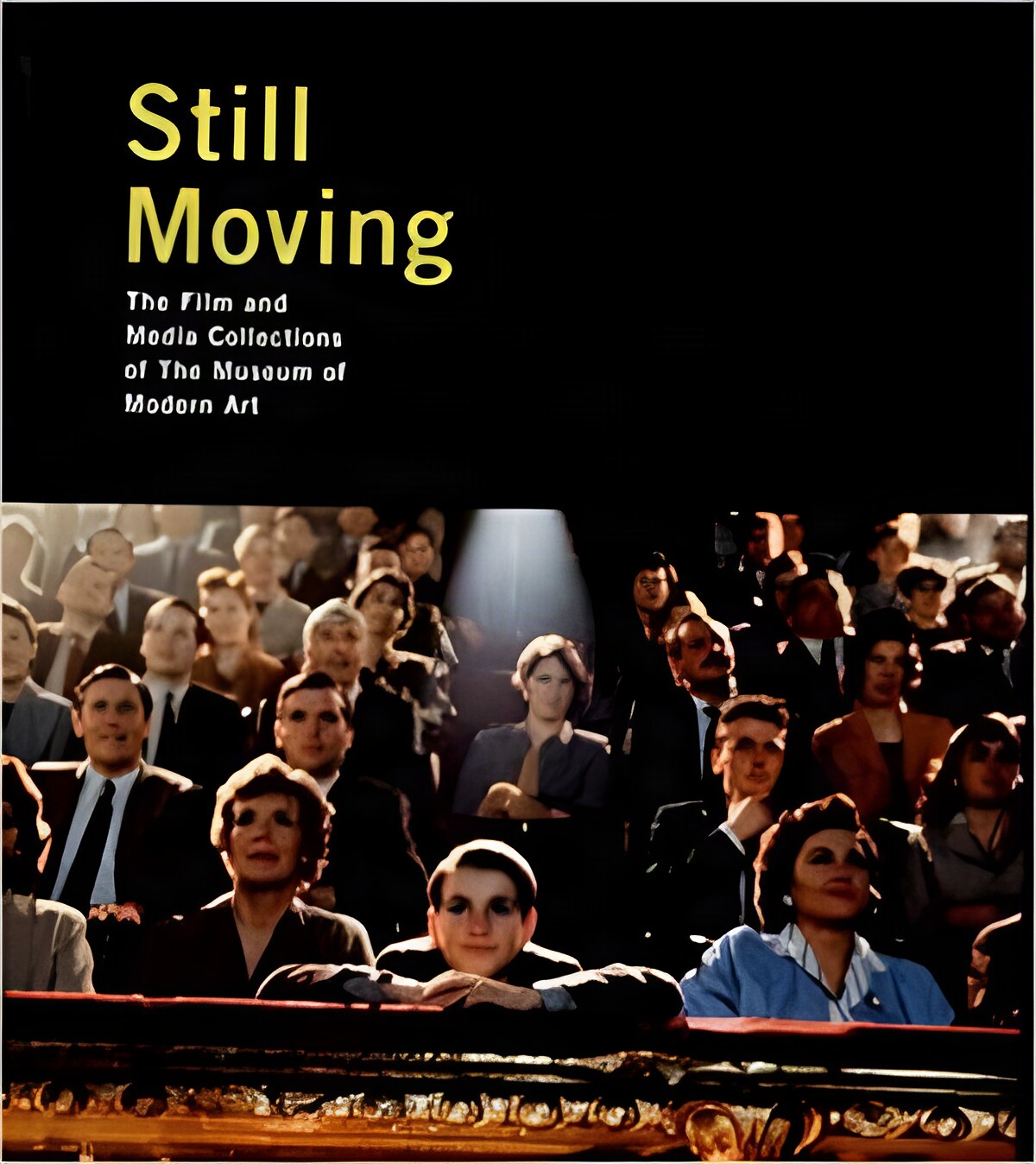
Hardcover. New York, The Museum of Modern Art, 1st, 2006, Book: Very Good, Dust Jacket: None, Hardcover, 375 pages, illustrated throughout in color and b&w. Clean, unmarked copy in excellent condition. 507 illustrations (108 in color, 399 in duotone). Founded in 1935, The Museum of Modern Art's Department of Film and Media is home to one of the most important moving-image archives in the world. Still Moving: The Film and Media Collections of The Museum of Modern Art marks the first time that MoMA has published a volume dedicated exclusively to these holdings. Drawn primarily from the Museum's vast library of film stills, the nearly 500 images in this book represent just a fraction of the department's renowned archive, including one of the world's most important collections of international silent cinema; classic early sound films from the United States, Great Britain, France, Germany, Italy, Russia, and Japan; extensive holdings of documentary and animation shorts and feature films; significant examples of Hollywood filmmaking from studios such as Warner Brothers, RKO, MGM, Twentieth Century-Fox, and Paramount; and more recent works by leading independent and avant-garde film and media artists.
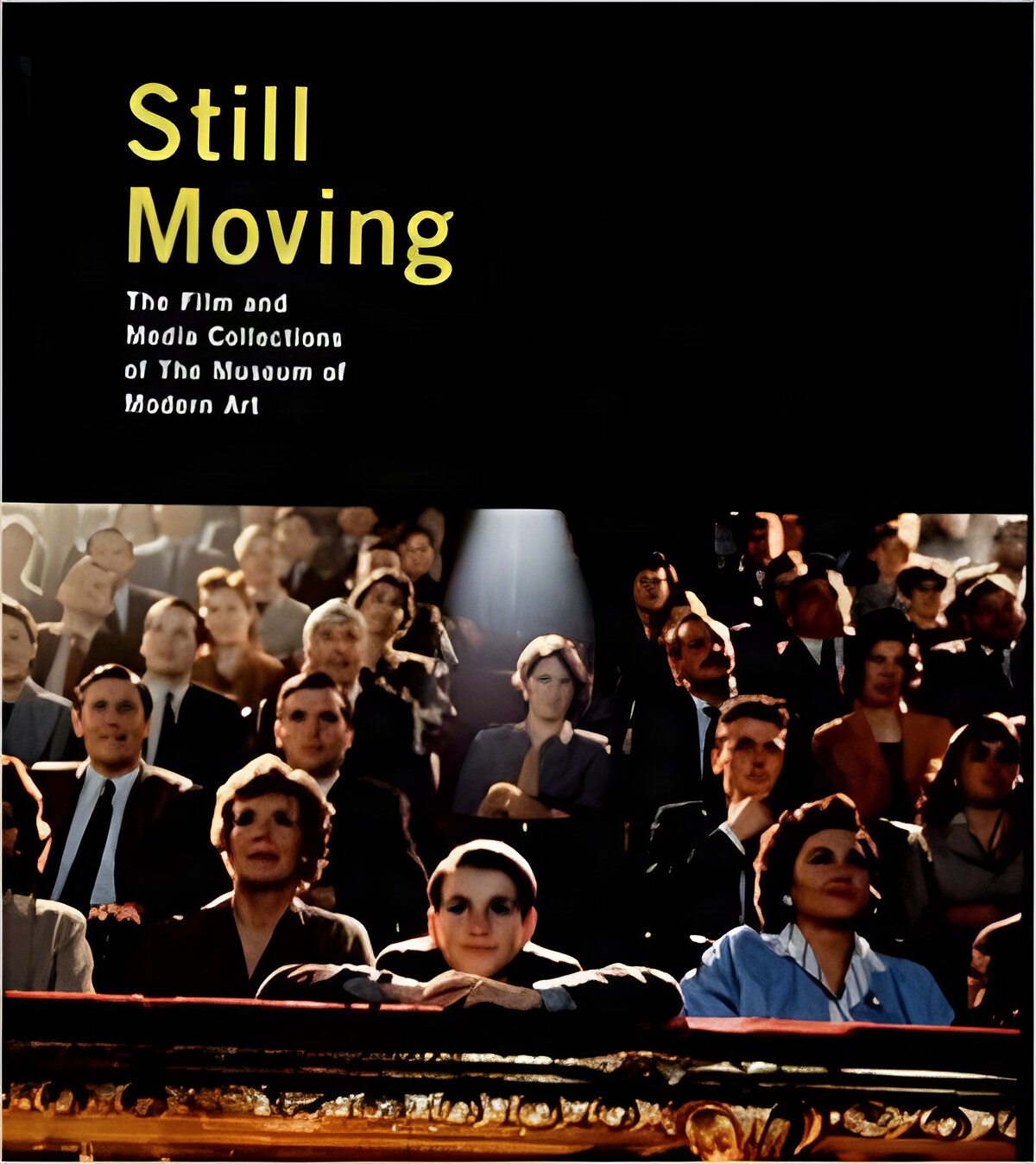
Hardcover. New York, The Museum of Modern Art, New York, 1st, 2006, Book: Very Good, Dust Jacket: None, Hardcover, 375 pages, illustrated throughout in color and b&w. Clean, unmarked copy in excellent condition. 507 illustrations (108 in color, 399 in duotone). Founded in 1935, The Museum of Modern Art's Department of Film and Media is home to one of the most important moving-image archives in the world. Still Moving: The Film and Media Collections of The Museum of Modern Art marks the first time that MoMA has published a volume dedicated exclusively to these holdings. Drawn primarily from the Museum's vast library of film stills, the nearly 500 images in this book represent just a fraction of the department's renowned archive, including one of the world's most important collections of international silent cinema; classic early sound films from the United States, Great Britain, France, Germany, Italy, Russia, and Japan; extensive holdings of documentary and animation shorts and feature films; significant examples of Hollywood filmmaking from studios such as Warner Brothers, RKO, MGM, Twentieth Century-Fox, and Paramount; and more recent works by leading independent and avant-garde film and media artists.
Hardcover. Urbana IL, University of Illinois Press, 1st, 1999, Book: Very Good, Dust Jacket: Very Good, Hardcover in a bright, unclipped dust jacket. 162 pages, b&w illustrations. In the wake of Kristallnacht, November 9, 1938, Sigmund Tobias and his parents fled their home in Germany and relocated to one of the few cities in the world that offered shelter without requiring a visa: the notorious pleasure capital, Shanghai. Seventeen thousand Jewish refugees flocked to Hongkew, a section of Shanghai ruled by the Japanese, and they created an active community that continued to exist through the end of the war. Tobias's coming-of-age story unfolds within his descriptions of Jewish life in the exotic sanctuary of Shanghai. Depleted by disease and hunger, constantly struggling with primitive and crowded conditions, the refugees faced shortages of food, clothing, and medicine. Tobias also observes the underlife of Shanghai: the prostitution and black market profiteering, the brutal lives of the Chinese workers, the tensions between Chinese and Japanese during the war, and the paralyzing inflation and the approach of the communist "liberators" afterward. Richly detailed, Strange Haven opens a little-documented chapter of the Holocaust and provides a fascinating glimpse of life for these foreigners in a foreign land. An epilogue describes the changes Tobias observed when he returned to Shanghai forty years later as a visiting professor.
Hardcover. NY, Farrar & Rinehart, 1st US, 1939, Book: Good, Hardcover, blue cloth with dark blue lettering, 251 pages. Endpapers tanned and soiled at edges. Name on front fly leaf, otherwise clean.
Hardcover. NY, Penguin Press, 3rd pr., 2011, Book: Very Good, Dust Jacket: Very Good, Hardcover in a bright, unclipped dust jacket. 564 pages. From the preeminent Hitler biographer, a fascinating and original exploration of how the Third Reich was willing and able to fight to the bitter end of World War II. As Kershaw shows, the structure of Hitler's "charismatic rule" created a powerful negative bond between him and the Nazi leadership- they had no future without him, and so their fates were inextricably tied. Terror also helped the Third Reich maintain its grip on power as the regime began to wage war not only on its ideologically defined enemies but also on the German people themselves. Yet even as each month brought fresh horrors for civilians, popular support for the regime remained linked to a patriotic support of Germany and a terrible fear of the enemy closing in. Based on prodigious new research, Kershaw's The End is a harrowing yet enthralling portrait of the Third Reich in its last desperate gasps. B&w illustrations. Clean copy.
Hardcover. NY, Pantheon, 1st US, 1999, Book: Very Good, Dust Jacket: Very Good, Hardcover in a bright, unclipped dust jacket. A magisterial achievement: part biography, part history, part moral meditation on the resurrection of torture as an instrument of political power in the twentieth century, The Good Listener tells the story of Helen Bamber, a good but complex woman now in her seventies, who has spent her life battling to bring the dark side of history into the light. In almost every situation in our century where mankind has demonstrated its capacity to intensify evil--during the Nazi Holocaust, in Algeria, Chile, Africa, the USSR, and Israel, as well as in postwar Britain and Germany--Bamber has served as a witness, an expert, or a reproach, as well as a repository of our collective memory of debasement. Her father, a Polish Jew, had been so obsessed by the Fascist threat that he would read to Helen from Goebbels' speeches, teaching her how corrupting and manipulative language can be. She went to Bergen-Belsen after World War II had ended, and upon her return to London she dedicated herself to caring for the young survivors of the camp. So began Bamber's brave devotion to the grim and dangerous task of undoing the work of the torturer--culminating, after her participation as a central force in Amnesty International, in her establishment in England of the Foundation for the Care of Victims of Torture. Because Bamber's uncanny openness to others has been one of her great skills, Clean copy.

 "Paris in the Third Reich: A History of the German Occupation, 1940-1944 by: David Pryce-Jones")


 "Pola Negri: Hollywood's First Femme Fataleby: Kotowski, Mariusz")
 "Porcelain of the Nineteenth Centuryby: Fay-Halle, Antoinette and Barbara Mundt")
 "Portraits of Powerby: Richard Avedon")
 "Posters of the First World Warby: Slocombe, Richard")
 "Raymond Depardon: Adieu Saigonby: Depardon, Raymond")
 "Raymond Depardon: Adieu Saigonby: Depardon, Raymond")
 "Roer River Battles: Germany's Stand at the Westwall, 1944")

 "Shadows of War: A German Soldier's Lost Photographs of World War IIby: Petra Bopp, Willi Rose , et al.")

 "Sirens & Sinners: A Visual History of Weimar Film 1918-1933by: Hans Helmut Prinzler")
 "Six Months in 1945: FDR, Stalin, Churchill, and Truman--from World War to Cold Warby: Michael Dobbs")
 "So war Berlin. / That was Berlin. / Tel fut Berlinby: Wolsdorff, Christian (Intro.)")
 "Strange Haven: A Jewish Childhood in Wartime Shanghai by: Tobias, Sigmund")