Hardcover. Atglen, PA, Schiffer Military History Book, 1st, 2008, Book: Very Good, Dust Jacket: Very Good, 256 pages. Hardcover with dust jacket. Profusely illustrated with b&w photos. Clean, tight copy.
Hardcover. New York , George H. Doran, unknown, ND, Book: Very Good, Dust Jacket: None, Hardcover, red cloth, 249 pages. Faint foxing to edges, Previous owner's inscription on front end paper, else a clean, tight copy.
Hardcover. Beach Lloyd Publishers, 2nd Ed., 2008, Book: Very Good, Dust Jacket: None, Hardcover. pictorial boards, 142 pages. SIGNED BY AUTHOR on the title page. I had all kinds of courage and guts; I don t know where that came from, says Fernande Keufgens Davis ( Freddie ) of the risks that she took as a teenager in the Belgian Resistance of World War II. After the shock of finding her formerly occupied village annexed as part of Germany, Davis was drafted to work in a German munitions factory. Determined not to aid the enemy, she jumped from the train and went underground. Clean copy.
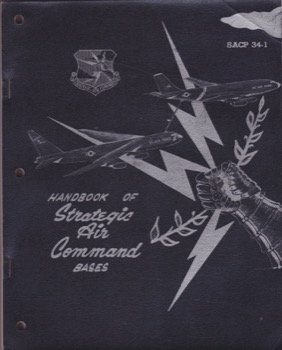
Softcover. Washington DC, United States Air Force, 1959, Book: Very Good, Dust Jacket: None, Softcover, unpaginated, approximately 300 stapled pages. A guide to the SAC's worldwide bases, circa 1959. 8 1/2 X 11", three hole punched. Profusely illustrated with b&w photos of airfields, barracks, NCO clubs, housing for airmen and other facilities covering bases in the states, England, Guam, Germany, etc. Also maps showing locations. Not classified in the early days of the Cold War. Front fly leaf with and introduction by Thomas Power, Commanding General.
Hardcover. NY, Viking, 1st, 1999, Book: Very Good, Dust Jacket: Very Good, Hardcover in a bright, unclipped dust jacket, 430 pages. In this book, backed by a wealth of new research, the author tells for the first time the story of the career of Eugenio Pacelli, the man who as Pius XII was Pope during the Second World War and arguably the most powerful churchman in modern history. Adding to the continuing debate about collective guilt and the Holocaust this is an extraordinary and explosive history. In the first decade of the century, as a brilliant young lawyer, Pacelli helped shape an ideology of unprecedented papal power; during the 1920s he employed cunning and moral blackmail to impose that power in Germany. In 1933 Hitler became his perfect negotiating partner and a concordat was established that granted religious and educational advantages to the Catholic Church in exchange for Catholic withdrawal from social and political action. This 'voluntary' abdication of political Catholicism imposed from Rome facilitated the rise of Nazism. Clean copy.
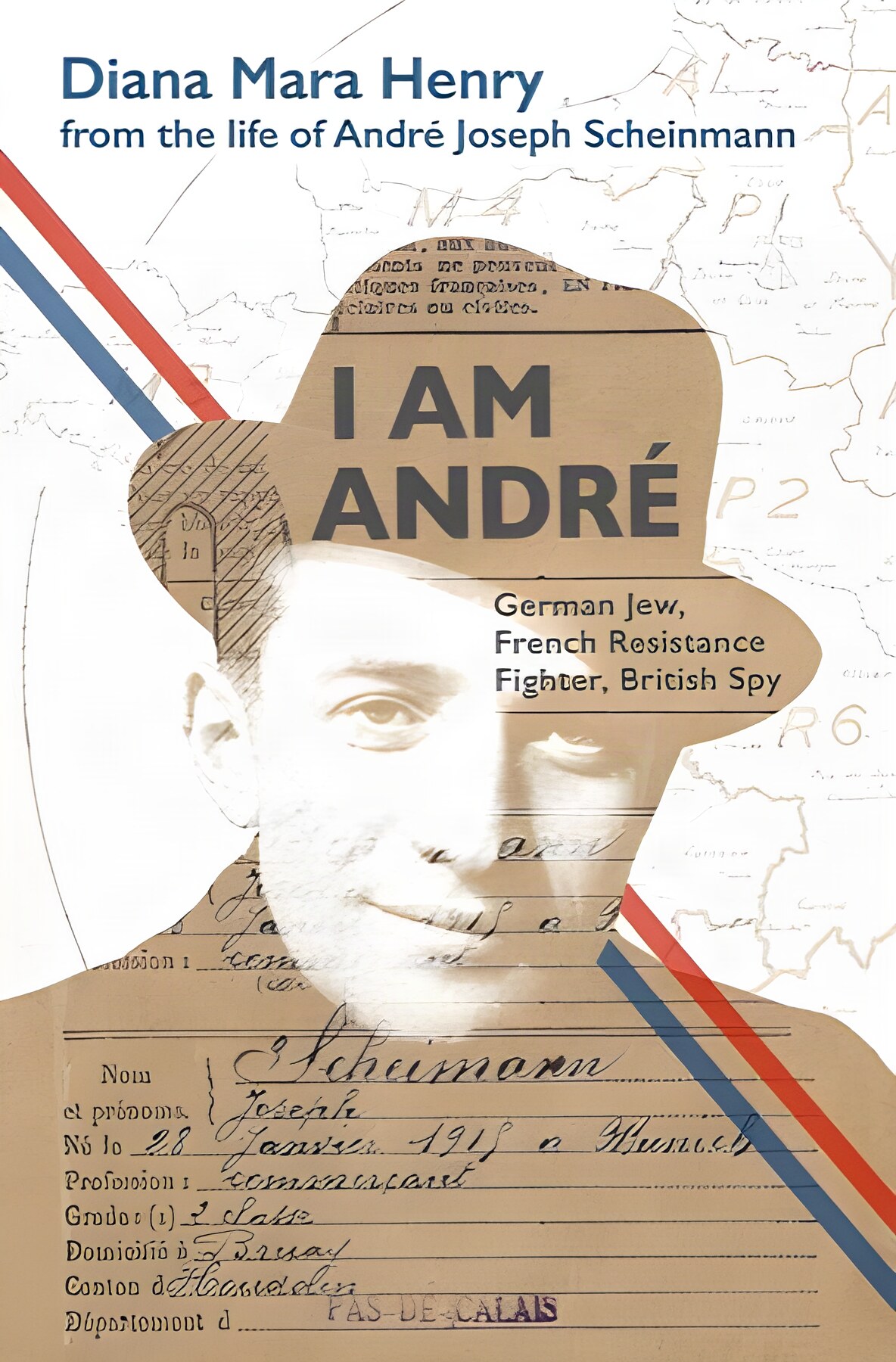
Hardcover. Chiselbury, 1st, 2024, Book: Very Good, Dust Jacket: None, Hardcover in glossy pictorial boards, 356 pages. An amazing real-life story of espionage, of courage and resistance, and of friendship and love. It pulls back the veil on the hidden history of the struggle for the identity of the Resistance in France. The life of 'André' Joseph Scheinmann is more intriguing and compelling than any work of fiction. His true-life story of derring-do starts as a Jewish youth in Munich, whose family moves to France in 1933 to escape the Nazi tide. He joins the French army at the outbreak of WW2 and escapes from a prisoner-of war camp after the bitterly brief fight for France in the summer of 1940. André becomes a spy and saboteur for the British and Free French whilst working undercover as translator and liaison with the German high command at the Brittany headquarters of the French National Railroads. Summoned by the British, he clandestinely crosses the Channel for initiation and training as an MI6 agent in England. His network betrayed during his absence, he is arrested on his return to France. André then begins an even more perilous journey with interrogation in Gestapo prisons and the little-known Natzweiler concentration camp in Alsace, before being transferred to Dachau and Allach, ahead of the advancing Allies. Illustrated with over 120 vintage and color photographs and letters. Clean copy.
Hardcover. Chicago, Henry Regnery Company, 1st, 1950, Book: Very Good, Dust Jacket: Fair, Hardcover in a worn, chipped dust jacket. Map endpapers, 176 pages, b&w photos. The first book by a German general published in America after the war, a German account of the D-Day & Normandy 'invasion' by Allied forces; the author was Rommel's Chief-of-Staff and therefore had an inside view of Rommel's efforts to get Hitler to negotiate a peace in the face of overwhelming Allied superiority. Speidel was a career military officer and trained historian; a German nationalist, he disagreed with racist Nazi policies, was involved in the 20 July plot to kill Hitler, and was important in rebuilding Germany's army after the war. Clean copy.
Softcover. San Francisco, Chronicle Books, 1st, 1993, Book: Very Good, Dust Jacket: None, Softcover, 133 pages illustrated in color. This lavishly illustrated volume offers a unique survey of Italian commercial graphic design during a period of both creative artistic vitality and extreme political turmoil. The first English-language book to showcase the bold typography and streamlined imagery of modern Italian design motifs on commercial products of the day, this fascinating and important resource for designers, history buffs, and collectors includes a discussion of the Futurist influence on the Italian Art Deco style and the success of such individualized expression despite a ruthless Fascist regime. Clean copy.
Hardcover. Chapel Hill, University of North Carolina Press., 1st, 1981, Book: Very Good, Dust Jacket: Very Good, Hardcover in a lightly worn dust jacket, 364 pages, b&w illustrations. As the most learned and eminent public lawyer in Germany, a busy administrator, and a prolific writer, Moser (1701-85) lived and breathed the political order. His correspondence, memoranda, and manuscript autobiography reflect the intricate day-to-day operations of the empire, and his fascinating life is a microcosm of the life and style of the empire itself. The biography provided a comprehensive picture of the empire between the Thirty Years War and the revolutionary era. Dust jacket spine faded otherwise very good, clean.
Hardcover. New Haven CT, Yale University Press;, 1st, 2009, Book: Very Good, Dust Jacket: Very Good, Hardcover, 180 pages. John Gutmann (1905-1998) was one of America's most distinctive photographers. Born in Germany where he trained as an artist and art teacher, he fled the Nazis in 1933 and settled in San Francisco, reinventing himself as a photo-reporter. Gutmann captured images of American culture, celebrating signs of a vibrant democracy, however imperfect. His own status as an outsider--a Jew in Germany, a naturalized citizen in the United States--informed his focus on individuals from the Asian-American, African-American, and gay communities, as well as his photography in India, Burma, and China during World War II. This handsome book acknowledges Gutmann's place in the history of photography. Drawing on his archive of photographs and papers at the Center for Creative Photography, it presents both unfamiliar works and little-known contexts for his imagery, linking his photography to his passionate interest in painting and filmmaking, his collections of non-Western art and artifacts, and his pedagogy. In addition to a major essay by Sally Stein, the volume includes an introduction by Douglas R. Nickel, and an overview of the Gutmann archive by Amy Rule.
Hardcover. New Haven CT, Yale University Press;, 1st, 2009, Book: Very Good, Dust Jacket: Very Good, Hardcover, 180 pages. John Gutmann (1905-1998) was one of America's most distinctive photographers. Born in Germany where he trained as an artist and art teacher, he fled the Nazis in 1933 and settled in San Francisco, reinventing himself as a photo-reporter. Gutmann captured images of American culture, celebrating signs of a vibrant democracy, however imperfect. His own status as an outsider--a Jew in Germany, a naturalized citizen in the United States--informed his focus on individuals from the Asian-American, African-American, and gay communities, as well as his photography in India, Burma, and China during World War II. This handsome book acknowledges Gutmann's place in the history of photography. Drawing on his archive of photographs and papers at the Center for Creative Photography, it presents both unfamiliar works and little-known contexts for his imagery, linking his photography to his passionate interest in painting and filmmaking, his collections of non-Western art and artifacts, and his pedagogy. In addition to a major essay by Sally Stein, the volume includes an introduction by Douglas R. Nickel, and an overview of the Gutmann archive by Amy Rule.
Hardcover. Koln GR, Taschen, 1st, 2001, Book: Very Good, Dust Jacket: Very Good, Hardcover, 336 pages. One remarkable woman, five remarkable careers: Leni Riefenstahl is the exception to the rule. From dancer to actress to film-maker to photographer to diver, she has excelled in each field and is one of the most important and controversial artists of the 20th century. Her contributions to the art and technique of film-making were vast, most notably in her epochal film "Olympia" (1938). Critically acclaimed during the 1930's for her work under the Hitler administration and harshly criticized after the war, Riefenstahl surged on, completing the famous "Tiefland" in 1954. In the 1960s and 70s she traveled to Africa and extensively photographed East Africa and the Nuba tribes in Sudan, publishing three books. Ready for yet another change, she took up deep-sea diving at the age of 71, beginning a new chapter as an underwater photographer. Though she has attracted much attention throughout her life and has been the subject of many books, articles, and films, Leni Riefenstahl Five Lives is the first book to showcase her entire career in pictures. Produced in collaboration with Riefenstahl herself, the book includes her most famous images as well as many previously unpublished pictures from her private archives.
New York, Philomel, 1st, 1994, Book: Very Good, Dust Jacket: Very Good, Hardcover in a bright, unclipped dust jacket. Color illustrations by Thomas B. Allen. Unpaginated. With America at war with Germany, Littlejim's father believes that there is no time for fun despite the coming of the Christmas holidays, but Littlejim practices hard for the Bible competition, hoping to go to the church Christmas tree celebration.
Hardcover. NY, Farrar, Straus and Giroux, 1st, 1971, Hardcover in a bright dust jacket, 378 pages. From dust jacket notes: "For most Americans, the Second World War started on December 7, 1941, and much of the fighting took place in strange, faraway places. For the British, the war started on September 3, 1939, and much of the action took place in the skies over England. In the spring of 1940, after months of uneasy calm, Germany invaded the Lowlands and conquered France within a few days, leaving England without her only meaningful ally on the Continent. A year would pass before the Soviet Union was drawn into the war, and eighteen months before the Japanese attacked Pearl Harbor. The United Kingdom, with a land area about the size of Wyoming, was alone, all alone, with only the Straits of Dover separating the island from Hitler's war machine. For six years Mollie Panter-Downes covered the war for The New Yorker magazine from her native England. Even at the height of the air war over London, when 'all that is best in the good life of civilized effort appears to be slowly and painfully keeling over,' she continued to file her fortnightly reports in an understated but dramatic fashion that reflected the fortitude of her fellow countrymen: 'The announcements of the first air-raid deaths are beginning to appear in the obituary columns of the morning papers. No mention is made of the cause of death, but the conventional phrase "very suddenly" is always used.' William Shawn, editor of The New Yorker, has assembled Miss Panter-Downes' 'Letter from London' columns into a consecutive, on-the-spot chronicle of the war in England."
Softcover. Zenith Press, reprint, 2004, Book: Very Good, Dust Jacket: None, Softcover, 574 pages, b&w illustrations. Originally published in Germany in 1955, and in England and the United States in 1958, this classic memoir of WWII by a man who was an acknowledged military genius and probably Germany's top WWII general, is now made available again. Field Marshal Erich von Manstein described his book as a personal narrative of a soldier, discussing only those matters that had direct bearing on events in the military field. The essential thing, as he wrote, is to "know how the main personalities thought and reacted to events." This is what he tells us in this book. His account is detailed, yet dispassionate and objective. Clean copy.
Hardcover. Boston, New Harvest, 1st, 2014, Book: Very Good, Dust Jacket: Very Good, 174 pages. Hardcover. Clean, unmarked copy with only minor wear to dust jacket. Hoban has written an insightful book into what may have made Lucian Freud the great painter he came to be. From his early days in Germany with his grandfather, Sigmund Freud, to his subsequent life in London, where his family moved before the war, we see Lucian Freud gradually developing from an intense adolescent who often resorted to physical violence in conflicts with others to the powerful figure who changed the face of Realism. His many liaisons with women are described in detail: Hoban offers us a candid sketch of who the most prominent women in his life were, his problems with commitment and other moral conundrums we are forced to consider in his character, such as his questionable demand on his lovers that they use no form of birth control, resulting in at least 14 children, most out of wedlock. Along with that, Freud's gambling addiction and his love of risk are explored by Hoban in a way that allows us a glimpse into Freud's psyche that is invaluable for anyone wanting to understand in a more in depth way the factors that might have contributed to his enormous talents and output.
Softcover. Germany, Schirmer/Mosel, 1st, 1996, Book: Very Good, Dust Jacket: None, Softcover. 128 pages, b&w photos. Portraits include Alfred Hitchcock, Grace Jones, Marilyn Manson, Radiohead, Tubac, Andy Warhol, Mike Tyson , Frank Stella, Louise Bourgeois, Jeff Koons, Cindy Sherman. Bright, clean copy.
Hardcover. New York, D.A.P.//La Fabrica , 1st, 2013, Book: Very Good, Dust Jacket: Very Good, Hardcover, 192 pages. Like new in publisher's shrink-wrap. America's first female war correspondent, Margaret Bourke-White was also something of a media star, with the portrait of her decked out in flying gear, camera in hand, about to set off on a bombing raid, being a favorite pin-up among U.S. forces. Focusing on the work Bourke-White made in the 1930s and 40s in Czechoslovakia, Germany, Italy, the Soviet Union and the U.K., Moments in History presents 150 classic photographs alongside revelatory extracts from letters and publications in periodicals. Bourke-White traveled to the USSR when the first Five-Year Plan was being implemented; she documented the German invasion of the Soviet Union in 1941, and the Allied bombing of Germany. In the summer of 1945 she was commissioned by Life to make a photographic record of the destroyed German cities. She was present at the liberation of the Buchenwald concentration camp and the Leipzig-Thekla forced labor camp. She recorded the partition of India and the Korean War, and one of her most famous pictures of this period is "Gandhi," which shows the subject at his spinning wheel. Also included in the catalogue are some of the word-picture sequences Bourke-White did for Fortune and Life, as well as extracts from her correspondence with personalities from the worlds of politics and culture, such as Winston Churchill and Georgia O'Keeffe. Bourke-White wanted to be the "eyes of the age," and her pictures testify to (as she put it) her "unquenchable desire to be present when history is being made."
Hardcover. Ostfildern GR, Hatje Cantz, 1st, 2010, Book: Very Good, Dust Jacket: None, Like new in publishers shrink-wrap. Dutch documentary photographer Martin Roemers decided to track down the remains of deserted atom bomb shelters of the Cold War period. For over ten years he traveled through formerly hostile countries on both sides of the line: through eastern and western Germany, England, Belgium, the Netherlands, Poland, Ukraine, and other former East Bloc nations. Hardcover, 144 pages, 73 color plates, essays by Roemers, H.J.A. Hofland, and Nadine Barth.
Hardcover. Edition Stemmle, 1st, 2001, Book: Very Good, Dust Jacket: Very Good, Hardcover, 136 pages. Bauhaus photography is well served by this first monograph on Max Baur, with many of the previously unpublished photographs also serving as a new source for Bauhaus studies. Working in Germany, at first providing images for postcards, Baur expanded his efforts to encompass landscape, portrait, and architectural images. In each of these genres, his work reflects the cool, objective approach of the Bauhaus style combined with the artist's elegant handling of light and perspective. In photos of stairways and colonnades, factories, and everyday objects, Baur was able to eliminate the extraneous and offer the essential nature of his subject. The book covers a period of vast changes in the world and in the life of the artist, but throughout there is a consistency of vision. An essay by William Ewing, director of the Mus e de l'Elys e (which specializes in photography), gives a brief description of the life and career of Baur with enthusiasm and warmth, while Edelmann-Pomplitz writes movingly about her experience as his student. In a letter to her, Baur expresses his credo most eloquently: "it is with light alone that we create images." This lovely work is a fine example of excellent printing and composition in harmony with content.
Hardcover. NY, McGraw-Hill , 1st, 1986, Book: Very Good, Dust Jacket: Very Good, Hatdcover, 364 pages, b&w photo illustrations. notes. bibliography. index. This is the definitive life story of Dr. Josef Mengele, the notorious "Angel of Death" Responsible for the death and mutilation of thousands of prisoners at Auschwitz, Mengele vanished into South America after World War II, where he remained free for more than three decades. How did he escape from the Allies? And how did he elude his pursuers? Granted exclusive and unrestricted access to the Mengele family papers and diaries, Posner and Ware have sifted through more than 5,000 pages of Mengele's writings to construct this extraordinary record of his life~from his childhood in Germany to the horrors of Auschwitz to his years in exile. previous owner's name, notation on front endpapers. Otherwise a clean copy.
Hardcover. NY , Duell, Sloan and Pearce, 1st, 1948, Book: Very Good, Dust Jacket: Poor, Hardcover in a poor dust jacket with chipping, fading, especially to spine. Wheeler-Bennett worked as the director of the Royal Institute of International Affairs' information department. In particular, Wheeler-Bennett lived in Germany in 1927-1934 and witnessed firsthand the rise of Nazi Germany. After the Second World War, Wheeler-Bennett was a critic of Appeasement, and 10 years after the Munich Agreement wrote a book condemning it. Footnotes. Illustrations, Maps. Bibliography. Index. 507 pages, name on front fly leaf, otherwise clean.
Hardcover. NY, Viking, 1st, 2004, Book: Very Good, Dust Jacket: Very Good, Hardcover, 320 pages, b&w photos, in a bright dust jacket. The true, little-known story of a family torn apart by revolution and war. Olga Chekhova, a stunning Russian beauty, was the niece of playwright Anton Chekhov and a famous Nazi-era film actress who was closely associated with Hitler.
Softcover. Brighton UK, Sussex Academic Press, 1st, 2010, Book: Very Good, Dust Jacket: None, Softcover, 283 pages. The first book to study the history of the Nazis in Britain. In September 1930, the Nazi Party newspaper, Volkischer Beobachter, sent its first representative to London. Soon afterwards, German residents in London established an Ortsgruppe, or local Nazi group, which provided Party members with a place to congregate and support the new movement. By 1933, more than 100 members belonged to the London group. The Nazis in pre-war London created a dilemma for the Foreign Office and the Home Office, who were divided as to how best to treat residents whose allegiance was to the German Reich. Some felt that all Nazi organizations should be banned, and Party Members should not be allowed to enter the UK. Others, including MI5, argued that it would be easier to keep track of Nazis if they were in-country. Previously unpublished German documents reveal the fates of German diplomats, journalists, and professionals, many of whom were interned in Britain or deported to Nazi Germany once war broke out on September 3, 1939. Clean copy.


 "German Fury in Belgium, Theby: Mokveld, L.")
 "Girl in the Belgian Resistance: A Wakeful Eye in the Underground (SIGNED COPY)by: Fernande K. Davis")



 "Italian Art Deco: Graphic Design between the Warsby: Heller, Steven / Fili, Louise")

 "John Gutmann: The Photographer at Workby: Sally Stein , Douglas R. Nickel, et al.")
 "John Gutmann: The Photographer at Workby: Sally Stein , Douglas R. Nickel, et al.")
 "Leni Riefenstahl-Five Lives: A Biography in Picturesby: Walk Ines; Leni Riefenstahl")
 "Littlejim's Gift - An Appalachian Christmas Storyby: Houston/Thomas B. Allen, Gloria")
 "London War Notes 1939-1945by: Mollie Panter Downes")
 "Lost Victories: War Memoirs of Hitlers Most Brilliant General by: Von Manstein, Field Marshal Erich")
 "Lucian Freud: Eyes Wide Openby: Hoban, Phoebe")
 "Mad Dogby: Watson, Albert")
 "Margaret Bourke- White: moments in historyby: Quimby, Sean")
 "Martin Roemers: Relics of the Cold Warby: Hofland, H.J.A.")
 "Max Baur: In the Bauhaus Spirit: Photographs 1925-1960by: Stephan Steins")


 "Mystery of Olga Chekhova, Theby: Beevor, Antony")
 "Nazis in Pre War London 1930 1939: The Fate and Role of German Party Members and British Sympathizers by: James J. Barnes; Patience P. Barnes")