Hardcover. NY, Knopf, 1st, 2008, Book: Very Good, Dust Jacket: Very Good, Hardcover, 736 pages. A rich and revelatory biography of one of the crucial cultural figures of the twentieth century. Lincoln Kirstein's contributions to the nation's life, as both an intellectual force and advocate of the arts, were unparalleled. While still an undergraduate, he started the innovative literary journal Hound and Horn, as well as the modernist Harvard Society for Contemporary Art--forerunner of the Museum of Modern Art. He brought George Balanchine to the United States, and in service to the great choreographer's talent, persisted, against heavy odds, in creating both the New York City Ballet and the School of American Ballet. Among much else, Kirstein helped create Lincoln Center in New York, and the American Shakespeare Festival in Stratford, Connecticut; established the pathbreaking Dance Index and the country's first dance archives; and in some fifteen books proved himself a brilliant critic of art, photography, film, and dance. This stunning biography, filled with fascinating perceptions and incidents, is a major act of historical reclamation. Utilizing an enormous amount of previously unavailable primary sources, including Kirstein's untapped diaries, Martin Duberman has rendered accessible for the first time a towering figure of immense complexity and achievement.
Hardcover. New Mexico, Museum of New Mexico Press, 1st, 2009, Book: Very Good, Dust Jacket: Very Good, Hardcover, 276 pages. Combining images from early masters and well-known fine art photographers with text and observations from noted writers, this is one of a kind book. It provides stimulating perspectives on Santa Fe's transformation over the last 160 years, presenting a historical and contextual perspective on the important role photography has played in documenting and shaping Santa Fe's image. Includes selected images from more than one hundred noted photographers.
Hardcover. St. Ann's Press, 1st, 2002, Book: Very Good, Dust Jacket: Very Good, Hardcover, 172 pages. On May 25, 1961, Bruce Davison joined a group of Freedom Riders traveling by bus from Montgomery, Alabama to Jackson, Mississippi. The actions of these youths challenged and disobeyed federal laws allowing for integrated interstate bus travel. These historic episodes, which ended in violence and arrests, marked the beginning of Davidson's exploration into the heart and soul of the civil rights movement in the United States during the years 1961-1965. In 1962, Davidson received a Guggenheim Fellowship and continued documenting the era, including an early Malcolm X rally in Harlem, steel workers in Chicago, a Ku Klux Klan cross burning near Atlanta, farm migrant camps in South Carolina, cotton picking in Mississippi, protest demonstrations in Birmingham, and the heroic Selma March that led to the Voting Rights Act of 1965, which was instrumental in changing the political power base in the segregated Southern states. In the 140 photographs collected here, many of which have never before been published, we see intimate and revealing portraits of Dr. Martin Luther King Jr., John Lewis, and other leaders made by Davidson during those turbulent times. These images describe the mood that prevailed during the civil rights movement with a lyrical imagery that is both poignant and profound. As Davidson bears witness to these historical events, and documents the degradation and segregation that were endured, he gives testimony to the struggle for freedom, equality, justice, and human dignity.
Softcover. Minnesota Historical Society, reprint, 2009, Book: Very Good, Dust Jacket: None, Softcover, oblong format, 309 pages. A collection of b&w seasonal photos from Minnesota's past with excerpts from letters and journals from each season. The book is broken up into the four seasons of the year and the author wrote captions giving available information about each photo. A fun look into Minnesota's past. Clean copy.
Softcover. NJ, Rutgers University Press, 1st, 2003, Book: Very Good, Dust Jacket: None, Softcover, 244 pages. The story of westering Americans in the late nineteenth and early twentieth centuries has been told most notably through photographs of American Indians. Unlike this vast archive, produced primarily by male photographers, which depicted American Indians as either vanishing or domesticated, the lesser-known images by the women featured in Trading Gazes provide new ways of seeing the intersecting histories of colonial expansion and indigenous resistance. Four unconventional women-Jane Gay, who documented land allotment to the Nez Perces; Kate Cory, an artist who lived for years in a Hopi community; Grace Nicholson, who purchased cultural items from the Karuk and other northern California tribes; and Mary Schaffer, who traveled among the Stoney and Metis of Alberta, Canada-used cameras to document their cross-cultural encounters. Trading Gazes reconstructs the rich biographical and historical contexts explaining these women's presence in different Native communities of the North American West. Their photographs not only record the unprecedented opportunities available for Euro-American women eager to shed gender restrictions, but also reveal how women's newfound mobility depended on the increasing restrictions placed on Native Americans in this era.
Hardcover. Trama Editorial; Bilingual edition, 1st, 2006, Book: Very Good, Dust Jacket: Very Good, Hardcover, 130 pages. Train to the Sun.-Understanding how a steam locomotive works is like watching the energy of boiling water by lifting the lid of a pan. The fuel (oil, coal stone or wood) is burned in the firebox, it heats the water in the boiler and makes steam, which in turn nourishes the cylinders linked to a piston. An exciting historical and cultural journey, with a spectacular photography that shows us the path of "the most difficult train in the world." A profile of one of the world's last operating steam trains in Ecuador. Text in Spanish and English.
Hardcover. New Haven, CT, Yale University Press, 1st, 2014, Book: Very Good, Dust Jacket: Very Good, 232 pages. Hardcover with dust jacket. Very clean, unmarked copy still in shrink wrap. Black & white and color photographs throughout. City scenes have been chronicled in photographs since the early 1800s, but street photography as traditionally defined has captured a relatively narrow field of these images. Revolutionizing the history of street photography, Unfamiliar Streets explores the work of Richard Avedon (1923-2004), Charles Moore (1931-2010), Martha Rosler (b. 1943), and Philip-Lorca diCorcia (b. 1951), four American photographers whose careers in fashion, photojournalism, conceptual art, and contemporary art are not usually associated with the genre. Bussard's lively and engaging text, a timely response to a growing interest in urban photography, challenges the traditional understanding of street photography and makes original and important connections among urban culture, social history, and the visual arts, constructing a new historical model for understanding street photography. Illustrated with more than one hundred images, this book provides an interpretation of a compelling genre that is as fresh as its consideration of the city streets themselves, sites of commerce, dispossession, desire, demonstration, power, and spectacle.
Hardcover. Berlin, Argon, 1st, 1991, Book: Very Good, Dust Jacket: Very Good, Hardcover in a bright dust jacket, 136 pages, historical images of Linden, Germany. Many from the late 1800s, mostly landmarks and buildings. Endpapers map of the city. Essay by Dieter Hildebrandt, introduction by Hans-Werner Klunner. GERMAN TEXT.
Softcover. NY, Writers And Readers Publishing, reprint, 1993, Book: Good, Softcover, 201 pages. Ex-lib with residue to endpapers, spine label. This photographic essay provides a fascinating historical overview of 34 black women photographers from 1839 to 1985. It is divided into five time periods and includes the general history of each period, along with the particular photographers' place in it. This volume is profusely illustrated with the work of each photographer and includes both biographical information and a critique of her work. All photographs are in black and white and are excellently reproduced. The writing is personalized and exciting. This is an upbeat, positive presentation of the role black women played in recording their history and their world. One page (179) loose, laid in.
Softcover. Martha's Vineyard Historical Society, 1st, 1998, Book: Very Good, Dust Jacket: None, Softcover, 296 pages, b&w photos by Mark Lennihan. It is the people of Martha's Vineyard who give voice to the Vineyard "sense of place." Here, in their own words excerpted from interviews with oral historian Linsey Lee, are the photographed portraits and stories of seventy-five Vineyarders, chronicling the continuity and the changes of life on the Vineyard over the last one hundred years. We find farmers, fishermen, neighbors, boat builders and summer people. There are stories of shipwrecks, race relations, ice cutting, rum running, one-room schoolhouses, whaling captains and whaling wives, Portuguese customs, Wampanoag heritage and more, chronicling a way of life that has continued for generations and is fast disappearing.
Hardcover. India, Mapin Publishing Gp Pty Ltd, 1st, 2008, Book: Very Good, Dust Jacket: Very Good, Hardcover. Like new in publishers shrink-wrap. Indian Heritage in the Photographs of Jean Philippe Vogel, 1901-1913. 191 pages, b&w photographs. Frontis, 1 color map, profuse b/w photos. The early twentieth century proved to be a highly innovate period for Indian historical archaeology and heritage care. This highlights Vogel's contribution to early twentieth-century archaeology, documenting his explorations and excavations.
Hardcover. New York , Pantheon, 1st US, 1989, Book: Very Good, Dust Jacket: Very Good, 111 pages, illustrated throughout in b&w. Light edgewear and rubbing to dust jacket. Faint foxing to top edge, otherwise a clean, tight copy. In April 1933 an editor at Lippincott asked Evans to take photographs for a polemical book by Carlton Beals, a leftist writer who was very critical of the then Cuban dictator Gerardo Machado and anxious to show how American support of Machado had created an economic catastrophe in Cuba. Evans agreed after acceptance of his conditions that he have complete freedom to choose the photographs for publication and that they be collected at the end of the book so that they appeared to be an independent entity and not simply illustration of the text. Indeed, according to legend, Evans had not read Beals's text when he went to Havana in May 1933. He was in Cuba for three weeks. When his personal funds ran out, his way was paid for by Ernest Hemingway; the two had never met before, but Hemingway was eager for the company of someone equally qualified in literary conversation and in drinking. In the end, Evans contributed thirty-one photographs to the published "The Crime of Cuba". This book, WALKER EVANS: HAVANA 1933, contains seventy of the photographs Evans took in Cuba, including most of the photographs he selected for "The Crime of Cuba". The volume is introduced by an excellent essay by Gilles Mora that gives the historical background and discusses the place of Evans's Cuban photographs in his overall body of work. The photographs were selected by Mora and by John T. Hill, who also was responsible for the sequencing of their presentation. (One of Mora's points is that Evans attached a great deal of significance to the sequencing of his photographs, any collection of which he viewed as a composite artistic/documentary statement and, as such, more important than any single photograph.)
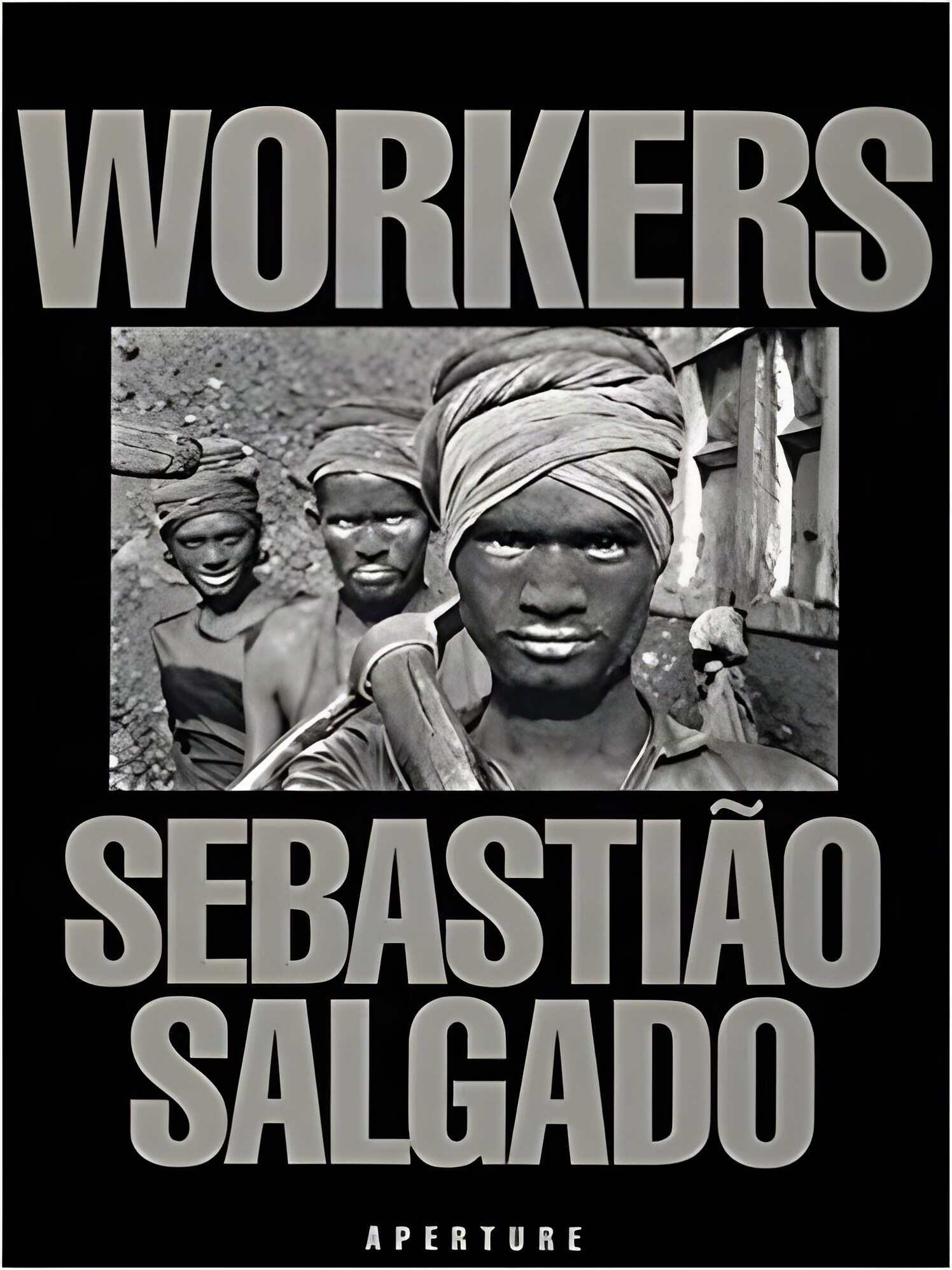
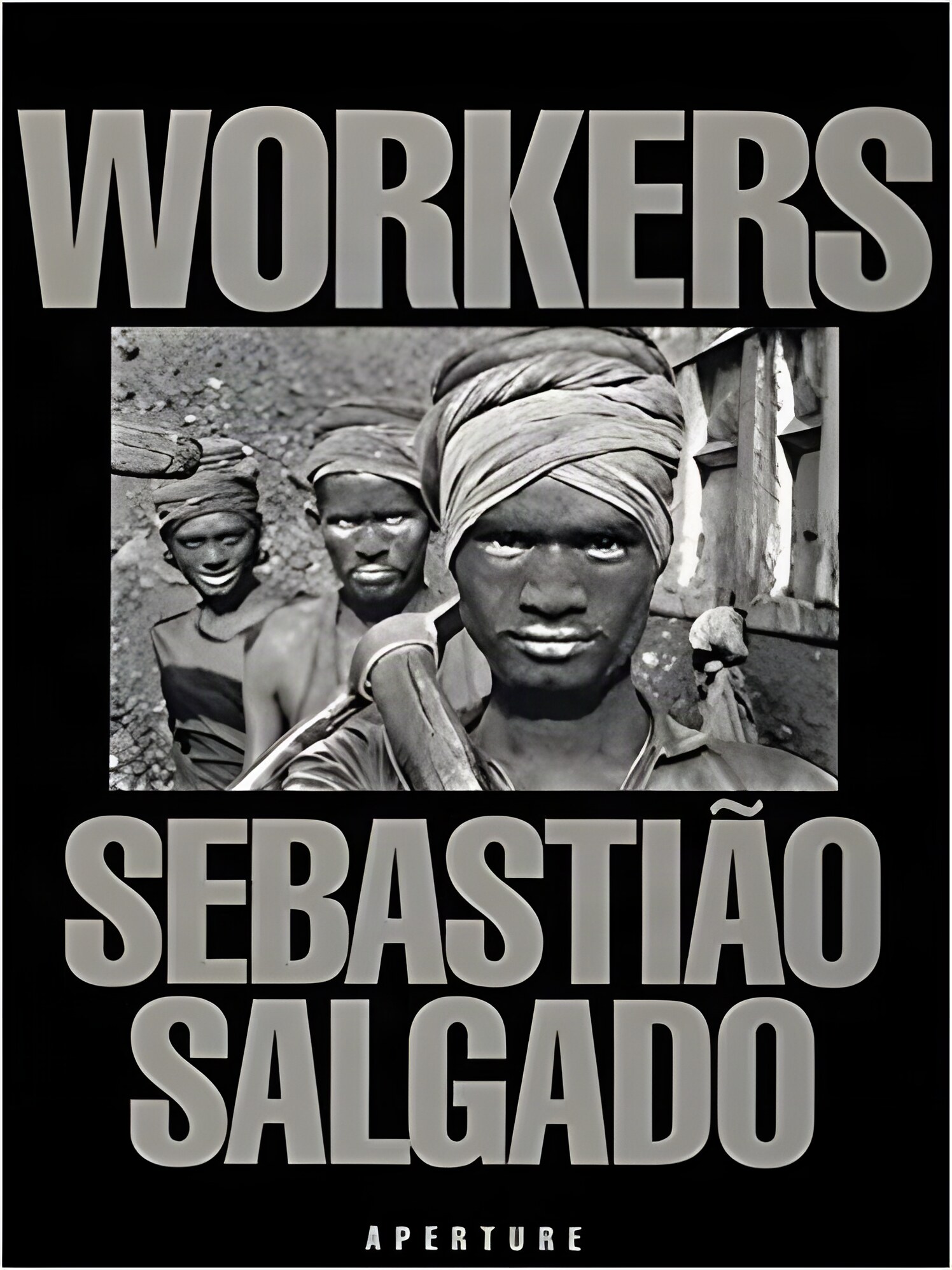
Hardcover. NY, Aperture, reprint, 2005, Book: Very Good, Dust Jacket: Very Good, Hardcover, 400 pages, 350 duotone images. More than those of any other living photographer, Sebastiao Salgado's images of the world's poor stand in tribute to the human condition. His transforming photographs bestow dignity on the most isolated and neglected, from famine-stricken refugees in the Sahel to the indigenous peoples of South America. "Workers" is a global epic that transcends mere imagery to become an affirmation of the enduring spirit of working women and men. The book is an archaeological exploration of the activities that have defined labor from the Stone Age through the Industrial Age, to the present. Divided into six categories -- "Agriculture," "Food," "Mining," "Industry," "Oil" and "Construction" -- the book unearths layers of visual information to reveal the ceaseless human activity at the core of modern civilization. Extended captions provide a historical and factual framework for the images. "Salgado unveils the pain, the beauty, and the brutality of the world of work on which everything rests," wrote Arthur Miller of this photobook classic, upon its original publication in 1993. "This is a collection of deep devotion and impressive skill." An elegy for the passing of traditional methods of labor and production, "Workers" delivers a message of endurance and hope. DOMESTIC SHIPPING ONLY.
Hardcover. NY, Aperture, 1st, 1993, Book: Very Good, Dust Jacket: Very Good, Hardcover, 400 pages, 350 duotone images. More than those of any other living photographer, Sebastiao Salgado's images of the world's poor stand in tribute to the human condition. His transforming photographs bestow dignity on the most isolated and neglected, from famine-stricken refugees in the Sahel to the indigenous peoples of South America. "Workers" is a global epic that transcends mere imagery to become an affirmation of the enduring spirit of working women and men. The book is an archaeological exploration of the activities that have defined labor from the Stone Age through the Industrial Age, to the present. Divided into six categories -- "Agriculture," "Food," "Mining," "Industry," "Oil" and "Construction"-- the book unearths layers of visual information to reveal the ceaseless human activity at the core of modern civilization. Extended captions provide a historical and factual framework for the images. "Salgado unveils the pain, the beauty, and the brutality of the world of work on which everything rests," wrote Arthur Miller of this photobook classic, upon its original publication in 1993. "This is a collection of deep devotion and impressive skill." An elegy for the passing of traditional methods of labor and production, "Workers" delivers a message of endurance and hope. DOMESTIC SHIPPING ONLY.
Hardcover. NY, Glitterati, 1st, Book: Very Good, Dust Jacket: Very Good, Hardcover in a bright dust jacket. After becoming captivated by the beauty and originality of a group of nineteenth-century photographs, Robert Flynn Johnson has uncovered more than two hundred vintage images of women who lived and worked at a brothel in Reading, Pennsylvania, circa 1892, and showcases them here for the first time for a wider public. Working Girls details the private, creative archive of commercial photographer William Goldman, whose imagery paints a complete picture of the environments that these women inhabited - from inside the brothel, posing artistically for the camera, to their off-duty routines, such as reading, smoking, and bathing. Taken two decades before the famous E. J. Bellocq photographs of prostitutes in Storyville, New Orleans, circa 1913, Johnson chronicles the aesthetic, historical, and sociological importance of Goldman's artwork in the history of photography, referencing them alongside paintings and photographs by such artists as Degas, Eakins, and Monsieur X. With essays that provide an insightful historical overview of Goldman's work in context of the period in which they were taken, by feminist and cultural luminaries including Dita Von Teese, Ruth Rosen and Dennita Sewell, this extraordinary collection provides a personal visual record of lives of these women while also offering a deeper understanding of the 'working girls' that existed in that era. Clean copy.
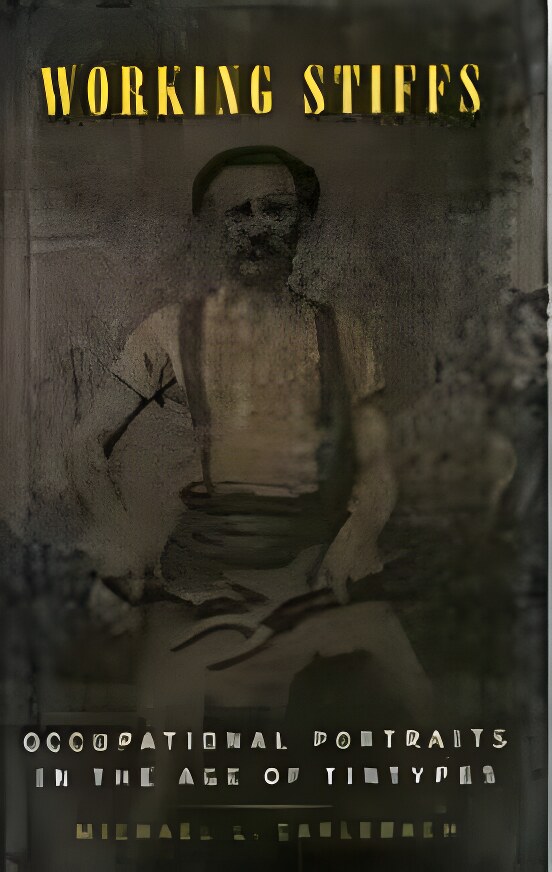
Hardcover. Washington DC, Smithsonian Institution Scholarly Press, 1st, 2002, Book: Very Good, Dust Jacket: Very Good, Hardcover, 144 pages. The tintype, patented in 1856, was a cheap, fast, easy-to-make, practically indestructible type of photograph that became enormously popular among the working class in the late nineteenth century. For common laborers and their families, the opportunity to join the ranks of those who owned pictures of family and friends--the upper classes--was momentous. This collection exhibits more than eighty examples of a specific kind of tintype: occupational portraits, photographs of working people with the tools of their trade. Michael L. Carlebach examines the historical significance of these tintypes and finds that they reveal a great deal about late nineteenth-century values. The subjects of these images are plumbers proudly holding their wrenches and pipe cutters, carpenters with their saws and lathing hatchets, textile workers with their spindles and yarn, icemen with their tongs. These people lived and worked at a time when a depersonalized factory system run by production and efficiency experts was beginning to dominate American industry and culture. Many of the men and women in these tintypes were part of a disappearing class of self-employed artisans and journeymen; their portraits proudly stress their individuality and the essential nobility of their work.
Hardcover. Munchen GR, Hugendubel, reprint, 1997, Book: Very Good, Dust Jacket: Very Good, Hardcover, 256 pages, Over 250 historical photos featuring public buildings, storefronts, cafes and other gathering spaces in the city. GERMAN TEXT. Clean, bright copy in a similar dust jacket. Appears to be a reprint of a book first published in 1990.

 "The Worlds of Lincoln Kirsteinby: Martin Duberman")

 "Through the Lens: Creating Santa Feby: Redding, Mary Anne and Krista Elrick")
 "Time of Change: Civil Rights Photographs, 1961-1965by: Bruce Davidson , John Lewis, et al.")


 "Tren al Sol / Train to the Sun: Travesias Abordo Del Ferrocarril De Vapor Mas Dificil Del Mundo / Journey on Board the Most Difficult Steam Railroad in the World by:")
 "Unfamiliar Streets: The Photographs of Richard Avedon, Charles Moore, Martha Rosler, and Philip-Lorca DiCorciaby: Bussard, Katherine A.")
 "Unter den Linden: Photographien (German Edition)by: Hildebrandt, Dieter")

 "Vineyard Voices: Word, Faces & Voices of Island Peopleby: Linsey Lee/Mark Lennihan")
 "Vision of Splendour, A: Indian Heritage in the Photographs of Jean Philippe Vogel, 1901-1913by: Boer, Gerda Theuns-de")
 "Walker Evans: Havana 1933by: Mora, Gilles")

 "Zu Gast im alten Berlin (German Edition)by: Taubrich, Hans-Christian")