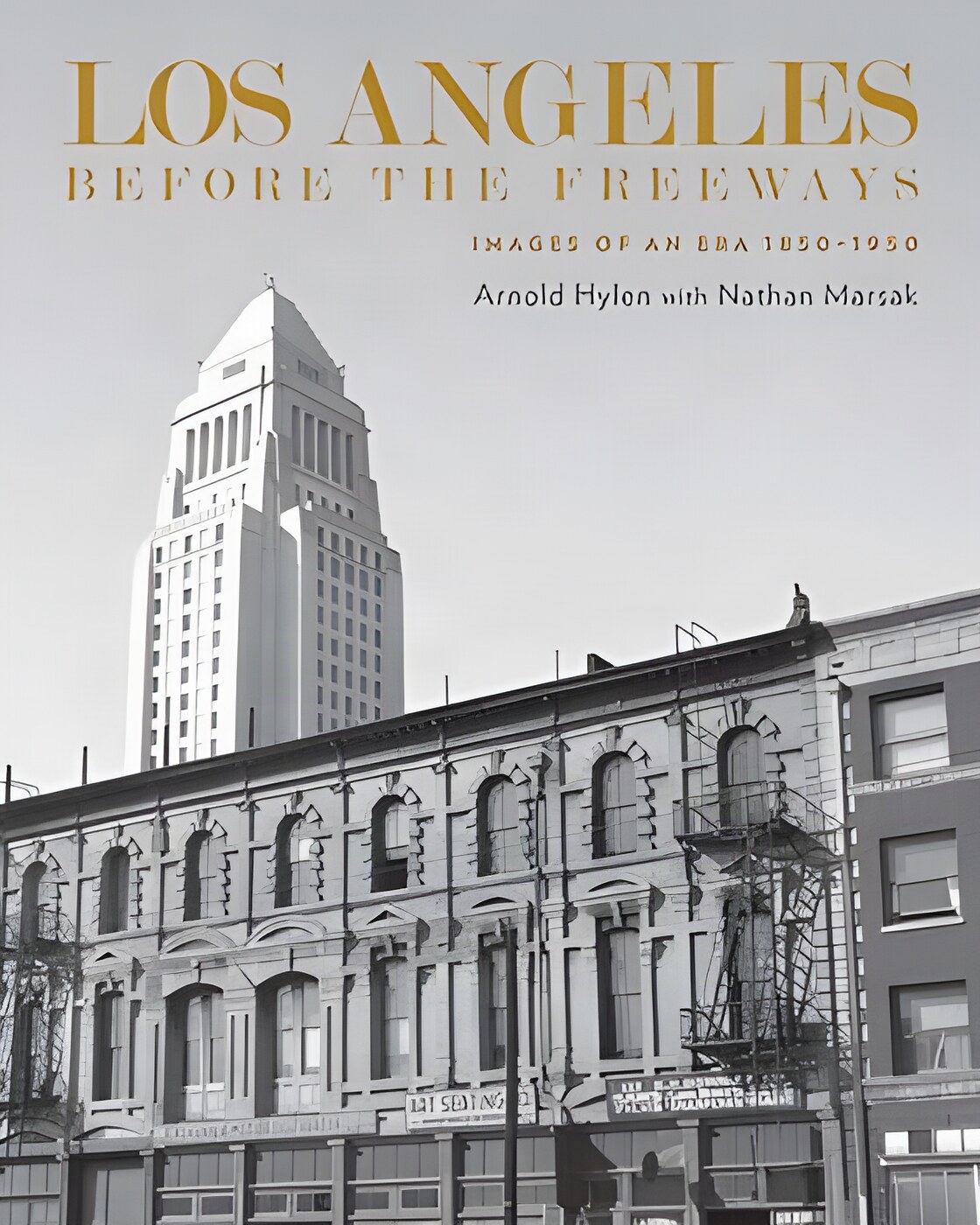
Hardcover. Santa Monica CA, Angel City Press, Book: Very Good, Dust Jacket: None, Hardcover, pictorial boards. Gives a lush, visual tour of a Los Angeles that no longer exists--one of elegant office buildings and stately mansions that were razed in the name of "progress" to build the city's famous freeways. Featuring stunning black-and-white photography from Arnold Hylen that captures a lost era, the book contains an original essay by the photographer that provides historical background and context for the time period. This new edition contains additional, never-before-seen photographs from Hylen and newly unearthed information from historian Nathan Marsak on these lost architectural treasures. Arnold Hylen (1908-1987) was a commercial and architectural photographer based in Los Angeles. Between the late 1940s and the late 1960s, Hylen traversed the streets of Los Angeles, photographing it's vanishing landscape. Still in publisher's shrinkwrap.
Hardcover. NY/London, Thames & Hudson, 1st, 2018, Book: Very Good, Dust Jacket: Very Good, Hardcover, illustrated boards with short wrap-around dust jacket. 400 color photos. This lavishly illustrated book is the history of China, spanning the pre-revolutionary years to China's present day rise as a global power as told through the Magnum photo agency's legendary photographs. Magnum Photos first covered China on assignment in the 1930s, when Robert Capa and Henri Cartier-Bresson established what has become a long-standing cultural engagement with the ever-changing country. Magnum's long history with China puts the agency in the unique position of being able to provide an in-depth photographic account of China, its people, and the changes they have witnessed over the last nine decades. Featuring an outstanding selection of photographs, Magnum China is a thorough illustrated history of a vast, enigmatic country, fascinating for China-watchers and novices alike. Chronologically organized into four parts, charting the history of China from 1933 to the present day, Magnum China presents in-depth portfolios by individual photographers, accompanied by introductory commentaries on the featured work and group selections that curate individual photographs to illustrate the diverse state of China. Each part also features an introduction by respected scholar Jonathan Fenby, as well as "key dates" timelines and lists of the photographers' travels, setting the socio-political and historical context for the photography on show. Remainder line on bottom edge.
Hardcover. Bloomington, IN, Indiana University Press, 1st, 2016, Book: Very Good, Dust Jacket: Very Good, 152 pages. Hardcover with dust jacket. A very clean, unmarked copy with only minor wear to dust jacket edges. A tight copy. As a photographer for Life and Fortune magazines, Margaret Bourke-White traveled to Russia in the 1930s, photographed the Nazi takeover of Czechoslovakia in 1938, and recorded the liberation of Buchenwald at the end of WWII. In 1949, Life sent her to South Africa to take photographs in a country that was becoming racially polarized by white minority rule. Life published two photo-essays highlighting Bourke-White's photographs, but much of her South African work remained unpublished until now. Here, these stunning photographs collected by Alex Lichtenstein and Rick Halpern offer an unparalleled visual record of white domination in South Africa during the early days of apartheid. In addition to these powerful and historically significant photographs, Lichtenstein and Halpern include two essays that explore Bourke-White's artistic and political formation and provide background material about the cultural, political, and economic circumstances that produced the rise and triumph of Afrikaner nationalism in South Africa. This richly illustrated book brings to light a large body of photography from a major American photographer and offers a compelling history of a reprehensible system of racial conflict and social control that Bourke-White took such pains to document.
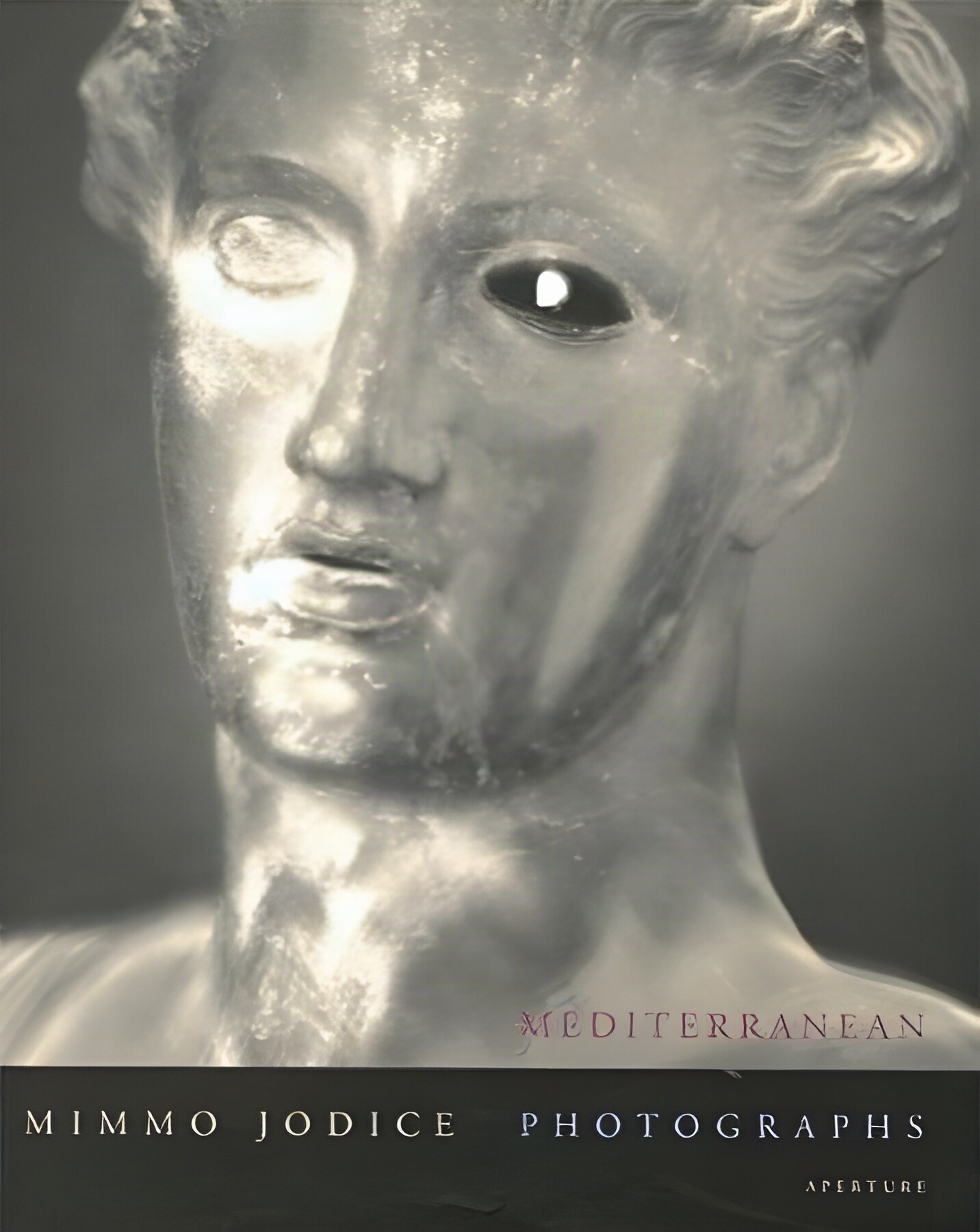
Hardcover. NY, Aperture, 1st, 1995, Book: Very Good, Dust Jacket: Very Good, Hardcover in a bright dust jacket. 118 pages with b&w plates. From Italy, France, Spain, Greece, Macedonia, Turkey, Tunisia, Syria, and Jordan, Jodice's luminous photographs evoke a vision of Mediterranean civilization that is a conflation of history and mythology. His dramatic yet ethereal images refuse both classical and contemporary boundaries in a fusion of the topographical and the intimate. Ruined temples, lost cities, heroic landscapes, gods and goddesses, vistas of Vesuvius and of the omnipresent sea transcend the constraints of their historical context in terms of both time and space. Clean copy.
Hardcover. Norman OK, University of Oklahoma Press, 1st, 1996, Book: Very Good, Dust Jacket: Very Good, Hardcover, 212 pages, b&w photos. Clean, unmarked copy with only minor wear to dust jacket. Today, roughly fifty thousand Tarahumara continue living in ways similar to those of their ancestors, retaining many customs from their pre-Columbian past. Striking sepia-toned monochrome photographs and a historical narrative document the lives and past of people in mountainous southwestern Chihuahua, Mexico.
Softcover. Tucson, AZ, Arizona University Press , 1st paperback, 1993, Book: Very Good, Dust Jacket: None, Softcover. Black & white photos by George Alexander Grant. Some color fade to edges of cover. The Spanish missions founded by Padre Eusebio Kino in Sonora, Mexico, during the 1690s and early 1700s are historical as well as architectural marvels. Once self-supporting villages with central churches, the missions stand today as monuments to perseverance in the face of a hostile New World. These "Kino Missions" were surveyed in 1935 by the National Park Service to prepare for the restoration of the mission at Tumacacori, Arizona, then a National Historic Monument. That report, which was never published, provided insights into the missions' history and architecture that remain of lasting relevance. Perhaps more important, it documented these structures in photographs and drawings--the latter including floor plans and sketches of architectural detail--that today are of historic as well as aesthetic interest. This volume reproduces that 1935 report in its entirety, focusing on sixteen missions and including two maps, 52 drawings, and 76 photographs. With a new introduction and appendixes that place the original study in context,
Softcover. Washington DC, National Geographic Society, 1st, 1917, Book: Very Good, Dust Jacket: None, Mid-Winter Double Issue. Softcover, illustrated with b&w photos, maps, advertisements. Original yellow and black wrappers, spine with light wear, good to very good. Articles include: The Geographical and Historical Environment of America's 32 New Soldier Cities, Training the New Armies of Liberty, The Immediate necessity for Military Highways, From the Trenches to Versailles, others.
Softcover. US, Prestel, 1st, 2014, Book: Very Good, Dust Jacket: None, 128 pages. Softover. Clean, unmarked copy with only minor wear to wrappers. Like new in publisher's shrink-wrap. Photographer Iain McKell offers an extraordinary and breathtakingly beautiful glimpse into the lives of a real and raw group of present-day nomads whose culture is built around ideals of freedom, nature, and simplicity. Historically despised the new gypsies are there by choice, not heritage. Unrelated to the Roma, the movement began in 1986 when a group of Post-Punk Anti-Thatcher protesters headed out of London into the English countryside. McKell followed these New Age Travellers to the West Country and over the years he watched them become a hybrid tribe - the new gypsies - present-day rural anarchists, living the subversive lifestyle in elaborately decorated horse-drawn caravans. Known as 'Horse-drawn', the new gypsies share a desire for sustainability, a love of self-reliance and a disdain for the trappings of contemporary life. For more than a decade McKell has focused his lens on travellers of all ages: parents, children, couples and loners. With sensitivity and honesty he captures a way of life that seems at once romantic, strange, beautiful and simple. The result is a deeply insightful portrayal of a culture that eschews the traditional creature comforts of urban life in favour of the simplicity and freedom of the natural world.
Hardcover. Louisville KY, Data Courier for the Courier-Journal, 1st, 1975, Book: Good, Dust Jacket: Good, Hardcover in a bight, lightly worn dust jacket. 152 pages with many b&w historical photos of Louisville
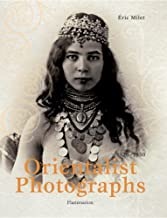
Hardcover. Paris, Flammarion, 1st, 2009, Book: Very Good, Dust Jacket: Very Good, Hardcover, 202 pages. Like new in publisher's shrink-wrap. Pays homage to the ultimate travel dream of that era. This collection of over 100 autochrome, sepia, and black and white photographs captures delicate, lost details: the dusty, labyrinthine walls of the casbah; the dappled sunlight on the market stall of a souk; the intricate metal work of traditional jewelry. Each image is accompanied by an informative text that situates the photograph in its historical reality.
Hardcover. Flammarion, 1st, 2009, Book: Very Good, Dust Jacket: Very Good, Hardcover, 204 pages. The century that spanned from the 1850-1950 witnessed the golden age of travel and the exposure of an increasing number of Westerners to foreign cultures. The Maghreb became a source of exotic fascination and people grew particularly enchanted by the landscapes, peoples, and cultures of countries such as Morocco, Tunisia, and Algeria. Orientalist Photographs pays homage to the ultimate travel dream of that era. This collection of over 100 autochrome, sepia, and black and white photographs captures delicate, lost details: the dusty, labyrinthine walls of the casbah; the dappled sunlight on the market stall of a souk; the intricate metal work of traditional jewelry. Each image is accompanied by an informative text that situates the photograph in its historical reality, revealing how, for example, the richness of Algerian embroidery is not the product of hermetic tradition, as once perceived, but rather that of an innovative fusion of Spanish, Turkish, and native cultures. This book's haunting photographs and incisive texts vividly render all the mystery, the beauty, and the naivete of the West's encounter with a culture it found so radically different from its own.
Hardcover. Jackson MS, University Press of Mississippi, 1st, 2014, Book: Very Good, Dust Jacket: None, Like new in publisher's shrink-wrap. Hardcover, 168 pages. In The Origins of Comics: From William Hogarth to Winsor McCay, Thierry Smolderen presents a cultural landscape whose narrative differs in many ways from those presented by other historians of the comic strip. Rather than beginning his inquiry with the popularly accepted "sequential art" definition of the comic strip, Smolderen instead wishes to engage with the historical dimensions that inform that definition. His goal is to understand the processes that led to the twentieth-century comic strip, the highly recognizable species of picture stories that he sees crystallizing around 1900 in the United States. Featuring close readings of the picture stories, caricatures, and humoristic illustrations of William Hogarth, Rodolphe Topffer, Gustave Dore, and their many contemporaries, Smolderen establishes how these artists were immersed in a very old visual culture in which images--satirical images in particular--were deciphered in a way that was often described as hieroglyphical. Across eight chapters, he acutely points out how the effect of the printing press and the mass advent of audiovisual technologies (photography, audio recording, and cinema) at the end of the nineteenth century led to a new twentieth-century visual culture. In tracing this evolution, Smolderen distinguishes himself from other comics historians by following a methodology that explains the present state of the form of comics on the basis of its history, rather than presenting the history of the form on the basis of its present state. This study remaps the history of this influential art form.
Softcover. Indianapolis, Indiana Historical Society, 1st, 1994, Book: Very Good, Dust Jacket: None, Softcover 96 pages. Otto Ping began taking pictures of the people and places of his native Brown County, Indiana, in 1900 at the age of seventeen in order to make some extra money. He continued doing so for forty years while he worked at such other endeavors as peddling, farming, canning, and chicken raising. Unlike the painters and photographers who came to the county in these years to capture quaint and rustic scenes for sophisticated audiences elsewhere, Ping made his pictures for the people who were in them. Primarily a portraitist, Ping photographed individuals, couples, family groups, and larger gatherings. He had no studio and carried with him no lights or props. His portraits are characterized by hastily thrown up backdrops, stark lighting, and rigid poses. They have a documentary quality, and one senses in the faces that peer from these images the determination with which these people met lives of toil and hardship. Many of the portraits betray a sense of melancholy. Life was tenuous for both young and old, and the photographer often worked against time to provide a family with images of the living before his efforts became memorial. Ping photographed people at work and play. Images abound of stiffly posed groups in front of sawmills, churches, schools, and lodge halls; families in front of cabins or newly framed houses; couples with buggies; and children at play. Clean copy.
Softcover. Washington DC, Smithsonian Books, 1st, 1974, Book: Very Good, Dust Jacket: None, Softcover, 512 pages plus index, b&w photographs, map end papers. Previous price sticker on back cover. Light edge wear to wrappers. Else a clean, tight copy. A unique reference for those interested in American heritage sculpture and architecture. This book was published in both paperback and clothbound editions. Photography by David Blume.
Hardcover. Layton, Utah, Gibbs Smith, 1st, 2015, Book: Very Good, Dust Jacket: None, 176 pages. Hardcover with no dust jacket. Color photographs throughout. Clean, unmarked copy with only minor wear to boards. This book collects more than two hundred fascinating and rarely seen historical photographs of Palm Springs, newly digitized from the Palm Springs Historical Society's expansive archive. Featured are many Hollywood celebrities, including Sinatra and the Rat Pack, who vacationed there, the early days of the desert paradise, various architectural masterworks, such as the fabulous El Mirador Hotel and the extraordinary, outrageous, and irreverent people of Palm Springs.
Hardcover. Paris, Editions de Lodi, 1st, 2001, Book: Very Good, Dust Jacket: Very Good, Hardcover, glossy boards in a matching bright dust jacket. Large format, 484 pages, FRENCH TEXT. A collection of over 500 historical photos of old Paris printed in sepia tone. Around 1832 Parisian-born Charles-Francois Bossu (1813-1879) shed his unfortunate last name (bossu means hunchback in French) and adopted the pseudonym Marville. After achieving moderate success as an illustrator of books and magazines, Marville shifted course in 1850 and took up photography, a medium that had been introduced 11 years earlier. His poetic urban views, detailed architectural studies, and picturesque landscapes quickly garnered praise.By the end of the 1850s, Marville had established a reputation as an accomplished and versatile photographer. From 1862, as official photographer for the city of Paris, he documented aspects of the radical modernization program that had been launched by Emperor Napoleon III and his chief urban planner, Baron Georges-Eugene Haussmann. In this capacity, Marville photographed the city's oldest quarters, and especially the narrow, winding streets slated for demolition. Even as he recorded the disappearance of Old Paris, Marville turned his camera on the new city that had begun to emerge. Many of his photographs celebrate its glamour and comforts, while other views of the city's desolate outskirts attest to the unsettling social and physical changes wrought by rapid modernization. Taken as a whole, Marville's photographs of Paris stand as one of the earliest and most powerful explorations of urban transformation on a grand scale. Clean, bright copy.
Hardcover. Milan, 5 Continents, 1st, 2007, Book: Very Good, Dust Jacket: None, 142 pages, b&w photographs taken by Muller. Illustrated boards, no dust jacket issued. A Passage to Congo is a collection of photographs taken by Doctor mile Muller (1891-1976) in the Congo provinces of the Kasa< and Katanga, territories of the Chokwe, Luba, Bashibushong and Basalampasu tribes. For these people, he was not the boss, but he who cured, who gave relief, who listened. He could move easily between the tribes without having to tackle the reticence that has denatured so many ethnic photographs. The privileged witnesses of esoteric ceremonies that are rarely photographed, his images are precious from an ethnographic and historical point of view, and reveal a fine aesthetic sense and profound humanity. Veritable living masks, as in the remarkable portraits of young Chokwe girls, astonishing initiation rites, scenes of divination, wild rhythmic dances responding to the beat of the large slotted drums, sculptural bodies decorated with tattoos and refined headgear recall the beauty and riches of these cultures, now lost in the modern world.
Hardcover. London, Merrill Holberton, 1st, 1998, Book: Very Good, Dust Jacket: Very Good, Hardcover, 160 pages. Black & white photography. Clean, tight copy. These largely unpublished photographs, some only recently discovered, were taken by Aby Warburg on his trip to the American frontier in 1895. Neither a photographer nor a native tourist, Warburg was a scholar with a camera. As seen though his own cultural and psychological perspective on art, these insightful photographs are significant not only to the study of Native American and frontier life, but also to an understanding of Warburg's unique vision of cultural history. 80 duotone photos.
Hardcover. New Haven CT, Yale University Press , 1st, 2002, Book: Very Good, Dust Jacket: Very Good, Hardcover, 184 pages. ARTnews, the oldest art magazine in America and the most widely circulated art magazine in the world, is celebrating its one-hundredth anniversary in 2002. This attractive book celebrates and commemorates this milestone event, presenting one hundred of the best photographic portraits commissioned by and reproduced in the magazine since its origin. These fascinating photographs chronicle the history of the magazine and present a "who's who" of people who have shaped the art world over the last century. Portrait of the Art World includes photographs of many of the great European and American artists of the twentieth century, including George Bellows, Francis Bacon, Pablo Picasso, Piet Mondrian, Jackson Pollock, Alexander Calder, and Alice Neel. The photographers-often as fascinating as their subjects-range from Zaida Ben-Yusuf, Alice Boughton (early members of Alfred Stieglitz's circle), and Jessie Tarbox Beals (perhaps the first woman photojournalist) to Stieglitz himself, Man Ray, and Cecil Beaton. Contemporary photographers featured in the book include Timothy Greenfield-Sanders, Arnold Newman, Richard Avedon, and Robert Mapplethorpe. The book also presents an essay by William F. Stapp exploring the historical context of portrait photography in ARTnews; an essay on the history of ARTnews by Pete Hamill; and an essay by Milton Esterow, the current editor and publisher of ARTnews, discussing his personal view of the magazine. This handsomely illustrated book is the catalogue for an exhibition at the New-York Historical Society from September 27, 2002, to January 5, 2003, which will then travel to Washington, Chicago, and San Francisco
Hardcover. New York, Rizzoli International Publications, Inc., 1st, 2000, Book: Very Good, Dust Jacket: Very Good, Hardcover. Published to commemorate the Hall of Presidents in the National Portrait Gallery. Features reproductions of portraits of every American president from George Washington to Bill Clinton. Historical notes accompany each illustration. Near fine condition; comes in original shrinkwrap.
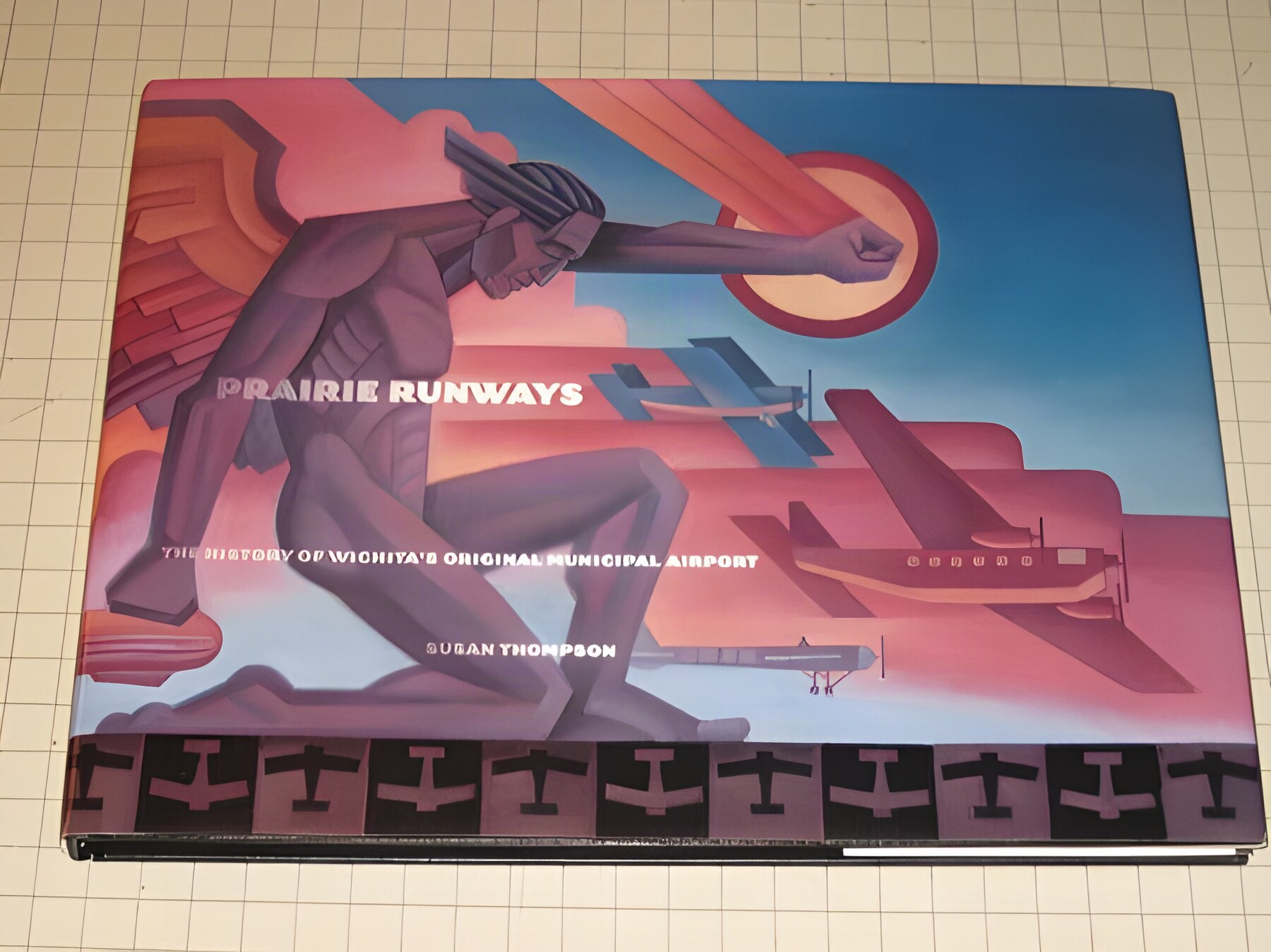
Hardcover. Wichita KS, Kansas Aviation Museum , 1st, 2000, Book: Very Good, Dust Jacket: Very Good, Hardcover in a bright dust jacket, oblong format, 127 pages with many b&w historical photos. Susan Thompson's clearly written, well-illustrated history of what was one of the nation's premier airports in the pre-jet age is a great read for serious and casual aviation fan and anybody with a general interest in aviation history. Wichita's Municipal Airport was the primary stop-off point for coast to coast air travel in the days that preceded long-distance flight. Clean copy.
Softcover. New York, Phaidon Press, 1st, 2003, Book: Very Good, Dust Jacket: Very Good, 316 pages. Softcvoer with vinyl wrappers. Black and white pictures throughout. This is the first visual history of China's Cultural Revolution (1966-1976) and includes the only complete set of surviving photographs to document the entire period. It is drawn from thousands of original negatives that were hidden for nearly 40 years by photographer Li Zhensheng, at great personal risk, and accompanied by his own personal story. Zhensheng brings to light in this historical record one of the most turbulent, controversial, and under-documented periods in modern history.
Hardcover. Hatje Cantz Publishers, 1st, 2005, Book: Very Good, Dust Jacket: None, Text is in English and German. Oversized hardcover issued without a dust jacket. Cover has faint wear to corners and edges. Inside is bright and clean, 210 b&w photographs throughout. This handsomely illustrated volume reproduces fine vintage prints from Relang's early reportage career and from the height of her days as a documenter of style, while also providing valuable insight into the historical background of her work.
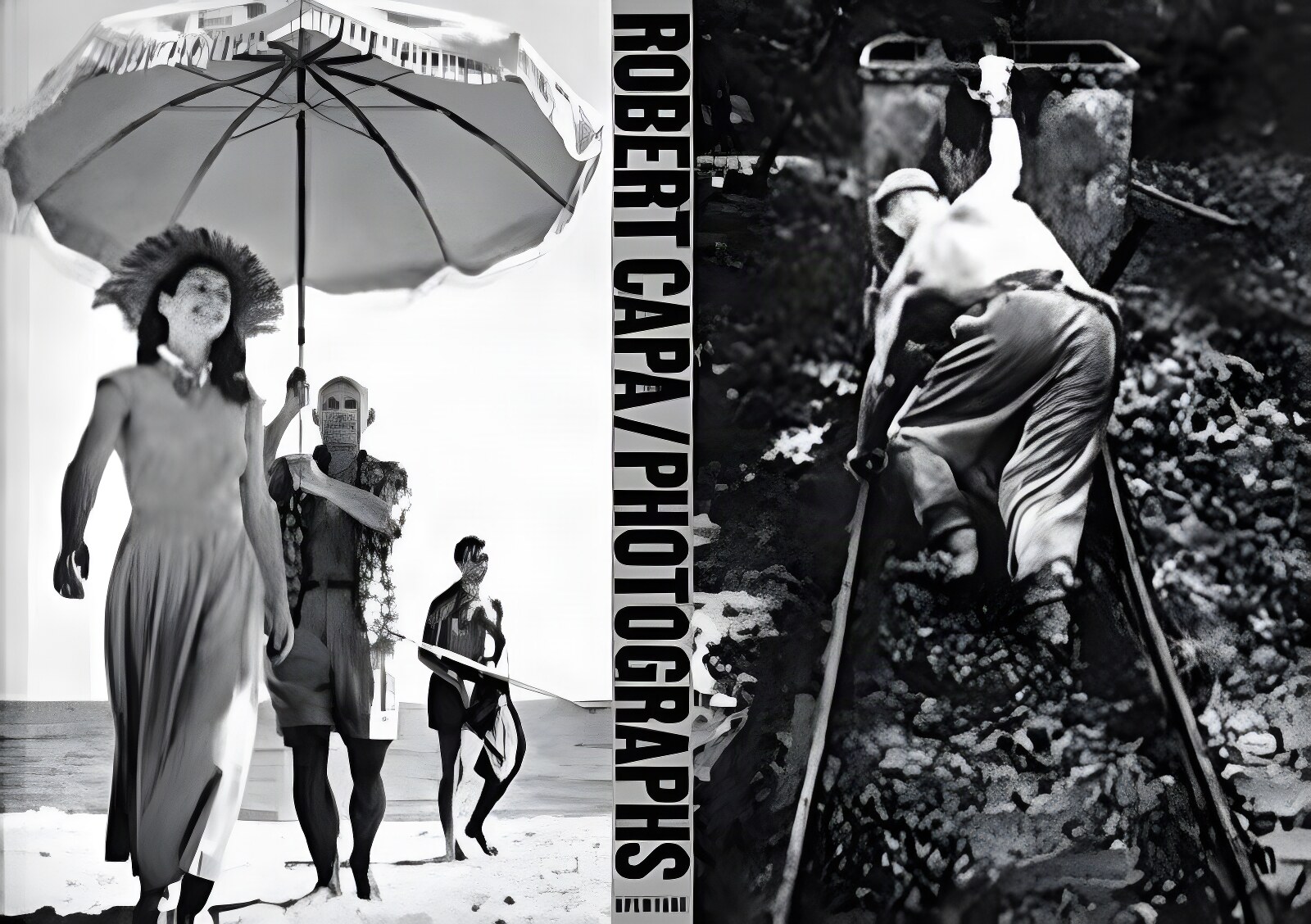
Hardcover. NY, Aperture, 1st, 2005, Book: Very Good, Dust Jacket: Very Good, Hardcover, 192 pages. Robert Capa: Photographs is a major retrospective of one of the century's greatest photographers. Drawing upon hundreds of previously unseen images, this collection reveals Capa as one of the great poets of the camera. In these photographs, we see the world through the eyes of a driven humanist who was also a documentarian of the highest caliber. While previous volumes on Capa have focused on his role as a war photographer, Robert Capa: Photographs shows us the remarkable range of his work: the sufferings as well as the tenderness, humor, and wonder of his subjects. The extraordinary book includes poignant comments by Capa's close friend Henri Cartier-Bresson and by Cornell Capa (Robert's younger brother and the Founding Director of the International Center of Photography), as well as a historical essay by Robert Capa biographer Richard Whelan. The dramatic collection of images in Robert Capa: Photographs shows that he captured-through the events of history-the very heart of humanity.

 "Magnum Chinaby: Magnum Photos (Author), Zheng Ziyu (Editor), Colin Pantall (Editor),")


 "Margaret Bourke-White and the Dawn of Apartheidby: Lichtenstein, Alex")
 "Mexico's Sierra Tarahumara: A Photohistory of the People of the Edgeby: Raat, W. Dirk and Janecek, George R.")
 "National Geographic Magazine - Vol. XXXII No. 5 & 6 November - December 1917by: National Geographic Society")
 "New Gypsies, Theby: McKell, Iain")
 "Old Louisville: The Victorian Eraby: Samuel W. Thomas; William Morgan")
 "Orientalist Photographs: 1870-1950by: Milet, Eric")
 "Origins of Comics, The: From William Hogarth to Winsor McCayby: Smolderen, Thierry/Bart Beaty, et al.")

 "Outdoor Sculpture of Washington, D.C., The: A Comprehensive Historical Guideby: Goode, James M.")
 "Palm Springs Paradise: Vintage Photographs from America's Desert Playgroundby: Moruzzi, Peter")
 "Paris sens dessus-dessous (Marville photographies 1852-1870)by: Mellot, Philippe")
 "Passage to Congo, A: Photographs by Doctor Emile Muller 1923-1938by: Loos, Pierre, Pierre Buch and Emile Muller")
 "Photographs at the Frontier - Aby Warburg in America 1895-1896by: Cestelli Guidi (ed), Benedetta and Nicholas Mann")
 "Portrait of the Art World: A Century of ARTnews Photographsby: William F. Stapp")
 "Portraits of the Presidents: The National Portrait Galleryby: Voss, Frederick S.")
 "Red-Color News Soldierby: Zhensheng, Li")
 "Regina Relang: The Elegant World Of Regina Relangby: Relang, Regina, Ulrich Pohlmann and Andreas Ley")