Hardcover. Bloomington, IN, Indiana University Press, 1st, 2016, Book: Very Good, Dust Jacket: Very Good, 152 pages. Hardcover with dust jacket. A very clean, unmarked copy with only minor wear to dust jacket edges. A tight copy. As a photographer for Life and Fortune magazines, Margaret Bourke-White traveled to Russia in the 1930s, photographed the Nazi takeover of Czechoslovakia in 1938, and recorded the liberation of Buchenwald at the end of WWII. In 1949, Life sent her to South Africa to take photographs in a country that was becoming racially polarized by white minority rule. Life published two photo-essays highlighting Bourke-White's photographs, but much of her South African work remained unpublished until now. Here, these stunning photographs collected by Alex Lichtenstein and Rick Halpern offer an unparalleled visual record of white domination in South Africa during the early days of apartheid. In addition to these powerful and historically significant photographs, Lichtenstein and Halpern include two essays that explore Bourke-White's artistic and political formation and provide background material about the cultural, political, and economic circumstances that produced the rise and triumph of Afrikaner nationalism in South Africa. This richly illustrated book brings to light a large body of photography from a major American photographer and offers a compelling history of a reprehensible system of racial conflict and social control that Bourke-White took such pains to document.
Softcover. Guilford CT, TwoDot, 1st, 2008, Book: Very Good, Dust Jacket: None, Softcover, 151 pages, b&w illustrations. The massacre at Wickenburg was one of the most notorious crimes committed in the Wild West--a story revealed in this book through a criminal investigation. November 5, 1871. A westbound stagecoach carrying seven men and one woman left Wickenburg in the early morning hours. At 8:00 a.m., six of the passengers were shot dead. One man and the lone woman, severely wounded, escaped into the desert. Debates raged over the identity of the murderous ambushers -- Indians? Mexican bandits? The two survivors? After a massive investigation, the U.S. Army concluded that a band of local Yavapai Indians were responsible, which led to a policy of "removal and concentration" that altered the fate of nearly every Indian in America's Southwest. Clean copy.
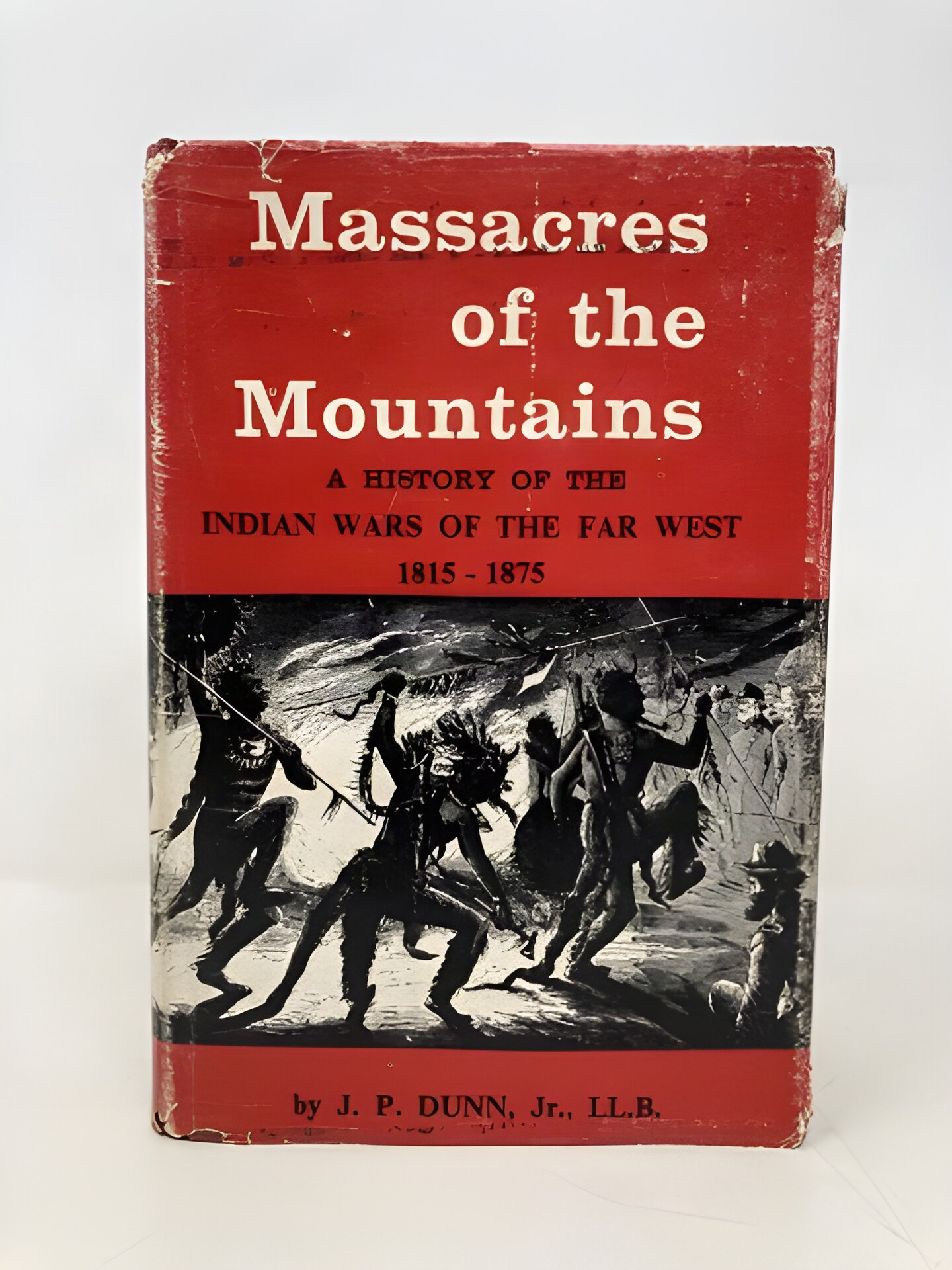
Hardcover. NY, Archer House, reprint, 1958, Book: Very Good, Dust Jacket: Good, Hardcover in a lightly worn dust jacket, 110 b/w illustrations. 669 pages. This is a facsimile reprint of edition first published in 1886. Covering 60 years of merciless bloody conflict, it documents in detail every major Indian battle between 1815 and 1876. Dust jacket spine faded, otherwise a clean, very good copy.
Softcover. Bowie MD, Heritage Books, reprint, 2001, Book: Very Good, Dust Jacket: None, Two softcover volumes 391 & 392 pages. Volumes 1 and 2 complete, a facsimile reprint of the 1897 edition by Lippincott. This two-volume series takes the reader on a journey through the colonies of Virginia, Massachusetts, Connecticut, Rhode Island, New Hampshire, Pennsylvania, New Jersey, New York, Maryland, Carolina, and Georgia. The charm of the journey is in its variety, as the reader passes through communities of such striking individuality that they assume the character of different nations. Each colony has a set of opinions and laws peculiar to itself, and it is not uncommon to find the laws of one in contradiction with the laws of another. This text explores the settlement and history of each colony prior to the American Revolution. Topics include development of the colonies' government, laws, religion, schools, boundaries, industries, layout of the cities, fashions, homes, social activities, slavery, architecture, interaction with the Indians, and customs. At least one prominent person from each colony is discussed, amongst them, William Penn of Pennsylvania, John Smith of Virginia, George Calvert of Maryland, and General Oglethorpe of Georgia. Light sunning ti spines.Clean copies.
Hardcover. UK, Cambridge University Press, 1st, 2001, Book: Very Good, Dust Jacket: Very Good, 444 pages. Hardcover with dust jacket. Light fading to dust jacket front. Light edgewear to dj. Black and white pictures throughout. Clean, tight copy. In 1999 Pope John Paul II proclaimed Our Lady of Guadalupe a patron saint of the Americas. According to oral tradition and historical documents, in 1531 Mary appeared as a beautiful Aztec princess to Juan Diego, a poor Indian. Speaking to him in his own language, she asked him to tell the bishop her name was La Virgen de Guadalupe and that she wanted a church built on the mountain. During a second visit, the image of the Virgin miraculously appeared on his cape. Through the centuries, the enigmatic power of this image has aroused such fervent devotion in Mexico that it has served as the banner of the rebellion against Spanish rule and, despite skepticism and anticlericalism, still remains a potent symbol of the modern nation. In Mexican Phoenix, David Brading traces the intellectual origins, the sudden efflorescence, and the theology that has sustained the tradition of Our Lady of Guadalupe. Brading also documents the interaction of religion and patriotism, and describes how the image has served as a banner both for independence and for the Church in its struggle against the Liberal and revolutionary state.
Hardcover. Norman OK, University of Oklahoma Press, 1st, 2001, Book: Very Good, Dust Jacket: Very Good, Hardcover in a bright dust jacket, 348 pages, b&w illustrations. This handsomely illustrated book offers a panoramic view of ancient Mexico, beginning more than thirty thousand years ago and ending with European occupation in the sixteenth century. Drawing on archaeological and ethnohistorical sources, the book is one of the first to offer a unified vision of Mexico's precolonial past. Typical histories of Mexico focus on the prosperity and accomplishments of Mesoamerica, located in the southern half of Mexico, due to the wealth of records about the glorious past of this region. Mesoamerica was only one of three cultural superareas of ancient Mexico, however, all interlinked by complex economic and social relationships. Tracing the large social transformations that took place from the earliest hunter-gatherer times to the Postclassic states, the authors describe the ties between the three superareas of ancient Mexico, which stretched from present-day Costa Rica to what is now the southwestern United States. According to the authors, these superareas-Mesoamerica, Aridamerica, and Oasisamerica - cannot be viewed as independent entities. Instead, they must be considered as a whole to understand the complex reality of Mexico's past.
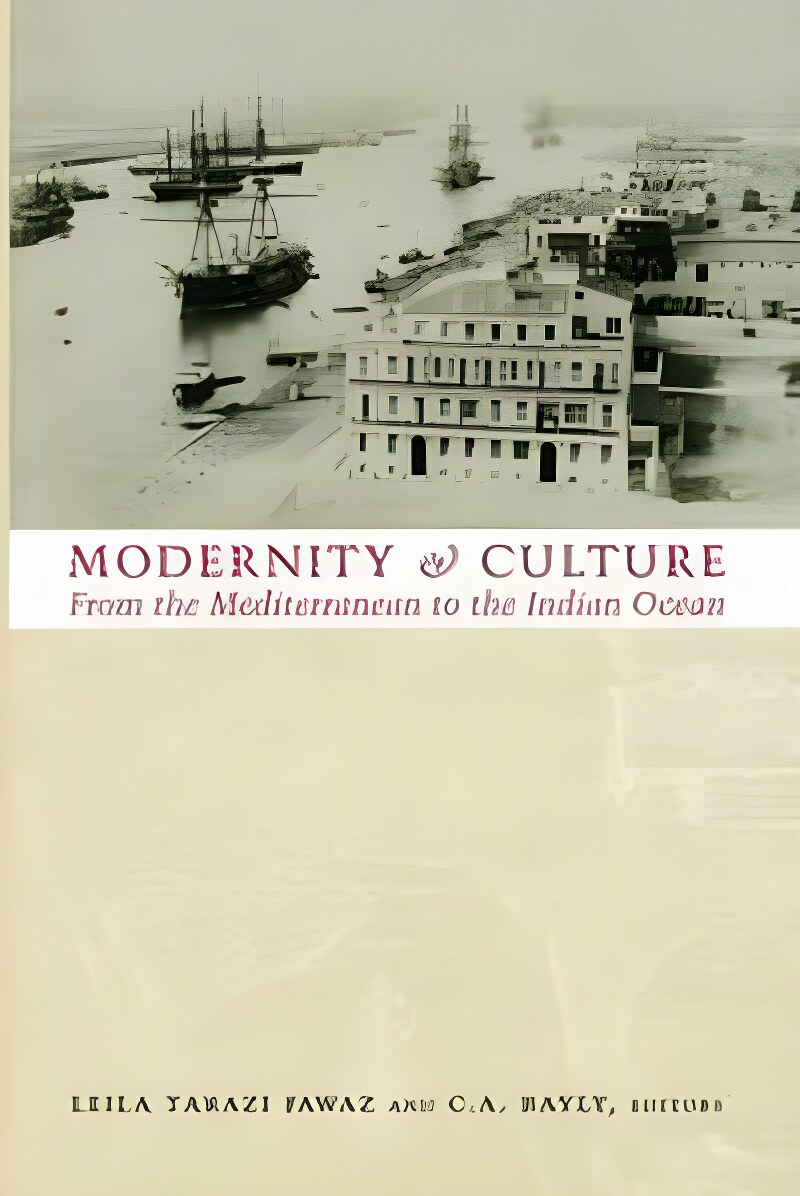
Softcover. NY, Columbia University Press, 1st pbk, 2002, Book: Very Good, Dust Jacket: None, Softcover, 410 pages. Collection of essays on the impact of global modernity in the region. Between the 1890s and 1920s, cities in the vast region stretching from the Mediterranean Sea to the Indian Ocean were experiencing political, social, economic, and cultural changes that had been set in motion at least since the early nineteenth century. As the age of pre-colonial empires gave way to colonial and national states, there was a sense that a particular liberalism of culture and economy had been irretrievably lost to a more intolerant age. The book provides a comparative analysis of contested versions of the concept of modernity. The book examines not only the "high" culture of scholars and the literati, but also popular music, the visual arts, and journalism. Clean.
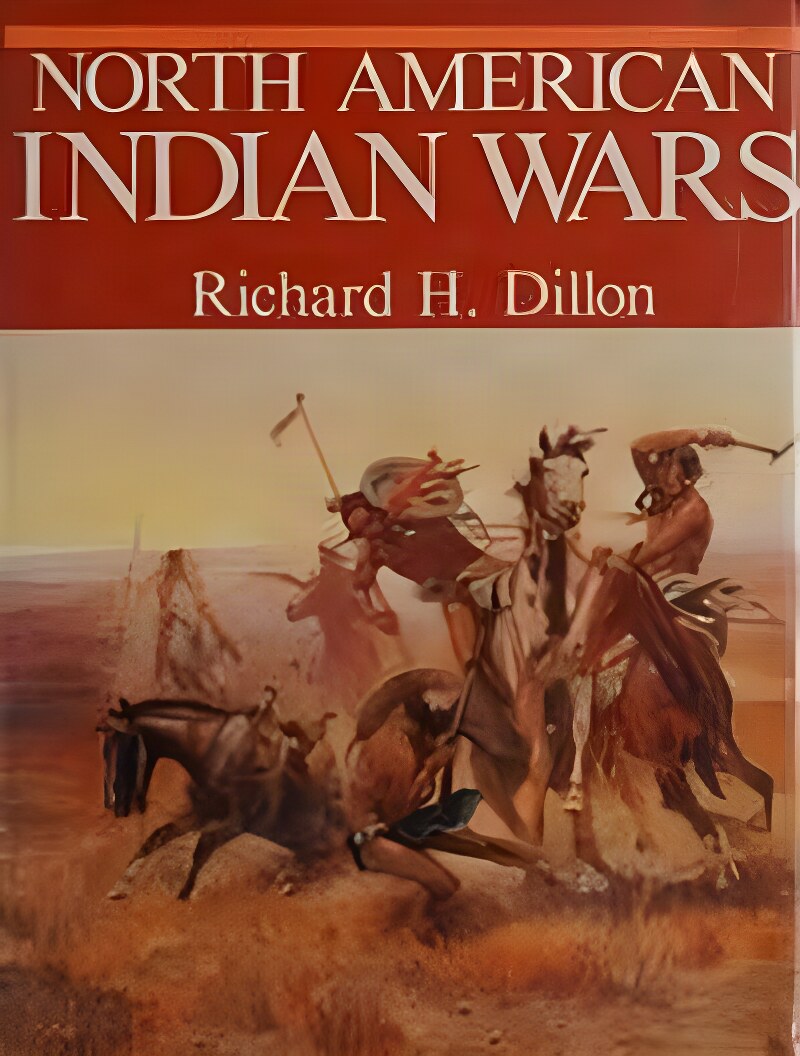
Hardcover. Lincoln NE, University of Nebraska Press, 1st, 1993, Book: Very Good, Dust Jacket: Very Good, Hardcover in a bright dust jacket, 391 pages, b&w illustrations. An excellent study of a military commander who transformed the American Frontier and the West. Based on a wide range of sources, including materials only recently made available to researchers, this first complete, carefully documented biography of Miles skillfully delineates the brilliant, abrasive, and controversial tactician whose career in many respects epitomized the story of the Old Army. Nelson A. Miles was probably the best Indian fighter produced by the U.S. Army between 1865 and 1890, figuring prominently in some of the most famous and significant conflicts between whites and Native Americans. This carefully documented biography of Miles skillfully delineates the brilliant, abrasive, and controversial tactician whose career in many respects epitomized the story of the Old Army. Clean copy.
Hardcover. Woodstock, Elm Tree Press, 1st Thus, 1926, Book: Very Good, Dust Jacket: None, 44 pages. INSCRIBED BY MARY M. BILLINGS FRENCH TO HERBERT H. HINES, WHO WROTE THE INTRODUCTION. Black & white tipped-in photographic illustrations. Covers show light wear. Clean, tight copy.
Hardcover. Secaucus NJ, Chartwell Books, 1993, Book: Very Good, Dust Jacket: Very Good, Hardcover, 255 pages, illustrated throughout in color and b&w. Folio. Light edgewear to dust jacket, else a clean, tight copy.
Hardcover. London, Cornmarket Press Ltd., reprint, 1969, Book: Very Good, Dust Jacket: Very Good, 205 pages + advertisement. Reprint of 1911 edition. Part of series of 50 books reprinted in facsimile from originals in the National Maritime Museum Library. B/W illustrations. Fold-out map at end of book. Dust jacket faded and lightly soiled otherwise clean.
Hardcover. NY, Harper & Brothers, 1st, 1881, Book: Very Good, Dust Jacket: None, Hardcover, expertly rebound green cloth with original gilt and black design inlaid on front cover. New color pattern endpapers, 460 pages, plus publisher's ads. Frontis w/ tissue guard many b/w engravings throughout. Various artists. illustrated tale of the triumphs and tragedies of the formation of the English colonies through the French & Indian War. Light shelf wear, no marking.
Softcover. Indianapolis, Indiana Historical Society, 1st, 1994, Book: Very Good, Dust Jacket: None, Softcover 96 pages. Otto Ping began taking pictures of the people and places of his native Brown County, Indiana, in 1900 at the age of seventeen in order to make some extra money. He continued doing so for forty years while he worked at such other endeavors as peddling, farming, canning, and chicken raising. Unlike the painters and photographers who came to the county in these years to capture quaint and rustic scenes for sophisticated audiences elsewhere, Ping made his pictures for the people who were in them. Primarily a portraitist, Ping photographed individuals, couples, family groups, and larger gatherings. He had no studio and carried with him no lights or props. His portraits are characterized by hastily thrown up backdrops, stark lighting, and rigid poses. They have a documentary quality, and one senses in the faces that peer from these images the determination with which these people met lives of toil and hardship. Many of the portraits betray a sense of melancholy. Life was tenuous for both young and old, and the photographer often worked against time to provide a family with images of the living before his efforts became memorial. Ping photographed people at work and play. Images abound of stiffly posed groups in front of sawmills, churches, schools, and lodge halls; families in front of cabins or newly framed houses; couples with buggies; and children at play. Clean copy.
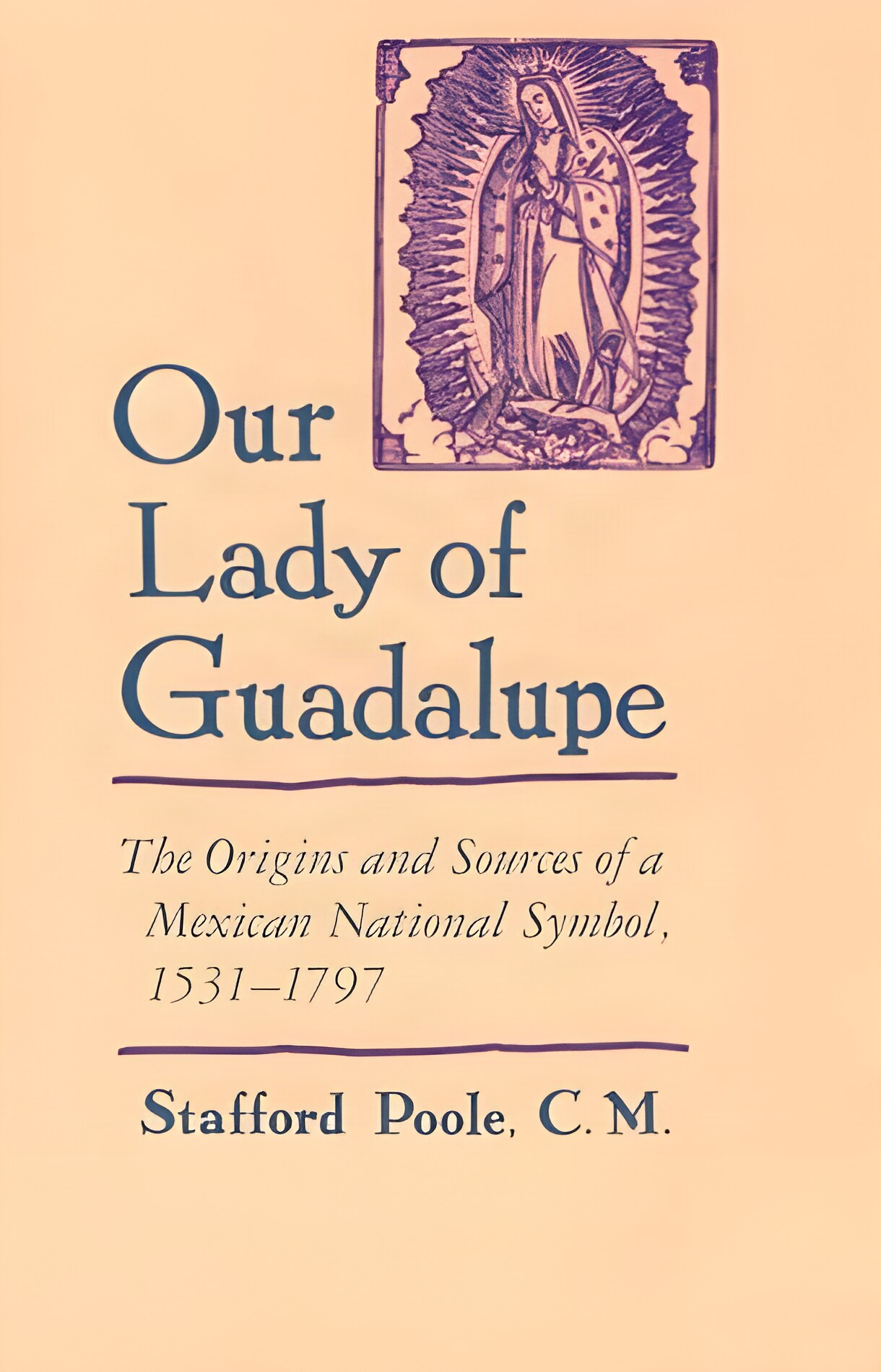
Softcover. Tucson, University of Arizona Press, 3rd pr., 1997, Book: Very Good, Dust Jacket: None, Softcover, 325 pages with index. The devotion to Our Lady of Guadalupe, based on the story of apparitions of the Virgin Mary to Juan Diego, an Indian neophyte, at the hill of Tepeyac in December 1531, is one of the most important formative religious and national forces in the history of Mexico. It has variously been interpreted as the source of Mexican national identity, a means of continuity between the Indian past and Spanish domination, a symbol of national liberation, and a way of evangelizing and pacifying the Indians. The aphorism "Mexico was born at Tepeyac" aptly summarizes its importance. In this, the first work ever to examine in depth every historical source of the Guadalupe apparitions, Stafford Poole traces the origins and history of the account, and in the process challenges many commonly accepted assumptions and interpretations. Small corner clip to front fly leaf, otherwise a clean, tight copy.
Hardcover. Hartford CT, Hartford Publishing Co., 1st, 1869, Book: Very Good, Dust Jacket: None, Hardcover, brown cloth with gilt lettering and design, embossed rules to covers. 524 pages. Detailed records of travel between the Mississippi River and the Pacific coast on the newly completed transcontinental railroad. Includes much information on the Mormons, Salt Lake City, Indians, gold mining, etc. 12 engraved plates and one map. Bookplate on inside front cover, light fading to spine gilt. Solid, clean copy.
Hardcover. NY, Flatiron Books, 2nd pr., 2021, Book: Very Good, Dust Jacket: Very Good, Hardcover in a bright, unclipped dust jacket, 389 pages. Traces the story of the integration of the Cleveland Indians and their quest for a World Series title through four key participants-all members of Baseball's Hall of Fame. They were Bill Veeck, the eccentric and visionary owner of the team; Larry Doby, a soft-spoken hard-hitting pioneer who shattered stereotypes that many Americans had of black ballplayers; ace pitcher Bob Feller who set the template for the athlete as businessman; and Satchel Paige, legendary pitcher from the Negro Leagues too long excluded from professional baseball because of his skin color. Clean copy.
Softcover. Bloomington IN, Indiana University Press, reprint, 1995, Book: Very Good, Dust Jacket: None, Softcover in pictorial wrappers, 852 pages. The life and art, the folklore, history, and common work of a rural community in Northern Ireland-through the eyes and pen of gifted folklorist Henry Glassie. Glassie regards the people of Ballymenone with respect and affection, allowing them to describe their ideas, life-ways, and values on their own terms, not his. Recognizing that theirs is a mindset and lifestyle that must be seen as an integrated whole, Glassie studies everything about Ballymenone from traditional songs to entertainment to religious beliefs to architecture, liberally quoting from the people who welcomed him into their homes over his extended stays. Some of his insights are pure brilliance, such as recognizing the way the poets and storytellers of a rural Irish district have adapted ancient Gaelic metrics to the English they use today. You will learn more about Ireland and its people in this one book than in a host of others. Clean copy.
Hardcover. Richmind VA, Dietz Press, 1st, 1959, Book: Good, Dust Jacket: None, Hardcover, 219 pages. Ex-library copy with usual stamps and marks. No dust jacket. Tan cloth covers with gilt stamping.Primarily covers the era of the early American fur trader, as typified by the white trader and the Indian beaver hunter. Clean, tight copy.
Softcover. London, Cambridge University Press , 1st, 1982, Book: Very Good, Dust Jacket: None, Softcover, 500 pages, maps and charts. The papers collected in this volume present important information on the history and culture of contemporary gathering and hunting peoples from Canada, India, Africa, Australia and the Philippines. The volume focuses on two themes: first, on the techniques which band-living foraging peoples employ to organise their social and economic lives; and second, on their fight for the right to their own lands and for a measure of cultural and political autonomy. The contributors maintain that gatherer-hunters are not examples of a disappearing way of life, but peoples who have maintained their social and economic practices through long periods of contact with stratified societies. The aim of this volume it to make known to as wide an audience as possible the daily lives, the patterns of relations between the sexes and the political orientations of the world's contemporary foragers. Clean copy.
Hardcover. Boston, Kluwer Academic Publishers, 1st, 1987, Book: Very Good, Dust Jacket: None, 271 pages. Light pink boards, 8 essays by various authors. Letter laid-in from editor of the book review section of The Bulletin of the History of Economics, to a professor at Indiana University, requesting the latter's assistance in reviewing this books, printed on Skidmore College's letterhead, dated 5/8/88. Faded spine, light edgewear to covers, very minor pencil markings in page margins to a few pages; overall a very clean, tight copy.
Hardcover. US, Prestel USA, 1st, 2012, Book: Very Good, Dust Jacket: Very Good, 264 pages. Hardcover in slipcase. Like new in publisher's shrink-wrap. This elegant volume is the first comprehensive published study in English of the finely carved wooden covers designed to protect fragile Tibetan Buddhist texts. From the 11th through 14th centuries, Tibetan monks worked tirelessly to transcribe the life and teachings of the Buddha onto paper. Highly skilled craftsmen then covered these pages with wooden boards that had been elaborately and painstakingly carved, gilded, and painted. The MacLean Collection, based in Chicago, has significant holdings of these extremely rare and ornately decorated objects. The first and most comprehensive of its kind, this lavishly produced, oversize volume features numerous illustrations of magnificent book covers from Tibet as well as several examples from other cultures. The volume tells the fascinating history of these objects, examines the materials from which they were carved, and traces stylistic influences from Kashmir, India, Nepal, and China.
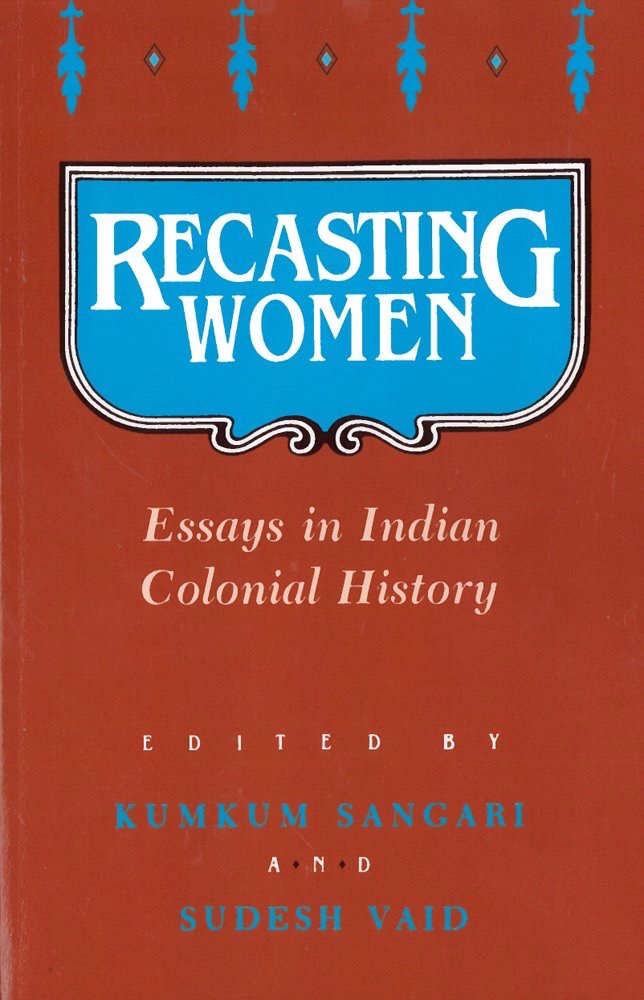
Softcover. New Brunswick NJ, Rutgers University Press, 1st pbk., 1990, Book: Very Good, Dust Jacket: None, Softcover, 372 pages. The first set of essays seeks to analyze the patriarchal discourses of a colonial society and includes an analysis of the shaping of Hindu-Aryan identity, the parameters of the discourse on widow-immolation, the "defeminization" of popular culture in nineteenth-century urban Calcutta, the nature of the reforms proposed by early women's journals in Hindi, and the implications of the nationalist movement and of Indo-Anglian literature on middle-class patriarchal norms. The second set of articles relates to women of the productive classes--the reconstitution of patriarchies in the agrarian transition in Haryana, in the Oudh peasant movement, in the armed peasant struggle in Telangana, and among the working class in Bengal. The contributors explore the interrelation of patriarchies with political economy, law, religion, and culture, and suggest a different history of "reform" movements, and of class and gender relations. Clean copy.
Hardcover. New York, The Free Press, 1st, 1968, Book: Very Good, Dust Jacket: Good, Hardcover, 615 pages. Previous owners name on front endpaper. Dust jacket with spine fading, standard wear. Clean, tight copy.
Hardcover. New Deli, Academic Foundation, 1st, 2015, Book: Very Good, Dust Jacket: Very Good, Hardcover in a bright dust jacket, 158 pagea. Clean, bright copy.

 "Margaret Bourke-White and the Dawn of Apartheidby: Lichtenstein, Alex")
 "Massacre at Wickenburg: Arizona's Greatest Mysteryby: Wilson, R. Michael")


 "Mexican Phoenix: Our Lady of Guadalupe: Image and Tradition Across Five Centuriesby: Brading, D.A.")

 "Nelson A. Miles and the Twilight of the Frontier Army by: Robert Wooster")

 "Old Country Trade of the East Indiesby: Coates, W. H.")
 "Old Times in the Coloniesby: Coffin, Charles Carleton")

 "Our New West. Records of Travel Between The Mississippi River and the Pacific Ocean. Over the Plains Over the Mountains Through the Great Interior Basin Over the Sierra Nevadas To and Up and Down the Pacific Coast... Including a full")
 "Our Team: The Epic Story of Four Men and the World Series That Changed Baseballby: Epplin, Luke")

 "Pelts and Palisades: The Story of Fur and Rivalry for Pelts in Early America by: Nathaniel C. Hale")
 "Politics and History in Band Societiesby: Eleanar Leacock and Richard Lee (Ed.)")
 "Pre-Classical Economic Thought: From the Greeks to the Scottish Enlightenmentby: Lowry (ed.), S. Todd")
 "Protecting Wisdom: Tibetan Book Covers from the MacLean Collectionby: Brown, Kathryn H. Selig")
 "Religion, Law and the State in Indiaby: Derrett, J. Duncan M.")
 "Resurgent India: Ideas and Priorities by: Agarwala, Ramgopal; Kumar, Rajiv; Shah, Rajesh")