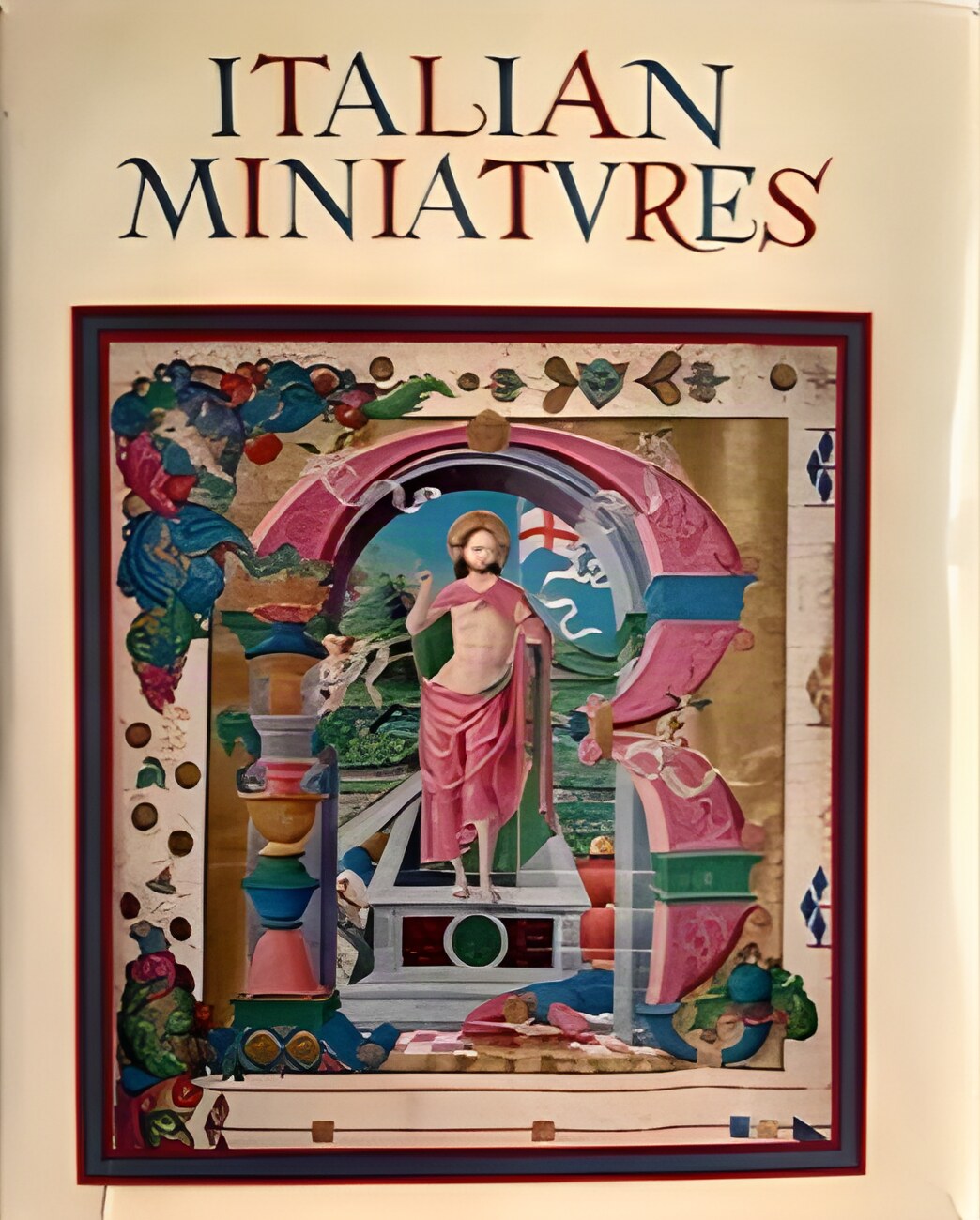
Hardcover. NY, Harry N. Abrams, 1st, 1954, Book: Very Good, Dust Jacket: Very Good, Hardcover in a bright dust jacket, cardboard slipcase. 214 pages with 75 mounted color plates, and 100 in-text illustrations. An important study, in which Salmi has gathered works of all schools of miniature painting, much of which had never been published before. Clean copy. Slipcase with minor tape repair. DOMESTIC SHIPPING ONLY.
Hardcover. London, Phaidon Press, 1st, 1963, Book: Very Good, Dust Jacket: Very Good, 222 pages of text, 1478 b&w plates, 39 index pages. Two volume set, textured cloth covers, clean dustjackets, set shows little wear. Cardboard slipcase with paper chipping to edges.
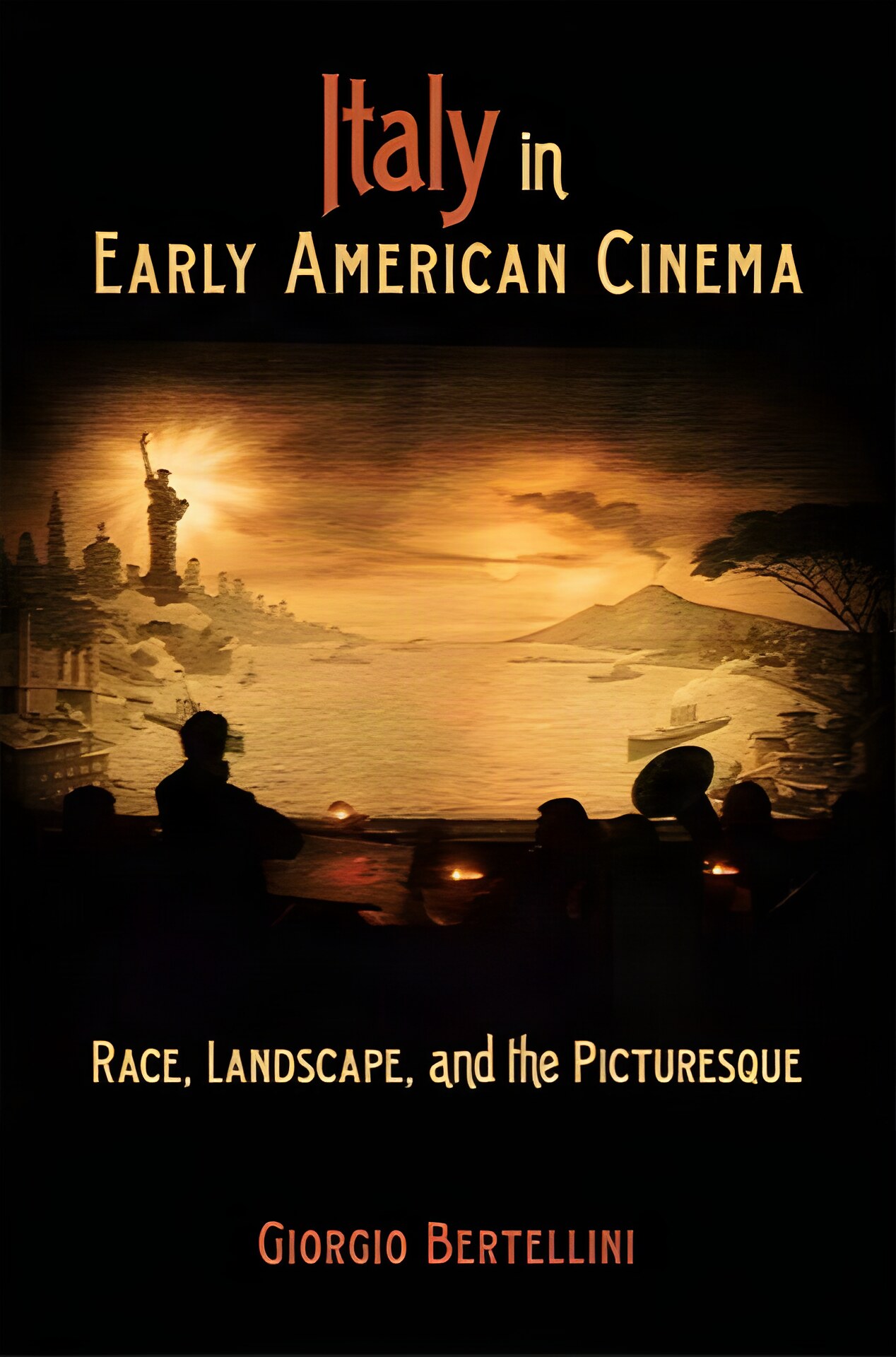
Softcover. Bloomington, Indiana University, 1st, 2010, Book: Very Good, Dust Jacket: None, Softcover, 443 pages, b&w illustrations, index. Traces the origins of American cinema's century-long fascination with Italy and Italian immigrants to the popularity of the pre-photographic aesthetic - the picturesque. "To read Bertellini's superb book is to enter into an intense, rich, and intricately layered experience of Italian immigrant culture in the New York of the 1900's and 1910's." Clean copy.
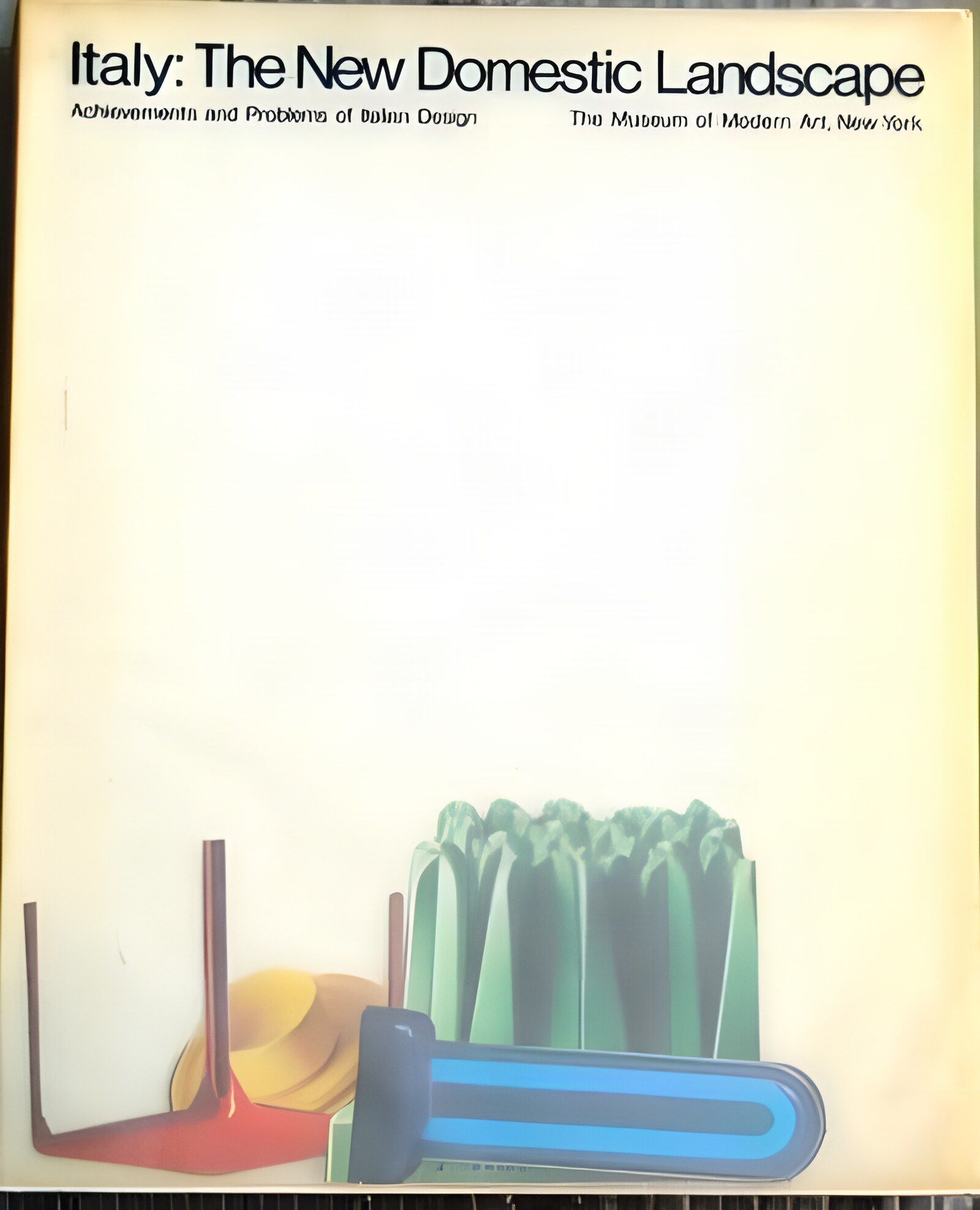
Hardcover. NY, The Museum of Modern Art, 1st, 1972, Book: Very Good, Dust Jacket: Very Good, Hardcover in a translucent dust jacket with 5 cut-outs enclosed (as called for), jacket with the usual darkening to edges and spine; The catalog for the 1972 major exhibition at MOMA, providing an excellent survey of modern Italian design and associated radical architectural movements. With articles on the history of modern Italian design by Portoghesi, Benevolo, and Gregotti, and articles on architecture by Celant and Tafuri. 430 pages with 520 photographic images and illustrations of which 124 are in color offering a kaleidescopic yet comprehensive vision of Italian design, objects and environments. Clean copy.
Softcover. Torino IT, Claudiana, 1st, 1992, Book: Very Good, Dust Jacket: None, Softcover, laminated wrappers, 526 pages, b&w illustrations. ITALIAN TEXT. Labels inside covers, from university library but like new, never checked out.
Hardcover. Chicago, University Of Chicago Press, 1st US, 2001, Book: Very Good, Dust Jacket: Very Good, 440 pages. Hardcover with dust jacket and slipcase. Full color and black & white illustrations. Beautiful copy with light sunning to dust jacket spine, Clean, tight copy. The technical problems with the Last Supper began as soon as Leonardo started to paint it. He jettisoned the traditional fresco technique of applying paint to wet plaster, a method unsuited to Leonardo's slow and thorough execution, and created the work instead with an experimental technique that involved painting directly on the dry plaster. With this renegade method, Leonardo rendered one of the most enduring painting techniques volatile and unstable. Added to this initial complication have been centuries of pollution, tourists, candle smoke, and the ravages of age, not to mention food fights in the refectory staged by Napoleonic soldiers and Allied bombs in 1943. By the middle of the twentieth century, the Last Supper was in desperate need of a complete restoration. Pinin Brambilla Barcilon was chosen to head this twenty-year project, and Leonardo, The Last Supper is the official record of her remarkable effort. It first documents the cleaning and removal of the overpainting performed in the other attempts at restoration and then turns to Barcilon's meticulous additions in watercolor, which were based on Leonardo's preparatory drawings, early copies of the painting, and contemporary textual descriptions. This book presents full-scale reproductions of details from the fresco that clearly display and distinguish Leonardo's hand from that of the restorer. With nearly 400 sumptuous color reproductions, the most comprehensive technical documentation of the project by Barcilon, and an introductory essay by art historian and project codirector Pietro C. Marani that focuses on the history of the fresco,
Softcover. Charleston SC, Arcadia Publishing, 1st, 2000, Book: Very Good, Dust Jacket: None, Softcover, 128 pages. In America "the streets were paved with gold." That was the mistaken notion of many an immigrant to the United States in the late 1800s and early 1900s. On Long Island, deluded sojourners from Italy were to find that in fact there were few streets and that they themselves were to be the ones to build them. A pictorial history covering more than a century of history, Long Island Italians depicts the transition of urban Italians as they moved increasingly from the city to the suburbs in Nassau and Suffolk Counties. Many photos, clean copy.
Hardcover. New York, Knopf, 1st us, 2012, Book: Very Good, Dust Jacket: Very Good, 368 pages. Hardcover with dust jacket. Small red dot remainder mark on bottom edge, otherwise, clean, unmarked copy with only minor wear to dust jacket. Color and Black and white pictures throughout.
Hardcover. Boston, Massachusetts, Harry N. Abrams, 1st, 1992, Book: Very Good, Dust Jacket: Very Good, 470 pages. Brown cloth cover, color illustrated dust jacket, 113 color and 206 illustrations. Still in original shrink wrap; book in excellent condition. American artists have been inspired by Italy since the 1760s, when Benjamin West, the first American painter to travel there, was drawn to the ancient Roman ruins and magnificent Renaissance architecture, statuary, and frescoes. This intriguing, superbly illustrated book is the first to explore the fascination Italy held for the American artist from West's time to the eve of World War I.The unique sense of the past found in Italy, where tangible evidence exists of a continual civilization from antiquity to the present, lured countless American artists to its cities, towns, and countryside. Painters from West and Copley in the eighteenth century to Cole, Inness, Whistler, Sargent, and Prendergast in the nineteenth century were inspired to create many of their finest works in Italy, as were American sculptors such as Hiram Powers and Harriet Hosmer and writers from Washington Irving to Henry James. This in-depth study includes 319 illustrations, of which 113 are reproduced in full color, many of works that have not previously been published. Theodore E. Stebbins, Jr., John Moors Cabot Curator of American Paintings at the Museum of Fine Arts, Boston, and Professor of Art History at Boston University, provides a broad overview of the American perception of Italy and the unique role that Italy played in the formation of American art.
Hardcover. Boston, Massachusetts, Harry N. Abrams, 1st, 1992, Book: Very Good, Dust Jacket: Very Good, 470 pages. Brown cloth cover, color illustrated dust jacket, 113 color and 206 illustrations. Still in original shrink wrap; book in excellent condition. American artists have been inspired by Italy since the 1760s, when Benjamin West, the first American painter to travel there, was drawn to the ancient Roman ruins and magnificent Renaissance architecture, statuary, and frescoes. This intriguing, superbly illustrated book is the first to explore the fascination Italy held for the American artist from West's time to the eve of World War I.The unique sense of the past found in Italy, where tangible evidence exists of a continual civilization from antiquity to the present, lured countless American artists to its cities, towns, and countryside. Painters from West and Copley in the eighteenth century to Cole, Inness, Whistler, Sargent, and Prendergast in the nineteenth century were inspired to create many of their finest works in Italy, as were American sculptors such as Hiram Powers and Harriet Hosmer and writers from Washington Irving to Henry James. This in-depth study includes 319 illustrations, of which 113 are reproduced in full color, many of works that have not previously been published. Theodore E. Stebbins, Jr., John Moors Cabot Curator of American Paintings at the Museum of Fine Arts, Boston, and Professor of Art History at Boston University, provides a broad overview of the American perception of Italy and the unique role that Italy played in the formation of American art.
Softcover. NY, W. W. Norton , reprint, 1984, Book: Very Good, Dust Jacket: None, Softcover, 339 pages. In Felix Gilbert's skilled analysis, the figures of Niccolo Machiavelli, whose writing changed the way people think about politics, and Francesco Guicciardini, whose History of Italy is one of the first classics of modern historical writing, provide important clues to interpreting the Renaissance. "Instead of treating these two great figures in isolation, Professor Gilbert puts them into the context of their times, into the stream of political thinking and historical writing of which they were a part. . . .His book is the fruit of years of writing of which they were a part. . . .His book is the fruit of years of original research among Florentine archives and of careful thought about the problems of Renaissance politics and historiography." Clean, bight copy.
Softcover. London, Black Dog Publishing, 1st, 2010, Book: Very Good, Dust Jacket: None, 192 pages. Softcover. Like new in publisher's shrink-wrap. Mapping the Invisible: EU-Roma Gypsies takes the reader on a visual journey across Europe with a focus on its fastest-growing ethnic minority: the Roma. This publication is the result of a unique partnership called EU-ROMA formed by a group of architects, designers and artists wishing to raise awareness to the diversity and richness of the Roma people. The book shows us the EU-ROMA projects conducted together with the gypsy communities in Romania, Greece, Italy and the UK.
Hardcover. Watkins, reprint, 2011, Book: Very Good, Dust Jacket: Very Good, Hardcover in a bright dust jacket, 272 pages. Marco Polo (c.1254-1324) was a Christian merchant from the Venetian Republic who learned about trading while his father and uncle were absent on an extended journey through Asia, which culminated in a visit with the great khan Kublai. In 1269 the brothers returned to Venice and met Marco for the first time. The three of them then embarked on a new journey to Asia and the court of the khan, returning after more than two decades to find Venice at war. Marco was imprisoned in Genoa, whereupon he dictated his romantic-sounding stories to a cellmate. The popularity of his account is a rare example of a success in publishing before the age of printing. Introduction by John Masefield.
Hardcover. New York, D.A.P.//La Fabrica , 1st, 2013, Book: Very Good, Dust Jacket: Very Good, Hardcover, 192 pages. Like new in publisher's shrink-wrap. America's first female war correspondent, Margaret Bourke-White was also something of a media star, with the portrait of her decked out in flying gear, camera in hand, about to set off on a bombing raid, being a favorite pin-up among U.S. forces. Focusing on the work Bourke-White made in the 1930s and 40s in Czechoslovakia, Germany, Italy, the Soviet Union and the U.K., Moments in History presents 150 classic photographs alongside revelatory extracts from letters and publications in periodicals. Bourke-White traveled to the USSR when the first Five-Year Plan was being implemented; she documented the German invasion of the Soviet Union in 1941, and the Allied bombing of Germany. In the summer of 1945 she was commissioned by Life to make a photographic record of the destroyed German cities. She was present at the liberation of the Buchenwald concentration camp and the Leipzig-Thekla forced labor camp. She recorded the partition of India and the Korean War, and one of her most famous pictures of this period is "Gandhi," which shows the subject at his spinning wheel. Also included in the catalogue are some of the word-picture sequences Bourke-White did for Fortune and Life, as well as extracts from her correspondence with personalities from the worlds of politics and culture, such as Winston Churchill and Georgia O'Keeffe. Bourke-White wanted to be the "eyes of the age," and her pictures testify to (as she put it) her "unquenchable desire to be present when history is being made."
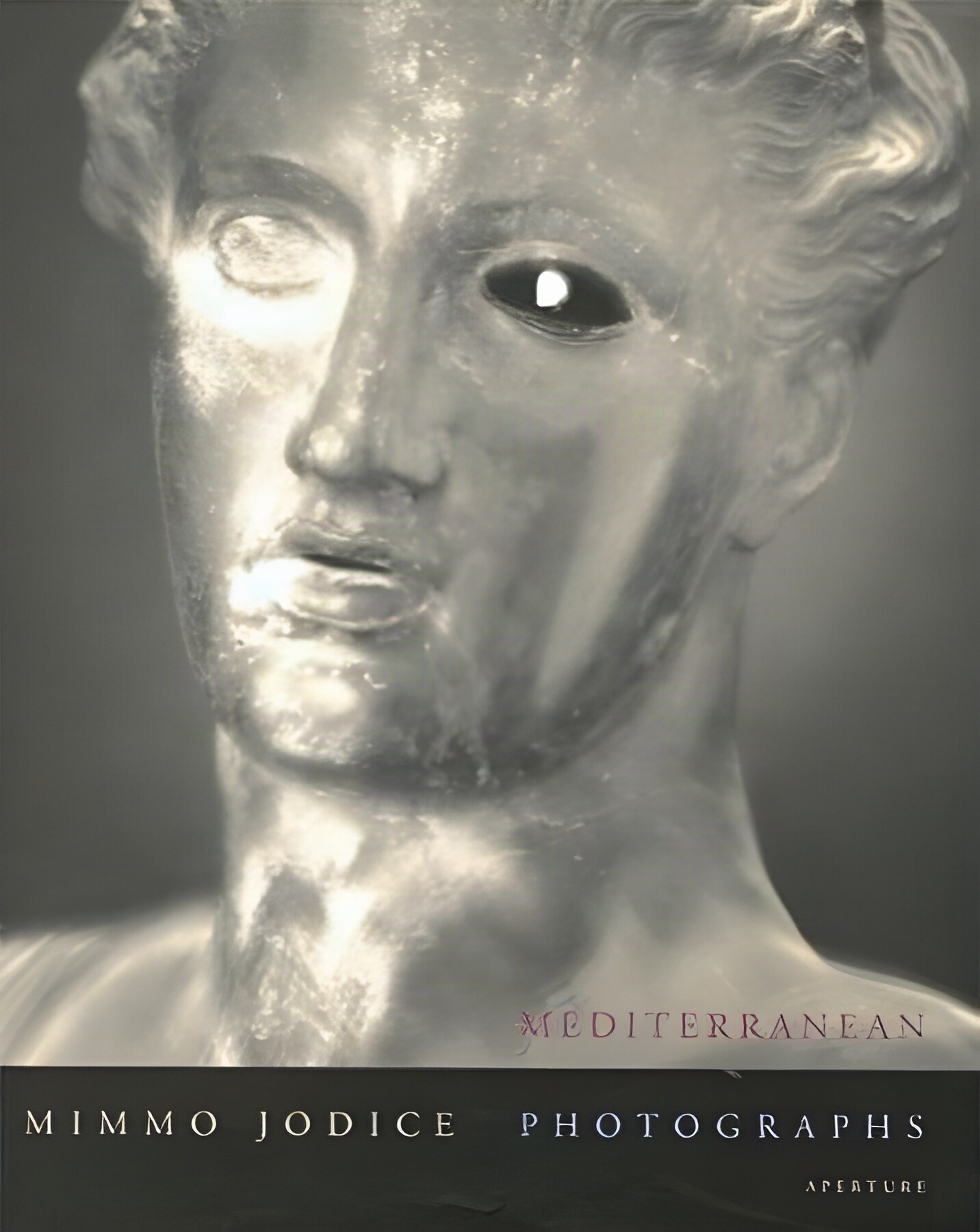
Hardcover. NY, Aperture, 1st, 1995, Book: Very Good, Dust Jacket: Very Good, Hardcover in a bright dust jacket. 118 pages with b&w plates. From Italy, France, Spain, Greece, Macedonia, Turkey, Tunisia, Syria, and Jordan, Jodice's luminous photographs evoke a vision of Mediterranean civilization that is a conflation of history and mythology. His dramatic yet ethereal images refuse both classical and contemporary boundaries in a fusion of the topographical and the intimate. Ruined temples, lost cities, heroic landscapes, gods and goddesses, vistas of Vesuvius and of the omnipresent sea transcend the constraints of their historical context in terms of both time and space. Clean copy.
Softcover. NY, Seven Stories Press, reprint, 2012, Book: Very Good, Dust Jacket: None, Softcover, 431 pages. A fascinating document of an extraordinary life, Memoirs of A Breton Peasant reads with the liveliness of a novel and bristles with the vigor of an opinionated autodidact from the very lowest level of peasant society. Brittany during the nineteenth century was a place seemingly frozen in the Middle Ages, backwards by most French standards; formal education among rural society was either unavailable or dismissed as unnecessary, while the church and local myth defined most people's reasoning and motivation. Jean-Marie Deguignet is unique not only as a literate Breton peasant, but in his skepticism for the church, his interest in science, astronomy and languages, and for his keen--often caustic--observations of the world and people around him. Born into rural poverty in 1834, Deguignet escapes Brittany by joining the French Army in 1854, and over the next fourteen years he fights in the Crimean war, attends Napoleon III's coronation ceremonies, supports Italy's liberation struggle, and defends the hapless French puppet emperor Maximilian in Mexico. He teaches himself Latin, French, Italian and Spanish and reads extensively on history, philosophy, politics, and literature. He returns home to live as a farmer and tobacco-seller, eventually falling back into dire poverty. Throughout the tale, Deguignet's freethinking, almost anarchic views put him ahead of his time and often (sadly, for him) out of step with his contemporaries. Deguignet's voluminous journals (nearly 4,000 pages in total) were discovered in a farmhouse in Brittany a century after they were written. This narrative was drawn from them and became a surprise bestseller when published in France in 1998. Clean copy.
Hardcover. New Haven CT, Yale University Press, 1st, 2010, Book: Very Good, Dust Jacket: Very Good, Hardcover, 438 pages, illustrations in color and b&w. Clean, unmarked copy with only minor wear to dust jacket.
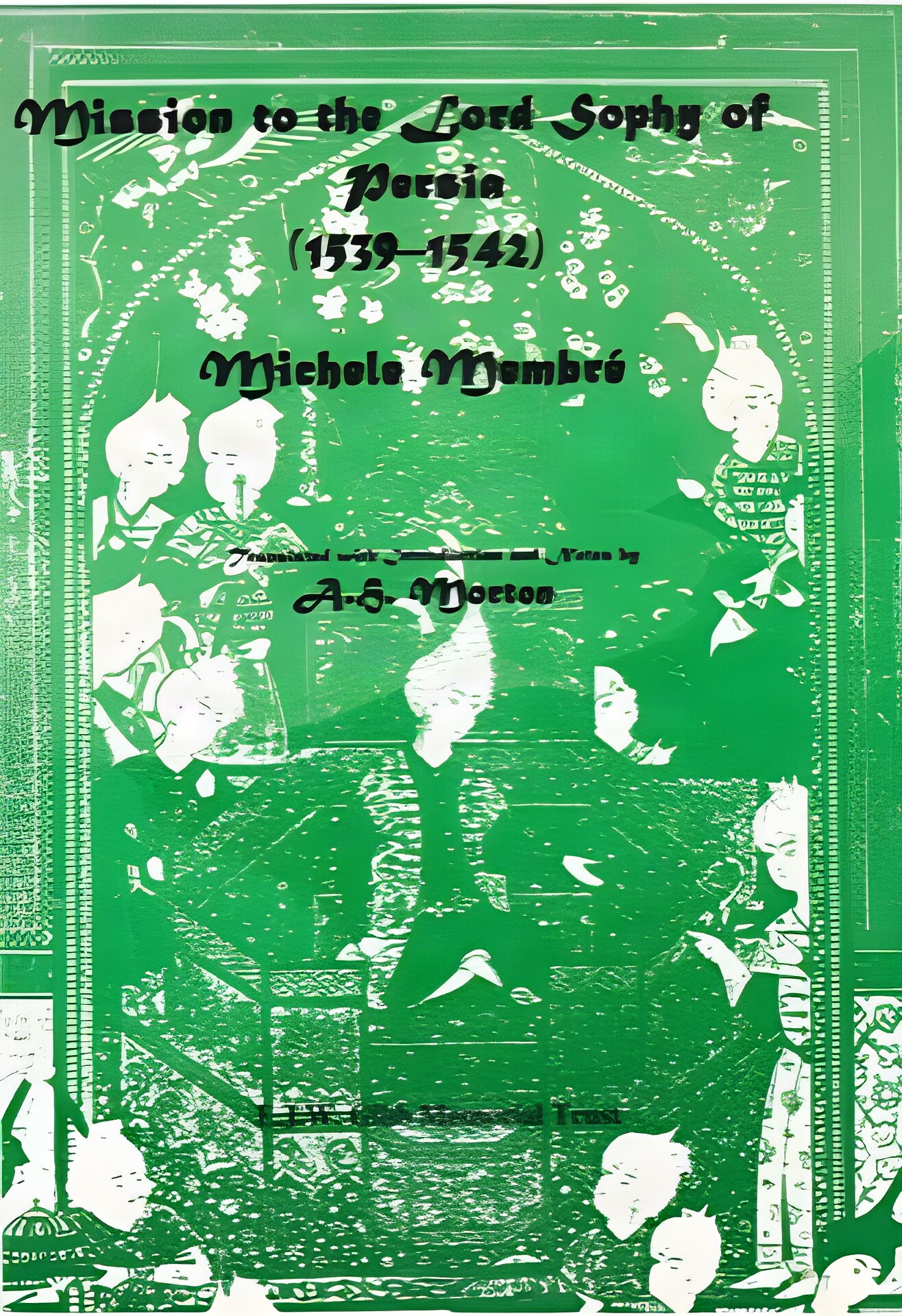
Softcover. Wiltshire UK, Gibb Memorial, reprint, 1999, Book: Very Good, Dust Jacket: None, Softcover, 109 pages with a modern double spread line map, a glossary and a biographical index. The description of his mission to the court of the Shah Tahmasp I of Persia by the Venetian Michele Membre is one of the most informative as well as one of the most individual of the few European accounts of 16th century Persia. Clean copy.
Hardcover. New York, Penguin Press, 1st, 2006, Book: Very Good, Dust Jacket: Very Good, Hardcover, 692 pages, b&w photographs. Beautiful copy. Like new. An evaluation of Italy's notorious Fascist period under dictator Benito Mussolini considers its violence and demands for obedience, noting how it served as a model for other twentieth-century dictatorships while arguing that the nation's largely undeveloped country and tribal family structures helped Italians to devise creative survival and resistance methods.
Hardcover. London, C. Kegan Paul & Co., 1st, 1878/1883, Book: Very Good, Dust Jacket: None, Four volume set complete, 3/4 calf dyed blue with blue cloth bindings. Spines stamped in gilt with ornate decorations, raised bands, top edge gilt. Translated by Linda Villari. 353, 389, 424, 445 pages, marbled endpapers. Volumes 1 and 2 were published in 1878, volumes 3 and 4 were published in 1883, but it is a matching set. Bright, unmarked set with tight bindings. Due to size and weight, DOMESTIC SHIPPING ONLY.
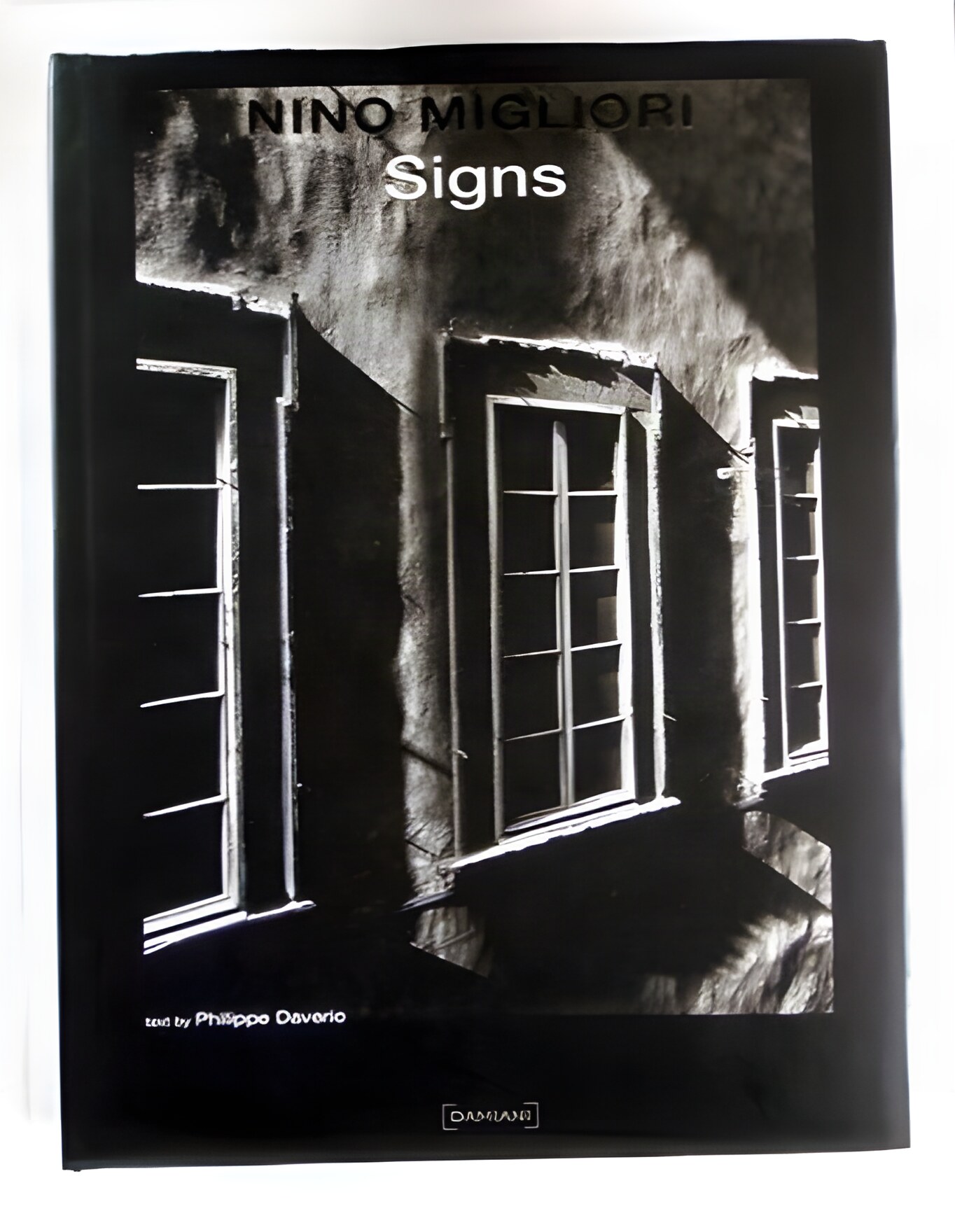
Hardcover. Damiani, 1st, 2005, Book: Very Good, Dust Jacket: Very Good, Hardcover in a lightly worn dust jacket, 300 pages. This monograph, Signs, is dedicated to Nino Migliori, one of the old masters of photography who had a significant effect on the history of Italian imagery after World War II. Signs presents a broad range of his production which has always been marked by creativity, versatility, and innovation. Included here are Miglori's portraits, landscapes, architecture, street scenes, abstract imagery, and polaroids. DOMESTIC SHIPPING ONLY.
Hardcover. NY, Metropolitan Museum of Art , 1st, 2004, Book: Very Good, Dust Jacket: Very Good, Hardcover, 272 pages. Painters of Reality, titled after an exhibition held in Milan more than fifty years ago, is the first study in English of this major aspect of Italian art. It builds on the work of the art historian Roberto Longhi. Reexamining the subject in light of copious subsequent scholarship, the authors of this volume contribute major essays that define and discuss naturalism as it appeared in both Lombard paintings and drawings. There is also a fresh consideration of the North Italian predecessors whose influence is apparent either directly or indirectly, in the paintings of Caravaggio. More detailed discussions of the subject center on the precise elements that constituted Leonardo's "hypernaturalism": the important schools of paintings that arose in Brescia, Bergamo, Cremona, and Milan; and Caravaggio's most notable successors in northern Italy, who kept Lombard realism alive into the eighteenth century. Among the 136 paintings and drawings, many never before seen outside of Italy, are influential drawings by Leonardo and major paintings by Caravaggio. Other acknowledged masters in the history of European art are represented, including Lorenzo Lotto, Giovanni Girolamo Savoldo, Giovanni Battista Moroni, and Giacomo Ceruti. Works also appear from significant but less widely known artists such as Sofonisba, Anguissola, Vincenzo Campi, Moretto da Brescia, and Fra' Galgario.
NY, Harper & Brothers , reprint, 1900, Book: Very Good, Dust Jacket: None, Hardcover, 385 pages. Illustrated with a frontispiece and 48 half tone photographs. Original decorated publisher's cloth, with gilt titles. First published in 1897. Account of Sicily at the turn of the 20th century, with a focus on the art, history, and landscape of the Island, from the largest of cities to its hamlets and villages. Contemporary color postcard laid in. Original pale green cloth fafed, previous owners name, embossed stamp on front fly leaf, otherwise clean.

 "Italian Pictures of the Renaissance: Florentine School (2 Vols.)by: Berenson, Bernard")
 "La Riforma protestante nell'Italia del Cinquecento (Studi storici) (Italian Edition) by: Salvatore Caponetto")
 "Leonardo: The Last Supperby: Barcilon, Pinin Brambilla/Pietro C. Marani")
 "Lions and Foxes - Men and Ideas of the Italian Renaissanceby: Alexander, Sidney")

 "Lost Battles: Leonardo, Michelangelo, and the Artistic Duel That Defined the Renaissanceby: Jones, Jonathan")
 "Lure of Italy, The: American Artists and The Italian Experience, 1760 - 1914by: Stebbins, Theodore E. Et al.")
 "Lure of Italy, The: American Artists and The Italian Experience, 1760 - 1914by: Stebbins, Theodore E. Et al.")

 "Mapping the Invisible: EU-Roma Gypsiesby: Orta, Lucy (editor)")
 "Marco Polo's Silk Road: The Art of the Journey - An Italian at the Court of Kublai Khanby: N/A")
 "Margaret Bourke- White: moments in historyby: Quimby, Sean")
 "Memoirs of a Breton Peasant, 1834-1905by: Jean-Marie D?©guignet")
 "Michelangelo: The Achievement of Fame, 1475-1534by: Hirst, Michael")
 "Mussolini's Italy: Life Under the Fascist Dictatorship, 1915-1945by: Bosworth, R. J. B.")
 "Niccolo' Machiavelli and His Times (4 Volume Set) by: Prof. Pasquale Villari")
 "Painters of Reality: The Legacy of Leonardo and Caravaggio in Lombardy (Metropolitan Museum of Art Series)by: Andrea Bayer and Mina Gregori")


