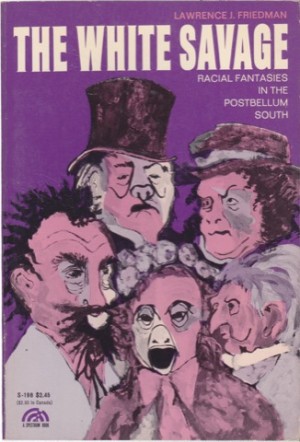
Softcover. NY, Prentice Hall, 1st pbk, 1970, Book: Very Good, Dust Jacket: None, Softcover, 184 pages. Revealing and disturbing study of the racist ideas and fantasies of southern whites after the Civil War and examines their racial fantasies and the social and psychological roots of those fantasies. He reveals how a complex set of anxieties and repressions in Southern life led whites to need "Negro" Inferiority." Name on title page otherwise clean.
Softcover. Woodstok VT, The Woodstock Foundation, 1st, 1982, Book: Very Good, Dust Jacket: None, Softcover, 123 pages, b&w illustrations. SIGNED BY JANE AND WILL CURTIS on the front fly leaf. This work was published in observance of the 100th anniversary of Marsh's death in 1882. It graphically portrays the many-faceted career of this extraordinarily versatile Vermonter. Marsh is best known for his pioneering environmental study, Man and Nature, which was first published in 1864. Marsh was a lawyer, linguist, businessman, farmer, designer, Congressman, and diplomat (he was Minister to Turkey and to the newly-united Kingdom of Italy, where he spent the last twenty-one years of his life, a tour of duty unprecedented in American diplomacy). In Congress he supported creating of the Smithsonian Institution.
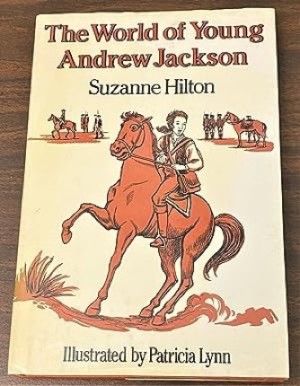
Hardcover. NY, Walker & Company, 1st, 1988, Book: Very Good, Dust Jacket: Very Good, Hardcover in a bright, unclipped dust jacket. 118 pages illustrated in b&w by Patricia Lynn. Details the early years in the life of the "frontier President," describing how the fatherless boy became a landowner at age three, a rebel scout at thirteen, and a lawyer at twenty. Clean copy.
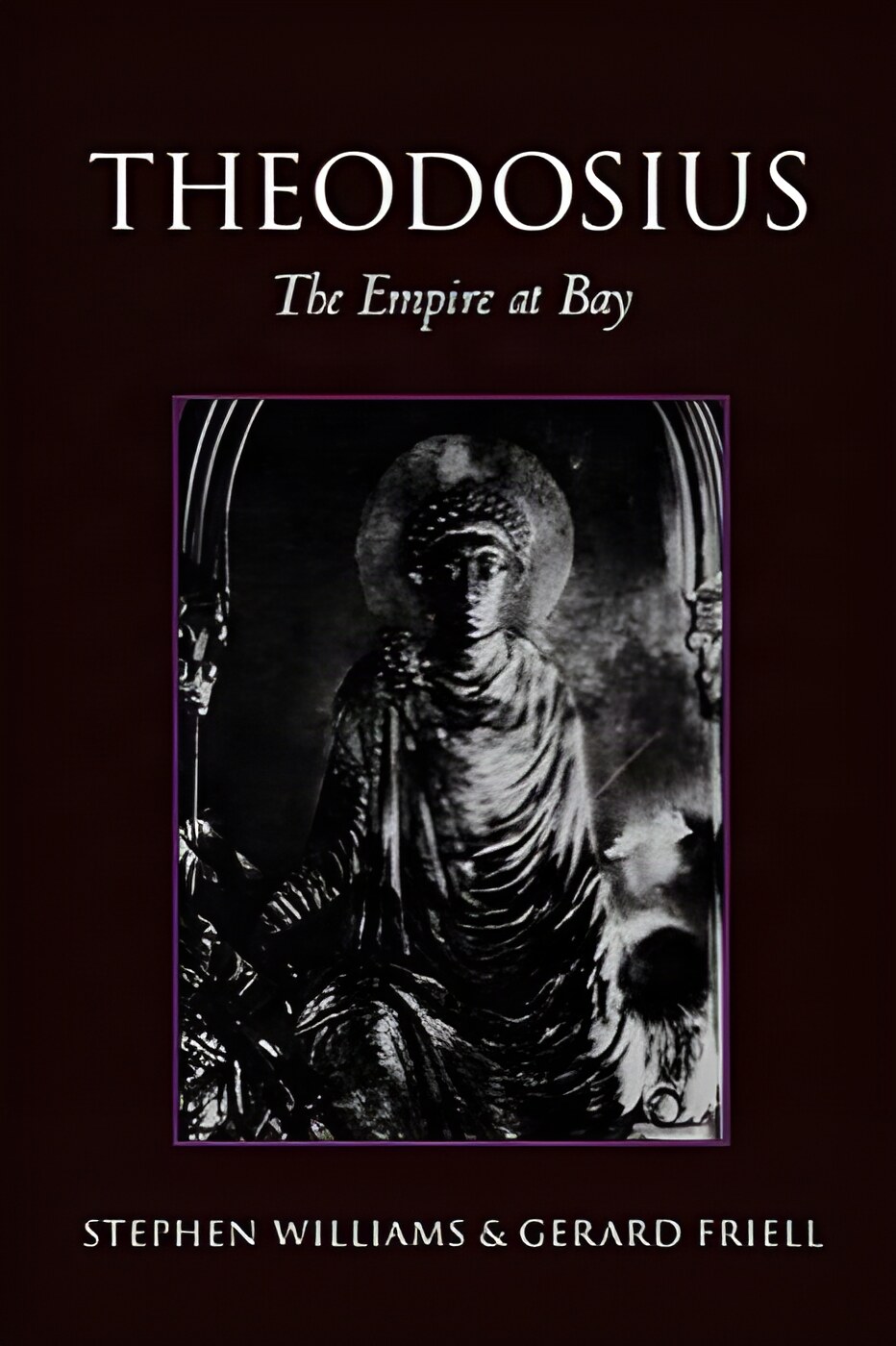
Hardcover. New Haven CT, Yale University Press, 1st, 1994, Book: Very Good, Dust Jacket: Very Good, Hardcover in a bright dust jacket, 238 pages. Theodosius I was the last Roman emperor to rule over both East and West. After the military disaster of Adrianople he had to rebuild the state by adopting a new policy of cooperation with the barbarians. He also suppressed paganism and established a unified Catholic Church by law. His reign was a turning point in the history of the late Roman Empire. The authors describe the military, political, and religious struggles of this turbulent period and analyze the far-reaching effects of his policies in the fourth and fifth centuries. Clean copy.
Hardcover. Southbury CT, self-published, 1st, 1971, Book: Very Good, Dust Jacket: None, Hardcover, printed paper over pictorial boards. 75 pages with many b&w illustrations. SIGNED BY AUTHOR on half-title page. Clean, bright copy.
Hardcover. St. Ann's Press, 1st, 2002, Book: Very Good, Dust Jacket: Very Good, Hardcover, 172 pages. On May 25, 1961, Bruce Davison joined a group of Freedom Riders traveling by bus from Montgomery, Alabama to Jackson, Mississippi. The actions of these youths challenged and disobeyed federal laws allowing for integrated interstate bus travel. These historic episodes, which ended in violence and arrests, marked the beginning of Davidson's exploration into the heart and soul of the civil rights movement in the United States during the years 1961-1965. In 1962, Davidson received a Guggenheim Fellowship and continued documenting the era, including an early Malcolm X rally in Harlem, steel workers in Chicago, a Ku Klux Klan cross burning near Atlanta, farm migrant camps in South Carolina, cotton picking in Mississippi, protest demonstrations in Birmingham, and the heroic Selma March that led to the Voting Rights Act of 1965, which was instrumental in changing the political power base in the segregated Southern states. In the 140 photographs collected here, many of which have never before been published, we see intimate and revealing portraits of Dr. Martin Luther King Jr., John Lewis, and other leaders made by Davidson during those turbulent times. These images describe the mood that prevailed during the civil rights movement with a lyrical imagery that is both poignant and profound. As Davidson bears witness to these historical events, and documents the degradation and segregation that were endured, he gives testimony to the struggle for freedom, equality, justice, and human dignity.
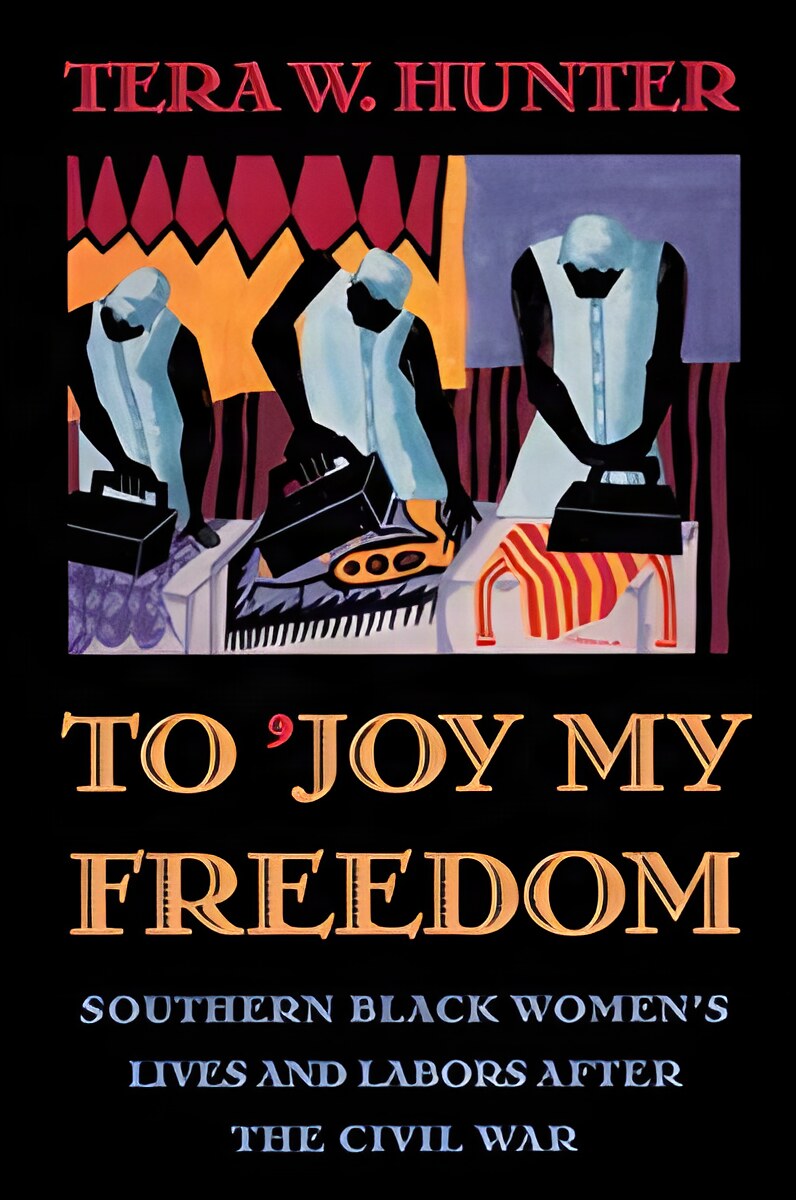
Softcover. Cambridge MA, Harvard University Press, reprint, 1998, Book: Very Good, Dust Jacket: None, Softcover, 311 pages. As the Civil War drew to a close, newly emancipated black women workers made their way to Atlanta-the economic hub of the newly emerging urban and industrial south-in order to build an independent and free life on the rubble of their enslaved past. In an original and dramatic work of scholarship, Tera Hunter traces their lives in the postbellum era and reveals the centrality of their labors to the African-American struggle for freedom and justice. Household laborers and washerwomen were constrained by their employers' domestic worlds but constructed their own world of work, play, negotiation, resistance, and community organization. Hunter follows African-American working women from their newfound optimism and hope at the end of the Civil War to their struggles as free domestic laborers in the homes of their former masters. We witness their drive as they build neighborhoods and networks and their energy as they enjoy leisure hours in dance halls and clubs. We learn of their militance and the way they resisted efforts to keep them economically depressed and medically victimized. Finally, we understand the despair and defeat provoked by Jim Crow laws and segregation and how they spurred large numbers of black laboring women to migrate north. Clean copy.
Hardcover. NY, Oxford University Press, 4th pr., 2000, Hardcover in a bright dust jacket. 670 pages, b&w illustrations. Written by the most prominent of the new generation of historians, this superb volume offers the most up-to-date and authoritative account available of African-American history, ranging from the first Africans brought as slaves into the Americas, to today's black filmmakers and politicians. Here is a panoramic view of African American life, rich in gripping first-person accounts and short character sketches that invite readers to relive history as African Americans experienced it. We begin in Africa, with the growth of the slave trade, and follow the forced migration of what is estimated to be between ten and twenty million people, witnessing the terrible human cost of slavery in the colonies of England and Spain. We read of the Haitian Revolution, which ended victoriously in 1804 with the birth of the first independent black nation in the New World, and of slave rebellions and resistance in the United States in the years leading up to the Civil War. There are vivid accounts of the Civil War and Reconstruction years, the backlash of notorious "Jim Crow" laws and mob lynchings, and the founding of key black educational institutions. The contributors also trace the migration of blacks to the major cities, the birth of the Harlem Renaissance, the hardships of the Great Depression and the service of African Americans in World War II, the struggle for Civil Rights in the 1950s and '60s, and the emergence of today's black middle class. From Harriet Tubman and Frederick Douglass to Martin Luther King, Jr., and Louis Farrakhan, To Make Our World Anew is an unforgettable portrait of a people. Clean copy.
Softcover. London, T. Plummer, Printer, Seething Lane, reprint, 1801, Book: Very Good, Dust Jacket: None, Disbound stab-stitched pamphlet. 4 pages in small typeface. Presumably reduced from the 8 page 1798 printing. Moore, a Scottish cartographer, chart seller and educator with a somewhat controversial reputation, was accused of copying a chart of the coasts of France, Spain and Portugal drawn up by William Heather. The case was heard before Lord Kenyon with the prosecution led by Erskine; the jury quickly found for the defendant despite Kenyon's balanced instruction.
Hardcover. Baton Rouge LA, Louisiana State University, 1st, 1972, Book: Very Good, Dust Jacket: Very Good, Hardcover in a lightly worn dust jacket, 294 pages. Name on front fly leaf otherwise clean.
Hardcover. NY, Viking Studio, 1st, 2000, Book: Very Good, Dust Jacket: Very Good, Hardcover in a bright, unclipped dust jacket. This lavish, photo-laden tour of Tinsel Town's history is coffee-table condensation of 87 years of Vanity Fair coverage of the Hollywood scene. Visually, it's a thrilling compendium of images that have defined not only the film industry and its workers but how the American public has understood them. Ranging from Edward Steichen's iconographic black-and-white portraits of Louise Brooks, Norma Shearer and Irving Thalberg, and Gloria Swanson (which defined the "look" of Hollywood in its first half-century) to the contemporary and often shocking color photographs of Annie Leibovitz (of nearly everyone from Sylvester Stallone and John Travolta to Cate Blanchette and Johnny Depp)Dand peppered with shots by Bruce Weber, Irving Penn, Helmut Newton, Griege Hurrell and othersDthe book traces how these stars have come to embody pop mythologies of everyday life. The photos are interspersed among 13 (mostly short) essays by writers as diverse as Carl Sandberg, Patricia Bosworth, P.G. Wodehouse, Dorothy Parker, Peter Biskind and D.H. Lawrence, which range from the humorous to the illuminating. Clean copy.
Hardcover. Rutland, VT, Tuttle Co, 1st, 1905, Book: Good, Dust Jacket: None, 736 pages, leather-bound cover, gilt lettered spine. Definite wear to cover with leather rot clearly evident, chipping on edges and corners, discoloration of page edges, especially on endpages, previous owner's signature and inscription to front endpaper that has a tear at the gutter.
Hardcover. Gretna LA, Pelican Publishing, 1st, 2003, Book: Very Good, Dust Jacket: Very Good, Hardcover in a bright dust jacket. In June 1892, a thirty-year-old shoemaker named Homer Plessy bought a first-class railway ticket from his native New Orleans to Covington, north of Lake Pontchartrain. The two-hour trip had hardly begun when Plessy was arrested and removed from the train. Though Homer Plessy was born a free man of color and enjoyed relative equality while growing up in Reconstruction-era New Orleans, by 1890 he could no longer ride in the same carriage with white passengers. Plessy's act of civil disobedience was designed to test the constitutionality of the Separate Car Act, one of the many Jim Crow laws that threatened the freedoms gained by blacks after the Civil War. This largely forgotten case mandated separate-but-equal treatment and established segregation as the law of the land. It would be fifty-eight years before this ruling was reversed by Brown v. Board of Education. Keith Weldon Medley brings to life the players in this landmark trial, from the crusading black columnist Rodolphe Desdunes and the other members of the Comite des Citoyens to Albion W. Tourgee, the outspoken writer who represented Plessy, to John Ferguson, a reformist carpetbagger who nonetheless felt that he had to judge Plessy guilty. Clean copy.
Hardcover. Baton Rouge, Louisiana State University Press, 1st, 1961, Book: Very Good, Dust Jacket: Very Good, Hardcover in a bright dust jacket, 251 pages including index. Clean copy.
Hardcover. Lawrence KS, University Press of Kansas , 1st, 2011, Book: Very Good, Dust Jacket: Very Good, Hardcover in a bright dust jacket, 386 pages, b&w illustrations. Inept leadership, inefficient campaigning, and enormous losses would seem to spell military disaster. Yet despite these factors, the Soviet Union won its war against Nazi Germany thanks to what Roger Reese calls its military effectiveness: its ability to put troops in the field even after previous forces had been decimated. Reese probes the human dimension of the Red Army in World War II through a close analysis of soldiers' experiences and attitudes concerning mobilization, motivation, and morale. In doing so, he illuminates the Soviets' remarkable ability to recruit and retain soldiers, revealing why so many were willing to fight in the service of a repressive regime--and how that service was crucial to the army's military effectiveness. He examines the various forms of voluntarism and motivations to serve-including the influences of patriotism and Soviet ideology-and shows that many fought simply out of loyalty to the idea of historic Russia and hatred for the invading Germans. He also considers the role of political officers within the ranks, the importance of commanders who could inspire their troops, the bonds of allegiance forged within small units, and persistent fears of Stalin's secret police. Clean copy.
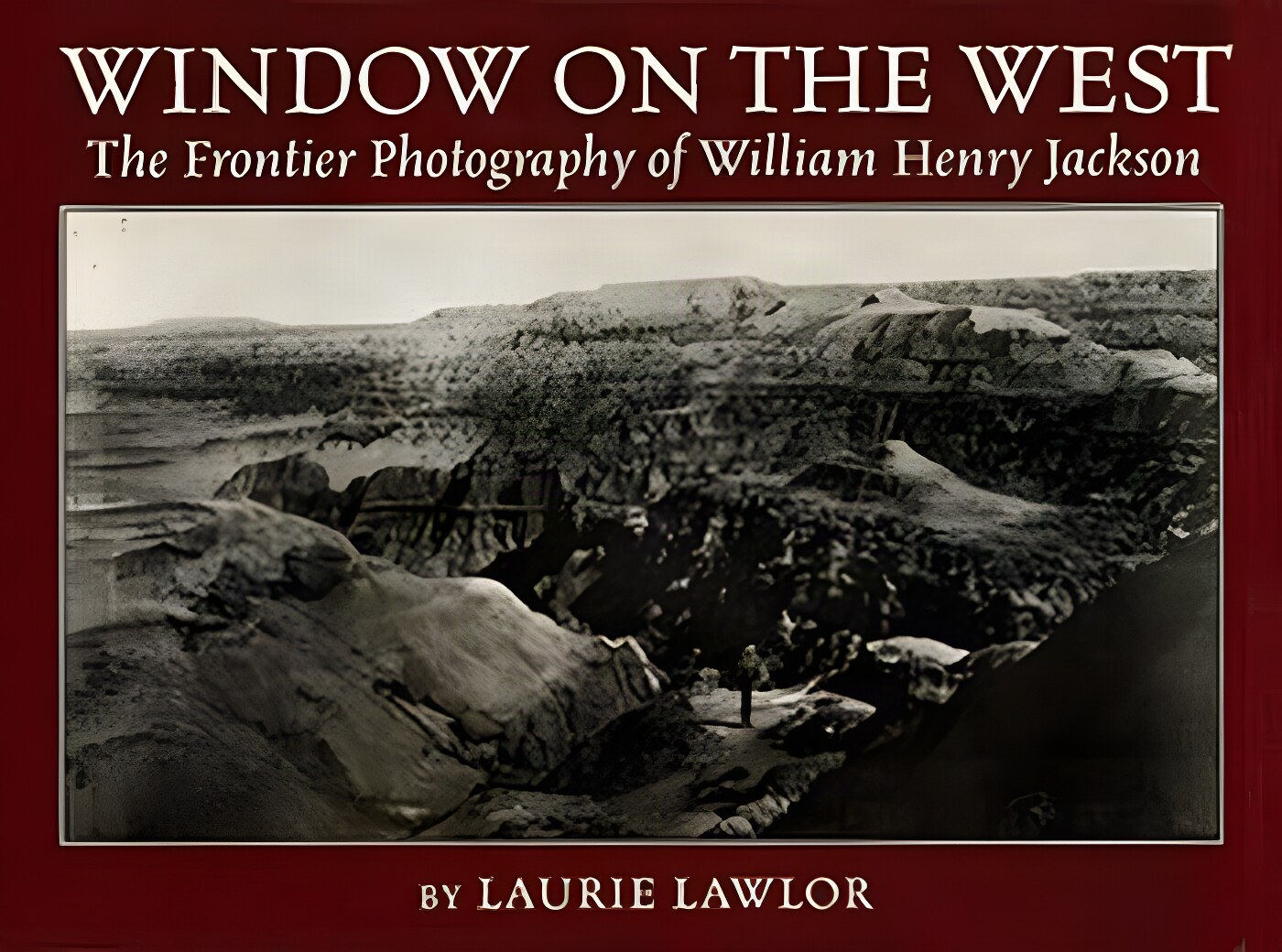
Hardcover. NY, Holiday House, 1st, 1999, Book: Very Good, Dust Jacket: Very Good, Hardcover in a bright dust jacket, 132 pages. Illustrated throughout with Jackson's black and white photographs. In this fascinating book, Laurie Lawlor tells parallel stories of the settling of the western United States and the wanderings of a man who captured much of that history in singular and beautiful photographs. Lawlor includes forty of Jackson's photographs as illustrations for her narrative. Bibliography, timeline, glossary, and index. Clean copy.
Hardcover. Cambridge MA, Harvard University Press, 1st, 2005, Book: Very Good, Dust Jacket: Very Good, Hardcover in a bright dust jacket, 558 pages. In the past twenty-five years, no one has been more instrumental than Catharine MacKinnon in making equal rights real for women. As Peter Jennings once put it, more than anyone else in legal studies, she "has made it easier for other women to seek justice." This collection, the first since MacKinnon's celebrated Feminism Unmodified appeared in 1987, brings together previously uncollected and unpublished work in the national arena from 1980 to the present, defining her clear, coherent, consistent approach to reframing the law of men on the basis of the lives of women.By making visible the deep gender bias of existing law, MacKinnon has recast legal debate and action on issues of sex discrimination, sexual abuse, prostitution, pornography, and racism. The essays in this volume document and illuminate some of the momentous and ongoing changes to which this work contributes; the recognition of sexual harassment, rape, and battering as claims for sexual discrimination; the redefinition of rape in terms of women's actual experience of sexual violation; and the reframing of the pornography debate around harm rather than morality. The perspectives in these essays have played an essential part in changing American law and remain fundamental to the project of building a sex-equal future. Clean copy.


 "Though Memory Plays Me False. A Story of Anticosti. The St. Lawrence River Isle of Enchantment, the life of William Hardy Eshbaugh and the role he played in its early development (SIGNED COPY)by:")


 "Time of Change: Civil Rights Photographs, 1961-1965by: Bruce Davidson , John Lewis, et al.")
 "To Make Our World Anew: A History of African Americansby: Kelley, Robin D. G./ Lewis, Earl (Editor)")
 "Treatise on the Law of Corporations , A - In Two Volumesby: Kyd, Stewart")
 "Trial of John Hamilton Moore for Pirating a Chart: Sittings After Term, March 1798, Before Lord Kenyon and a Special Jury of Merchants. Guildhall, London. by: Trial;")
 "Vanity Fair's Hollywoodby: Graydon Carter, David Friend, Christopher Hitchens")


 "Vermont Justice and Public Officer: A Manual of Vermont Lawby: Harman, Henry A.")
 "We As Freemen: Plessy v. Fergusonby: Keith Weldon Medley")

 "Why Stalin's Soldiers Fought: the Red Army's Military Effectiveness in World War IIby: Roger R. Reese")