Softcover. Washington and Lee University, 1st, 2005, Book: Very Good, Dust Jacket: None, Softcover, 100 pages. The 2005 issue, Volume 12, of Perspectives in Vernacular Architecture: The Journal of the Vernacular Architecture Forum contains the articles: "Selling Domestic Space: The Boarding House in the Southern Mountains" by Michael Ann Williams; "La Casa Alamense: The Mexican Hacienda as Urban Dwelling" by John Messina; "Unraveling the Benjamin Deyerle Legend: An Analysis of Mid-Nineteenth-Century Brickwork in the Roanoke Valley of Virginia" by Michael J. Pulice; "Orson S. Fowler and a Home for All: The Octagon House in the Midwest" by Rebecca Lawin McCarley; and "Roadside Shrines and Granite Sketches: Diversifying the Vernacular Landscape of Memory" by David Charles Sloane.
Hardcover. Hillsdale NJ, Lawrence Erlbaum, 1st, 1982, Book: Very Good, Dust Jacket: None, Hardcover, green cloth covers with light blue stamping, 422 pages. This highly readable translation of the major works of the 18th- century philosopher Etienne Bonnot, Abbe de Condillac, a disciple of Locke and a contemporary of Rousseau, Voltaire, and Diderot, shows his influence on psychiatric diagnosis as well as on the education of the deaf, the retarded, and the preschool child. Published two hundred years after Condillac's death, this translation contains treatises which were, until now, virtually unavailable in English: A Treatise on Systems, A Treatise of the Sensations, Logic. Name on front fly leaf, light bumps to cover corners.
Hardcover. Cambridge, MA, MIT Press, 1st, Book: Very Good, Dust Jacket: Very Good, Hardcover, 208 pages. Pictures that are made, not taken, are the focus of this exciting collection of works by 90 American artists who are using appropriation, computer technology, performance, and numerous other sources of inspiration to stretch the limits and expand the possibilities of photographic art. "Perhaps in the future," Man Ray suggested to Duchamp, "photography would replace all art." The Photography of Invention hints at that future by documenting a decade of startling new work in American photography: work that challenges the accepted hierarchy of the arts and, arguably, establishes photography as the equal of the other arts. Pictures that are made, not taken, are the focus of this exciting collection of works by 90 American artists who are using appropriation, computer technology, performance, and numerous other sources of inspiration to stretch the limits and expand the possibilities of photographic art. The selection of nontraditional pictures includes works by some of the decade's most interesting experimenters-Cindy Sherman, Sherrie Levine, Richard Prince, Barbara Kruger, William Christenberry, Louise Lawler, Stefan Roloff, and others who create or manipulate the subject photographed.
Softcover. NY, Burns Archive Press, 1st, 2022, Book: Very Good, Dust Jacket: None, Softcover, 272 pages. SIGNED BY STANLEY BURNS on title page. Picturing Freedom chronicles and celebrates the photographic history of African Americans and their cars by focusing on personal images of the pride and joy of car ownership (1900-1980+). Owning a car was a significant life-changing achievement. It offered special freedoms--the freedom to travel, the freedom to work further from home, the freedom to visit family and friends, the freedom to avoid Jim Crow laws, and the freedom to migrate. The car was unequivocal evidence of Black success and an important symbol of status in a country that had long fought their advancement in every area. Car ownership was purposely and proudly photographed. All of the photographs were taken in Black communities by a family member or a friend and reveal how African Americans represented themselves. This 2022 IPPY award-winning compilation of over 450 unique photographs is an inspiring visual narrative of American life. Clean, bright copy.
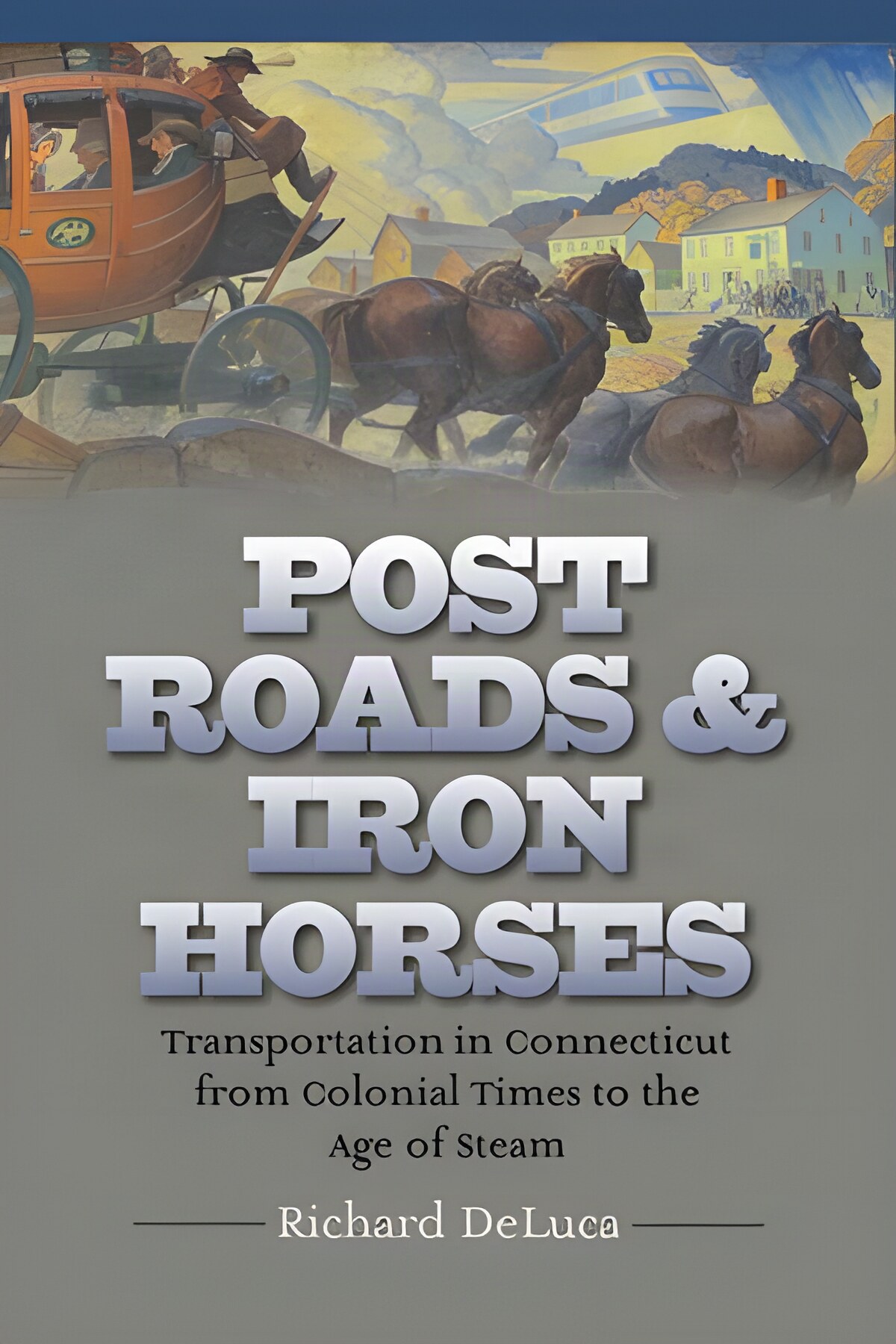
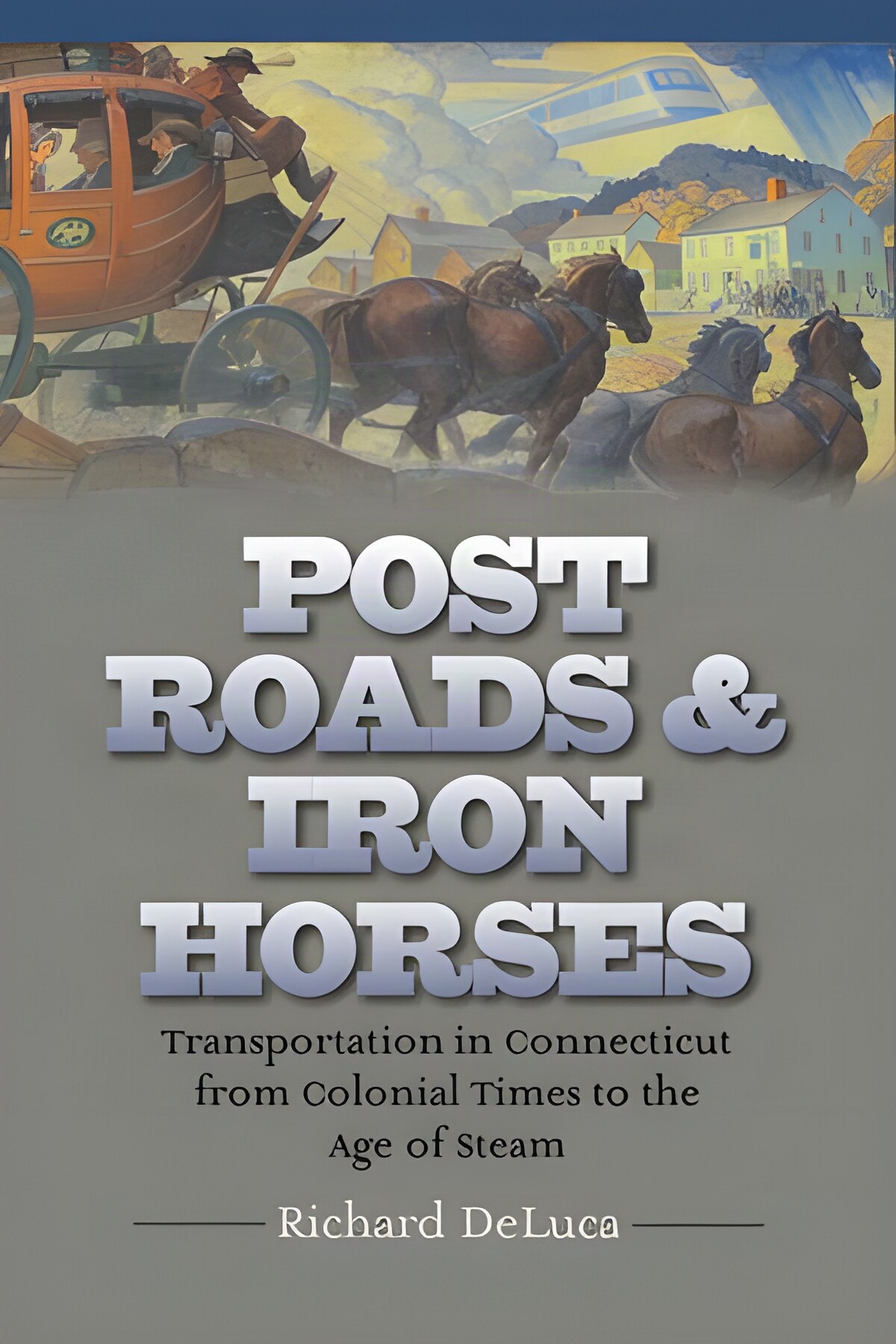
Hardcover. Middletown CT, Wesleyan University Press, 1st, 2011, Book: Very Good, Dust Jacket: Very Good, Hardcover in a bright dust jacket. The first book to look in detail at the turnpikes, steamboats, canals, railroads, and trolleys (street railroads) that helped define Connecticut and shape New England. Advances in transportation technology during the nineteenth century transformed the Constitution State from a rough network of colonial towns to an industrial powerhouse of the Gilded Age. From the race to build the Farmington Canal to the shift from water to rail transport, historian and transportation engineer Richard DeLuca gives us engaging stories and traces the significant themes that emerge as American innovators and financiers, lawyers and legislators, struggle to control the movement of passengers and goods in southern New England. The book contains over fifty historical images and maps, and provides an excellent point of view from which to interpret the history of New England as a whole. Clean copy.
Hardcover. Middletown CT, Wesleyan University Press, 1st, 2011, Book: Very Good, Dust Jacket: Very Good, Hardcover in a bright dust jacket. The first book to look in detail at the turnpikes, steamboats, canals, railroads, and trolleys (street railroads) that helped define Connecticut and shape New England. Advances in transportation technology during the nineteenth century transformed the Constitution State from a rough network of colonial towns to an industrial powerhouse of the Gilded Age. From the race to build the Farmington Canal to the shift from water to rail transport, historian and transportation engineer Richard DeLuca gives us engaging stories and traces the significant themes that emerge as American innovators and financiers, lawyers and legislators, struggle to control the movement of passengers and goods in southern New England. The book contains over fifty historical images and maps, and provides an excellent point of view from which to interpret the history of New England as a whole. Clean copy.
Hardcover. Philadelphia, PA, John S. Lettell, 1837, Book: Good, Dust Jacket: None, Hardcover. 394 pages. Marbled covers with calf spine and corners. Raised bands and red label with gold lettering on spine. Previous owner's stamp on title-page. Previous owner's signature on front end paper. Light foxing to a few pages. Rubbing to covers. Ex-library with usual markings and stamping. Edgewear. Corners bumped.
Hardcover. Ithaca NY, Cornell University Press, 1st, 2004, Book: Very Good, Dust Jacket: Very Good, Hardcover in a bright dust jacket, 260 pages. From the dawn of the twentieth century to the early 1960s, public-sector unions generally had no legal right to strike, bargain, or arbitrate, and government workers could be fired simply for joining a union. Public Workers is the first book to analyze why public-sector labor law evolved as it did, separate from and much more restrictive than private-sector labor law, and what effect this law had on public-sector unions, organized labor as a whole, and by extension all of American politics. Joseph E. Slater shows how public-sector unions survived, represented their members, and set the stage for the most remarkable growth of worker organization in American history. Slater examines the battles of public-sector unions in the workplace, courts, and political arena, from the infamous Boston police strike of 1919, to teachers in Seattle fighting a yellow-dog rule, to the BSEIU in the 1930s representing public-sector janitors, to the fate of the powerful Transit Workers Union after New York City purchased the subways, to the long struggle by AFSCME that produced the nation's first public-sector labor law in Wisconsin in 1959. Slater introduces readers to a determined and often-ignored segment of the union movement and expands our knowledge of working men and women, the institutions they formed, and the organizational obstacles they faced.
Softcover. London, W. Stewart & Co., 1st, 1881, Book: Fair, Dust Jacket: None, Scarce. 76 pages plus index, b&w illustrations. Covered in brown protective paper wrapper. Previous owner's signature inside original front cover. Top right corner torn from original title page; bottom right corners missing from index pages. Original rear wrapper missing. Else pages clean and tight.
Hardcover. Ithaca, Cornell University Press, 1st, 1990, Book: Very Good, Dust Jacket: None, Hardcover, 260 pages. No dust jacket. John Locke's untitled manuscript "Questions concerning the Law of Nature" (1664) was his only work focused on the subject of natural law, a circumstance that is especially surprising since his published writings touch on the subject frequently, if inconclusively. Containing a substantial critical apparatus, this new edition of Locke's manuscript is faithful to Locke's original intentions and to the format he chose for his discourse on the law of nature-a late-Scholastic quaestio disputata, the form through which in 1664 the young Locke debated questions with his students as moral censor of Christ Church. For this volume, Robert Horwitz provides an introduction summarizing the history of the manuscript and analyzing Locke's role in the development of thinking on natural law. Jenny Strauss Clay offers a superb critical edition of the Latin text, for which she has supplemented the Latin text of Manuscript B, written by an amanuensis, with Manuscript A, a first draft in Locke's own hand. Diskin Clay's precise English translation-with the Latin presented on facing pages-is accompanied by annotations identifying Locke's references and allusions and explaining difficulties of translation. In the view of Horwitz, Clay, and Clay, Questions concerning the Law of Nature shows a tension between several opposing conceptions of natural law. In developing this view, the editors break with W. von Leyden, who prepared the first edition of the text and who interpreted Locke's understanding of natural law squarely within a Christian framework. The editors here present a fresh interpretation of Locke as a thinker who posed a series of subtle challenges to traditional natural law doctrine. That Locke was aware of the political danger of this challenge is evident from his refusal to publish the work during his lifetime and from the care he took to conceal these manuscripts among his possessions. Clean, tight copy.
Softcover. NY, Oxford University Press, reprint, 1992, Book: Very Good, Dust Jacket: None, Softcover in pictorial wraps, 184 pages, coloe illustrations. From before the days of Moses up through the 1960s, slavery was a fact of life in the Middle East. Pagans, Jews, Christians, and Muslims bought and sold at the slave markets for millennia, trading the human plunder of wars and slave raids that reached from the Russian steppes to the African jungles. But if the Middle East was one of the last regions to renounce slavery, how do we account for its--and especially Islam's--image of racial harmony? How did these long years of slavery affect racial relations? In Race and Slavery in the Middle East, Bernard Lewis explores these questions and others, examining the history of slavery in law, social thought, and practice over the last two millennia. Bright, clean copy.
Hardcover. Oxford UK, Clarendon Press, 1st, 1923, Book: Very Good, Hardcover, red cloth, 296 pages. Gilt title on spine. Folding maps in rear. Contents: Relation of Bantu to other African races: Africa & Africans - Study of Bantu life & thought: Spirits of things; Spirits of people; Tribal law & politics; Woman & marriage; Training of Bantu youths - Europeanization of Bantu Africa: Discovery of Bantu; White man's burden & how he got it; Some problems of government in Bantu areas; Native labour; Colour bar; Task of Church. Newsp. clippings re author laid in, leaving tan mark.
Softcover. Cambridge MA, Harvard University Press, 2nd pr., 1988, Book: Very Good, Dust Jacket: None, Softcover, 414 pages, b&w illustrations. Scholars exploring the history of science under the Nazis have generally concentrated on the Nazi destruction of science or the corruption of intellectual and liberal values. Racial Hygiene focuses on how scientists themselves participated in the construction of Nazi racial policy. Robert Proctor demonstrates that the common picture of a passive scientific community coerced into cooperation with the Nazis fails to grasp the reality of what actually happened-namely, that many of the political initiatives of the Nazis arose from within the scientific community, and that medical scientists actively designed and administered key elements of National Socialist policy. The book presents the most comprehensive account to date of German medical involvement in the sterilization and castration laws, the laws banning marriage between Jews and non-Jews, and the massive program to destroy "lives not worth living." The study traces attempts on the part of doctors to conceive of the "Jewish problem" as a "medical problem," and how medical journals openly discussed the need to find a "final solution" to Germany's Jewish and gypsy "problems." Clean, bright copy.
Hardcover. Cambridge, MA, Harvard University Press, 1st, 1949, Book: Good, Dust Jacket: None, Hardcover. 529 pages. Previous owner's inscription on front end paper. Rubbing to corners and spine. Some markings to covers.
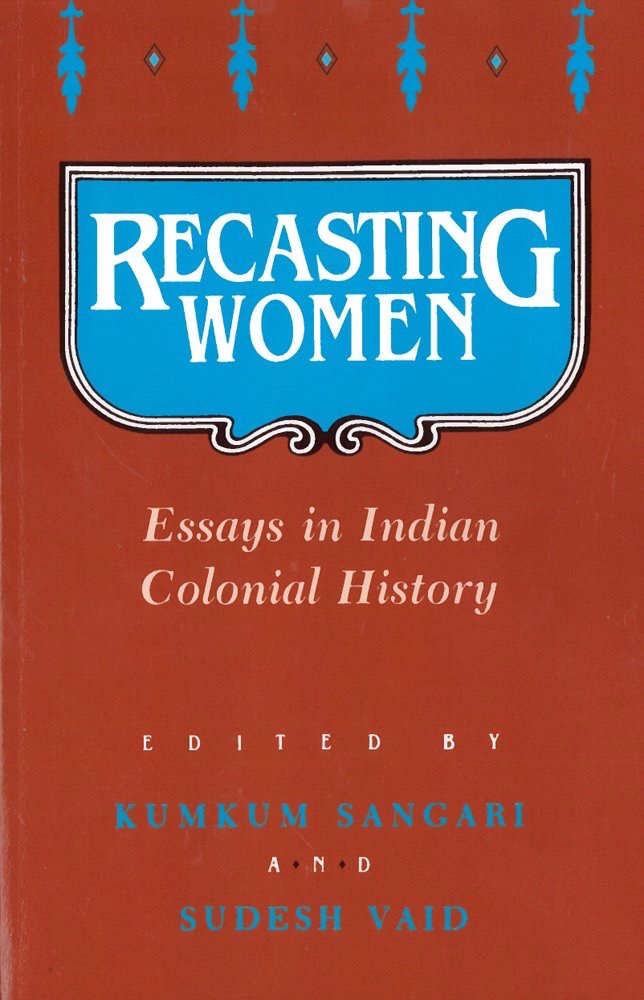
Softcover. New Brunswick NJ, Rutgers University Press, 1st pbk., 1990, Book: Very Good, Dust Jacket: None, Softcover, 372 pages. The first set of essays seeks to analyze the patriarchal discourses of a colonial society and includes an analysis of the shaping of Hindu-Aryan identity, the parameters of the discourse on widow-immolation, the "defeminization" of popular culture in nineteenth-century urban Calcutta, the nature of the reforms proposed by early women's journals in Hindi, and the implications of the nationalist movement and of Indo-Anglian literature on middle-class patriarchal norms. The second set of articles relates to women of the productive classes--the reconstitution of patriarchies in the agrarian transition in Haryana, in the Oudh peasant movement, in the armed peasant struggle in Telangana, and among the working class in Bengal. The contributors explore the interrelation of patriarchies with political economy, law, religion, and culture, and suggest a different history of "reform" movements, and of class and gender relations. Clean copy.
Hardcover. New York, The Free Press, 1st, 1968, Book: Very Good, Dust Jacket: Good, Hardcover, 615 pages. Previous owners name on front endpaper. Dust jacket with spine fading, standard wear. Clean, tight copy.
Hardcover. NY, Harper and Row, 1st US, 1970, Book: Very Good, Dust Jacket: Very Good, Hardcover in a bright dust jacket, 269 pages. 'Weber's famous study of the 'affinity' between the rise of rational bourgeois capitalism in England and Calvinist-Puritanism has for almost a century stirred up a cloud of dust and misunderstanding. Toward the end of settling some of the dust no one has previously made such an acute analysis of pre-revolutionary England as has David Little. On the one hand, he has applied and extended Weber's method, especially in the sphere of the law-monopoly and corporation law-thus filling a gap in these studies. He has also delineated the sharply conflicting conceptions of social order and of legitimation. On the the other hand, Little has given an invaluable critical survey of the extensive literature of Weber's thesis. This is a landmark in the study of the complex and varying relations between religion and society.' -James Luther Adams, Harvard Divinity School. Clean copy.
Hardcover. NY, Isaac Riley, 1st, 1809/1810, Book: Good, Dust Jacket: None, Two hardcover volumes, leather bound with maroon labels with gilt lettering "Tyler's Reports". Vol. 1, 496 pages, dated 1809. Vol. 2, 488 pages, dated 1810. Both with an index to the Principal Matters. Royall Tyler became an assistant judge of the Vermont Supreme Court in 1801 and from 1807 through 1813 served as chief justice (the ninth in Vermont history); during this time he presided over a number of important trials (e.g., that of Stephen Jacob in 1802, involving slavery, and that of the Black Snake crew in 1808, dealing with smuggling on Lake Champlain), prepared two volumes (1809-1810) of Reports of the Vermont Supreme Court (covering 1800-1803), and became professor of jurisprudence at the University of Vermont (1811-1814). Calf covers scuffed, discolored, bindings strong, interiors clean. Previous owner's bookplate, related newspaper clipped laid in.
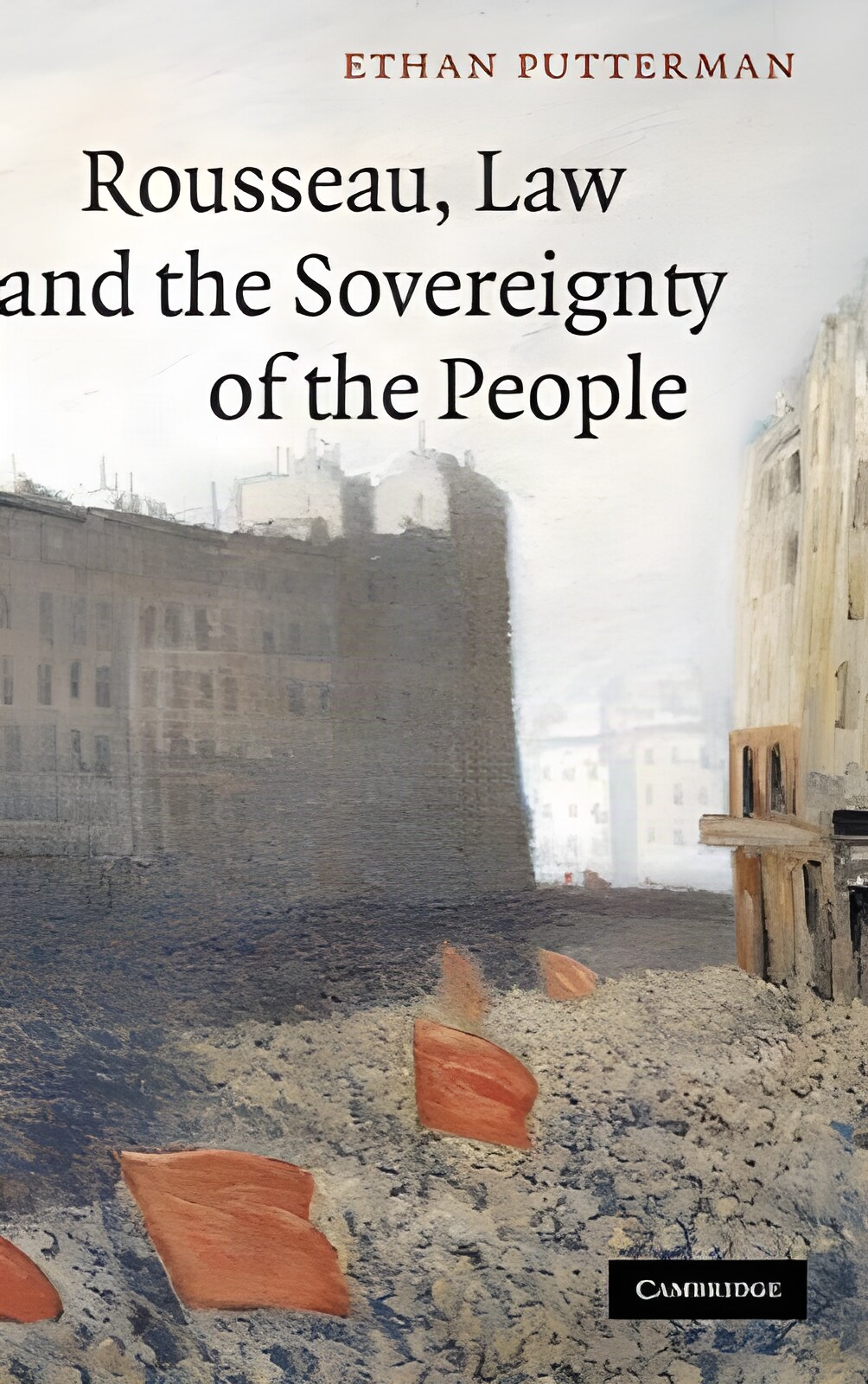
Hardcover. Cambridge UK, Cambridge University Press, 1st, 2010, Book: Very Good, Dust Jacket: Very Good, Hardcover in a bright dust jacket, 187 pages. Examines Rousseau's contribution as a constitutionalist and builder of institutions, relating his major ideas to twenty-first century debates. Rubber stamp on copyright page, otherwise clean.
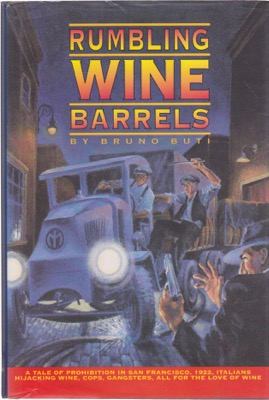
Hardcover. Cloverdale CA, Buti Publications, 1st, 1996, Book: Very Good, Dust Jacket: Very Good, Hardcover in a bright dust jacket, 355 pages illustrated with b&w drawings, not credited. GENERIC INSCRIPTION & SIGNATURE BY AUTHOR on the front fly leaf. Bruno Buti, (pronounced "booty") born to immigrant Italian parents May 23, 1922, in San Bruno, California, the youngest of three children. Nursed to an age he can still remember, then weaned on wine for lack of a cow, he was raised in an era when milk pails runneth over with fresh made alcohol. Growing up underfoot of tough bootleggers, he spent his childhood experiencing unpleasant run-ins between them and crooked lawmen. Haunted by memories of the involvement that his father, relatives and colleagues had in bucking prohibition, their ups and downs in the struggle to make it in a society hostile to immigrant minorities, the author finally dares to unload the burden he carried for so long. His tale attempts to bring out the characteristics and qualities of this particular group of people by depicting them the way they were during those fabulous Twenties. Clean copy.
Hardcover. Lawrence KS, University Press of Kansas, 1st, 2003, Book: Very Good, Dust Jacket: Very Good, Hardcover in a bright dust jacket, 313 pages, b&w illustrations. Working from the fossil record, Richard Ellis explores the natural history of these fierce predators, speculates on their habits, and tells how they eventually became extinct - or did they? He traces the 200-million-year history of the great ichthyosaurs, plesiosaurs, and mosasaurs who swam the ancient oceans - and who, according to some, may even still frequent the likes of Loch Ness. The first book about these animals in nearly a century, Sea Dragons draws upon the most recent scientific research to reconstruct their lives and habitats. Along the way, the book also provides insights into and tales about the work, discoveries, and competing theories that compose the world of vertebrate paleontology. Clean, tight copy.
Hardcover. London , Selden Society/ Bernard Quaritch, 1st, 1908, Book: Very Good, Dust Jacket: None, 181 pages plus 55 preliminary pages. Text in English and Latin. Blue cloth covers, gilt lettering on spine, top edge gilt. A clean, tight copy.
Hardcover. NY, Prestel, 1st, 2019, Book: Very Good, Dust Jacket: None, Hardcover, pictorial boards, 160 pages. Illustrated with color and b&w photos. A captivating exploration of London's iconic Soho district, capturing its vibrant and eclectic mix of people, subcultures, and street life. This photographic collection delves into Soho's rich history of art, nightlife, and diversity, revealing both the allure and the edgier, untamed aspects of this unique area. Opening with a look at Soho through the years, this book includes archival images of Suffragettes learning Jiu-jitsu in a Soho gym, David Bowie preparing to record at Trident Studios, and Francis Bacon drinking at the French House. The book then presents the work of photographers who have shed light on Soho's many faces through the decades, including Kelvin Brodie, Clancy Gebler Davies, Corinne Day, William Klein, and Anders Petersen. Also featured is a new series of work by young, up-and-coming photographer Daragh Soden, whose images were specially commissioned by The Photographers' Gallery for this project. These streetscapes and portraits are by turns intimate and haunting, visceral and vibrant, nostalgic and provocative. Clean copy.
Softcover. Gwinn MI, Avery Color Studios, 1st, 2014, Book: Very Good, Dust Jacket: None, Softcover, 201 pages, b&w illustrations. The Reverend Law was in peril on the Great Lakes and was rescued by a U.S. Life-Saving Service Station crew. As a result of that rescue, seeing their heroic efforts first hand, Reverend Law dedicated the rest of his life to the men and women stationed at Light and Life-Saving stations throughout the United States. Whether it was bringing his "Floating Library" to stations located on the Great Lakes, regular correspondence with the crews of stations far too remote for a personal visit, or his relentless pursuit of Congress to approve a bill to provide better pay and pensions, Reverend Law became a fast friend to those serving in the Lighthouse and Life-Saving services. "Sky Pilot" was sailors' slang for a chaplain. To the men and women he served, Reverend Law was lovingly known as "The Sky Pilot of the Great Lakes." A true tale of unconquerable optimism,

 "Perspectives in Vernacular Architecture: The Journal of the Vernacular Architecture Forum - Volume 12by: Pamela Simpson (editors) Jennings, Jan (Author)")
 "Philosophical Writings of Etienne Bonnot, Abbe De Condillac:by: Franklin Philip/ Harlan Lane")
 "Photography of Invention: American Pictures of the 1980sby: Joshua P. Smith, Merry A. Foresta, et al.")



 "Practical Treatise of Powersby: Sugden, Sir Edward")

 "Punishments in the Olden Timeby: Andrews, William")
 "Questions Concerning the Law of Natureby: Locke, John")

 "Race Problems in the New Africa A Study of the Relation of Bantu and Britons in Those Parts of Bantu Africa Which Are under British Controlby: Willoughby, Rev. W. C.")

 "Readings in American Legal Historyby: Howe (Ed), Mark DeWolfe")
 "Religion, Law and the State in Indiaby: Derrett, J. Duncan M.")



 "Sea Dragons: Predators of the Prehistoric Oceansby: Richard Ellis")
 "Select Cases Concerning the Law Merchant A.D. 1270-1638 Vol. I Local Courtsby: Gross (Ed.), Charles")

 "Sky Pilot of the Great Lakes: A Biography of the Reverend William H. Law (INSCRIBED COPY)by: John Kotzian / Frederick Stonehouse (Foreword)")