Hardcover. Birmingham AL, Legal Classics Library, reprint, 1986, Book: Very Good, Dust Jacket: None, Hardcover, 528 pages ,handsomely bound in black cowhide leather lettered and decorated in gilt, raised spine bands, all edges gilt, attached ribbon bookmarks, marbled endpapers. A facsimile of the original 1827 first edition. Bright, clean copy.
Hardcover. Birmingham AL, Legal Classics Library, reprint, 1986, Book: Very Good, Dust Jacket: None, Hardcover, 550 pages, handsomely bound in black cowhide leather lettered and decorated in gilt, raised spine bands, all edges gilt, attached ribbon bookmarks, marbled endpapers. A facsimile of the original 1830 first edition. Bright, clean copy.
Hardcover. University Park, Pennsylvania State University Press, 1st Edition, 2012, Book: Very Good, Dust Jacket: Very Good, 346 pages. Hardcover. Dust jacket with only minor wear. Clean, unmarked and tight copy.
Hardcover. New York, Macmillan Company, 1st, 1947, Book: Good, Dust Jacket: None, Hardcover. 361 pages. Some light scratching to front cover. Rubbing to corners, spine. Spine slightly faded.
Softcover. Toronto CAN, Dundurn Press, 1st, 1997, Softcover, 192 pages, b&w illustrations. The insular character of Britain delayed the creation of professional police until the 19th century. This volume traces the course of British amateur policing until that time, at which point it deals with the foundation of the London Metropolitan Police and efforts to create similar professional urban institutions in New York and Montreal. Due attention is also given to the fact that very different conditions in rural Ireland necessitated the creation of a para-military type of force, which in turn served as the model for police in the countryside throughout the Empire. Clean copy.
Hardcover. NY, W. W. Norton & Company, 1st, 2015, Book: Very Good, Dust Jacket: Very Good, Hardcover in a bright, unclipped dust jacket. 402 pages. Remarkable study of smuggling, which illustrates how Americans related to the world from the Founding to World War I. From the beginning, the United States sought to build nationalism by limiting their own ability to trade with foreigners. But at the same time, Americans like Charles L. Lawrence defied customs authorities, insisting that trade be free. The government responded by building a potent army of customs inspectors and treasury agents, who profiled Jews, Asians, and women in the pursuit of tariff revenues. Beautifully written, the author uses the stories of smugglers like Jean Lafitte, Charles L. Lawrence, and Rose Eytinge to illustrate not only the history of Protectionism, but also the rise of American empire and the development of the modern social safety net. He shows that the tariff was far from an unpopular relic, but rather the foundation of the nineteenth century state. Clean copy.
Hardcover. London, England, Pickering & Chatto, 1st, 2001, Book: Very Good, Dust Jacket: None, Six volumes, Hardcovers. 1636-1691. Volume 1: 521 pages. Two bumps to front cover board edge. Volume 2: 674 pages. front cover board top right corner bump. Volume 3: 445 pages. Volume 4: 528 pages. Volume 5: 474 pages. Volume 6: 616 pages. Some b/w illustrations. Blue cover boards, gilt title on black with decoration on spines. Previous owner's name and information on flyleaf of volumes 1, 2, and 6. Pages clean and bright. Binding tight. Spines straight. Beautiful set right out of a professor's library. Domestic Shipping Only.
Hardcover. Princeton, NJ, Princeton University Press, 1st US, 1982, Book: Very Good, Dust Jacket: Good, Hardcover. 360 pages. Dust jacket with edgewear, sun-fading. Clean, tight copy. The first monograph on English medieval county courts, this book provides a major revision of traditional conceptions of the character of these courts and the organization of English society from the twelfth to the fourteenth century. THe county courts have been considered courts of custom dominated by local knights unskilled in the law. By analyzing county peronnel and their role of the courts, Robert C. Palmer shows that these courts were, on the contrary, clearly professional and controlled by the magnates through their lawyers. Nevertheless, as the author demonstrates by his study of the process of jurisdictional change, the county courts were increasingly relegated to lesser roles by changes meant to assure justice to county litigants, while the king's court became the normal court of original jurisdiction for most important cases.
Softcover. Beverly Hills, CA, Lawrence Bassoff Collection, 1st, 1997, Book: Very Good, Dust Jacket: None, Large softcover, 159 pages, illustrated throughout in color. Light wear to pictorial covers, else a very nice, tight. clean copy. Foreword by Robert Wise. 100 beautiful reproductions of classic crime film posters.
New York, Van Nostrand Reinhold, 1st, 1981, Book: Very Good, Dust Jacket: Very Good, Hardcover in a bright dust jacket, 196 pages. Black & white photography. Reveals the war with Russia, the first war to be extensively recorded by photography. Here are 85 photos and commentary. Many of the photos were taken by two Englishmen, Roger Fenton and William Robertson.
Hardcover. Philadelphia, J.B. Lippincott, 2nd Ed., 1865, Book: Very Good, Dust Jacket: None, Hardcover, dark green pebbled cloth with gilt lettering on spine, 4" x 6 1/4", 303 pages including index. A detailed instructional guide for the Civil War era soldier. Copyright page states 1964, title page says 1865. Probably a second edition. Still scarce in this nice condition. A few pages with dog ears, previous owner's pencil signature on front fly leaf. Otherwise clean, tight copy.
Hardcover. Clark NJ, The Lawbook Exchange,, 2005, Hardcover, blue cloth stamped in green with gilt lettering, 752 pages. No dust jacket. Reprint of the standard critical Latin edition of Grotius's magnum opus of 1625, which established the framework of modern international law. Grotius describes the situations in which war is a valid tool of law enforcement and outlines the principles of armed combat. Though based on Christian natural law, Grotius advanced the novel argument that his system would still be valid if it lacked a divine basis. In this regard he pointed to the future by moving international law in a secular direction. A work of painstaking philological research, this edition is based on the final version edited by the author, which issued posthumously in 1646. Name on front fly leaf, otherwise clean.
Hardcover. Buffalo NY, William S. Hein, reprint, 1995, Book: Very Good, Dust Jacket: None, Hardcover, tan buckram with black spine lettering. This is a reprint of the first English translation from the Latin, originally published in 1925 by The Clarendon Press. 946 pages. Name on front fly leaf, otherwise clean. PLEASE NOTE: DUE TO WEIGHT DOMESTIC SHIPPING ONLY.
Hardcover. Baltimore, Johns Hopkins University Press, 1st, 2020, Book: Very Good, Dust Jacket: Very Good, Hardcover in a bright, unclipped dust jacket. America has had a love affair with the hard-boiled detective since the 1920s, when Prohibition called into question who really stood on the right and wrong side of the law. And nowhere did this hero shine more than in crime fiction. In Detectives in the Shadows, literary and cultural critic Susanna Lee tracks the evolution of this truly American character type from Race Williams to Philip Marlowe and from Mike Hammer to Jessica Jones. Lee explores how this character type morphs to fit an increasingly troubled world, offering compelling interpretations of The Wire, True Detective, and Jessica Jones. 216 pages, clean copy.
Hardcover. Germany, Taschen, 1st, 2013, Book: Very Good, Dust Jacket: Very Good, 3-vol set in slip case. Hardcovers. Like new in publisher's shrink-wrap. Editor Dian Hanson traces the fascinating development of the genre from 1900 to 1969 in three compact, informative volumes. In Volume 1 you'll learn about the first magazines that appeared around 1900 in France, Germany, and the U.S., and follow the development of the genre through the First and Second World Wars. Covered are men's magazines masquerading as movie magazines, humor magazines, art magazines, nudist magazines, and "spicy" fiction. Volume 2 documents the proliferation of pin-up magazines following World War II, most notably a little item called Playboy that debuted in December 1953 and spawned dozens of imitators. This volume also charts the emergence of English men's magazines, fetish magazines, and the top five covergirls of the 1950s. Volume 3 begins with an explosion of new American pin-up magazines following the loosening of U.S. obscenity laws, and continues with French titles in decline, England going pervy; nudists going hippy, and Germany going pervy, hippy and political.
Hardcover. NY, Abrams Press, 1st, 2023, Book: Very Good, Dust Jacket: Very Good, Hardcover in a bright, unclipped dust jacket, 439 pages. In the 1950s, comics meant POW!BAM! superheroes, family-friendly gags, and Sunday funnies, but in the 1960s, inspired by these strips and the satire of MAD magazine, a new generation of creators set out to subvert the medium, and with it, American culture. Their "comix"--spelled that way to distinguish the work from their dime-store contemporaries--presented tales of taboo sex, casual drug use, and a transgressive view of society. Embraced by hippies and legions of future creatives, this subgenre of comic books and strips often ran afoul of the law, but that would not stop them from casting cultural ripples for decades to come, eventually moving the entire comics form beyond the gutter and into fine-art galleries. Brian Doherty weaves together the stories of R. Crumb, Art Spiegelman, Trina Robbins, Spain Rodriguez, Harvey Pekar, and Howard Cruse, among many others, detailing the complete narrative history of this movement. Through dozens of new interviews and archival research, he chronicles the scenes that sprang up around the country in the 1960s and '70s, beginning with the artists' origin stories and following them through success and strife, and concluding with an examination of these creators' legacies. Dirty Pictures is the essential exploration of a truly American art form that recontextualized the way people thought about war, race, sex, gender, and expression.
Hardcover. NY, Abrams Press, 1st, 2023, Book: Very Good, Dust Jacket: Very Good, Hardcover in a bright, unclipped dust jacket, 439 pages. In the 1950s, comics meant POW!BAM! superheroes, family-friendly gags, and Sunday funnies, but in the 1960s, inspired by these strips and the satire of MAD magazine, a new generation of creators set out to subvert the medium, and with it, American culture. Their "comix"--spelled that way to distinguish the work from their dime-store contemporaries--presented tales of taboo sex, casual drug use, and a transgressive view of society. Embraced by hippies and legions of future creatives, this subgenre of comic books and strips often ran afoul of the law, but that would not stop them from casting cultural ripples for decades to come, eventually moving the entire comics form beyond the gutter and into fine-art galleries. Brian Doherty weaves together the stories of R. Crumb, Art Spiegelman, Trina Robbins, Spain Rodriguez, Harvey Pekar, and Howard Cruse, among many others, detailing the complete narrative history of this movement. Through dozens of new interviews and archival research, he chronicles the scenes that sprang up around the country in the 1960s and '70s, beginning with the artists' origin stories and following them through success and strife, and concluding with an examination of these creators' legacies. Dirty Pictures is the essential exploration of a truly American art form that recontextualized the way people thought about war, race, sex, gender, and expression.
Hardcover. Birmingham AL, The Legal Classics Library , reprint, 1988, Book: Very Good, Dust Jacket: None, Hardcover, maroon calf, decorative gilt stamping, raised bands, marbled endpapers, all edges gilt, ribbon marker. A facsimile reprint of the 1787 London edition, the 17th Edition, corrected and improved by William Muchal. 335 pages plus index. Bright, clean copy.
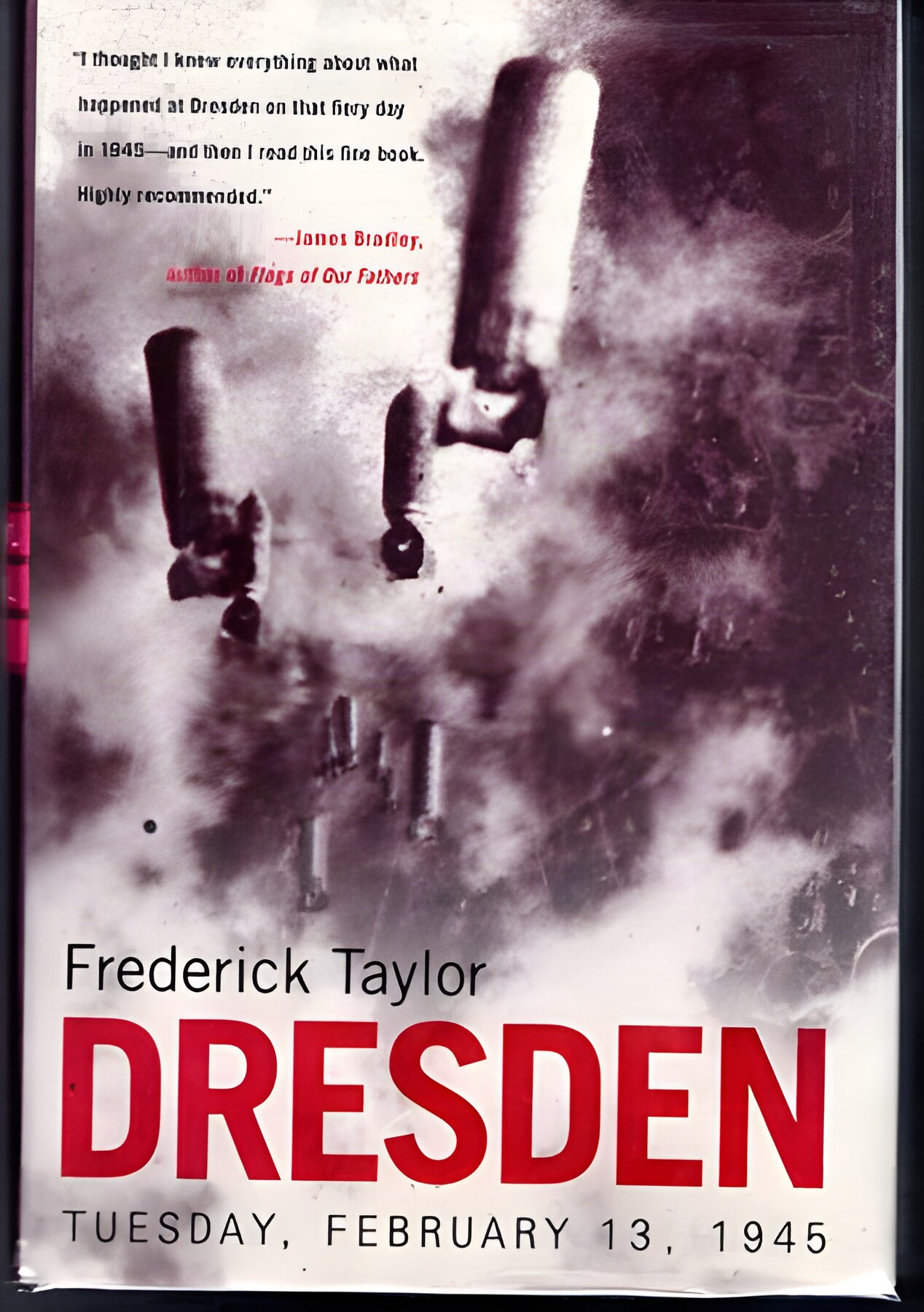
Hardcover. NY, HarperCollins, 1st, 2004, Book: Very Good, Dust Jacket: Very Good, Hardcover in a bright dust jacket, 518 pages with index. B&w illustrations. The allied bombing of Dresden created a massive fire that swept the city center, killing thousands of people and destroying its medieval heart. Debate began almost immediately: Was the destruction of this seemingly civilian city necessary militarily, or was it, some asked, equivalent to a war crime? Not just another in an endless parade of books on Dresden, Taylor's account may go a long way toward putting such questions to rest. It opens with the start, by British bombers, of the nighttime attack, and immediately turns to the past, meandering through several centuries of Dresden history, from its founding in the Middle Ages to the 20th century and the rise of the Nazis. Taylor, translator of The Goebbels Diaries, also covers the history of aerial bombardment and its international laws; gives glimpses of life under the Nazi regime; details the Allied bombing campaign against Germany; and, most excitingly, puts forth new information concerning Dresden's part in the German war effort, which turns out to be much greater than postwar information generally portrays. Clean copy.
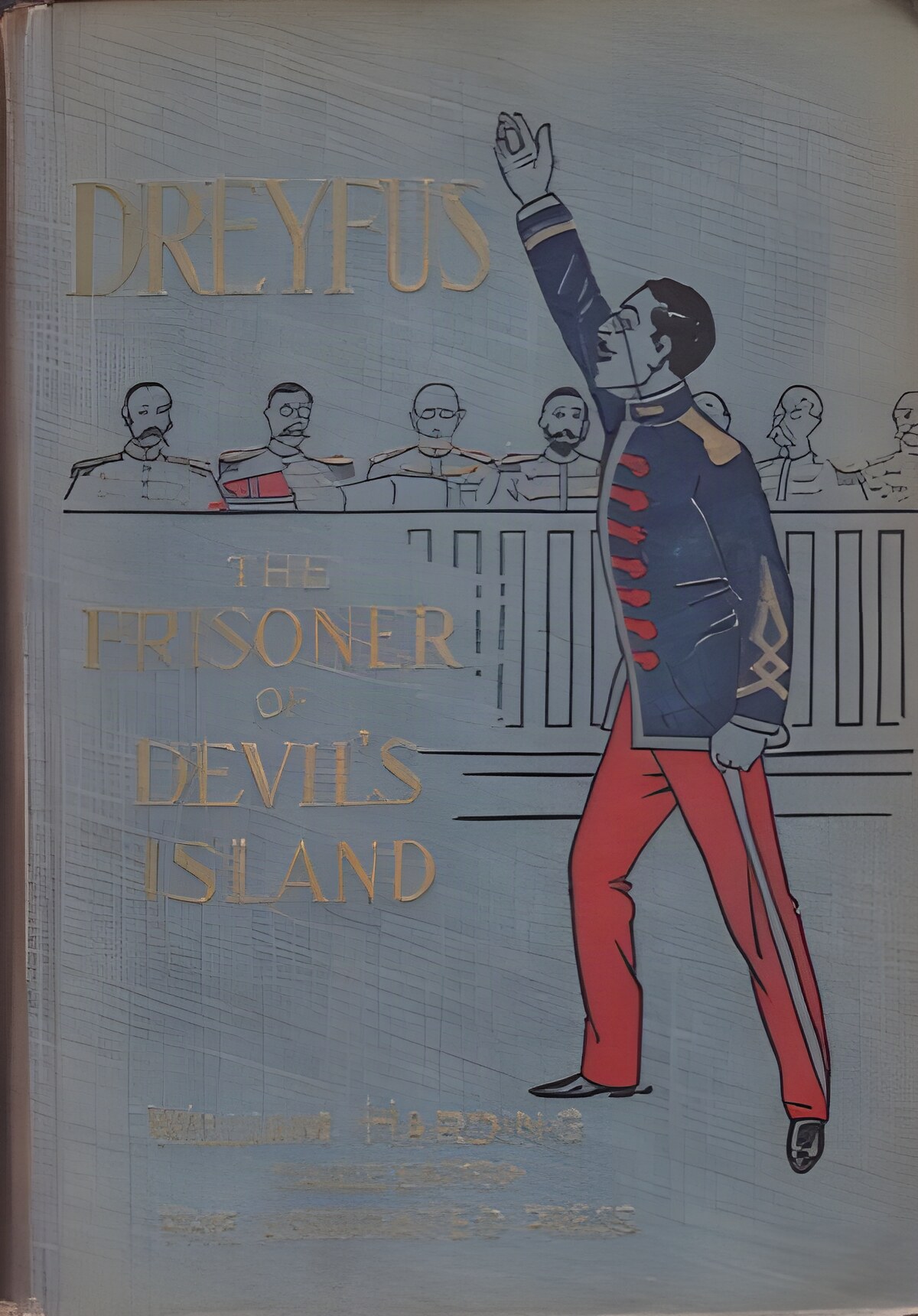
Hardcover. Associated Publishing Company, 1st, 1899, Book: Good, Dust Jacket: None, Hardcover, blue pictorial cloth illustrated on upper cover with gilt, red, blue and black illustration and embossed gilt title. Gilt title on spine faded. 406 pages, frontispiece illustrated with b/w plate of Captain Dreyfus. Profusely illustrated with b/w portraits of the principal actors, and photographic reproductions of the places and scenes of Dreyfus trial and exile. Name and embossed stamp on front fly leaf, cover with light edge wear, interior clean.
Hardcover. Princeton NJ, Princeton University Press, 1st, 1994, Book: Very Good, Dust Jacket: Very Good, Hardcover in a bright dust jacket, 268 pages. The question of what it takes "to be a man" comes under scrutiny in this sharp, often playful, cultural critique of the German duel--the deadliest type of one-on-one combat in fin-de-siecle Europe. At a time when dueling was generally restricted to swords or had been abolished altogether in other nations, the custom of fighting to the death with pistols flourished among Germany's upper-class males, who took perverse comfort in defying their country's weakly enforced laws. From initial provocation to final death agony, Kevin McAleer describes with ironic humor the complex protocol of the German duel, inviting his reader into the disturbing mindset of its practitioners and the society that valued this socially important but ultimately absurd pastime. Clean copy.
Softcover. Berkeley, University of California Press, reprint, 1978, Book: Very Good, Softcover, 640 pages. Max Weber's "Economy and Society" is the greatest sociological treatise written in this century. Published posthumously in Germany in the early 1920's, it has become a constitutive part of the modern sociological imagination. "Economy and Society" was the first strictly empirical comparison of social structures and normative orders in world-historical depth, containing the famous chapters on social action, religion, law, bureaucracy, charisma, the city, and the political community with its dimensions of class, status and power. "Economy and Society" is Weber's only major treatise for an educated general public. It was meant to be a broad introduction, but in its own way it is the most demanding textbook yet written by a sociologist. Clean copy.
Hardcover. New Haven CT, Yale University Press, 1st, 2019, Book: Very Good, Dust Jacket: None, Hardcover, pictorial boards, 232 pages. The question "What is American art?" might conjure the hyperrealism of Raphaelle Peale and William Harnett, the bold graphic style of Stuart Davis and Jacob Lawrence, or the Precisionist forms of Charles Sheeler. Little known, however, is that such notions of American art are significantly owed to a Russian Jewish immigrant named Edith Halpert. The founder of the Downtown Gallery in New York, Halpert shaped an identity for American art, declaring that its thrilling heterogeneity and democratic values were what most distinguished it from the European avant-garde. For forty-plus years, Halpert's gallery brought recognition and market success to now-legendary American artists--among them Arthur Dove, Marsden Hartley, and Georgia O'Keeffe, in addition to the artists mentioned above. She relentlessly championed nonwhite, female, and unknown artists and was a formative advisor in the shaping of many of the nation's most celebrated art museums and collections, from San Francisco to Boston. Not content with those achievements, she also pioneered the appreciation and collecting of American folk art. Richly illustrated with works that passed through her groundbreaking gallery, this book tells the extraordinary and largely overlooked story of her career and legacy. The artists Halpert launched into the American canon are household names--and this book compellingly argues that hers should be, as well. In publisher's shrinkwrap.
Hardcover. Lawrence KS, University Press of Kansas, 1st, 2007, Book: Very Good, Dust Jacket: Very Good, Hardcover in a bright dust jacket, 274 pages. With the landmark election of Franklin Delano Roosevelt in 1932, decades of Republican ascendancy gave way to a half century of Democratic dominance. It was nothing less than a major political realignment, as the direction of federal policy shifted from conservative to liberal-and liberalism itself was redefined in the process. Electing FDR is the first book in seventy years to examine in its entirety the 1932 presidential election that ushered in the New Deal. Award-winning historian Donald Ritchie looks at how candidates responded to the nation's economic crisis and how voters evaluated their performance. More important, he explains how the Democratic Party rebuilt itself after three successive Republican landslides: where the major shifts in party affiliation took place, what contingencies contributed to FDR's victory, and why the new coalition persisted as long as it did. Ritchie challenges prevailing assumptions that the Depression made Roosevelt's election inevitable. He shows that FDR came close to losing the nomination to contenders who might have run to the right of Hoover, and discusses the role of newspapers and radio in presenting the candidates to voters. He also analyzes Roosevelt's campaign strategies, recounting his attempts to appeal to disaffected voters of all ideological stripes, often by altering his positions to broaden his popularity. With the advent of the New Deal, Americans came to enjoy a wide federal safety net that provided everything from old age pensions to rural electricity-government innovations so embraced by voters that even later conservative presidents recognized their importance. Ritchie traces this legacy through the Reagan and Bush years, but he relates how FDR in 1932 was often vague about the specifics of his program and questions whether voters really knew what they were in for with the New Deal. Clean copy.

 "Commentaries on American Law, Volume IIby: Kent, James")
 "Commentaries on American Law, Volume IVby: Kent, James")
 "Companion to Michael Oakeshott, Aby: Oakeshott, Michael/Paul Franco & Leslie Marsh")
 "Concise History of Law of Nations, Aby: Nussbaum, Arthur")

 "Contraband: Smuggling and the Birth of the American Centuryby: Cohen, Andrew Wender")


 "County Courts of Medieval England, 1150-1350, Theby: Palmer, Robert C.")
 "Crime Scenes: Movie Poster Art of the Film Noir : The Classic Period : 1941-1959by: Bassoff, Lawrence")
 "Crimea - The War With Russia from Contemporary Photographs 1854-56by: James, Lawrence")
 "Customs Of Service for Non Commissioned Officers and Soldiers as Derived from Law and Regulations and Practised in the Army of the United States by: Kautz, August V.")
 "De Iure Belli ac Pacis Libri Tres In Quibus Ius Naturae et Gentium..by: Grotius Hugo/PC. Molhuysen (editor )")
 "De Jure Belli Ac Pacis Libri Tres. Volume Two: The Translation, Book 1 (English Edition)by: Grotius, Hugo/Francis W. Kelsey (Transl.)")

 "Dian Hanson's History of Pin-up Magazines Vol. 1-3by: Hanson, Dian (editor)")




 "Doctor and Student; or Dialogues Between a Doctor of Divinity and a Studentby: Saint Germain German Christopher; John Baker")


 "Edith Halpert: The Downtown Gallery and the Rose of American Artby: Shaykin, Rebecca")
 "Electing FDR: The New Deal Campaign of 1932by: Donald A. Ritchie")