Softcover. Albany NY, State University of New York Press, reprint, 1987, Book: Very Good, Dust Jacket: None, Softcover, 157 pages. Introduction: Sharpe, Eric, Translation from the Swedish by Birgitta Sharpe. Here are the early Sufis: their ascetic practices, their attitudes toward women and marriage, toward food and drink and toward music and poetry. First published in 1947. Clean copy.
Hardcover. New York, Publishers Company, 2nd edition, 1968, Book: Very Good, Dust Jacket: None, 5 volumes: 291, 291, 317, 304, and 306 pages. Light brown cloth covers, with silver and black titles, profusely illustrated with b&w plates. Slight rubbing to covers, small brown stain to spines of Theater and Civil War volumes, previous owner's embossed stamp to all title pages, ex-lib bookplates to all copyright pages, pages very crisp and unmarked, tight binding; overall, volumes are in clean, tight condition. NOTE: DUE TO WEIGHT AND SIZE, DOMESTIC SHIPPING ONLY.
Hardcover. Bloomsbury Sigma, 1st, 2023, Book: Very Good, Dust Jacket: None, Hardcover, pictorial cloth, 320 pages. The story of recorded sound - the technological developments, the people that made them happen and the impact they had on society - from the earliest inventions via the phonograph to LPs, EPs and the recent resurgence of vinyl.While Thomas Edison's phonograph, the first device that could both record and reproduce sound, represented an important turning point in the story of recorded sound, it was really only the tip of the iceberg, and came after decades of invention, tinkering and experiment.Into the Groove tells the story of the birth of recorded sound, from the earliest serious attempts in the 1850s all the way up to the vinyl resurgence we're currently enjoying. This book celebrates the ingenuity, rivalries and science of the modulated groove.
Hardcover. Seattle, Fantagraphics, 1st, 2016, Book: Very Good, Dust Jacket: Very Good, Hardcover in a bright dust jacket, 304 pages. In 1976, the critic Paul Nelson spent several weeks interviewing his literary hero, legendary detective writer Ross Macdonald. Beginning in the late 1940s with his shadowy creation, ruminating private eye Lew Archer, Macdonald had followed in the footsteps of Dashiell Hammett and Raymond Chandler, but ultimately elevated the form to a new level. "We talked about everything imaginable," Nelson wrote-including Macdonald's often meager beginnings; his dual citizenship; writers, painters, music, books, and movies he admired; how he used symbolism to change detective writing; his own novels and why Archer was not the most important character-"my God, everything." It's All One Case provides an open door to Macdonald at his most unguarded. The book is far more than a collection of never-before-published interviews, though. Published in a handsome, oversized format, it is a visual history of Macdonald's professional career, illustrated with rare and select items from one of the world's largest private archives of Macdonald collectibles. Featuring in full color the covers of the various editions of Macdonald's more than two dozen books, facsimile reproductions of pages from his manuscripts, magazine spreads, and many never before seen photos of Macdonald and his friends (such as Kurt Vonnegut), including those by celebrated photojournalist Jill Krementz. It's All One Case is an intellectual delight and a visual feast, a fitting tribute to Macdonald's distinguished career. Full-color illustrations throughout
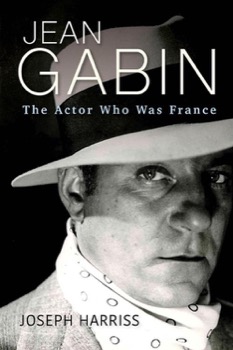
Hardcover. Lexington KY, University Press of Kentucky, 1st, 2023, Book: Very Good, Dust Jacket: Very Good, Hardcover in a bright dust jacket, 289 pages, b&w illustrations. The son of music hall performers, the Paris-born actor grew up in the entertainment business. His onscreen debut in the 1930's marked the beginning of many memorable roles in films such as La Grande Illusion (1937) and Emile Zola's La Bete Humaine (1938). His performances would earn him international recognition and establish his reputation as one of the greatest stars of film noir. Pausing his performances on screen, Gabin joined the Allied struggle of WWII. Serving under General Charles De Gaulle in the Free French Forces as a tank commander, Gabin was awarded several medals for his service. Upon his return to acting after the war, he became the embodiment of the uniquely French spirit a persona that would define his future roles. In Jean Gabin: The Actor Who Was France, Joseph Harriss tells the story of this French icon. This well-researched biography documents Gabin's life from his start as a reluctant singer and dancer in Parisian music halls to his rise to film superstardom. Clean copy.
Hardcover. New York, Stringer & Townsend, 1st, 1851, Book: Very Good, Dust Jacket: None, Hardcover, red cloth with gilt lettering, 226 pages. Previous owners bookplate on inside front cover. Some pages show minor foxing. Light rubbing to corners and at top and base of spine. Clean, unmarked text.
Hardcover. New York, Ktav Pub Inc, 1st, 1982, Book: Very Good, Dust Jacket: Very Good, Hardcover, 226 pages, INSCRIBED BY AUTHOR on title page, with photographs throughout. Minor dust jacket edge wear, otherwise, very clean and tight.
Softcover. Lincoln NE, University Of Nebraska Press , 1st pbk, 1995, Book: Very Good, Dust Jacket: None, Softcover, 432 pages. Collects letters and essays that are published during the 1850s and 1860s. This title highlights the notorious 1850 article "Judaism in Music". It includes prose pieces such as "On the Performing of Tannhauser"; "On Musical Criticism"; and, "Music of the Future". It offers suggestions for the reform of opera houses in Vienna, Paris, and Zurich. Clean copy.
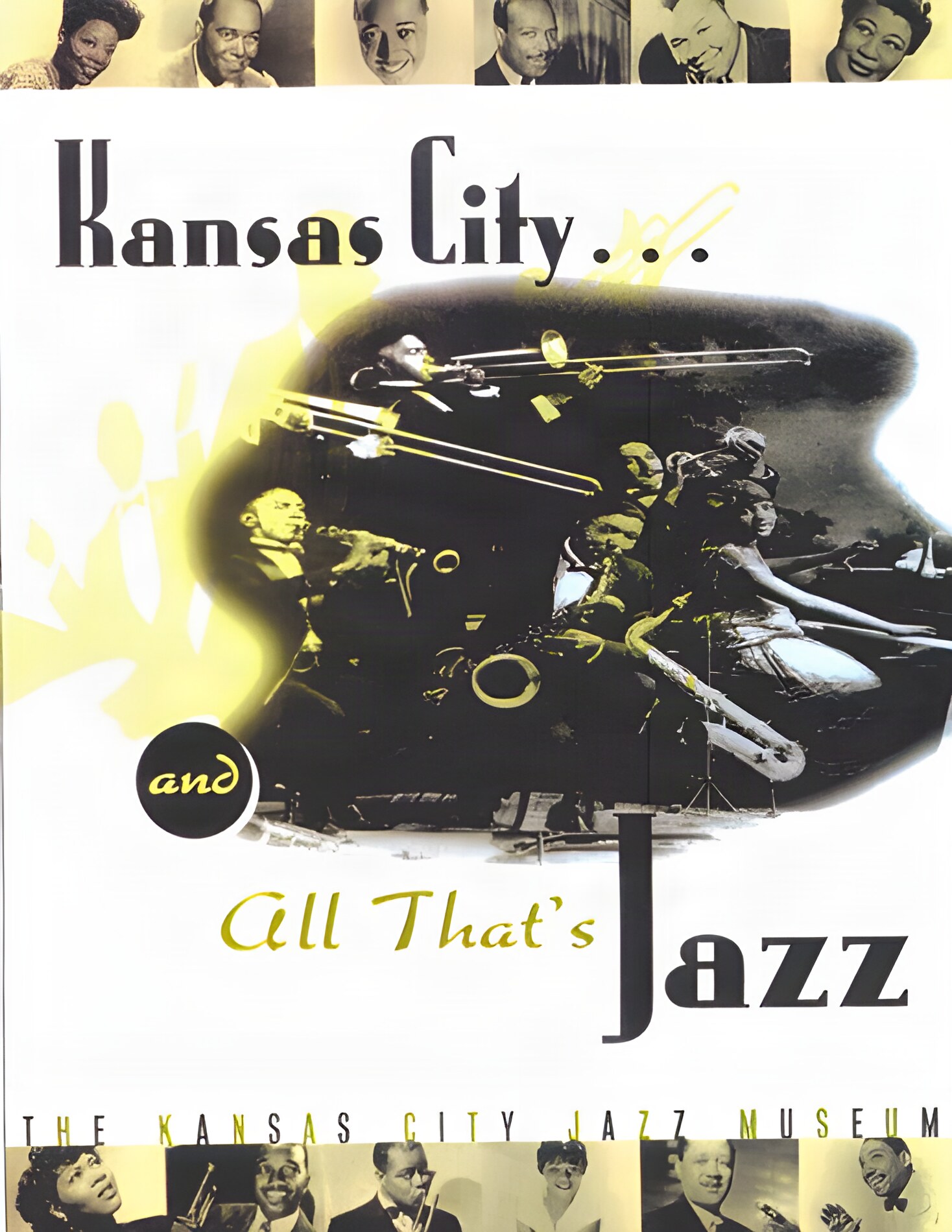
Softcover. Kansas City, Andrews McMeel Publishing, 1st pbk, 1999, Book: Very Good, Dust Jacket: None, Softcover, 120 pages, profusely illustrated. The Kansas City Jazz Museum traces the evolution of jazz music in America, from the early 1920s to the present day, focusing on the contributions of such Kansas City-based musicians as Count Basie, Charlie Parker, Lester Young, and other jazz greats. Clean, bright copy.
Hardcover. Princeton NJ, Princeton University Press, 1st, 1992, Book: Very Good, Dust Jacket: Very Good, Hardcover in a bright dust jacket, 281 pages, b&w illustrations. "For, Lo! We live in an Iron Age--In the age of Steam and Fire!" wrote a poet mesmerized by the engines that were transforming American transportation, agriculture, and industry during his lifetime. Indeed, by the nineteenth century fire had become America's leitmotif--for good and for ill. "Keeping the flame" was deadly serious: even the slightest lapse of attention could convert a fire from friendly ally to ravaging destroyer. To examine the cultural context of fire in "combustible America," Margaret Hazen and Robert Hazen gather more than a hundred illustrations, most never before published, together with anecdotes and information from hundreds of original sources, including newspapers, diaries, company records, popular fiction, art, and music. What results is an immensely entertaining and encyclopedic history that ranges from stories of the tragic "great fires" of the century to fire imagery in folktales and popular literature. Dealing more with technology than with fire in nature, the book provides a vast amount of information on fire manipulation and prevention in urban life. Hazen and Hazen discuss the people who worked with fire--or against it. Founders, gaffers, blacksmiths, boilers at saltworks, and housewives knew how to "read" a fire and employ it for their purposes. A few dedicated investigators inquired about the scientific nature of heat and flame. And firefighters gradually progressed from "bucket brigades" to "using fire to fight fire" with the newly invented steam engine. The colorful stories of these Americans--the risks they took and the rewards they received--will fascinate not only social historians but also a broad audience of general readers. Clean copy.
Hardcover. NY, Harry N Abrams, 1st, 1989, Book: Very Good, Dust Jacket: Very Good, 264 pages, illustrated throughout in b&w. Clean, unmarked copy with only minor wear to dust jacket. "A lavish, information-packed look at the people and places of an important, exciting era in art history. "?Publishers Weekly. From 1900 to 1930, Montparnasse was the center of artistic life for the whole world. A major contribution to the social and cultural history of the period? with its informative text and hundreds of photographs?. As The Washington Post said, Kiki's Paris "celebrates the people who made the modern movement in art, music and literature, most of whom were friends or lovers of Kiki, the woman Hemingway called 'The Queen of Montparnasse.'"
Hardcover. London, Faber and Faber, 1st, 1996, Book: Very Good, Dust Jacket: Very Good, Hardcover in a bright, unclipped dust jacket. Music's confrontation with modernity has been difficult, and has often involved the artist leaving his country for political and social reasons. In the company of a range of performers,this work reflects the difficulties encountered and the audiences' often reluctant attitude towards them.
Hardcover. Library of American Comics, 1st, 2014, Book: Very Good, Dust Jacket: None, Oblong hardcover, 336 pages. In Alley Oop, Hamlin created a unique concept, marrying his fascination with dinosaurs and prehistoric times to a rollicking style of storytelling and drawing that was simultaneously serious, fantastic, and loaded with slapstick. The series was set in the kingdom of Moo and starred Alley Oop, the club-wielding caveman, his girlfriend Ooola, friends Dinny the dinosaur and Foozy (who speaks in rhyme), plus Oop's rival, King Guz, and Guz's Queen Umpateedle. Yet Hamlin knew that the strip's horizons in Moo were limited. So it was, in early 1939, that Alley Oop and Ooola see a mysterious box and, to the utter amazement of Guz and his minions, promptly fade from view, followed by the caption: "Dear Reader: you must now say goodbye to Moo...if you are to follow Alley Oop in this strangest of many strange adventures. --V. T. Hamlin". Oop and Ooola had entered a time machine and were now living in the modern-day 20th Century! Their host was the inventor of the time machine, Dr. Elbert Wonmug! No change of such magnitude had ever occurred in a continuing newspaper strip, and readers responded enthusiastically. With every time period in history available as a backdrop, Alley Oop became even more popular. This volume features Oop's final Moo adventure, followed by his trips to the 20th Century and ancient Greece, where he and Ooola share adventures with brave Ulysses, the lovely Helen of Troy, and the mighty Hercules. V.T. Hamlin would send his characters everywhere and everywhen--but the classic Alley Oop begins with the stories contained in this volume. The book is introduced by Michael T. Price, who first met V. T. Hamlin in the 1960s and remained friendly with him for the rest of the cartoonist's life. Price also composed the musical score for Hip Pocket Theatre's production, Alley Oop.
Hardcover. London, Faber & Faber, 1st, 2016, Book: Very Good, Dust Jacket: None, 72 pages. Hardcover with no dust jacket. Very clean, unmarked copy with only minor wear to edges. Black and white illustrations throughout by Mezzo. From 'Crossroads Blues' to 'Sweet Home Chicago', 'Hellhound on My Trail' to 'Come On In My Kitchen', Robert Johnson wrote some of the most enduring and formative songs of the original blues era, songs that would go on to help shape the birth of rock 'n' roll in the 1960s. Beloved of Clapton, Dylan and the Stones, Robert Johnson remains one of the most iconic and mythologized figures in popular music (and the first of many to die at the age of 27). Born in the in the South in Mississippi, Johnson made his way to the urban North as a traveling musician, but it was only when he returned to the South that he recorded the twenty-nine songs, in two sessions, which would create his legacy. Exploring the stories and legends that surround his life and death -- his childhood, his womanizing, his pact with the devil at the crossroads -- Mezzo and DuPont have produced a fittingly creative and beautiful depiction of this most extraordinary life.
Softcover. Berkeley CA, University of California Press, 1st pbk, 2007, Book: Very Good, Dust Jacket: None, Softcover, 398 pages. Alex Stewart's excellent book tackles a subject which has been hidden in plain sight: the central importance of the big band, not as dead artifact of the Swing Era, but as a seminal and nurturing force through the entire history of jazz down to our own time. Through an attractive blend of ethnographic participant-observation, historiography, and formal analysis, Stewart puts the big band at the center of jazz, arguing for its indispensability as a locus of instrumental training and rehearsal, composition, legitimation, and professional networking. Informed and enriched by his own experience as a performer in those worlds. Light crease to front cover, clean copy.
Hardcover. Lexington KY, University Press of Kentucky, 1st, 2013, Book: Very Good, Dust Jacket: Very Good, Hardcover in a bright dust jacket. An Armenian national raised in Russia, Rouben Mamoulian (1897--1987) studied in the influential Stanislavski studio, renowned as the source of the "method" acting technique. Shortly after immigrating to New York in 1926, he created a sensation with an all-black production of Porgy (1927). He then went on to direct the debut Broadway productions of three of the most popular shows in the history of American musical theater: Porgy and Bess (1935), Oklahoma! (1943), and Carousel (1945). Mamoulian began working in film just as the sound revolution was dramatically changing the technical capabilities of the medium, and he quickly established himself as an innovator. Not only did many of his unusual camera techniques become standard, but he also invented a device that eliminated the background noises created by cameras and dollies. Seen as a rebel earlier in his career, Mamoulian gradually gained respect in Hollywood, and the Directors Guild of America awarded him the prestigious D. W. Griffith Award for Lifetime Achievement in 1983. In this meticulously researched biography, David Luhrssen paints the influential director as a socially conscious artist who sought to successfully combine art and commercial entertainment. Luhrssen not only reveals the fascinating personal story of an important yet neglected figure, but he also offers a tantalizing glimpse into the extraordinarily vibrant American film and theater industries during the twenties, thirties, and forties.
Hardcover. NY, Harper & Row, 1st, 1966, Book: Very Good, Dust Jacket: None, Hardcover, turquoise cloth with gilt lettering on the spine, 272 pages, b&w illustrations. Bibliography. Index. The author considers the paradoxical period between the social and political revolutions of 1848 and the death of optimisn in 1914. Besides presenting a revealing and fascinating account of great social contrasts, the author introduces the reader into other aspects of life during this period, the relaxations and dissipations of both the rich and poor, from the showboat and the music hall to the lavish spectacles of the Nineties and the beginnings of jazz. Clean copy. No dust jacket.
Hardcover. New Haven CT, Yale University Press, 1st, 2004, Book: Very Good, Dust Jacket: Very Good, Hardcover in a bright, unclipped dust jacket, 398 pages. From colonial times to the present, American composers have lived on the fringes of society and defined themselves in large part as outsiders. In this stimulating book Michael Broyles considers the tradition of maverick composers and explores what these mavericks reveal about American attitudes toward the arts and about American society itself. Broyles starts by examining the careers of three notably unconventional composers: William Billings in the eighteenth century, Anthony Philip Heinrich in the nineteenth, and Charles Ives in the twentieth. All three had unusual lives, wrote music that many considered incomprehensible, and are now recognized as key figures in the development of American music. Broyles goes on to investigate the proliferation of eccentric individualism in all types of American music-classical, popular, and jazz-and how it has come to dominate the image of diverse creative artists from John Cage to Frank Zappa. The history of the maverick tradition, Broyles shows, has much to tell us about the role of music in American culture and the tension between individualism and community in the American consciousness. Leer menos
Softcover. Cincinnati OH, Contemporary Art Center, 1st, 1987, Book: Very Good, Dust Jacket: None, Softcover, 102 pages, b&w and color illustrations. Very light edge wear, else a clean, tight copy. Publication documenting renowned post-modern architect Michael Graves and the summer pavilion for the Cincinnati Symphony Orchestra. Written by architecture historian and critic Jayne Merkel, the book begins with a history of other outdoor music structures and the decision to build on the river site. Merkel discusses Graves' development as a leader of the post-modern movement and draws upon his sources in ancient amphitheaters, as well as his other structures in Portland, Louisville, and San Juan Capistrano. The book also includes an in-depth interview with Graves and a chapter on the "state of the art" acoustics and the collaboration between architect Graves and artist Ted Schmidt which resulted in the unique cut-out sculptures adorning the roof line of Riverbend.
Softcover. NY, Columbia University Press, 1st pbk, 2002, Book: Very Good, Dust Jacket: None, Softcover, 410 pages. Collection of essays on the impact of global modernity in the region. Between the 1890s and 1920s, cities in the vast region stretching from the Mediterranean Sea to the Indian Ocean were experiencing political, social, economic, and cultural changes that had been set in motion at least since the early nineteenth century. As the age of pre-colonial empires gave way to colonial and national states, there was a sense that a particular liberalism of culture and economy had been irretrievably lost to a more intolerant age. The book provides a comparative analysis of contested versions of the concept of modernity. The book examines not only the "high" culture of scholars and the literati, but also popular music, the visual arts, and journalism. Clean.
Hardcover. New Haven CT, Yale University Press, 1st, 2011, Book: Very Good, Dust Jacket: Very Good, Hardcover in a bright, unclipped dust jacket, 336 pages. Despite the apparent incompatibility between Mozart's humanitarian and cosmopolitan outlook and Nazi ideology, the Third Reich tenaciously promoted the great composer's music to further the goals of the fascist regime. In this revelatory book, Erik Levi draws on period articles, diaries, speeches, and other archival materials to provide a new understanding of how the Nazis shamelessly manipulated Mozart for their own political advantage. The book also explores the continued Jewish veneration of the composer during this period while also highlighting some of the disturbing legacies of Mozart reception that resulted from Nazi appropriation of his work. Augmented by rare contemporary illustrations, Mozart and the Nazis will be widely welcomed by readers with interests in music, German history, Holocaust studies, propaganda, and politics in the twentieth century. Clean copy.
Hardcover. Schirmer Reference, 1st, Book: Very Good, Dust Jacket: Very Good, Hardcover in a bright dust jacket, 271 pages. The last decade of Mozart's short but amazingly prolific career counts as one of the most remarkable periods--truly golden years--in the history of Western music. Richly illustrated with contemporary paintings and engravings and authoritatively written, this book provides a vivid account of the composer's life in the European music capital, Vienna, from 1781 to 1791. Clean copy.
Softcover. Baltimore, Johns Hopkins University Press, 1st, 2014, Book: Very Good, Dust Jacket: None, Softcover, 210 pages with index, b&w illustrations. Smoke. Shadows. Moody strains of jazz. Welcome to the world of "noir musical" films, where tormented antiheroes and hard-boiled musicians battle obsession and struggle with their music and ill-fated love triangles. Sultry divas dance and sing the blues in shrouded nightclubs. Romantic intrigue clashes with backstage careers. In her pioneering study, Music in the Shadows, film noir expert Sheri Chinen Biesen explores musical films that use film noir style and bluesy strains of jazz to inhabit a disturbing underworld and reveal the dark side of fame and the American Dream. Clean copy.
Hardcover. NY, Viking, 1st, 2023, Book: Very Good, Dust Jacket: Very Good, Hardcover in a bright, unclipped dust jacket. 970 pages illustrated with color, b&w illustrations. Barbra Streisand is by any account a living legend, a woman who in a career spanning six decades has excelled in every area of entertainment. She is among the handful of EGOT winners (Emmy, Grammy, Oscar, and Tony) and has one of the greatest and most recognizable voices in the history of popular music. She has been nominated for a Grammy 46 times, and with Yentl she became the first woman to write, produce, direct, and star in a major motion picture. In My Name Is Barbra, she tells her own story about her life and extraordinary career, from growing up in Brooklyn to her first star-making appearances in New York nightclubs to her breakout performance in Funny Girl on stage and winning the Oscar for that performance on film. Then came a long string of successes in every medium in the years that followed. The book is, like Barbra herself, frank, funny, opinionated, and charming. She recounts her early struggles to become an actress, eventually turning to singing to earn a living; the recording of some of her acclaimed albums; the years of effort involved in making Yentl; her direction of The Prince of Tides; her friendships with figures ranging from Marlon Brando to Madeleine Albright; her political advocacy; and the fulfillment she's found in her marriage to James Brolin. Clean copy.

 "In the Garden of Myrtles: Studies in Early Islamic Mysticism by: Andrae, Tor")
 "International Library of Negro Life and History, (5 volumes): Historical Negro Biographies, Negro Americans in the Civil War, The History of the Negro in Medicine, The Negro in Music and Art, Anthology of the American Negro in the T")
 "Into the Groove: The Story of Sound From Tin Foil to Vinylby: Jonathan Scott")
 "It's All One Case: The Illustrated Ross Macdonald Archivesby: Kevin Avery , Paul Nelson, et al.")
 "Jenny Lind in America (Jenny Lind's Tour Through America and Cuba)by: Rosenberg, C.G.")
 "Jews on Tin Pan Alley: The Jewish Contribution to American Popular Music, 1830-1940 (SIGNED COPY)by: Kanter, Kenneth Aaron")



 "Keepers of the Flame: The Role of Fire in American Culture, 1775-1925by: Margaret Hindle and Robert M Hazen")
 "Ki Ki's Paris: Artists and Lovers 1900-1930by: Kluver, Billy/ Julie Martin")
 "Leaving Home: A Conducted Tour of Twentieth-century Music with Simon Rattle by: Michael Hall")

 "Love in Vain: Robert Johnson, 1911-1938 by: DuPont, J. M.")

 "Mamoulian: Life on Stage and Screenby: David Luhrssen")
 "Manners and Morals in the Age of Optimism, 1848-1914 by: Laver, James")
 "Mavericks and Other Traditions in American Musicby: Michael Broyles")
 "Michael Graves & Riverbend Music Center: A Summer Pavillion for the Cincinnati Symphony Orchestraby: Merkel, Jayne")

 "Mozart and the Nazis: How the Third Reich Abused a Cultural Iconby: Erik Levi")