Softcover. Seattle, Fantagraphics, 1st, 2015, Book: Very Good, Dust Jacket: None, Large softcover, 263 pages, b&w photos ad illustrations. In-depth, career-spanning interviews with the cartoonists - Crumb, Shelton, and more - who forever altered the course of American comics with their anthology title, Zap Comix. The definitive Comics Journal interviews with the cartoonists behind Zap Comix, featuring: Supreme 1960s counterculture/underground artist Robert Crumb on how acid unleashed a flood of Zap characters from his unconscious; Marxist brawler Spain Rodriguez on how he made the transition from the Road Vultures biker gang to the exclusive Zap cartoonists' club; Yale alumnus Victor Moscoso and Christian surfer Rick Griffin on how their poster-art psychedelia formed the backdrop of the 1960s San Francisco music scene; Savage Id-choreographer S. Clay Wilson on how his dreams insist on being drawn; Painter and Juxtapoz-founder Robert Williams on how Zap #4 led to 150 news-dealer arrests; Fabulous, Furry, Freaky Gilbert Shelton on the importance of research; Church of the Subgenius founder Paul Mavrides on getting a contact high during the notorious Zap jam sessions; and much more. In these career-spanning interviews, the Zap contributors open up about how they came to create a seminal, living work of art. Partial color.
Softcover. New York, Fantagraphics Books, 1st, 2014, Book: Very Good, Dust Jacket: None, 300 pages. Softcover with light edgewear to paper wrappers. Clean, tight copy. Color and black and white illustrations throughout. The definitive Comics Journal interviews with the cartoonists behind Zap Comix, featuring: Supreme 1960s counterculture/underground artist Robert Crumb on how acid unleashed a flood of Zap characters from his unconscious; Marxist brawler Spain Rodriguez on how he made the transition from the Road Vultures biker gang to the exclusive Zap cartoonists' club; Yale alumnus Victor Moscoso and Christian surfer Rick Griffin on how their poster-art psychedelia formed the backdrop of the 1960s San Francisco music scene; Savage Id-choreographer S. Clay Wilson on how his dreams insist on being drawn; Painter and Juxtapoz-founder Robert Williams on how Zap #4 led to 150 news-dealer arrests; Fabulous, Furry, Freaky Gilbert Shelton on the importance of research; Church of the Subgenius founder Paul Mavrides on getting a contact high during the notorious Zap jam sessions; and much more. In these career-spanning interviews, the Zap contributors open up about how they came to create a seminal, living work of art.
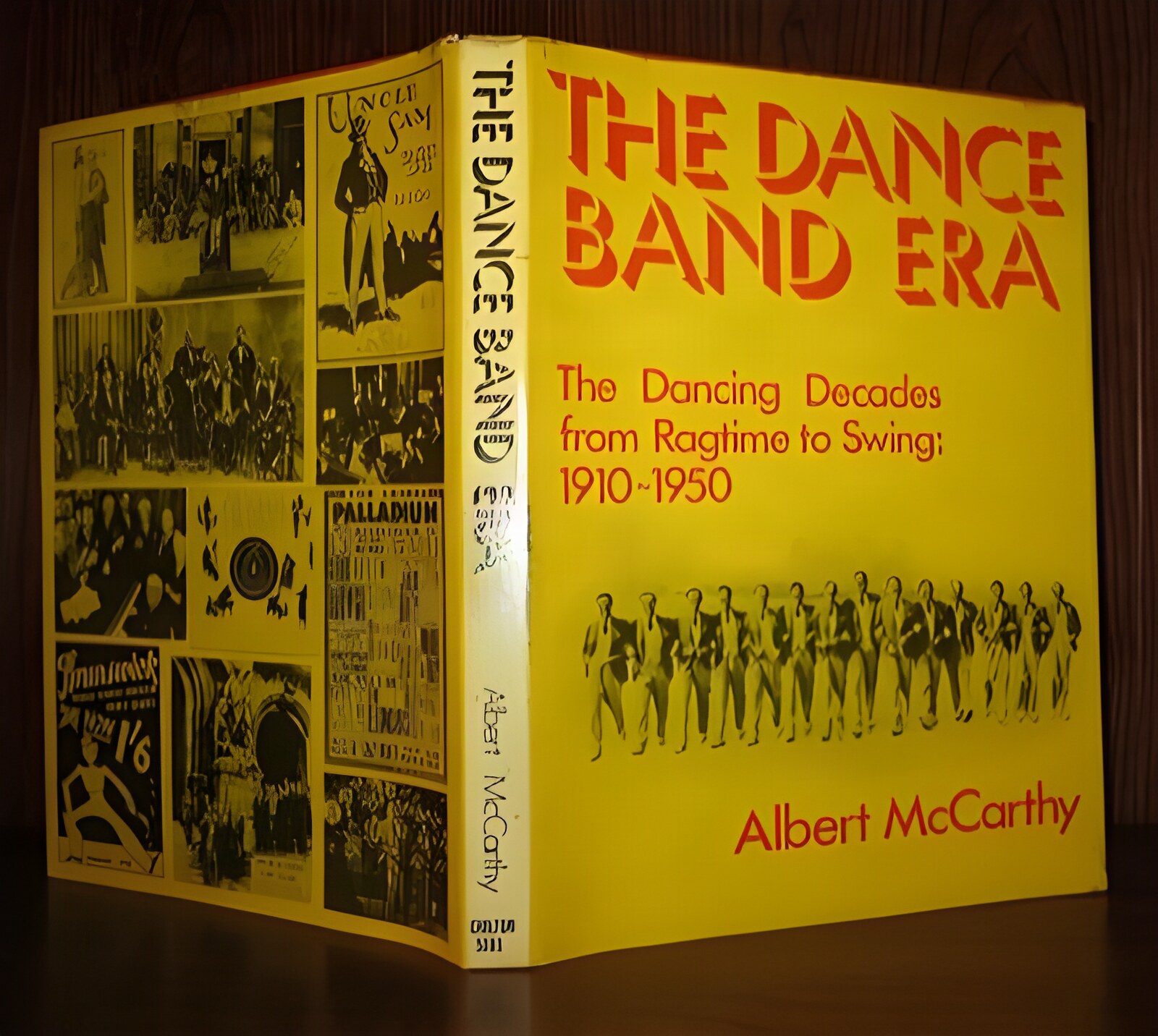
Hardcover. Philadelphia, Chilton Book Co, 1st, 1971, Book: Very Good, Dust Jacket: Very Good, Hardcover in a bright, unclipped dust jacket. 176 pages, profusely illustrated in b&w. Clean copy.
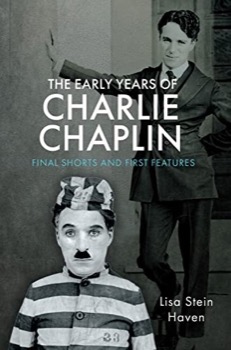
Hardcover. UK, White Owl/Pen & Sword, 20231st, Book: Very Good, Dust Jacket: Very Good, Hardcover in a bright dust jacket, 191 pages, b&w photos. Charlie Chaplin's career has been described, critiqued, and scrutinized. There are book-length studies on Chaplin's music hall career, his career at Keystone Studios and the Mutual Studios. Somehow, his tenure with First National studios, however, has been largely neglected, even though it was during this several-year contractual time period that Chaplin built and occupied his own studio for the first time, that he attempted and succeeded in filming a comedy feature (The Kid) and that he helped to set up United Artists, an organization that protected the salaries and creative freedom of actors in Hollywood. This period in Chaplin's story is especially interesting because such landmark moments are accompanied by Chaplin's first marriage and divorce, the death of his first child, his friendship with French silent film comedian Max Linder, World War I and the role he would play in it, and the production and release of several unsuccessful films that marked Chaplin's first creative blockage - one that threatened his future career. Clean copy.
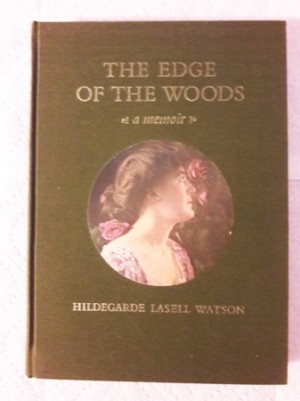
Hardcover. Lunenburg VT, Stinehour Press, 1st, 1979, Book: Very Good, Dust Jacket: None, Hardcover, green cloth with gilt lettering and color label on front cover. 165 pages, b&w photos. Hildegarde Lasell was a concert singer. "Miss Lasell sang with refinement and cultivation," commented a reviewer in 1936, "she is obviously a serious student of the meaning and values of the music she interprets." She appeared in her husband's two short avant-garde films. She played Madeline Usher in the silent horror film The Fall of the House of Usher (1928),and Lot's wife in the Biblical adaptation Lot in Sodom (1933).In the 1950s, she persuaded composer Alec Wilder to write an original soundtrack for the 1928 film. Watson was vice-president of the Rochester (NY)Historical Society, and wrote the history of the society's Woodside mansion in 1962. She received a medal from the Rochester Museum and Science Center in 1972, alongside fellow recipients including Robert Jastrow, Roger Tory Peterson, and Yousuf Karsh. Her memoir, The Edge of the Woods: A Memoir (1979) was published posthumously. Some of her correspondence with poet Marianne Moore was also published posthumously. Limited to 1,000 copies. Clean.
Hardcover. NY, Random House, 1st, 1954, Book: Very Good, Dust Jacket: None, Hardcover, "A Random House Play", 131 pages illustrated with photographs from the stage production featuring Kaye Ballard and Jerry Stiller. Cover label illustration by Hirschfeld. John Latouche's Introduction is his unusual expository curtain speech recounting the circumstances of the plays inception and history. Front end paper tanned. No dust jacket.
Hardcover. NY, Knopf, 1st, 2009, Book: Very Good, Dust Jacket: Very Good, Hardcover, 268 pages. After having a breakdown in the midst of working on a photo-essay on Pittsburgh in 1957, legendary photographer W. Eugene Smith holed up in a loft in New York's Chelsea, in the Tin Pan Alley area. There, over the next several years, he became deeply embroiled in the New York City jazz scene, opening his home as a practice and performance space for some of the great artists of mid-century jazz, including Thelonious Monk, Zoot Sims and many others. Of course, he took pictures--both of musicians and of a window-size view of mid-century New York--and also wired the place for recording, logging hours and hours of tape, capturing the music and the talk around it. These photos and tapes had been thought lost--the stuff of rumor, buried in Smith's archive--until Stephenson dug them out and culled the best, along with transcriptions of material from the tapes, for this landmark book. Smith's stunning use of contrast makes figures like Monk seem dramatic and completely ordinary at the same time. The photos of the city offer a rare glimpse into a neighborhood being itself when it thought no one was watching. This will be an essential book for jazz fans, photography lovers and those interested in the history of New York.
Hardcover. NY, Abrams, 1st, 2007, Book: Very Good, Dust Jacket: Very Good, Hardcover, 200 pages. The photography that Americans invented in the 1960s and ?70s was as fresh and vital as their music. Photographers of those years believed in their medium?s unlimited capacities of expression. Between the publication of Robert Frank?s The Americans (1958) and the coming of post-modernism, the photographers featured in this book embarked on their own personal quests. Whether they roamed the world, like Lee Friedlander and Garry Winogrand, or sought out its dark corners, like Larry Clark and Nan Goldin, they shared a fierce devotion to their medium and its unique qualities. The generation that created this work knew it was remarkable. Today, with Gilles Mora as a guide, we can look back on it with even greater appreciation, since we know that these were indeed the last photographic heroes. Also includes work by Joel Meyerowitz, William Eggleston, and many others.
Hardcover. NY, Abrams, 1st, 2007, Book: Very Good, Dust Jacket: Very Good, Hardcover, 200 pages. The photography that Americans invented in the 1960s and ?70s was as fresh and vital as their music. Photographers of those years believed in their medium?s unlimited capacities of expression. Between the publication of Robert Frank?s The Americans (1958) and the coming of post-modernism, the photographers featured in this book embarked on their own personal quests. Whether they roamed the world, like Lee Friedlander and Garry Winogrand, or sought out its dark corners, like Larry Clark and Nan Goldin, they shared a fierce devotion to their medium and its unique qualities. The generation that created this work knew it was remarkable. Today, with Gilles Mora as a guide, we can look back on it with even greater appreciation, since we know that these were indeed the last photographic heroes. Also includes work by Joel Meyerowitz, William Eggleston, and many others.
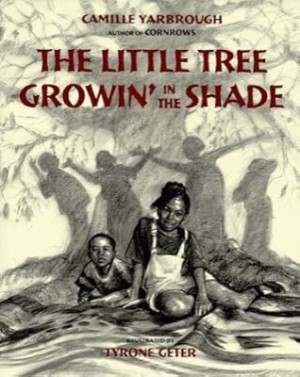
Hardcover. NY, G. P. Putnam's Sons, 1st, 1996, Book: Very Good, Dust Jacket: Very Good, Hardcover in a bright, unclipped dust jacket, 64 pages. Yarbrough weaves a beautiful story in picture-book format about the role of music in the lives of Africans and shows how it was transformed on American and Caribbean soil. The tale revolves around a "Roots of Rhythm and Blues" concert attended by a sister and brother and their parents, great grandmother, and elderly neighbor. At the park, the father tells his children about slavery and the "culture baggage" the slaves carried with them from Africa. With a compelling delivery that echoes the rhythmic chanting of the griot, the man speaks about concepts such as spirit power and the tree of life that at first are hard for his young son to grasp. The performance begins with a song of praise for the strength and endurance of a transplanted people. By the end, the youngsters understand more about their heritage and the role spirituals played and continue to play in it. Geter's pencil-and-charcoal illustrations are richly imaginative, evoking images of Africa, slavery, roots, and soaring trees. Clean copy.
Hardcover. Taschen, 1st, 2021, Book: Very Good, Dust Jacket: None, Hardcover in pictorial boards, large format, 63 pages illustrated in color. Story sketches, cell setups, behind-the-scene photographs, and other exclusive material from the Walt Disney Archives and private collections. Includes Cinderella Blue-Ray DVD with a copy of the film's original poster. Clean, bright copy. DOMESTIC SHIPPING ONLY.
Hardcover. NY, Gotham Books, 1st, 2012, Book: Very Good, Dust Jacket: Very Good, Hardcover in a bright, unclipped dust jacket. 455 pages, b&w photos. The definitive biography of James Brown, the Godfather of Soul, with fascinating findings on his life as a Civil Rights activist, an entrepreneur, and the most innovative musician of our time. Playing 350 shows a year at his peak, with more than forty Billboard hits, James Brown was a dazzling showman who transformed American music. His life offstage was just as vibrant, and until now no biographer has delivered a complete profile. The One draws on interviews with more than 100 people who knew Brown personally or played with him professionally. Using these sources, award-winning writer RJ Smith draws a portrait of a man whose twisted and amazing life helps us to understand the music he made. The One delves deeply into the story of a man who was raised in abject-almost medieval-poverty in the segregated South but grew up to earn (and lose) several fortunes. Covering everything from Brown's unconventional childhood (his aunt ran a bordello), to his role in the Black Power movement, which used "Say It Loud (I'm Black and Proud)" as its anthem, to his high-profile friendships, to his complicated family life, Smith's meticulous research and sparkling prose blend biography with a cultural history of a pivotal era. Clean, bright copy.
Softcover. NY, Berkeley Boulevard Books, 1st thus, 1998, Book: Very Good, Dust Jacket: None, Softcover, 325 pages, b&w illustrations. Brimming with concert information, the histories of their songs, profiles of band members, tour highlights, Phish-filled anecdotes, articles by fans and editors, and more, this book is the ultimate guide to this popular band. Clean, bright copy. Like new.
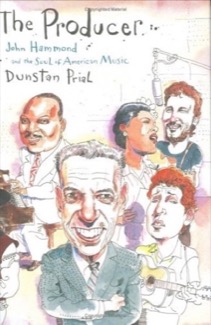
Hardcover. NY, Farrar Straus Giroux, 1st, 2006, Book: Very Good, Dust Jacket: Very Good, Hardcover in a bright dust jacket, 347 pages. In this first biography focusing on John Hammond, the charismatic American music producer is brought to life by journalist Dunston Prial. Hammond was renowned for his ability to spot new talent, introducing the world to some of most gifted musicians of early jazz- Billie Holiday, Count Basie, and Charlie Christian. Then, as jazz gave way to pop and rock, Hammond staged an amazing second act discovering Bob Dylan, Aretha Franklin, Bruce Springsteen, and Stevie Ray Vaughan. 'The Producer' covers Hammond's entire story from his heyday as a music producer to his privileged upbringing as a Vanderbilt. This is a story of an American music in all its rough-edged vitality. Clean copy.
Hardcover. Hermes Press, 1st, 2015, Book: Very Good, Dust Jacket: Very Good, Hardcover, 192 pages. Music inspired, science fiction and fantasy combined in a way that revolutionized poster art of the Psychedelic 1960's-era. Famous for his rock posters, The Psychedelic Rock Art of Carl Lundgren, a Detroit, Michigan based artist, showcases his posters which were as important to the Detroit Music and Art history as were the music legends themselves; The Who, Jefferson Airplane and Pink Floyd to name a few. The book's forward is written by Mitch Ryder, who was lead vocalist of a Detroit 1960's rock group The Detroit Wheels. The introduction is by Russ Gibb, a former radio personality and rock promoter from Dearborn, Michigan, who played a major role in the late sixties/early seventies Motor City music scene.
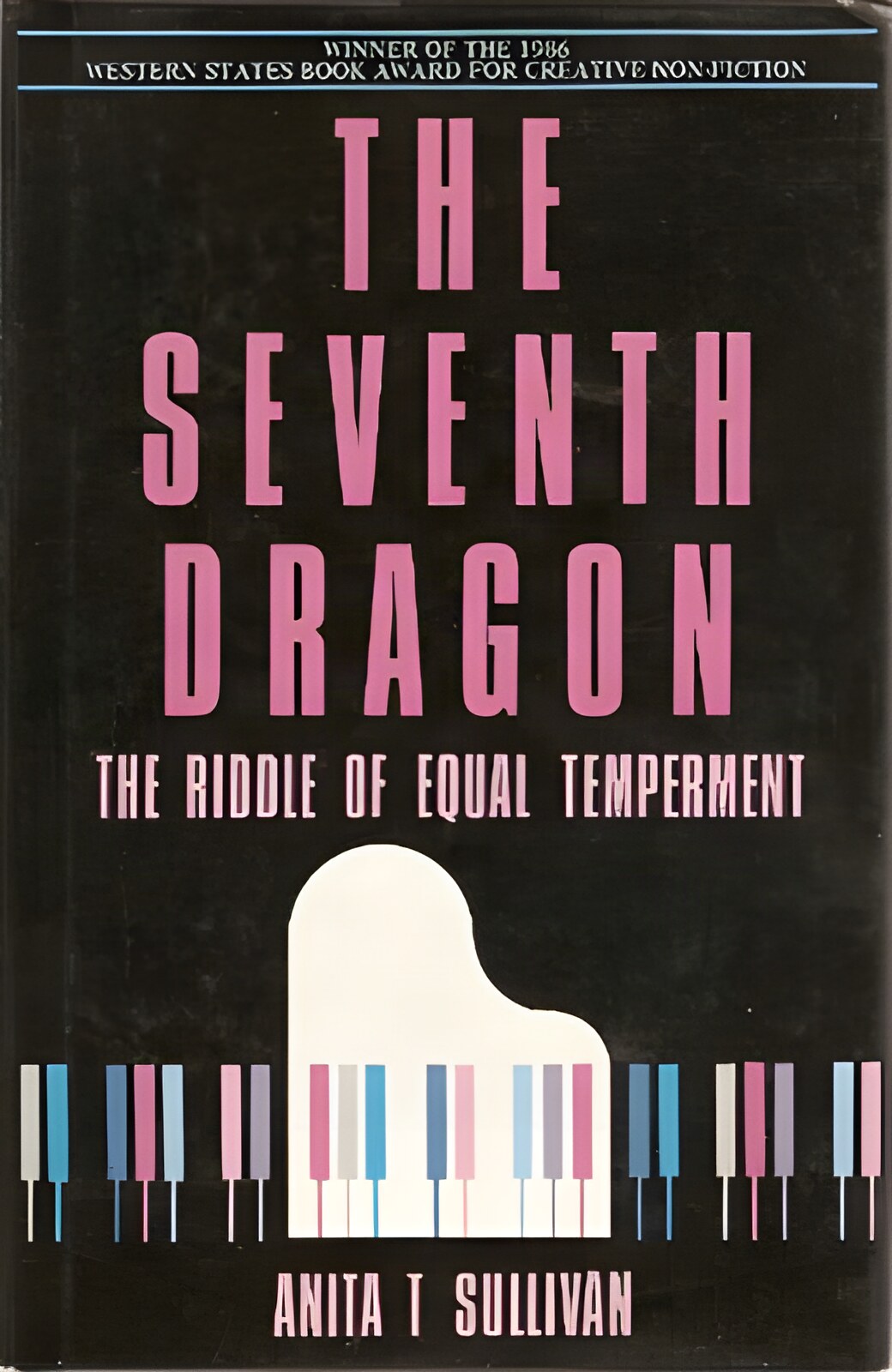
Hardcover. Lake Oswego OR, Metamorphous Press, 1st, 1985, Book: Very Good, Dust Jacket: Very Good, Hardcover in a bright dust jacket, b&w illustrations, 104 pages. A veteran piano tuner presents a non-technical, literary view of the quixotic tuning system used on keyboard instruments for hundreds of years. Focuses on the "comma", which is the pitch difference by which (9/8)^12 > (2/1), discusses its history, its importance in piano tuning, and philosophically what it all means. Winner of the Western States Book Award for creative nonfiction in 1986.
Softcover. Urbana, University of Illinois Press , 1st, 1993, Book: Very Good, Dust Jacket: None, Softcover, 361 pages, b&w illustrations. The Stonemans is an eye-opening slice of Americana---a trip through nearly twenty years of country music history following a single family from their native Blue Ridge Mountains to the slums of Washington, D.C., and the glitter of Nashville. As early as 1924 Ernest V. "Pop" Stoneman realized the potential of what is now known as country music, and he tried to carve a career from it. Successful as a recording artist from 1925 through 1929, Stoneman foundered during the Great Depression. He, his wife, and their nine children went to Washington in 1932, struggling through a decade of hardship and working to revive the musical career Pop still believed in. The Stoneman Family won the Country Music Association's Vocal Group of the Year Award in 1967. After Pop's death a year later, some of the children scattered to pursue their own careers. Ivan Tribe relies on extensive interviews with the Stonemans and their friends in this chronicle of a family whose members have clung to their musical heritage through good times and bad.
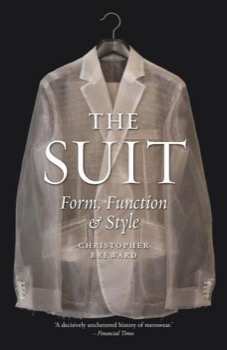
Hardcover. London, Reaktion Books, 1st, 2016, Book: Very Good, Dust Jacket: Very Good, Hardcover in a bright dust jacket, 240 pages, illustrated in color and b&w. The story of this most familiar garment, from its emergence in western Europe at the end of the seventeenth century to today. Suit-wearing figures such as the Savile Row gentleman and the Wall Street businessman have long embodied ideas of tradition, masculinity, power and respectability, but the suit has also been used to disrupt concepts of gender and conformity. Adopted and subverted by women, artists, musicians and social revolutionaries through the decades - from dandies and Sapeurs to the Zoot Suit and Le Smoking. Clean, bright copy.
Softcover. Other Press, reprint, 2021, Softcover, 550 pages, b&w illustrations. The little-known story of screenwriter Salka Viertel, whose salons in 1930s and 40s Hollywood created a refuge for a multitude of famous figures who had escaped the horrors of World War ll. Hollywood was created by its "others"; that is, by women, Jews, and immigrants. Salka Viertel was all three and so much more. She was the screenwriter for five of Greta Garbo's movies and also her most intimate friend. At one point during the Irving Thalberg years, Viertel was the highest-paid writer on the MGM lot. Meanwhile, at her house in Santa Monica she opened her door on Sunday afternoons to scores of European emigres who had fled from Hitler--such as Thomas Mann, Bertolt Brecht, and Arnold Schoenberg--along with every kind of Hollywood star, from Charlie Chaplin to Shelley Winters. In Viertel's living room (the only one in town with comfortable armchairs, said one Hollywood insider), countless cinematic, theatrical, and musical partnerships were born. Clean copy.
Softcover. Boston, Back Bay Books, 1st, 1999, Book: Very Good, Dust Jacket: None, Softcover, 246 pages, b&w illustrations. Documents the history of swing music and dancing, covering the important artists, style and fashion, albums, and dance moves of swing. A bright, clean copy that has a light smoker's odor.
Hardcover. Boston, David Godine, 1st, 2009, Book: Very Good, Dust Jacket: Very Good, Hardcover, 192 pages. The photography of Angus McBean encompasses more than three decades of the history of British theater. His work includes most of the memorable productions of the Old Vic Company and of what is now the Royal Shakespeare Company; opera productions at Glyndebourne and the Royal Opera House, Covent Garden; ballet and operetta at Sadler's Wells; and West End productions of plays and musicals both old and new-hundreds of productions in all. McBean was the favorite photographer of Vivien Leigh, Laurence Olivier, and Edith Evans, and he photographed countless plays starring John Gielgud, Ralph Richardson, and Alec Guinness, not to mention younger stars such as Audrey Hepburn, Richard Burton, and Elizabeth Taylor. In fact, McBean photographed virtually every great actor of his era, perhaps the most brilliant years in the annals of British theater.
Hardcover. Boston, David R. Godine, 1st, 2009, Hardcover, 192 pages. The photography of Angus McBean encompasses more than three decades of the history of British theater. His work includes most of the memorable productions of the Old Vic Company and of what is now the Royal Shakespeare Company; opera productions at Glyndebourne and the Royal Opera House, Covent Garden; ballet and operetta at Sadler's Wells; and West End productions of plays and musicals both old and new -- hundreds of productions in all. He was the favorite photographer of Vivien Leigh, Laurence Olivier, and Edith Evans, and he photographed countless plays starring John Gielgud, Ralph Richardson, and Alec Guinness, not to mention younger stars such as Audrey Hepburn, Richard Burton, and Elizabeth Taylor. In fact, McBean photographed virtually every great actor of his era, perhaps the most brilliant years in the annals of British theater. His studio was active and eclectic; among his patrons were not only actors, singers, and dancers, but also playwrights, producers, composers, artists, and writers. In his early career, McBean had been a pioneer of surrealist photography, with a highly popular series of "surrealized" portraits that appeared in The Sketch, and, later, of montage and multiple-exposure photography in a long-running series for The Tatler. In 1969, McBean approached Harvard University to initiate the sale of his collection, and in the following year his archive of glass plate negatives, index prints, and programs, together with the copyrights, became a part of the Harvard Theatre Collection, where it remains the most often-requested collection of visual material. The photographs in this book, selected and captioned by the archive's curator, Fredric Woodbridge Wilson, have been carefully reproduced from the original negatives.

 "The Comics Journal Library Vol. 9: Zap - The Interviews by: Gary Groth (Editor), Michael Dean (Editor), Bob Levin (Introduction)")


 "The Comics Journal Library Vol. 9: Zap - The Interviewsby: Rosenkranz, Patrick")


 "The Grand Tradition: Seventy Years of Singing on Record 1900 to 1970 by: J. B. Steane")
 "The Jazz Loft Project: Photographs and Tapes of W. Eugene Smith from 821 Sixth Avenue, 1957-1965by: Sam Stephenson")
 "The Last Photographic Heroes: American Photographers of the Sixties and Seventiesby: Gilles Mora")
 "The Last Photographic Heroes: American Photographers of the Sixties and Seventiesby: Gilles Mora")



 "The Psychedelic Rock Art of Carl Lundgrenby: Lungren, Carl")
 "The Stonemans: An Appalachian Family and the Music That Shaped Their Livesby: Tribe, Ivan M.")
 "The Story of Woodstock Live: 50 Years: Relive the Magic Artist by Artistby: Bitoun, Julien")

 "The Theatrical World of Angus McBean: Photographs from the Harvard University Theatre Collectionby: Fredric Woodbridge Wilson and Richard Traubner")
 "The Theatrical World of Angus McBean: Photographs from the Harvard University Theatre Collectionby: Fredric Woodbridge Wilson and Richard Traubner")