Hardcover. New York, Zone Books, 1st, 1996, Book: Very Good, Dust Jacket: Very Good, 565 pages. Hardcover. B/w illustrations throughout. Dust jacket unclipped, excellent, in protective brodart. Boards bound in black cloth, gilt title on spine. Binding tight. Some light pencil underlining throughout. Boards have a touch of rubbing, but in very good shape. A little light foxing to edges (shelfwear). A stunning, innovative blend of microsociology, cultural history, and philosophical reflection that will fascinate anyone concerned with problems of authenticity, identity, and originality.
Hardcover. Clark NJ, The Lawbook Exchange,, 2005, Hardcover, blue cloth stamped in green with gilt lettering, 752 pages. No dust jacket. Reprint of the standard critical Latin edition of Grotius's magnum opus of 1625, which established the framework of modern international law. Grotius describes the situations in which war is a valid tool of law enforcement and outlines the principles of armed combat. Though based on Christian natural law, Grotius advanced the novel argument that his system would still be valid if it lacked a divine basis. In this regard he pointed to the future by moving international law in a secular direction. A work of painstaking philological research, this edition is based on the final version edited by the author, which issued posthumously in 1646. Name on front fly leaf, otherwise clean.
Hardcover. Buffalo NY, William S. Hein, reprint, 1995, Book: Very Good, Dust Jacket: None, Hardcover, tan buckram with black spine lettering. This is a reprint of the first English translation from the Latin, originally published in 1925 by The Clarendon Press. 946 pages. Name on front fly leaf, otherwise clean. PLEASE NOTE: DUE TO WEIGHT DOMESTIC SHIPPING ONLY.
Hardcover. UK, Gregg International Publishing, 1st thus., 1969, Book: Very Good, Dust Jacket: None, Hardcover, blue textured cloth, gilt title on spine, 364 pages plus index. A facsimile reprint of the 1687 volume in Latin. The text of Limborch's debate with Isaac Orobio de Castro, (1620-1687). At the end Uriel Da Costa's {Exemplar humanae vitae}. To this, Limborch added his {Brevis refutatio}. Name, pencil notations on front fly leaf, otherwise clean.
Softcover. NY, Continuum, reprint, 1989, Book: Very Good, Dust Jacket: None, Softcover, 258 pages. Dialectic of Enlightenment is undoubtedly the most influential publication of the Frankfurt School of Critical Theory. Written during the Second World War and circulated privately, it appeared in a printed edition in Amsterdam in 1947. "What we had set out to do," the authors write in the Preface, "was nothing less than to explain why humanity, instead of entering a truly human state, is sinking into a new kind of barbarism." Yet the work goes far beyond a mere critique of contemporary events. Historically remote developments, indeed, the birth of Western history and of subjectivity itself out of the struggle against natural forces, as represented in myths, are connected in a wide arch to the most threatening experiences of the present. The book consists in five chapters, at first glance unconnected, together with a number of shorter notes. The various analyses concern such phenomena as the detachment of science from practical life, formalized morality, the manipulative nature of entertainment culture, and a paranoid behavioral structure, expressed in aggressive anti-Semitism, that marks the limits of enlightenment. The authors perceive a common element in these phenomena, the tendency toward self-destruction of the guiding criteria inherent in enlightenment thought from the beginning. Using historical analyses to elucidate the present, they show, against the background of a prehistory of subjectivity, why the National Socialist terror was not an aberration of modern history but was rooted deeply in the fundamental characteristics of Western civilization. Spine faded, Clean copy.
Hardcover. Leiden/NY, E.J. Brill, 1st, 1996, Book: Very Good, Dust Jacket: Very Good, Hardcover in a bright dust jacket, 376 pages. This volume consists of 21 papers delivered at an international Spinoza conference on Disguised and Overt Spinozism around 1700, held at the Erasmus University (Rotterdam) in October 1994. In these papers, scholars from Italy, France, Germany, Great Britain, the Netherlands and the United States examine the impact of Spinoza's philosophy on the European Republic of Letters, one generation after the death, in 1677, of the greatest philosopher in the history of the Netherlands. Clean copy.
Hardcover. NY, Columbia University Press, 1st, 2010, Book: Very Good, Dust Jacket: Very Good, Hardcover in a bright dust jacket, 379 pages. As religious leaders, ministers are often assumed to embody the faith of the institution they represent. As cultural symbols, they reflect subtle changes in society and belief-specifically people's perception of God and the evolving role of the church. For more than forty years, Douglas Alan Walrath has tracked changing patterns of belief and church participation in American society, and his research has revealed a particularly fascinating trend: portrayals of ministers in American fiction mirror changing perceptions of the Protestant church and a Protestant God. From the novels of Harriet Beecher Stowe, who portrays ministers as faithful Calvinists, to the works of Herman Melville, who challenges Calvinism to its very core, Walrath considers a variety of fictional ministers, including Garrison Keillor's Lake Woebegon Lutherans and Gail Godwin's women clergy. He identifies a range of types: religious misfits, harsh Puritans, incorrigible scoundrels, secular businessmen, perpetrators of oppression, victims of belief, prudent believers, phony preachers, reactionaries, and social activists. He concludes with the modern legacy of nineteenth- and early-twentieth-century images of ministers, which highlights the ongoing challenges that skepticism, secularization, and science have brought to today's religious leaders and fictional counterparts. Clean copy.
Hardcover. Cambridge, MA, Belknap Press of Harvard University Press, 1st Edition, 1961, Book: Very Good, Dust Jacket: None, 154 pages. Hardcover. Navy blue cloth cover boards, title on spine in white and small gilt design on front cover board. Previous owner's name on front flyleaf. Light pencil marks (erasable) throughout. Binding tight. Spine straight. This small book, the last work of a world-renowned scholar, has established itself as a classic. It provides a superb overview of the vast historical process by which Christianity was Hellenized and Hellenic civilization became Christianized.
Hardcover. Cambridge MA, Harvard University Press, 1st, 1969, Book: Very Good, Dust Jacket: Very Good, Hardcover in a bright dust jacket, 556 pages. Clean copy.
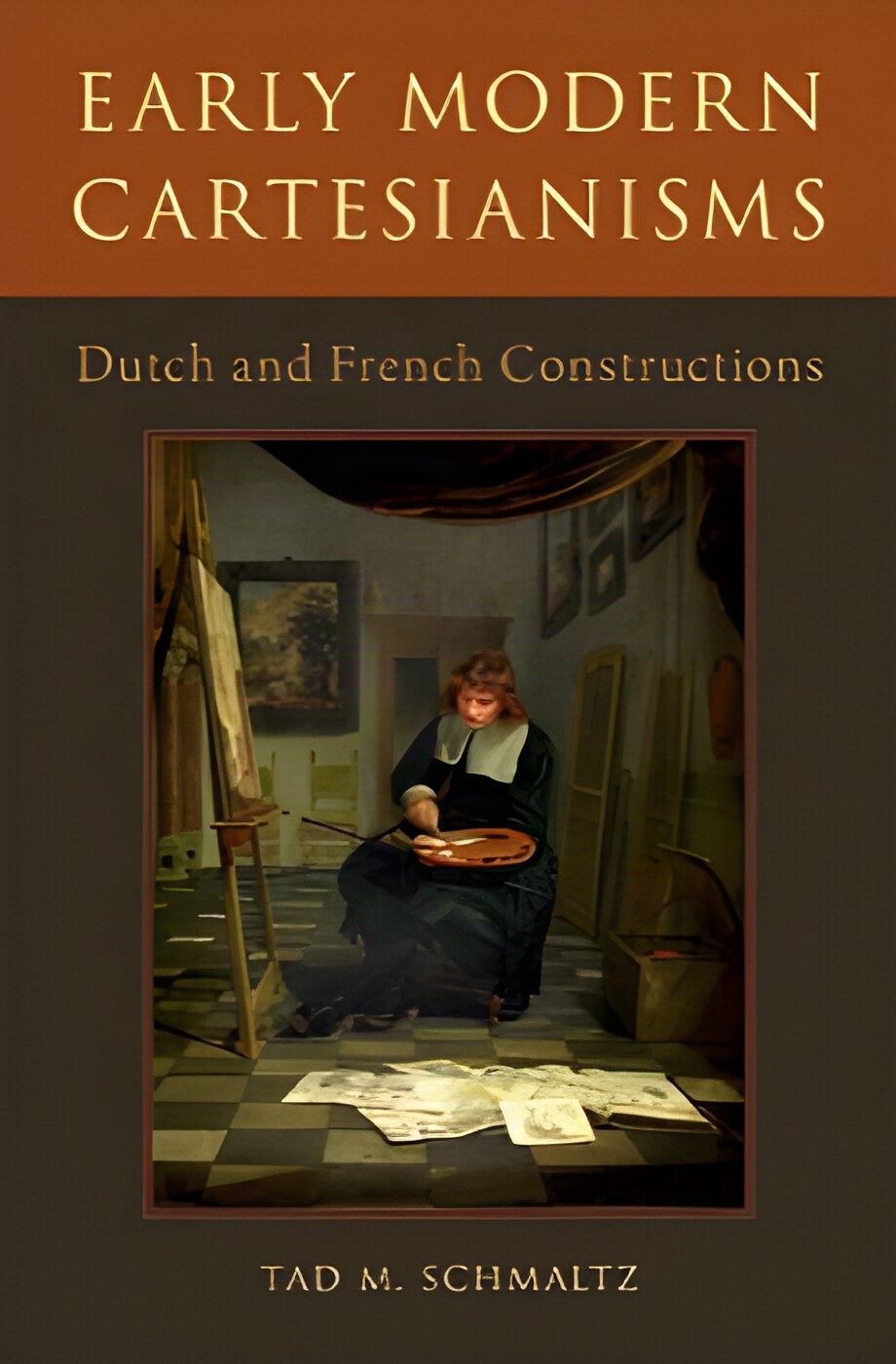
Hardcover. Oxford UK, Oxford University Press, 1st, 2016, Book: Very Good, Dust Jacket: Very Good, Hardcover in a bright dust jacket, 382 pages. This study addresses the need for a more current understanding of Cartesian philosophy by considering the different constructions of Descartes's thought that emerged in the Calvinist United Provinces (Netherlands) and Catholic France, the two main centers for early modern Cartesianism, during the period dating from the last decades of his life to the century or so following his death in 1650. It turns out that we must speak not of a single early modern Cartesianism rigidly defined in terms of Descartes's own authorial intentions, but rather of a loose collection of early modern Cartesianisms that involve a range of different positions on various sets of issues. Though more or less rooted in Descartes's somewhat open-ended views, these Cartesianisms evolved in different ways over time in response to different intellectual and social pressures. Chapters of this study are devoted to: the early modern Catholic and Calvinist condemnations of Descartes and the incompatible Cartesian responses to these; conflicting attitudes among early modern Cartesians toward ancient thought and modernity; competing early modern attempts to combine Descartes's views with those of Augustine; the different occasionalist accounts of causation within early modern Cartesianism; and the impact of various forms of early modern Cartesianism on both Dutch medicine and French physics. Name on front fly leaf, otherwise clean.
Hardcover. Durham UK, Acumen, 1st, 2009, Book: Very Good, Dust Jacket: None, Hardcover in blue cloth, with red title block, gilt lettering, 348 pages. The early modern period in philosophy - encompassing the 16th to the 18th centuries - reflects a time of social and intellectual turmoil. The Protestant Reformation, the Catholic Counter-Reformation, and the birth of the Enlightenment all contributed to the re-evaluation of reason and faith. The revolution in science and in natural philosophy swept away two millennia of Aristotelian certainty in a human-centered universe. Covering some of the most important figures in the history of Western thought - notably Descartes, Locke, Hume and Kant - "Early Modern Philosophy of Religion" charts the philosophical understanding of religion at a time of intellectual and spiritual revolution. "Early Modern Philosophy of Religion" will be of interest to historians and philosophers of religion, while also serving as an indispensable reference for teachers, students and others who would like to learn more about this formative period in the history of ideas. Lacks dust jacket. Clean copy.
Softcover. NY, Columbia University Press, 1st, 1990, Book: Very Good, Dust Jacket: None, Softcover, 395 pages. The essays gathered here, in addition to those by editors Wm. Theodore de Bary and Irene Bloob, are written by leading scholars of Asian cultures--among them Donald Keene, Peter Awn, Barbara Stoler Miller, Ainslie Embree, Burton Watson, C.T. Hsia, Paul Anderer, and others. They introduce classics from the Islamic, Indian, Chinese, and Japanese traditions, providing entree to texts which have emerged as monuments of Asian thought and literature. Among the works discussed are the Qu'ran, the philosophy of history of Ibn Khaldun, the Upanishads, the epic Mahabarata, the philosopher Mencius, the Lotus Sutra, T'and Poetry, the Tale of Genji, and the poet Basho.
Hardcover. Salem MA, Cushing and Carlton, 1st US, 1795, Book: Very Good, Dust Jacket: None, 144 pages, 2 parts bound in one volume, bound in leather. Front cover hinge partially cracked, loose. Light pencil writing on last blank page, otherwise clean, tight copy.
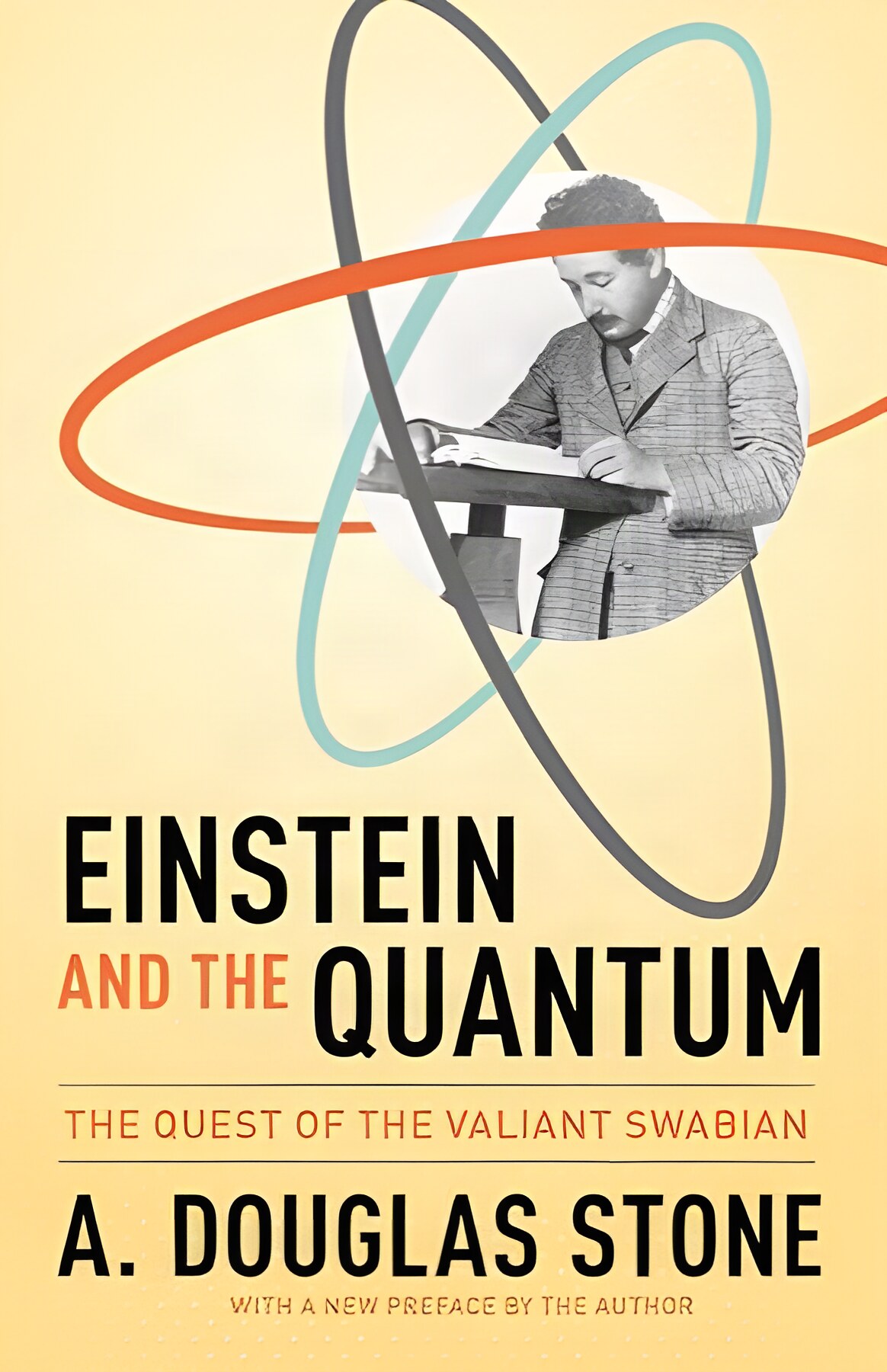
Hardcover. Princeton NJ, Princeton University Press, 2nd pr., 2013, Book: Very Good, Dust Jacket: Very Good, Hardcover in a bright dust jacket, 332 pages, b&w illustrations. Einstein and the Quantum reveals for the first time the full significance of Albert Einstein's contributions to quantum theory. Einstein famously rejected quantum mechanics, observing that God does not play dice. But, in fact, he thought more about the nature of atoms, molecules, and the emission and absorption of light-the core of what we now know as quantum theory-than he did about relativity. A compelling blend of physics, biography, and the history of science, Einstein and the Quantum shares the untold story of how Einstein-not Max Planck or Niels Bohr-was the driving force behind early quantum theory. It paints a vivid portrait of the iconic physicist as he grappled with the apparently contradictory nature of the atomic world, in which its invisible constituents defy the categories of classical physics, behaving simultaneously as both particle and wave. And it demonstrates how Einstein's later work on the emission and absorption of light, and on atomic gases, led directly to Erwin Schrodinger's breakthrough to the modern form of quantum mechanics. The book sheds light on why Einstein ultimately renounced his own brilliant work on quantum theory, due to his deep belief in science as something objective and eternal. Clean copy.
Hardcover. Netherlands, Kluwer Academic Publishers, 1st, 2000, Book: Very Good, Dust Jacket: Very Good, Hardcover in a bright dust jacket, 223 pages. In Elements, Principles and Particles, Antonio Clericuzio explores the relationships between chemistry and corpuscular philosophy in the age of the Scientific Revolution. Science historians have regarded chemistry and corpuscular philosophy as two distinct traditions. Clericuzio's view is that since the beginning of the 17th century atomism and chemistry were strictly connected. This is attested by Daniel Sennert and by many hitherto little-known French and English natural philosophers. They often combined a corpuscular theory of matter with Paracelsian chemical (and medical) doctrines. Boyle plays a central part in the present book: Clericuzio redefines Boyle's chemical views, by showing that Boyle did not subordinate chemistry to the principles of mechanical philosophy. When Boyle explained chemical phenomena, he had recourse to corpuscles endowed with chemical, not mechanical, properties. The combination of chemistry and corpuscular philosophy was adopted by a number of chemists active in the last decades of the 17th century, both in England and on the Continent. Using a large number of primary sources, the author challenges the standard view of the corpuscular theory of matter as identical with the mechanical philosophy. He points out that different versions of the corpuscular philosophy flourished in the 17th century. Most of them were not based on the mechanical theory, i.e. on the view that matter is inert and has only mechanical properties. Throughout the 17th century, active principles, as well as chemical properties, are attributed to corpuscles. Given its broad coverage, the book is a significant contribution to both history of science and history of philosophy.
Hardcover. Bristol UK, Thoemmes Press, reprint, 1997, Book: Very Good, Dust Jacket: None, Hardcover, blue cloth with gilt lettering on spine, 403 pages plus a 27 page addenda. A facsimile printing of the 1671 edition. Some 100 illustrations to text showing physical or geometrical calculations. Henry More (1614-1687), was an influential Jesuit, Neoplatonist, and philosopher. This work on metaphysics profoundly influenced the development of Newton's thought, "It seems undeniable that Newton read and was influenced by More's views on space and time, as presented in the Enchiridion metaphysicum. Like More, Newton also believed that for something to exist it must exist in space, and he identified the immensity of infinite space with the extension of God the similarities between their views of space and time, and their relationship to God, guarantees More's place in the history of science." Name on front fly leaf, otherwise clean and bright.
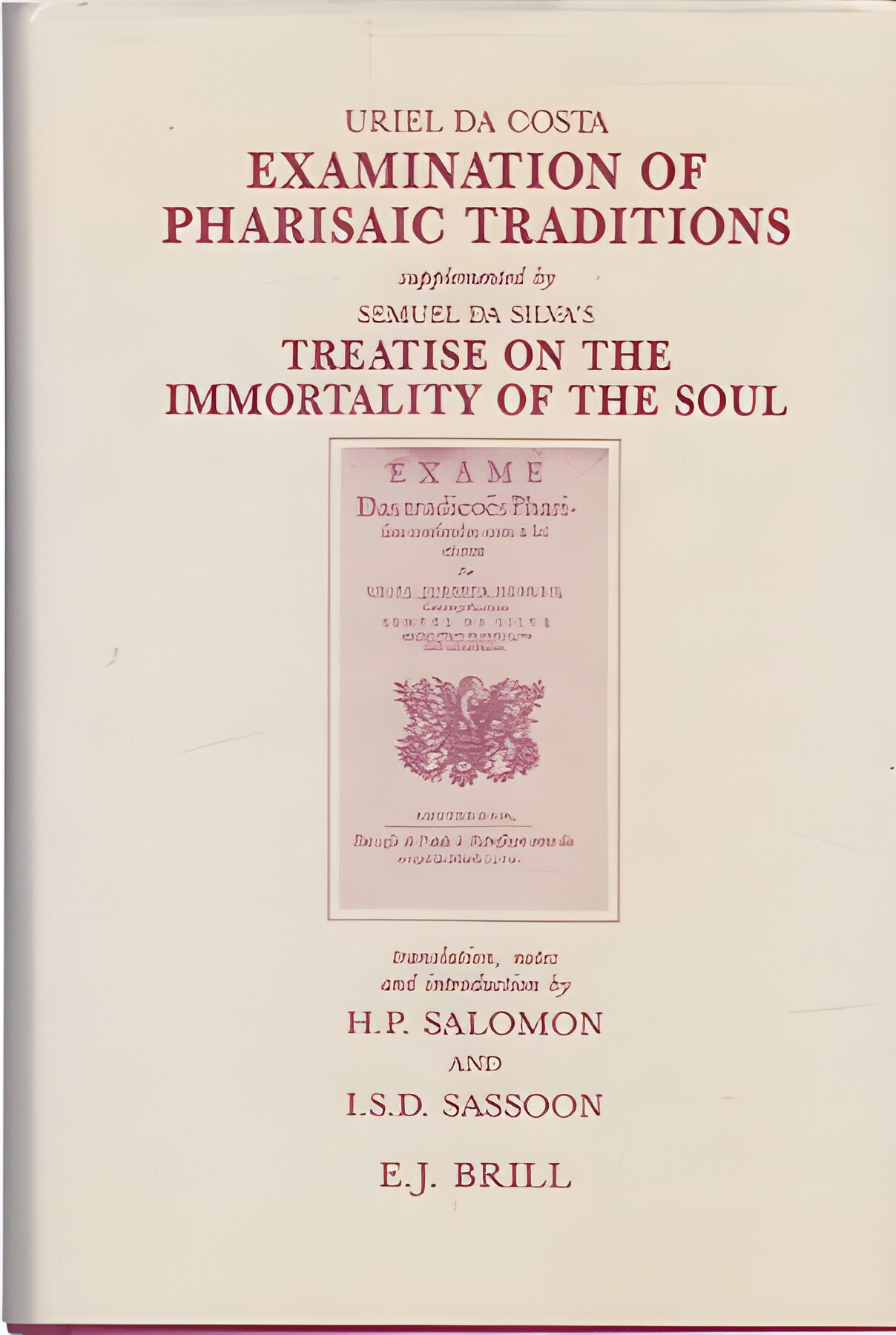
Hardcover. NY, E.J. Brill, 1st, 1993, Book: Very Good, Dust Jacket: Very Good, Hardcover in a bright dust jacket, 578 pages plus charts, b&w photos in rear. Translation and notes by H.P. Salomon and I.S.D. Sassoon. Da Costa's long-lost book rejects the divine origin of the rabbinic tradition. His insight was that what he calls Pharisaism is irreconcilable with the religion of the Pentateuch and therefore cannot derive from the same source. He claims, for example, that the Law of Moses does not allow for a belief in an afterlife for individual human beings. Concomitantly he denied the Mosaic origin of the notion of eternal punishment. The rabbinic reading of the Mosaic Law appeared to him almost as great a falsification as the Christian one. Yet there could be no reversion to Christianity and despite his deep rift with the synagogue he still believed in ultimate redemption for the Jewish people. As he so dramatically declares in his closing sonnet, Israel's rehabilitation depends on its shedding man-made doctrines, and holding fast to the Law in its purity.
Hardcover. New York, The Century Co., 1st, 1929, Book: Very Good, Dust Jacket: None, Hardcover, 341 pages, gilt title on spine, blue cloth cover. Very slight edge and corner wear, otherwise, very clean and tight copy.
Softcover. London/NY, Bloomsbury, 1st, 2016, Book: Very Good, Dust Jacket: None, Softcover, 346 pages. This volume makes the key essays of 19th century French philosopher Felix Ravaisson available in English for the first time. In recent years, Ravaisson has emerged as an extremely important and influential figure in the history of modern European philosophy. The volume contains the classic 1838 dissertation Of Habit, studies of Pascal, Stoicism and the wider history of philosophy together with the Philosophical Testament that he left unfinished when he died in 1900. The volume also features Ravaisson's work in archaeology, the history of religions and art-theory, and his essay on the Venus de Milo, which occupied him over a period of twenty years after he noticed, when hiding the statue behind a false wall in a dingy Parisian basement during the Franco-Prussian war, that it had previously been presented in a way that deformed its original bearing and meaning. Clean copy.
Hardcover. Princeton NJ, Princeton Architectural Press, 1st, 2001, Book: Very Good, Dust Jacket: Very Good, 326 pages, illustrated with b&w photographs, several color plates and architectural drawings by Vitale. Foreword by Horace Havemeyer III. Ferruccio Vitale is America's forgotten landscape architect. Though his works like Skylands and Longwood Gardens are well known, his name has been eclipsed by his contemporary, Frederick Law Olmsted, Jr. Yet Vitale's influence on the modern direction of landscape design and his promotion of it as a profession is arguably more significant than Olmsted's. His unique designs and philosophy, which challenged the then-dominant pictorial mode of landscape architecture, influenced generations of followers, and is still felt today. Vitale (1875-1933) developed his rationale designs, based on the principles of composition from the fine arts and architecture, in both civic commissions and, most notably, at the country estates of captains of industry and finance. He introduced an idealized and abstracted type of formal design that created beautiful spaces, structured large sites, and reflected informal and relaxed plant compositions. Ferruccio Vitale tours over 40 of his masterworks, photographed by some of the best landscape photographers of the time, including Samuel Gottscho. It recounts the compelling story of a life in the early twentieth century, influenced by immigrant dreams, social clubs, and professional connections, and its culmination in some of the greatest landscapes of the 20th century.
Hardcover. Princeton NJ, Princeton Architectural Press, 1st, 2001, Book: Very Good, Dust Jacket: Very Good, 326 pages, illustrated with b&w photographs, several color plates and architectural drawings by Vitale. Foreword by Horace Havemeyer III. Ferruccio Vitale is America's forgotten landscape architect. Though his works like Skylands and Longwood Gardens are well known, his name has been eclipsed by his contemporary, Frederick Law Olmsted, Jr. Yet Vitale's influence on the modern direction of landscape design and his promotion of it as a profession is arguably more significant than Olmsted's. His unique designs and philosophy, which challenged the then-dominant pictorial mode of landscape architecture, influenced generations of followers, and is still felt today. Vitale (1875-1933) developed his rationale designs, based on the principles of composition from the fine arts and architecture, in both civic commissions and, most notably, at the country estates of captains of industry and finance. He introduced an idealized and abstracted type of formal design that created beautiful spaces, structured large sites, and reflected informal and relaxed plant compositions. Ferruccio Vitale tours over 40 of his masterworks, photographed by some of the best landscape photographers of the time, including Samuel Gottscho. It recounts the compelling story of a life in the early twentieth century, influenced by immigrant dreams, social clubs, and professional connections, and its culmination in some of the greatest landscapes of the 20th century.
Hardcover. Staten Island NY, Center Migration Studies , 1st, 2000, Book: Very Good, Dust Jacket: Very Good, Hardcover in a bright dust jacket, 359 pages. Clean copy.
Softcover. Liverpool Univeristy Press, 1st, 1997, Book: Very Good, Dust Jacket: None, Softcover, pages. In 1916 Thomas Wallis founded a new practice, Wallis, Gilbert & Partner, primarily to collaborate with an American company in the design of factories to be constructed of reinforced concrete. Designing factories was not then popular among architects and many manufacturers regarded the employment of an architect a wanton extravagance. Wallis's move could be seen as a reckless gamble, but his and his partners' subsequent achievements suggest that his choice had been well considered; some of the best known inter-war industrial building - Firestone, Hoover, The Gramophone Company, Glaxo Laboratories - were their work. In Form and Fancy, Dr Skinner looks first at the biographical background of Wallis, at the history and organisation of the partnership he founded, and at the many factors that contributed to its reputation in the inter-war years. She then offers a perspective on architectural thought and activity in that period, and of the attitudes and influences on factory design. Designs by the partnership for over one hundred factories and factory buildings have been discovered and at the core of the book is a third chapter which analyses and assesses them. Dr Skinner concludes with an evaluation of the design philosophy of Wallis, Gilbert & Partners, the aim of which was to contribute to the successful pursuit of business by the companies that commissioned them.

 "Culture of the Copy, The: Striking Likenesses, Unreasonable Facsimilesby: Schwartz, Hillel")
 "De Iure Belli ac Pacis Libri Tres In Quibus Ius Naturae et Gentium..by: Grotius Hugo/PC. Molhuysen (editor )")
 "De Jure Belli Ac Pacis Libri Tres. Volume Two: The Translation, Book 1 (English Edition)by: Grotius, Hugo/Francis W. Kelsey (Transl.)")
 "De veritate religionis christianae amica collatio cum erudito Judaeo. Gouda 1687by: Van Limborch, Phillipi")


 "DES VRAIES ET DES FAUSSES IDEES Edition, pr?©sentation et notes par Denis Moreau by: Arnauld, Antoine")
 "Disguised and Overt Spinozism around 1700: Papers presented at the international colloquium held at Rotterdam 5-8 October 1994by: Bunge, Wiep van & Wim Klever (Ed.)")
 "Early Christianity and Greek Paideiaby: Jaeger, Werner")

 "Early Modern Philosophy of Religion (The History of Western Philosophy of Religion, Volume 3) by: Oppy, G.raham & Trakakis, Nick N. (eds)")
 "Eastern Canonsby: Wm. Theodore De Bary, Irene Bloom (Editors)")
 "Economy of Human Life, The: Translated from An Indian Manuscript written by A Braminby: N/A")
 "Elements, Principles, and Corpuscles: A Study of Atomism and Chemistry in the Seventeenth Century by: Clericuzio, Antonio")
 "Enchiridion Metaphysicumby: Henry More")
 "Experience with the Supernatural in Early Christian Timesby: Case, Shirley Jackson")

 "Ferruccio Vitale: Landscape Architect of the Country Place Eraby: Schnadelbach, R. Terry")
 "Ferruccio Vitale: Landscape Architect of the Country Place Eraby: Schnadelbach, R. Terry")