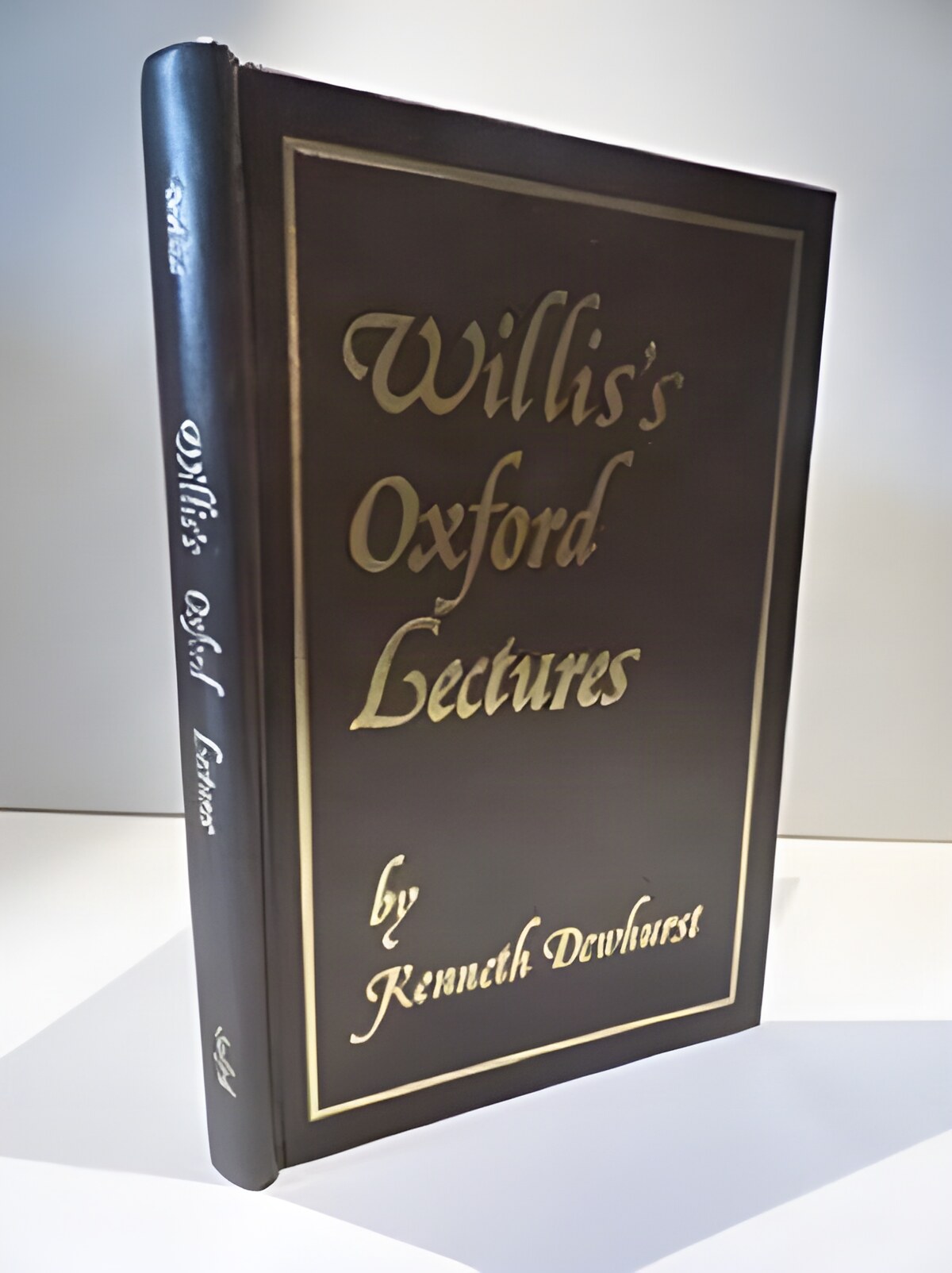
Hardcover. Oxford UK, Sandford Publications, 1st, 1980, Book: Very Good, Dust Jacket: None, Hardcover, limited to 750 copies, 182 pages, b&w illustrations, INSCRIBED BY DEWHURST on inside front cover, brown faux-leather. Thomas Willis (1621-1675) was an English doctor who played an important part in the history of anatomy, neurology and psychiatry, and was a founding member of the Royal Society.
Softcover. Princeton, Princeton University Press, 1st Edition, 2000, Book: Very Good, Dust Jacket: None, 382 pages. Softcover in very good condition with full color photo of Isaiah Berlin to cover. Tight copy. Clean & unmarked text.
Hardcover. NY, Abrams, 1st, 2023, Book: Very Good, Dust Jacket: Very Good, Hardcover in a bright dust jacket, 265 pages illustrated in b&w. From Bill Griffith, creator of Zippy the Pinhead and Nobody's Fool, comes Three Rocks, a biography of cartoonist Ernie Bushmiller, creator of the iconic comic strip Nancy. But this graphic novel is about more than a single comic book artist. It is the story of this American art form, tracing its inception to 1895 with the Yellow Kid, the creation of Nancy in 1933, and all the strips that followed, including Peanuts and The Far Side. When Bushmiller died in 1982, Nancy was running in almost 900 daily newspapers--a number few syndicated cartoonists ever achieve. Nancy is hailed as the "perfect" comic strip by fans and cartoonists alike. The title Three Rocks refers to the trope of three hemispherical rocks often seen in a Bushmiller landscape--just enough to communicate environment to the reader. This distillation is exemplary of the iconic, diagrammatic look of Nancy, a comic strip about the nature of what it means to be a comic strip--the perfect avatar for Griffith to expand upon his philosophy of creating comics. Clean, bright copy.
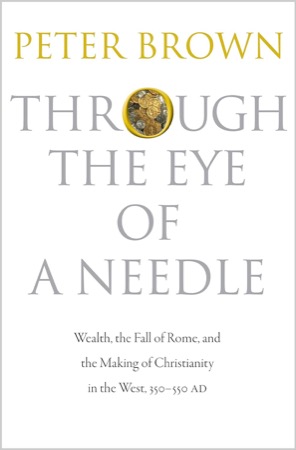
Hardcover. Princeton NJ, Princeton University Press, 1st, 2012, Book: Very Good, Dust Jacket: Very Good, Hardcover in a bright dust jacket, 759 pages, b&w illustrations. A sweeping intellectual history of the role of wealth in the church in the last days of the Roman Empire Jesus taught his followers that it is easier for a camel to go through the eye of a needle than for a rich man to enter heaven. Yet by the fall of Rome, the church was becoming rich beyond measure. Through the Eye of a Needle is a sweeping intellectual and social history of the vexing problem of wealth in Christianity in the waning days of the Roman Empire, written by the world's foremost scholar of late antiquity. Peter Brown examines the rise of the church through the lens of money and the challenges it posed to an institution that espoused the virtue of poverty and called avarice the root of all evil. Drawing on the writings of major Christian thinkers such as Augustine, Ambrose, and Jerome, Brown examines the controversies and changing attitudes toward money caused by the influx of new wealth into church coffers, and describes the spectacular acts of divestment by rich donors and their growing influence in an empire beset with crisis. He shows how the use of wealth for the care of the poor competed with older forms of philanthropy deeply rooted in the Roman world, and sheds light on the ordinary people who gave away their money in hopes of treasure in heaven. Clean copy.
Hardcover. NY, Oxford University Press, 1st, 2008, Book: Very Good, Dust Jacket: Very Good, Hardcover in a bright dust jacket, 323 pages. Although Buddhism is often depicted as a religion of meditators and philosophers, some of the earliest writings extant in India offer a very different portrait of the Buddhist practitioner. In Indian Buddhist narratives from the early centuries of the Common Era, most lay religious practice consists not of reading, praying, or meditating, but of visually engaging with certain kinds of objects. These visual practices, moreover, are represented as the primary means of cultivating faith, a necessary precondition for proceeding along the Buddhist spiritual path. In Thus Have I Seen: Visualizing Faith in Early Indian Buddhism, Andy Rotman examines these visual practices and how they function as a kind of skeleton key for opening up Buddhist conceptualizations about the world and the ways it should be navigated. Clean copy.
Hardcover. NY, Farrar, Straus & Giroux, 1st US, 2012, Book: Very Good, Dust Jacket: Very Good, Hardcover in a bright, unclipped dust jacket. Full number line down to and including 1. In grey boards with blue type to spine. Searching for an inn, the enigmatic traveler Hans stops in a small city on the border between Saxony and Prussia. The next morning, Hans meets an old organ-grinder in the market square and immediately finds himself enmeshed in an intense debate-on identity and what it is that defines us-from which he cannot break free. Indefinitely stuck in Wandernburg until his debate with the organ-grinder is concluded, he begins to meet the various characters who populate the town, including a young freethinker named Sophie. Though she is engaged to be married, Sophie and Hans begin a relationship that defies contemporary mores about female sexuality and what can and cannot be said about it. Traveler of the Century is a deeply intellectual novel, chock-full of discussions about philosophy, history, literature, love, and translation. It is a book that looks to the past in order to have us reconsider the conflicts of our present. The winner of Spain's prestigious Alfaguara Prize and the National Critics Prize, Traveler of the Century marks the English-language debut of Andres Neuman, a writer described by Roberto Bolano as being "touched by grace." Clean copy.
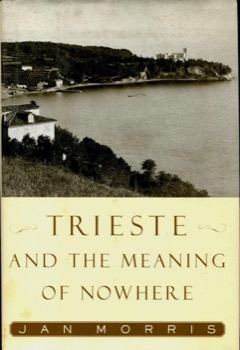
Hardcover. NY, Simon & Schuster, 1st, 2001, Book: Very Good, Dust Jacket: Very Good, Hardcover in a bright dust jacket with light sticker residue, 203 pages. The travel author and historian journeys to the beguiling city of Trieste, Italy, which has enchanted her for more than fifty years, to explore issues of patriotism, decency, wildness, and sex. In this love letter to Trieste a city she has grown to love over the years and never got tired of exploring Morris looks back on her life. She recalls first coming to Trieste as a soldier [male] in World War II and discusses the impact the city's way of life has had on her own philosophy of life. Each chapter begins with a philosophical quote stating its theme and setting the atmosphere. Morris is not only skilled at vividly describing townspeople and buildings in a way that brings Trieste to life, but she also successfully balances the personal with the historical by providing references to both history and literature. Clean copy.
Hardcover. NY, Simon & Schuster, 1st, 2015, Book: Very Good, Dust Jacket: Very Good, Hardcover in a bright, unclipped dust jacket. 449 pages, b&w illustrations. Ty Cobb is baseball royalty, maybe even the greatest player who ever lived. His lifetime batting average is still the highest of all time, and when he retired in 1928, after twenty-one years with the Detroit Tigers and two with the Philadelphia Athletics, he held more than ninety records. But the numbers don't tell half of Cobb's tale. The Georgia Peach was by far the most thrilling player of the era: "Ty Cobb could cause more excitement with a base on balls than Babe Ruth could with a grand slam," one columnist wrote. When the Hall of Fame began in 1936, he was the first player voted in. But Cobb was also one of the game's most controversial characters. He got in a lot of fights, on and off the field, and was often accused of being overly aggressive. In his day, even his supporters acknowledged that he was a fierce and fiery competitor. Because his philosophy was to "create a mental hazard for the other man," he had his enemies, but he was also widely admired. After his death in 1961, however, something strange happened: his reputation morphed into that of a monster--a virulent racist who also hated children and women, and was in turn hated by his peers. Clean copy.
Hardcover. Cambridge MA, Belknap Press / Harvard University Press, 1st, 1979, Book: Very Good, Dust Jacket: Very Good, Hardcover in a lightly worn dust jacket, 896 pages. This masterly study has a grand sweep. It ranges over centuries, with a long look backward over several millennia. Yet the history it unfolds is primarily the story of individuals: thinkers and dreamers who envisaged an ideal social order and described it persuasively, leaving a mark on their own and later times. The roster of utopians includes men of all stripes in different countries and eras--figures as disparate as More and Fourier, the Marquis de Sade and Edward Bellamy, Rousseau and Marx. Fascinating character studies of the major figures are among the delights of the book. 1980 National Book Award winner. Name on front fly leaf, otherwise clean.
Softcover. Lanham MD, Rowman & Littlefield , 1st, 2003, Book: Very Good, Dust Jacket: None, Softcover, 349 pages. In Vergil's Empire, Eve Adler offers an exciting new interpretation of the political thought of Vergil's Aeneid. Adler argues that in this epic poem, Vergil presents the theoretical foundations of a new political order, one that resolves the conflict between scientific enlightenment and ancestral religion that permeated the ancient world. The work concentrates on Vergil's response to the physics, psychology, and political implications of Lucretius' Epicurean doctrine expressed in De Rerum Natura. Proceeding by a close analysis of the Aeneid, Adler examines Vergil's critique of Carthage as a model of universal enlightenment, his positive doctrine of Rome as a model of universal religion, and his criticism of the heroism of Achilles, Odysseus, and Epicurus in favor of the heroism of Aeneas. Beautifully written and clearly argued, Vergil's Empire will be of great value to all interested in the classical world. Clean copy.
Softcover. Oxford UK, Clarendon Press, reprint, 2016, Book: Very Good, Dust Jacket: None, Softcover, 400 pages. Clean, bright copy. This volume makes available for the first time critical editions of John Locke's A Vindication and A Second Vindication of the Reasonableness of Christianity, in which Locke defends his interpretation of the New Testament and of the Christian Religion against charges of heterodoxy. These works contribute greatly to our understanding of Locke's Christian commitments, which it is now recognized played an important role in shaping his philosophical opinions; they also demonstrate his sophistication as a biblical scholar, and the breadth of his theological learning. The texts are accompanied by a historical introduction explaining the origin of the works and setting them in context. In addition to a textual introduction and critical apparatus, editorial notes help to clarify the text. The volume also includes a French translation and abridgment by Pierre Coste, a Huguenot scholar, who was patronized by Locke and worked on his translations while residing in Locke's household. This definitive edition is an important contribution to an understanding of the development of modern enlightened Christian attitudes.
Hardcover. NY, New York University Press, 2nd pr., 1972, Book: Very Good, Dust Jacket: None, Hardcover, orange cloth covers, gilt lettering on spine, 159 pages. While Morgan's literary portfolio shows remarkable diversity, it is studded with works on Puritanism. 'Visible Saints' further solidifies his reputation as a leading authority on this subject. An expanded version of his Anson G. Phelps Lectures of 1962 (presented at New York University), this slender volume focuses on the central issue of church membership. Morgan posits and develops a revisionary main thesis: the practice of basing membership upon a declaration of experiencing saving grace, or 'conversion,' was first put into effect not in England, Holland, or Plymouth, as is commonly related, but in Massachusetts Bay Colony by non-separating Puritans. Characterized by stylistic grace and exegetic finesse, 'Visible Saints' is another scholarly milestone in the 'Millerian Age' of Puritan historiography. Name on front fly leaf, otherwise clean.
Softcover. Cambridge MA, Harvard University Press, 1st pbk, 2014, Book: Very Good, Dust Jacket: None, Softcover, 755 pages. Walter Benjamin is one of the twentieth century's most important intellectuals, and also one of its most elusive. His writings-mosaics incorporating philosophy, literary criticism, Marxist analysis, and a syncretistic theology-defy simple categorization. And his mobile, often improvised existence has proven irresistible to mythologizers. His writing career moved from the brilliant esotericism of his early writings through his emergence as a central voice in Weimar culture and on to the exile years, with its pioneering studies of modern media and the rise of urban commodity capitalism in Paris. That career was played out amid some of the most catastrophic decades of modern European history: the horror of the First World War, the turbulence of the Weimar Republic, and the lengthening shadow of fascism. Now, a major new biography from two of the world's foremost Benjamin scholars reaches beyond the mosaic and the mythical to present this intriguing figure in full. Clean copy.
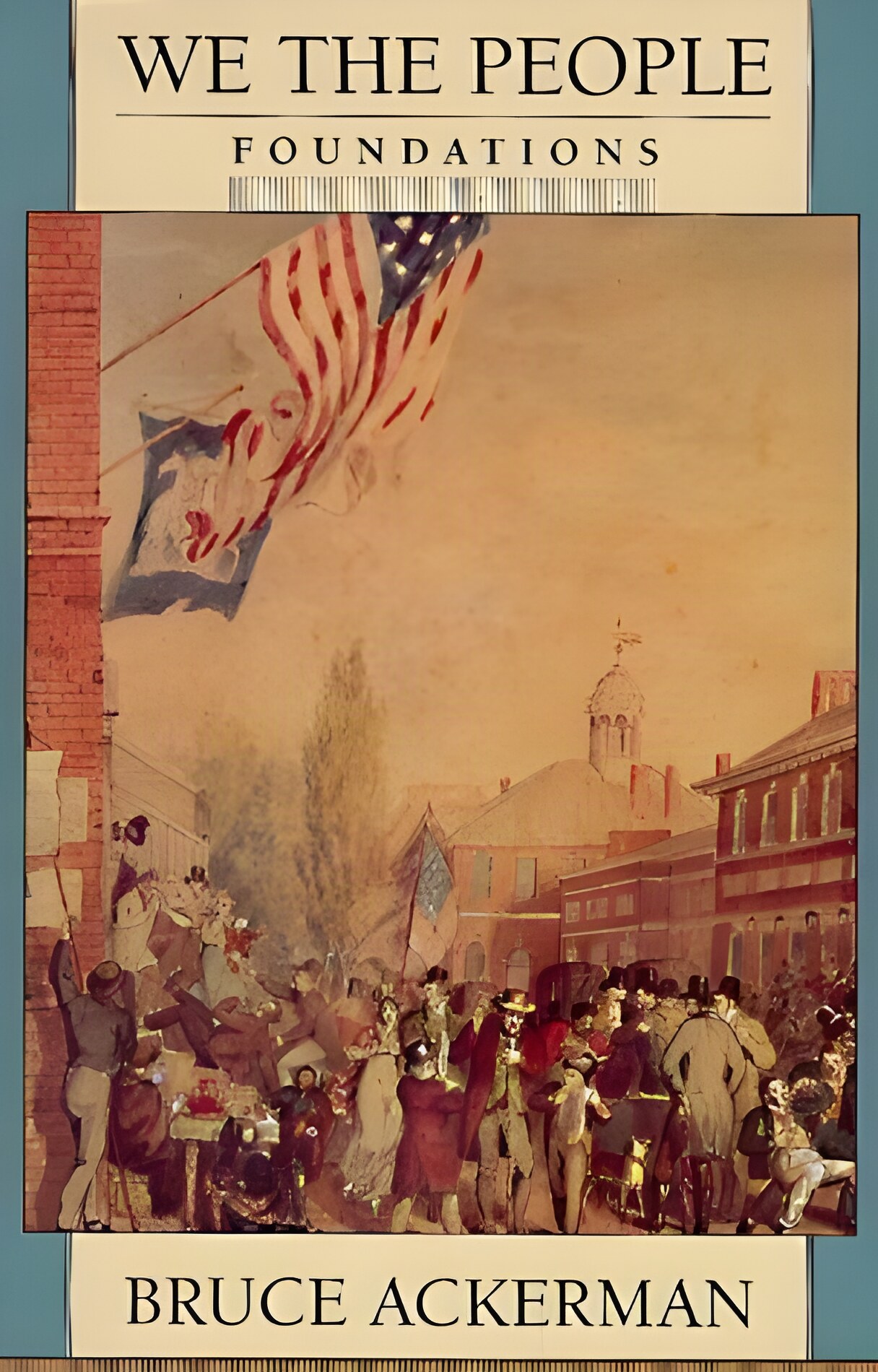
Hardcover. Cambridge MA, Harvard University Press, 1st, 1991, Book: Very Good, Dust Jacket: Very Good, Hardcover in a lightly worn dust jacket. Bruce Ackerman offers a sweeping reinterpretation of our nation's constitutional experience and its promise for the future. Integrating themes from American history, political science, and philosophy, We the People confronts the past, present, and future of popular sovereignty in America. Only this distinguished scholar could present such an insightful view of the role of the Supreme Court. Rejecting arguments of judicial activists, proceduralists, and neoconservatives, Ackerman proposes a new model of judicial interpretation that would synthesize the constitutional contributions of many generations into a coherent whole. The author ranges from examining the origins of the dualist tradition in the Federalist Papers to reflecting upon recent, historic constitutional decisions. The latest revolutions in civil rights, and the right to privacy, are integrated into the fabric of constitutionalism. Today's Constitution can best be seen as the product of three great exercises in popular sovereignty, led by the Founding Federalists in the 1780s, the Reconstruction Republicans in the 1860s, and the New Deal Democrats in the 1930s.
Hardcover. NY, Abrams, 1st, 2016, Book: Very Good, Dust Jacket: None, Hardcover in pictorial boards, 175 pages in color. William Wegman's postcard paintings reflect a lifetime of engagement with narrative, perspective, art history, architecture, popular culture, humor, and philosophy in art. Starting with one or more vintage postcards, Wegman constructs scenes that range from intimate interiors to cosmic vistas, filling audaciously complex spaces with intriguing incident. Collected together, the paintings possess the universal, encyclopedic, and mysterious qualities of their source materials. In addition to Martin Filler's introduction, a stellar group of contributors responds to the work.
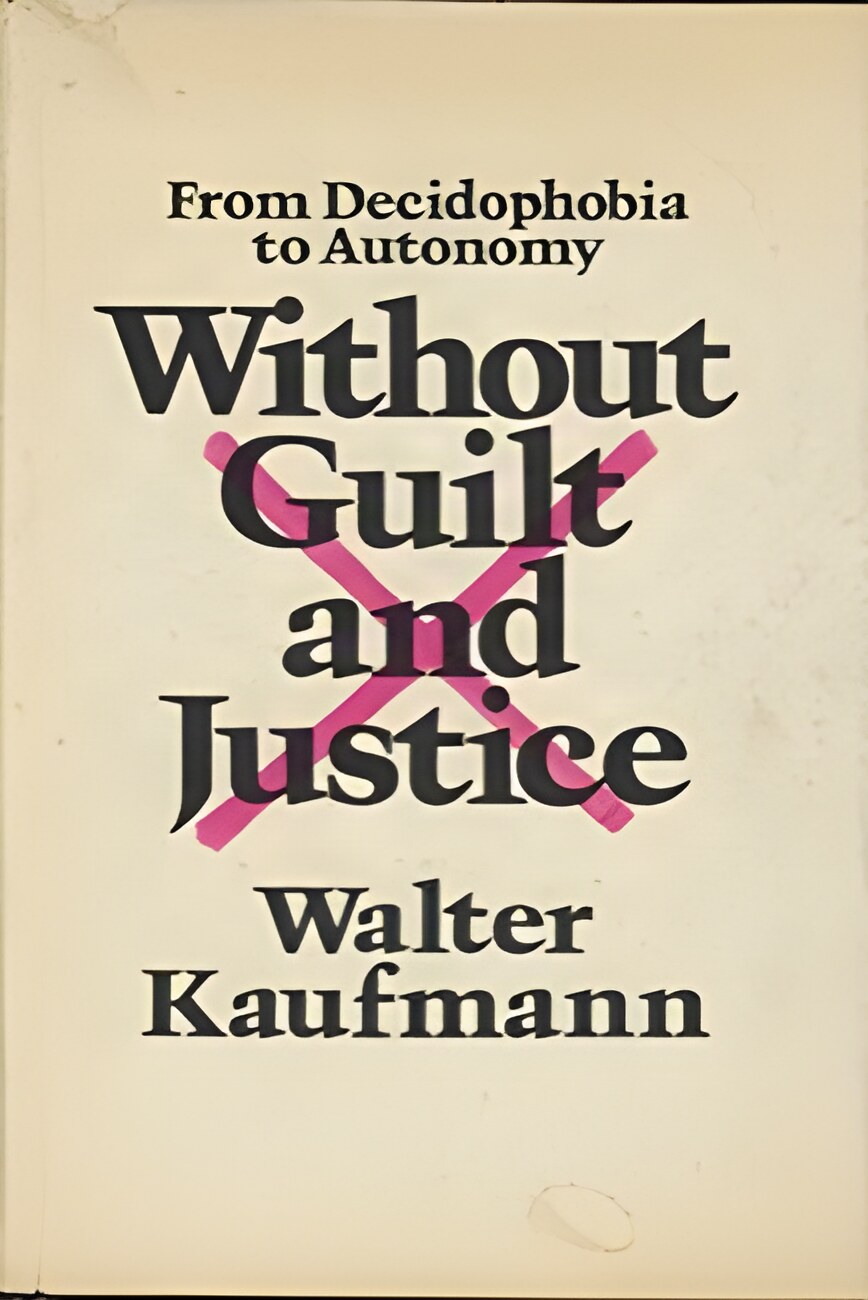
Hardcover. NY, Peter H. Wyden, 1st, 1973, Book: Good, Dust Jacket: Fair, Hardcover in a dust jacket that has a water stain to rear panel. Mild ripple to rear cloth, but book, text pages not affected. There is some foxing/tanning to top edge of text block. No markings. Walter Kaufmann in defining the conflicts in Germany that put Hitler in power, are very similar to our challenges today. A good read for people who want to understand underlying impulses in our culture.
Hardcover. Bristol UK, Thoemmes Press, reprint, 1999, Book: Very Good, Dust Jacket: None, Six volume complete set. Folios, maroon cloth covers with gilt and dark blue spine designs. Facsimile reprint of the 1772 edition, over 5000 pages. Clean, very good. NOTE: THESE ARE HUGE VOLUMES AND CAN ONLY BE SHIPPED DOMESTICALLY.
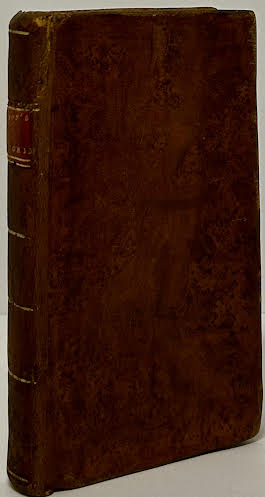
Hardcover. Middlebury, VT, Swift & Chipman, 2nd American from the 7th London Edition, 1811, Book: Good, Dust Jacket: None, 202 pages. Hardcover. Brown leather cover boards, front cover board slightly bowed (see image), gilt title on spine with gilt bands. Binding tight. Spine straight. Some appropriate agewear throughout: tanning, foxing, etc. A series of graphic and interesting scenes illustrating the temper and conduct of the pilgrim on his way to Zion.

 "Three Critics of the Enlightenment - Vico, Hamann, Herderby: Berlin, Isaiah/Henry Harder (Editor)")




 "Thus Have I Seen: Visualizing Faith in Early Indian Buddhismby: Andy Rotman")
 "Traveler of the Centuryby: Neuman, Andres")
 "Ty Cobb: A Terrible Beautyby: Leerhsen, Charles")
 "Unthinkable Swift, The - The Spontaneous Philosophy of a Church of England Manby: Montag, Warren")


 "Vindications of the reasonableness of Christianity. Edited with introductions, notes, and critical apparatus by Victor Nuovoby: John Locke")

 "Walter Benjamin: A Critical Lifeby: Eiland, Howard; /Jennings, Michael W.")
 "William Wegman: Paintings by: William Wegman")