Hardcover. Ithaca, NY, Cornell University Press, 1st Edition, 1986, Book: Very Good, Dust Jacket: Very Good, 336 pages. Hardcover. SIGNED BY AUTHOR. Tan cloth bound covers, red title on spine. In excellent condition, pages clean, bright, unmarked. Binding tight. Spin straight. Dust jacket unclipped, has a touch of tanning, otherwise very good, no tears or rips. Previous bookstore's label on spine. Traces the historical roots of an idea that has had an incalculable impact on twentieth-century thought and culture by examining the interplay of Freud's inner life--his fantasies and dreams--with the world around him.
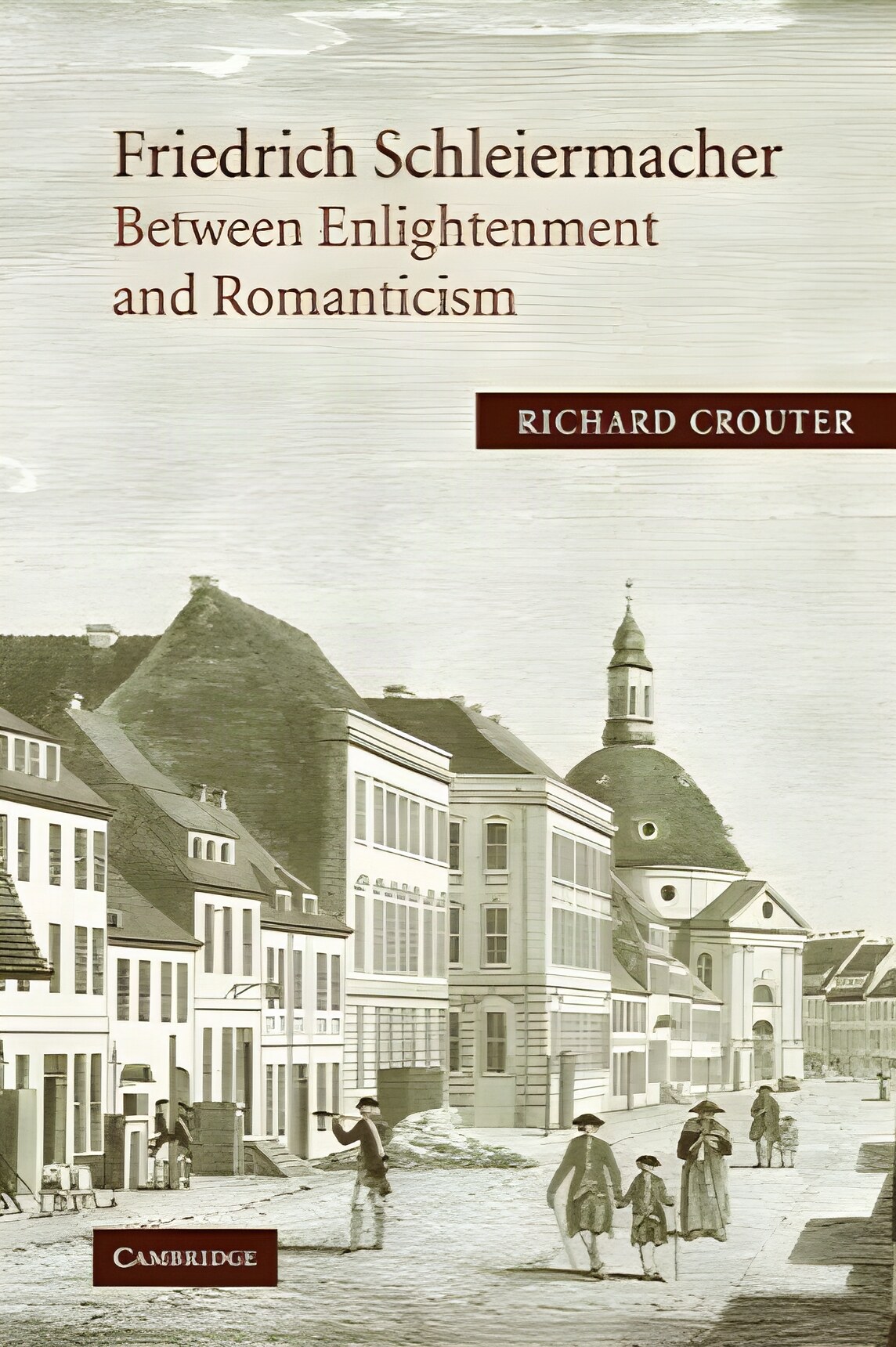
Softcover. Oxford UK, Cambridge University Press, reprint, 2008, Book: Very Good, Dust Jacket: None, Softcover, 277 pages. Friedrich Schleiermacher's groundbreaking work in theology and philosophy was forged in the cultural ferment of Berlin at the convergence of the Enlightenment and Romanticism. The three sections of this book include illuminating sketches of Schleiermacher's relationship to contemporaries, his work as a public theologian, as well as the formation and impact of his two most famous books, On Religion and The Christian Faith. Richard Crouter's essays examine the theologian's stance regarding the status of doctrine, church and political authority, and the place of theology among the academic disciplines. Clean, bright copy.
Hardcover. Oxford at the Clarendon Press, London, England, 1959, Book: Very Good, Dust Jacket: None, 505 pages. Hardcover. Previous owner's name on front flyleaf. Navy blue cloth boards, some chipping at top and bottom of spine, gilt title on spine, faded. Some light tanning to pages and edges. Spine straight. Binding good.
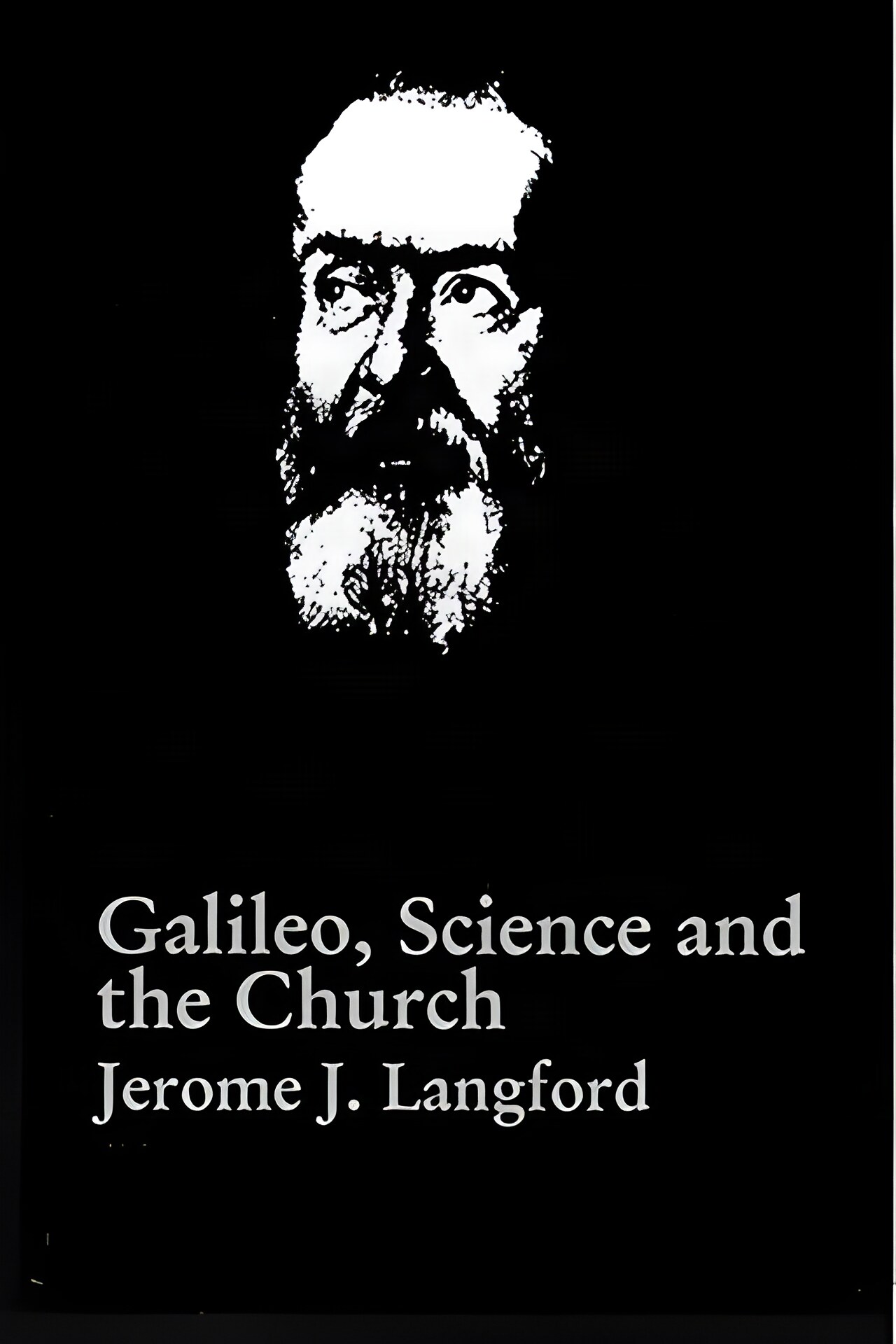
Hardcover. South Bend IN, St. Augustine's Press, reprint, 1998, Book: Very Good, Dust Jacket: None, Hardcover, glossy pictorial boards, 225 pages. Widely recognized as a classic account of the circumstances, issues, and consequences of Galileo's tragic confrontation with the theologians. Langford's book is cited in much of the Galileo literature of the past three decades, and it has been in print continuously since 1971. The present text is the third edition, updated and expanded with a survey of the most important advances in recent Galileo studies. In it, Langford assesses the validity of his own account while making the modifications dictated by recent scholarship.
Hardcover. UK, Oxford University Press, 1st, 2004, Book: Very Good, Dust Jacket: Very Good, Hardcover in a bright dust jacket, 482 pages. This is the first comprehensive study of Gangraena, an intemperate anti-sectarian polemic written by a London Presbyterian Thomas Edwards and published in three parts in 1646. These books, which bitterly opposed any moves to religious toleration, were the most notorious and widely debated texts in a Revolution in which print was crucial to political moblization. They have been equally important to later scholars who have continued the lively debate over the value of Gangraena as a source for the ideas and movements its author condemned. This study includes a thorough assessment of the usefulness of Edwards' work as a historical source, but goes beyond this to provide a wide-ranging discussion of the importance of Gangraena in its own right as a lively work of propaganda, crucial to Presbyterian campaigning in the mid-1640s. Name, date on front fly leaf, otherwise clean.
Hardcover. Thorverton UK, The Rota/Imprint Academic, 1st thus, 1977, Book: Very Good, Dust Jacket: None, Hardcover, gray cloth with gilt lettering on spine. A facsimile of 17th century polemical work, with a modern introduction. Approx. 800 pages. Name on front fly leaf otherwise a bright, clean copy.
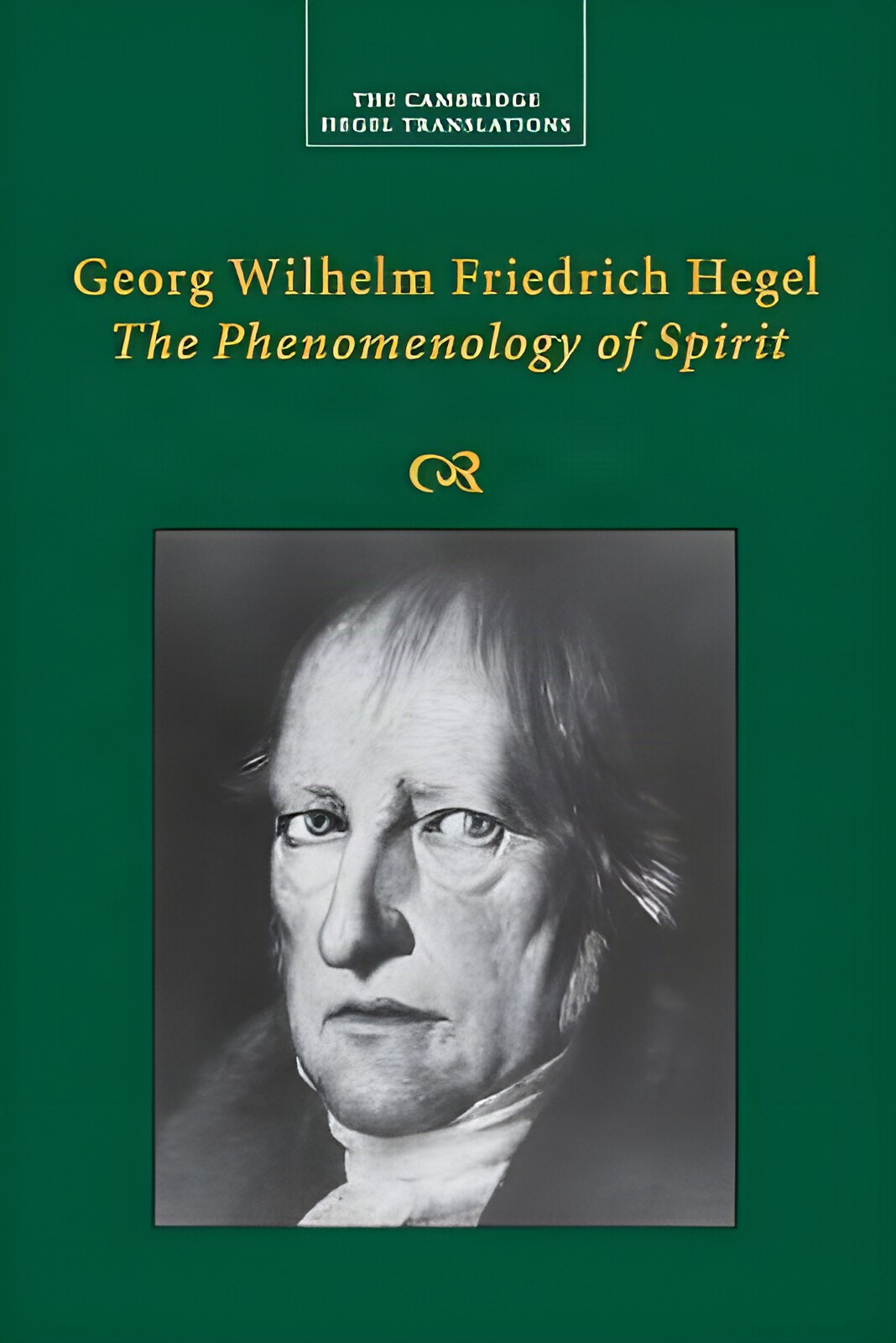
Softcover. Cambridge UK, Cambridge University Press, 1st pbk, 2018, Book: Very Good, Dust Jacket: None, Softcover, 492 pages. Hegel's The Phenomenology of Spirit (1807) is one of the most influential texts in the history of modern philosophy. In it, Hegel proposed an arresting and novel picture of the relation of mind to world and of people to each other. Like Kant before him, Hegel offered up a systematic account of the nature of knowledge, the influence of society and history on claims to knowledge, and the social character of human agency itself. A bold new understanding of what, after Hegel, came to be called 'subjectivity' arose from this work, and it was instrumental in the formation of later philosophies, such as existentialism, Marxism, and American pragmatism, each of which reacted to Hegel's radical claims in different ways. This edition offers a new translation, an introduction, and glossaries to assist readers' understanding of this central text, and will be essential for scholars and students of Hegel. Clean copy.
Softcover. Cambridge UK, Cambridge University Press, 1st pbk, 2018, Book: Very Good, Dust Jacket: None, Softcover, 492 pages. Hegel's The Phenomenology of Spirit (1807) is one of the most influential texts in the history of modern philosophy. In it, Hegel proposed an arresting and novel picture of the relation of mind to world and of people to each other. Like Kant before him, Hegel offered up a systematic account of the nature of knowledge, the influence of society and history on claims to knowledge, and the social character of human agency itself. A bold new understanding of what, after Hegel, came to be called 'subjectivity' arose from this work, and it was instrumental in the formation of later philosophies, such as existentialism, Marxism, and American pragmatism, each of which reacted to Hegel's radical claims in different ways. This edition offers a new translation, an introduction, and glossaries to assist readers' understanding of this central text, and will be essential for scholars and students of Hegel. Clean copy.
Hardcover. UK, Oxford University Press, 1st, 2012, Book: Very Good, Dust Jacket: Very Good, Hardcover in a bright, unclipped dust jacket. God in the Age of Science? is a critical examination of strategies for the philosophical defence of religious belief. The main options may be presented as the end nodes of a decision tree for religious believers. The faithful can interpret a creedal statement (e.g. "God exists") either as a truth claim, or otherwise. If it is a truth claim, they can either be warranted to endorse it without evidence, or not. Finally, if evidence is needed, should its evidential support be assessed by the same logical criteria that we use in evaluating evidence in science, or not? Each of these options has been defended by prominent analytic philosophers of religion. In part I Herman Philipse assesses these options and argues that the most promising for believers who want to be justified in accepting their creed in our scientific age is the Bayesian cumulative case strategy developed by Richard Swinburne. Parts II and III are devoted to an in-depth analysis of this case for theism. Using a "strategy of subsidiary arguments," Philipse concludes (1) that theism cannot be stated meaningfully; (2) that if theism were meaningful, it would have no predictive power concerning existing evidence, so that Bayesian arguments cannot get started; and (3) that if the Bayesian cumulative case strategy did work, one should conclude that atheism is more probable than theism. Philipse provides a careful, rigorous, and original critique of theism in the world today. Clean copy.
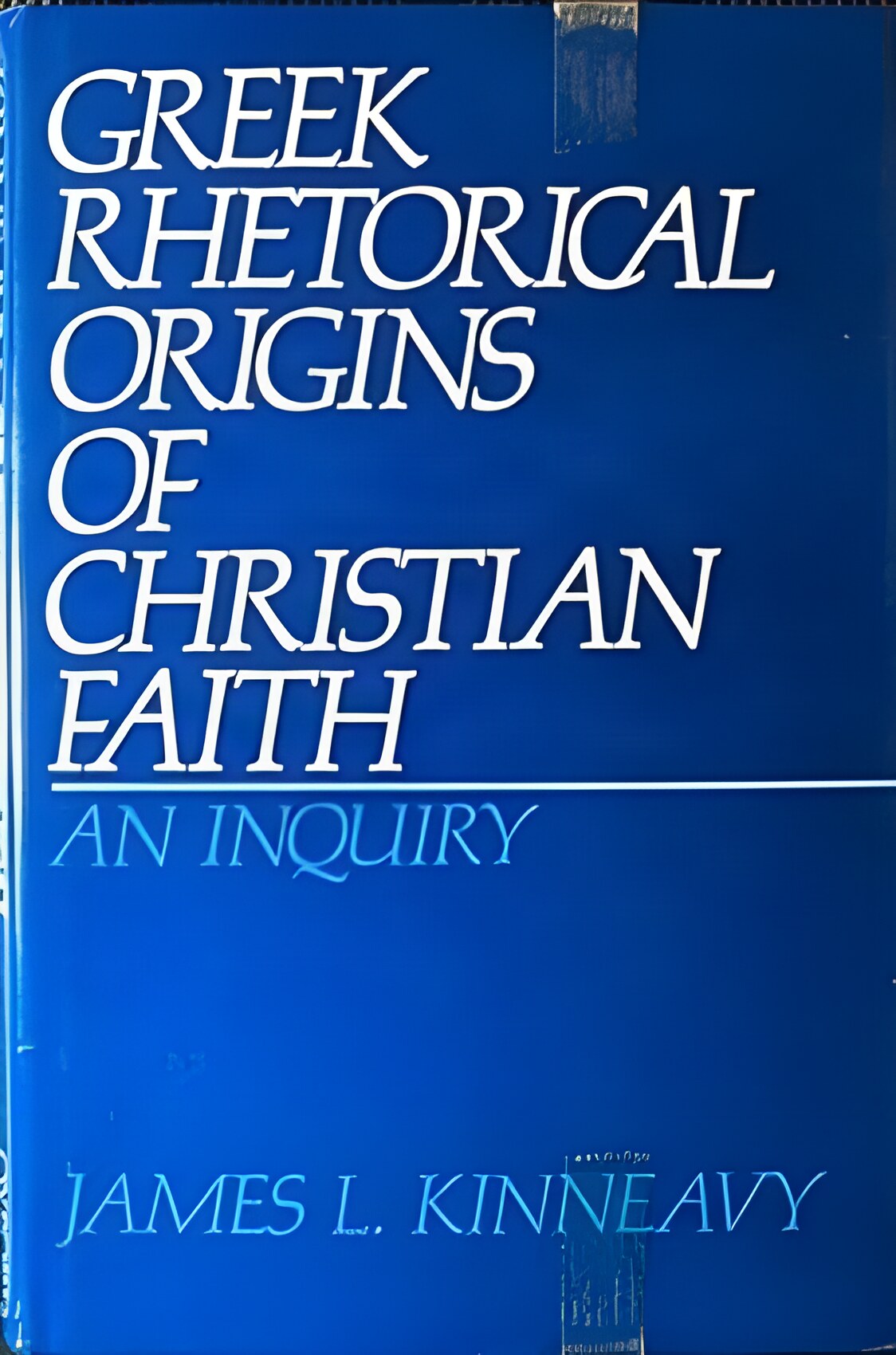
Hardcover. NY, Oxford University Press, 1st, 1987, Book: Very Good, Dust Jacket: Very Good, Hardcover in a bright dust jacket, 186 pages. What is the origin of Christian faith? Are the roots of the concept the same in both the Old and New Testaments? With the support of semantic, historical, and analytical evidence, Kinneavy develops a controversial and persuasive hypothesis that the origin of the Christian concept of faith can be traced to Greek classical rhetoric. The author examines the notions of faith formulated by eight major Christian and Jewish theologians, presents a meticulous case for the historical influence of Greek rhetoric on Hebraic thought, and concludes with a novel rhetorical study of the several hundred occurrences of the Greek terms for "faith" and "to believe," emerging with overwhelming support for the Greek influence on Christian faith. Name on front fly leaf, otherwise clean.
Hardcover. NY, Cambridge University Press, reprint, 2000, Book: Very Good, Dust Jacket: Very Good, Hardcover in a bright, price-clipped dust jacket, 256 pages. Originally published in 1971, this volume was created to commemorate the bicentenary of Hegel's birth in 1770. Thirteen essays are included from experts with diverse approaches, concentrating on the central issues of Hegel's political philosophy, and covering all of the major political works. These essays demonstrate the vitality of Hegel's philosophical perspective, engaging the reader and providing a way into the often difficult explication of his ideas. Whilst this is a commemorative edition, and the views put forward are broadly sympathetic, a critical distance is maintained, allowing for numerous fresh insights. Accessible and highly informative, this book will be of value to anyone with an interest in Hegelian thought and its political implications.
Hardcover. New York, State University of New York Press, 1st, 1991, Book: Very Good, Dust Jacket: Very Good, 233 pages. Hardcover. Dust jacket with light wear. Clean unmarked text.
Hardcover. Minneapolis, University of Minnesota, 2nd pr., 1965, Book: Very Good, Dust Jacket: Very Good, Hardcover in a lightly worn dust jacket, 197 pages. Professor Noble examines the basic philosophy and writing of six American historians, George Bancroft, Frederick Jackson, Charles A. Beard, Carl Becker, Vernon Louis Parrington, and Daniel J. Boorstin, and finds in them a common tradition which he calls anti-historical. He argues that this viewpoint is founded in the frontier interpretation of American history, that American historians have served as the chief political theorists and theologians of this country since 1830, and that their writings can be interpreted as Jeremiads designed to preserve a national covenant with nature. Clean copy.
Hardcover. Cambridge, W. Heffer & Sons, Revised, 1928, Book: Very Good, Dust Jacket: None, 94 pages. Hardcover with no dust jacket. A few minor margin marks in pencil. Dark blue cover boards.
Softcover. Evanston IL, Northwestern University Press, reprint, Book: Very Good, Dust Jacket: None, Softcover, 333 pages. A work about the problems in the philosophy of history by the French hermeneutic phenomenologist. Introduction by Charles A. Kelbley; Foreword by David M. Rasmussen. Clean copy.
Hardcover. London, England, Routledge & Kegan Paul Limited, 1st Editions, 1950, Book: Very Good, Dust Jacket: None, International Library of Sociology and Social Reconstruction. Two Volumes: Vol. 1: 352 pages. Vol. 2: 706 pages plus publisher ads. Previous owner's name on front flyleafs. Green cloth cover boards, gilt title on spine, fading to boards, especially to spines. Binding tight. Spines straight. Pages/edges have light tanning, otherwise clean. Appearing in isolation as they do, autobiographies demand for their description and appreciation, a comprehensive view of the development of the human mind. DOMESTIC SHIPPING ONLY.
Softcover. Urbana IL, University of Illinois Press, 1st pbk, 2006, Book: Very Good, Dust Jacket: None, Softcover, 83 pages. In Humanism of the Other, Emmanuel Levinas argues that it is not only possible but of the highest exigency to understand one's humanity through the humanity of others. In paperback for the first time, Levinas's work here is based in a new appreciation for ethics and takes new distances from phenomenology, idealism, and skepticism to rehabilitate humanism and restore its promises. Painfully aware of the long history of dehumanization that reached its apotheosis in Hitler and Nazism, Levinas does not underestimate the difficulty of reconciling oneself with another. The humanity of the human, Levinas argues, is not discoverable through mathematics, rational metaphysics, or introspection. Rather, it is found in the recognition that the other person comes first, that the suffering and mortality of others are the obligations and morality of the self. Clean copy.
Hardcover. Cambridge MA, Harvard University Press, 1st, 1963, Book: Very Good, Dust Jacket: Very Good, Hardcover, 184 pages, maroon cloth with a lightly worn dust jacket. Previous owner's signature, pencil notes on front end paper. Otherwise clean. These studies concern the development in the Renaissance of a new perspective on the past, a new method for interpreting the meaning of the documents of the past, and a reformulation of traditional doctrine that history was philosophy teaching by example.
Softcover. Oxford UK, Oneworld, 1st, 2005, Book: Very Good, Dust Jacket: None, Softcover, 152 pages. Renowned expert William Chittick covers the life and works of this legendary Sufi writer. The importance of Muhyi al-Din Ibn al-Arabi (1165-1240) for Islamic mysticism lies in the fact that he was a speculative thinker of the highest order, albeit diffuse and difficult to understand. His central doctrine is the unity of all existence. In this text, William Chittick explores how, through the work of Ibn Al-Arabi, Sufism moves away from anguished and ascetic searchings of the heart also conscience and becomes a matter of speculative philosophy and theosophy. Ex-lib with stamping and stickers on front endpapers, cover, otherwise clean.
Hardcover. DeKalb IL, Northern Illinois University Press, 1st, 1972, Book: Very Good, Dust Jacket: Very Good, Hardcover in a bright dust jacket, 554 pages. Text in Italian, English and French. Clean, like-new copy.
Hardcover. New Haven CT, Yale University Press, 1st, 2012, Book: Very Good, Dust Jacket: Very Good, Hardcover in a bright dust jacket, 232 pages. Political theorist Michael Walzer reports his findings after decades of thinking about the politics of the Hebrew Bible. Attentive to nuance while engagingly straightforward, Walzer examines the laws, the histories, the prophecies, and the wisdom of the ancient biblical writers and discusses their views on such central political questions as justice, hierarchy, war, the authority of kings and priests, and the experience of exile. Because there are many biblical writers with differing views, pluralism is a central feature of biblical politics. Yet pluralism, Walzer observes, is never explicitly defended in the Bible; indeed, it couldn't be defended since God's word had to be as singular as God himself. Yet different political regimes are described in the biblical texts, and there are conflicting political arguments--and also a recurrent anti-political argument: if you have faith in God, you have no need for strong institutions, prudent leaders, or reformist policies. At the same time, however, in the books of law and prophecy, the people of Israel are called upon to overcome oppression and "let justice well up like water, righteousness like an unfailing stream." Name on front fly leaf, light pencil marking to pages.
Hardcover. NY, Metropolitan Museum of Art, 1st, 2019, Book: Very Good, Dust Jacket: None, Hardcover, pictorial boards with a wraparound title band. This handsome volume explores the modern discipline of fashion collecting, presenting remarkable works from one of the greatest private collection of 20th-century costume. This group of clothing and accessories, assembled over several decades by Sandy Schreier, includes many rare and historically significant pieces that define key moments in fashion. Her collection features not only iconic garments by established designers but also looks by pioneering couturiers rarely represented in museum collections. Outstanding works, by designers that include Gilbert Adrian, Cristobal Balenciaga, Boue Soeurs, Gabrielle Chanel, Christian Dior, Mariano Fortuny, Karl Lagerfeld, Paul Poiret, and Valentina, are illustrated with new photography by fashion photographer Nicholas Cope. An informative introduction traces the progress of her collecting from its roots in Detroit to the present day. The book also includes descriptions of over 80 works, including garments, accessories, and rare designer drawings, in addition to a lively interview with Schreier by Andrew Bolton that reveals her collecting philosophy.

 "Freud's Discovery of Psychoanalysis: The Politics of Hysteria (SIGNED BY AUTHOR)by: McGrath, William J.")


 "From Alexander to Constantine: Passages and Documents Illustrating the History of Social and Political Ideas 336 B.C.-A.D. 337by: Barker, Ernest")






 "Heidegger and the Project of Fundamental Ontologyby: Taminiaux, Jacques")

 "Historical Account of The Church Hymnary: Revised Edition, Anby: Kinloch, T.F.")
 "History of Autobiography in Antiquity (Two Volumes)by: Misch, Georg, Dr. Karl Mannheim (Editor)")


 "History Without a Subject: The Postmodern Conditionby: Ashley, David")



 "Il Seicento e Descartes. Dibattiti Cartesianiby: Del Prete, Antonella")
 "In God's Shadow: Politics in the Hebrew Bibleby: Walzer, Michael")