Hardcover. Princeton NJ, Kingston Press, 1st, 1984, Book: Very Good, Dust Jacket: Very Good, Hardcover, 227 pages, bibliography and index. A scarce scholarly history. Slight sunning to dust jacket spine, otherwise like new, clean and tight.
Softcover. University Press of Maryland, 2000, Softcover, 306 pages. Memoir (translated from the German by Henny Wenkart) of a Jewish woman in 19th-century Russia, with scholarly introduction and analysis. Pauline Wengeroff's memoir tells what it was like to be a Jewish girl and a Jewish woman in 19th-century Russia, as foundations of faith and tradition eroded around her. Clean copy.
Hardcover. Stanford CA, Stanford University Press, 1st, 1992, Book: Good, Dust Jacket: Very Good, Hardcover, 443 pages. This book contains UNDERLINING which is mainly confined to chapter 7. Otherwise a bright, tight copy in an unclipped dust jacket.
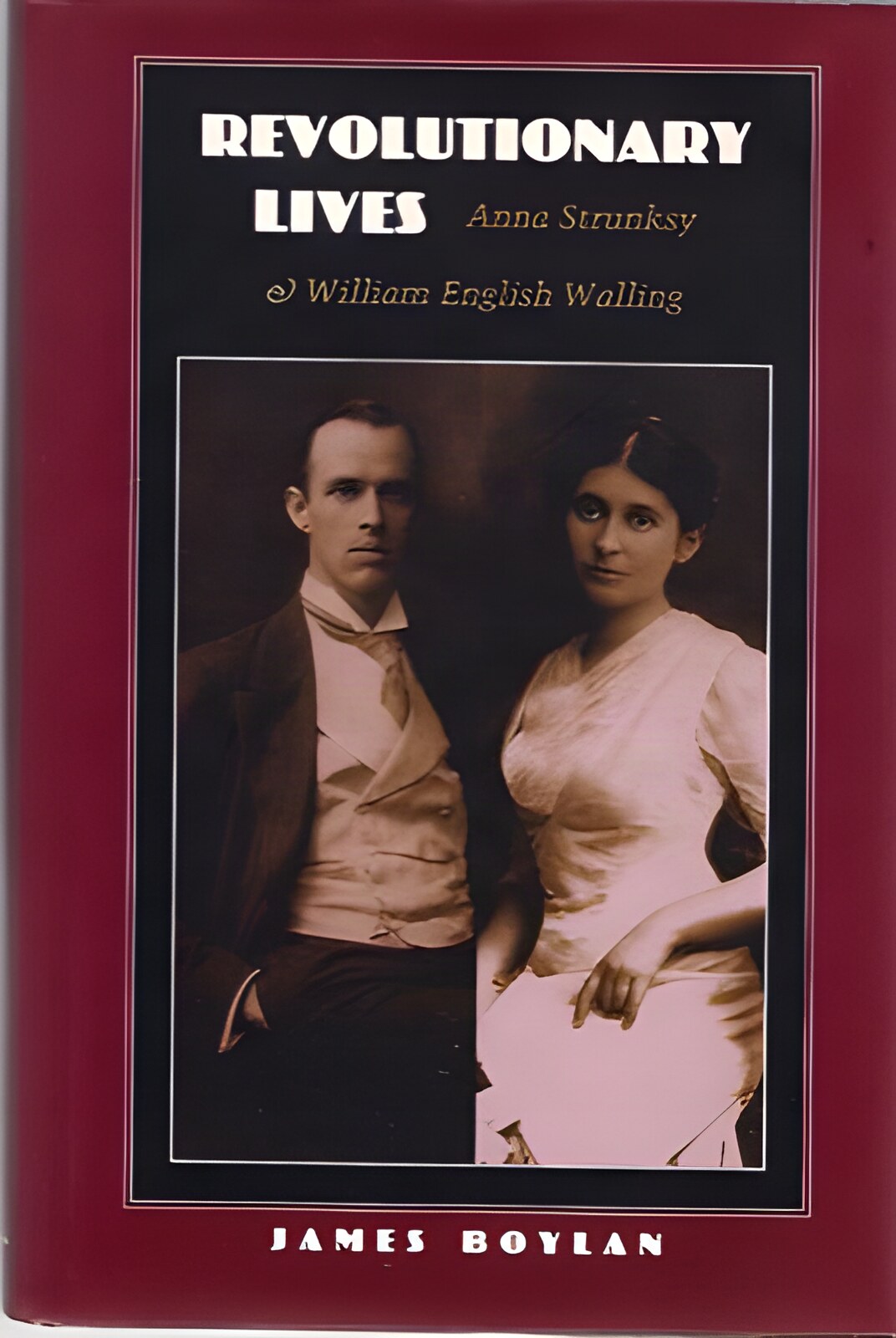
Hardcover. Amherst MA, University of Massachusetts Press, 1st, 1999, Book: Very Good, Dust Jacket: Very Good, Hardcover in a bright dust jacket, 334 pages, b&w illustrations. Relying on original historical materials, an illustrated biography traces the lives of an influential pair of American socialists--he a wealthy journalist-activist, she an aspiring novelist. When they fell in love amid the tumult of the 1905 Russian revolution, they believed they were destiny's match: William English Walling, a wealthy American journalist-activist from the Midwest, an Anna Strunsky, an aspiring novelist from San Francisco. Vowing to dedicate themselves to socialist ideals, they soon became celebrities who moved in an elite circle of writers, journalist, and reformers. ultimately, both their marriage and their political commitment faltered, but not before they had participated in some of the most urgent social causes of their day. Drawing on archival sources and family materials, James Boylan creates engaging portraits of two striking figures. He reveals the details of Strunsky's intesnse involvement with Jack London and their troubled literary collaboration. He describes the creation of Walling's "revolutionary news bureau" in Russia under scrutiny of the czarist police, and Strunsky's harrowing journey to report on a pogrom. He also recounts the couple's dash to cover a race riot in Illinois, Walling's pivotal role in creating the NAACP and the disasterous schism between Strunksky's pacifism and Walling's bellicosity during World War I. Clean copy.
Hardcover. Milwaukee WI, Amadeus, 1st, 2016, Book: Very Good, Dust Jacket: Very Good, Hardcover in a bright dust jacket, 406 pages, illustrations. INSCRIBED by co-editor Malcolm Crocker. A rare, revealing look at the composer, written by his granddaughter Tatiana. Featuring a wealth of correspondence and photographs from his family's archives, this book provides new, fascinating details about the composer's life, work, and relations with close friends and colleagues, including Borodin, Mussorgsky, and Tchaikovsky. It also sheds new light on his wife, Nadezhda Purgold, an accomplished composer and pianist who helped her husband with his own compositions. Many letters involve Rimsky-Korsakov's other family members and important figures in art, history, literature, and music of the late 19th and early 20th centuries. Clean copy.
Hardcover. Toronto, Trafalgar Press, 1st, 1986 , Book: Very Good, Dust Jacket: Very Good, Hardcover in a bright "(Skillfully traces the causes of the Crimean War and sketches a vivid picture of an age which made possible 'the world's most curious and unneccesary struggle'. Troubetzkoy ingeniously weaves together the varied developments in diplomacy, trade, nationalistic expression and personality conflict in the decade which led to the hostilities. The armies of the belligerents are described (and the) reader is introduced to the principal personages of the drama - Napoleon III, Marshal St. Arnaud, Lord Raglan and the great Russian engineer, Todleben, who, apart from Florence Nightingale, was the only one to earn true distinction during the War. Vividly described are Nicholas I and the Russian Empire." Clean copy.
Hardcover. Berkeley CA, University of California Press, 1st, 1999, Book: Very Good, Dust Jacket: Very Good, Hardcover, 156 pages. Between 1935 and 1938 the celebrated photographer Roman Vishniac explored the cities and villages of Eastern Europe, capturing life in the Jewish shtetlekh of Poland, Romania, Russia, and Hungary, communities that even then seemed threatened-not by destruction and extermination, which no one foresaw, but by change. Using a hidden camera and under difficult circumstances, Vishniac was able to take over sixteen thousand photographs; most were left with his father in a village in France for the duration of the war. With the publication of Children of a Vanished World, seventy of those photographs are available, thirty-six for the first time. The book is devoted to a subject Vishniac especially loved, and one whose mystery and spontaneity he captured with particular poignancy: children.
Hardcover. New York, Oxford University Press, 1st, 1990, Book: Very Good, Dust Jacket: Very Good, Hardcover, 239 pages. Minor edge wear to dust jacket. Else a very clean, tight copy. The dramatic events of the twentieth century have often led to the mass migration of intellectuals, professionals, writers, and artists. One of the first of these migrations occurred in the aftermath of the Russian Revolution, when more than a million Russians were forced into exile. With this book, Marc Raeff, one of the world's leading historians of Russia, offers the first comprehensive cultural history of the "Great Russian Emigration." He examines the social and institutional structure of the emigration and describes its rich cultural and intellectual life. He points out that what distinguishes this emigration from other such episodes in European history is the extent to which the emigres succeeded in reconstituting and preserving their cultural creativity in the West. The flourishing Russian communities of Paris, Berlin, Prague and Kharbin not only enriched Russian arts and letters, but also significantly influenced the culture of their Western hosts, and Raeff concludes with an assessment of their impact on the development of modern Western and Soviet culture.
Hardcover. NY, Henry Holt and Company, 1st, 1899, Book: Good, Dust Jacket: None, 411 pages. Hardcover. Previous owners name on inside front cover. Green cloth with gilt title and decoration. Front and rear hinges cracked. Missing front endpaper. Heavy foxing to preliminary pages up to contents page, and last 5 pages at end of book; including map. Front fold-out map at title page and rear most map both badly damaged. Foxing to edges. Moderate wear to covers. Clean, unmarked text.
Hardcover. Moscow, Sovietsky Khudozhnik, 1st, 1990, Book: Very Good, Dust Jacket: Very Good, 359 pages. Hardcover with dust jacket. Russian text only. Profusely illustrated in full color and black & whiite. A survey of Russia's brief Art Nouveau movement in architecture. Bright, clean copy in a similar dust jacket. In a plain cardboard slipcase.
Hardcover. New York, Harper & Brothers, 1st, 1887, Book: Very Good, Dust Jacket: None, Hardcover, 310 pages. Brown cloth, gilt lettering to spine. Light wear and rubbing to covers and edges of spine. Clean, tight copy.
Hardcover. London, VIVAYS, 1st, 2012, Book: Very Good, Dust Jacket: Very Good, 200 pages. Hardcover with dust jacket. Like new in publisher's shrink-wrap. "This volume, based on rarely seen Russian archives, traces the history of the silent film poster in Russia, starting with a poster designed by Paul Assaturov ("Stenka Razin", 1908) in the style of ancient naive Russian imagery to the latest advertise- ment for a silent movie by Yuri Pimenov from 1934. Full-page reproductions of 161 Russian silent film posters are presented here in chronological order - from the very beginning of the 20th century until the 1930s.
Hardcover. Russia, Aurora Art Publishers, 1st, 1991, Book: Very Good, Dust Jacket: Very Good, 199 pages. Hardcover with dust jacket. Some foxing to textblock edges. Otherwise a very clean, unmarked copy with some minor dust jacket wear. Black & white and color illustrations throughout. A tight copy.
Hardcover. New York, Basic Books , 1st, 1984, Book: Good, Dust Jacket: Good, 239 pages. Red cloth. Light edgewear to dust jacket with one small closed tear to front cover. Spine slightly slanted. Clean, tight copy.
Hardcover. NY, Abrams, 1st, 2005, Book: Very Good, Dust Jacket: Very Good, Hardcover, 192 pages. Shadows of War presents an astonishing collection of previously unpublished, unknown photographs of life at the front lines in the German war machine during World War II, taken by a common foot soldier. The work of a gifted amateur, Willi Rose's images present a powerful vision of a largely suppressed aspect of the war. These fractured glimpses of the world at war, from quotidian tasks and moments of leisure to scenes of death and destruction, reveal one man's experience of the epic flow of history. A miller in the years before World War II, Rose was drafted into the German army in October 1939 and served as a motorbike messenger on the front, first in France and then in Russia. He was wounded twice and was later captured by the Polish army, eventually returning home in June 1946. Throughout his military service, Rose sent home photographs that he took of the action, mostly along the Eastern Front. Discovered by his widow after his death, these images form a unique photographic document of one soldier's war.
Hardcover. NY, Knopf, 1st, 2012, Book: Very Good, Dust Jacket: Very Good, Hardcover in a bright, unclipped dust jacket. 418 pages, b&w illustrations. From the author of the best-selling One Minute to Midnight, a riveting account of the pivotal six-month period spanning the end of World War II, the dawn of the nuclear age, and the beginning of the Cold War. When Roosevelt, Stalin, and Churchill met in Yalta in February 1945, Hitler's armies were on the run and victory was imminent. The Big Three wanted to draft a blueprint for a lasting peace--but instead set the stage for a forty-four-year division of Europe into Soviet and western spheres of influence. After fighting side by side for nearly four years, their political alliance was rapidly fracturing. By the time the leaders met again in Potsdam in July 1945, Russians and Americans were squabbling over the future of Germany and Churchill was warning about an "iron curtain" being drawn down over the Continent. These six months witnessed some of the most dramatic moments of the twentieth century: the cataclysmic battle for Berlin, the death of Franklin Roosevelt, the discovery of the Nazi concentration camps, Churchill's electoral defeat, and the dropping of atomic bombs on Japan. While their armies linked up in the heart of Europe, the political leaders maneuvered for leverage: Stalin using his nation's wartime sacrifices to claim spoils, Churchill doing his best to halt Britain's waning influence, FDR trying to charm Stalin, Truman determined to stand up to an increasingly assertive Soviet superpower.
Hardcover. Vancouver, CN, University of British Columbia Press, 1st, 1988, Book: Very Good, Dust Jacket: Very Good, Like New. Black & white illustrations. Harcover in a bright dust jacket, 302 Pages.
Softcover. New York, Harry N. Abrams, Inc., 1st, 1997, Book: Very Good, Dust Jacket: None, 336 pages. Softcover. Color and b/w illustrations throughout. Covers in excellent condition. Touch of foxing to top edge. Pages clean and bright. The ever-rapacious Nazis looted staggering quantities of great art and antiques from the nations they occupied. Much of it found its way back to Germany, and following the Allied victory, many thousands of rare (and some priceless) pieces were identified, and returned to the countries from which they had been taken. But not all of the paintings, statues, and archaeological treasures were recovered: Some were taken by Soviet troops and disappeared into Russia. Still others slipped into the black market in western Europe, and were snapped up by wealthy (if unprincipled) collectors. A 1995 symposium at the Bard Graduate Center for Studies in the Decorative Arts brought together European and American investigators and historians to discuss both the the Nazi thefts and the current state of knowledge of the whereabouts of the many still missing treasures. Those papers are reprinted here. While the pieces are detailed, dry, and likely to be of most interest to specialists, there are some extraordinary stories, most prominently the description of the recent rediscovery of ``Priam's treasure,'' excavated by Schliemann at Troy and hidden since WW II in a Russian museum. (123 illustrations, 25 in color).
Softcover. New Lebanon NY, Omega Publications, 1st, 2007, Book: Very Good, Dust Jacket: None, Softcover, 234 pages, b&w photos. Everything about Noor Inayat Khan was extraordinary. A great-great-great granddaughter of Tipu Sultan, the Tiger of Mysore, she was born in Moscow to an American mother and an Indian Sufi Muslim father. Due to the unrest in Russia the family moved to London and from there to France where she spent the happiest years of her life studying music, child psychology and writing children's books. In 1940, her father having deserted the family and died in India years before, the family moved once again to England where Noor was trained as a wireless operator with the aim of sending her to German-occupied France to join up with the resistance. Noor was small and delicate, emotional, imaginative, shy, easily flustered and distracted. On the other hand there was her steely determination to serve her country, the desperate need for wireless operators and her perfect French. She was sent on her mission in June 1943. Her biography contains all the elements of an exciting spy novel but it was horrific and deadly reality. Clean copy.
Hardcover. Yorkshire UK, Pen and Sword Military, 1st, 2019, Book: Very Good, Dust Jacket: Very Good, Hardcover in a bright, unclipped dust jacket, 320 pages. So much has been written about the Battle of Stalingrad - the Soviet victory that turned the tide of the Second World War - that we should know everything about it. But the history of the war, and the battle, is evolving and is being written anew, and Alexey Isaev's engrossing account is a striking example of this fresh approach. B&w photos, color maps. Clean copy.
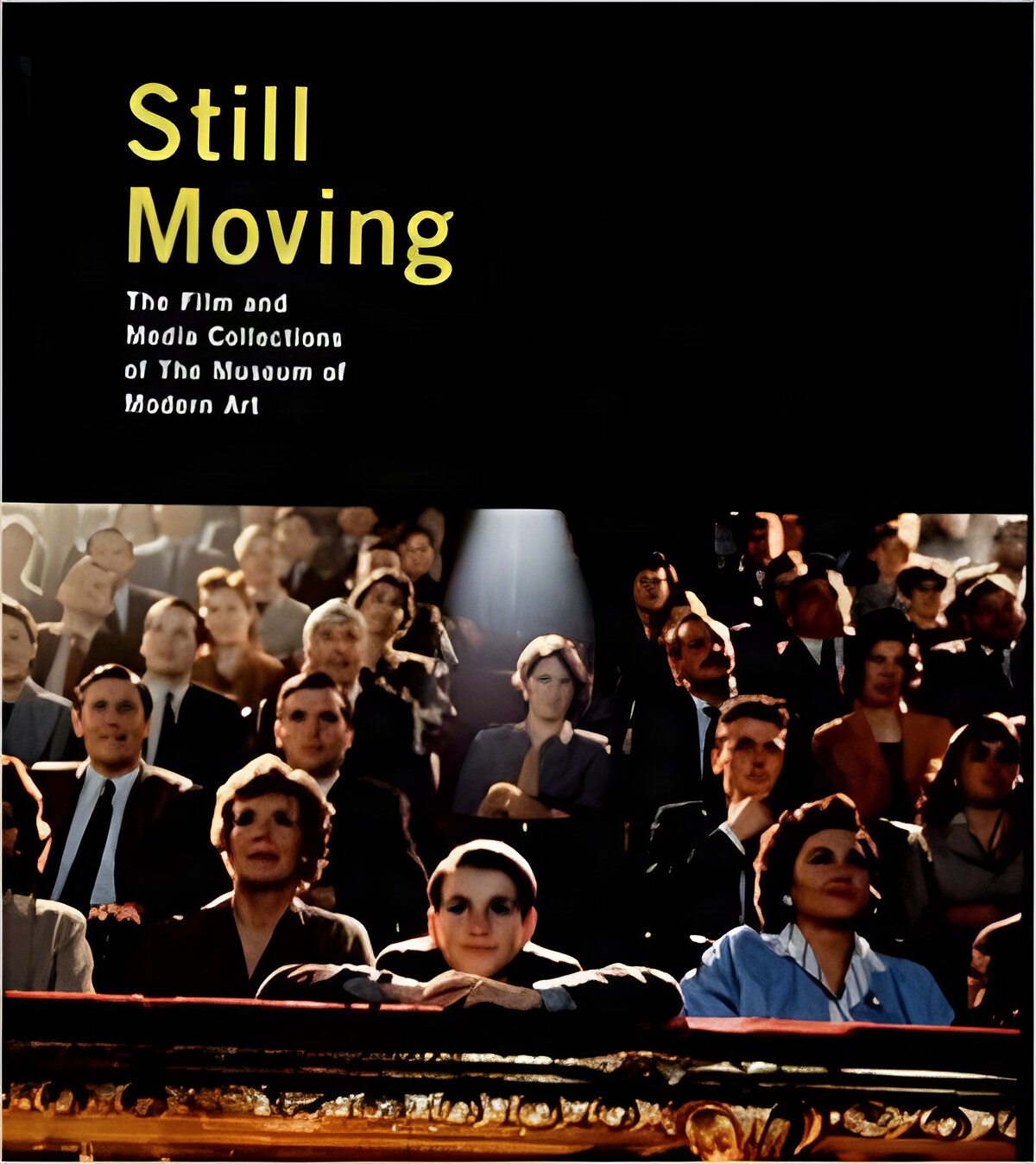
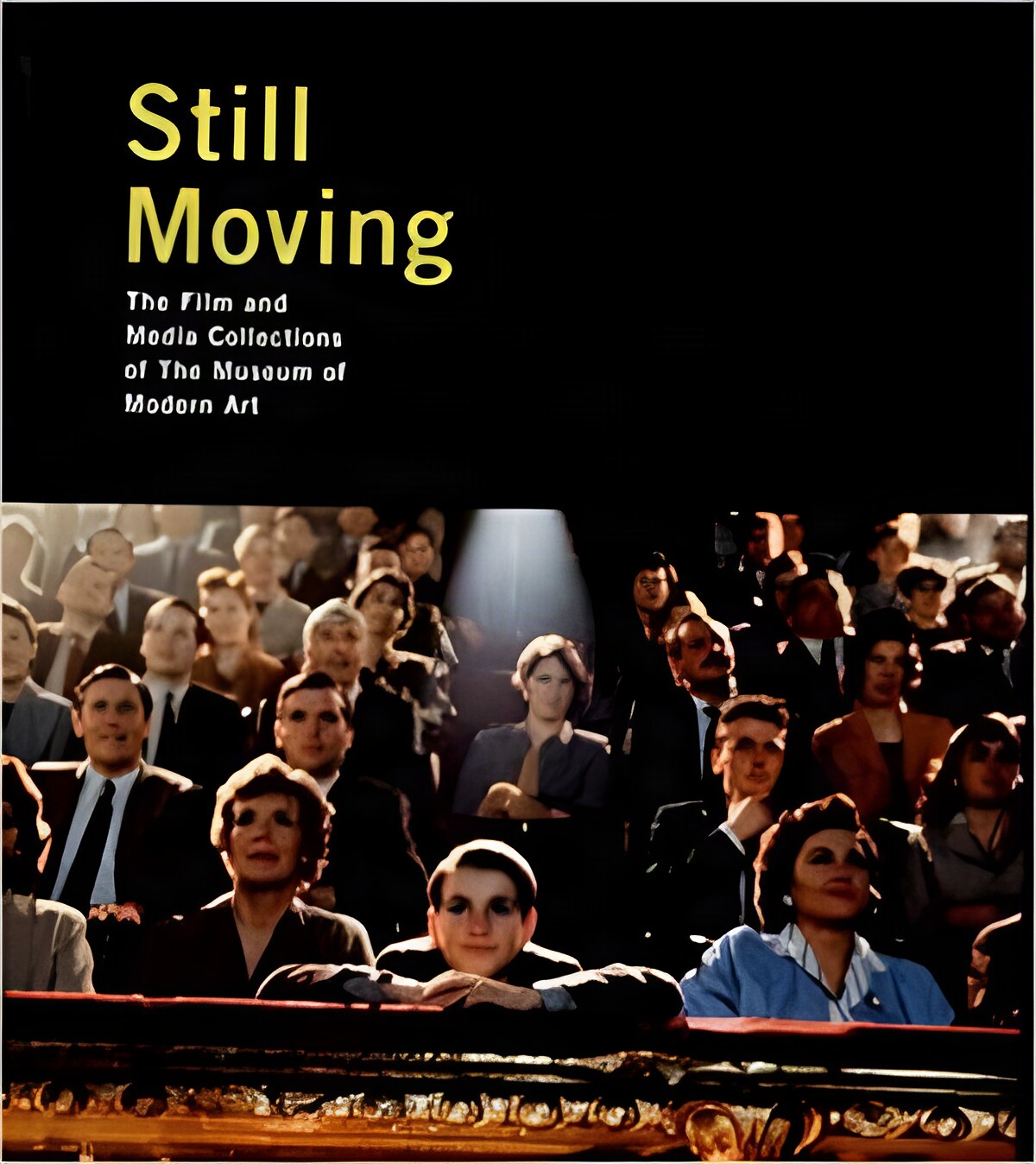
Hardcover. New York, The Museum of Modern Art, New York, 1st, 2006, Book: Very Good, Dust Jacket: None, Hardcover, 375 pages, illustrated throughout in color and b&w. Clean, unmarked copy in excellent condition. 507 illustrations (108 in color, 399 in duotone). Founded in 1935, The Museum of Modern Art's Department of Film and Media is home to one of the most important moving-image archives in the world. Still Moving: The Film and Media Collections of The Museum of Modern Art marks the first time that MoMA has published a volume dedicated exclusively to these holdings. Drawn primarily from the Museum's vast library of film stills, the nearly 500 images in this book represent just a fraction of the department's renowned archive, including one of the world's most important collections of international silent cinema; classic early sound films from the United States, Great Britain, France, Germany, Italy, Russia, and Japan; extensive holdings of documentary and animation shorts and feature films; significant examples of Hollywood filmmaking from studios such as Warner Brothers, RKO, MGM, Twentieth Century-Fox, and Paramount; and more recent works by leading independent and avant-garde film and media artists.
Hardcover. New York, The Museum of Modern Art, 1st, 2006, Book: Very Good, Dust Jacket: None, Hardcover, 375 pages, illustrated throughout in color and b&w. Clean, unmarked copy in excellent condition. 507 illustrations (108 in color, 399 in duotone). Founded in 1935, The Museum of Modern Art's Department of Film and Media is home to one of the most important moving-image archives in the world. Still Moving: The Film and Media Collections of The Museum of Modern Art marks the first time that MoMA has published a volume dedicated exclusively to these holdings. Drawn primarily from the Museum's vast library of film stills, the nearly 500 images in this book represent just a fraction of the department's renowned archive, including one of the world's most important collections of international silent cinema; classic early sound films from the United States, Great Britain, France, Germany, Italy, Russia, and Japan; extensive holdings of documentary and animation shorts and feature films; significant examples of Hollywood filmmaking from studios such as Warner Brothers, RKO, MGM, Twentieth Century-Fox, and Paramount; and more recent works by leading independent and avant-garde film and media artists.
Hardcover. Somerville MA, Candlewick, 1st, 2015, Book: Very Good, Dust Jacket: Very Good, Hardcover in a bright dust jacket, 456 pages, SIGNED BY AUTHOR on the title page. In September 1941, Adolf Hitlers Wehrmacht surrounded Leningrad in what was to become one of the longest and most destructive sieges in Western history-almost three years of bombardment and starvation. Trapped between the Nazi invading force and the Soviet government itself was composer Dmitri Shostakovich, writing a symphony to rouse, rally, eulogize, and commemorate his fellow citizens: the Leningrad Symphony. This is the true story of a city under siege, the triumph of bravery and defiance in the face of terrifying odds. It is also a look at the power-and layered meaning-of music in beleaguered lives. Symphony for the City of the Dead is a masterwork thrillingly told and impeccably researched by National Book Award-winning author M. T. Anderson. Signed copy sticker on front cover, otherwise like new.

 "Religious Revolt in the XVIIth Century: The Schism of the Russian Churchby: Lupinin, Nickolas")
 "Rememberings: The World of a Russian-Jewish Woman in the Nineteenth Century by: Pauline Wengeroff")
 "Revolution of 1905 - Authority Restored, Theby: Ascher, Abraham")
 "Rimsky-Korsakov: Letters to His Family and Friends by: Tatiana Rimsky-Korsakov")

 "Roman Vishniac: Children of a Vanished Worldby: Mara Vishniac Kohn/Roman Vishniac")
 "Russia Abroad: A Cultural History of the Russian Emigration, 1919-1939by: Raeff, Marc")
 "Russia's Art Nouveauby: Borisova, Elena and Grigory Sternin")
 "Russian Church and Russian Dissent, The: Comprising Orthodoxy, Dissent, and Erratic Sectsby: Heard, Albert F.")
 "Russian Empire and Soviet Union - A Guide to Manuscripts and Archival Materials in the United States, Theby: Grant, Steven A./John H. Brown")
 "Russian Film Posters: 1900-1930by: Boerner, Maria-Christina")
 "Russian Painted Shop Signs and Avant-Garde Artistsby: Povelikhina, A. V")
 "Russian Revolutions of 1917: The Origins of Modern Communismby: Schapiro, Leonard")
 "Shadows of War: A German Soldier's Lost Photographs of World War IIby: Petra Bopp, Willi Rose , et al.")
 "Six Months in 1945: FDR, Stalin, Churchill, and Truman--from World War to Cold Warby: Michael Dobbs")
 "Southern And Eastern Polynesia - Russia and the South Pacific 1696-1840by: Barratt, Glynn")
 "Spy Princess: The Life of Noor Inayat Khanby: Basu, Shrabani")
 "Stalingrad: City on Fireby: Isaev, Alexey")