Hardcover. London, Elek, 1st, 1975, Book: Very Good, Dust Jacket: Good, Hardcover, 537 pages, illustrated throughout with 420 plates, including 86 in full color. Very large, heavy book. Light edgewear, rubbing and de-lamination to dust jacket. Clean, tight copy.
Hardcover. New Haven CT, Yale University Press, 1st, 2019, Book: Very Good, Dust Jacket: None, Hardcover, pictorial boards, 232 pages. The question "What is American art?" might conjure the hyperrealism of Raphaelle Peale and William Harnett, the bold graphic style of Stuart Davis and Jacob Lawrence, or the Precisionist forms of Charles Sheeler. Little known, however, is that such notions of American art are significantly owed to a Russian Jewish immigrant named Edith Halpert. The founder of the Downtown Gallery in New York, Halpert shaped an identity for American art, declaring that its thrilling heterogeneity and democratic values were what most distinguished it from the European avant-garde. For forty-plus years, Halpert's gallery brought recognition and market success to now-legendary American artists--among them Arthur Dove, Marsden Hartley, and Georgia O'Keeffe, in addition to the artists mentioned above. She relentlessly championed nonwhite, female, and unknown artists and was a formative advisor in the shaping of many of the nation's most celebrated art museums and collections, from San Francisco to Boston. Not content with those achievements, she also pioneered the appreciation and collecting of American folk art. Richly illustrated with works that passed through her groundbreaking gallery, this book tells the extraordinary and largely overlooked story of her career and legacy. The artists Halpert launched into the American canon are household names--and this book compellingly argues that hers should be, as well. In publisher's shrinkwrap.
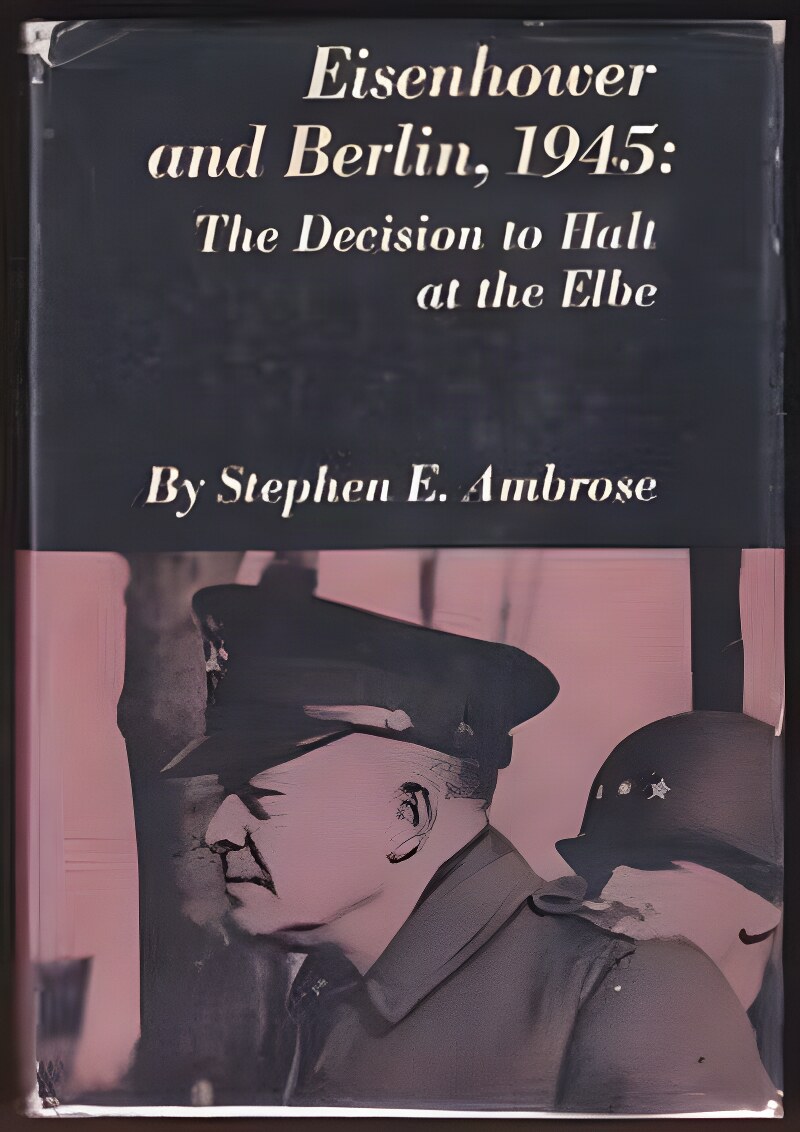
Hardcover. NY, W. W. Norton, 1st, 1967, Book: Very Good, Dust Jacket: Very Good, Hardcover in a worn, chipped dust jacket, 119 pages, maps, index. As WWII ground to a close, whose forces would be the first to reach Berlin? General Dwight David Eisenhower, supreme commander of the British and American armies, chose to halt at the Elbe River and leave Berlin to the Red Army. Could he have beaten the Russians to Berlin? If so, why didn't he? If he had, would the Berlin question have arisen? Would Germany have been divided as it was? Name on front fly leaf, otherwise clean.
Hardcover. NY, G. P. Putnam's Sons, 1st, 1974, Book: Very Good, Dust Jacket: Very Good, Hardcover in a bright, unclipped dust jacket. 374 pages. Russia has a fascinating history and author Robert Coughlan has provided us with an informative and compelling peek into a particularly notable segment of it, essentially the 1700s. The book covers the period from Tsar [Czar] Alexis (briefly) up to the reign of Tsar Alexander I, probably the most beloved of all the Romanovs. The focus of the work is on Catherine the Great. Her mentor, Elizabeth, was important through her shrewd handling of the many bumps and potholes which eventually allowed Catherine to take the throne against many rivals and usurpers. Clean copy.
Hardcover. Munchen GR%, C. Bertelsmann, 1st, 1992, Book: Very Good, Dust Jacket: Very Good, Hardcover, 255 pages, profusely illustrated with b&w photographs, text illustrations., maps, bibliog., Foreword by Lew Kopelew. GERMAN TEXT. Highly pictorial account of the disastrous German campaign 1942-43. Cllean copy.
Hardcover. New York, Aurora, 1st, Aurora, Book: Good, Dust Jacket: Good, Hardcover, 459 pages, 1430 illustrations, including 705 plates in full color. Light edgewear and rubbing to dust jacket with small scratch to front cover. Excellent reference copy.
Hardcover. NY, Houghton Mifflin Harcourt, 1st, 2018, Book: Very Good, Dust Jacket: Very Good, Hardcover in a bright, unclipped dust jacket. In 2008, when Michael McFaul was asked to leave his perch at Stanford and join an unlikely presidential campaign, he had no idea that he would find himself at the beating heart of one of today's most contentious and consequential international relationships As President Barack Obama's adviser on Russian affairs, McFaul helped craft the United States' policy known as "reset" that fostered new and unprecedented collaboration between the two countries And then, as US ambassador to Russia from 2012 to 2014, he had a front-row seat when this fleeting, hopeful moment crumbled with Vladimir Putin's return to the presidency This riveting inside account combines history and memoir to tell the full story of US-Russia relations from the fall of the Soviet Union to the new rise of the hostile, paranoid Russian president From the first days of McFaul's ambassadorship, the Kremlin actively sought to discredit and undermine him, hassling him with tactics that included dispatching protesters to his front gates, slandering him on state media, and tightly surveilling him, his staff, and his family. 506 pages, illustrations, clean copy.
Softcover. London, Phoenix Press, reprint, 2001, Book: Very Good, Dust Jacket: None, Softcover, 718 pages. One of history's greatest reformers, Garibaldi won his first battle against Aegean Pirates, his last battle against German Dragoons. He went to jail in Russia and led Brazilian rebels in the field. He was twice an admiral and seven times a general, a high government official in at least five countries, became Commander in Chief of the Uruguayan Army, Dictator of Sicily and Freeman of the City of London.
Hardcover. NY, Doubleday, 1st, 2005, Book: Very Good, Dust Jacket: Very Good, Hardcover in a bright, unclipped dust jacket, 270 pages. In the early eighties, Jennie Erdal was hired by a flamboyant British publisher she calls Tiger to be his specialist editor for Russian books. By degrees he co-opted her time and loyalty, to the point where she ended up becoming his ghostwriter for a huge nonfiction book on women, two glossy novels, and hundreds of newspaper columns, all published under his own name. She also wrote any number of his love letters. With often ironic directness and quiet comedy, Erdal relates how she became seduced into this peculiar job. On the way she makes fascinating excursions into her own private history, from vivid evocations of her Scottish Presbyterian childhood to moving observations on being an abandoned wife and lone parent to piercing insights into the very nature of literary creation. One of the smartest books about writing in years, Ghosting is a tour de force in which the author renders both Tiger and herself as compelling characters, connected to each other by a strange symbiosis. Their interaction is bizarre and also quite spooky; in the end this is a book about the very nature of identity, literary and otherwise. Clean copy.
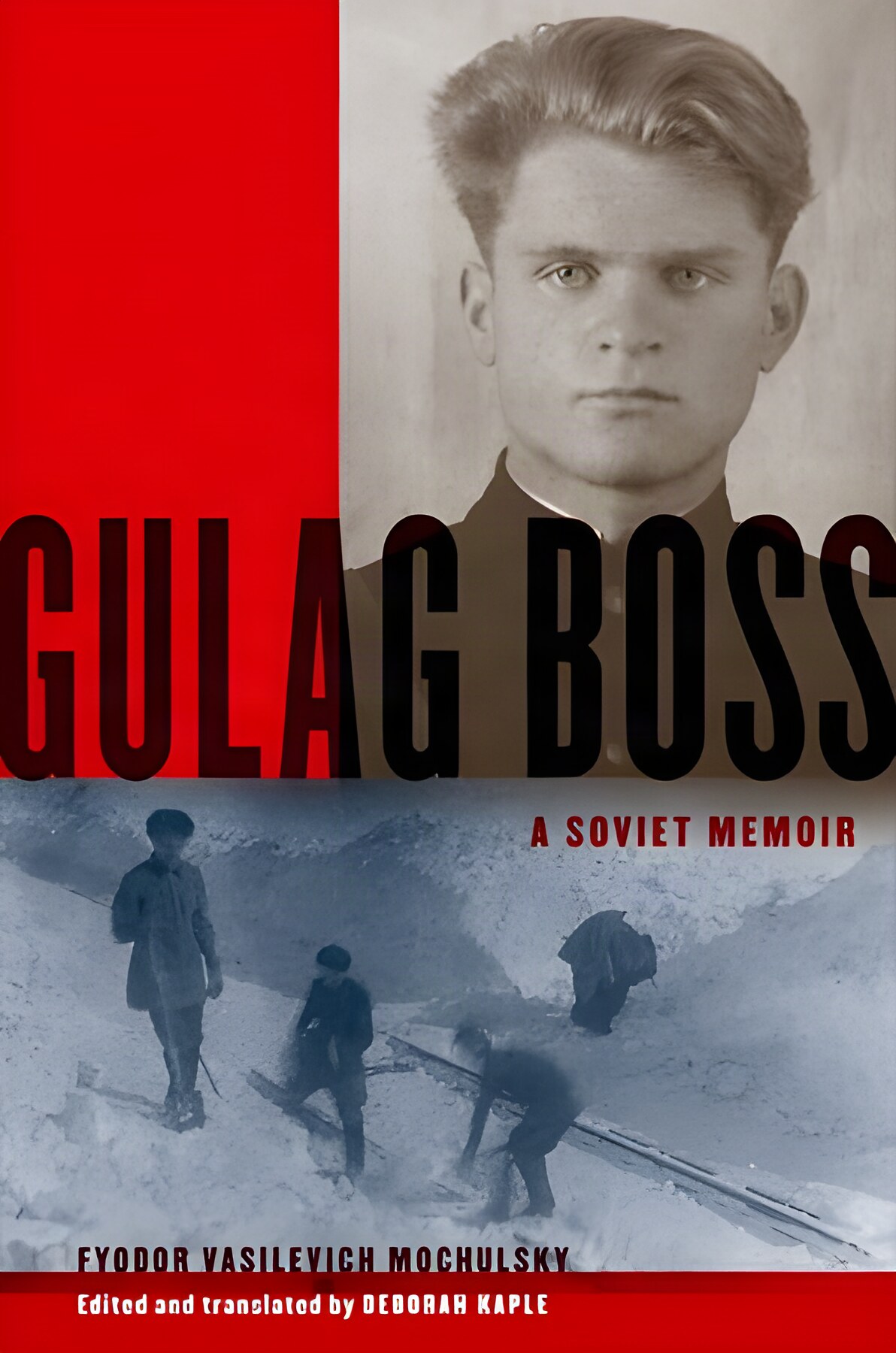
Hardcover. NY, Oxford University Press, 1st, 2011, Book: Very Good, Dust Jacket: Very Good, Hardcover in a bright dust jacket, 229 pages, b&w illustrations. The searing accounts of Aleksandr Solzhenitsyn, Evgeniia Ginsberg and Varlam Shalamov opened the world's eyes to the terrors of the Soviet Gulag. But not until now has there been a memoir of life inside the camps written from the perspective of an actual employee of the Secret police. In this riveting memoir, superbly translated by Deborah Kaple, Fyodor Mochulsky describes being sent to work as a boss at the forced labor camp of Pechorlag in the frozen tundra north of the Arctic Circle. Only twenty-two years old, he had but a vague idea of the true nature of the Gulag. What he discovered was a world of unimaginable suffering and death, a world where men were starved, beaten, worked to death, or simply executed. Mochulsky details the horrific conditions in the camps and the challenges facing all those involved, from prisoners to guards. He depicts the power struggles within the camps between the secret police and the communist party, between the political prisoners (most of whom had been arrested for the generic crime of "counterrevolutionary activities") and the criminal convicts. And because Mochulsky writes of what he witnessed with the detachment of the engineer that he was, readers can easily understand how a system that destroyed millions of lives could be run by ordinary Soviet citizens who believed they were advancing the cause of socialism. Clean copy.
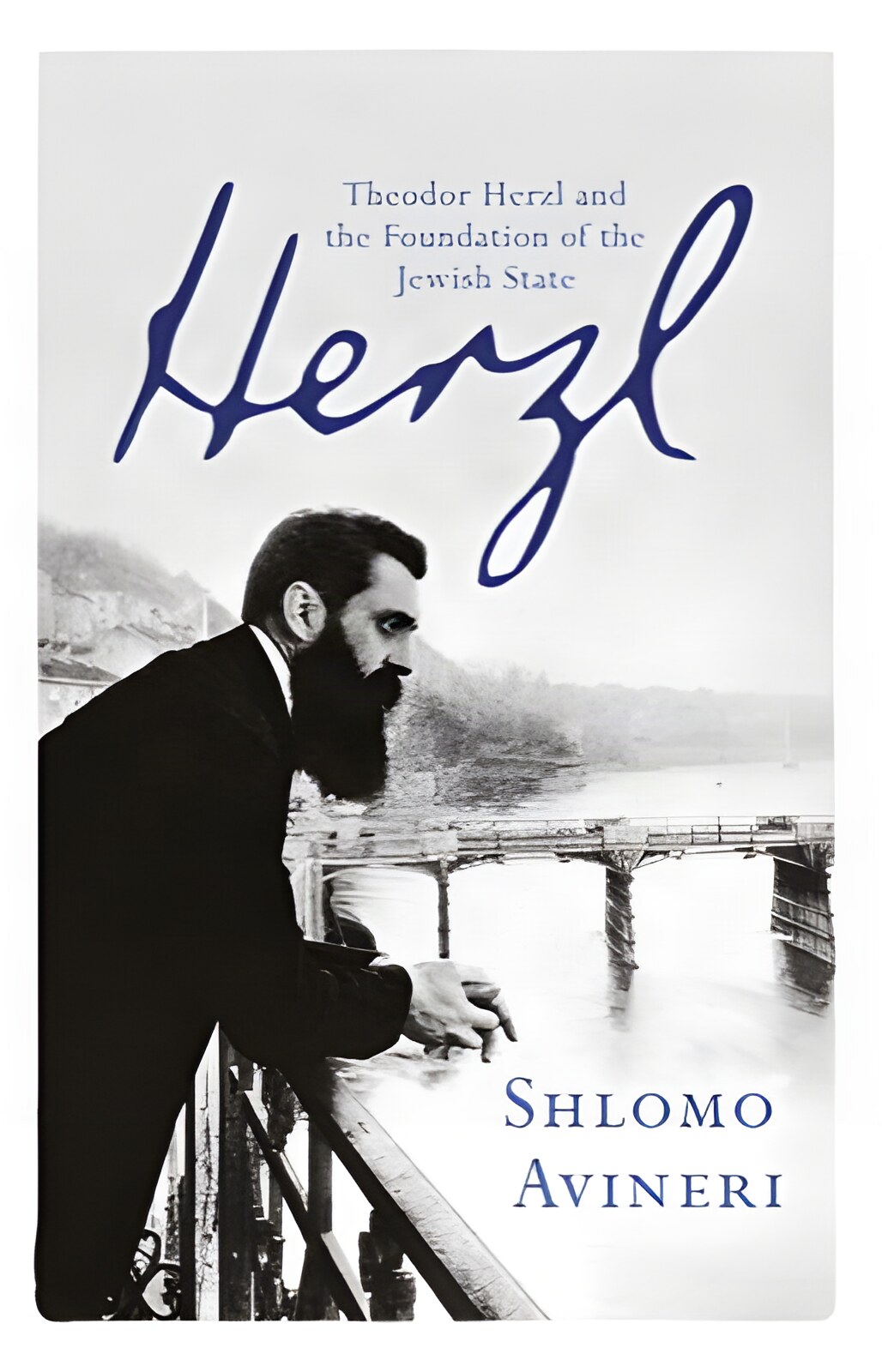
Hardcover. London, Weidenfeld & Nicolson, 1st UK, 2013, Book: Very Good, Dust Jacket: Very Good, Hardcover in a bright, unclipped dust jacket. Drawing extensively on his diaries as well as his published works, this intellectual biographical follows Herzl's transformation from a private person into the founder and leader of a political movement which made the quest for a Jewish state into a player in international politics. Contrary to the conventional view which saw the Dreyfus affair as the trigger for Herzl's loss of belief in the promise of Jewish emancipation, Avineri shows how it was the political crisis of the Austro-Hungarian Habsburg Empire, torn apart by contending national movements, which convinced Herzl of the need for a Jewish polity. In response to the wide resonance for his 1896 The Jewish State, Herzl convened the first Zionist Congress in Basel in 1897, which established the World Zionist Organization with its representative and elected institutions; this in turn became the foundation for Israel's democratic political system. In his efforts to gain international support for a Jewish state, Herzl met with the Ottoman Sultan, the German Emperor Wilhelm II, Pope Pius X, British, Russian and German ministers, as well as an enormous number of other government and public opinion leaders of most European countries. By the time of his early death in 1904 at the age of 44, Herzl succeeded in putting Zionism on the map of world politics, no longer an esoteric idea held by a small group of Jewish intellectuals in Eastern Europe. Clean copy.
Hardcover. New Delhi, Calcutta, 1st, 1977, Book: Very Good, Dust Jacket: Good, Hardcover, 485 pages. Underlining in brown felt tip on pages 129-133. Otherwise clean, tight copy. Dust jacket shows standard wear with sunfaded spine.
NY, Simon & Schuster, reprint, 1935, Book: Very Good, Dust Jacket: Good, Hardcover in a worn, chipped dust jacket. 347 pages. The author was the Moscow correspondent for the New York Times starting in 1920 through the rise of Stalin. A first hand account of Russian history. Clean copy.
Hardcover. University of Pittsburgh Press, 1st, 2004, Book: Very Good, Dust Jacket: Very Good, Hardcover in dust jacket, 297 pages. James W. Heinzen's work fills a significant gap in the extensive historiography of the New Economic Policy (NEP) . The book studies the organization and staffing of NKZem RSFSR, offers some memorable portraits of its leading figures, especially its head, Alexander Petrovich Smirnov, and delves into the complexity of policy making in this era and the clash of institutional interests that had a major impact on policy. Heinzen makes a convincing case that Smirnov and the specialists in NKZem RSFSR were one of the major sources of ideas and policies for the 'Rightists' within the party leadership. The book is distinguished by its thoroughness, and by its cool and balanced judgment. This study brings out the full complexity of the Bolshevik regime, its dilemmas, and its internal contradictions. Clean copy, light fading to dj spine.
Hardcover. New York, Da Capo Press, 1st, 2017, Book: Very Good, Dust Jacket: Very Good, 327 pages. Hardcover. Gilt title on spine. Dust jacket unclipped. B/w illustrations throughout. In excellent condition, clean inside and out. Remainder mark on bottom edge. Binding tight, looks barely read.
Softcover. NY, Guggenheim Museum, 1st, 2003, Book: Very Good, Dust Jacket: None, 267 pages, illustrated throughout in color and b&w. Clean, unmarked copy with only minor wear to wrappers. In 1915, Kazimir Malevich changed the future of modern art when his experiments in painting led the Russian avant-garde into pure abstraction. He called his innovation Suprematism--an art of pure geometric form meant to be universally comprehensible regardless of cultural or ethnic origin. His Suprematist masterpiece, White Square on White (1920-27), continues to inspire artists throughout the world. Focused exclusively on this defining moment in Malevich's career, Kazimir Malevich: Suprematism features nearly 120 paintings, drawings and objects, among them several recently discovered masterworks. In addition, the book includes previously unpublished letters, essays and diaries, along with essays by international scholars, who shed new light on this popular figure and his devotion to the spiritual in art.
Hardcover. New York, The New Press, 1st, 1999, Book: Very Good, Dust Jacket: Very Good, 515 pages. Hardcover. Gray cover boards, gilt title on spine. In nice shape, Dust jacket unclipped, has just a touch of age yellow. Edges show a little soil (shelfwear). Binding very tight, clean inside. Very good condition.
Hardcover. NY, Simon & Schuster, 1st, 1994, Book: Very Good, Dust Jacket: Very Good, Hardcover, 400 pages, b&w illustrations. A touching, brilliant and ground-breaking biography of one of literary history's most famous couple, at once a dual biography, a history, and the portrait of a long and stormy marriage. In a bright, unclipped dust jacket. Remainder line on bottom edge.
Hardcover. London, Chris Boot, 1st, 2009, Book: Very Good, Dust Jacket: None, Hardcover, 252 pages. In this volume, ten Magnum photographers turn their lenses on contemporary Georgia. Situated on the cusp of Russia and Asia, but with a European culture dating back to the 7th century BC, Georgia was forcibly incorporated into the Soviet Union in 1922. Its independence was restored in 1991, but it then suffered from civil war and a breakdown of its economic infrastructure. In the last decade, however, despite ongoing tensions in its relations with Russia, Georgia has mounted a spirited comeback. Magnum photographers Antoine d'Agata, Jonas Bendiksen, Thomas Dworzak, Martine Franck, Alex Majoli, Gueorgui Pinkhassov, Martin Parr, Paolo Pellegrin, Mark Power and Alec Soth visited the country during spring 2009, each pursuing their own theme (Alec Soth goes in search of the 'most beautiful woman in Georgia', for example). All found themselves enchanted by the Georgian people, something strongly conveyed in their photographs as well as in personal text journals which accompany the images. This well-designed volume also includes a fold-out map, marked with each photographer's journey; a chapter showing the best of Magnum photographers' work over 60 years (including by Magnum's founders Robert Capa from his visit to Georgia with John Steinbeck in 1948 and Henri Cartier-Bresson); and an illuminating introduction by the Paris-based New Yorker writer, and Georgia expert, Wendell Steavenson.
Hardcover. Sverdlovsk, Mid-Urals Publishing House, 1st, 1987, Book: Very Good, Dust Jacket: Good, Beautiful 2 volume set exploring the history and various uses and creations of Malachite. Profusely illustrated with color photographs. In pristine condition with original pictorial slip cover (slight edge-wear). Book 1: Poetics of Stone. Book 2:Chronicles Documents Commentaries. Text in Russian and English.
Hardcover. Lexington KY, University Press of Kentucky, 1st, 2013, Book: Very Good, Dust Jacket: Very Good, Hardcover in a bright dust jacket. An Armenian national raised in Russia, Rouben Mamoulian (1897--1987) studied in the influential Stanislavski studio, renowned as the source of the "method" acting technique. Shortly after immigrating to New York in 1926, he created a sensation with an all-black production of Porgy (1927). He then went on to direct the debut Broadway productions of three of the most popular shows in the history of American musical theater: Porgy and Bess (1935), Oklahoma! (1943), and Carousel (1945). Mamoulian began working in film just as the sound revolution was dramatically changing the technical capabilities of the medium, and he quickly established himself as an innovator. Not only did many of his unusual camera techniques become standard, but he also invented a device that eliminated the background noises created by cameras and dollies. Seen as a rebel earlier in his career, Mamoulian gradually gained respect in Hollywood, and the Directors Guild of America awarded him the prestigious D. W. Griffith Award for Lifetime Achievement in 1983. In this meticulously researched biography, David Luhrssen paints the influential director as a socially conscious artist who sought to successfully combine art and commercial entertainment. Luhrssen not only reveals the fascinating personal story of an important yet neglected figure, but he also offers a tantalizing glimpse into the extraordinarily vibrant American film and theater industries during the twenties, thirties, and forties.
Softcover. NY, New York Telephone Company, 1935, Book: Good, Dust Jacket: None, Softcover, gray-green covers. a good- copy of this scarce Manhattan phone book, 1072 pages. Spine cocked, rear cover soiled. Ads scattered throughout and on inside covers. (Russian Tea Room: CO lumbus 5-0947, Sardi's: LA cawana 4-5785). Solid copy.
Hardcover. Bloomington, IN, Indiana University Press, 1st, 2016, Book: Very Good, Dust Jacket: Very Good, 152 pages. Hardcover with dust jacket. A very clean, unmarked copy with only minor wear to dust jacket edges. A tight copy. As a photographer for Life and Fortune magazines, Margaret Bourke-White traveled to Russia in the 1930s, photographed the Nazi takeover of Czechoslovakia in 1938, and recorded the liberation of Buchenwald at the end of WWII. In 1949, Life sent her to South Africa to take photographs in a country that was becoming racially polarized by white minority rule. Life published two photo-essays highlighting Bourke-White's photographs, but much of her South African work remained unpublished until now. Here, these stunning photographs collected by Alex Lichtenstein and Rick Halpern offer an unparalleled visual record of white domination in South Africa during the early days of apartheid. In addition to these powerful and historically significant photographs, Lichtenstein and Halpern include two essays that explore Bourke-White's artistic and political formation and provide background material about the cultural, political, and economic circumstances that produced the rise and triumph of Afrikaner nationalism in South Africa. This richly illustrated book brings to light a large body of photography from a major American photographer and offers a compelling history of a reprehensible system of racial conflict and social control that Bourke-White took such pains to document.

 "Early Russian Architectureby: Faensen, Hubert")
 "Edith Halpert: The Downtown Gallery and the Rose of American Artby: Shaykin, Rebecca")
 "Elizabeth and Catherine: Empresses of All the Russias by: Robert Coughlan")
 "Entscheidung Stalingrad-Das Buch zur TV Reihe Der verdammte Krieg by: Guido Knopp")
 "Folk Art in the Soviet Unionby: Razina, T. M. (Tat?eiiana Mikhaaeilovna)")

 "Garibaldi by: Ridley, Jasper")

 "History of Soviet Russia, Aby: Von Rauch, Georg")
 "History of the Communist Party of USSRby: Schlesinger, Rudolf")
 "I Write As I Pleaseby: Walter Duranty")

 "Island of the Blue Foxes: Disaster and Triumph on the World's Greatest Scientific Expeditionby: Bown, Stephen R.")
 "Kazimir Malevich: Suprematismby: Gurianova, Nina/ Jean-Claude Marcade , Tatyana Mikhienko")
 "Kissinger Transcripts, The: The Top-Secret Talks with Beijing & Moscowby: Burr, William (Ed.)")
 "Love and Hatred: The Stormy Marriage of Leo and Sonya Tolstoyby: Shirer, William L.")
 "Magnum Photos: Georgian Spring-A Magnum Journalby: Wendell Steavenson")
 "Malachite: Ural Gems (Two Volume Set: Volume 1: Poetics of Stone; Volume 2: Chronicles, Documents, Commentaries)by: Semyonov, V.B.")
 "Mamoulian: Life on Stage and Screenby: David Luhrssen")

 "Margaret Bourke-White and the Dawn of Apartheidby: Lichtenstein, Alex")