Hardcover. Philadelphia, Temple University Press, 1st, 1991, Book: Very Good, Dust Jacket: Very Good, Hardcover in a dust jacket with fading to spine, 174 pages. In this interpretation of Bolivia's political and social development, Carmenza Gallo focuses on the impact of the Bolivian tax code and its relationship to class structure. She argues that differences in state formation in primary export economies merge from variation of three main elements: class structure; the economic base and the export sector's degree of integration into the domestic economy; and the reliance of fiscal resources on export sectors. Gallo produces a more complete view of the state's responses to internal and international circumstances and a better understanding of the conditions under which officials of weak states, like Bolivia, act independently of upper classes.
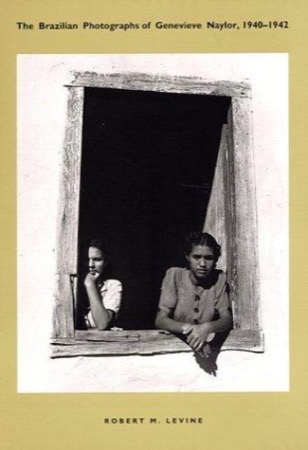
Softcover. Durham NC, Duke University Press, 1st, 1998, Book: Very Good, Dust Jacket: None, Softcover, 156 pages. In the early 1940s as the conflict between the Axis and the Allies spread worldwide, the U.S. State Department turned its attention to Axis influence in Latin America. As head of the Office of Inter-American Affairs, Nelson Rockefeller was charged with cultivating the region's support for the Allies while portraying Brazil and its neighbors as dependable wartime partners. Genevieve Naylor, a photojournalist previously employed by the Associated Press and the WPA, was sent to Brazil in 1940 by Rockefeller's agency to provide photographs that would support its need for propaganda. Often balking at her mundane assignments, an independent-minded Naylor produced something far different and far more rich--a stunning collection of over a thousand photographs that document a rarely seen period in Brazilian history. Accompanied by analysis from Robert M. Levine, this selection of Naylor's photographs offers a unique view of everyday life during one of modern Brazil's least-examined decades. Clean copy.
Hardcover. Cambridge MA, Harvard University Press, 1st, 1972, Book: Very Good, Dust Jacket: Very Good, Hardcover in a bright, unclipped dust jacket, 246 pages. Preface, Introduction, Chapters on: The United States and the Dominican Republic to 1965: Background to Intervention; The Origins of the 1965 Dominican Crisis: Setting the Stage; The Decision to Intervene; Deploying the Troops; and Explaining the Dominican Intervention. Drawing on nearly 150 personal interviews with individuals in the Dominican Republic and the United States, on rare access to classified U.S. government documents, and on his own first-hand experiences during the crisis, Abraham F. Lowenthal rejects official, liberal, and radical accounts of the intervention. Instead, he explains it as the product of fundamental premises, of decision-making procedures, and of bureaucratic politics. Name on front fly leaf, otherwise clean.
Hardcover. NY, Appleton-Century-Crofts, 1st, Book: Very Good, Dust Jacket: None, Hardcover, tan cloth with gilt lettering on black title blocks, 650 pages. "This is the only complete history of the Latin American Republics that takes into account the important subject of inter-American relations in the present war {World War II}. It brings Latin American history down to the conferences in which Under-Secretary of State Sumner Welles helped to cement North and South solidarity." The book presents, in separate chapters, the history of each of the twenty Latin American nations since independence. Bookplate and name on front endpapers, otherwise a clean, tight copy.
Softcover. Prospect Heights IL, Waveland Press, Revised Ed., 1992, Book: Very Good, Dust Jacket: None, Softcover, 280 pages. An account of a massive earthquake in the small city of Yungay, Peru in 1970. The author lived in the area and documents the survivors efforts to rebuild. Clean copy.
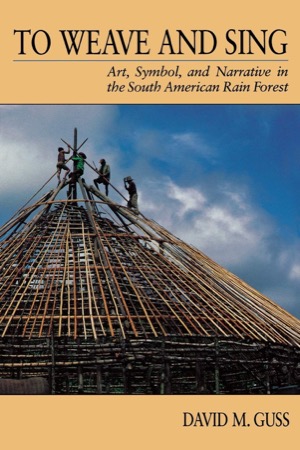
Softcover. Berkeley CA, University of California Press, 1st pbk., 1990, Book: Very Good, Dust Jacket: None, Softcover, 273 pages, b&w illustrations. The first in-depth analysis of the rich spiritual and artistic traditions of the Carib-speaking Yekuana Indians of Venezuela, who live in the dense rain forest of the upper Orinoco. Within their homeland of Ihuruna, the Yekuana have succeeded in maintaining the integrity and unity of their culture, resisting the devastating effects of acculturation that have befallen so many neighboring groups. Yet their success must be attributed to more than natural barriers of rapids and waterfalls, to more than lack of "contact" with our "modern" world. The ethnographic history recounted here includes not only the Spanish discovery of the Yekuana but detailed indigenous accounts of the entire history of Yekuana contact with Western culture, revealing an adaptive technique of mythopoesis by which the symbols of a new and hostile European ideology have been consistently defused through their incorporation into traditional indigenous structures. Clean copy.
Softcover. UK, Cambridge University Press, reprint, 2005, Book: Very Good, Dust Jacket: None, Softcover, 299 pages, b&w illustrations. Brooke Larson's interpretive analysis of the history of Andean peasants reveals the challenges of nation making in the republics of Colombia, Ecuador, Peru, and Bolivia during the volatile nineteenth century. Nowhere in Latin America were postcolonial transitions more turbulent than in the Andes, where communal indigenous roots grew deep and where the "Indian problem" seemed so discouraging to liberalizing states. The analysis raises broader issues about the interplay of liberalism, racism, and ethnicity in the formation of exclusionary "republics without citizens" over the nineteenth century.
Softcover. NY, Atheneum, reprint, 1970, Book: Very Good, Dust Jacket: None, Softcover, 314 pages. The roles of planter and slave in a changing plantation society in Brazil. Clean, bright copy.

 "Taxes And State Power: Political Instability in Bolivia, 1900-1950by: Carmenza Gallo")