Hardcover. NY, Thomas Y. Crowell, 1st, 1958, Book: Very Good, Dust Jacket: Good, Hardcover, red cloth covers with a lightly worn dust jacket with some chipping. 207 pages, b&w drawings by Hubert Buel. Story of journey from Mexico to what is now San Francisco in 1775 to claim land for Spain. For 10 to 14-year-olds. Previous owner's signature on front fly leaf otherwise clean.
Hardcover. Boston, Twayne Publishers, 1st, 1978, Book: Very Good, Dust Jacket: None, Hardcover, green cloth stamped in gilt, 166 pages. Virtues's place in Spanish drama is partly as one of the few to attempt tragedy, partly as one of the precursors of the national comedia, but above all as a pivotal figure in an important transitional period of Spain's political and cultural history. Clean copy.
Hardcover. New York, Charles Scribner's Sons, 1st, 1898, Book: Very Good, Dust Jacket: None, Hardcover, tan cloth covers stamped in blue and red, 360 pages. 116 b&w photos throughout, color maps in rear. In 1898 America intervened in the Cuban War of Independence, leading to conflict with Spain. This is a detailed account of this campaign, together with American military sea and land operations on the island of Puerto Rico during the Spanish American War. Cloth spine darkened otherwise clean, tight copy.
Hardcover. NY, Abrams Press, 1st, 2023, Book: Very Good, Dust Jacket: Very Good, Hardcover in a bright, unclipped dust jacket, 439 pages. In the 1950s, comics meant POW!BAM! superheroes, family-friendly gags, and Sunday funnies, but in the 1960s, inspired by these strips and the satire of MAD magazine, a new generation of creators set out to subvert the medium, and with it, American culture. Their "comix"--spelled that way to distinguish the work from their dime-store contemporaries--presented tales of taboo sex, casual drug use, and a transgressive view of society. Embraced by hippies and legions of future creatives, this subgenre of comic books and strips often ran afoul of the law, but that would not stop them from casting cultural ripples for decades to come, eventually moving the entire comics form beyond the gutter and into fine-art galleries. Brian Doherty weaves together the stories of R. Crumb, Art Spiegelman, Trina Robbins, Spain Rodriguez, Harvey Pekar, and Howard Cruse, among many others, detailing the complete narrative history of this movement. Through dozens of new interviews and archival research, he chronicles the scenes that sprang up around the country in the 1960s and '70s, beginning with the artists' origin stories and following them through success and strife, and concluding with an examination of these creators' legacies. Dirty Pictures is the essential exploration of a truly American art form that recontextualized the way people thought about war, race, sex, gender, and expression.
Hardcover. NY, Abrams Press, 1st, 2023, Book: Very Good, Dust Jacket: Very Good, Hardcover in a bright, unclipped dust jacket, 439 pages. In the 1950s, comics meant POW!BAM! superheroes, family-friendly gags, and Sunday funnies, but in the 1960s, inspired by these strips and the satire of MAD magazine, a new generation of creators set out to subvert the medium, and with it, American culture. Their "comix"--spelled that way to distinguish the work from their dime-store contemporaries--presented tales of taboo sex, casual drug use, and a transgressive view of society. Embraced by hippies and legions of future creatives, this subgenre of comic books and strips often ran afoul of the law, but that would not stop them from casting cultural ripples for decades to come, eventually moving the entire comics form beyond the gutter and into fine-art galleries. Brian Doherty weaves together the stories of R. Crumb, Art Spiegelman, Trina Robbins, Spain Rodriguez, Harvey Pekar, and Howard Cruse, among many others, detailing the complete narrative history of this movement. Through dozens of new interviews and archival research, he chronicles the scenes that sprang up around the country in the 1960s and '70s, beginning with the artists' origin stories and following them through success and strife, and concluding with an examination of these creators' legacies. Dirty Pictures is the essential exploration of a truly American art form that recontextualized the way people thought about war, race, sex, gender, and expression.
Hardcover. NY, Henry Holt , 1st, 1998, Book: Very Good, Dust Jacket: Very Good, Hardcover in a bright, unclipped dust jacket, 740 pages. Historian Musicant offers a detailed examination of the American war that catapulted the nation to imperial status. Musicant offers a portrait of a nation increasingly torn between the desire for isolation and the yearning for a place on the international stage. That conflict was at first fought out in the nation's newspapers, which managed to gradually sway public opinion toward involvements abroad. The sinking of the American warship Maine in the harbor of Havana pushed America over the edge, and McKinley was compelled to declare war on Spain. The war itself lasted less than a year and featured only a few large-scale battles, but Musicant is able to wring considerable drama from this thorough narrative of events. Clean copy.
Hardcover. New Haven CT, Yale University Press, 1st, 2006, Book: Very Good, Dust Jacket: Very Good, Hardcover in a bright dust jacket, 546 pages. This epic history compares the empires built by Spain and Britain in the Americas, from Columbus's arrival in the New World to the end of Spanish colonial rule in the early nineteenth century. J. H. Elliott, one of the most distinguished and versatile historians working today, offers us history on a grand scale, contrasting the worlds built by Britain and by Spain on the ruins of the civilizations they encountered and destroyed in North and South America. Elliott identifies and explains both the similarities and differences in the two empires, processes of colonization, the character of their colonial societies, their distinctive styles of imperial government, and the independence movements mounted against them. Based on wide reading in the history of the two great Atlantic civilizations, the book sets the Spanish and British colonial empires in the context of their own times and offers us insights into aspects of this dual history that still influence the Americas. Color illustrations. Clean copy.
Hardcover. NY, Random House, 1st, 1969, Book: Very Good, Dust Jacket: Very Good, Hardcover in a lightly worn dust jacket, 387 pages. These essays originated in a series of lectures and seminars held by the Graduate School of Contemporary European Studies and the Centre for the Advanced Study of Italian Society of the University of Reading in 1966-1967. The countries covered include Italy, Germany, Austria, Hungary, Rumania, Poland, Finland, Norway, Great Britain, France, Spain, and Portugal. Name on front fly leaf otherwise clean.
Hardcover. Reno, Center for Basque Studies, 1st, 2012, Book: Very Good, Dust Jacket: None, 333 pages, b&w photos. Black illustrated boards, no dust jacket. Light bumping to corners, else a clean, tight copy. his story--that of the government-in-exile of Lehendakari Jose Antonio Agirre and the multitudes of other Basques who were forced by war and oppression to flee their homeland--has not been written in English before and is rather unknown to the Basque, Spanish, and French historiography. Drawing on primary sources; archival documentation; and interviews with many Basque political exiles, resistance members, and former prisoners of labor camps Professor Xabier Irujo tells a gripping story of the Basque autonomous government, conceived during the beginnings of a bloody civil war, forced to organize a mass exile and then overtaken by necessity to feed and clothe its exiled population. Following this initial period, the exiled Basques were then confronted by World War and forced again into flight, this time mainly to the Americas. Never giving up their opposition to the dictatorship of Francisco Franco, the government continued its struggle during forty long years of existence, through wars hot and cold as well as countless political developments. While tracing the history of Lehendakari Agirre, this book is more the story of all of the Basques who were forced into exile, and it serves as a testimony to their unwavering determination to return to their homeland. In addition, the book contains an extensive biographical index of many of the heretofore unknown exile activists: writers, politicians, soldiers, intellectuals, but even more so, Basque patriots.
Hardcover. Thunder Bay Press, 1st, 2007, Book: Very Good, Dust Jacket: None, Hardcover, 48 pages. For over forty years, postmodern architect Frank Gehry has changed skylines with his dramatic forms. Among several other awards, his enchanting body of work earned him the prestigious Pritzker Architecture Prize-the "Nobel Prize of architecture." Experience for yourself Gehry's captivating deconstructive designs in a new interactive book, Frank Gehry in Pop-Up. This beautiful pop-up book illustrates Frank Gehry's greatest works of architecture and their natural environments, demonstrating his gift for radically redefining structure and space. Discover the inspirations behind Gehry's light and lively designs in a three-dimensional way, and learn how he combines building elements with an innovative approach. Featured within are his most iconic works, including the titanium-clad Guggenheim Museum in Bilbao, Spain, the Walt Disney Concert Hall in Los Angeles, and the pioneering, pulled-apart structure of Gehry's Venice Beach House. Get to know the man behind the buildings with a brief yet in-depth look into Gehry's personal history and lifeworks. Compare and contrast the many different sides of Gehry, from the whimsical laid-back Californian to the closet elitist-and sometimes obsessive perfectionist.
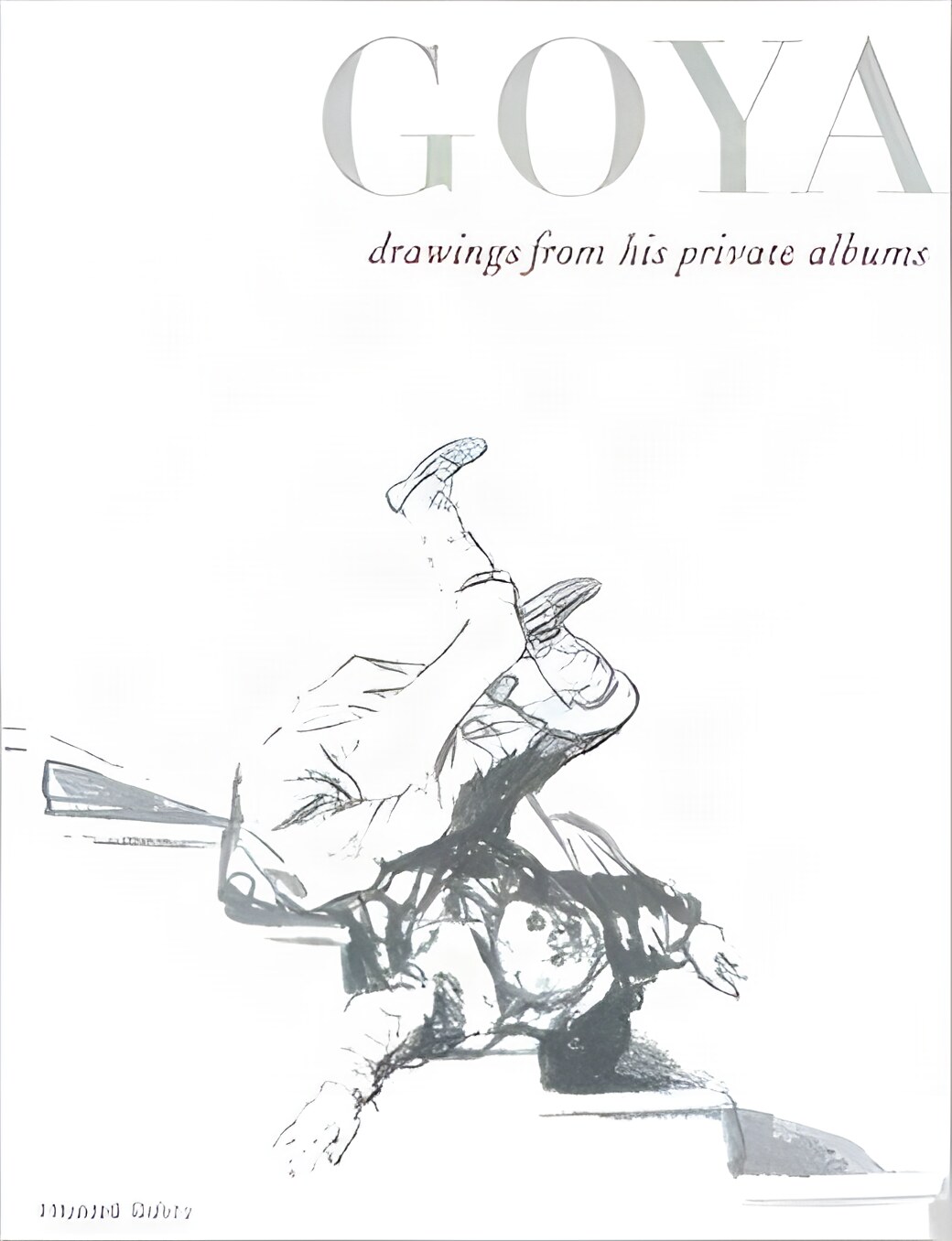
Softcover. US, Lund Humphries Publishers, 2004, Book: Very Good, Dust Jacket: None, Softcover. Like new in publisher's shrink-wrap. Over 35 years, alongside his paintings and prints, Francisco Goya expressed his creative genius in eight albums of drawings. Split up after his death, their pages scattered across various collections, the albums remain little known. This book reunites over 100 of the drawings, almost all in colour at actual size, including both sides of double-sided sheets, and there are detailed commentaries on each album and each drawing. The album drawings reveal Goya's astonishing powers of invention and observation. Essay by Tom Lubbock.
Hardcover. Princeton Architectural Press, 1st, 2006, Book: Very Good, Dust Jacket: Very Good, Hardcover, 256 pages. The Breakers, the Waldorf, the Biltmore, the Sherry, the Pierre--these landmark hotels are synonymous with grand luxury and style. When they were built, in the 1920s, their refined elegance and grandeur set the bar for hotels and resorts the world over. Responsible for creating these and countless other hotels throughout the United States, were the partners of a single architectural firm: Schultze & Weaver. Together, this duo--an architect and an engineer--virtually invented the glamorous lifestyle made famous in films like Grand Hotel. Catering to the social elite of which they were themselves a part, Schultze & Weaver synthesized the Old World style of Renaissance Italy, Moorish Spain, and Georgian England with all of the modern amenities that made hotel living luxurious. This book presents portfolios of fifteen of the firm's most spectacular hotels, culminating in the Art Moderne masterpiece of the Waldorf-Astoria. Over two hundred period photographs and hand-colored architectural renderings chart the ascent of the American hotel in all its glory and glamour, before the Great Depression forever changed the lifestyles of America's rich and famous. Essays address the cultural and technological developments that underpin the creation of resort and residential hotels, including the elemental role played by Schultze & Weaver.
Hardcover. Spain, Editorial Labor, 1st , 1955, Book: Very Good, Dust Jacket: None, Spanish editions. 1,080 pages. Black & white photos, drawings. Both with 3/4 leather, spine with gilt lettering. Vol I with stain to endpapers. Vol. II page 1029 with bottom corner crease. Both with browning to black leather spines, bottom edgewear.
Hardcover. New York , Charles Scribner's Sons, reprint, 1899, Book: Good, Dust Jacket: None, 416 pages. Blue cloth cover, gilt lettering, and embossed design. Some wear to corners and edges of spine. Spine is slightly cracked at rear endpage. Some faint stains on front pages, otherwise inside is bright and clean, with more than 500 b&w illustrations, maps and diagrams. A nice copy.
Hardcover. New York , Charles Scribner's Sons, reprint, 1899, Book: Good, Dust Jacket: None, 425 pages. Blue cloth cover, gilt lettering, and embossed design. Some wear to corners and edges of spine. Some faint stains on front pages, otherwise inside is bright and clean, with more than 500 b&w illustrations, maps and diagrams. A nice copy.
Hardcover. Dynamite Entertainment, 1st, 2017, Hardcover, glossy pictorial boards, 272 pages. A celebration of the great artists who revolutionized horror comics in the 1970s with their work on Warren's Vampirella, Creepy, and Eerie horror comics. This first-ever comprehensive history of Spanish comic books and Spanish comic artists reveals their extraordinary success -- not just in Spain and America, but around the world. Containing artwork from over 80 artists, this in-depth retrospective includes profiles of such legends as Esteban Maroto, Sanjulian, Jose Gonzalez, Jordi Bernet, Enrich, Victor De La Fuente, Jose Ortiz and Luis Garcia Mozos. With 500 illustrations, over half scanned directly from the original artwork, Masters Of Spanish Comic Book Art honors the "Golden Generation" whose artwork inspired the imagination of comic book lovers everywhere. Clean copy.
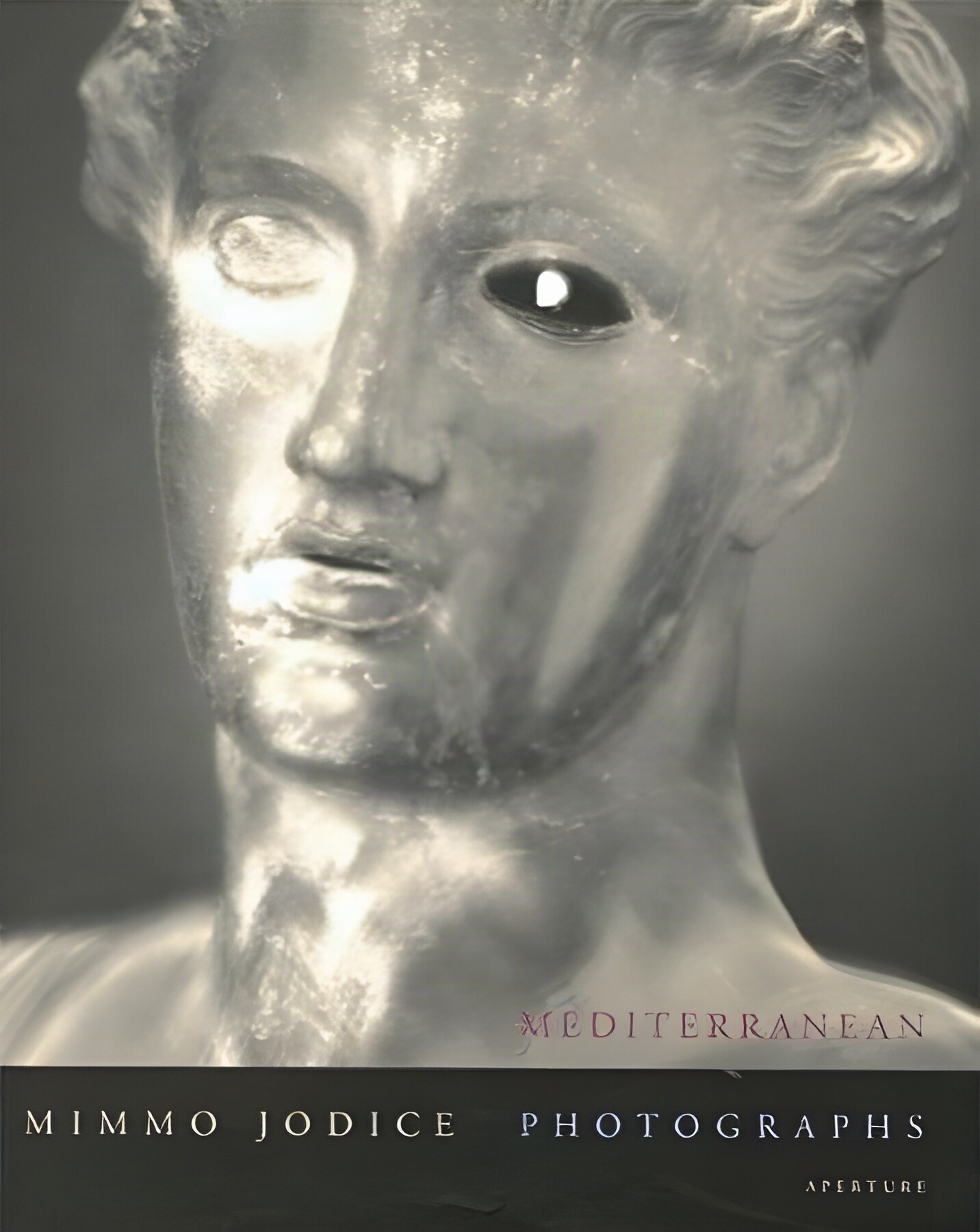
Hardcover. NY, Aperture, 1st, 1995, Book: Very Good, Dust Jacket: Very Good, Hardcover in a bright dust jacket. 118 pages with b&w plates. From Italy, France, Spain, Greece, Macedonia, Turkey, Tunisia, Syria, and Jordan, Jodice's luminous photographs evoke a vision of Mediterranean civilization that is a conflation of history and mythology. His dramatic yet ethereal images refuse both classical and contemporary boundaries in a fusion of the topographical and the intimate. Ruined temples, lost cities, heroic landscapes, gods and goddesses, vistas of Vesuvius and of the omnipresent sea transcend the constraints of their historical context in terms of both time and space. Clean copy.
Softcover. Chicago, University of Chicago Press, reprint, 2009, Book: Very Good, Dust Jacket: None, Softcover, 448 pages. Tells the story of an early modern nation struggling to deal with diversity and multiculturalism while torn by the fanaticism of the Counter-Reformation on one side and the threat of Ottoman expansion on the other. Clean copy.
Softcover. Washington DC, National Geographic Society, 1st, 1929, Book: Very Good, Dust Jacket: None, Original magazines January - June 1929, in a maroon pebbled hardcover binding. Magazines are dated and paged, with photographs and maps, but do not have covers, advertisements, etc. Several pages of color plates. Includes fold-out painting by N.C. Wyeth: "The Age of Discovery". Articles on Arizona, Ecuador, Bolivia, Spain, Washington, D.C. and many more. Bright, clean volume.
Hardcover. New Haven, CT, Yale University Press, 1st, 2015, Book: Very Good, Dust Jacket: None, 480 pages. Hardcover with no dust jacket. Very clean, unmarked copy still in shrink wrap. 378 color and 10 black & white illustrations. Tight copy. While European art forms were widely disseminated, copied, and adapted throughout Latin America, colonial painting is not a derivative extension of Europe. The ongoing debate over what to call it-mestizo, hybrid, creole, indo-hispanic, tequitqui-testifies to a fundamental yet unresolved question of identity. Comparing and contrasting the Viceroyalties of New Spain, with its center in modern-day Mexico, and Peru, the authors explore the very different ways the two regions responded to the influence of the Europeans and their art. A wide range of art and artists are considered, some for the first time.
Hardcover. Colombia, Carvajal S. A., 1st, 1992, Book: Very Good, Dust Jacket: None, Hardcover, folio, maroon cloth backed decorative paper boards, 75 pages. Translated by Elvira de Martin from the Spanish. Illustrated by 4 engravings appeared in Theodor de Brys' America Pt. 4 1594 (Frankfurt) and original handwritten facsimile 1492. Facsimile edition. No slipcase. Published by Carvajal S.A., Cali, Colombia and the John Carter Brown Library, Providence, Rhode Island, in Honor of the Quincentenary Year Date: 1992. Preface by Norman Fiering. Clean, bright copy.
Softcover. Spain, Editorial Escudo de Oro. S.A., 1st, 1995, Book: Very Good, Dust Jacket: None, 93 pages. Softcover. Mild soiling throughout. An otherwise unmarked copy with only minor edgewear. Color photographs throughout.

 "Big Rideby: Erskine, Dorothy Ward")
 "Colonialism and Postcolonial Development: Spanish America in Comparative Perspectiveby: Mahoney, James")
 "Cristobal De Virues by: John G. Weiger")
 "Cuban and Porto Rican Campaigns, Theby: Davis, Richard Harding")





 "Expelled from the Motherland The Government of President Jose Antonio Agirre in Exile, 1937-1960by: Irujo, Xabier")


 "Frank Gehry in Pop-Upby: Jinny Johnson and Roland Lewis")
 "Grand Hotels of the Jazz Age: The Architecture of Schultze & Weaverby: Marianne Lamonaca")
 "Historia del Arte Espanol Vol. I & IIby: Pellicer, Alejandro Cirici")
 "History of Our Navy, The: From its Origin to the End of the War with Spain, 1775-1898, Vol. I of V.by: Spears, John R.")
 "History of Our Navy, The: From its Origin to the End of the War with Spain, 1775-1898, Vol. II of V.by: Spears, John R.")

 "Muslims in Spain: 1500 to 1614by: Harvey, L. P.")
 "National Geographic Magazine - Vol. LV January - June 1929 by: National Geographic Society / N.C. Wyeth")
 "Painting in Latin America, 1550-1820: From Conquest to Independenceby: Alcala, Luisa Elena")
 "Rights of Discovery: Christopher Columbus's Final Appeal to King Fernando/Derechos del Descubrimiento: Apelacion Final de Cristobal Colon al Rey Fernando. by: Nader,")
 "Robert Ramble's Stories Selected from the History of Spainby: (Frost, John)")


 "Sevilla Cathedral by: Delgado. Francisco Gil (Editor)")