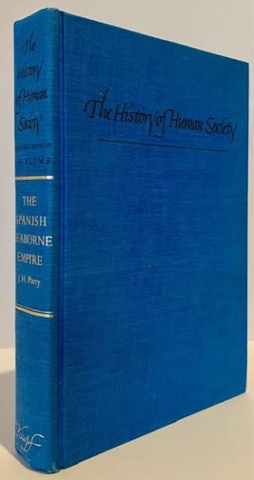
Hardcover. New York, Alfred A. Knopf, 1st, 1966, Book: Very Good, Dust Jacket: None, 416 pages. Hardcover. B/w illustrations throughout. Top edge dyed. Some underlining throughout. Deckled edges. Blue cover boards, black title on spine and front cover board.
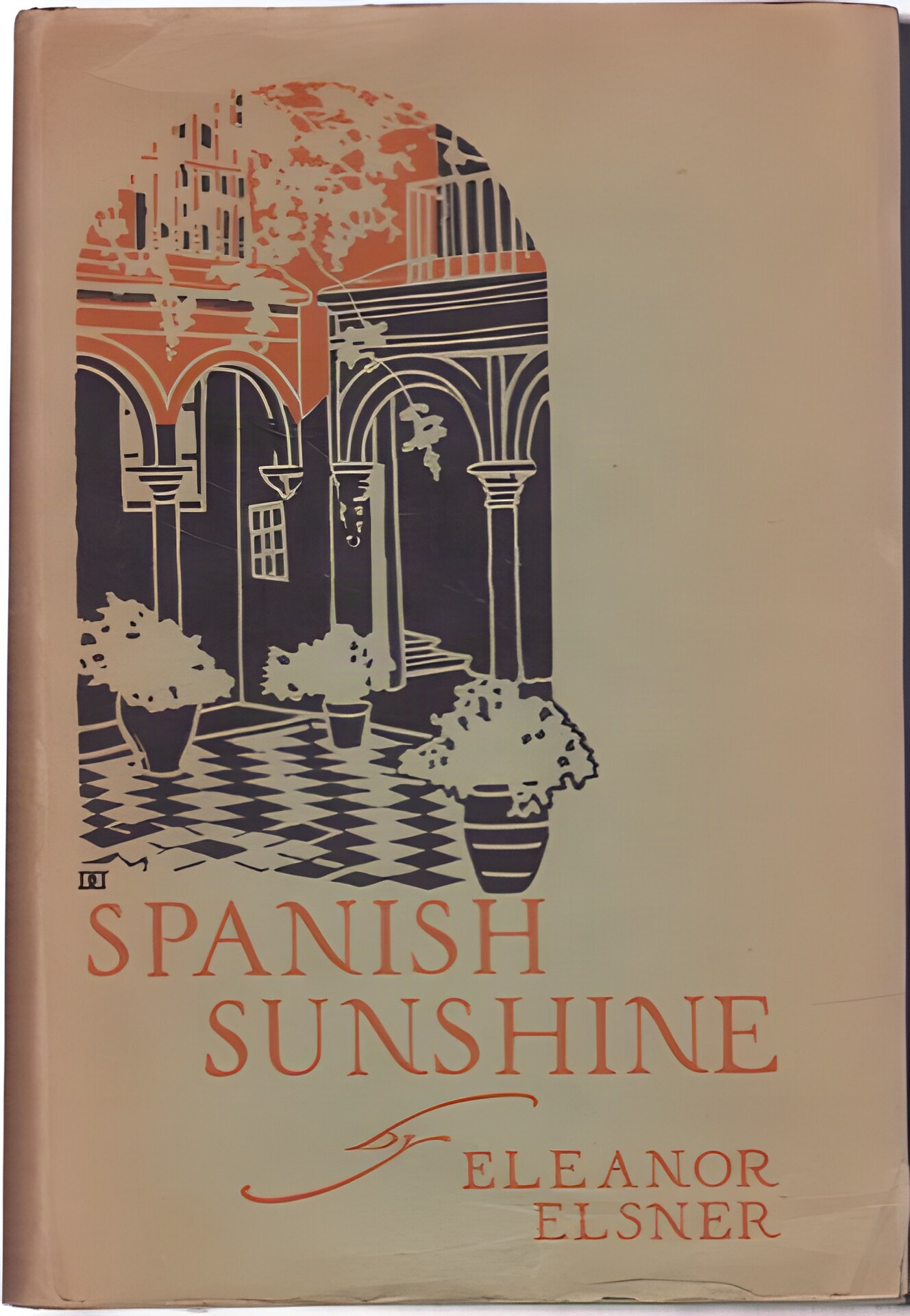
Hardcover. NY, The Century Co., 1st, 1925, Book: Very Good, Dust Jacket: Very Good, Hardcover in a lightly worn dust jacket, 365 pages plus index. This entertaining look at life in Spain written by an Englishwoman was the result of a three year stay during the 1920's. This book covers the major Spanish towns, with b&w photos, history and information on facilities, and transportation in each from the 1920s period for the traveler. Some foxing to top edge otherwise clean in the scarce jacket.
Hardcover. Baltimore, Johns Hopkins Press, 1st, 1906, Book: Good, Dust Jacket: None, Hardcover, brown cloth covers with gilt lettering on spine, 95 pages. Ex-lib with residue, stamping to endpapers. Interior clean, probably a rebound softcover published in 1906.
Hardcover. College Station, Texas A&M University Press, 1st, 1975, Book: Very Good, Dust Jacket: Very Good, Hardcover in a bright dust jacket with a small tape repair, 805 pages. The Confrontation of Indians, Spanish, and French in the Southwest, 1540-1795. Spanning two and a half centuries, from the earliest contacts in the 1540s to the crumbling of Spanish power in the 1790s. Storms Brewed in Other Men's Worlds is a panoramic view of Indian peoples and Spanish and French intruders in the early Southwest. The primary focus is the world of the American Indian, ranging from the Caddos in the east to the Hopis in the west, and including the histories of the Pueblo, Apache, Navajo, Ute, and Wichita peoples. Within this region, from Texas to New Mexico, the Comanches played a key, formative role, and no less compelling is the story of the Hispanic frontier peoples who weathered the precarious, often arduous process of evolving coexistence with the Indians on the northern frontier of New Spain. Clean copy.
Hardcover. NY, Macmillan Company, 1st, 1959, Book: Very Good, Dust Jacket: None, Hardcover, tan cloth covers, 286 pages, map endpapers, b&w illustrations. Lionel Casson, the renowned authority on ancient ships and seafaring, has done what no other author has: he has put in a single volume the story of all that the ancients accomplished on the sea from the earliest times to the end of the Roman Empire. He explains how they perfected trading vessels from mere rowboats into huge freighters that could carry over a thousand tons, how they transformed warships from simple oared transports into complex rowing machines holding hundreds of marines and even heavy artillery, and how their maritime commerce progressed from short cautious voyages to a network that reached from Spain to India. In the process he corrects cherished but erroneous beliefs. Ancient warships, he shows, were never manned with slave rowers; ancient merchant-men did not stick timidly to the shore; and ancient craft were well able to sail against the wind. Embossed stamp to dedication page, otherwise clean, No dust jacket.
Softcover. UK, Cambridge University Press, reprint, 1978, Book: Very Good, Dust Jacket: None, Softcover, 309 pages. The classic study, looking at Habsburg Spain's handling of the Dutch Revolt. Clean copy.
Softcover. Dallas TX, Southern Methodist University, reprint, 2001, Book: Very Good, Dust Jacket: None, Softcover, 221 pages, 202 b&w plates, 20 in color. Historical and cultural history of religious, popular and folk architecture of colonial New Spain. Clean copy.
Softcover. Seattle, Fantagraphics, 1st, 2015, Book: Very Good, Dust Jacket: None, Large softcover, 263 pages, b&w photos ad illustrations. In-depth, career-spanning interviews with the cartoonists - Crumb, Shelton, and more - who forever altered the course of American comics with their anthology title, Zap Comix. The definitive Comics Journal interviews with the cartoonists behind Zap Comix, featuring: Supreme 1960s counterculture/underground artist Robert Crumb on how acid unleashed a flood of Zap characters from his unconscious; Marxist brawler Spain Rodriguez on how he made the transition from the Road Vultures biker gang to the exclusive Zap cartoonists' club; Yale alumnus Victor Moscoso and Christian surfer Rick Griffin on how their poster-art psychedelia formed the backdrop of the 1960s San Francisco music scene; Savage Id-choreographer S. Clay Wilson on how his dreams insist on being drawn; Painter and Juxtapoz-founder Robert Williams on how Zap #4 led to 150 news-dealer arrests; Fabulous, Furry, Freaky Gilbert Shelton on the importance of research; Church of the Subgenius founder Paul Mavrides on getting a contact high during the notorious Zap jam sessions; and much more. In these career-spanning interviews, the Zap contributors open up about how they came to create a seminal, living work of art. Partial color.
Softcover. Seattle, Fantagraphics, 1st, 2015, Book: Very Good, Dust Jacket: None, Large softcover, 263 pages, b&w photos ad illustrations. In-depth, career-spanning interviews with the cartoonists - Crumb, Shelton, and more - who forever altered the course of American comics with their anthology title, Zap Comix. The definitive Comics Journal interviews with the cartoonists behind Zap Comix, featuring: Supreme 1960s counterculture/underground artist Robert Crumb on how acid unleashed a flood of Zap characters from his unconscious; Marxist brawler Spain Rodriguez on how he made the transition from the Road Vultures biker gang to the exclusive Zap cartoonists' club; Yale alumnus Victor Moscoso and Christian surfer Rick Griffin on how their poster-art psychedelia formed the backdrop of the 1960s San Francisco music scene; Savage Id-choreographer S. Clay Wilson on how his dreams insist on being drawn; Painter and Juxtapoz-founder Robert Williams on how Zap #4 led to 150 news-dealer arrests; Fabulous, Furry, Freaky Gilbert Shelton on the importance of research; Church of the Subgenius founder Paul Mavrides on getting a contact high during the notorious Zap jam sessions; and much more. In these career-spanning interviews, the Zap contributors open up about how they came to create a seminal, living work of art. Partial color.
Softcover. New York, Fantagraphics Books, 1st, 2014, Book: Very Good, Dust Jacket: None, 300 pages. Softcover with light edgewear to paper wrappers. Clean, tight copy. Color and black and white illustrations throughout. The definitive Comics Journal interviews with the cartoonists behind Zap Comix, featuring: Supreme 1960s counterculture/underground artist Robert Crumb on how acid unleashed a flood of Zap characters from his unconscious; Marxist brawler Spain Rodriguez on how he made the transition from the Road Vultures biker gang to the exclusive Zap cartoonists' club; Yale alumnus Victor Moscoso and Christian surfer Rick Griffin on how their poster-art psychedelia formed the backdrop of the 1960s San Francisco music scene; Savage Id-choreographer S. Clay Wilson on how his dreams insist on being drawn; Painter and Juxtapoz-founder Robert Williams on how Zap #4 led to 150 news-dealer arrests; Fabulous, Furry, Freaky Gilbert Shelton on the importance of research; Church of the Subgenius founder Paul Mavrides on getting a contact high during the notorious Zap jam sessions; and much more. In these career-spanning interviews, the Zap contributors open up about how they came to create a seminal, living work of art.
Softcover. London, Pimlico, 1st pbk., 1994, Book: Very Good, Dust Jacket: None, Softcover, 812 pages, b&w illustrations. Light wear to covers and edges of spine. Old UK price sticker on rear cover. Neat, tight copy.
Hardcover. San Francisco, CA, John Howell-Books, 1st, 1971, Book: Very Good, Dust Jacket: Good, Hardcover. Limited to 5000 copies. 130 pages. 6 color illustrations. Color frontispiece. The original narrative, hitherto unpublished by Father Vicente Maria and further details by participants in the first explorations of the Bay's waters. Illustrations by Louis Choris in brush and pencil who was at San Francisco in 1816. Blue dust jacket with wear. Sun-fading to spine. Blue boards with gilt title to spine and front. Previous owner sticker on front flyleaf. Overall, a clean, tight copy.
Hardcover. Gloucester MA, Peter Smith, reprint, 1959, Book: Very Good, Dust Jacket: None, Hardcover, light blue cloth with dark blue lettering on spine. 360 pages. Originally published in 1902. The author looks at the formation of the Tory or Loyalist party in the American Revolution, its persecution, the banishment (or death) of over 100,000 of these most conservative and respectable Americans, and the consequences of their banishment. In numbers, historically it is only comparable to the fates of the Moors of Spain and the Huguenots of France. This was the first book by the famous historian Claude Halstead van Tyne (1869-1930), who was a Michigan and Pennsylvania professor and author who wrote extensively on the American Revolution. Name on front fly leaf, otherwise a bright, clean copy.
Hardcover. NY, Harry N. Abrams, 1st, 1998, Book: Very Good, Dust Jacket: Very Good, Hardcover in a bright dust jacket. 120 pages illustrated in color. Since the first report of cave art (at Altamira in 1879), attempts have been made to explain the purpose of the mysterious drawings. Art for art's sake; totemism; hunting, destructive, or fertility magic; and modern structuralist theories have all been proposed. Clottes and Lewis-Williams propose a new theory emphasizing the shamanic aspects of Paleolithic cave paintings. After an unavoidably technical chapter providing the basics of shamanism, the authors examine Paleolithic paintings from across France and Spain, noting the use of animal figures, composite figures combining both human and animal characteristics, and geometric designs that are all common elements of shamanism. The bulk of the book is both fascinating and thought-provoking, and while it is not likely to be the last word on the subject, it is an important contribution to the field. Clean, bright copy.
Hardcover. Londo, Longmans, Green, and Co. , 1892, Book: Good, Dust Jacket: None, Hardcover in embossed brown cloth, gilt lettering on spine, 328 pages plus publisher's ads in rear. A collection of historical essays from English historian, James Anthony Froude. Titles include: The Spanish Story of the Armada, Antonio Perez: An Unsolved Historical Riddle, Saint Teresa, The Templars, The Norway Fjords, and Norway Once More. Written by James Anthony Froude, an English historian, biographer, novelist, and editor of Fraser's Magazine, a general and literary journal published from 1830 to 1882. Repair to cloth on spine which shows edgewear, fading. Owner's stamp om front fly leaf, otherwise clean.
Softcover. Cambridge MA, Harvard University Press, reprint, 2011, Book: Very Good, Dust Jacket: None, Softcover, 997 pages, color and b&w illustrations. A deadly continental struggle, the Thirty Years War devastated seventeenth-century Europe, killing nearly a quarter of all Germans and laying waste to towns and countryside alike. Peter Wilson offers the first new history in a generation of a horrifying conflict that transformed the map of the modern world. When defiant Bohemians tossed the Habsburg emperor's envoys from the castle windows in Prague in 1618, the Holy Roman Empire struck back with a vengeance. Bohemia was ravaged by mercenary troops in the first battle of a conflagration that would engulf Europe from Spain to Sweden. The sweeping narrative encompasses dramatic events and unforgettable individuals-the sack of Magdeburg; the Dutch revolt; the Swedish militant king Gustavus Adolphus; the imperial generals, opportunistic Wallenstein and pious Tilly; and crafty diplomat Cardinal Richelieu. In a major reassessment, Wilson argues that religion was not the catalyst, but one element in a lethal stew of political, social, and dynastic forces that fed the conflict. By war's end a recognizably modern Europe had been created, but at what price? The Thirty Years War condemned the Germans to two centuries of internal division and international impotence and became a benchmark of brutality for centuries. As late as the 1960s, Germans placed it ahead of both world wars and the Black Death as their country's greatest disaster. Clean, bright copy.
Hardcover. NY, Oxford University Press, 4th pr., 2000, Hardcover in a bright dust jacket. 670 pages, b&w illustrations. Written by the most prominent of the new generation of historians, this superb volume offers the most up-to-date and authoritative account available of African-American history, ranging from the first Africans brought as slaves into the Americas, to today's black filmmakers and politicians. Here is a panoramic view of African American life, rich in gripping first-person accounts and short character sketches that invite readers to relive history as African Americans experienced it. We begin in Africa, with the growth of the slave trade, and follow the forced migration of what is estimated to be between ten and twenty million people, witnessing the terrible human cost of slavery in the colonies of England and Spain. We read of the Haitian Revolution, which ended victoriously in 1804 with the birth of the first independent black nation in the New World, and of slave rebellions and resistance in the United States in the years leading up to the Civil War. There are vivid accounts of the Civil War and Reconstruction years, the backlash of notorious "Jim Crow" laws and mob lynchings, and the founding of key black educational institutions. The contributors also trace the migration of blacks to the major cities, the birth of the Harlem Renaissance, the hardships of the Great Depression and the service of African Americans in World War II, the struggle for Civil Rights in the 1950s and '60s, and the emergence of today's black middle class. From Harriet Tubman and Frederick Douglass to Martin Luther King, Jr., and Louis Farrakhan, To Make Our World Anew is an unforgettable portrait of a people. Clean copy.
Hardcover. NY, Farrar, Straus & Giroux, 1st US, 2012, Book: Very Good, Dust Jacket: Very Good, Hardcover in a bright, unclipped dust jacket. Full number line down to and including 1. In grey boards with blue type to spine. Searching for an inn, the enigmatic traveler Hans stops in a small city on the border between Saxony and Prussia. The next morning, Hans meets an old organ-grinder in the market square and immediately finds himself enmeshed in an intense debate-on identity and what it is that defines us-from which he cannot break free. Indefinitely stuck in Wandernburg until his debate with the organ-grinder is concluded, he begins to meet the various characters who populate the town, including a young freethinker named Sophie. Though she is engaged to be married, Sophie and Hans begin a relationship that defies contemporary mores about female sexuality and what can and cannot be said about it. Traveler of the Century is a deeply intellectual novel, chock-full of discussions about philosophy, history, literature, love, and translation. It is a book that looks to the past in order to have us reconsider the conflicts of our present. The winner of Spain's prestigious Alfaguara Prize and the National Critics Prize, Traveler of the Century marks the English-language debut of Andres Neuman, a writer described by Roberto Bolano as being "touched by grace." Clean copy.
Softcover. London, T. Plummer, Printer, Seething Lane, reprint, 1801, Book: Very Good, Dust Jacket: None, Disbound stab-stitched pamphlet. 4 pages in small typeface. Presumably reduced from the 8 page 1798 printing. Moore, a Scottish cartographer, chart seller and educator with a somewhat controversial reputation, was accused of copying a chart of the coasts of France, Spain and Portugal drawn up by William Heather. The case was heard before Lord Kenyon with the prosecution led by Erskine; the jury quickly found for the defendant despite Kenyon's balanced instruction.
Hardcover. London, National Gallery , 1st, 2006, Book: Very Good, Dust Jacket: Very Good, Hardcover, 256 pages, illustrated throughout in color. Light shelf-wear to dust jacket with small scratch on front cover. Clean, tight copy. With over 150 illustrations and an in-depth chronology, this beautifully produced and comprehensive book surveys Velazquez's entire career and explores his universal popularity. Fascinating essays by world-class Velazquez scholars address the artist's life and technique, examining his studies in Seville and Italy to his final great works at the court of Philip IV.
Hardcover. New Haven CT, Yale University Press, 1st, 2009, Book: Very Good, Dust Jacket: Very Good, Hardcover, 192 pages. Admired for finding beauty in everyday surroundings, William Merritt Chase (1849-1916) brought an autobiographical element to his work, earning him a unique place in late-19th-century American art history. This book, the third of four volumes to document the complete works of Chase, traces his career as a landscape painter. Following Chase's training in Munich in the 1870s and his many trips to Spain in the early 1880s, his works became light filled and colorful. These paintings anticipate Chase's well-known park scenes of the 1880s painted in Brooklyn and New York and his 1890s works depicting the hills and shoreline adjacent to his home in Shinnecock Hills, Long Island, now recognized as being among the most important examples of American Impressionism. This book presents all of his known landscapes painted in oil, which include many of his best-loved works, in beautiful reproduction, accompanied by the most current and thorough documentation on them.
Hardcover. Philadelphia, PA, Philadelphia Museum of Art in association with Yale University Press, 1st, 2015, Book: Very Good, Dust Jacket: None, Hardcover with no dust jacket. Very clean, like new in publishers shrinkwrap. Peter Paul Rubens (1577-1640) proudly described his monumental painting Prometheus Bound as first among "the flower of my stock." This singular work demonstrates how Rubens engaged with and responded to his predecessors Michelangelo and Titian, with whom he shared an interest in depictions of physical torment. The Wrath of the Gods offers an in-depth case study of the Flemish artist's creative process and aesthetic, while also demonstrating why this particular painting has appealed to viewers over time. Many scholars have elaborated on Rubens's affinity for Titian, but his connection to Michelangelo has received far less attention. This study presents a new interpretation of Prometheus Bound, showing how Rubens created parallels between the pagan hero Prometheus and Michelangelo's Risen Christ from the Sistine Chapel's Last Judgment. Christopher D. M. Atkins expands our understanding of artistic transmission by elucidating how Rubens synthesized the works he saw in Italy, Spain, and his native Antwerp, and how Prometheus Bound in turn influenced Dutch, Flemish, and Italian artists. By emulating Rubens's composition, these artists circulated it throughout Europe, broadening its influence from his day to ours.
Softcover. Norman OK, University of Oklahoma Press, 1st, 1997, Book: Very Good, Dust Jacket: None, Softcover, 656 pages. In mythic sagas of the American West, the wide western range offered boundless opportunity to a limited cast of white men. Buffalo roamed, deer and antelope played, and women's voices were never heard. Writing the Range allows us to hear many long-silenced women: Spanish-Mexican settlers and American Indians on New Spain's northern frontiers; Chinese, Basque, Japanese, Korean, Vietnamese, Slavic, and Irish immigrants; film stars Dolores del Rio and Lupe Velez; Navajos and African Americans who moved to western cities during World War II; and the activist Mothers of East Los Angeles, who organized to resist environmental dangers to their community. A valuable introduction to the rapidly changing field of western history, Writing the Range explains clearly how race, class, and culture are constructed and connected. The first section examines issues raised by more than a decade of multicultural western women's histories; following are six chronological sections spanning four centuries. Each section offers a short introduction connecting is essays and placing them in analytic and historical perspective. Clean copy.

 "Spanish Elizabethans, The - The English Exiles at the Court of Philip IIby: Loomie, Albert J.")







 "The Comics Journal Library Vol. 9: Zap - The Interviews by: Gary Groth (Editor), Michael Dean (Editor), Bob Levin (Introduction)")


 "The Comics Journal Library Vol. 9: Zap - The Interviews by: Gary Groth (Editor), Michael Dean (Editor), Bob Levin (Introduction)")


 "The Comics Journal Library Vol. 9: Zap - The Interviewsby: Rosenkranz, Patrick")

 "The First Spanish Entry into San Francisco Bay 1775by: Galvin, John (ed)")


 "The Spanish Story of the Armada and Other Essaysby: James Anthony Froude")
 "The Thirty Years War: Europe")
 "To Make Our World Anew: A History of African Americansby: Kelley, Robin D. G./ Lewis, Earl (Editor)")
 "Traveler of the Centuryby: Neuman, Andres")
 "Trial of John Hamilton Moore for Pirating a Chart: Sittings After Term, March 1798, Before Lord Kenyon and a Special Jury of Merchants. Guildhall, London. by: Trial;")
 "Velazquezby: Carr, Dawson W.")
 "William Merritt Chase: Landscapes in Oil by: Ronald G. Pisano")
 "Wrath of the Gods, The: Masterpieces by Rubens, Michelangelo, and Titianby: Atkins, Christopher D. M.")