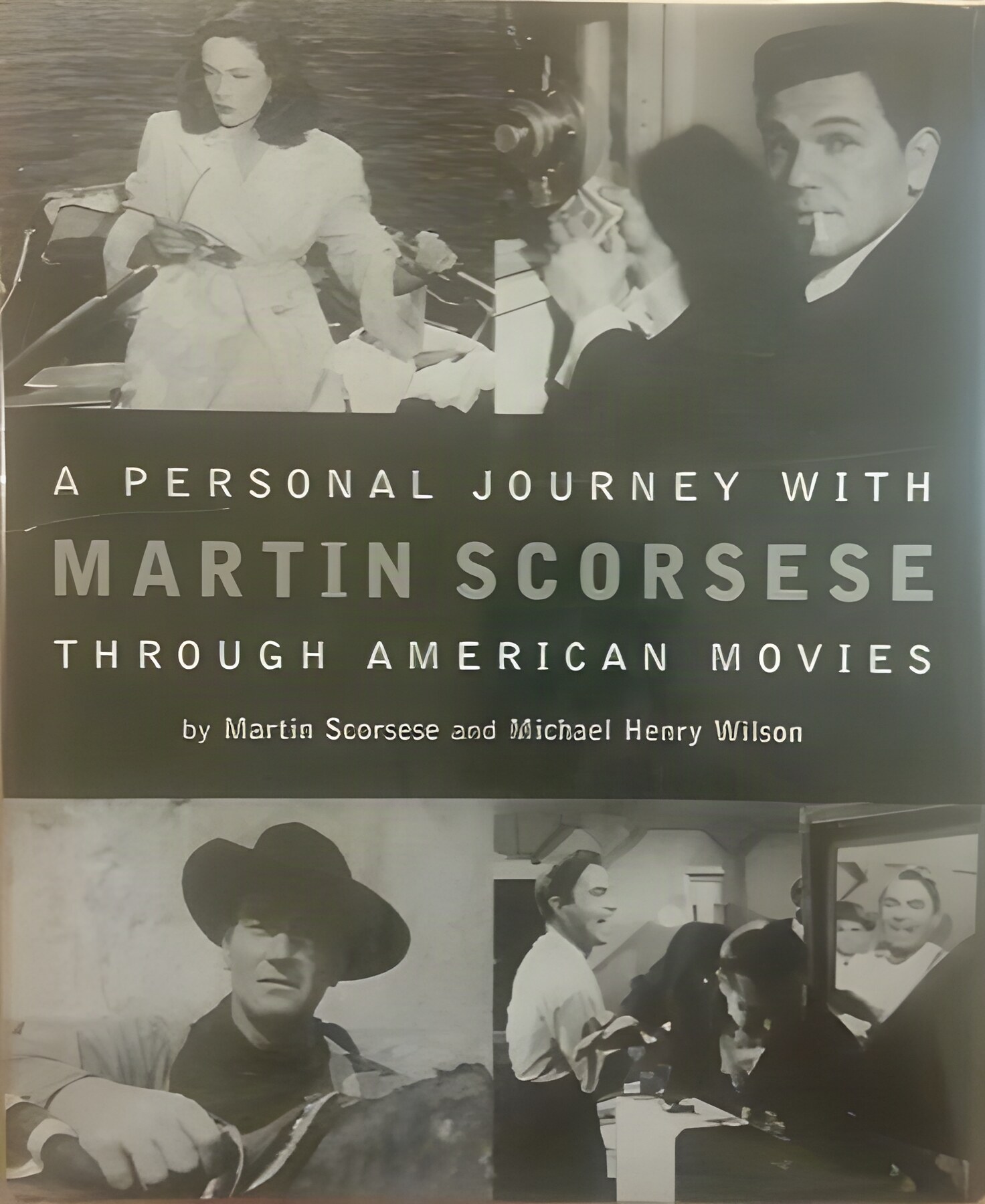
Hardcover. NY, Hyperion/Miramax, 1st, 1997, Book: Good, Dust Jacket: Very Good, Hardcover in a bright dust jacket, 191 pages, b&w illustrations. Light waviness to some pages, otherwise clean copy. In an expert guide to the history of American film, enhanced by many wonderful full-color and black-and-white photographs and film stills, the acclaimed director takes a look at many American movies while exploring them from a both a professional and personal perspective. An academically trained filmmaker (NYU film school) who is among today's most innovative directors, Scorsese presents an engrossing, idiosyncratic memoir of his experiences with motion pictures, including recollections of his first boyhood journeys to movie theaters and the impressions the films made on him. In analyzing American film since the silent era, he especially highlights Westerns, musicals, and gangster movies, genres that originated in America. No markings.
Hardcover. North Hollywood CA, National Association of Theatre Owners, 1st, 1993, Book: Very Good, Dust Jacket: Very Good, Hardcover, 256 pages, color and b&w illustrations. Lavish and marvelous pictorial on movie theatres and how movies were presented including the publicity and all the hoopla that surrounded the movie going experience from the first nickelodeons to the majestic movie palaces and all the wonderful small neighborhood theatres. Loaded with 100's of b&w photos publicity material and more with many color photos.
Hardcover. London, Dent / Everyman's Library, reprint, 1976, Book: Very Good, Dust Jacket: Good, Hardcover in a lightly worn blue dust jacket with fading to spine. 302 pages. The author was an actor, dramatist and theatrical manager and gives an account of the British stage in the first half of the Eighteenth century. First published in 1740. Clean copy.
Hardcover. New Haven CT, Yale University Press, 1st, 2004, Book: Very Good, Dust Jacket: Very Good, Hardcover in a bright dust jacket. INSCRIBED BY AUTHOR on the front fly leaf. "During its first two centuries, opera was dominated by sopranos. There were male sopranos, or castrati, whose supercharged voices (female vocal cords powered by male lungs) were capable of feats of vocalism that are hard to imagine today. And there were female sopranos, or prime donne, whose long battle for social acceptance and top billing was crowned in the early nineteenth century when the castrati disappeared from the opera stage and left them supreme.", "Whether they were male or female, these singers wre amazing vertuosi, perhaps the greatest singers there have ever been - "angels." Unfortunately, some of them (and often the most famous) were also capable of behaving extremely badly, both on and off stage - "monsters." This book tells their colorful stories." Clean copy.
Hardcover. Princeton NJ, Princeton University Press, 1st, 1995, Book: Very Good, Dust Jacket: Very Good, Hardcover in a bright dust jacket. 327 pages, clean copy. Few diseases have exercised the Western imagination as chronically as hysteria--from the wandering womb of ancient Greek medicine, to the demonically possessed witch of the Renaissance; from the "vaporous" salon women of Enlightenment Paris, through to the celebrated patients of Sigmund Freud, with their extravagant, erotically charged symptoms. In this fascinating and authoritative book, Mark Micale surveys the range of past and present readings of hysteria by intellectual historians; historians of science and medicine; scholars in gender studies, art history, and literature; and psychoanalysts, psychiatrists, clinical psychologists, and neurologists. In so doing, he explores numerous questions raised by this ever-growing body of literature: Why, in recent years, has the history of hysterical disorders carried such resonance for commentators in the sciences and humanities? What can we learn from the textual traditions of hysteria about writing the history of disease in general? What is the broader cultural meaning of the new hysteria studies? In the second half of the book, Micale discusses the many historical "cultures of hysteria." He reconstructs in detail the past usages of the hysteria concept as a powerful, descriptive trope in various nonmedical domains, including poetry, fiction, theater, social thought, political criticism, and the arts. His book is a pioneering attempt to write the historical phenomenology of disease in an age preoccupied with health, and a prescriptive remedy for writing histories of disease in the future.
Hardcover. Greenwich CT, New York Graphic Society, 1st, 1968, Book: Very Good, Dust Jacket: None, Hardcover, brick-red cloth stamped in gilt. Oblong folio, 306 pages, 13" x 12". 256 illustrations, thirty color plates. Comprehensive survey and critical evaluation of the contributions made to the theater by major painters and sculptors of the twentieth century, such as Chagall; Schlemmer; Toulouse-Lautrec; the German Impressionists; Picasso; Calder; Kandinsky; Dada; and Dali, etc. Bibliography. List of Exhibitions. Index. Name on front fly leaf, otherwise clean. No dustjacket, mild wear to covers. DUE TO SIZE AND WEIGHT, DOMESTIC SHIPPING ONLY.
Hardcover. Annapolis MD, Naval Institute Press, 1st, 2005, Book: Very Good, Dust Jacket: Very Good, Hardcover in a bright dust jacket, 126 pages, b&w illustrations. Princeton grad Erasmus Kloman was undergoing Army training at Fort Bragg in 1943 when, due to his passing knowledge of French, he was interviewed for potential involvement in "a highly confidential activity." The interview culminated in the question, "Would you be willing to volunteer for hazardous duty behind enemy lines?" He signed up for duty with the newly formed Office of Strategic Services (OSS) and after an intensive period of training in various aspects of espionage, found himself on assignment in wartime Cairo, Algiers, and then Caserta. At age 24 with the title of OSS Acting Chief of Operations in the Mediterranean Theater of Operations, he helped organize and coordinate the actions of Operational Groups (OGs) , which infiltrated Italy and occupied France on daring sabotage missions. Clean copy.
Hardcover. New York, Playbill/ Applause Thetre& Cinama Books, 1st, 2002, Book: Very Good, Dust Jacket: Very Good, 357 pages. Hardcover with dust jacket. Clean, tight copy. Minor wear to dust jacket. Minor rubbing to top spine. Light soil on rear. This is the ultimate backstage tour of Broadway! AT THIS THEATRE tells the complete history of Broadway in the 20th century, theatre by theatre. This gorgeous book is now updated, revised and with a larger format, covering 1900 to 2001. PLAYBILL's columnist, Louis Botto, along with Robert Viagas, opens the doors and lets readers explore the 40 active Broadway theatres in New York. From the conception and design of the buildings, to their original creators, and on to the theatres' transformation, often under duress, from legitimate houses to vaudeville and Burlesque, to movie houses and then back to their original purpose, this book captures the magical world of Broadway. It is a complete and authoritative history that only Botto, the curator of PLAYBILL's incomparable 116-year-old archives, can tell.
Hardcover. New York, Century Co., 1st, 1890, Book: Very Good, Dust Jacket: None, 501 pages. Hardcover. AUTHORS SIGNED INSCRIPTION PASTED ON TITLE PAGE. 3/4 Leather marbled sections, raised bands on spine. Gilt titles and highlights. Marbled endpapers. Gilt top edge. Light rubbing to cover edges. Clean, tight copy.
Hardcover. NY, St. Martin's Press, 1st US, 1970, Book: Very Good, Dust Jacket: Good, Hardcover in a lightly worn and chipped dust jacket. 180 pages with index. An account of the infamous showman and his adventures after descending on Victorian London in the 1840s. Clean copy.
Softcover. NY, Skyhorse, 1st, 2014, Book: Very Good, Dust Jacket: None, Softcover, 361 pages, b&w illustrations. Burlesque was one of America's most popular forms of live entertainment in the first half of the 20th century. Gaudy, bawdy, and spectacular, the shows entertained thousands of paying customers every night of the week. And yet the legacy of burlesque is often vilified and misunderstood, left out of the history books. By telling the intimate and surprising stories from its golden age through the women (and men!) who lived it, Behind the Burly Q reveals the true story of burlesque, even as it experiences a new renaissance. Lovingly interviewed by burlesque enthusiast Leslie Zemeckis who produced the hit documentary of the same name, are former musicians, strippers, novelty acts, club owners, authors, and historians--assembled here for the first time ever to tell you just what really happened in a burlesque show. From Jack Ruby and Robert Kennedy to Abbott and Costello--burlesque touched every corner of American life. The sexy shows often poked fun at the upper classes, at sex, and at what people were willing to do in the pursuit of sex. Sadly, many of the performers have since passed away, making this their last, and often only interview. Behind the Burly Q is the definitive history of burlesque during its heyday and an invaluable oral history of an American art form. Funny, shocking, unbelievable, and heartbreaking, their stories will touch your hearts. We invite you to peek behind the curtain at the burly show.
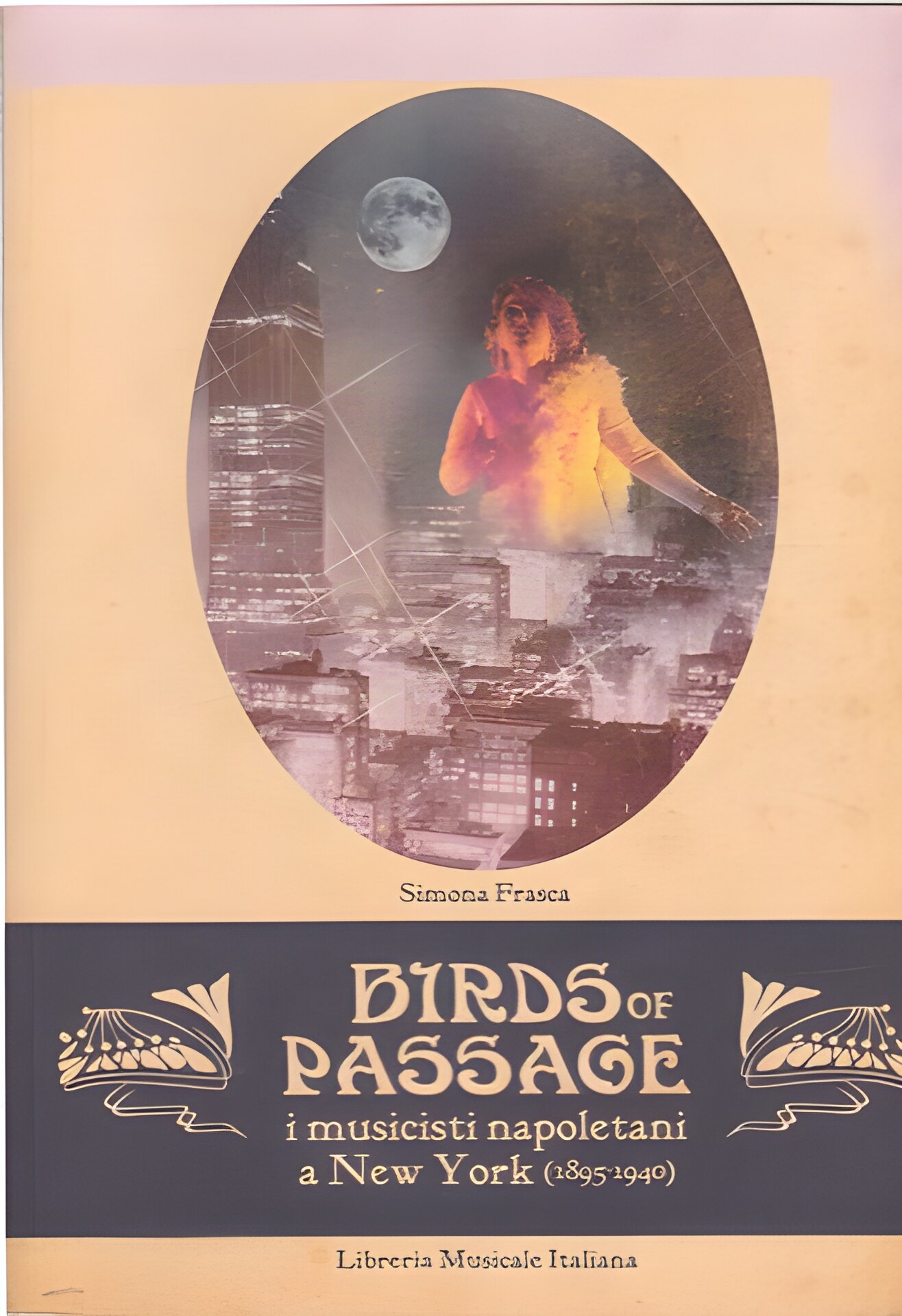
Softcover. Libreria Musicale Italiana, 1st, 2011, Book: Very Good, Dust Jacket: None, Softcover, 215 pages, b&w illustrations. A history of the diaspora of Neapolitan musicians in New York. This book reviews the period from the unification of Italy to the fascist era through significant Neapolitan performers such as Gilda Mignonette and Enrico Caruso. It traces the transformation of a popular tradition written in dialect into a popular tradition, written in Italian, that contributed to the production of 'American' identity. PLEASE NOTE: ITALIAN TEXT. Simona Frasca is a lecturer on early sound reproduction and Italian migration, and a freelance music journalist. She hold a doctorate in History and Analysis of Musical Culture from La Sapienza University in Rome. Mild sunning to wraps, clean copy.
Hardcover. Boston, Bulfinch Press, 1st, 2004, Book: Very Good, Dust Jacket: Very Good, Hardcover, 470 pages, illustrated with over 500 color and b&w images including posters, programs, maps and other archival material. Like new in publisher's shrinkwrap.
Hardcover. Detroit MI, Wayne State University Press, 1st, 1978, Book: Good, Dust Jacket: Good, Hardcover in a lightly worn dust jacket, 263 pages, b&w illustrations. The author traces the origins of humor to primitive drama, folk ritual, and carnival play. from antiquity to the era of Laurel and Hardy. Light making to about 16 pages.
Softcover. Syracuse, NY, Willis N Bugbee Co, 1st, 1932, Book: Very Good, Dust Jacket: None, 16 pages. Softcover booklet. Green paper wrappers with softened edges. Light soil to paper wrappers. tight copy. Lightly faded on rear.
Softcover. Urbana, University of Illinois Press, 1st pbk, 2009, Book: Very Good, Dust Jacket: None, Softcover, 376 pages, b&w illustrations. The personal history of Barney Josephson, proprietor of the legendary interracial New York City night clubs Cafe Society Downtown and Cafe Society Uptown and their successor, The Cookery. Famously known as 'the wrong place for the Right people', Cafe Society featured the cream of jazz and blues performers--among whom were Billie Holiday, Big Joe Turner, Lester Young, Buck Clayton, Big Sid Catlett, and Mary Lou Williams--as well as comedy stars Imogene Coca, Zero Mostel, and Jack Gilford, the boogie-woogie pianists, and legendary gospel and folk artists. Spanning half a century from the 1930s to the 1980s, Josephson's narrative depicts both the business and the artistic sides of Cafe Society while exposing the tensions between the club's own progressive interracial openness and the more restrictive social and political climate in which it evolved. Publisher's stamp on bottom edge otherwise clean.
Hardcover. New Haven, Yale University Press, 1st, 2015, Book: Very Good, Dust Jacket: Very Good, 392 pages. Hardcover with dust jacket. Very clean, unmarked copy with only minor wear to edges of dust jacket. Black and white illustrations throughout. Tight copy.
Softcover. Milano, Longanesi & Co., 1st, 1979, Book: Good, Dust Jacket: None, Softcover, 94 pages. Text in Italian. Light edgewear to wrappers, faint foxing to edges and end papers.
Hardcover. Boston, Little Brown , 1st, 1966, Book: Very Good, Dust Jacket: Good, Hardcover, 319 pages, b&w photos. In a bright, unclipped dust jacket with a couple closed tears, mild soil.
Hardcover. NY, Time Life, reprint, 1983, Book: Very Good, Dust Jacket: None, 274 pages. Hardcover with no dust jacket. Dark blue leather bound with gilt titles to front cover and spine. Embossed decoration on front cover. Gilt text block edges, red ribbon marker. Clean, tight copy. This memoir by Confederate General Richard Taylor is usually considered one of the best and least biased by a general officer. The work is full of considered analysis on both the strategy of the war and the personalities of his fellow officers. Taylor is always fair in his criticism and seems to have no real scores to settle. While he makes little mention of his own talents, his tactical brilliance and strategic insight does shine through. Many contemporaries said Richard Taylor was one of the best soldiers of the war, but he is comparatively little known due to his posting to peripheral theaters. While he was a man of his time, the work (with the exception of some of his Reconstruction writings) is much less tainted by Lost Cause polemics than most Confederate memoirs.
Hardcover. NY, Abrams, 1st, 2018, Book: Very Good, Dust Jacket: Very Good, Hardcover, 352 pages, b&w illustrations. In a bright, unclipped dust jacket. The 1960s to early '70s was a pivotal time for American culture, and New York City was ground zero for seismic shifts in music, theater, art, and film-making. The Downtown Pop Underground takes a kaleidoscopic tour of Manhattan during this era and shows how deeply interconnected all the alternative worlds and personalities were that flourished in the basement theaters, dive bars, concert halls, and dingy tenements within one square mile of each other. Author Kembrew McLeod links the artists, writers, and performers who created change, and while some of them didn't become everyday names, others, like Patti Smith, Andy Warhol, and Debbie Harry, did become icons. Ambitious in scope and scale, the book is fueled by the actual voices of many of the key characters who broke down the entrenched divisions between high and low, gay and straight, and art and commerce -- and changed the cultural landscape of not just the city but the world.
Hardcover. NY, Norton, 1st, 2008, Book: Very Good, Dust Jacket: Very Good, Hardcover, 288 pages. Edward Steichen was already a famous painter and photographer in America and abroad when, in early 1923, he was offered the most prestigious position in photography's commercial domain: that of chief photographer for Vogue and Vanity Fair. Over the next fifteen years, Steichen would produce a body of work of unequaled brilliance, dramatizing and glamorizing contemporary culture and its achievers in politics, literature, film, sport, dance, theater, opera, and the world of high fashion. Here are iconic images of Gloria Swanson, Gary Cooper, Greta Garbo, and Charlie Chaplin as well as numerous other celebrities drawn from an archive of more than two thousand original prints. Until now, no more than a handful have been exhibited or published in book form. The photographs of the 1920s and 1930s represent the high point in Steichen's career and are among the most striking creations of twentieth-century photography. 242 illustrations.
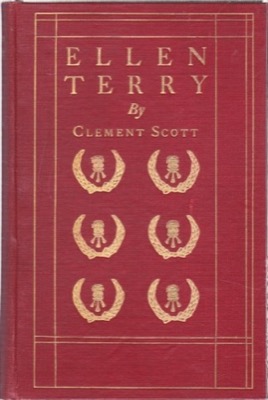
Hardcover. NY, Frederick A. Stokes , 1st, 1900, Hardcover, red cloth with bright gilt stamping, 150 pages. Top edge gilt. Ribbon marker, photographic frontispiece portrait of actress Terry, as well as numerous photographs of her in various dramatic productions. Clean copy.

 "America Goes to the Movies: 100 Years of Motion Picture Exhibitionby: Stones, Barbara")
 "An Apology for the Life of Colley Cibberby: Cibber, Colley")
 "Angels and Monsters")


 "Assignment Algiers: With the OSS in the Mediterranean Theater by: Erasmus H. Kloman")
 "At This Theatre: 100 Years of Broadway Shows, Stories and Starsby: Botto, Louis")
 "Autobiography of Joseph Jefferson, The (SIGNED COPY)by: Jefferson, Joseph")

 "Behind the Burly Q: The Story of Burlesque in Americaby: Leslie Zemeckis, Blaze Starr (foreword)")
 "Broadway: The American Musicalby: Kantor, Michael and Laurence Maslon")
 "Buffo: The Genius of Vulgar Comedy by: Caputi, Anthony")
 "Bugbee's Minstrel Plays: The Honey Boy Minstrelsby: Giles, Billy")
 "Cafe Society: The Wrong Place for the Right People by: Barney Josephson, Terry Trilling-Josephson")
 "Captain and \"the Cannibal\", The: An Epic Story of Exploration, Kidnapping, and the Broadway Stageby: Fairhead, James")
 "Carnet Di Balloby: Rossi, Elisa Gribaudi")
 "Cristianis, The - The Story of the World's Most Colorful Circus Familyby: Hubler, Richard")
 "Destruction and Reconstruction - Personal experiences of the late war (Collector's Library of the Civil War)by: Taylor, Richard")
 "Downtown Pop Underground: New York City and the literary punks, renegade artists, DIY filmmakers, mad playwrights, and rock 'n' roll glitter queens who revolutionized culture by:")
 "Downtown Pop Underground: New York City and the literary punks, renegade artists...and rock 'n' roll glitter queens who revolutionized cultureby: McLeod, Kembrew")
 "Edward Steichen: In High Fashion - The Conde Nast Years, 1923-1937by: Todd Brandow and William A. Ewing")