Hardcover. Pittsburgh PA, GoodKnight Books, 1st, 2017, Book: Very Good, Dust Jacket: Very Good, Hardcover in a bright, unclipped dust jacket. The Art of Selling Movies presents the first-ever look at 60 years of newspaper advertising for motion pictures great and small. These ads created by Hollywood and adapted by local and regional exhibitors motivated patrons to leave their homes, part with precious income, and spend time in the dark. Because of the high stakes involved, theater operators used wildly creative means to make that happen. They made movie advertising equal parts art and psychology, appealing to every human instinct (especially sex) in an effort to push product and keep their theatres in business. From the pen-and-ink masterpieces of the 1920s and 30s to location-specific folk art to ad space jam-packed with enticements for every member of the family, The Art of Selling Movies dissects the psyche of the American movie-going public ... and the advertisers seeking to push just the right buttons.
Hardcover. NY, H. Bittner and Company, 1st, 1945, Book: Very Good, Dust Jacket: None, Hardcover, blue buckram stamped with gilt code of arms and lettering on spine. Limited to 1000 copies. A study of an artistic family who created theatrical designs dating from the 1680s to the 1780s under eight names. Illustrated with 53 plates. Small review slip tipped on front fly leaf. Some darkening to covers and spine, internally clean and bright. No dust jacket.
Hardcover. Koln GR, Taschen, 1st, 2008, Book: Very Good, Dust Jacket: Very Good, Hardcover, larger slipcased edition of this title and measures 15.5 x 10.5" and weighs approx. 11.8 lbs. Slipcase, book and jacket in very good condition. With photographic gems of early circus performers, as well as original posters, lithographs, sideshow banners and engravings from the 16th to 19th centuries illustrating the worldwide roots of the circus, readers are transported to a world of thrill and skill, grit and glamor. Highlights include iconic circus photographs by Mathew Brady, Cornell Capa, Walker Evans, Weegee, and Lisette Model, and little-known circus images by Stanley Kubrick and Charles and Ray Eames. 670 pages. DOMESTIC SHIPPING ONLY.
Hardcover. Koln GR, Taschen, 1st, 2016, Book: Very Good, Dust Jacket: Very Good, Hardcover, folio trade edition. With photographic gems of early circus performers, as well as original posters, lithographs, sideshow banners and engravings from the 16th to 19th centuries illustrating the worldwide roots of the circus, readers are transported to a world of thrill and skill, grit and glamor. Highlights include iconic circus photographs by Mathew Brady, Cornell Capa, Walker Evans, Weegee, and Lisette Model, and little-known circus images by Stanley Kubrick and Charles and Ray Eames. 670 pages.
Hardcover. NY, Benjamin Blom, 1st, 1964, Book: Very Good, Dust Jacket: None, Hardcover, light orange cloth with brown titles on spine. Traces the history of the time-honored farce, featuring Pulcinella, Harlequin, Pierrot, Pantaleone, and other traditionsl characters, from Roman comedy to Cruikshank's Punch & Judy. Originally published in 1912, this new edition adds 46 pages of illustrations and a folding color frontispiece. Clean copy, no dust jacket.
Softcover. Notre Dame IN, Theatre Historical Society, 1st, 1986, Book: Very Good, Dust Jacket: None, Softcover, stapled wrappers, 40 pages. Profusely illustrated in b&w. A visual history of the design and building of the Earle Theatre in Philadelphia. Some of the world's biggest stars performed there in it's heyday. Old price sticker on rear cover, otherwise clean, very good.
Softcover. NY, Cambridge University Press, reprint, 1996, Book: Very Good, Dust Jacket: None, Softcover, 434 pages. Of all the terms with which Americans define themselves as members of society, few are as elusive as "middle class." This book traces the emergence of a recognizable and self-aware "middle class" between the era of the American Revolution and the end of the nineteenth century. The author focuses on the development of the middle class in larger American cities, particularly Philadelphia and New York. He examines the middle class in all its complexity, and in its day-to-day existence--at work, in the home, and in the shops, markets, theaters, and other institutions of the big city. The book places the new language of class---in particular the new term "middle class"--in the context of the concrete, interwoven experiences of specific anonymous Americans who were neither manual workers nor members of urban upper classes. Clean copy.
Hardcover. NY, New York University Press, 1st, 2002, Book: Very Good, Dust Jacket: Very Good, Hardcover in a bright dust jacket, pages. The GI War Against Japan recounts the harrowing experiences of American soldiers in Asia and the Pacific. Based on countless diaries and letters, it sweeps across the battlefields, from the early desperate stand at Guadalcanal to the tragic sinking of the U.S.S. Indianapolis at war's very end. From the daunting spaces of the China-India theater to the fortress islands of Iwo Jima and Okinawa, Schrijvers brings to life the GIs' struggle with suffocating wilderness, devastating diseases, and Japanese soldiers who preferred death over life. Amidst the frustration and despair of this war, American soldiers abandoned themselves to an escalating rage that presaged Hiroshima and Nagasaki.
Hardcover. NY, Random House, 1st, 1954, Book: Very Good, Dust Jacket: None, Hardcover, "A Random House Play", 131 pages illustrated with photographs from the stage production featuring Kaye Ballard and Jerry Stiller. Cover label illustration by Hirschfeld. John Latouche's Introduction is his unusual expository curtain speech recounting the circumstances of the plays inception and history. Front end paper tanned. No dust jacket.
Hardcover. NY/London, Booth-Clibborn, 1st, 2011, Book: Very Good, Dust Jacket: Very Good, Hardcover, 300 pages. Basil Hyman, a keen amateur photographer, took hundreds of photographs of everyday life in Britain during the 1950s. The Lost Album is a nostalgic look back at this long-gone era, filled with photographs made during a time of enormous social change--just after World War II and before the "Swinging Sixties"--and a wealth of ephemera: theater tickets and playbills, newspaper advertisements, ration books, and much more. Special inserts include actual facsimiles of some of these now-obscure items--talismans from a slower time, when formality, pride, and courtesy prevailed. There are special sections on two major events: the Festival of Britain in 1951, and the Coronation of Queen Elizabeth II in 1953. With brief, lively introductions and captions, this is a captivating snapshot of how people lived and played in Britain in those years.
Hardcover. NY, Knopf, 1st, 1979, Book: Very Good, Dust Jacket: Very Good, Hardcover in a bright, price-clipped dust jacket, 326 pages. Extensively illustrated in color and black and white. Clean copy. Margot Fonteyn shares her personal vision of the history of dance.
Hardcover. Chicago, University of Chicago Press, 1st, 1988, Book: Very Good, Dust Jacket: Very Good, Hardcover in a bright dust jacket, 178 pages. The drama is the most social of the arts, depending upon physical space, audience, and social factors for its existence. It is no surprise, therefore, that the most successful criticism approaches theater the way Barber and Mullaney do: as historical artifact. Barber is the better known, having authored the classic Shakespeare's Festive Comedy (1959); the present volume is based on his papers and examines three early Elizabethan tragedies"Tamburlaine" and "Dr. Faustus" by Marlowe and "The Spanish Tragedy" by Kyd. Particularly interested in locating these plays in the unstable religious atmosphere of the late 16th century, Barber ably demonstrates his understanding of the social, historical, and economic factors that defined the era. Mullaney takes the novel approach of examining the theater in light of London topography; the title thus refers to the physical location of the playhouses as well as the social importance of the theater. Mullaney points out that the prejudice that forced the great theaters of the age to operate outside the city walls encouraged a drama that was radical and iconoclastichence its greatness. Mullaney's argument is fascinating and thought-provoking, convincingly presented. Clean copy.
Softcover. The New Press, 1st, 2008, Book: Very Good, Dust Jacket: None, Softcover, 364 pages. Collects the Pulitzer Prize-winning oral historian's remarkable conversations with some of the greatest luminaries of film and theater. Originally published under the title The Spectator, this "knowledgeable and perceptive" (Library Journal) look at show business presents the actors directors, playwrights, dancers, lyricists, and others who created the dramatic works of the twentieth century. Among the many highlights in these pages, Buster Keaton explains the wonders of unscripted silent comedy, Federico Fellini reflects on honesty in art, Carol Channing reveals that she is far more serious than she lets on, and Marlon Brando turns the tables and wants to interview Terkel. We learn about crucial artistic decisions in the lives of Arthur Miller, Tennessee Williams, and Edward Albee and hear from a range of film directors, from Vittorio De Sica and King Vidor to Satyajit Ray. We even get to witness Terkel playing straight man to a wildly inventive Zero Mostel. Clean copy.
London, Rupert Hart-Davis, 1st, 1961, Book: Very Good, Dust Jacket: None, Hardcover, green cloth with gilt lettering on spine, 292 pages. Maps on the endpapers. Black and white illustrations by Timothy Birdsall. A illustrated guide to the major theatres in London along with a brief history of each. No dust jacket. A bright, clean copy.
Hardcover. Boston, David R. Godine, 1st, 2009, Hardcover, 192 pages. The photography of Angus McBean encompasses more than three decades of the history of British theater. His work includes most of the memorable productions of the Old Vic Company and of what is now the Royal Shakespeare Company; opera productions at Glyndebourne and the Royal Opera House, Covent Garden; ballet and operetta at Sadler's Wells; and West End productions of plays and musicals both old and new -- hundreds of productions in all. He was the favorite photographer of Vivien Leigh, Laurence Olivier, and Edith Evans, and he photographed countless plays starring John Gielgud, Ralph Richardson, and Alec Guinness, not to mention younger stars such as Audrey Hepburn, Richard Burton, and Elizabeth Taylor. In fact, McBean photographed virtually every great actor of his era, perhaps the most brilliant years in the annals of British theater. His studio was active and eclectic; among his patrons were not only actors, singers, and dancers, but also playwrights, producers, composers, artists, and writers. In his early career, McBean had been a pioneer of surrealist photography, with a highly popular series of "surrealized" portraits that appeared in The Sketch, and, later, of montage and multiple-exposure photography in a long-running series for The Tatler. In 1969, McBean approached Harvard University to initiate the sale of his collection, and in the following year his archive of glass plate negatives, index prints, and programs, together with the copyrights, became a part of the Harvard Theatre Collection, where it remains the most often-requested collection of visual material. The photographs in this book, selected and captioned by the archive's curator, Fredric Woodbridge Wilson, have been carefully reproduced from the original negatives.
Hardcover. Boston, David Godine, 1st, 2009, Book: Very Good, Dust Jacket: Very Good, Hardcover, 192 pages. The photography of Angus McBean encompasses more than three decades of the history of British theater. His work includes most of the memorable productions of the Old Vic Company and of what is now the Royal Shakespeare Company; opera productions at Glyndebourne and the Royal Opera House, Covent Garden; ballet and operetta at Sadler's Wells; and West End productions of plays and musicals both old and new-hundreds of productions in all. McBean was the favorite photographer of Vivien Leigh, Laurence Olivier, and Edith Evans, and he photographed countless plays starring John Gielgud, Ralph Richardson, and Alec Guinness, not to mention younger stars such as Audrey Hepburn, Richard Burton, and Elizabeth Taylor. In fact, McBean photographed virtually every great actor of his era, perhaps the most brilliant years in the annals of British theater.
Hardcover. NY, McGraw-Hill Book Company, 1975, Book: Very Good, Dust Jacket: Very Good, Hardcover, 324 pages, color and black and white illustrations throughout. A masterly survey of the world's stages brings to the contemporary reader the entire panorama of the theatre, including its formative stages among primitive peoples and the richly stylized traditions of the East.
Hardcover. NY, McGraw-Hill Book Company, 1975, Book: Very Good, Dust Jacket: Very Good, Hardcover, 324 pages, color and black and white illustrations throughout. A masterly survey of the world's stages brings to the contemporary reader the entire panorama of the theatre, including its formative stages among primitive peoples and the richly stylized traditions of the East.
Hardcover. NY, Crown, 1st, 1995, Book: Very Good, Dust Jacket: Very Good, Hardcover in a bright, unclipped dust jacket, 644 pages, b&w illustrations. After a protracted squabble over private papers with the playwright's estate, Leverich delivers this hefty first volume of a projected two-volume life of Tennessee Williams (1911-1983). In it, Leverich, who produced several of Williams's plays and calls himself Williams's "chosen biographer", covers the years through 1945, when The Glass Menagerie opened on Broadway. Treated are Williams's youth in Mississippi and St. Louis; the college years at the universities of Missouri and Iowa; bumming around (but always writing) in New Orleans and Greenwich Village; the disaster of his first Broadway play (it closed in Boston); script writing, or avoiding it, at MGM's Hollywood mill; and, finally, the evolution of Menagerie, a wonderfully detailed and dramatic case history in itself. Leverich's overworked conceit, which he restates at intervals, is that this is the life of Tom Williams, a "repressed puritan" poet, who in time created a more flamboyant public persona called Tennessee. A few matters are set straight. Leverich maintains his subject's active homosexual life started in his late 20s, later than Williams stated in his memoirs, and that his sister's infamous lobotomy came later than his mother claimed. Although the accumulation of information is impressive, the lower Leverich keeps his own profile and editorial commentary the better his book is, which means it is at its best when it simply reproduces Williams's sporadically kept journal. If you believe that all the details of a life are but preparation for a single event, in this case, the opening of a remarkable play, this is an impressively argued biography.
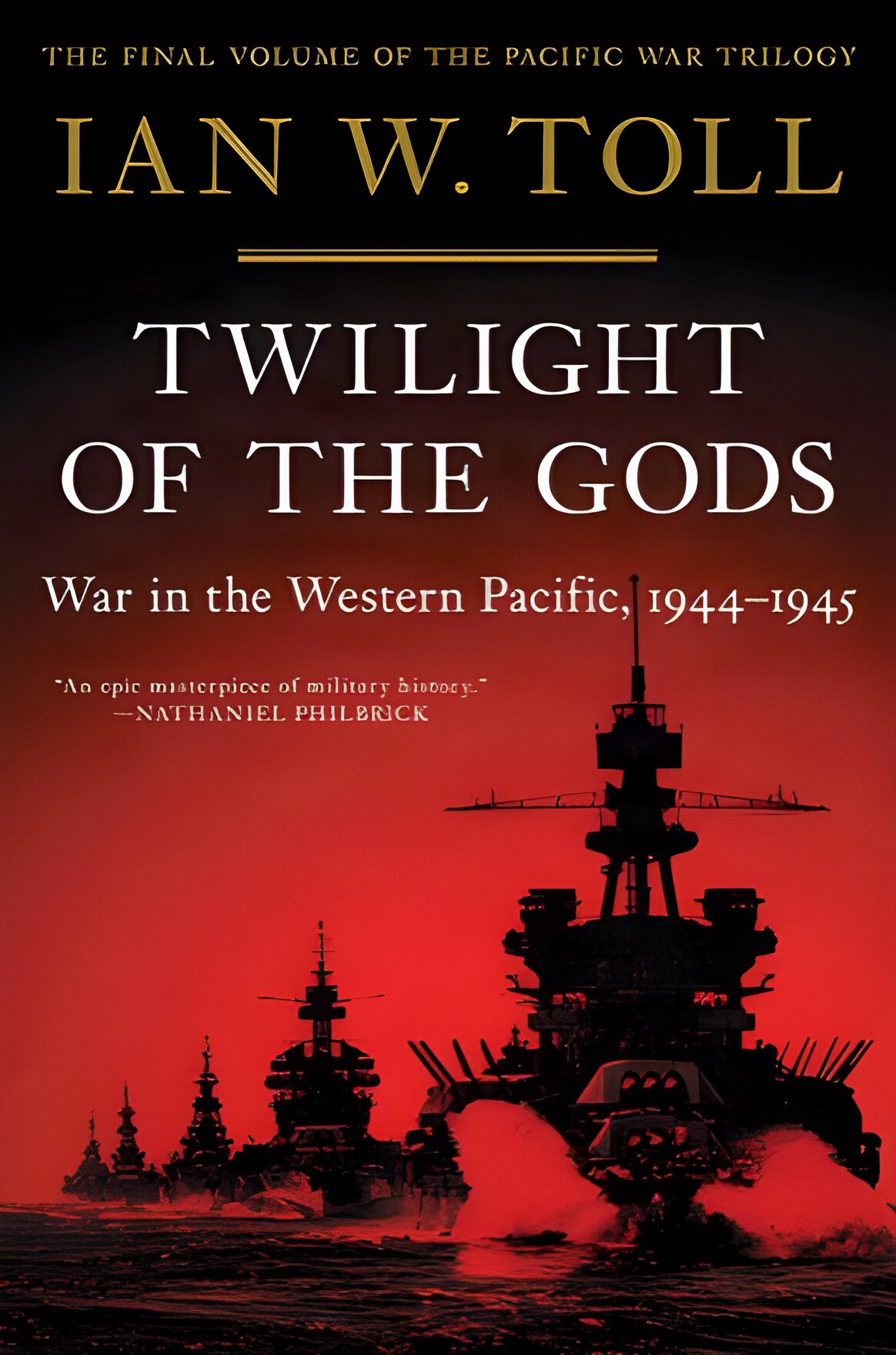
Hardcover. NY, W. W. Norton & Company, 2nd pr., 2020, Book: Very Good, Dust Jacket: Very Good, Hardcover in a bright dust jacket, 926 pages, illustrations. In June 1944, the United States launched a crushing assault on the Japanese navy in the Battle of the Philippine Sea. The capture of the Mariana Islands and the accompanying ruin of Japanese carrier airpower marked a pivotal moment in the Pacific War. No tactical masterstroke or blunder could reverse the increasingly lopsided balance of power between the two combatants. The War in the Pacific had entered its endgame. Beginning with the Honolulu Conference, when President Franklin Delano Roosevelt met with his Pacific theater commanders to plan the last phase of the campaign against Japan, Twilight of the Gods brings to life the harrowing last year of World War II in the Pacific, when the U.S. Navy won the largest naval battle in history; Douglas MacArthur made good his pledge to return to the Philippines; waves of kamikazes attacked the Allied fleets; the Japanese fought to the last man on one island after another; B-29 bombers burned down Japanese cities; and Hiroshima and Nagasaki were vaporized in atomic blasts. Ian W. Tolls narratives of combat in the air, at sea, and on the beaches are as gripping as ever, but he also reconstructs the Japanese and American home fronts and takes the reader into the halls of power in Washington and Tokyo, where the great questions of strategy and diplomacy were decided. Clean copy.
Hardcover. NY, Harper & Row, 1st, 1977, Book: Very Good, Dust Jacket: Very Good, Hardcover in a bright dust jacket, 435 pages, b&w illustrations. An illustrated world history of the Yiddish theatre covering five continents and more than 300 years. Mild wear to rear panel of dust jacket, clean copy.
Hardcover. NY, George H. Doran, 1st, 1915, Hardcover, black cloth covers with gilt title, top edge gilt. 523 pages, b&w photos. The author wrote this book to depict and commemorate "leading representatives of the Stage". He writes about: William Warren, laura Keene, Matilda Heron, Lester Wallack, James W. Wallace, Mark Smith, Edward Adams, Henry J. Montague; Edwin Booth, Augustin Daly, Henry Irving, Johnston Forbes-Robertson, Edward H. Sothern and Julia Marlowe. Index. Clean, bright copy.
Hardcover. New Haven CT, Yale University Press, 1st thus, 1950, Book: Very Good, Dust Jacket: None, Hardcover. The Chronicles of America Vol. 54. 364 pages, b&w illustrations. Red gilt-decorated cloth, top edge gilt, no dust jacket as issued. Details the campaigns of the U.S. Armed Forces in all theaters of World War II, including Tunisia, France, Italy, the Philippines, and Guadalcanal. A very nice, tight, clean copy in excellent condition.
Hardcover. Chicago, University Of Chicago Press, 1st, 2006, Book: Very Good, Dust Jacket: Very Good, Hardcover, pages. In When Buildings Speak,Anthony Alofsin explores the rich yet often overlooked architecture of the late Austro-Hungarian Empire and its successor states. He shows that several different styles emerged in this milieu during the late nineteenth and early twentieth centuries. Moreover, he contends that each of these styles communicates to us in a manner resembling language and its particular means of expression. Covering a wide range of buildings--from national theaters to crematoria, apartment buildings to warehouses, and sanatoria to postal savings banks--Alofsin proposes a new way of interpreting this language. He calls on viewers to read buildings in two ways: through their formal elements and through their political, social, and cultural contexts. By looking through Alofsin's eyes, readers can see how myriad nations sought to express their autonomy by tapping into the limitless possibilities of art and architectural styles. And such architecture can still speak very powerfully to us today about the contradictory issues affecting parts of the former Habsburg Empire.

 "The Art of Selling Moviesby: John McElwee")

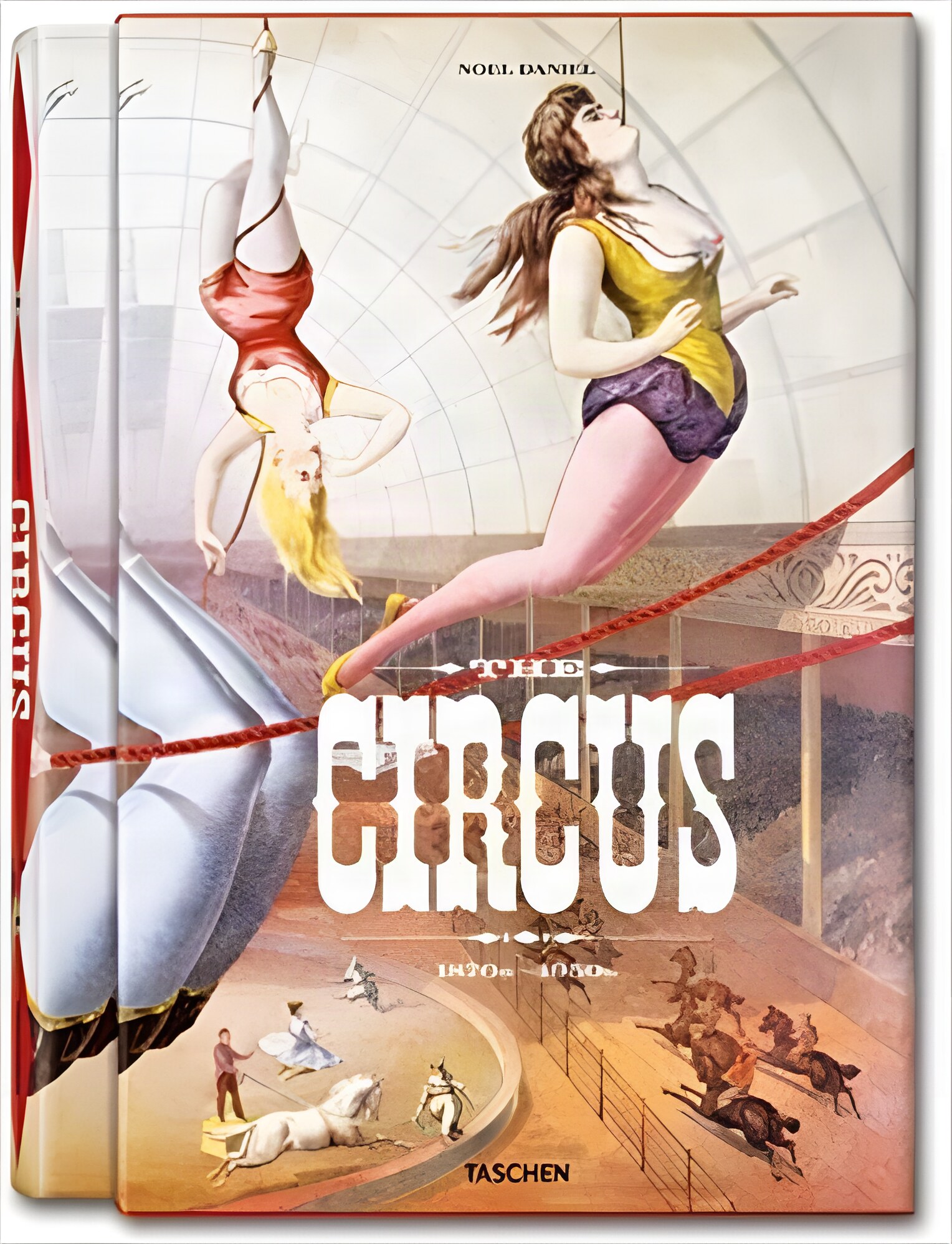
 "The Circus: 1870-1950by: Granfield Linda; Jando Dominique; Dahlinger Fred; Daniel Noel Editor")
 "The Commedia Dell'Arteby: Winifred Smith")
 "The EARLE THEATRE, Philadelphia, Penna., Hoffman & Henon, Architects, Opened: March 24, 1924. Theatre Historical Society Annual for 1986by: Irvin R. Glazer")


 "The Emergence of the Middle Class: Social Experience in the American City, 1760")


 "The Lost Album: A Visual History of 1950s Britainby: Hyman, Basil")
 "The Magic of Dance by: Margot Fonteyn")
 "The Place of the Stage: License, Play, and Power in Renaissance Englandby: Mullaney, Steven")

 "The Theatres of London by: Raymond Mander and Joe Mitchenson")
 "The Theatrical World of Angus McBean: Photographs from the Harvard University Theatre Collectionby: Fredric Woodbridge Wilson and Richard Traubner")
 "The Theatrical World of Angus McBean: Photographs from the Harvard University Theatre Collectionby: Fredric Woodbridge Wilson and Richard Traubner")
 "Theatre through the Ages by: Molinari Cesare")
 "Theatre through the Ages by: Molinari Cesare")
 "Tom: The Unknown Tennessee Williams by: Lyle Leverich")

 "Vagrant Memories; Being Further Recollections of Other Daysby: Winter, William")

 "When Buildings Speak: Architecture as Language in the Habsburg Empire and Its Aftermath, 1867-1933by: Alofsin, Anthony")