Hardcover. NY, Knopf, 1st, 2003, Book: Very Good, Dust Jacket: Very Good, Hardcover in a bright dust jacket. 185 pages, color and b&w illustrations. With these character sketches of key figures of the American Revolution and illuminating probes of its circumstances, Bernard Bailyn reveals the ambiguities, complexities, and uncertainties of the founding generation as well as their achievements. Using visual documentation--portraits, architecture, allegorical engravings--as well as written sources, Bailyn, one of our most esteemed historians, paints a complex picture of that distant but still remarkably relevant world. He explores the powerfully creative effects of the Founders' provincialism and lays out in fine detail the mingling of gleaming utopianism and tough political pragmatism in Thomas Jefferson's public career, and the effect that ambiguity had on his politics, political thought, and present reputation. And Benjamin Franklin emerges as a figure as cunning in his management of foreign affairs and of his visual image as he was amiable, relaxed, and amusing in his social life. Bailyn shows, too, why it is that the Federalist papers--polemical documents thrown together frantically, helter-skelter, by Alexander Hamilton, James Madison, and John Jay in a fierce political battle two hundred years ago--have attained canonical status, not only as a penetrating analysis of the American Constitution but as a timeless commentary on the nature of politics and constitutionalism.
Hardcover. New York , Penguin Putnam Inc, 1st, 1993, Book: Very Good, Dust Jacket: Very Good, Hardcover, 158 pages, illustrated throughout with photos in b&w. Clean, unmarked copy with only minor wear to dust jacket. Elie Wiesel provides the preface to a master photographer's record of eastern Europe's Jewish communities in the years just before World War II with 160 photographs that capture the ordinary lives of Jews before the Holocaust.
Softcover. self-published, 1st, 2017, Softcover, 238 pages, b&w illustrations. SIGNED BY AUTHOR on the title page. An historical and biographical study of the men from College Point, Queens, New York who rendered valuable service to their country in World War One. More than six hundred fifty served in the Army, the Navy, the Marine Corps and the Merchant Marine. Twenty-eight died. What gives the book its relatively unique character is that the hamlet was basically German in origin, primarily industrial, and in the late 19th and early 20th centuries, a destination place for large numbers of entertainment-seeking New Yorkers. The book includes an overview of these elements, illustrating how each played its role before, during and, to a limited extent, after the war. These subjects are woven into a detailed analysis of how College Point, and its people weathered movements and events; labor strife, anti-German sentiment, espionage, the influenza epidemic, and a host of other forces that impacted American culture in general, and their lives in particular. Also told in chronological order, and brief vignettes are the stories of the twenty-eight men who went willingly to war, and died. Clean copy.
Hardcover. NY, Oxford University Press, 4th pr., 2000, Hardcover in a bright dust jacket. 670 pages, b&w illustrations. Written by the most prominent of the new generation of historians, this superb volume offers the most up-to-date and authoritative account available of African-American history, ranging from the first Africans brought as slaves into the Americas, to today's black filmmakers and politicians. Here is a panoramic view of African American life, rich in gripping first-person accounts and short character sketches that invite readers to relive history as African Americans experienced it. We begin in Africa, with the growth of the slave trade, and follow the forced migration of what is estimated to be between ten and twenty million people, witnessing the terrible human cost of slavery in the colonies of England and Spain. We read of the Haitian Revolution, which ended victoriously in 1804 with the birth of the first independent black nation in the New World, and of slave rebellions and resistance in the United States in the years leading up to the Civil War. There are vivid accounts of the Civil War and Reconstruction years, the backlash of notorious "Jim Crow" laws and mob lynchings, and the founding of key black educational institutions. The contributors also trace the migration of blacks to the major cities, the birth of the Harlem Renaissance, the hardships of the Great Depression and the service of African Americans in World War II, the struggle for Civil Rights in the 1950s and '60s, and the emergence of today's black middle class. From Harriet Tubman and Frederick Douglass to Martin Luther King, Jr., and Louis Farrakhan, To Make Our World Anew is an unforgettable portrait of a people. Clean copy.
Softcover. Berkeley CA, University of California Press, 1st pbk., 1990, Book: Very Good, Dust Jacket: None, Softcover, 273 pages, b&w illustrations. The first in-depth analysis of the rich spiritual and artistic traditions of the Carib-speaking Yekuana Indians of Venezuela, who live in the dense rain forest of the upper Orinoco. Within their homeland of Ihuruna, the Yekuana have succeeded in maintaining the integrity and unity of their culture, resisting the devastating effects of acculturation that have befallen so many neighboring groups. Yet their success must be attributed to more than natural barriers of rapids and waterfalls, to more than lack of "contact" with our "modern" world. The ethnographic history recounted here includes not only the Spanish discovery of the Yekuana but detailed indigenous accounts of the entire history of Yekuana contact with Western culture, revealing an adaptive technique of mythopoesis by which the symbols of a new and hostile European ideology have been consistently defused through their incorporation into traditional indigenous structures. Clean copy.
Hardcover. London, Angus and Robertson, 1st UK, 1967, Book: Very Good, Dust Jacket: Very Good, Hardcover in a lightly worn dust jacket. General, minister of war, prime minister, and unrepentant ultranationalist, Hideki Tojo was the most powerful leader in the Japanese government during World War II. This clear and compelling portrait of Tojo illuminates the spartan, single-minded, incorruptible personality of the man who chose war rather than succumb to U.S.-induced economic strangulation. 20 photos. 288 pages. Clean copy.
Hardcover. Seattle, Fantagraphics, 1st, 2022, Book: Very Good, Dust Jacket: None, Hardcover, large format pictorial boards, 200 pages. In 1949, the ambitious Charles Biro - who had previously co-created the realistically brutal comic Crime Does Not Pay - edited and wrote an oversized comic aimed at adults, called Tops. Like several other radical adult comics projects that would follow, it proved to be a commercial failure and lasted only two Life magazine-sized issues. The original comics have since become a legendary holy grail among comics fans and historians, fetching as much as $6,000 on the collector's market: written about but rarely seen and never reprinted. Until now.Fantagraphics' Tops collects both issues of these oversized experimental comics in their entirety. Some of the best craftsmen working in comics at that time drew these pulpy, sexy, and melodramatic stories: Dan Barry, George Tuska, and others. It includes two stunning pre-EC crime tales illustrated by Reed Crandall, reminiscent of his Crime SuspenStories work. Actor Melvyn Douglas (believe it or not) takes the reader on a tour of utopia, entitled "How Would You Live Under A World Government?" - a positive spin on global Socialism! A treasure trove of fascinating and revelatory comics history for scholars and fans, this compilation includes an introduction by the editor, the historian and cartoonist Michael T. Gilbert, as well as several other essays providing background on the creation of the series and the publisher, editors, and cartoonists who realized it. It includes a chronicle in essay form of experimental, adult comics endeavors throughout the first half of the 20th century. Tops is a landmark work of historical importance and a mind-boggling reading experience from a bygone era meticulously restored and reproduced in a deluxe hardcover in its originally published dimensions. Full-color illustrations throughout.
Hardcover. Glencoe IL, The Free Press, 1st, 1957, Book: Good, Dust Jacket: None, Hardcover, brown cloth, 382 pages. Dust jacket flaps laid in, name inside front cover. Light pencil marking to about 10 pages. Ancient civilizations and medieval Europe had no "economies" -- no fixed prices for commodities, no production for markets. People have always exchanged goods, of course, but in the pre-modern world, exchange between individuals was most often done through social networks, always with a non-economic motivation. Scarcity, "entrepreneurship", the universal self-regulating market with fixed prices for goods, and the system of trade as we know it, and economics as the fundamental driving sector for all of society --- are all unique to the modern West.
Hardcover. NY, Simon & Schuster, 1st, 2001, Book: Very Good, Dust Jacket: Very Good, Hardcover in a bright dust jacket with light sticker residue, 203 pages. The travel author and historian journeys to the beguiling city of Trieste, Italy, which has enchanted her for more than fifty years, to explore issues of patriotism, decency, wildness, and sex. In this love letter to Trieste a city she has grown to love over the years and never got tired of exploring Morris looks back on her life. She recalls first coming to Trieste as a soldier [male] in World War II and discusses the impact the city's way of life has had on her own philosophy of life. Each chapter begins with a philosophical quote stating its theme and setting the atmosphere. Morris is not only skilled at vividly describing townspeople and buildings in a way that brings Trieste to life, but she also successfully balances the personal with the historical by providing references to both history and literature. Clean copy.
Softcover. Berkeley CA, University of California Press, 2nd pr., 2004, Book: Very Good, Dust Jacket: None, Softcover, 421 pages, b&w illustrations. Located only blocks from Tokyo's glittering Ginza, Tsukiji-the world's largest marketplace for seafood-is a prominent landmark, well known but little understood by most Tokyoites: a supplier for countless fishmongers and sushi chefs, and a popular and fascinating destination for foreign tourists. Early every morning, the worlds of hi-tech and pre-tech trade noisily converge as tens of thousands of tons of seafood from every ocean of the world quickly change hands. Clean, bright copy.
Hardcover. NY, Dodd, Mead & Co., reprint, 1902, Book: Very Good, Dust Jacket: None, Hardcover, green cloth covers with elaborate gilt decoration to front cover and spine, top edge gilt. Design by Alice Cordelia Morse. 317 pages with 48 b&w plates. Selections from Dickens, Hugo, Ruskin, and many others. Originally published in 1898. Hinges cracked, Small ownership sticker to front fly leaf, otherwise a clean, tight copy.
Hardcover. NY, Simon & Schuster, 1st, 2002, Book: Very Good, Dust Jacket: Very Good, Hardcover in a bright dust jacket, 352 pages. Alfred Lee Loomis (1887-1975) made his fortune in the 1920s by investing in public utilities, but science was his first love. In 1928, he established a premier research facility in Tuxedo Park, N.Y., that attracted such brilliant minds as Einstein, Bohr and Fermi and became instrumental in the Allies' WWII victory. Conant, a magazine writer, draws on studies, family papers and interviews with Loomis's friends, family and colleagues (she's a relative of two scientists who worked with Loomis) to trace the story of the tycoon's professional and social life (the latter fairly racy). At the Tuxedo Park lab, Loomis attracted top-flight scientists who experimented with sound, time measurement and brain waves. During WWII, he established a laboratory at MIT (the "rad lab") where radar was developed. He also served as a conduit between civilian scientists and Roosevelt's military establishment. Although he lost some of his top people to the Manhattan Project, the "rad lab" was a major contributor to the allies' defense. In his well-publicized personal life, Loomis angered family members by trying to have his emotionally unstable wife institutionalized while he pursued an affair with another woman. Through Conant's spare, unobtrusive prose and well-paced storytelling, Loomis emerges as a contradictory man who craved scientific accomplishment and influence, but rarely took credit for himself.
Hardcover. NY, W. W. Norton & Company, 2nd pr., 2020, Book: Very Good, Dust Jacket: Very Good, Hardcover in a bright dust jacket, 926 pages, illustrations. In June 1944, the United States launched a crushing assault on the Japanese navy in the Battle of the Philippine Sea. The capture of the Mariana Islands and the accompanying ruin of Japanese carrier airpower marked a pivotal moment in the Pacific War. No tactical masterstroke or blunder could reverse the increasingly lopsided balance of power between the two combatants. The War in the Pacific had entered its endgame. Beginning with the Honolulu Conference, when President Franklin Delano Roosevelt met with his Pacific theater commanders to plan the last phase of the campaign against Japan, Twilight of the Gods brings to life the harrowing last year of World War II in the Pacific, when the U.S. Navy won the largest naval battle in history; Douglas MacArthur made good his pledge to return to the Philippines; waves of kamikazes attacked the Allied fleets; the Japanese fought to the last man on one island after another; B-29 bombers burned down Japanese cities; and Hiroshima and Nagasaki were vaporized in atomic blasts. Ian W. Tolls narratives of combat in the air, at sea, and on the beaches are as gripping as ever, but he also reconstructs the Japanese and American home fronts and takes the reader into the halls of power in Washington and Tokyo, where the great questions of strategy and diplomacy were decided. Clean copy.
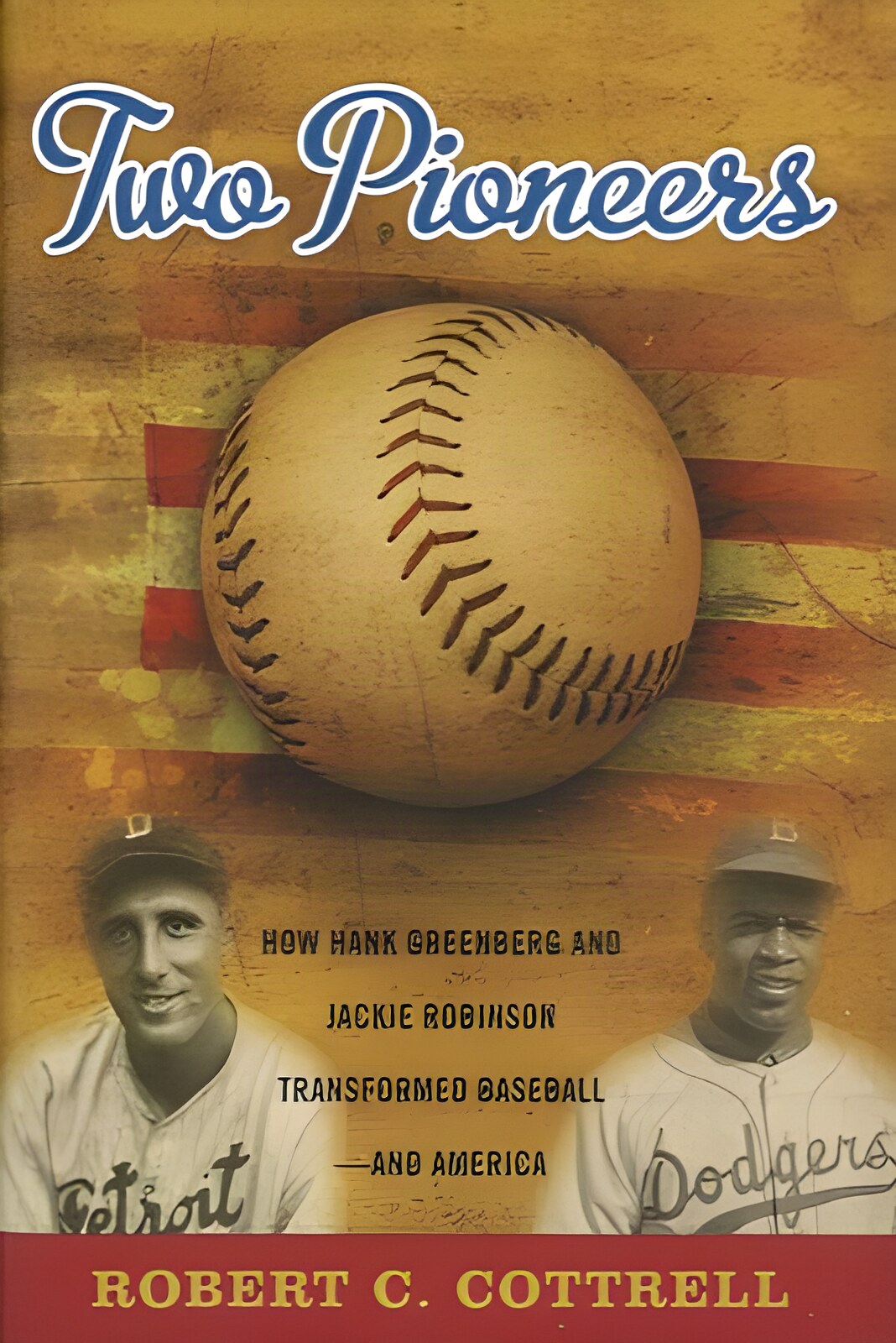
Hardcover. Washington DC, Potomac Books, 1st, 2012, Book: Very Good, Dust Jacket: Very Good, Hardcover in a bright dust jacket, 270 pages, b&w illustrations. As the first great Jewish player in the major leagues and the first African American to play major-league baseball during the twentieth century, respectively, Hank Greenberg and Jackie Robinson are forever linked because of the barriers they encountered, the discrimination they endured, the athletic gifts they exhibited, and especially the courage and dignity they displayed. Both suffered ridicule and abuse as they participated in the national pastime. Nevertheless, each excelled. Greenberg became one of the preeminent sluggers of the 1930s and 1940s who took a break from baseball to serve in the war. Robinson, from the mid-1940s into the following decade, helped bring back speed and a thinking man's approach to the game, both of which had largely been discarded for a generation. Two Pioneers presents these remarkable players' experiences while competing in a nation that was deeply divided on social issues such as anti-Semitism and racism. Both men earned nearly as much attention off the field as they did on it. Greenberg called into question the idea of a "master race" as Adolf Hitler rose to power and gained supporters all over the world. Likewise, Robinson contested racial notions regarding the supposed inferiority of people of African ancestry, even though segregationists proved determined to maintain social barriers separating blacks and whites. It is only fitting that when Robinson finally crossed baseball's color line, Greenberg was one of the first players to welcome him publicly. Robert Cottrell's well-researched work shows how two baseball superstars became important figures in the civil rights crusade to ensure that all Americans, no matter their religion or race, are given equal opportunity. Clean, bright copy.
Hardcover. NY, Thomas Dunne/St. Martins, 1st, 2007, Book: Very Good, Dust Jacket: Very Good, Hardcover in a bright, price-clipped dust jacket, 290 pages, b&w illustrations. Early in the twentieth century, fate thrust a young Babe Ruth into the gleaming orbit of Ty Cobb. The resulting collision produced a dazzling explosion and a struggle of mythic magnitude. At stake was not just baseball dominance, but eternal glory and the very soul of a sport. For much of fourteen seasons, the Cobb-Ruth rivalry occupied both men and enthralled a generation of fans. Even their retirement from the ball diamond didn't extinguish it. On the cusp of America's entry into World War II, a quarter century after they first met at Navin Field, Cobb and Ruth rekindled their long-simmering feud--this time on the golf course. Ty and Babe battled on the fairways of Long Island, New York; Newton, Massachusetts; and Grosse Ile, Michigan; in a series of charity matches that spawned national headlines and catapulted them once more into the spotlight. Clean copy.
Softcover. Newport RI, Naval War College Press, 1st, 1994, Book: Very Good, Dust Jacket: None, Softcover, 419 pages. Naval War College Historical Monograph Series No. 11. Collection of papers by naval historians on the state of international maritime history in the 1990;s. Includes footnotes, chapter bibliographies, Illustrated with b&w charts & tables. Clean copy.
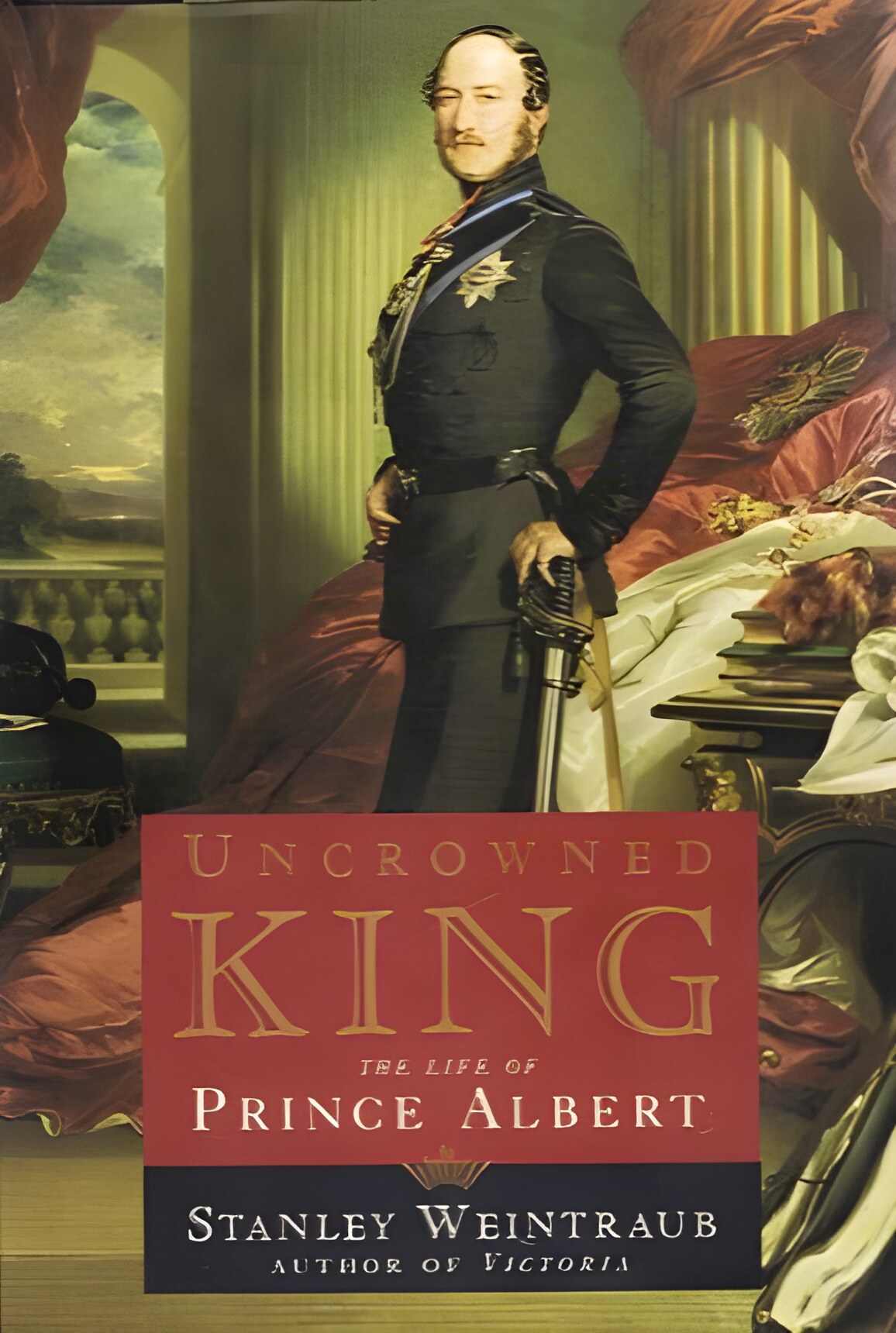
Hardcover. NY, Free Press, 1st, 1997, Book: Very Good, Dust Jacket: Very Good, Hardcover in a bright, unclipped dust jacket. 478 pages, b&w illustrations. When the young, insignificant scion of an unremarkable German principality first came to England to serve as consort to the youthful Queen Victoria, no one could have guessed that he would grow to become one of Britain's great--if uncrowned--kings. Albert's life could not have been an easy one; a man of great intelligence, pride, and ambition, he was forced to move behind the scenes, playing major roles in running the Crimean War and working to keep Britain out of the Civil War being waged in the United States. He was interested in industry and technology, and worked to stage the Crystal Palace exhibition--the first World's Fair. Yet, while his wife adored him, his adopted people scorned him for his German accent, his foreign ways, and his covert activities as a surrogate ruler. Clean copy.
Hardcover. New York, Holiday House, 1st, 2001, Book: Very Good, Dust Jacket: Very Good, Hardcover. Non-paginated. Full color illustrations by Robert Rayevsky. Clean, bright copy. Above there are skyscrapers and sunshine, schools and families, pigeons and pets--but below the streets of New York there is a bustling world of tunnels, jazz clubs, subways, restaurants, and more.
Hardcover. Rockport MA, Protean Pree, 1st, 2008, Book: Very Good, Dust Jacket: Very Good, Hardcover in a bright, unclipped dust jacket, b&w illustrations. In 1943, the author was on track to become a doctor like his parents when he flunked organic chemistry at Harvard and enlisted in the army, finding himself heading off to fight in Europe with the 45th Infantry Division (in which famed editorial cartoonist Bill Mauldin also served). Garland chronicles the division's journey from the landing at Sicily through the liberation of Dachau and then, some 60 years later, also seeks to come to terms with his experiences and those of his comrades. Part personal and collective memoir and part history, Garland's book is loaded with recollections compiled from interviews, diaries, drawings, and photographs that he neatly fits into the historical framework. His writing is highly engaging and shares the story of the 45th and its 511 days in combat and four amphibious landings, providing an excellent narrative history of the division during World War II, as well as a personal reckoning.
Hardcover. Cambridge MA, Belknap Press / Harvard University Press, 1st, 1979, Book: Very Good, Dust Jacket: Very Good, Hardcover in a lightly worn dust jacket, 896 pages. This masterly study has a grand sweep. It ranges over centuries, with a long look backward over several millennia. Yet the history it unfolds is primarily the story of individuals: thinkers and dreamers who envisaged an ideal social order and described it persuasively, leaving a mark on their own and later times. The roster of utopians includes men of all stripes in different countries and eras--figures as disparate as More and Fourier, the Marquis de Sade and Edward Bellamy, Rousseau and Marx. Fascinating character studies of the major figures are among the delights of the book. 1980 National Book Award winner. Name on front fly leaf, otherwise clean.
Hardcover. NY, Harper & Row, 1st, 1977, Book: Very Good, Dust Jacket: Very Good, Hardcover in a bright dust jacket, 435 pages, b&w illustrations. An illustrated world history of the Yiddish theatre covering five continents and more than 300 years. Mild wear to rear panel of dust jacket, clean copy.
Hardcover. NY, Charles Scribner's Sons, 1st, 1967, Book: Very Good, Dust Jacket: Very Good, Hardcover in a bright dust jacket with light edgewear. In 1945, a previously unknown Vermeer was discovered by the Allied Art Commission in the collection of Hermann Goering. The question arose: where - and how - did Goering acquire it? From the investigation came a story that rocked the art world. The trail finally led to Han van Meegeren, an obscure painter who had sold seven authenticated Vermeers over a number of years. Faced with a possible death sentence for collaborating in a sale of a national treasure to the Nazis, van Meegeren insisted he had not helped the Nazi cause: he had painted all the Vermeers himself. Needless to say, nobody believed him - until he proved he was telling the truth by painting still another Vermeer, before the eyes of an astonished jury. Here, with 24 pages of illustrations, is the story of the audacious forger who fooled the most eminent art critics, yet failed to impress them with his own paintings. Lord Kilbracken offers an exhaustive study of van Meegeren's background - his motives , his two marriages, and all the pieces of the puzzle that go to make up an understandable complex human being. With fascinating detail he also makes it clear exactly how the incredibly bold deception was executed - and why it worked. The result is an eminently readable true account that has all the narrative excitement of a thriller. No markings.
Hardcover. New York, Abrams, 1st, 2008, Book: Very Good, Dust Jacket: Very Good, 384 pages, 100 color, 200 b&w images by the world's best photographers. Essays by Christopher Hichens, others. In publisher's shrinkwrap. Vanity Fair: The Portraits brings together 300 iconic portraits from Vanity Fair's 95-year history in a remarkable book that captures the image of modern fame--the magical thing that happens when individual talent and beauty (and sometimes genius) is caught in the spotlight of popular curiosity and passion. The photographers--from Edward Steichen and Cecil Beaton to Annie Leibovitz and Mario Testino--are a glittering and celebrated group themselves. Their portraits have become the iconic likenesses of the best-known figures from the worlds of art, film, music, sports, business, and politics.
Hardcover. London, National Gallery , 1st, 2006, Book: Very Good, Dust Jacket: Very Good, Hardcover, 256 pages, illustrated throughout in color. Light shelf-wear to dust jacket with small scratch on front cover. Clean, tight copy. With over 150 illustrations and an in-depth chronology, this beautifully produced and comprehensive book surveys Velazquez's entire career and explores his universal popularity. Fascinating essays by world-class Velazquez scholars address the artist's life and technique, examining his studies in Seville and Italy to his final great works at the court of Philip IV.

 "To Begin the World Anew: The Genius and Ambiguities of the American Foundersby: Bernard Bailyn")
 "To Give Them Light: Legacy of Roman Vishniacby: Vishniac, Roman")
 "To Make Our World Anew: A History of African Americansby: Kelley, Robin D. G./ Lewis, Earl (Editor)")

 "Tops: The Complete Collection of Charles Biro's Visionary 1949 Comic Book Seriesby: Charles Biro / Michael T. Gilbert")




 "Ubi Sumus? The State of Naval and Maritime Historyby: Hattendorf, John B.")
 "Under New Yorkby: High, Linda Oatman/Robert Rayevsky")
 "Unknown Soldiers: Reliving World War II in Europeby: Joseph E. Garland")



 "Vanity Fair: The Portraits: A Century of Iconic Imagesby: Carter (Ed.), Graydon")
 "Velazquezby: Carr, Dawson W.")