Hardcover. NY, Frederick A. Praeger , 1st, 1966, Book: Good, Dust Jacket: Fair, Hardcover in a worn, chipped dust jacket. 303 pages, b&w illustrations, maps. Eight years after the Russian capture of Tashkent in 1865, Schuyler, then American consul in St. Petersburg, set out to tour Russia's newly acquired dominions. Traveling entirely by road under primitive conditions, he managed in the space of 18 months to traverse the Steppe Region and record his observations of the Muslim people. Name, date on front fly leaf, no other markings.
Hardcover. Solana Beach, CA, Santa Monica Press LLC, 1st, 2014, Book: Very Good, Dust Jacket: Very Good, 336 pages. Hardcover with dust jacket. A very clean, unmarked copy with only minor wear to dust jacket edges. A very clean, unmarked copy. Color and black & white photographs throughout.
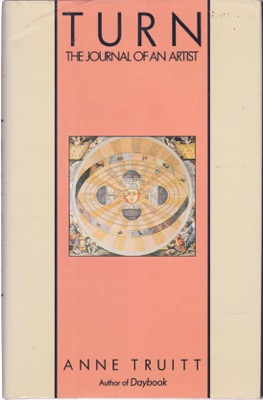
Hardcover. NY, Viking, 1st, 1986, Book: Very Good, Dust Jacket: Very Good, Hardcover in a bright, unclipped dust jacket. 214 pages. A follow up of Truitt's journal "Daybook." The author continues the exploration of her life as an artist, a woman, and a mother, focusing on the constant interplay between daily activities and choices and the broader context of history and ideas. Clean copy.
Hardcover. Boston, Houghton Mifflin Company, 1st, 1928, Book: Good, Dust Jacket: None, Hardcover, 500 pages, with illustrations. Corner and edge wear and fade, scuff mark on spine, some red spots on back cover, two small watermarks on front cover and black ink stains on bottom edge. Overall in good condition with clean pages and tight binding.
Hardcover. NY, Dodd, Mead & Co., reprint, 1902, Book: Very Good, Dust Jacket: None, Hardcover, green cloth covers with elaborate gilt decoration to front cover and spine, top edge gilt. Design by Alice Cordelia Morse. 317 pages with 48 b&w plates. Selections from Dickens, Hugo, Ruskin, and many others. Originally published in 1898. Hinges cracked, Small ownership sticker to front fly leaf, otherwise a clean, tight copy.
Hardcover. NY, Simon & Schuster, 1st, 2002, Book: Very Good, Dust Jacket: Very Good, Hardcover in a bright dust jacket, 352 pages. Alfred Lee Loomis (1887-1975) made his fortune in the 1920s by investing in public utilities, but science was his first love. In 1928, he established a premier research facility in Tuxedo Park, N.Y., that attracted such brilliant minds as Einstein, Bohr and Fermi and became instrumental in the Allies' WWII victory. Conant, a magazine writer, draws on studies, family papers and interviews with Loomis's friends, family and colleagues (she's a relative of two scientists who worked with Loomis) to trace the story of the tycoon's professional and social life (the latter fairly racy). At the Tuxedo Park lab, Loomis attracted top-flight scientists who experimented with sound, time measurement and brain waves. During WWII, he established a laboratory at MIT (the "rad lab") where radar was developed. He also served as a conduit between civilian scientists and Roosevelt's military establishment. Although he lost some of his top people to the Manhattan Project, the "rad lab" was a major contributor to the allies' defense. In his well-publicized personal life, Loomis angered family members by trying to have his emotionally unstable wife institutionalized while he pursued an affair with another woman. Through Conant's spare, unobtrusive prose and well-paced storytelling, Loomis emerges as a contradictory man who craved scientific accomplishment and influence, but rarely took credit for himself.
Softcover. New York , Ira Spanierman Gallery, 1st, 1987, Book: Very Good, Dust Jacket: None, Exhibition catalog. 88 pages, illustrated throughout with numerous plates in b&w and 19 plates in full color. French folded pictorial wrappers. Lovely copy. like new.
Hardcover. Indianapolis, State of Indiana, 1st, 1870, Book: Good, Dust Jacket: None, Hardcover, green cloth covers with blind-stamp design, gilt title on spine. 432 pages interspersed with dozens of b&w detailed engravings of farm machinery from the period. Light foxing throughout.
Hardcover. Marshall Cavendish , 1st, 2009, Book: Very Good, Dust Jacket: Very Good, Hardcover, color illustrations by Gennady Spirin. SIGNED by Spirin on half title page. Gennady Spirin's sumptuous paintings bring new life and spectacular beauty to this classic song, making it a gift to be treasured at Christmastime. An Illustrator's Note is included which addresses the song's origin and history.
Softcover. Lincoln NE, Bison Books, reprint, 2004, Book: Very Good, Dust Jacket: None, Softcover, 368 pages. Documents the generations of Native peoples who for twelve millennia have moved through and eventually settled along the rocky coast, rivers, lakes, valleys, and mountains of a region now known as Maine. Arriving first to this area were Paleo-Indian peoples, followed by maritime hunters, more immigrants, then a revival of maritime cultures. Beginning in the sixteenth century, Native peoples in northern New England became tangled in the far-reaching affairs of European explorers and colonists. Twelve Thousand Years reveals how Penobscots, Abenakis, Passamaquoddies, Maliseets, Micmacs, and other Native communities both strategically accommodated and overtly resisted European and American encroachments. Clean copy.
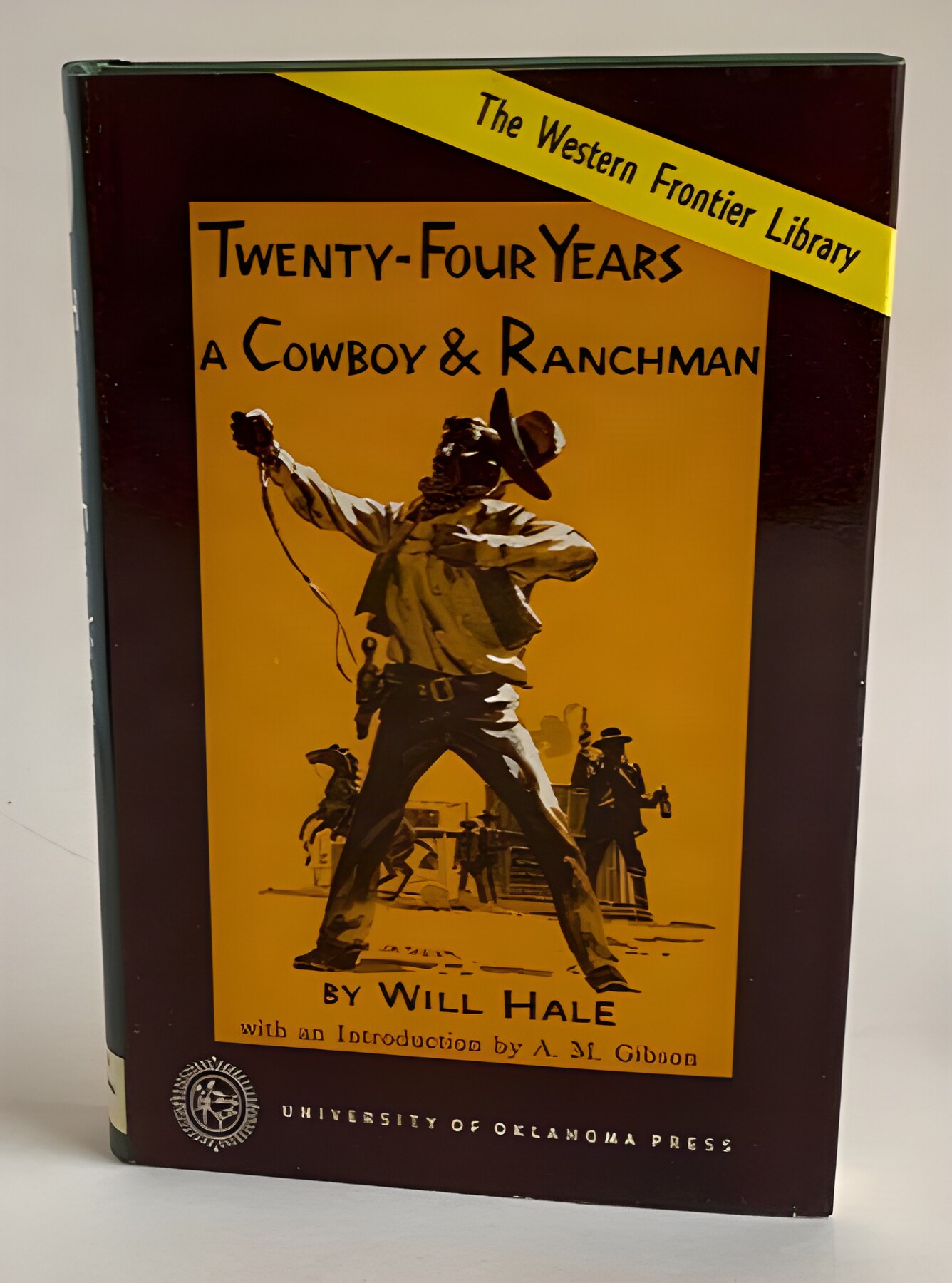
Hardcover. Norman OK, University of Oklahoma Press, 1st, 1959, Book: Very Good, Dust Jacket: Very Good, Hardcover in a bright dust jacket, 183 pages. The Western Frontier Library, Vol. 12. B&w illustrations. The timeframe extends from the Mexican War to the 1880's. Much on the Comanches in Texas, cattle raids and killings on both sides of the Rio Grande by both Mexican and American cowboys, the murder of a Pinkerton detective, the Lincoln County cattle war, and the pursuit of Billy the Kid. Clean copy.
Hardcover. Princton NJ, Princeton University Press, 1st, 2001, Book: Very Good, Dust Jacket: Very Good, Hardcover in a bright dust jacket. Fairy tales, often said to be ''timeless'' and fundamentally ''oral,'' have a long written history. However, argues Elizabeth Wanning Harries in this provocative book, a vital part of this history has fallen by the wayside. The short, subtly didactic fairy tales of Charles Perrault and the Grimms have determined our notions about what fairy tales should be like. Harries argues that alongside these ''compact'' tales there exists another, ''complex'' tradition: tales written in France by the conteuses (storytelling women) in the 1690s and the late-twentieth-century tales by women writers that derive in part from this centuries-old tradition. Grounded firmly in social history and set in lucid prose, Twice upon a Time refocuses the lens through which we look at fairy tales.
Hardcover. NY, W. W. Norton & Company, 2nd pr., 2020, Book: Very Good, Dust Jacket: Very Good, Hardcover in a bright dust jacket, 926 pages, illustrations. In June 1944, the United States launched a crushing assault on the Japanese navy in the Battle of the Philippine Sea. The capture of the Mariana Islands and the accompanying ruin of Japanese carrier airpower marked a pivotal moment in the Pacific War. No tactical masterstroke or blunder could reverse the increasingly lopsided balance of power between the two combatants. The War in the Pacific had entered its endgame. Beginning with the Honolulu Conference, when President Franklin Delano Roosevelt met with his Pacific theater commanders to plan the last phase of the campaign against Japan, Twilight of the Gods brings to life the harrowing last year of World War II in the Pacific, when the U.S. Navy won the largest naval battle in history; Douglas MacArthur made good his pledge to return to the Philippines; waves of kamikazes attacked the Allied fleets; the Japanese fought to the last man on one island after another; B-29 bombers burned down Japanese cities; and Hiroshima and Nagasaki were vaporized in atomic blasts. Ian W. Tolls narratives of combat in the air, at sea, and on the beaches are as gripping as ever, but he also reconstructs the Japanese and American home fronts and takes the reader into the halls of power in Washington and Tokyo, where the great questions of strategy and diplomacy were decided. Clean copy.
Softcover. Rome, Libreria dello Stato, 1st, 1992-01-01, Book: Very Good, Dust Jacket: None, Softcover, 429 pages, illustrated throughout in b&w. Folio. Light edgewear and rubbing to wrappers, else a clean, tight copy.
Hardcover. Rutland, VT, Sharp Printing, 1st, 1962, Book: Very Good, Dust Jacket: Good, Hardcover. 111 pages SIGNED BY AUTHOR on title-page. Wear to top rear edge. Translucent dust wrapper with some chipping.
Hardcover. NY, Disney Editions, 1st, 2010, Book: Very Good, Dust Jacket: Very Good, Hardcover, 192 pages. One Joe was in his ninety-seventh year when he died in 2005; the other Joe died the same year at age forty-five. Both died before their time. This book explores the interplay between personal creativity and the craft of animation storytelling, as seen through the lives and art of two of its greatest practitioners: Joe Grant and Joe Ranft. Grant and Ranft were unique influences on storytelling at two major studios during important periods in the history of animation. Joe Grant, in fact, straddled two eras. A gifted newspaper caricaturist, he contributed ideas for Mickey Mouse and Silly Symphony shorts as well as classic masterworks like Snow White and the Seven Dwarfs; Pinocchio; Fantasia; and Dumbo. As Walt Disney's confidant, Grant played a leading role in defining Disney's pioneering animation legacy. He returned to the studio at eighty-one after a fortyyear hiatus, his creative spirit and abilities undiminished, and made significant contributions to Beauty and the Beast; Aladdin; Mulan; and The Lion King, among others. Joe Ranft built on the traditions of the past forged by Grant and others to become the top animation storyboard artist of his generation, working on Tim Burton's The Nightmare Before Christmas; The Brave Little Toaster; Who Framed Roger Rabbit; James and the Giant Peach; The Little Mermaid; and Beauty and the Beast, among other films. As one of Pixar's creative founders and a close friend of John Lasseter's, Ranft had a major influence on the studio's signature originality, warmth, and irreverent humor, through his contributions to Toy Story; Toy Story 2; A Bug's Life; Monsters, Inc.; and Cars.
Softcover. Mason City, IA, Arrow Printing , 1st, 1956, Book: Very Good, Dust Jacket: None, 248 pages. 12mo. SIGNED BY BOTH AUTHORS on title page. Yellow wrappers wih red titles in English and Chinese. Age soil. The glue used by the printing company to attach the wrappers to the text was of poor quality; this has toned the wrappers spine to a darker yellow. Wear to top and bottom of spine.
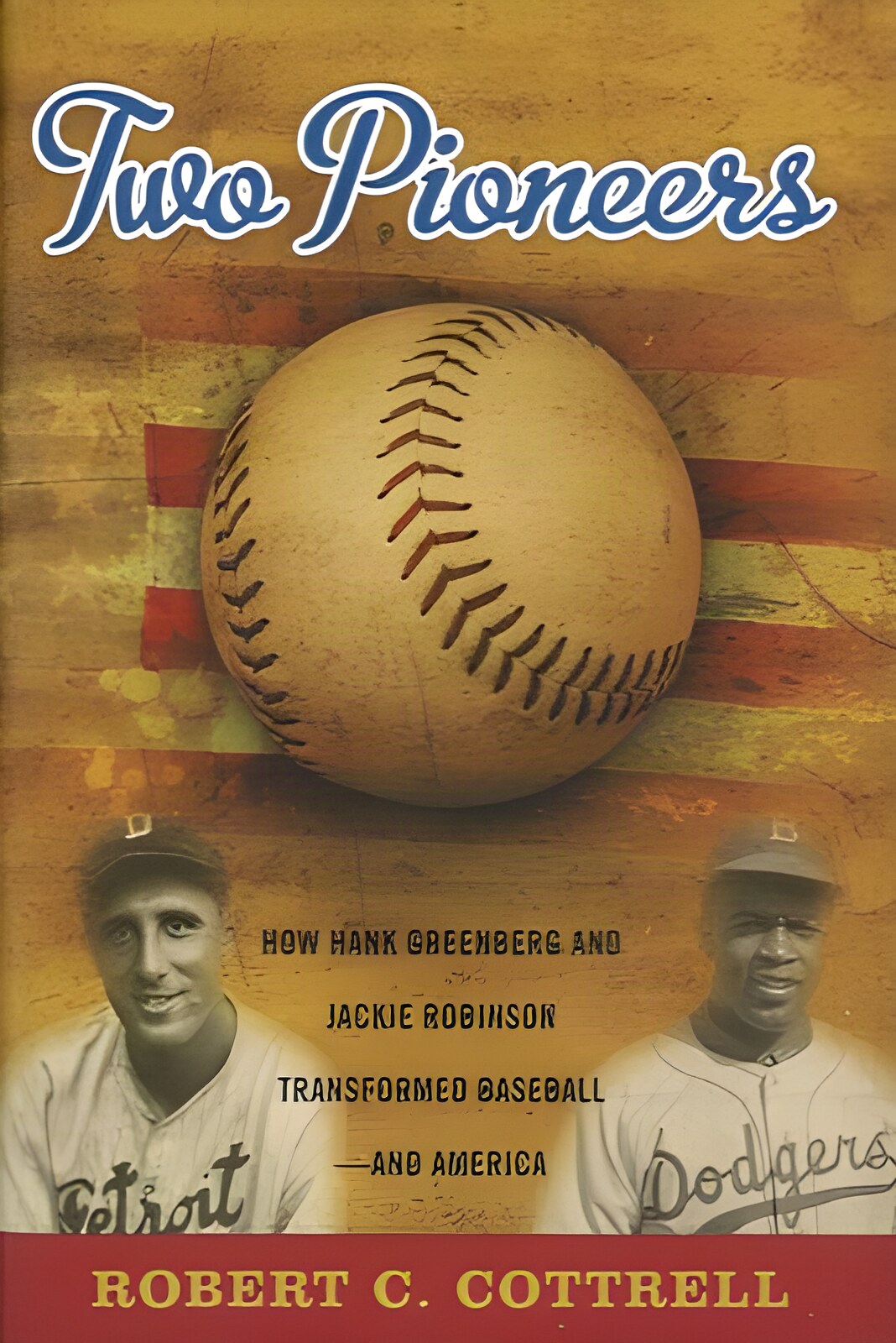
Hardcover. Washington DC, Potomac Books, 1st, 2012, Book: Very Good, Dust Jacket: Very Good, Hardcover in a bright dust jacket, 270 pages, b&w illustrations. As the first great Jewish player in the major leagues and the first African American to play major-league baseball during the twentieth century, respectively, Hank Greenberg and Jackie Robinson are forever linked because of the barriers they encountered, the discrimination they endured, the athletic gifts they exhibited, and especially the courage and dignity they displayed. Both suffered ridicule and abuse as they participated in the national pastime. Nevertheless, each excelled. Greenberg became one of the preeminent sluggers of the 1930s and 1940s who took a break from baseball to serve in the war. Robinson, from the mid-1940s into the following decade, helped bring back speed and a thinking man's approach to the game, both of which had largely been discarded for a generation. Two Pioneers presents these remarkable players' experiences while competing in a nation that was deeply divided on social issues such as anti-Semitism and racism. Both men earned nearly as much attention off the field as they did on it. Greenberg called into question the idea of a "master race" as Adolf Hitler rose to power and gained supporters all over the world. Likewise, Robinson contested racial notions regarding the supposed inferiority of people of African ancestry, even though segregationists proved determined to maintain social barriers separating blacks and whites. It is only fitting that when Robinson finally crossed baseball's color line, Greenberg was one of the first players to welcome him publicly. Robert Cottrell's well-researched work shows how two baseball superstars became important figures in the civil rights crusade to ensure that all Americans, no matter their religion or race, are given equal opportunity. Clean, bright copy.
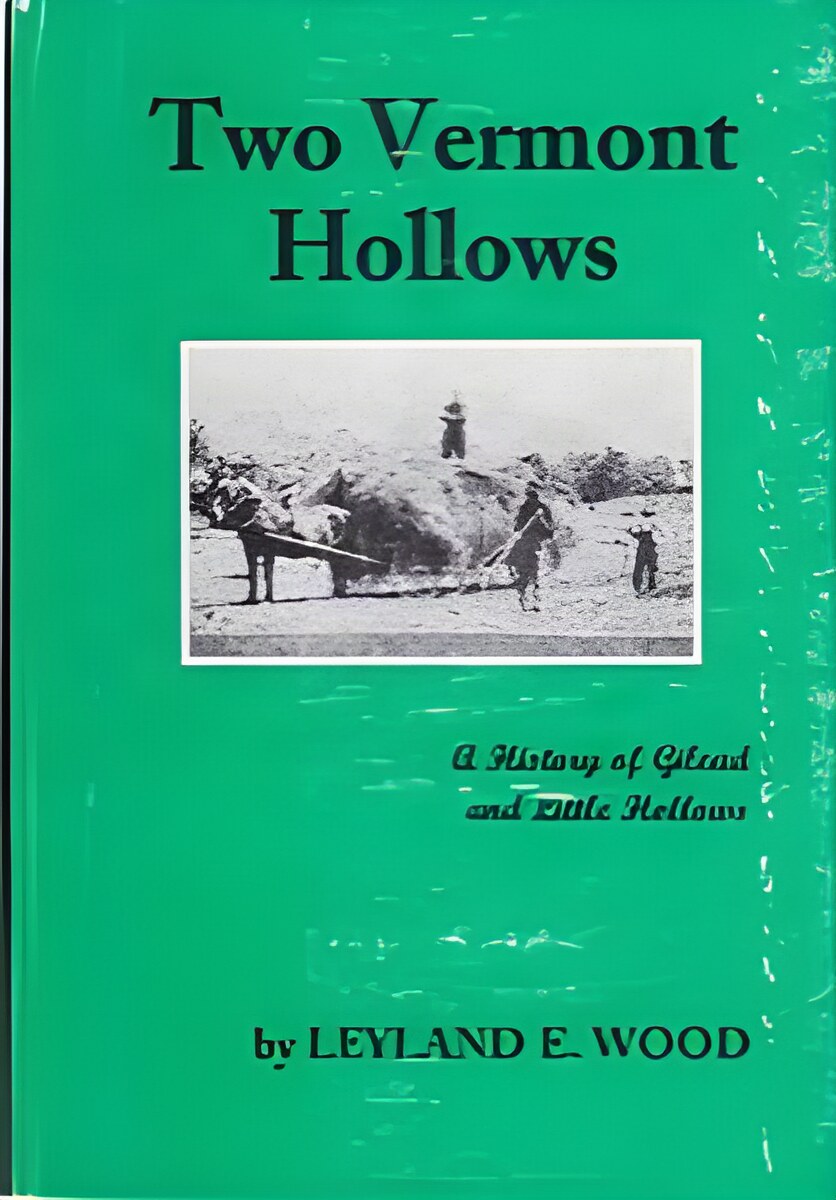
Softcover. Randolph VT, privately printed, 1st, 1976, Book: Very Good, Dust Jacket: None, Softcover, in lightly rubbed green wrappers, 242 pages, b&w illustrations, map in rear. A description of rural life "way back when" in Bethel Gilead and Rochester Little Hollows in the green hills of Vermont. Clean copy.
Hardcover. NY, Thomas Dunne/St. Martins, 1st, 2007, Book: Very Good, Dust Jacket: Very Good, Hardcover in a bright, price-clipped dust jacket, 290 pages, b&w illustrations. Early in the twentieth century, fate thrust a young Babe Ruth into the gleaming orbit of Ty Cobb. The resulting collision produced a dazzling explosion and a struggle of mythic magnitude. At stake was not just baseball dominance, but eternal glory and the very soul of a sport. For much of fourteen seasons, the Cobb-Ruth rivalry occupied both men and enthralled a generation of fans. Even their retirement from the ball diamond didn't extinguish it. On the cusp of America's entry into World War II, a quarter century after they first met at Navin Field, Cobb and Ruth rekindled their long-simmering feud--this time on the golf course. Ty and Babe battled on the fairways of Long Island, New York; Newton, Massachusetts; and Grosse Ile, Michigan; in a series of charity matches that spawned national headlines and catapulted them once more into the spotlight. Clean copy.
Hardcover. NY, Simon & Schuster, 1st, 2015, Book: Very Good, Dust Jacket: Very Good, Hardcover in a bright, unclipped dust jacket. 449 pages, b&w illustrations. Ty Cobb is baseball royalty, maybe even the greatest player who ever lived. His lifetime batting average is still the highest of all time, and when he retired in 1928, after twenty-one years with the Detroit Tigers and two with the Philadelphia Athletics, he held more than ninety records. But the numbers don't tell half of Cobb's tale. The Georgia Peach was by far the most thrilling player of the era: "Ty Cobb could cause more excitement with a base on balls than Babe Ruth could with a grand slam," one columnist wrote. When the Hall of Fame began in 1936, he was the first player voted in. But Cobb was also one of the game's most controversial characters. He got in a lot of fights, on and off the field, and was often accused of being overly aggressive. In his day, even his supporters acknowledged that he was a fierce and fiery competitor. Because his philosophy was to "create a mental hazard for the other man," he had his enemies, but he was also widely admired. After his death in 1961, however, something strange happened: his reputation morphed into that of a monster--a virulent racist who also hated children and women, and was in turn hated by his peers. Clean copy.
Hardcover. NY, Henry Holt & Co., 1st, 1926, Book: Very Good, Dust Jacket: None, Hardcover, light gray boards with a black cloth spine with gilt lettering. Name and ownership stamp on front fly leaf, otherwise clean copy.
Hardcover. Washington, Government Printing Office, 1st, 1892, Book: Good, Dust Jacket: None, 1000 pages. Black cloth cover, worn and soiled. Corners and edges of spine are bumped. Minor foxing on front endpaper. Front flyleaf has small tear, but no part of the page is missing. Pages untrimmed. Diverse topics include the history of sheep husbandry in the U. S. and a record of the sheep industry in Eastern and Western states. Inside is bright and clean, with 96 b&w plates depicting various sheep breeds and farms, also b&w statistic charts throughout. A nice copy.
Hardcover. New York , The Bobbs-Merrill Company, 1st, 1942, Book: Good, Dust Jacket: None, 275 pages. Blue cloth cover with gilt lettering. Edges and corners and worn and bumped, faint smudges on cloth. Previous owner's inscription on front flyleaf. Pages untrimmed, some unopened. Some foxing on front and rear endpapers. Otherwise, inside is bright and clean, with many b&w illustrations throughout.


 "Turn Up the Radio!: Rock, Pop, and Roll in Los Angeles 1956-1972by: Kubernik, Harvey")



 "Twachtman in Gloucester : His Last Years, 1900 - 1902by: Hale, Essays by John Douglas & Richard J Boyle, William H Gerdts")
 "Twelfth Annual Report of the Indiana State Board of Agricultureby: Cox, Prof. E.T.")
 "Twelve Days of Christmas, The (SIGNED COPY))by: Spirin, Gennady")
 "Twelve Thousand Years: American Indians in Maine by: Bruce J. Bourque")
 "Twice Upon a Time: Women Writers and the History of the Fairy Taleby: Harries, Elizabeth Wanning")

 "Twilight of the Grand Tour: A catalogue of the drawings by James Hakewill in the British School at Rome Libraryby: Cubberley, Tony")
 "Two Centuries of Cornwall Life (SIGNED COPY)by: Sanford, Beulah M.")
 "Two Guys Named Joe: Master Animation Storytellers Joe Grant & Joe Ranftby: Canemaker, John")
 "TWO HUNDRED DAYS AS PRISONERS OF THE CHINESE COMMUNISTS. (SIGNED COPY)by: Koether Luella G. and T. Janet Surdan")



 "Ty Cobb: A Terrible Beautyby: Leerhsen, Charles")
 "U. S. Department of Agriculture. Bureau of Animal Industry. Special Report on the History and Present Condition of the Sheep Industry of the United States.by: Carman,")
 "U. S. Navy Fights, The.by: Roberts, W. Adolphe")