Softcover. Camarillo CA, About Comics, reprint, 2018, Book: Very Good, Dust Jacket: None, Softcover, 112 pages. First published in 1934, in the midst of the Great Depression, these cartoons (by Reuben Award winner Otto Soglow, creator of The Little King, working with David G. Plotkin) gives us an insider's view of that difficult time. Even the title is a sign of the moment; in 1932, the Republican Party tried to convince people that, no matter what they saw around them, the Depression was already in the past, putting "Wasn't the depression terrible?" in big letters in newspaper ads and on billboards along commuter corridors in the northeast. (This failed to convince the Depression to go away.)Content note: This material includes common racial and social caricatures of its day, some of which will be considered inappropriate by modern audiences. Clean, like new.
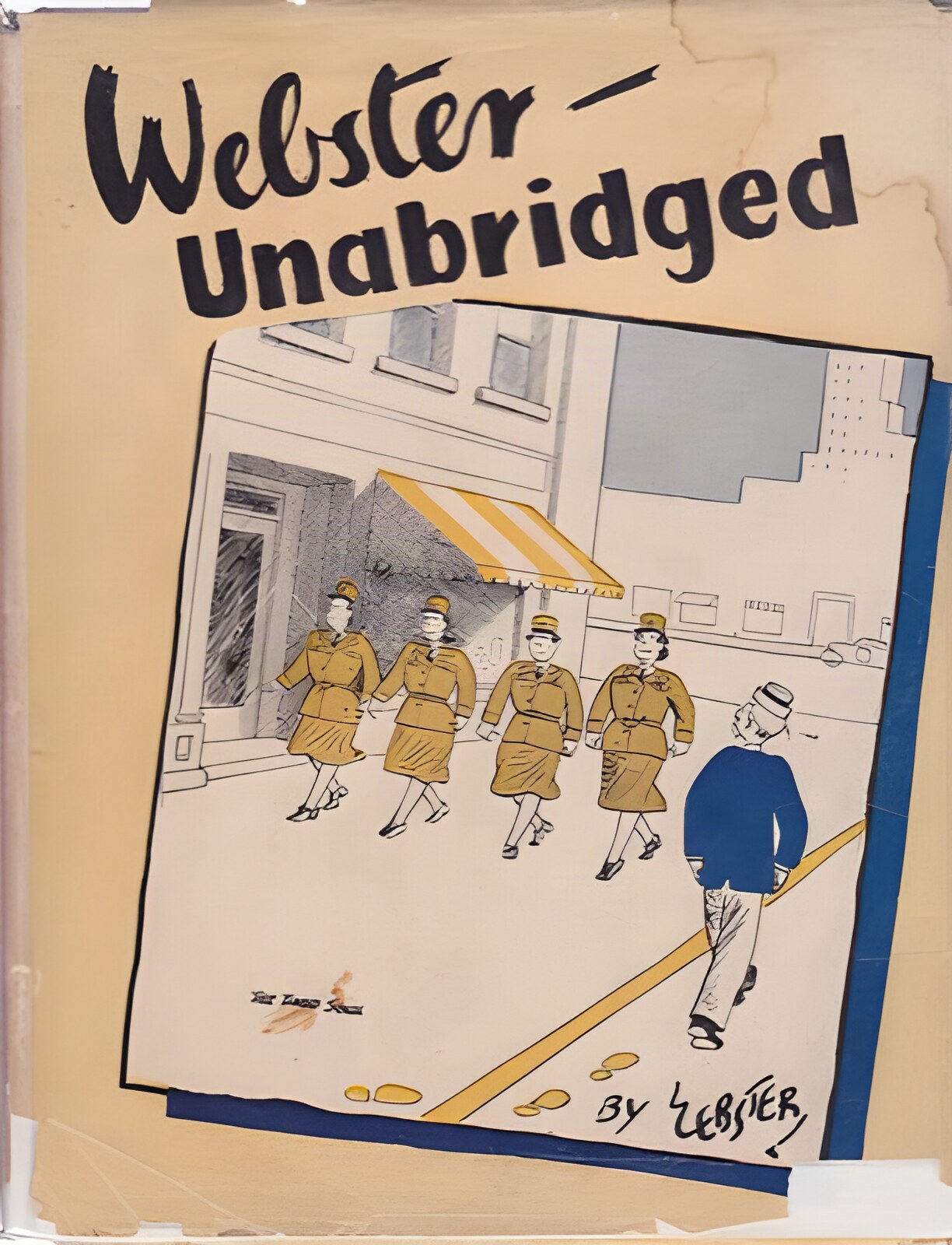
Hardcover. NY, Robert M. McBride & Company, 1st, 1945, Book: Very Good, Dust Jacket: Fair, Hardcover, pictorial boards in a worn, chipped dust jacket, 128 pages. A collection of his b&w cartoons, Foreword by Frank Sullivan. Mild stain to dj, interior clean.
Softcover. Berkelry CA, Last Gasp, 1st, 1984, Book: Very Good, Dust Jacket: None, Softcover First Edition R. Crumb color front cover, 8 page b&w strip by R. Crumb, Mode O'day. Other b&w strips.
Softcover. Berkeley CA, Last Gasp, 1st, 1983, Book: Very Good, Dust Jacket: None, Softcover, 44 pages, created by Robert Crumb, his wife Aline, and others; with a color front and rear cover by Crumb, work entitled Uncle Bob's Mid-Life Crisis (eight pages), Robert Williams, a photo piece called Slaves Of The Comicbook Factory, Jeff John, Trashman by the legendary Spain, Dori Seda, C.P.Grimsley, and others; this true first printing, in stapled wrappers.
Softcover. Berkeley CA, Last Gasp, 1st, 1987, Book: Very Good, Dust Jacket: None, Softcover First Edition. The Winter, 1986-87 issue of this comics series created by Robert Crumb, his wife Aline, and others; this issue features a wonderful, full color cover by Crumb, and contributors such as Mark Zingarelli, Kim Deitch, Stephen Calt, Frank Stack, S.Clay Wilson, Penny Moran, a superb, five page story by Robert Crumb, entitled Mother Hulda, and a wonderful letter from Harvey Pekar; this copy is very good plus in stapled wrappers .
Softcover. Berkeley CA, Last Gasp, 1st, 1982, Book: Very Good, Dust Jacket: None, Softcover The Summer, 1982 issue of the famed Weirdo comics series, created by Robert Crumb, his wife Aline and others, featuring a beautiful, color collage front cover with a border of "girlie" photos and a full color rear drawing by Aline Kominsky Crumb; contributors include Terry Boyce, Norman Dog, a fabulous, four page piece by Robert, entitled Trash:What Do We Throw Away, a funny 4-page, photo piece called Untamed Passion For Pasta, Jeff John, Fried Nuts by Robert, and a terrific Drew Friedman piece called Joe Franklin Is A Dream Walkin' and Old Bud Abbott, also by Drew; a wonderful issue, this is the true first printing, in stapled wrappers.
Softcover. Berkeley CA, Last Gasp, 1st, 1981, Book: Very Good, Dust Jacket: None, Softcover unpaginated, [44 pages including covers], glossy color wraps, $2.25 cover price, b/w interior. Contributors include D. Worden, Dori Seda, Robert Armstrong, Drew Friedman, Elinore Nofflus, Terry Boyce, Kaz, Tom Bertino, B.N. Duncan, Jay Kinney reporting on the First Annula World SubGenius Convention, R. Crumb's "I Remember the Sixties." Photo-illustrated stories featuring Crumb in "Beauty and the Pest" and with wife Aline Kominsky-Crumb in "The Unfaithful Husband and La Malisma Tentadora!." Saddle stapled, magazine sized comic book.
Hardcover. New York, Macmillan, 1st, 1991, Book: Very Good, Dust Jacket: Very Good, Non-paginated. Hardcover. Full color illustrations by Daniel Pinkwater. Dust jacket price clipped. Clean, tight copy.
Softcover. New York, Pantheon, 1st wraps, 1989, Book: Very Good, Dust Jacket: None, Non-paginated. Softcover. SIGNED BY KOREN on title-page. Black & white illustrations by Edward Koren. Red remainder mark on top edge at spine. Clean, tight copy.
Hardcover. NY, HarperCollins, 1st, 1992, Book: Very Good, Dust Jacket: Very Good, Hardcover in a bright, unclipped dust jacket, 498 pages. The renowned artist offers a humorous take on his own life, discussing among other topics his Bronx childhood, his jazz career, his legendary excesses, and his brief stint in the military. There is the Larry Rivers whose work hangs in the Metropolitan Museum of Art and the National Gallery, and there is the Larry Rivers who himself has hung out in a variety of other, less respectable milieus. Now the artist, musician, friend, lover, and entertaining writer--with help from his old friend playwright Arnold Weinstein--pens perhaps the most outspoken and candid autobiography ever. B&w, some color illustrations. Clean copy.
Hardcover. NY, Bloomsbury, 1st, 2011, Book: Very Good, Dust Jacket: Very Good, Hardcover, 64 pages. "In this neurotic spin on the classic alphabet book, longtime New Yorker staff cartoonist Chast shares a few of her least favorite things, with each letter suggesting a horror that you may never have even considered worrying about before: G for general anesthesia, K for kites, S for spontaneous human combustion, V for vision loss... Chast's funny, fuzzy-lined drawings make even the most mundane object send chills of unease down your spine... hypochondriacs and fans of Chast's twisted sense of humor will especially rejoice." -Library Journal
Hardcover. Montreal, Drawn and Quarterly, 1st, 2008, Book: Very Good, Dust Jacket: Very Good, Hardcover, pages. How do objects summon memories? What do real images feel like? For decades, these types of questions have permeated the pages of Lynda Barry's compositions, with words attracting pictures and conjuring places through a pen that first and foremost keeps on moving. What It Is demonstrates a tried-and-true creative method that is playful, powerful, and accessible to anyone with an inquisitive wish to write or to remember. Composed of completely new material, each page of Barry's first Drawn & Quarterly book is a full-color collage that is not only a gentle guide to this process but an invigorating example of exactly what it is: "The ordinary is extraordinary."
Hardcover. New York, E.P. Dutton, 1st, 1954, Book: Very Good, Dust Jacket: Fair, Hardcover, yellow boards stamped in black. Light edgewear, o/w very good. The wonderful world of 1950s cartoons! A "carnival" of cartoons compiled by This Week magazine editors, including work by Bil Keane, Chon Day, Ronald Searle, Ton Smits, Charles Pearson. Gives brief bios of some of the cartoonists with photos. Dust jacket worn, tape repairs.
NY, Scribner's , 1st, 1974, Book: Very Good, Dust Jacket: Very Good, Hardcover. Color illustrations by Reynold Ruffins. Light edgewear to dust jacket. Brings together more than five hundred riddles on a variety of subjects, trivial and important.
Hardcover. New York, Greenwillow, 1st, 1985, Book: Very Good, Dust Jacket: None, Hardcover, 48 pages. Color illustrations by Lobel. Clean. Lacks dust jacket.
Hardcover. New York , Atheneum/Anne Schwartz Books, 1st, 2001, Book: Very Good, Dust Jacket: Very Good, Hardcover, illustrated in color by George Booth with bookplate SIGNED BY BOOTH laid in. While preparing to spend a quiet day on the river, a young girl finds her little boat filled with a group of uninvited guests and so decides to make the best of things, but when a crocodile appears, she decides enough is enough.
Hardcover. New York, Greenwillow Books, 1st, 2005, Book: Very Good, Dust Jacket: Very Good, Non-Paginated. Hardcover in a bright, unclipped dust jacket.. Full color illustrations by Nancy Winslow Parker. Clean, tight copy. Preparing for a Halloween party, a little girl pulls together various articles of clothing to come up with a suitable costume. Each item is depicted in rebus fashion in cumulative lines of verse. She ends up with two different costumes using the same garments, but, in the end, she receives a ready-made witch's outfit from Grandma.
Hardcover. NY, Farrar & Rinehart, 1st, 1943, Book: Very Good, Dust Jacket: Fair, Hardcover, unpaginated. Foreword by Wolcott Gibbs. Dust jacket faded. George Price (1901-1995) was an American cartoonist. Price started doing cartoons for The New Yorker magazine in 1929. He continued contributing to the New Yorker well into his eighties, displaying a talent for both graphic innovation (many of his cartoons consisted of a single, unending line) and for a wit that somehow combined the small issues of domestic life with a topical sensibility.
Hardcover. New York, Farrar & Rinehart, 1st, 1943, Book: Very Good, Dust Jacket: Very Good, Unpaginated, b&w cartoons by Price from the New Yorker, Saturday Evening Post, Colliers, etc. Dust jacket with light fade to blue, otherwise very good.
Hardcover. NY, Dial, 1st, 2006, Book: Very Good, Dust Jacket: Very Good, Hardcover in a bright, unclipped dust jacket. We all know the joke. We've all told it. Kids love to tell it over and over and over again, with as many different punch lines as possible. And now we've found out that famous award-winning artists love to tell the joke too--and they have some wacky and downright hilarious ideas about why that chicken really did cross the road. Mo Willems's chicken confesses his motives to a police officer; David Shannon's chicken can drive a car; Marla Frazee's chicken is looking for a more luxurious coop; and Harry Bliss's chicken encounters aliens. And this is just the beginning. One thing is for sure--you won't cross this book without a good laugh!
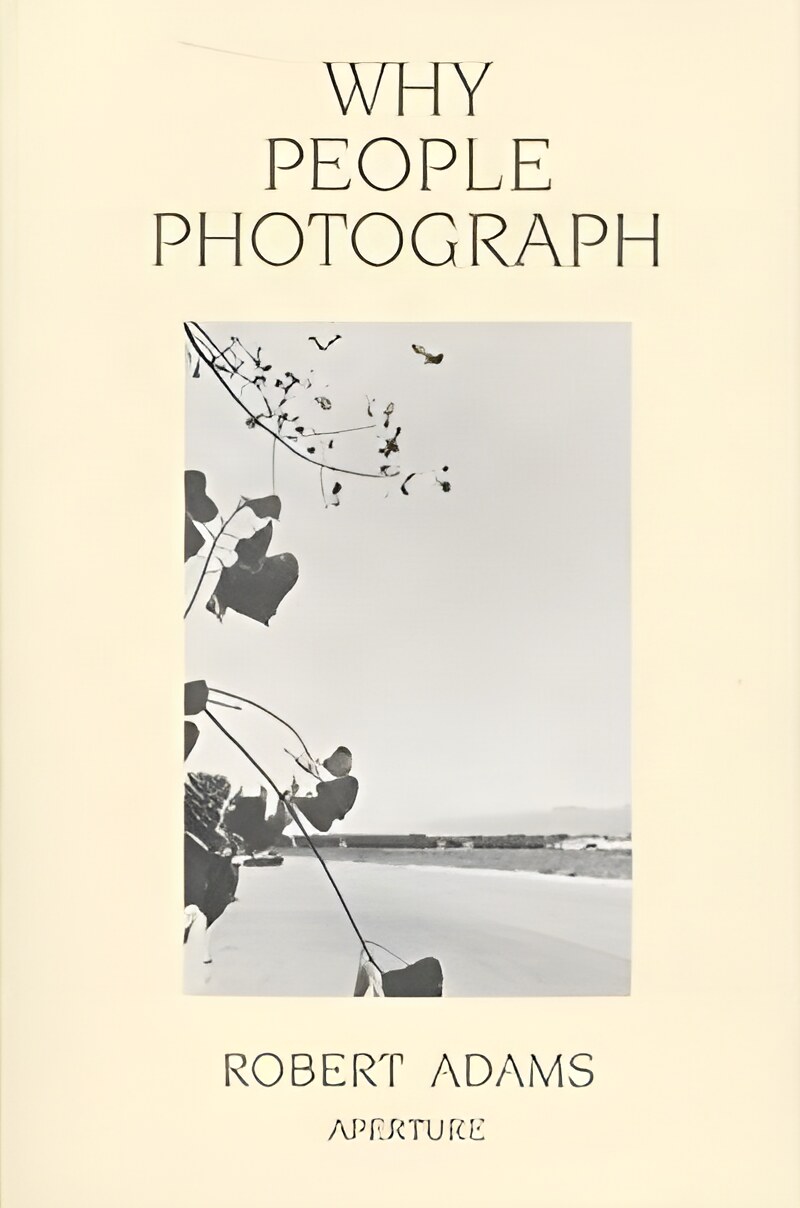
Softcover. NY, Aperture, 3rd pr., 1994, Book: Very Good, Dust Jacket: None, Softcover, 186 pages. A now classic text on the art, Why People Photograph gathers a selection of essays by the great master photographer Robert Adams, tackling such diverse subjects as collectors, humor, teaching, money and dogs. Adams also writes brilliantly on Edward Weston, Paul Strand, Laura Gilpin, Judith Joy Ross, Susan Meiselas, Michael Schmidt, Ansel Adams, Dorothea Lange, and Eugene Atget. The book closes with two essays on "working conditions" in the nineteenth- and twentieth-century American West, and the essay "Two Landscapes." Clean copy.
Softcover. NY, Aperture, 1st, 1994, Book: Very Good, Dust Jacket: None, Softcover, 186 pages, b&w illustrations. A now classic text on the art, Why People Photograph gathers a selection of essays by the great master photographer Robert Adams, tackling such diverse subjects as collectors, humor, teaching, money and dogs. Adams also writes brilliantly on Edward Weston, Paul Strand, Laura Gilpin, Judith Joy Ross, Susan Meiselas, Michael Schmidt, Ansel Adams, Dorothea Lange, and Eugene Atget. The book closes with two essays on "working conditions" in the nineteenth- and twentieth-century American West, and the essay "Two Landscapes." Name on front fly leaf otherwise clean.
Hardcover. NY, Atlantic Monthly Press , 1st, 2020, Book: Very Good, Dust Jacket: Very Good, Hardcover in a bright, unclipped dust jacket. In 1911, famed cartoonist Winsor McCay debuted one of the first animated cartoons, based on his sophisticated newspaper strip "Little Nemo in Slumberland," itself inspired by Freud's recent research on dreams. McCay is largely forgotten today, but he unleashed an art form, and the creative energy of artists from Otto Messmer and Max Fleischer to Walt Disney and Warner Bros.' Chuck Jones. Their origin stories, rivalries, and sheer genius, as Reid Mitenbuler skillfully relates, were as colorful and subversive as their creations-from Felix the Cat to Bugs Bunny to feature films such as Fantasia-which became an integral part and reflection of American culture over the next five decades. Pre-television, animated cartoons were aimed squarely at adults; comic preludes to movies, they were often "little hand grenades of social and political satire." Early Betty Boop cartoons included nudity; Popeye stories contained sly references to the injustices of unchecked capitalism. "During its first half-century," Mitenbuler writes, "animation was an important part of the culture wars about free speech, censorship, the appropriate boundaries of humor, and the influence of art and media on society." During WWII it also played a significant role in propaganda. The Golden Age of animation ended with the advent of television, when cartoons were sanitized to appeal to children and help advertisers sell sugary breakfast cereals.
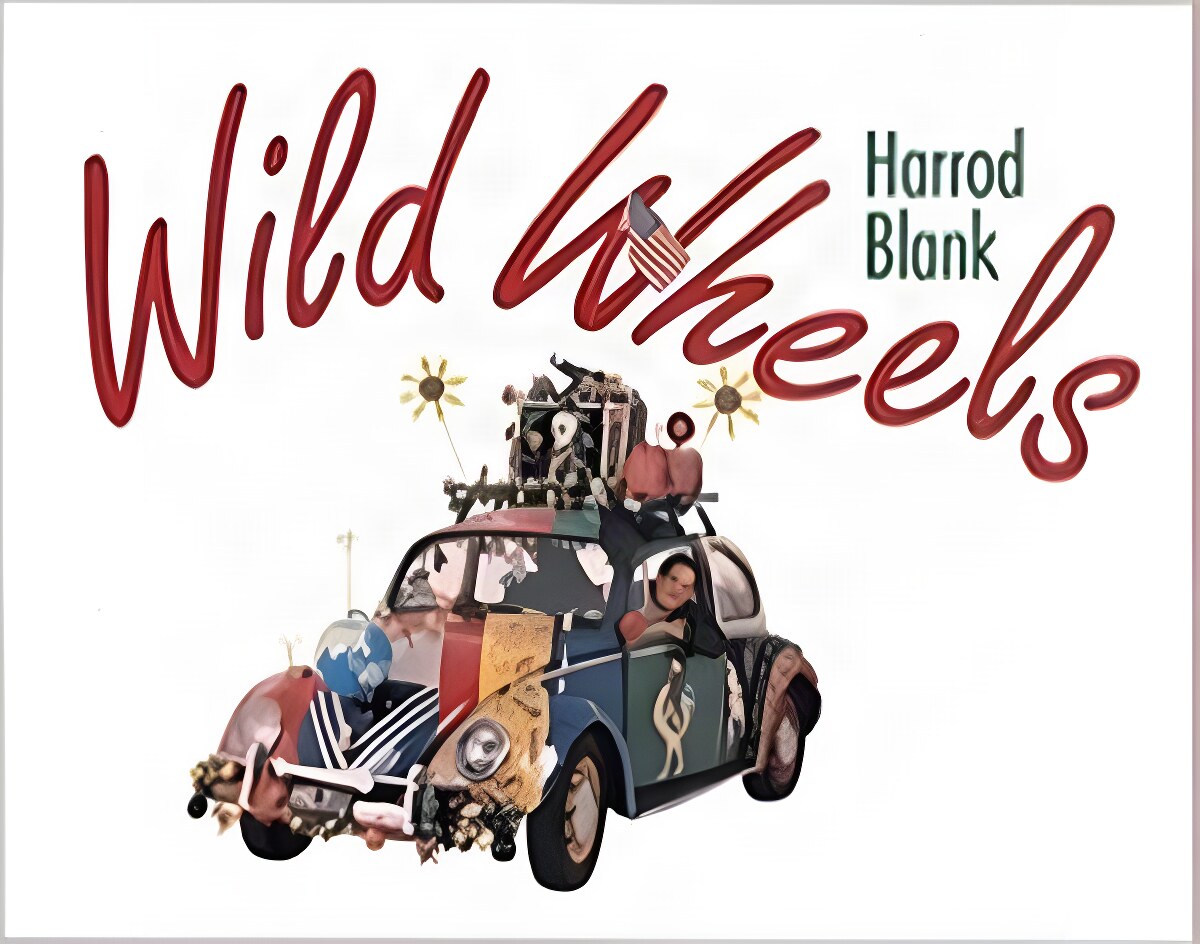
Softcover. San Francisco, Pomegranate Books, 1st, 1993, Book: Very Good, Dust Jacket: None, Softcover, 112 pages, color photos. "Art cars" are vehicles transformed by their creative owners into elaborately decorated statements of individual mobility. Blank, an independent filmmaker and art car aficionado, spent two years traveling the highways and byways of America in search of people who shared his unusual passion for artistically personalized transportation. The result was an independent documentary film (also entitled Wild Wheels ) and this book: a zany testament to the far reaches of the creative spirit enlivened by more than 100 color photographs and descriptions of 42 attention-grabbing autos with humorous names like the Beaded Bug, the Hippomobile, and the Grass Car. The book also contains brief stories about the artists who created them, providing insight into the ideas and emotions that sparked this novel pop art form.

 "Wasn't the Depression Terrible?by: O. Soglow /David G. Plotkin")
 "Weirdo #10 by: Peter Bagge & R. Crumb & Dennis Worden & J. D. King & Aline Kominsky Crumb & Drew Friedman")


 "Weirdo #7by: Crumb, Robert ® and Robert Williams, Jeff John, T Boyce, Spain, Dori Seda, Dennis Worden, Kaz, Drew Friedman")


 "WEIRDO; Comics No 19by: Kominsky-Crumb, Aline, others")


 "WEIRDO; Comics No 6by: Crumb R. editor")


 "WEIRDO; Comics No. 4 by: Crumb R. editor")


 "Wempiresby: Pinkwater, Daniel")
 "What About Me? Cartoons from The New Yorker (SIGNED COPY)by: Koren, Edward")
 "What I Hate: From A to Zby: Chast, Roz")
 "What It Isby: Barry, Lynda")
 "What's Funny About That? - A Cartoon Carnival from This Week Magazineby: Stein (Ed.), Ralph")
 "What? A Riddle Bookby: Sarnoff / Reynold Ruffins, Jane")
 "Whiskers & Rhymesby: Lobel, Arnold")
 "Who Invited You? (SIGNED BY BOOTH ON BOOKPLATE)by: Fleming, Candace and George Booth")
 "Who Will I Be? - A Halloween Rebus Storyby: Neitzel, Shirley/Nancy Winslow Parker")
 "Who's in Charge Here? by: Price, George")
 "Who's In Charge Here?by: Price, George")
 "Why Did the Chicken Cross the Road?by: Tedd Arnold, Harry Bliss, David Catrow, Marla Frazee, Jerry Pinkney, Chris")
 "Wild Minds: The Artists and Rivalries That Inspired the Golden Age of Animation by: Reid Mitenbuler")