Hardcover. NY, Taschen, reprint, 2025, Book: Very Good, Dust Jacket: Very Good, Hardcover in a bright dust jacket. Color frontispiece. Black and white fantasy cartoon sketches, many scatological. 11" high X 8" wide, 439 pages. Clean, still in publisher's shrinkwrap. DOMESTIC SHIPPING ONLY.
Hardcover. NY, Taschen, reprint, 2025, Book: Very Good, Dust Jacket: Very Good, Hardcover in a bright dust jacket. Color frontispiece. Black and white fantasy cartoon sketches, many scatological. 11" high X 8" wide, 443 pages. Clean, still in publisher's shrinkwrap. DOMESTIC SHIPPING ONLY.
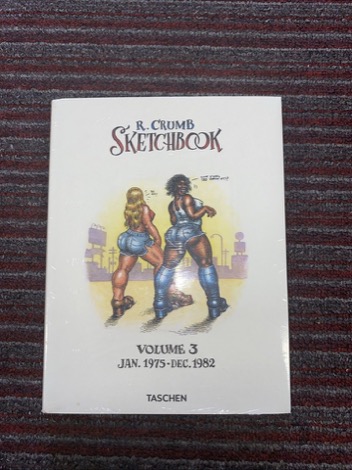
Hardcover. NY, Taschen, reprint, 2025, Book: Very Good, Dust Jacket: Very Good, Hardcover in a bright dust jacket. Color frontispiece. Black & white illustrations throughout on every page. 11" high X 8" wide, 448 pages. The perfect tribute to the world's favorite dirty old man. It spans the years 1982 to 1989, a period when the artist was comfortably ensconced in rural California, raising his young daughter Sophie, who appears throughout this volume. But Crumb was still Crumb, declaring in one drawing, above a lovingly rendered tree, "As I get older I get more twisted, convoluted, depraved, cynical, embittered, self-centered, jaded, debauched, ruthless, greedy, conceited, set-in-my-ways, long-winded, absent-minded, prejudiced, closed-minded, misanthropic, nervous..." To prove this self-flagellating analysis he fills the pages with his signature perversions (in country settings), scathing social commentary, cruel self-portraits, experimental cubism... and some lovely sylvan landscape. His mastery of the Rapidograph pen is at its zenith here in his 40s, Clean, still in publisher's shrinkwrap.
Softcover. NY, Ballantine Books, 1st, 1970, Book: Very Good, Dust Jacket: None, Large format softcover, 64 pages of b&w comic art by Crumb. Introduction by Paul Krassner. Some tanning to edges of wrappers. Otherwise clean.
Hardcover. New York, Hudson Hills Press, 1st, 1980, Book: Very Good, Dust Jacket: Very Good, 188 pages. Hardcover with dust jacket. A very clean, unmarked copy with only minor edgewear. Black & white illustrations throughout.
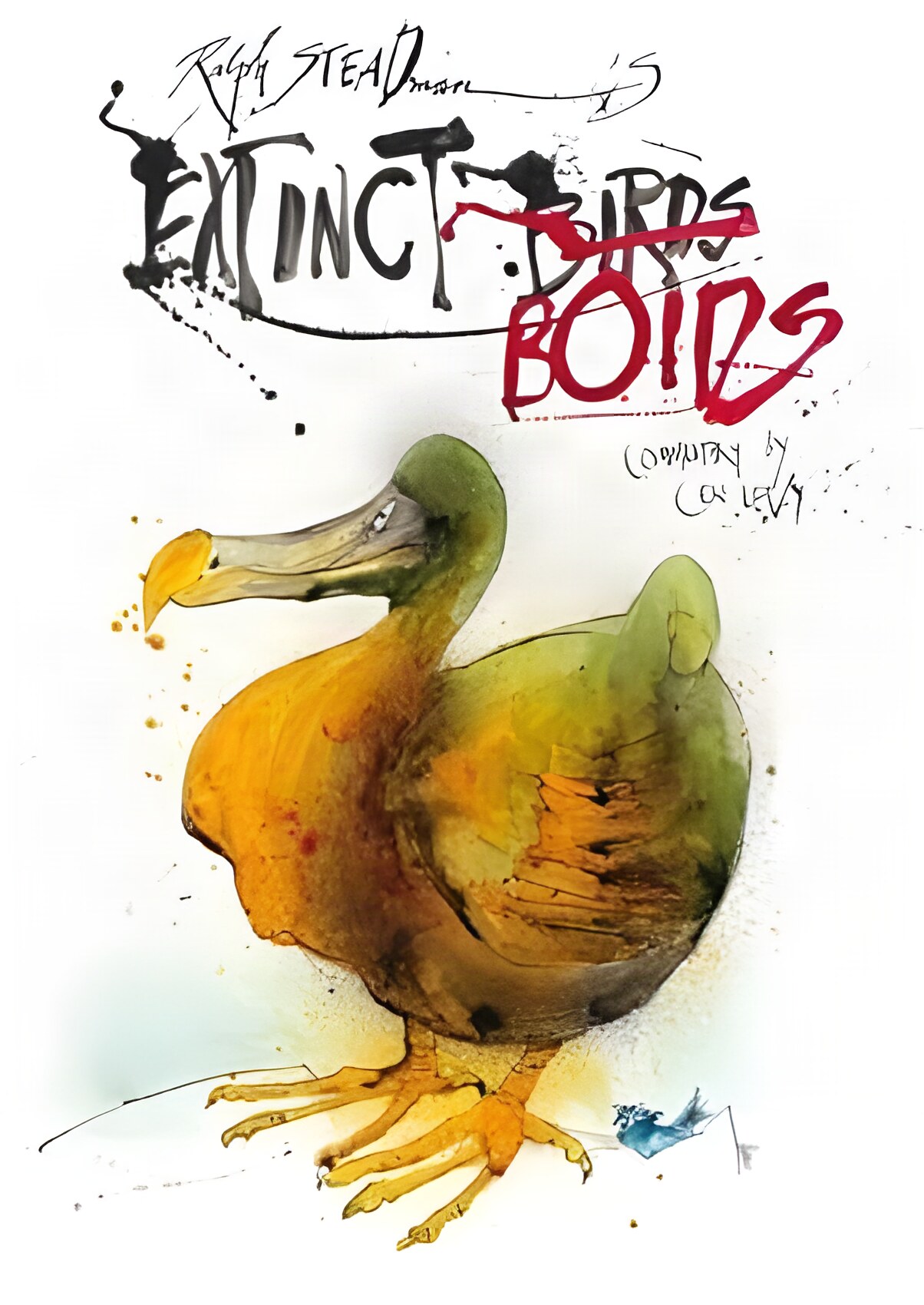
Hardcover. London/NY, Bloomsbury, 1st, 2012, Book: Very Good, Dust Jacket: Very Good, Hardcover in a bright dust jacket, decorated orange boards with silver stamping; in clean, crisp dust jacket with just a touch of shelfwear. Cartoonist and British national treasure Ralph Steadman's unique take on a variety of extinct birds. Ralph documents them all in this series of remarkable paintings, featuring unique interpretations of well-known birds such as the Great Auk, Passenger Pigeon and Dodo, along with less familiar members of the feathersome firmament. Text by Ceri Levy. DOMESTIC SHIPPING ONLY.
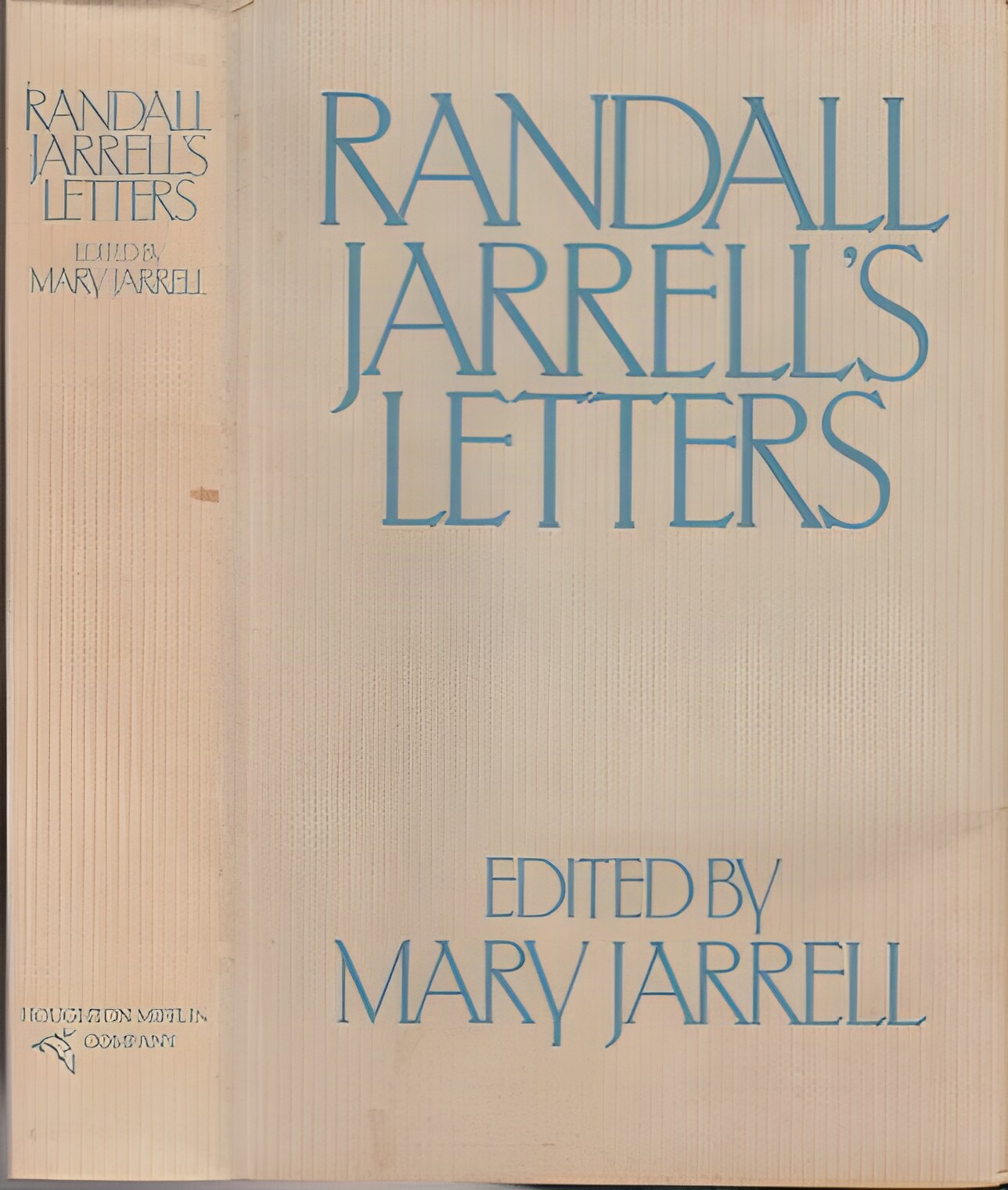
Hardcover. Boston, Houghton Mifflin , 1st, 1985, Book: Very Good, Dust Jacket: Good, Hardcover in a dust jacket, 540 pages. A comprehensive collection of letters from Jarrell. Edited by his second wife Mary Jarrell with the assistance of Stuart Wright. Jarrell's letters span over fifty years and document his life, thoughts, and writing. The letters are insightful and often humorous, and provide a unique perspective on the author's life and work. Paper covered boards with a cloth spine, dust jacket with mild soil, stain. No markings.
Hardcover. Lexington KY, Eclipse Press, 1st, 2002, Book: Very Good, Dust Jacket: Very Good, Hardcover in a bright, unclipped dust jacket. 197 pages, b&w photos. A humorous look at the life of the sport with recollections from some of racing's more unusual and interesting individuals. Clean copy.
Hardcover. NY, Dial, reprint, 1991, Book: Very Good, Dust Jacket: Very Good, Hardcover in a bright dust jacket, 80 pages, b&w illustrations by James Marshall.
Hardcover. NY, Library of America, 1st, 1995, Book: Very Good, Dust Jacket: Very Good, Hardcover in a bright, unclipped dust jacket, 1199 pages, ribbon marker. In Raymond Chandler's hands, the pulp crime story became a haunting mystery of power and corruption, set against a modern cityscape both lyrical and violent. Now Chandler joins the authoritative Library of America series in a comprehensive two-volume set displaying all the facets of his brilliant talent. In his first novel, The Big Sleep (1939), the classic private eye finds his full-fledged form as Philip Marlowe: at once tough, independent, brash, disillusioned, and sensitive--and man of weary honor threading his way (in Chandler's phrase) "down these mean streets" among blackmailers, pornographers, and murderers for hire. In Farewell, My Lovely (1940), Chandler's personal favorite among his novels, Marlowe's search for a missing woman leads him from shanties and honky-tonks to the highest reaches of power, encountering an array of richly drawn characters. The High Window (1942), about a rare coin that becomes a catalyst by which a hushed-up crime comes back to haunt a wealthy family, is partly a humorous burlesque of pulp fiction. All three novels show Chandler at a peak of verbal inventiveness and storytelling drive. Stories and Early Novels also includes every classic noir story from the 1930s that Chandler did not later incorporate into a novel--thirteen in all, among them such classics as "Red Wind," "Finger Man," The King in Yellow," and "Trouble Is My Business." Drawn from the pages of Black Mask and Dime Detective, these stories show how Chandler adapted the violent conventions of the pulp magazine--with their brisk exposition and rapid-fire dialogue--to his own emerging vision of twentieth-century America. Clean copy.
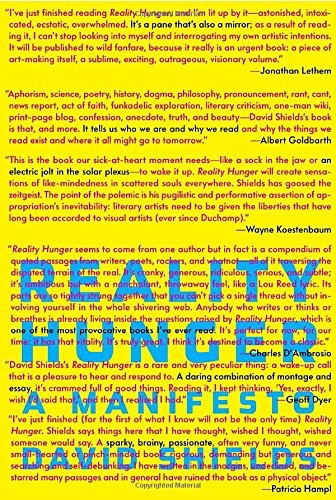
Hardcover. New York, Knopf, 1st, 2010, Book: Very Good, Dust Jacket: Very Good, Hardcover, 219 pages. Clean, bright copy. "I doubt very much that I'm the only person who's finding it more and more difficult to want to read or write novels," David Shields acknowledges in Reality Hunger, then seeks to understand how the conventional literary novel has become as lifeless a form as the mass market bodice-ripper. Shields provides an ars poetica for writers and other artists who, exhausted by the artificiality of our culture, "obsessed by real events because we experience hardly any," are taking larger and larger pieces of the real world and using them in their work. Reality Hunger is made of 600-odd numbered fragments, many of them quotations from other sources, some from Shields's own books, but none properly sourced--the project being not a treasure hunt or a con but a good-faith presentation of what literature might look like if it caught up to contemporary strategies and devices used in the other arts, and allowed for samples (that is, quotation from art and from the world) to revivify existing forms. Shields challenges the perceived superiority of the imagination and exposes conventional literary pieties as imitation writing, the textual equivalent of artificial flavoring, sleepwalking, and small talk. I can't name a more necessary or a more thrilling book.
Hardcover. US, Fantagraphics Books, 1st, 2003, Book: Very Good, Dust Jacket: Very Good, 292 pages. Hardcover with dust jacket. Clean, unmarked copy with only minor wear to dust jacket. Black and white pictures throughout.
Hardcover. New York, Cupples & Leon, 1st, 1929, Book: Very Good, Dust Jacket: None, Publisher's cloth-backed boards illustrated in color, 86 pages of b&w cartoons reprinted from the New York Herald Tribune, most dated 1927. Light use to edges of boards; tight and sound, no markings.
Hardcover. Kampen GR, teNeues, 1st, 2014, Book: Very Good, Dust Jacket: Very Good, Hardcover, large format, 304 pages, cloth over boards, stamped spine and cover. 300 duotone photographs by Erwitt. Photographic master Elliott Erwitt has created many noteworthy portraits of womankind over the years. In Regarding Women he presents us with an exceptional collection composed (almost) exclusively of black-and-white female portraits. This volume is Erwitt's evocative personal tribute to female strength, intelligence, and beauty. The archival material spans several generations, with many images not previously published or rarely seen before. Conveying respect, admiration, and sometimes awe, these photographs portray all the complex elements that make up the feminine nature, whether formidable and tenacious, or occasionally capricious and coy. Through capturing their many varied facets the photographer shares his insights into how all kinds of women make their way into -- not to mention their mark on -- the world. In these pages, readers will find romance and glamor, touches of sensuality, as well as much affection. Of course, there are also those disarming flashes of candid everyday humor that are so quintessentially Erwitt. Text in English, German, French, Spanish and Italian.
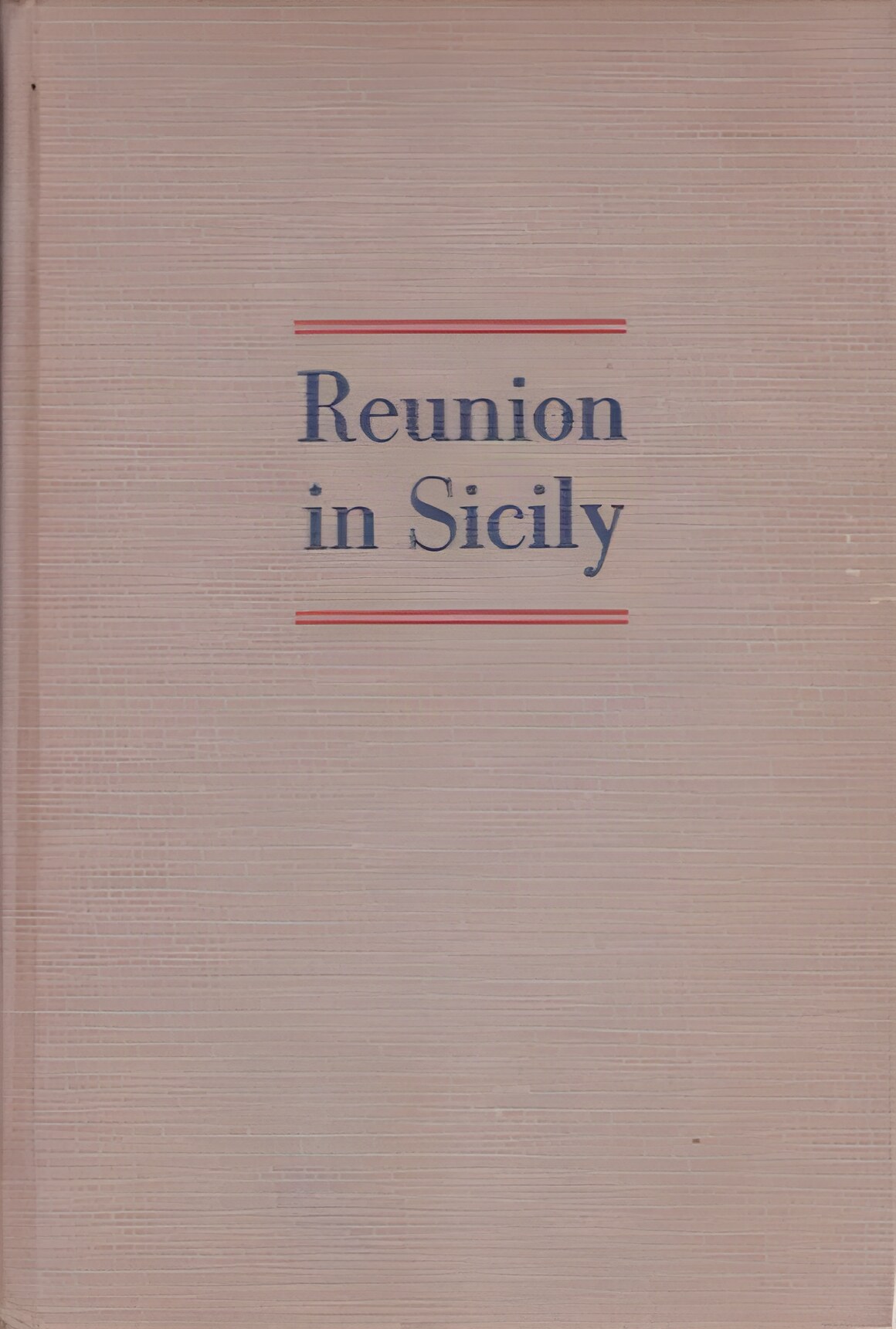
Hardcover. Boston, Houghton Mifflin , 1st, 1950, Book: Very Good, Dust Jacket: None, Hardcover, putty color cloth stamped in red and blue, 277 pages. To write this, his third book, the author lived in Sicily itself for several months on a Guggenheim Fellowship. There he found the humor and romance, the places and the people that figured in the legends of his childhood. During his extensive travel on the island, he also discovered some of the realities of post-war and post-fascism reconstruction. Mild shelf wear, dust jacket flaps laid in.
Hardcover. Chicago, University of Chicago Press, 1st, 2006, Book: Very Good, Dust Jacket: Very Good, Hardcover in bright, unclipped dust jacket. 575 pages, b&w illustrations. Stephen Kercher here provides the first comprehensive look at the satiric humor that flourished in the United States during the 1950s and early 1960s. Focusing on an impressive range of comedy--not just standup comedians of the day but also satirical publications like MAD magazine, improvisational theater groups such as Second City, the motion picture Dr. Strangelove, and TV shows like That Was the Week That Was--Kercher reminds us that the postwar era saw varieties of comic expression that were more challenging and nonconformist than we commonly remember. His history of these comedic luminaries shows that for a sizeable audience of educated, middle-class Americans who shared such liberal views, the period's satire was a crucial mode of cultural dissent. For such individuals, satire was a vehicle through which concerns over the suppression of civil liberties, Cold War foreign policies, blind social conformity, and our heated racial crisis could be productively addressed. Clean copy.
Hardcover. Drawn & Quarterly;, Hardcover in oblong decorated orange cloth covers. color comics/cartoons throughout. Tom Gauld returns with his wittiest and most trenchant collection of literary cartoons to date. Perfectly composed drawings are punctuated with the artist's signature brand of humour, hitting high and low. After all, Gauld is just as comfortable taking jabs at Jane Eyre and Game of Thrones. Some particularly favoured targets include the pretentious procrastinating novelist, the commercial mercenary of the dispassionate editor, the willful obscurantism of the vainglorious poet. Quake in the presence of the stack of bedside books as it grows taller! Gnash your teeth at the ever-moving deadline that the writer never meets! Quail before the critic's incisive dissection of the manuscript! And most importantly, seethe with envy at the paragon of creative productivity!
Hardcover. Albuquerque, University of New Mexico Press, 1st, 1990, Book: Very Good, Dust Jacket: Very Good, Hardcover in a bright dust jacket, 238 pages, b&w photography by Alex Harris. New Mexico's Sangre de Cristo mountains are a place where two cultures ? Hispanic and Anglo ? meet. They're also the place where three men meet: William deBuys, a young writer; Alex Harris, a young photographer; and Jacobo Romero, an old farmer. When Harris and deBuys move to New Mexico in the 1970s, Romero is the neighbor who befriends them and becomes their teacher. With the tools of simple labor ? shovel and axe, irony and humor ? he shows them how to survive, even flourish, in their isolated village. A remarkable look at modern life in the mountains, River of Traps also magically evokes the now-vanished world in which Romero tended flocks on frontier ranges and absorbed the values of a society untouched by cash or Anglo America. His memories and wisdom, shared without sentimentality, permeate this absorbing story of three men and the place that forever shaped their lives. Clean copy.
Hardcover. Boston, Houghton Mifflin, 1st, 1999, Book: Very Good, Dust Jacket: Very Good, Hardcover in a bright, unclipped dust jacket, 506 pages. The author recounts his voyage on American waters from sea to sea -- as he offers fascinating shipboard perspective on the country's rivers, lakes, canals, and landscapes, brimming with history, drama, humor, and wisdom. Clean copy.
Hardcover. London, Jonathan Cape, 8th pr., 1994, Book: Very Good, Dust Jacket: None, Pictorial glossy boards, 61 pages illustrated in color by Quentin Blake. Who but Roald Dahl could think up such mouthwatering and deliciously disgusting foods as Lickable Wallpaper, Stink Bugs Eggs, and Eatable Pillows? Now there,s a practical guide to making these and other delicacies featured in Charlie and the Chocolate Factory, James and the Giant Peach, and Dahl's other books, with easy, step-by-step recipes that range from the delectable to the truly revolting. Quentin Blake's illustrations combine with full-color photographs of the luscious results to perfectly capture Roald Dahl's wicked sense of fun.
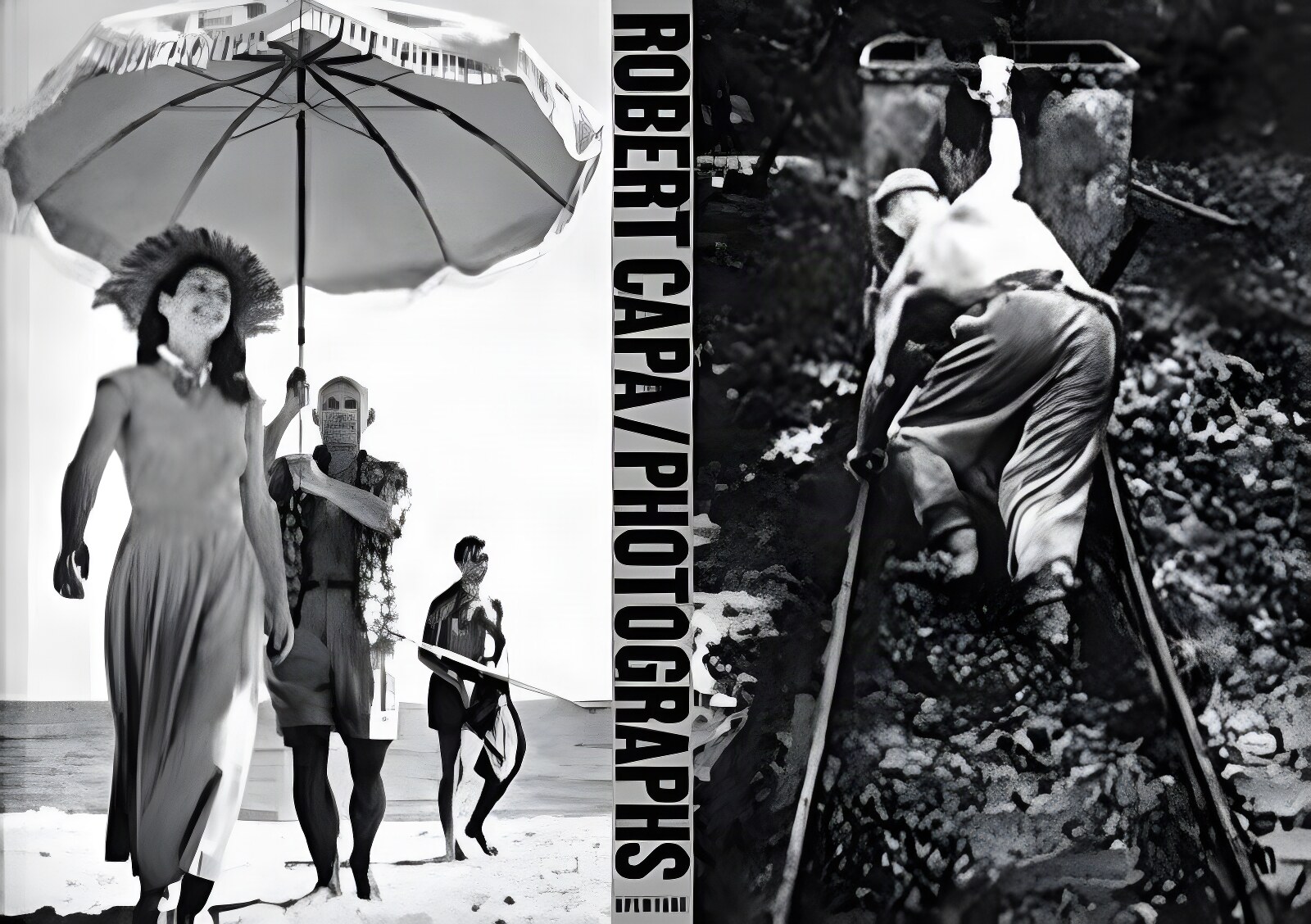
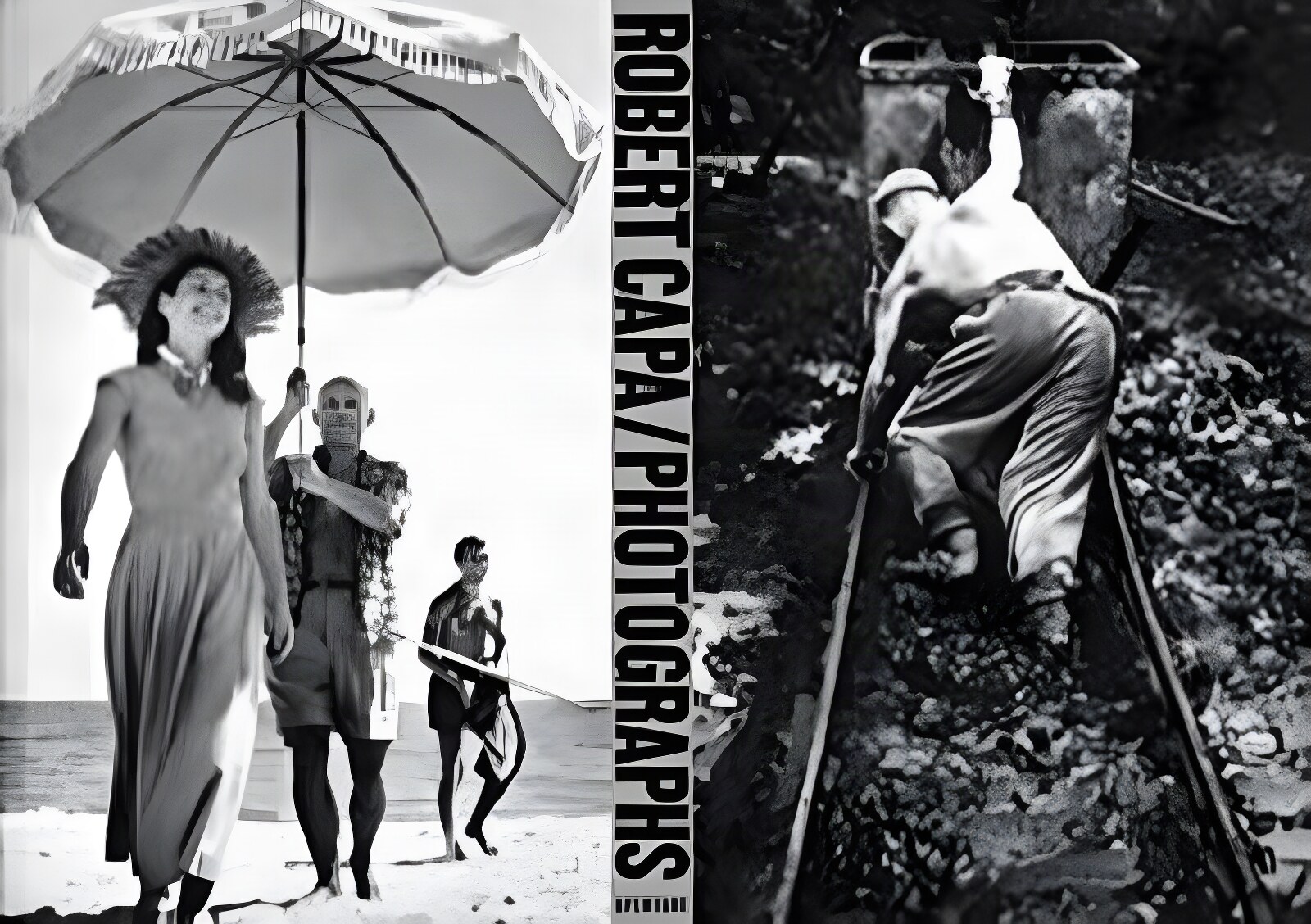
Hardcover. NY, Aperture, 1st, 2005, Book: Very Good, Dust Jacket: Very Good, Hardcover, 192 pages. Robert Capa: Photographs is a major retrospective of one of the century's greatest photographers. Drawing upon hundreds of previously unseen images, this collection reveals Capa as one of the great poets of the camera. In these photographs, we see the world through the eyes of a driven humanist who was also a documentarian of the highest caliber. While previous volumes on Capa have focused on his role as a war photographer, Robert Capa: Photographs shows us the remarkable range of his work: the sufferings as well as the tenderness, humor, and wonder of his subjects. The extraordinary book includes poignant comments by Capa's close friend Henri Cartier-Bresson and by Cornell Capa (Robert's younger brother and the Founding Director of the International Center of Photography), as well as a historical essay by Robert Capa biographer Richard Whelan. The dramatic collection of images in Robert Capa: Photographs shows that he captured-through the events of history-the very heart of humanity.
Hardcover. NY, Aperture, 1st, 2005, Book: Very Good, Dust Jacket: Very Good, Hardcover, 192 pages. Robert Capa: Photographs is a major retrospective of one of the century's greatest photographers. Drawing upon hundreds of previously unseen images, this collection reveals Capa as one of the great poets of the camera. In these photographs, we see the world through the eyes of a driven humanist who was also a documentarian of the highest caliber. While previous volumes on Capa have focused on his role as a war photographer, Robert Capa: Photographs shows us the remarkable range of his work: the sufferings as well as the tenderness, humor, and wonder of his subjects. The extraordinary book includes poignant comments by Capa's close friend Henri Cartier-Bresson and by Cornell Capa (Robert's younger brother and the Founding Director of the International Center of Photography), as well as a historical essay by Robert Capa biographer Richard Whelan. The dramatic collection of images in Robert Capa: Photographs shows that he captured-through the events of history-the very heart of humanity.

 "R. Crumb Sketchbook. Volume 2 Sept. 1968-Jan. 1975 by: Crumb, Robert")





 "R. Crumb's Head Comix by: Crumb, Robert")
 "R. O. Blechman: Behind the Linesby: Blechman, R. O.")
 "Rascals and Racehorses: A Sporting Man's Life by: W. Cothran Campbell")
 "Rats on the Roof and Other Storiesby: Marshall, James")
 "Raymond Chandler: Later Novels and Other Writings: The Lady in the Lake / The Little Sister / The Long Goodbye / Playback /Double Indemnity / Selected Essays and Letters by:")
 "Raymond Chandler: Stories and Early Novels: Pulp Stories / The Big Sleep / Farewell, My Lovely / The High Windowby: Raymond Chandler/Frank MacShane (Editor)")
 "Rebel Visions: Underground Comixby: Rosenkranz, Patrick")
 "Reg'lar Fellersby: Byrnes, Gene")


 "Regarding Womenby: Erwitt, Elliott")
 "Revel with a Cause: Liberal Satire in Postwar Americaby: Stephen E. Kercher")
 "Revenge of the Librariansby: Tom Gauld")
 "Rhyme Stewby: Dahl/Quentin Blake, Roald")


 "Roald Dahl's Revolting Recipesby: Roald Dahl/Quentin Blake")