Softcover. Lincoln NE, Bison Books, reprint, 2004, Book: Very Good, Dust Jacket: None, Softcover, 368 pages. Documents the generations of Native peoples who for twelve millennia have moved through and eventually settled along the rocky coast, rivers, lakes, valleys, and mountains of a region now known as Maine. Arriving first to this area were Paleo-Indian peoples, followed by maritime hunters, more immigrants, then a revival of maritime cultures. Beginning in the sixteenth century, Native peoples in northern New England became tangled in the far-reaching affairs of European explorers and colonists. Twelve Thousand Years reveals how Penobscots, Abenakis, Passamaquoddies, Maliseets, Micmacs, and other Native communities both strategically accommodated and overtly resisted European and American encroachments. Clean copy.
Hardcover. NY, Abrams ComicArts, 1st, 2018, Hardcover, 26 pages fold-out accordion style, all in color by the author. "By focusing on the narrative of one immigrant worker, Tonatiuh breaks the mammoth issues of immigration and workers rights into an easy-to-swallow bite, allowing the reader to easily engage with an often intimidating topic. The personal is again political. Highly recommended." In a cardboard slipcase with a color label. Like new.
Hardcover. Brooklyn, NY, PowerHouse Books, 1st, 2018, Book: Very Good, Dust Jacket: Very Good, 176 pages. Hardcover with dust jacket. A very clean, unmarked copy with only minor wear to dust jacket edges. Color photographs throughout.
Hardcover. New York, Alfred A. Knopf, 1st, 1986, Book: Very Good, Dust Jacket: Very Good, 668 pages. Hardcover. B/w illustrations throughout. Gilt title on spine. Dust jacket unclipped. Front cover board slightly splayed. Dust jacket has a touch of agewear. In good shape for its age.
Softcover. Logan UT, Utah State University Press, reprint, 1994, Book: Good, Dust Jacket: None, Softcover, pictorial wrappers, 328 pages, b&w illustrations. Two fold-out maps in a rear pocket. Three pages with yellow highlighting, otherwise clean.
Chicago, A.C. McClurg, reprint, 1911, Book: Very Good, Dust Jacket: None, Hardcover in pictorial cloth. Eleven color illustrations by Florence Scovel Shinn. Mild wear to covers. "When Mr. O'Callaghan dies after a long, severe, and expensive sickness, he leaves his widow a state of unlimited poverty and seven boys." The dialect is said to come close to the speech of Irish immigrants in 1900. Clean copy.
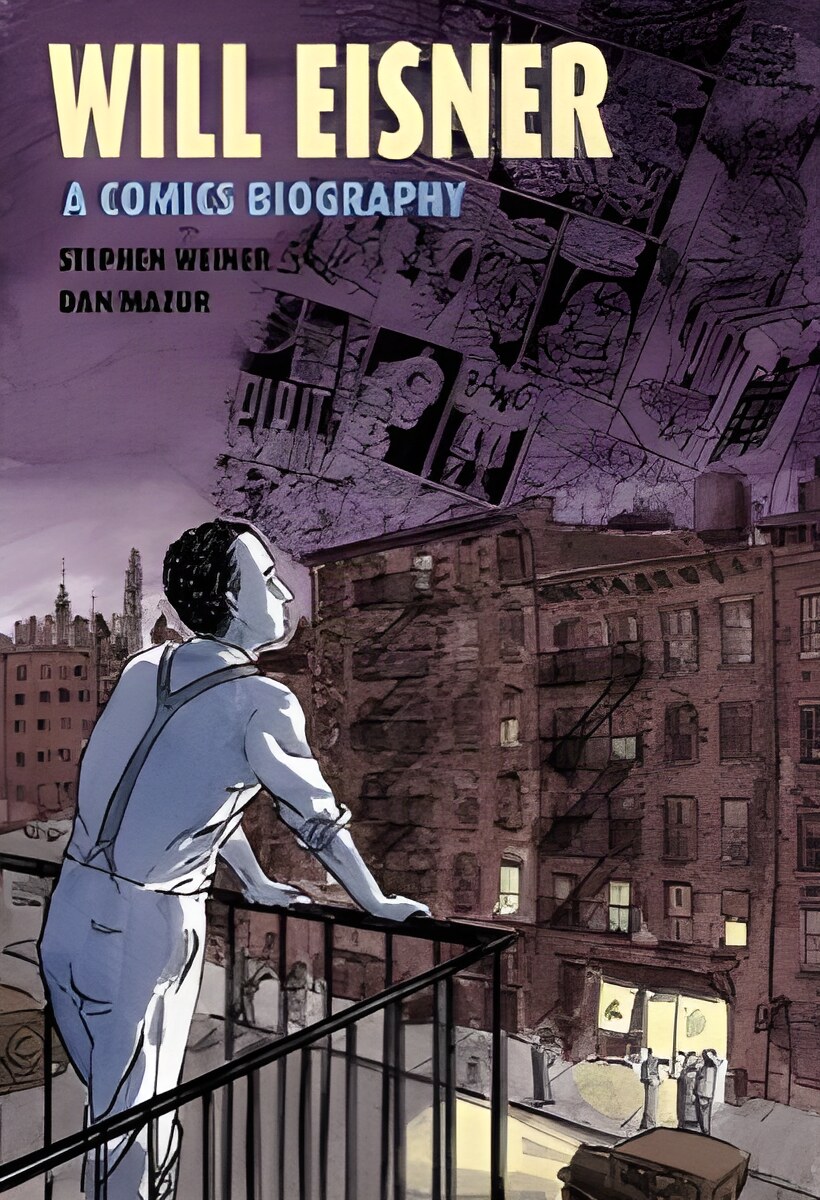
Hardcover. NY, Nantier Beall Minoustchine, 1st, 2025, Book: Very Good, Dust Jacket: None, Hardcover, pictorial boards. Explore the life of Will Eisner, one of the most influential artists in the history of comics through the most appropriate medium: a graphic novel! From his immigrant roots and childhood in New York, starting his own comics studio and business, and the creation and publication of his beloved comic, The Spirit, through inventing the term ' graphic novel' to convince a general trade publisher to publish the groundbreaking A Contract with God, you'll follow along in Eisner's life journey. With the most prestigious comics awards named after him, Will Eisner is forever celebrated not only in what he created but his unerring belief in comics' capacity to be better, to reach higher, to be a full art form in its own right. This is the life of this man of vision who helped to put comics on the map. Clean copy.
Softcover. Bloomington, IN, Indiana University Press, 1st, 2015, Book: Very Good, Dust Jacket: None, 232 pages. Softcover. A very clean, unmarked copy with only minor edgewear. Black and white photographs throughout. The center of the art world before the war, Paris fired the Nazis' greed. The discovery of more than 1,500 prized paintings and drawings in a private Munich residence, as well as a recent movie about Allied attempts to recover European works of art, have brought Nazi plundering back into the headlines, but the thievery was far from being limited to works of art. From 1942 onwards, ordinary Parisian Jews-mostly poor families and recent immigrants from Eastern Europe-were robbed, not of sculptures or paintings, but of toys, saucepans, furniture, and sheets. Witnessing the Robbing of the Jews tells how this vast enterprise of plunder was implemented in the streets of Paris by analyzing images from an album of photographs found in the Federal Archives of Koblenz. Brought from Paris in 1945, the photographs were cataloged by the staff of the Munich Central Collecting Point. Beyond bearing witness to the petty acts of larceny, these images provide crucial information on how the Germans saw their work. They enable us to grasp the "Nazi gaze" and to confront the issue of the relation between greed and mass destruction.
Softcover. Norman OK, University of Oklahoma Press, 1st, 1997, Book: Very Good, Dust Jacket: None, Softcover, 656 pages. In mythic sagas of the American West, the wide western range offered boundless opportunity to a limited cast of white men. Buffalo roamed, deer and antelope played, and women's voices were never heard. Writing the Range allows us to hear many long-silenced women: Spanish-Mexican settlers and American Indians on New Spain's northern frontiers; Chinese, Basque, Japanese, Korean, Vietnamese, Slavic, and Irish immigrants; film stars Dolores del Rio and Lupe Velez; Navajos and African Americans who moved to western cities during World War II; and the activist Mothers of East Los Angeles, who organized to resist environmental dangers to their community. A valuable introduction to the rapidly changing field of western history, Writing the Range explains clearly how race, class, and culture are constructed and connected. The first section examines issues raised by more than a decade of multicultural western women's histories; following are six chronological sections spanning four centuries. Each section offers a short introduction connecting is essays and placing them in analytic and historical perspective. Clean copy.
Hardcover. Boston, MA, Houghton Mifflin Company, 1st, 1976, Book: Very Good, Dust Jacket: Very Good, 324 pages. Hardcover. Color and b/w illustrations throughout. Cover boards bound in green cloth, gilt title stamped on spine and decoration on front cover. Black endpapers. Binding tight, spine straight. Dust jacket unclipped, has a touch of tanning from age, but still in excellent condition. Pages' outer edges are very slightly tanned, but otherwise clean. This is a beautiful volume that examines an artist's technique, while also telling a story through word and paint brush, about the German immigrants with whom he was living.
New York, Dial Press, 1st , 1976, Book: Very Good, Dust Jacket: Good, Hardcover. B&W illustrations by Jerry Pinkney. Dust jacket with edgewear, chipping.

 "Twelve Thousand Years: American Indians in Maine by: Bruce J. Bourque")
 "Undocumented: A Worker's Fightby: Duncan Tonatiuh")


 "UnDocumented: Immigration and the Militarization of the United States-Mexico Borderby: Moore, John")
 "Voyagers to the West: A Passage in the Peopling of America on the Eve of the Revolutionby: Bailyn, Bernard")
 "West From Fort Bridger: The Pioneering of Immigrant Trails Across Utah 1846 1850 by: Korns, J. Roderic & Dale L. Morgan, Revised and Updated By Will Bagley & Harold S")
 "Widow O'Callaghan's Boysby: Zollinger, Guliema")
 "Witnessing the Robbing of the Jews: A Photographic Album, Paris, 1940-1944by: Gensburger, Sarah")

 "Wyeth at Kuernersby: Wyeth, Betsy James")


 "Yagua Daysby: Martel, Cruz and Jerry Pickney")