Softcover. Bangor ME, Bangor and Aroostook Railroad , 1st, 1941, Book: Very Good, Dust Jacket: None, Softcover. Published by the Bangor and Aroostook Railroad, this wonderfully evocative magazine brings the unspoiled Maine woods of pre-World War II back to life. The magazine has articles on a variety of topics, including camping, canoeing, Indian relics, Maine guides, Moosehead Lake and climbing Mt. Katahdin. Illustrated throughout with black and white photos designed to make you drop everything and head North. With canoeing map, list of big game records for 1940, Sportsman's Directory of camps, hotels and fishing waters reached by the railroad and 39 pages of vintage advertisements. 128 pages. Light edgewear, small name on first page, otherwise clean.
Hardcover. Portland, Or., C. H. Belding, 1st, 1978, Book: Very Good, Dust Jacket: Very Good, Hardcover, 119 pages, illustrated throughout in color. Clean, unmarked copy with only minor wear to dust jacket.
Hardcover. Hartford CT, Hurlbut, Scranton & Co., 1st, 1864, Book: Very Good, Dust Jacket: None, Hardcover, 763 pages, illustrated with many full-page plates, most hand-colored (including second title page). Leather bound with some splitting along spine edges. Black spine label with gilt lettering. Internally very good, minor foxing.
Hardcover. Princeton NJ, Princeton University Press, 1st, 1982, Book: Very Good, Dust Jacket: Very Good, Hardcover in a bright dust jacket, 386 pages. In a study of the vitality of Islam in late-nineteenth-century north India, Barbara Metcalf explains the response of Islamic religious scholars ('ulama) to the colonial dominance of the British and the collapse of Muslim political power. Clean bright copy of the first printing.
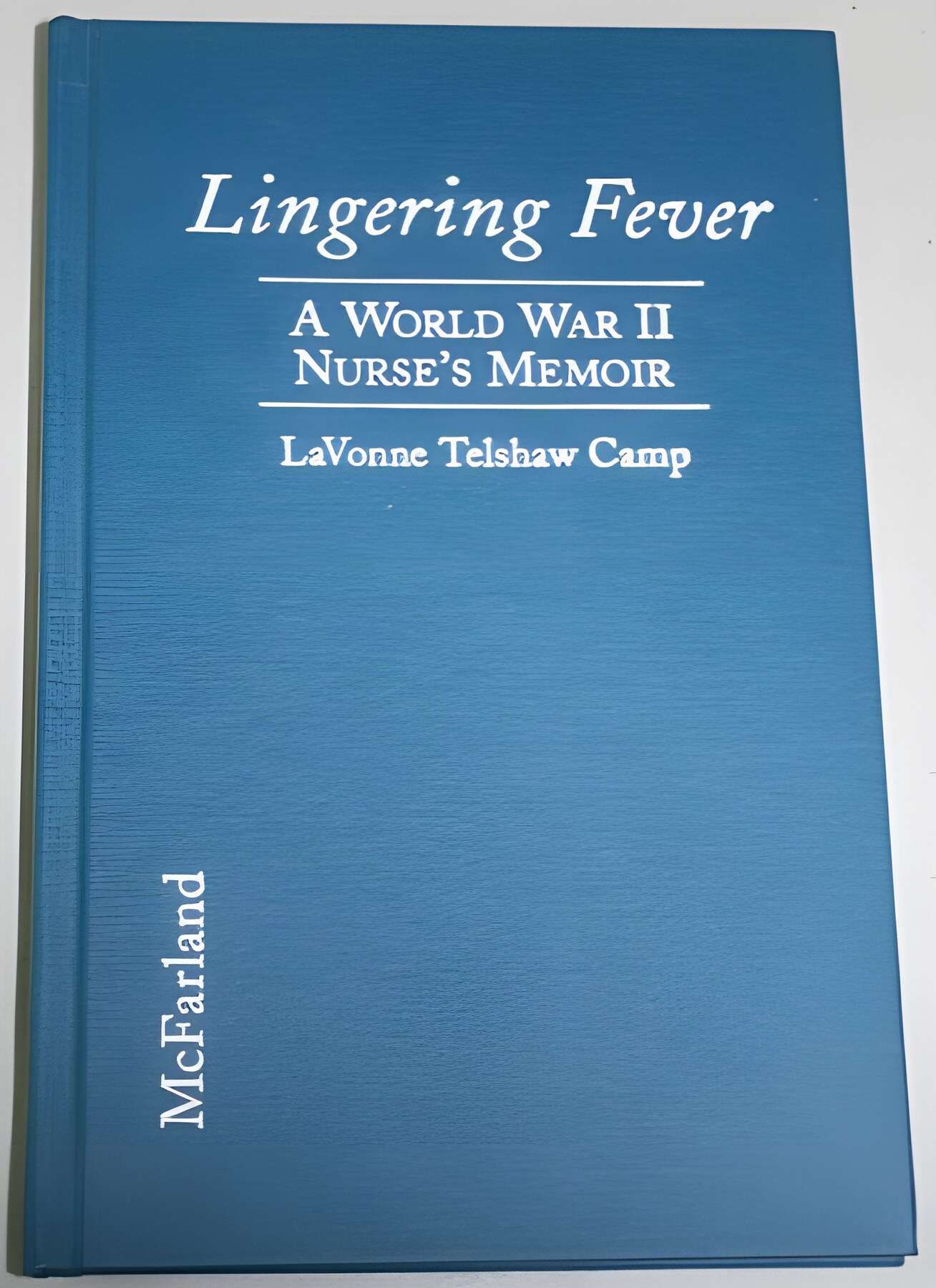
Hardcover. Jefferson NC, McFarland Publishing, 1st, 1997, Book: Very Good, Dust Jacket: None, Hardcover, blue cloth with white lettering. 176 pages, b&w illustrations. In 1945, the author found herself in the monsoon-drenched jungles of Assam, caring for soldiers in the China-Burma-India theater of war. Nothing in her nurse's training had prepared her for the tropical diseases her patients faced, nor had her experiences readied her for a hospital where men spat on the floor, rats were pervasive, and patients were as likely to sell their medicine as swallow it. What made the experience tolerable was Nurse Camp's romance with one of the airmen who flew the Hump, supplying O.S.S. troops behind Japanese lines and carrying General Joseph Stillwell's Chinese troops to fight the battle of North Burma. She accompanied her future husband on some of his missions. Based, in part, on letters she wrote to her parents, this is the poignant story of one nurse's experience in World War II and how her service changed her life forever. Name on front fly leaf, otherwise a clean, bright copy.
Hardcover. Cambridge UK, Cambridge University Press, 1st, 1968, Book: Very Good, Dust Jacket: Very Good, Hardcover in a bright dust jacket, 350 pages. Introduction + 10 essays. Specific societies noted incl Traditional China & India, Buddhist Village in North-East Thailand, Kerala, Islamic Learning in Western Sudan, Northern Ghana, Somali Nomads, Madagascar, Melanesia, Pre-Industrial England. Bibliography & Index. Clean copy.
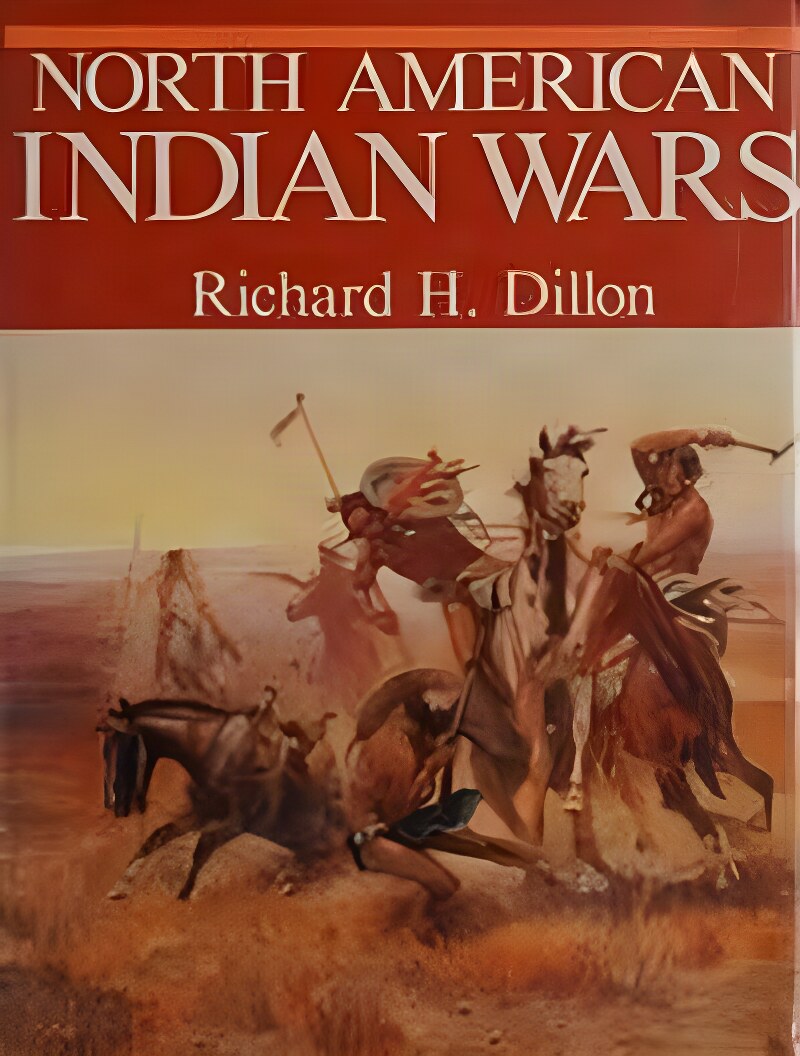
Hardcover. US, Combined Books, 1st, 1993, Book: Very Good, Dust Jacket: Very Good, Hardcover, 312 pages, b&w illustrations. Light shelf-wear to dust jacket, else a clean, tight copy. The destruction of George Armstrong Custer's command at Little Bighorn by the Sioux and Northern Cheyenne on 25 June, 1876 has been etched in the national memory and has remained one of America's longest lingering controversies. The Little Bighorn Campaign penetrates the mysteries of Custer's disaster as well as the broader context of the 1876 campaign against the Sioux.
Hardcover. NY, Random House, 1st, 1965, Book: Very Good, Dust Jacket: Very Good, Hardcover in a bright, lightly worn dust jacket. A brief survey of life in five North American Indian tribes--Makah, Hopi, Creek, Penobscot, and Mandan--at the time Columbus arrived in the New World. Nice 2-color drawings by Mad artist Jack Davis. Clean copy.
Softcover. San Francisco, Mercury House , 1st, 2001, Book: Good, Dust Jacket: None, Softcover, pictorial wraps, 289 pages. An extraordinary story of a woman's experience among the Athabaskan Indians where she learns to see the visible and invisible world around her. Bump to top outside corner created a light wave to pages. Otherwise clean.
Hardcover. Westport CT, Greenwood Press, 1st, 1988, Book: Very Good, Dust Jacket: None, Hardcover, red cloth stamped in black, 249 pages. This bibliography includes more than 1,100 entries from books, journals, newspaper articles, and dissertations concerning North American Indian basketry. More general cultural works with some information on basketry are also included, and the materials date from early ethnographic work in the late 19th and early 20th centuries to 1987. . . . The introduction offers a good overview of research in Native American basketry, and although the annotations vary greatly in thoroughness and length, they are generally useful. Bookplate on inside front cover. Otherwise a clean, bright copy.
Hardcover. Flagstaff, Arizona, Northland Press, 2nd pr., 1968, Book: Very Good, Dust Jacket: Very Good, Hardcover, 98 pages. INSCRIBED BY PERCEVAL with personal note to previous owner from him and his wife. Cover shows very light wear and soiling. Internally clean. Beautiful color and black & white sketches of Navajos and Arizona landscape. With a descriptive text by Clay Lockett.
Softcover. New York, Crown Publishers, 1st, 1975, Book: Very Good, Dust Jacket: None, Unpaginated. Color illustrated softcover, 120 full color plates. Very light wear to cover; overall a very clean, tight copy.
Hardcover. Secaucus NJ, Chartwell Books, 1993, Book: Very Good, Dust Jacket: Very Good, Hardcover, 255 pages, illustrated throughout in color and b&w. Folio. Light edgewear to dust jacket, else a clean, tight copy.
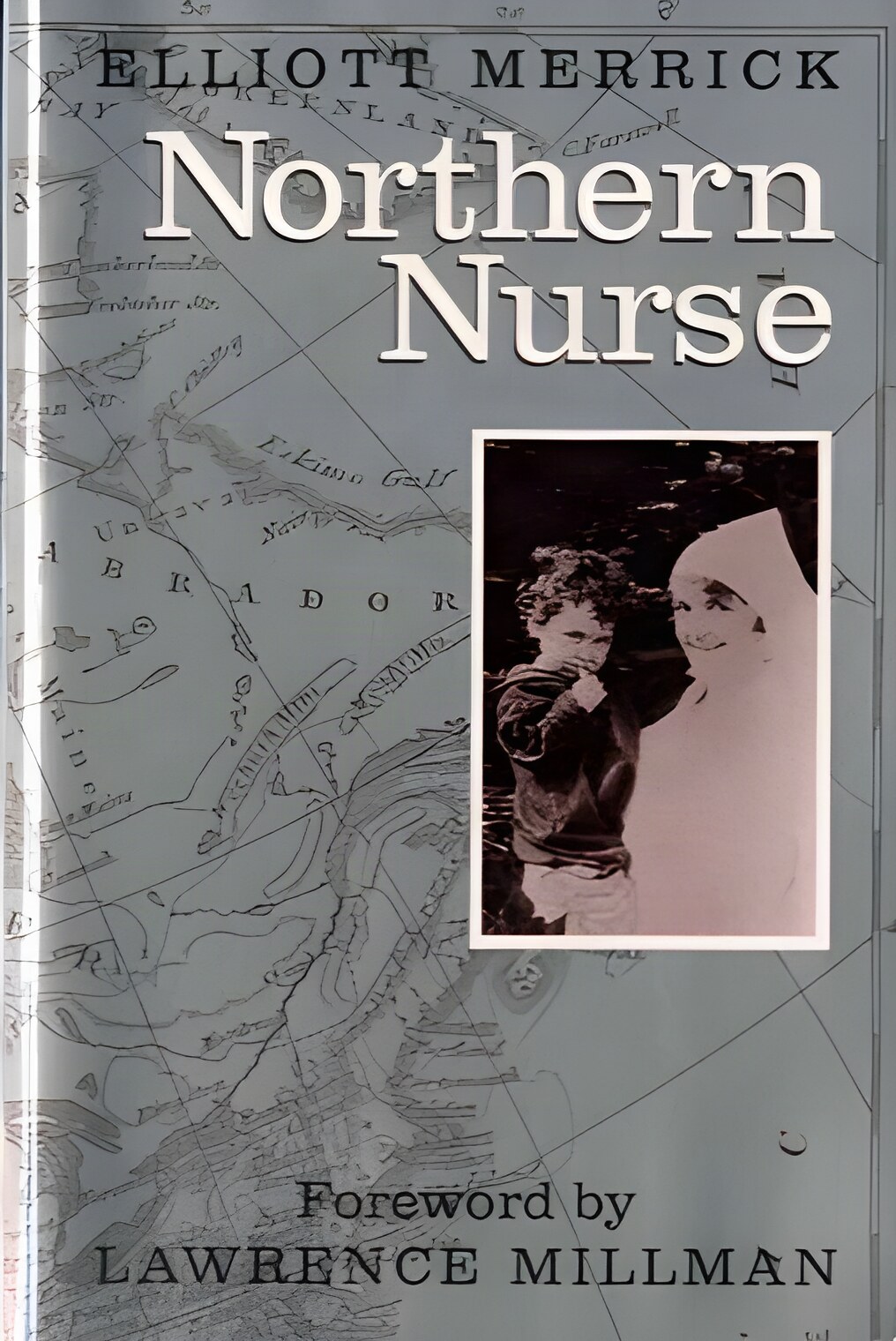
Softcover. Woodstock VT, Countryman Press, reprint, Book: Very Good, Dust Jacket: None, Softcover, 311 pages, b&w illustrations. Kate Austen was a young Australian nurse looking for adventure in the 1920s. She accepted an assignment working in a mission hospital in Labrador, Canada, and fell in love with the local people and harsh wilderness she found there. She also met and married her husband (the author) during her time in Labrador. Throughout the book, Kate relates in a no-nonsense voice the births, deaths, epidemics, injuries, burns and unusual medical cases she treated. She also tells affectionately of the people she served - trappers, wives, children, native Indians, fishermen, sailors, and various visitors. Some of the stories made me chuckle, and some of them made me hold my breath in suspense. She worked day and night to serve the community living around the hospital, which also served as general store and community center. The weather was dreadful most of the year, and they lived without running water, electricity, telephone, or indoor toilets. Kate reveled in the experience, often traveling hundreds of miles by dog-sled to treat sick people in out-lying homesteads. She loved the snow, ice, wind, and the dangerous ocean, and rarely complained about the primitive conditions or workload. Previous owner's inscription otherwise clean copy.
Hardcover. New York, Pantheon, 1st, 1990, Book: Very Good, Dust Jacket: Very Good, SIGNED BY AUTHOR. 343 pages. Brown and white cloth cover, gilt design, very light foxing. Dust jacket has minor wear to edges. Slight foxing on edges, but inside is clean and unmarked, with b&w illustrations throughout. A nice, bright copy. Gathering tales from the tribal peoples of Greenland, Canada, Russia, Alaska, and the polar region, which were told and retold through months of long winter night, "Northern Tales", reflects a rich diversity of traditions and cultures, spanning the Way-Back Time through the coming of the first white explorers.
Hardcover. NY, Doubleday, Doran & Company, , 1st thus, 1937, Book: Very Good, Dust Jacket: None, Hardcover in light tan cloth, black and gilt design on spine, 709 pages. Title page with 1937 date and title in orange. Endpaper maps in color. (route map in front and map of United States in back). The 1st printing was a two-volume limited edition. No indication of other printing on copyright page. The story of Rogers' Rangers expedition against St. Francis, on the Maine/Quebec border, during the French and Indian Wars. Spine title faded with mild chipping. No dust jacket. Clean copy.
Hardcover. NY, Knopf, 1st, 2009, Hardcover, 384 pages. Ronsequist writes about growing up in a tight-knit community of Scandinavian farmers in North Dakota and Minnesota in the late 1930s and early 1940s; about his mother, who was not only an amateur painter but, along with his father, a passionate aviator; and about leaving that flat midwestern landscape in 1955 for New York, where he had won a scholarship to the Art Students League. George Grosz, Edwin Dickinson, and Robert Beverly Hale were among his teachers, but his early life was a struggle until he discovered sign painting. He describes days suspended on scaffolding high over Broadway, painting movie or theater billboards, and nights at the Cedar Tavern with Willem de Kooning, Franz Kline, and the poet LeRoi Jones. His first major studio, on Coenties Slip, was in the thick of the new art world. Among his neighbors were Ellsworth Kelly, Robert Indiana, Agnes Martin, and Jack Youngerman, and his mentors Robert Rauschenberg and Jasper Johns.
Softcover. Bloomington IN, Indiana University Press, reprint, 1995, Book: Very Good, Dust Jacket: None, Softcover in pictorial wrappers, 852 pages. The life and art, the folklore, history, and common work of a rural community in Northern Ireland-through the eyes and pen of gifted folklorist Henry Glassie. Glassie regards the people of Ballymenone with respect and affection, allowing them to describe their ideas, life-ways, and values on their own terms, not his. Recognizing that theirs is a mindset and lifestyle that must be seen as an integrated whole, Glassie studies everything about Ballymenone from traditional songs to entertainment to religious beliefs to architecture, liberally quoting from the people who welcomed him into their homes over his extended stays. Some of his insights are pure brilliance, such as recognizing the way the poets and storytellers of a rural Irish district have adapted ancient Gaelic metrics to the English they use today. You will learn more about Ireland and its people in this one book than in a host of others. Clean copy.
Softcover. New Haven CT, Yale University Press, reprint, 1998, Book: Very Good, Dust Jacket: None, Softcover, 384 pages, illustrations. Philip II of Spain--ruler of the most extensive empire the world had ever known--has been viewed in a harsh and negative light since his death in 1598. Identified with repression, bigotry, and fanaticism by his enemies, he has been judged more by the political events of his reign than by his person. This book, published four hundred years after Philip's death, is the first full-scale biography of the king. Placing him within the social, cultural, religious, and regional context of his times, it presents a startling new picture of his character and reign. Drawing on Philip's unpublished correspondence and on many other archival sources, Henry Kamen reveals much about Philip the youth, the man, the husband, the father, the frequently troubled Christian, and the king. Kamen finds that Philip was a cosmopolitan prince whose extensive experience of northern Europe broadened his cultural imagination and tastes, whose staunchly conservative ideas were far from being illiberal and fanatical, whose religious attitudes led him to accept a practical coexistence with Protestants and Jews, and whose support for Las Casas and other defenders of the Indians in America helped determine government policy. Shedding completely new light on most aspects of Philip's private life and, in consequence, on his public actions, the book is the definitive portrayal of Philip II. Clean copy.
Softcover. Australia, National Gallery of Australia, 1st, 2008, Book: Very Good, Dust Jacket: None, 88 pages. Softcover with light edgewear to wrappers. Picture Paradise chronicles the transmission and adoption of new developments in photography from Europe to the Asia-Pacific region. It is the first survey of the early photography from this diverse region covering India and Sri Lanka, Southeast and East Asia, Australia, New Zealand and the Pacific Islands, to the West Coast of North America. It includes pioneer local photographers as well as European photographers working in the region and reveals the rich heritage and the many outstanding achievements of the first century of photography in the Asia-Pacific region.
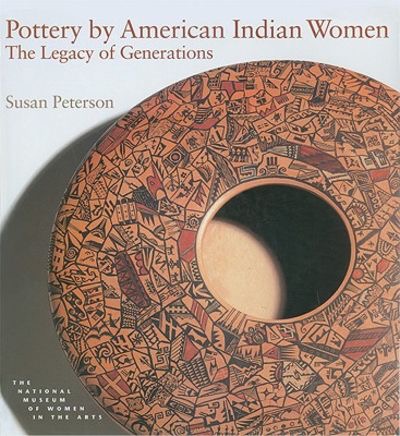
Hardcover. NY, Abbeville Press, 1st, 1997, Book: Very Good, Dust Jacket: Very Good, Hardcover in a bright dust jacket, 224 pages. This book provides a personal look at the three generations of American Indian women who made (and are still making) traditional pottery. Color illustrations throughout. Primarily a women's art, American Indian pottery reflects a heritage of powerful social, religious, and aesthetic values. Even now, modern American Indian women use the clay, paint, and fire of pottery making to express themselves, creating designs that range from dutifully traditional to strikingly original. This book--written in conjunction with one of the most important exhibitions of American Indian pottery ever mounted--provides an in-depth look at a unique North American art form. Clean copy. DOMESTIC SHIPPING ONLY.
Hardcover. Baltimore, Genealogical Publishing Company, 2nd pr., 1997, Book: Very Good, Dust Jacket: None, Hardcover, blue cloth stamped with gilt lettering, 608 pages. After the Revolutionary War, the federal government awarded bounty lands to citizens and soldiers for services rendered. In its simplest form, this involved the exchange of free land for military service. Federal records of these Revolutionary War bounty land awards are well known and readily accessible to genealogists. But the federal government was not alone in rewarding its citizens and soldiers with bounty lands. Nine state governments adopted similar policies, generating even more records. Unlike the federal bounty land records, however, these state records are not centralized; instead, they are found in the various states in the form of manuscript records and printed books and are all but inaccessible to the researcher. Until now, that is! Because with this work by Lloyd Bockstruck we now have a master index to state bounty land records, a Revolutionary War resource unparalleled for freshness, originality, and research potential. The nine states that awarded bounty lands in their western reserves or on their western borders (directly affecting the future states of Indiana, Kentucky, Maine, Ohio, and Tennessee) are Connecticut, Georgia, Maryland, Massachusetts, New York, North Carolina, Pennsylvania, South Carolina, and Virginia. (The basis for the Connecticut and Georgia awards, by the way, differ from the norm.) Clean, bright copy.
Hardcover. San Francisco, Chronicle Books, 1st, 2000, Book: Very Good, Dust Jacket: None, Hardcover, gray boards with a dark brown cloth spine and a pictorial label on the cover. No dust jacket issued. Legendary for his massive photographic undertaking, The North American Indian, Edward Sheriff Curtis (1868-1952) recorded much more than portraits of Native American tribespeople. Among his huge body of work are numerous images of all manner of native dwellings: tipis, hogans, huts, cliff houses, adobes, and many more that are far less familiar to the public eye. Though people are largely absent from these photographs, each image speaks volumes about the lives and lifestyles of the tribes to which they belonged. Other structures such as tombs, religious buildings, granaries, and totem poles are also featured prominently, further glimpses into ways of life that were in the process of disappearing. Taken from the Dan and Mary Solomon collection,Sites & Structures: The Architectural Photographs of Edward S. Curtis is the first book of Curtis photographs to explore these dwellings and structures, faithfully reproduced from the original prints and gravures.


 "Indian Baskets of the Northwest Coastby: Lobb, Allan")
 "Indian Races of North and South America, The: Including the Late Sioux War and Indian Massacre in Minnesotaby: Brownell, Charles de Wolf")
 "Islamic Revival in British India : Deoband, 1860-1900by: Metcalf, Barbara Daly")
 "Literacy in Traditional Societiesby: Goody, Jack (ed)")
 "Little Bighorn Campaign, The : March-September 1876 (Great Campaigns Series)by: Sarf, Wayne Michael")


 "Narrow Road to the Deep North: A Journey into the Interior of Alaska by: Katherine McNamara")

 "Navajo Sketch Book, A (SIGNED COPY)by: Lockett, Clay & Don Perceval")
 "North American Indian Portraits: 120 Full-Color Portraits Painted from Life from the McKenney-Hall Portrait Gallery of American Indiansby: Horan, James D.")




 "Painting Below Zero: Notes on a Life in Artby: James Rosenquist and David Dalton")


 "Picture Paradise: Asia-Pacific Photography 1840s-1940sby: Newton, Gael")
 "Revolutionary War Bounty Land Grants Awarded by State Governmentsby: Bockstruck, Lloyd DeWitt")
 "Scriptural Ecclesiastical and Historical View of Slavery from the Days of the Patriarch Abraham to the Nineteenth Century Addressed to The Right Rev. Alonzo Potter by:")


 "Sites and Structures: The Architectural Photographs of Edward S. Curtis by: Solomon, Mary/Slemmons, Rod")

