Softcover. Baltimore, MD, Baltimore Museum of Art, 1st, 1977, Book: Very Good, Dust Jacket: None, Softcover, 151 pages, b&w and color illustrations. Light edge wear, rubbing to wrappers. Else a clean, tight copy.
Hardcover. NY, Vanguard Press, 1st, 1929, Book: Very Good, Dust Jacket: None, Hardcover, green cloth, spine stamped in black and gilt, gilt faded. 165 pages, 20 Native American myths. Emdossed stamp on title page, otherwise clean, very good. Uncommon title.
Hardcover. Boston, Faber and Faber, 1st, 1994, Book: Very Good, Dust Jacket: Very Good, Hardcover in a bright, unclipped dust jacket, pages. "I write of peoples and of a struggle." So begins A New World, an ambitious and extraordinary book that challenges conventional historical narrative by presenting episodes in North America's history through the eyes and voices of the Europeans who established the first colonial outposts here. Beginning with the swaggering John Smith at Jamestown and ending with the beleaguered Montcalm at Quebec, Arthur Quinn allows towering historical figures to emerge from an often beautiful, sometimes forbidding early American landscape and speak. An elderly William Bradford looks back with growing despair at the early promise of the Pilgrim colony at Plymouth. Governor John Winthrop tries to administer a dose of practicality to the Puritans of Massachusetts. Jesuit missionaries bring Christianity and disaster to the Huron Confederacy. A blustering Peter Stuyvesant watches Manhattan slip from Dutch grasp. William Penn's Holy Experiment in Pennsylvania goes increasingly awry. And, finally, the British and the French fight history's first world war for supremacy in the New World. Telling each story using the literary conventions of the day, Quinn casts North America's colonial beginnings as a multicultural epic, gripping the reader throughout with his uncanny eye and storytelling skill. Clean copy.
Hardcover. NY, Harcourt, Brace & World, 3rd pr., 1947, Book: Very Good, Dust Jacket: Very Good, Hardcover in a lightly worn dust jacket, 168 pages. Blue boards are solid with silhouette of a boy and girl in a canoe; illustrated in b&w by Stephen Voorhies who did the illustrated map on the endpapers. When Ann Jackman was fourteen and her brother Philip eleven, their father decided to become a fur trapper, so the whole family moved to northern Ontario, near a Hudson Bay Post, and built themselves a home. There were many exciting new things for the Jackmans to learn: building a log cabin, making furniture, paddling canoes, the habits of animals, and the language and customs of the Indians.
Hardcover. North Clarendon VT, Tuttle Publishing, 1st, 2006, Book: Very Good, Dust Jacket: Very Good, Hardcover in a bright dust jacket, gorgeous color paintings on every page by Lak-Khee Tay-Audouard. Adventures of the Treasure Fleet is the amazing story of seven epic voyages and their larger-than-life commander, Admiral Zheng He. Beginning in 1405, Admiral Zheng He led more than 300 gigantic, brightly-painted ships across the South China Sea to the Indian Ocean and all the way to the distant coast of Africa. The admiral and his crew battled pirates and raging storms, and were amazed by the people and ways of life in distant lands. At each port, Chinese goods were traded for pearls, precious stones, herbs and medicines which were given as tribute to China's powerful emperor when the ships' returned home. Clean copy.
Hardcover. Springfield, Ma, Milton Bradley and Co., 1st, 1939, Book: Very Good, Dust Jacket: Very Good, Hardcover, 216 pages. Illustrated by George Gray. Red cloth boards with title on front and spine. Some fading on front and back endpapers. Previous owners inscription on front endpaper. Flyleaf has childrens crayon drawing of cowboy and indian. Illustrated dust jacket has minor chipping. Still a very nice copy.
Softcover. Paris, Reunion des Musees Nationaux, 1st, 1990, Book: Very Good, Dust Jacket: None, 204 pages. Softcover. French text only. Previous owners stamp on front endpaper. Illustrated with beautiful full color and black & white examples of religious art and artifacts of Tibet and Nepal. Slight toning to page edges. Clean, tight copy.
Hardcover. Seattle, WA, University of Washington Press, 1st, 1967, Book: Very Good, Dust Jacket: Very Good, Hardcover black cloth with silver lettering. 410 pages. 32 pages of color plates; near 1000 black-and-white photographs. Bibliography and index. Authoritative guide to the collections at the University of British Columbia. Clean copy in a bright dust jacket.
Softcover. Chapel Nill NC, University of North Carolina Press , 1st, 2002, Book: Very Good, Dust Jacket: None, Softcover, 419 pages. This sweeping, richly evocative study examines the origins and legacies of a flourishing captive exchange economy within and among native American and Euramerican communities throughout the Southwest Borderlands from the Spanish colonial era to the end of the nineteenth century. Indigenous and colonial traditions of capture, servitude, and kinship met and meshed in the borderlands, forming a "slave system" in which victims symbolized social wealth, performed services for their masters, and produced material goods under the threat of violence. Slave and livestock raiding and trading among Apaches, Comanches, Kiowas, Navajos, Utes, and Spaniards provided labor resources, redistributed wealth, and fostered kin connections that integrated disparate and antagonistic groups even as these practices renewed cycles of violence and warfare. Always attentive to the corrosive effects of the "slave trade" on Indian and colonial societies, the book also explores slavery's centrality in intercultural trade, alliances, and "communities of interest" among groups often antagonistic to Spanish, Mexican, and American modernizing strategies. The extension of the moral and military campaigns of the American Civil War to the Southwest in a regional "war against slavery" brought differing forms of social stability but cost local communities much of their economic vitality. Clean copy.
Hardcover. Norman, OK, University of Oklahoma Press (, 1st, 1989, Book: Very Good, Dust Jacket: Very Good, Hardcover, 415 pages, b&w illustrations. Light edge wear to dust jacket, creases to front flap. Light soiling to edges. Else a clean, tight copy. The first major battle between the U.S. Army and the Cheyenne Indians took place on the south fork of the Solomon River in present-day northwest Kansas. In this stirring account, William Y. Chalfant recreates the human dimensions of what was probably the only large-unit sabre charge against the Plains tribes, in a battle that was as much a clash of cultures as of cavalry and Cheyenne warriors.
NY, Clarion Books, 1st US, 1999, Book: Very Good, Dust Jacket: Very Good, Hardcover in a bright, unclipped dust jacket. 48 pages. Color photos and illustrations. Illustrated end papers. More than 130 full-color photographs adorn this handsome re-creation of daily life in a Plains Indian village in 1868. Readers will meet Real Bird and his family, part of a Northern Cheyenne tribe in southeastern Montana. Each member has an important role: Men prepare to become warriors and hunters, while women learn to raise crops and build a home-a tipi-from poles and buffalo hides. The clothes the family wears, from elaborate ceremonial headdresses to colorful beaded moccasins; the foods they eat; the games they play; the crafts and jewelry they make; and the spiritual rituals they perform are among the many topics included. This large-format book, with clear text and informative sidebars, provides a detailed pictorial account of the Plains Indian life more than a century ago. Clean copy.
Indianapolis, Bobbs Merrill, 1st, 1962, Book: Very Good, Dust Jacket: Very Good, Hardcover, 181 pages. Bright dust jacket. Juvenile suspense novel set in North Africa, involving a modern (1960s) day Prester John character.
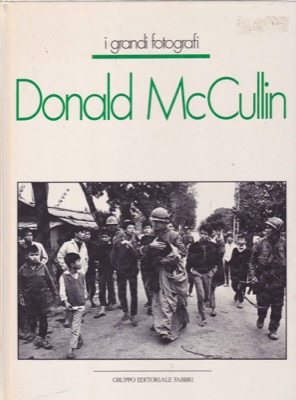
Hardcover. Italy, Gruppo Editoriale Fabbri, 1st, 1982, Book: Very Good, Dust Jacket: None, Hardcover, glossy pictorial boards. A retrospective survey of the photographs of Donald McCullin. The text is in Italian. He covered lots of violent events, war, civil war, terrorism. 50+ photos in this book from: Northern Ireland, Vietnam, Biafra, Cambodia, Beirut, India. ITALIAN TEXT. Clean copy.
NY, Delacorte, 1st US, 1986, Book: Very Good, Dust Jacket: Very Good, Hardcover in a bright, unclipped dust jacket. 166 pages.An Indian girl and a blacksmith's son are separated from their Northwoods Colonial community in the early spring, and they struggle in the wilderness to survive and return. The story is symbolized by the boy's beautiful knife; the girl is scornful of its dullness, but when she uses it to save their lives, returning it razor-sharp but bloody and chipped, he is equally disgusted. Clean copy.
Softcover. Berkeley CA, University of California Press, reprint, Book: Very Good, Dust Jacket: None, Softcover, 210 pages. Taking Gandhi's statements about civil disobedience to heart, in February 1922 residents from the villages around the north Indian market town of Chauri Chaura attacked the local police station, burned it to the ground and murdered twenty-three constables. Appalled that his teachings were turned to violent ends, Gandhi called off his Noncooperation Movement and fasted to bring the people back to nonviolence. In the meantime, the British government denied that the riot reflected Indian resistance to its rule and tried the rioters as common criminals. These events have taken on great symbolic importance among Indians, both in the immediate region and nationally. Amin examines the event itself, but also, more significantly, he explores the ways it has been remembered, interpreted, and used as a metaphor for the Indian struggle for independence. The author, who was born fifteen miles from Chauri Chaura, brings to his study an empathetic knowledge of the region and a keen ear for the nuances of the culture and language of its people. In an ingenious negotiation between written and oral evidence, he combines brilliant archival work in the judicial records of the period with field interviews with local informants. Clean copy.
Hardcover. New York, Macmillan and Co., reprint, 1897, Book: Very Good, Dust Jacket: None, Two volume set. 12 mo. 351 + 471 pages. Original heavy navy with gilt lettering, and gilt embossed design on front over. "This Edition is intended for circulation only in India and British Colonies." This is a smaller edition than the original, and contains no photos but there is a folding map in Vol. 2. Light wrinkle to cloth spine of Vol. 1, endpapers in both books have foxing but doesn't affect internal pages. A clean, very good set. NOTE: DUE TO WEIGHT, DOMESTIC SHIPPING ONLY.
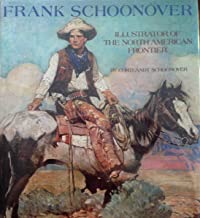
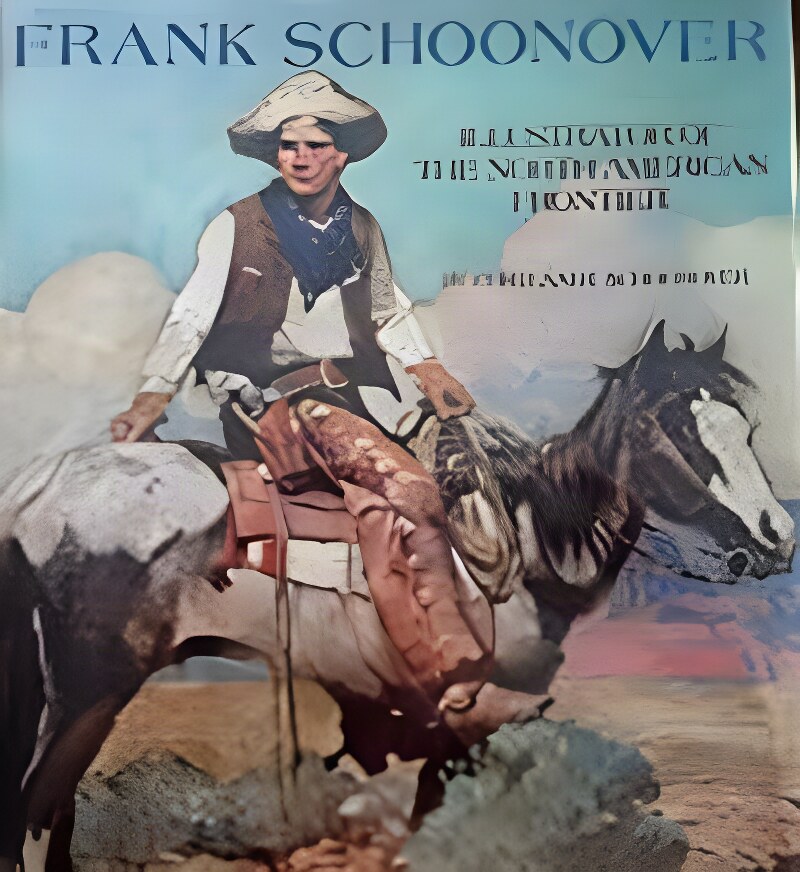
Hardcover. NY, Watson-Guptill, 1st, 1976, Book: Very Good, Dust Jacket: Very Good, Hardcover. Frank Schoonover, one of the giants of the Golden Age of American Illustration, was renowned for his scenes of life on the western frontier of America and Canada. Schoonover captured the flavor of the west and northwest in his dramatic outdoor compositions which depicted cowboys, Indians, trappers, Eskimos - the people and way of life that he knew, loved, and painted first hand. His keen sense of observations, coupled with his vivid documentary style, made his illustrations powerful paintings in themselves. They are now exhibited and collected for their own sake, independent of the books they illustrated, as unforgettable documents of a legendary way of life. Like the other great painter/illustrators of the Brandywine School -he was a student of Howard Pyle and a contemporary of such notables as N. C. Wyeth and Harvey Dunn - Schoonover was passionate about the portrayal of the American past. Although he lived most of his life in the Brandywine River area of Pennsylvania and Delaware, his commitment to the frontier dominated his work. A natural love for adventure and a yearning to find his own style sent him initially to the Canadian northwest, where he took naturally to the challenge of frontier life. Living among the Indians, canoeing, traveling by dogsled, and fending for himself brought authentic flavor to his paintings which illustrated many popular books and stories of adventure - most of which are now forgotten, although the paintings endure. This handsome collection is the first full-scale illustrated study of Schoonover's work, not only rediscovering the paintings of a major artist, but providing an important visual document of frontier life. 208 pages. 10 1/2 X 11 1/4. 48 color plates. 150 black-and-white illustrations. Chronology. Index. Due to size and weight, DOMESTIC SHIPPING ONLY.
Hardcover. NY, Watson-Guptill, 1st, 1976, Book: Very Good, Dust Jacket: Very Good, Hardcover. Frank Schoonover, one of the giants of the Golden Age of American Illustration, was renowned for his scenes of life on the western frontier of America and Canada. Schoonover captured the flavor of the west and northwest in his dramatic outdoor compositions which depicted cowboys, Indians, trappers, Eskimos - the people and way of life that he knew, loved, and painted first hand. His keen sense of observations, coupled with his vivid documentary style, made his illustrations powerful paintings in themselves. They are now exhibited and collected for their own sake, independent of the books they illustrated, as unforgettable documents of a legendary way of life. Like the other great painter/illustrators of the Brandywine School -he was a student of Howard Pyle and a contemporary of such notables as N. C. Wyeth and Harvey Dunn - Schoonover was passionate about the portrayal of the American past. Although he lived most of his life in the Brandywine River area of Pennsylvania and Delaware, his commitment to the frontier dominated his work. A natural love for adventure and a yearning to find his own style sent him initially to the Canadian northwest, where he took naturally to the challenge of frontier life. Living among the Indians, canoeing, traveling by dogsled, and fending for himself brought authentic flavor to his paintings which illustrated many popular books and stories of adventure - most of which are now forgotten, although the paintings endure. This handsome collection is the first full-scale illustrated study of Schoonover's work, not only rediscovering the paintings of a major artist, but providing an important visual document of frontier life. 208 pages. 10 1/2 X 11 1/4. 48 color plates. 150 black-and-white illustrations. Chronology. Index.
Hardcover. Indianapolis/NY, Bobbs Merrill, 1st, 1963, Book: Very Good, Dust Jacket: Very Good, Hardcover in a bright, unclipped dust jacket. Historical adventure. A young Spaniard goes to sea on a voyage to the Yukon and British Columbia to trade with Indian trappers. It is the late 18th century and sea otter pelts are bringing high prices. The plan is to proceed down the coast of North America, collecting hides from the natives. But things do not go according to plan. Mild chipping wear to rear of dust jacket, otherwise a clean copy.
Hardcover. Spain, La Fabrica, 1st, 2011, Book: Near Fine, Dust Jacket: None, Hardcover, 63 pages. Like new in publishers shrink-wrap. Reveals the Mexican photographer's extended explorations in (mostly) cities in the north of India--Varanasi, Delhi and Calcutta, as well as Bombay--over the past 13 years. Iturbide`s black-and-white images are strikingly at ease with their subject matter, able to locate arrangements of objects, architectural outline and urban signage without ever lapsing into visual tourism. Text in English and Spanish.
Hardcover. Spain, La Fabrica, 1st, 2011, Book: Near Fine, Dust Jacket: None, Hardcover, 63 pages. Like new in publishers shrink-wrap. Reveals the Mexican photographer`s extended explorations in (mostly) cities in the north of India--Varanasi, Delhi and Calcutta, as well as Bombay--over the past 13 years. Iturbide`s black-and-white images are strikingly at ease with their subject matter, able to locate arrangements of objects, architectural outline and urban signage without ever lapsing into visual tourism. Text in English and Spanish.
Softcover. Seattle, University of Washington Press, 1st, 2000, Book: Very Good, Dust Jacket: None, Softcover. Like new in publishers shrink-wrap. Chief Joseph's exhausted words of surrender, 'Hear me, my chiefs, I am tired; my heart is sick and sad. From where the sun now stands, I will fight no more forever', are the accepted end of the Nez Perce War of 1877, in which several bands of Nez Perce attempting to find a new home outside their diminished Idaho reservation clashed with the U.S. military (and occasionally other Indians) along the Clearwater and Big Hole Rivers, and finally at the foot of the Bear Paw Mountains. However, a number of Nez Perce escaped transportation to Indian Territory with Joseph and continued their flight to Canada, with perhaps a hundred eventually joining Sitting Bull's Lakota."I Will Tell of My War Story" reproduces, describes, and discusses a remarkable series of drawings by an anonymous Indian artist who fought with Chief Joseph and later reached Canada. The drawings, in red, blue, and black pencil, include portraits of principal participants in the war, battle scenes, and views of Nez Perce camp life and celebrations during the war and after. The drawings are preserved in a small pocket ledger labeled 'Cash Book' on the front, which was acquired by Indian Agent Charles D. Warner in the 1880s. It was willed by him to a family living in northern Idaho, and is now in the collection of the Idaho State Historical Society. Scott Thompson worked closely both with the owners and with members of the Nez Perce community in preparing his manuscript. Thompson's detective work and research methods to identify Nez Perce and other parties pictured in the Cash Book make fascinating reading. He is careful to point out what is speculation and what has been documented or attested to by experts on dress, weapons, ceremony, and other aspects of Native culture. The Cash Book drawings are unique in several ways. They are one of very few firsthand pictorial records of the Nez Perce War, representing an even scarcer record of this war as seen from the Indian viewpoint. They contain invaluable historical and ethnographic information not only explicit in the form of military and Native dress, regalia, and quite graphic battle scenes, but also implicit. The drawings reveal an important stage of cultural adaptation as shown by the mixture of white and Native goods combined in Nez Perce material culture during the 1870s and 1880s, and by the artist's assimilation of white/European drawing techniques such as texture and perspective. The artist combined these drawing techniques with Native art traditions to make exceptionally effective pictorial communications. Scott M. Thompson is an art teacher at Chase Middle School in Spokane, Washington.
Barre, MA, Barre Publishers, 1st, 1972, Book: Very Good, Dust Jacket: Very Good, Hardcover, 152 pages, photographs by Curtis. Introduction and commentary by Don D. Fowler. One hundred and eighteen superb representative photographs have been selected from Curtis's monumental work and reproduced in this book by The Meriden Gravure Company. Don Fowler describes Curtis the photographer and ethnographer, and the Indian groups depicted, commenting on the unique cultural characteristics of each tribe.
Hardcover. Boston, Richard B. Badger, 1st, 1912, Book: Very Good, Dust Jacket: None, Hardcover, 292 pages. Octavo in original gilt lettered red cloth and gilt top edge with b&w plates (including frontispiece) from photos and maps on endpaper. "The author spent several seasons in (the) .Labrador interior, 1903-10, and records here his knowledge of the country, the trails, hunting & fishing among the Montagnais Indians." Previous owner's bookplate otherwise clean.

 "\"And Eagles Sweep Across the Sky\": Indian Textiles of the North American West Navajo Blankets and Rugs, Baskets of the Westby: Katzenberg, Dena S.")


 "Adventures of the Treasure Fleet: China Discovers the World by: Bowler, Ann Martin; illustrations by Lak-Khee Tay-Audouard,")


 "American Indian, Theby: Northey, Sue")
 "Art esoterique de L'Himalaya - Catalogue de la donation Lionel Fournierby: Beguin, Gilles")
 "Art of the Kwakiutl Indians and Other Northwest Coast Tribesby: Hawthorn, Audrey")
 "Cheyennes and Horse Soldiers: The 1857 Expedition and the Battle of Solomon's Forkby: Chalfant, William Y.")
 "Daily Life In A Plains Indian Village 1868by: Terry, Michael Bad Hand")
 "Dangerous Assignmentby: Patchett, Mary Elwyn")
 "Driftby: Mayne, William")
 "Event, Metaphor, Memory: Chauri Chaura, 1922-1992by: Shahid Amin")
 "Farthest North: Being the record of a voyage of exploration of the ship `Fram', 1893-1896, and of a fifteen months' sleigh journey by Dr. Nansen and Lieut. Johansen. With an appendix by Otto Svedrup Captain of the `Fram'. In Two Volu")
 "Friendly Cove by: Brant, Irving")
 "Graciela Iturbide: No Hay Nadie, There is No-Oneby: Iturbide, Graciela")
 "Graciela Iturbide: No Hay Nadie, There is No-Oneby: Iturbide, Graciela")
 "I Will Tell of My War Story: A Pictorial Account of the Nez Perce War (Samuel and Althea Stroum Book)by: Thompson, Scott M.")
 "In a Sacred Manner We Live: Photographs of the North American Indianby: Curtis, Edward S.")
 "In Northern Labrador by: Cabot, William Brooks")