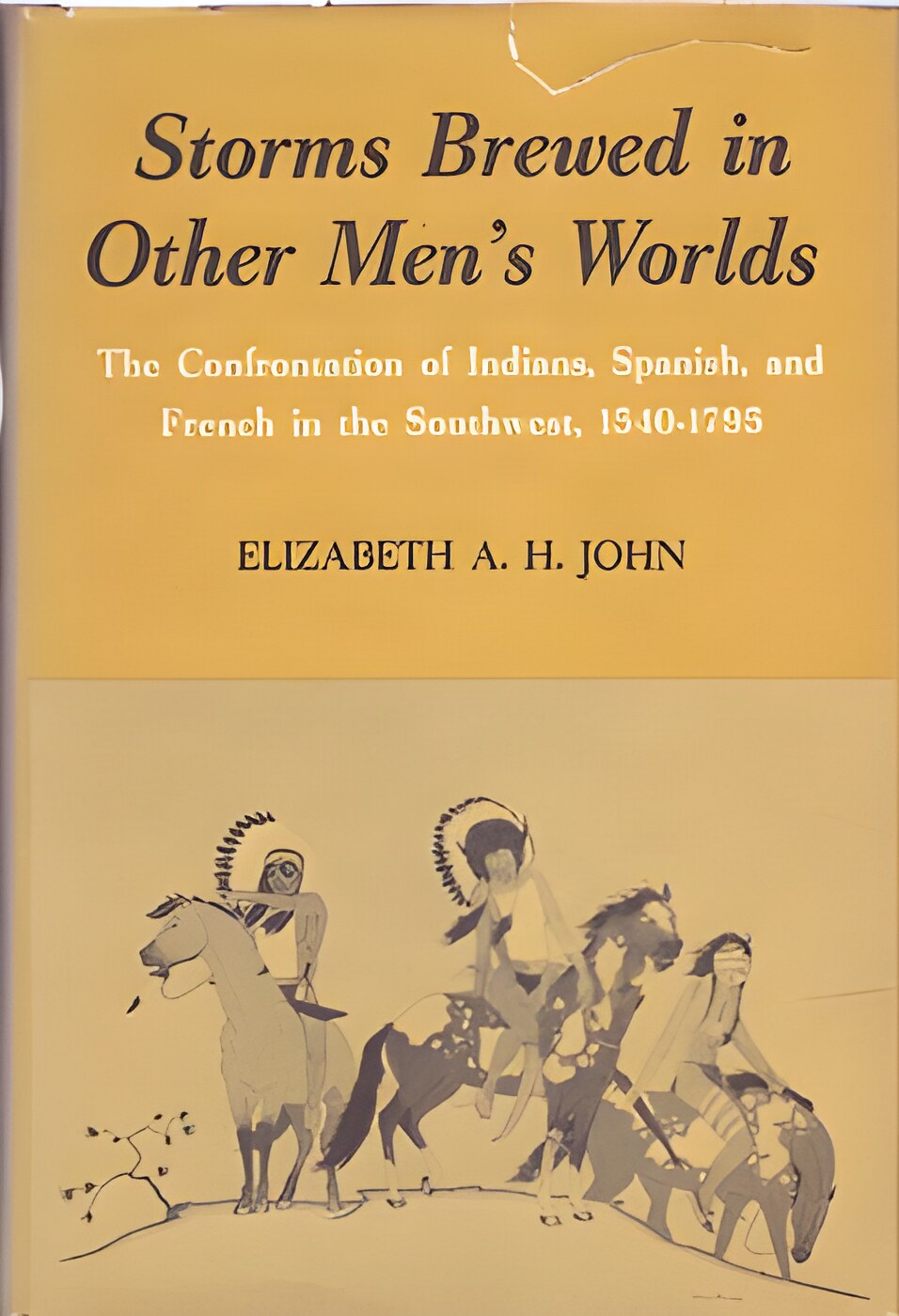
Hardcover. College Station, Texas A&M University Press, 1st, 1975, Book: Very Good, Dust Jacket: Very Good, Hardcover in a bright dust jacket with a small tape repair, 805 pages. The Confrontation of Indians, Spanish, and French in the Southwest, 1540-1795. Spanning two and a half centuries, from the earliest contacts in the 1540s to the crumbling of Spanish power in the 1790s. Storms Brewed in Other Men's Worlds is a panoramic view of Indian peoples and Spanish and French intruders in the early Southwest. The primary focus is the world of the American Indian, ranging from the Caddos in the east to the Hopis in the west, and including the histories of the Pueblo, Apache, Navajo, Ute, and Wichita peoples. Within this region, from Texas to New Mexico, the Comanches played a key, formative role, and no less compelling is the story of the Hispanic frontier peoples who weathered the precarious, often arduous process of evolving coexistence with the Indians on the northern frontier of New Spain. Clean copy.
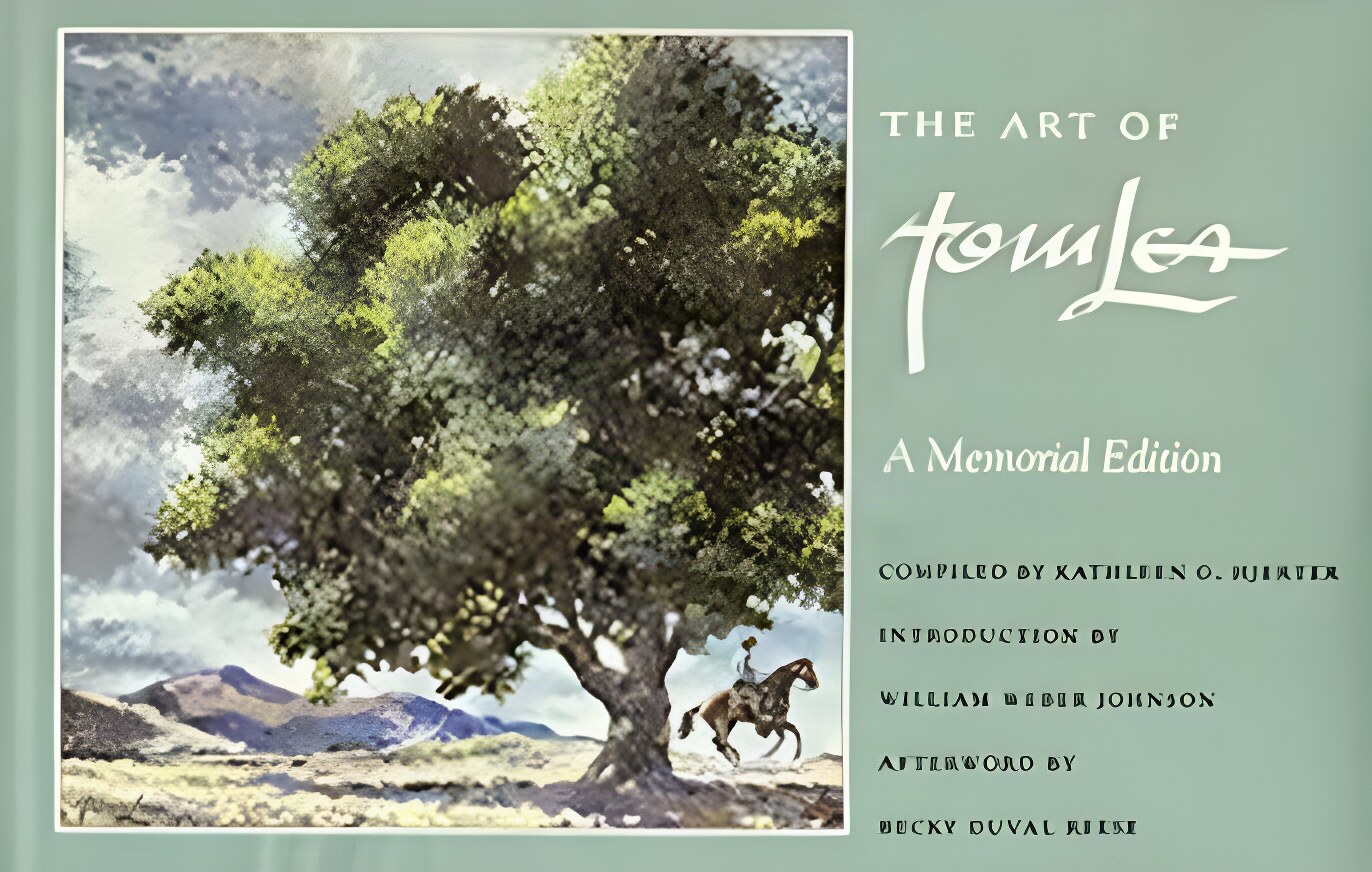
Hardcover. Texas A&M University Press;, 1st, 2003, Book: Very Good, Dust Jacket: Very Good, Hardcover, 276 pages. Tom Lea was a realist who painted things as they are, but just happened to see more of what they are than most of us do. A muralist, painter, book illustrator, World War II artist-correspondent, historian, novelist, and humanist, Lea died in 2001 after creating in some sixty years a corpus of work that has captivated those who know it. This volume makes available the full range of his vigorous work. Old admirers of Lea's talents will delight in this presentation, and a whole new generation will be awed by the unique contribution he has made. A Southwesterner from multicultural El Paso, Lea gave new vision to the misunderstood lands often thought of as barren wastes. As Kathleen G. Hjerter says in her foreword, in his paintings "the desert's melded colors are vibrant under many subtle gradations of light; the mesas and mountains reach up to a sky enormous enough to hold everyone's soul." But it is not just the southwest. its life and lore that Lea knew. Any subject he portrayed in picture or words (he wrote several outstanding books, including The Wonderful Country) he first researched minutely. Thus, he brought marvelous detail to his portrayal of the Mexican bullfighter, the Australian ranches and Texas cattle of the King empire, and the Indians, pioneers, and ranch hands of his own corner of the world. In the Second World War, as an artist-correspondent for Life magazine, he captured both the weaponry and the emotions of war. On assignment in China he developed a love for that land that gave him not only many subjects for paintings but also his favorite and, in later years, most characteristic medium: Chinese ink applied with a fine brush. This is a heavy and oversized book and will require extra shipping. International customers please ask for a shipping quote before purchasing.
Hardcover. Baton Rouge, Louisiana State University, 1st, 1987, Book: Good, Dust Jacket: Fair, Hardcover in a lightly worn dust jacket, 227 pages, b&w illustrations. In this penetrating study, Carl Brasseaux looks beyond long-standing mythology to provide a critical account of early Acadian culture in Louisiana and the reasons for its survival. He convincingly dispels many received notions about the routes Acadians traveled from Nova Scotia to Louisiana, their original settlement sites, and the patterns of their subsequent migrations within the state, and closely examines the relations of Louisiana's Acadians with their black, Spanish, Indian, and Creole neighbors. In adapting to subtropical Louisiana, with its turmoil of alternating French and Spanish regimes, the Acadians exhibited industry, pragmatism, individualism, and the ability to close ranks in the face of a general threat. As Brasseaux reveals, Acadians' cohesiveness and insularity preserved the core elements of their culture and helped them adjust to new physical and social demands. Names, inscription to front fly leaf, interior clean and bright.
Hardcover. NY, Oxford University Press, 1st, 1985, Book: Very Good, Dust Jacket: Very Good, Hardcover in a bright, unclipped dust jacket, 364 pages. The Second World War's Pacific conflict was one of the most complex in history. It embrioled peoples from opposite sides of the globe; it was fought in China, across the expanses of the Pacific, and in the jungles of Southeast Asia; and it was devastating in its consequences for civilians and servicemen alike. It saw the first use of atomic weapons, hastened the end of the Western empires in Asia, and marked America's rise to the position of the most powerful nation in the world. Christopher Thorne, whose previous studies of the war in the Pacific have become landmarks in the field, here weaves together both the entire network of international relations surrounding the war and the impact the war had on all the societies involved--Indian as well as American; Australian and New Zealand as well as Japanese; Korean, Chinese, and Southeast Asian as well as British, French, and Dutch. The Issue of War draws on material gathered over many years in the Far East, Western Europe, and the U.S.--material including wartime films, broadcasts, and newspapers,as well as countless private and offical papers. Representing a synthesis of military, diplomatic, economic, intellectual, and social history, it not only places the war in the context of developments before 1941, but illuminates various patterns that cut across the familiar distinctions between Asia and the West or between Japan and the Allies. Name on front fly leaf, otherwise clean.
Hardcover. Boston, Bradbury Soden & Co., 1st thus, 1844, Book: Good, Dust Jacket: None, Hardcover, 336 pages, frontispiece engraving with tissue guard, extra engraved title page, many b&w text illustrations. Brown cloth with black leather spine stamped in gilt. Pages with tanning to edges, light water stain to bottom corners of most pages, affecting text and images, but not horrible. Covers show mottling, discoloration to foredges, front and rear. Interior clean, binding tight.
Hardcover. Norman OK, University of Oklahoma Press, 8th pr., 1970, Book: Very Good, Dust Jacket: Very Good, Hardcover in a lightly worn dust jacket, 220 pages with black & white illustrations. A thorough study of the art of the Indian silversmiths of the Southwest. Includes the history of the craft as well as names and localities of pioneer artisans. Bookplate on inside front cover, otherwise clean.
Hardcover. Greenwich CT, New York Graphic Society, 1st, 1972, Book: Very Good, Dust Jacket: Very Good, Hardcover, 208 pages. Margaret Bourke-White was "a war correspondent, a compassionate witness of famine in India, a dedicated seeker of the truth, whether it be among sharecroppers, South African goldminers, American GI's or Jesuits. . All of her important work is shown in this major retrospective of her career." Tan cloth binding, illustrated dust jacket.
Hardcover. NY, Harper & Row, 1st US, 1969, Book: Very Good, Dust Jacket: Very Good, Hardcover in an unclipped dust jacket with a sunned spine. This is the first of a series of volumes in which the famous French anthropologist attempts to reduce some of the basic myths of the South American Indians to a comprehensible psychological pattern. 387 pages. Dust jacket with light edgewear. Clean copy.
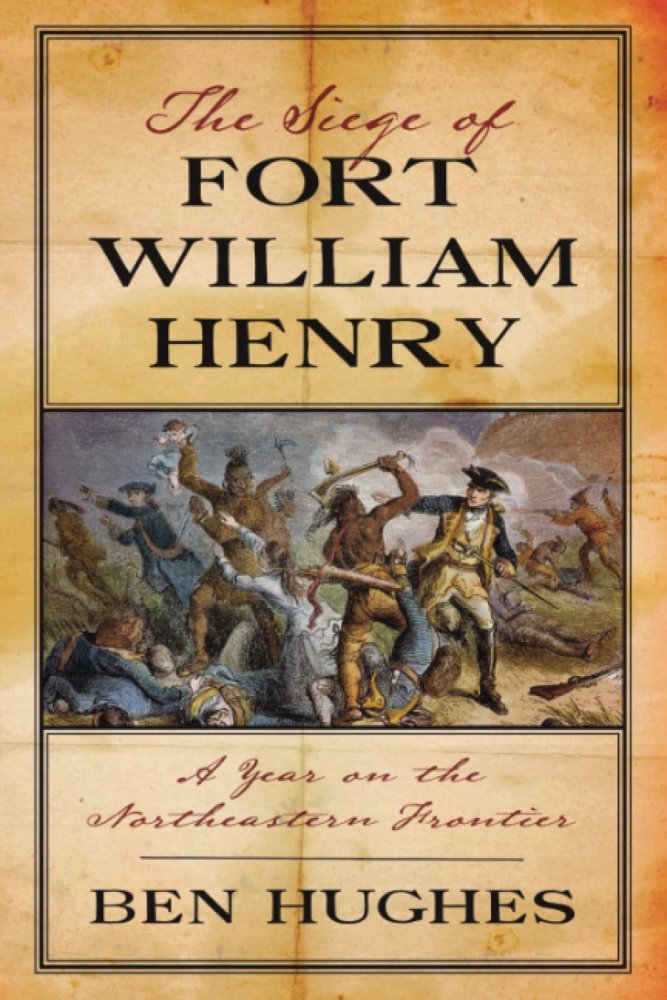
Hardcover. Yardley PA, Westholme Publishing, BC Ed., 2011, Book: Very Good, Dust Jacket: Very Good, Hardcover in a bright dust jacket, 337 pages. The opening years of the French and Indian War were disastrous for the British. In 1755 General Braddock's troops were routed at the Battle of Monongahela and by the middle of 1756 Fort Oswego on Lake Ontario had fallen. Hindered by quarrelsome provincial councils, incompetent generals, and the redcoats' inability to adapt to wilderness warfare, Britain was losing the war. In 1757 the 35th Regiment of Foot stepped into the breach. A poorly trained assortment of conscripts, old soldiers, and convicted criminals led by Lieutenant Colonel George Monro, the regiment was destined to take center stage in the most controversial event of the war. Fort William Henry on the southern shore of New York's Lake George was a key fortification supporting British interests along the frontier with French America. Clean copy.
Softcover. Madras, Government Press, 1st, 1931, Book: Very Good, Dust Jacket: None, Softcover, Heavy gray paper wraps, 158 pages. 12 plates of b/w photographs. A complete survey of the origin and development of the Brahmanas as well as an authoritative exposition of their liturgical codes and an accurate account of their cultural life. This work also deals with Vaishnavism of south India. Azhvars, Acharyas, Ramanuja, Visistadvaita philosophy, cardinal principles of Sri Vaishnavism. Some interesting illustrations enhance the beauty of this volume. Light wear to wrappers, clean copy.
Hardcover. Berkeley, University of California Press, 1st, 1992, Book: Very Good, Dust Jacket: Very Good, Hardcover in a bright dust jacket. 305 pages. The Wrestler's Body tells the story of a way of life organized in terms of physical self-development. While Indian wrestlers are competitive athletes, they are also moral reformers whose conception of self and society is fundamentally somatic. Using the insights of anthropology, Joseph Alter writes an ethnography of the wrestler's physique that elucidates the somatic structure of the wrestler's identity and ideology. Young men in North India may choose to join an akhara, or gymnasium, where they subject themselves to a complex program of physical and moral fitness. Alter's first-hand description of each detail of the wrestler's regimen offers a unique perspective on South Asian culture and society. Wrestlers feel that moral reform of Indian national character is essential and advocate their way of life as an ideology of national health. Everyone is called on to become a wrestler and build collective strength through self-discipline. Clean copy.
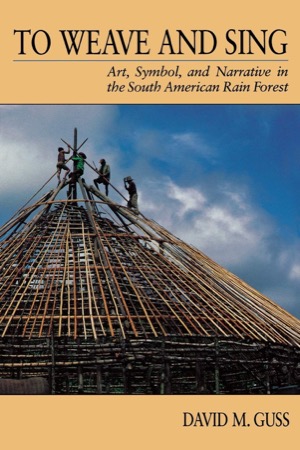
Softcover. Berkeley CA, University of California Press, 1st pbk., 1990, Book: Very Good, Dust Jacket: None, Softcover, 273 pages, b&w illustrations. The first in-depth analysis of the rich spiritual and artistic traditions of the Carib-speaking Yekuana Indians of Venezuela, who live in the dense rain forest of the upper Orinoco. Within their homeland of Ihuruna, the Yekuana have succeeded in maintaining the integrity and unity of their culture, resisting the devastating effects of acculturation that have befallen so many neighboring groups. Yet their success must be attributed to more than natural barriers of rapids and waterfalls, to more than lack of "contact" with our "modern" world. The ethnographic history recounted here includes not only the Spanish discovery of the Yekuana but detailed indigenous accounts of the entire history of Yekuana contact with Western culture, revealing an adaptive technique of mythopoesis by which the symbols of a new and hostile European ideology have been consistently defused through their incorporation into traditional indigenous structures. Clean copy.
Softcover. UK, Cambridge University Press, reprint, 2005, Book: Very Good, Dust Jacket: None, Softcover, 299 pages, b&w illustrations. Brooke Larson's interpretive analysis of the history of Andean peasants reveals the challenges of nation making in the republics of Colombia, Ecuador, Peru, and Bolivia during the volatile nineteenth century. Nowhere in Latin America were postcolonial transitions more turbulent than in the Andes, where communal indigenous roots grew deep and where the "Indian problem" seemed so discouraging to liberalizing states. The analysis raises broader issues about the interplay of liberalism, racism, and ethnicity in the formation of exclusionary "republics without citizens" over the nineteenth century.
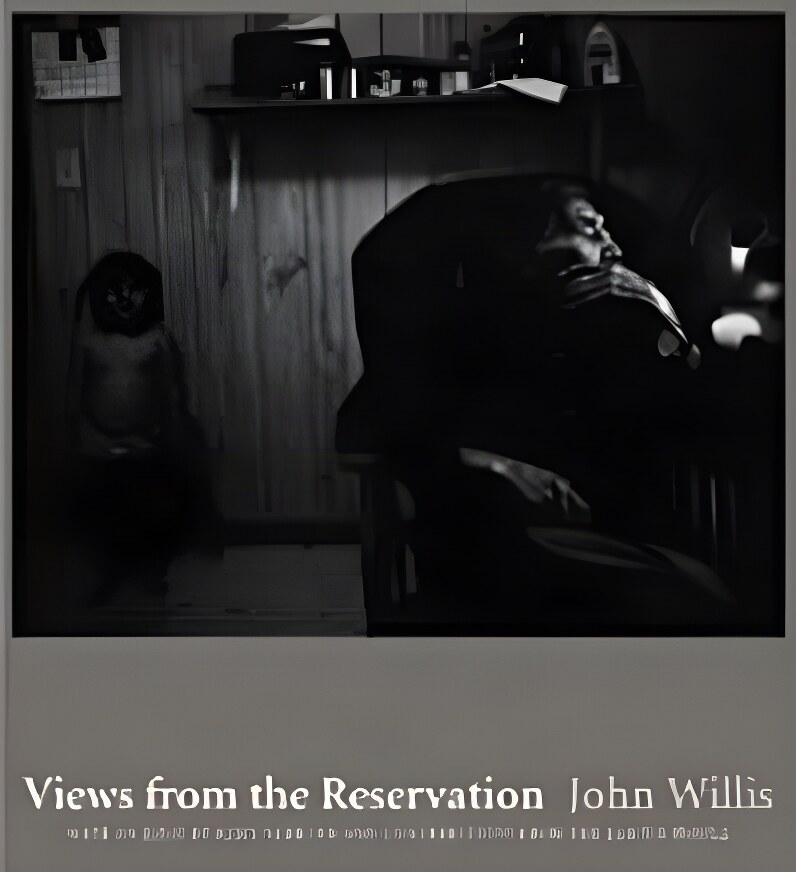
Hardcover. Center for American Places, 1st, 2010, Book: Very Good, Dust Jacket: Very Good, Hardcover, 184 pages. Professor and photographer John Willis is well aware of the exploitation that sometimes occurs when photographers enter impoverished communities for a project. So, in 1992, when he first traveled to the Pine Ridge Indian Reservation in the southwest corner of South Dakota, he assured the elders of the Oglala Lakota Sioux that he would not be exhibiting any of the images he took while there. Over time, however, Willis earned the respect and trust of the community, and the elders--hoping that the photographs might bring aid to their community--urged him to show his work. The product of several visits to the Pine Ridge Indian Reservation, Views from the Reservation is meant to open our eyes, minds, and hearts to the life, culture, and conditions of the Oglala Lakota people.
Hardcover. Newtown CT, The Taunton Press, 1st, 2006, Book: Very Good, Dust Jacket: Very Good, Hardcover in a bright dust jacket, 266 pages. The past has left behind only scattered clues that, on their own, provide little insight into how the people of early America lived and the details of their daily lives. The photographs in this book, the deeply informed narrative that accompanies them, and the eyewitness accounts of daily life that the author weaves throughout, provide a fresh perspective on our early American ancestors and the places they called home. This book is about how their houses and their life in them, from the wealthy to the impoverished, from New York City to the small farms and plantations of the South, from coastal fishing towns to the Western frontier of Indiana and Kentucky. The stories focus on the remarkably vivid differences from one part of the country to the next, class and culture, and the realities of everyday life for American families. These stories twine around a wide selection of HABS photographs of early houses, covering the variety and evolutions of house styles -- not by labeling the style but by explaining the style in the context of everyday life. Richly illustrated with handsome black-and-white photography of old houses from the Library of Congress Historic American Building Survey (HABS) collection and supplemented with period woodcuts, engravings, drawings, paintings, artifacts, and maps, the book is printed on a 4-color press for a depth of tone. Sidebar excerpts from diaries, journals, and letters inject graphic eyewitness descriptions, adding an additional layer of insight. The book also includes sidebars called Still Standing that traces the history of specific houses, from their origins to the present and includes information on the original family, how the house has evolved over the centuries, and how it's used today.

 "The Founding of New Acadia: The Beginnings of Acadian Life in Louisiana, 1765 - 1803 by: Brasseaux, Carl A")

 "The manners, customs, and antiquities of the Indians of North and South America (Parley's Cabinet Library)by: Goodrich, Samuel G.")

 "The Photographs of Margaret Bourke-Whiteby: Sean Callahan, Margaret Bourke-White , et al.")


 "The Wrestler's Body:Identity and Ideology in North India by: Alter, Joseph S.")