NY, Delacorte, 1st US, 1986, Book: Very Good, Dust Jacket: Very Good, Hardcover in a bright, unclipped dust jacket. 166 pages.An Indian girl and a blacksmith's son are separated from their Northwoods Colonial community in the early spring, and they struggle in the wilderness to survive and return. The story is symbolized by the boy's beautiful knife; the girl is scornful of its dullness, but when she uses it to save their lives, returning it razor-sharp but bloody and chipped, he is equally disgusted. Clean copy.
Softcover. NY, Columbia University Press, 1st, 1990, Book: Very Good, Dust Jacket: None, Softcover, 395 pages. The essays gathered here, in addition to those by editors Wm. Theodore de Bary and Irene Bloob, are written by leading scholars of Asian cultures--among them Donald Keene, Peter Awn, Barbara Stoler Miller, Ainslie Embree, Burton Watson, C.T. Hsia, Paul Anderer, and others. They introduce classics from the Islamic, Indian, Chinese, and Japanese traditions, providing entree to texts which have emerged as monuments of Asian thought and literature. Among the works discussed are the Qu'ran, the philosophy of history of Ibn Khaldun, the Upanishads, the epic Mahabarata, the philosopher Mencius, the Lotus Sutra, T'and Poetry, the Tale of Genji, and the poet Basho.
Hardcover. Salem MA, Cushing and Carlton, 1st US, 1795, Book: Very Good, Dust Jacket: None, 144 pages, 2 parts bound in one volume, bound in leather. Front cover hinge partially cracked, loose. Light pencil writing on last blank page, otherwise clean, tight copy.
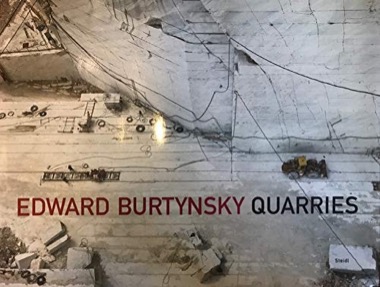
Hardcover. Gottingen GR, Steidl Publishers, 1st, 2009, Book: Very Good, Dust Jacket: Very Good, Hardcover in a bright dust jacket with light edgewear. Large format, 191 pages. Essay by Michael Mitchell. A striking collection of 80 color photographs taken by Burtynsky over the course of seventeen years at various quarry sites around the world. Including Canada, Italy, China, Spain, Portugal, India and America these thought provoking studies of sites that are created as we dig into the earth for material in order to build our cities, urge us to consider how we as viewers are simultaneously attracted yet repulsed by these landscapes somewhere a building is created while a landscape is destroyed. DOMESTIC SHIPPING ONLY.
Hardcover. Berkeley, University of California Press, 1st, 1990, Book: Very Good, Dust Jacket: Very Good, Hardcover in a bright dust jacket, 480 pages. Although he is referred to as a "genius" more often than any other scholar of his period, Edward Sapir has received no full-scale biography since his death in 1939. At long last, Regna Darnell provides a comprehensive assessment of the life, ideas, and wide-ranging interests of this remarkable man. Sapir, the foremost linguist and anthropologist of his generation, contributed substantially to the professionalization of linguistics as an independent discipline. He was the first to apply comparative Indo-European methods to the study of American Indian languages, on which he conducted extensive fieldwork. His theoretical work on the relationship of the individual personality to culture remains fundamental to culture theory in anthropology, as does his insistence on the symbolic nature of culture and the importance of culture as understood by its members, in their own words.Sapir became the first professional anthropologist in Canada and teacher of a whole generation of linguists and anthropologists at Chicago and Yale. Holding to a humanistic view of anthropology (his own work included poetry and literary criticism), he was the most articulate spokesman for the interdisciplinary social science of the late 1920s and 1930s. In both linguistics and anthropology Sapir is a revered master whose ideas continue to inspire discussion and research. A sixteen-volume Collected Works is now in progress. Clean copy.
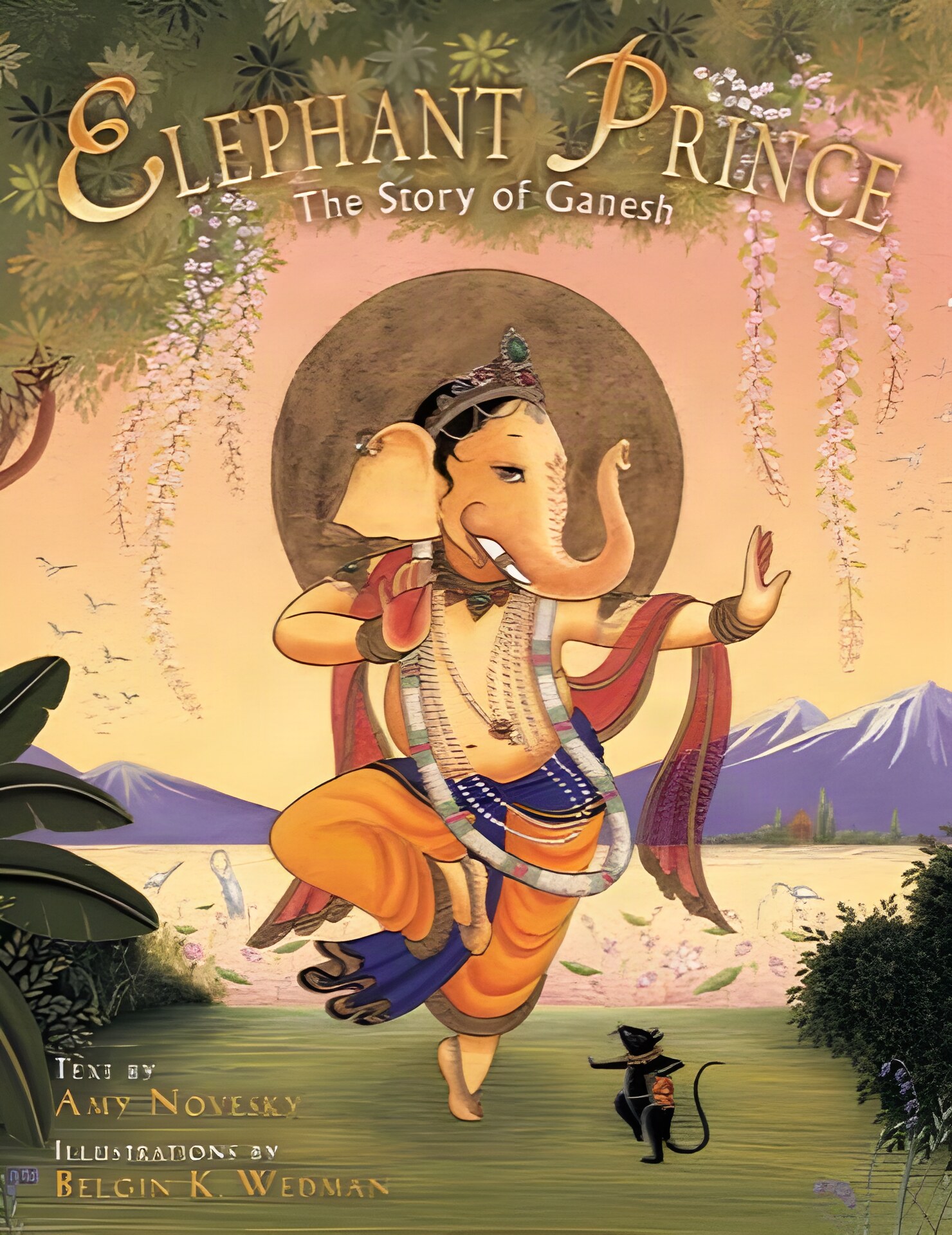
Hardcover. San Rafael CA, Insight Kids, 5th pr., Book: Very Good, Dust Jacket: Very Good, Hardcover in a bright dust jacket. Elephant-headed and big-bellied, mischievous and sweet, the god Ganesh is one of the most familiar faces in the world. But why does he have the head of an elephant? Set in the Himalayas in a time of gods and goddesses, Elephant Prince tells the story of a remarkable bond between a mother and her son, a remorseful god, a generous elephant and the boy who became Ganesh. Belgin K. Wedman's jewel-toned illustrations, reminiscent of classical Indian miniatures, complement this poetic story of one of the most beloved gods of all.
Hardcover. US, Glitterati, 1st, 2015, Book: Very Good, Dust Jacket: Very Good, Like new in publisher's shrink-wrap. Hardcover, 272 pages. In his debut book of photography, with a foreword by one of the luminaries of NYC culture and entertainment, Adrian Buckmaster's monograph presents a staggeringly beautiful collection of portraits - a cross-section of humanity in all of its glorious diversity, from the ordinary to the extraordinary and everything in-between. Having spent his early years shooting commercial beauty and fashion, Buckmaster soon shifted focus to more personal projects, challenging conventional notions of beauty and celebrating the eccentricities of those whom society might classify as "misfits." Echoes of Buckmaster's early career remain, in the form of exquisite costuming, make-up, and scenic design. Despite an element of performance, there is an undeniable rawness to these portraits, in which subjects are both aware of the camera's gaze and sympathetically self-conscious, robing and disrobing, revealing and concealing. Buckmaster's photographic genius is encapsulated in his uncanny ability to fastidiously art direct while simultaneously stripping away layers of formality and convention. Arranged in three movements: Imposing, Revealing, and Inventing, this collection progresses from traditional portraiture to increasingly intimate portrayals, as subjects expose, create, and invent themselves. Included in this endlessly varied spectrum of characters are Burlesque performers, families, brides, lovers, and all manner of tattoos and body piercings. There are classical reclining nudes, reminiscent of Edouard Manet's Olympia or Titian's Sleeping Venus, dancers with incredible physical strength and dexterity, women costumed as peacocks and geishas, a contortionist inside a trunk, even a green-skinned man, bejewelled like an Indian deity.
Hardcover. Boston, Houghton Mifflin, 2nd pr., 1959, Book: Very Good, Dust Jacket: Very Good, hardcover in a bright, price-clipped dust jacket. 217 pages, b&w illustrations by Frank Nicholas. Clean, tight copy. Emmy Lane, a child of itinerant workers, decides to go on a Friends Service Project to a very poor Indian village in Mexico. Although she herself has come from a hard life, she is unprepared for what she finds.
Hardcover. New York, Bulfinch, 1st, 2003, Book: Very Good, Dust Jacket: Very Good, 160 pages. Hardcover with dust jacket. Very clean, unmarked copy still in publishers shrik-wrap. An inspirational account of the global initiative to eliminate the scourge of polio offers one hundred stunning duotone photographs that capture the campaign in five polio endemic nations--Democratic Republic of Congo, India, Pakistan, Somalia, and Sudan.
Softcover. Cloud Books, 1st, 2011, Book: Very Good, Dust Jacket: None, Softcover, 526 pages. Based on nearly 40 hours of interviews, Escaping from Reality Without Really Trying is the memoir of a 61-year-old, life-long merchant seaman re-counting his fantastic, hilarious, and politically incorrect exploits. He's a sailor-scholar and an individualist anarchist; he's read Voltaire and The Egyptian Book of the Dead. He admits to working at his hobby, sailing, to keep up his real occupation, drinking.He's lived 40 years of adventures around the world, including an incursion into Cambodia during the Vietnam War; a prison break from a Ceylon jail; a dockside fistfight in the Philippines in 1977; a 2-week stowaway run on a British merchant ship sailing around South Africa; meeting Omar Sharif in Aqaba, Jordan; an around-the-world trip (with Greg Cousins, the third mate on the Exxon Valdez, and we learn what really happened!) that ends in Alang, India and the beaching of the ship to be cut up for scrap metal; seeing the rise and fall of communism and capitalism in Africa and the newly independent states after the Soviet Union's collapse and division; and an ammunition delivery to Kuwait on the eve of the 2003 American-led invasion of Iraq.
Hardcover. Indianapolis, Indiana, Indianapolis Museum of Art, 1st, 2013, Book: Very Good, Dust Jacket: None, 160 pages. Hardcover no dust jacket. Color pictures throughout. Clean, unmarked copy with only minor wear to boards. Decoding Robert Indiana's work for a new generation, this revelatory book explores previously unknown autobiographical elements in the work of the Pop artist and printmaker. Famously proclaiming himself to be "an American painter of signs," Robert Indiana has created an enormous body of work, much of it boldly colored abstractions. In this incisive new examination of the artist, based on ongoing conversations with Indiana, art historian Martin Krause sifts through autobiographical clues within the artist's work and finds a wealth of affecting and affectionate references to Indiana's childhood, literary heroes, and the cultural icons of his generation. In addition, a penetrating essay by Pop art scholar John Wilmerding deconstructs Indiana's use of geometric shapes, making unexpected connections that enhance Krause's thesis. Accompanied by reproductions of more than 50 prints from the period 1960-2010--and focusing specifically on series such as Decade: Autoportraits, Vinalhaven Suite, and The Hartley Elegies as well as the "Love" and "Hope" images and studies of Marilyn Monroe, Picasso, and the Brooklyn Bridge--Krause's decryption of Indiana's visual language provides telling insight into the work of this quintessentially American artist.
Hardcover. NY, W. W. Norton & Company, 1st, 2016, Book: Very Good, Dust Jacket: Very Good, Hardcover in a bright, unclipped dust jacket, 580 pages, b&w illustrations. Los Angeles is a city founded on blood. Once a small Mexican pueblo teeming with Californios, Indians, and Americans, all armed with Bowie knives and Colt revolvers, it was among the most murderous locales in the Californian frontier. In Eternity Street: Violence and Justice in Frontier Los Angeles, "a vivid, disturbing portrait of early Los Angeles" (Publishers Weekly), John Mack Faragher weaves a riveting narrative of murder and mayhem, featuring a cast of colorful characters vying for their piece of the city. These include a newspaper editor advocating for lynch laws to enact a crude manner of racial justice and a mob of Latinos preparing to ransack a county jail and murder a Texan outlaw. In this "groundbreaking" (True West) look at American history, Faragher shows us how the City of Angels went from a lawless outpost to the sprawling metropolis it is today. A riveting popular history of Los Angeles's bloody beginnings. Clean copy.
Hardcover. NY, WW Norton & Co, 1st, 2016, Book: Very Good, Dust Jacket: Very Good, Hardcover in a bright, unclipped dust jacket. 580 pages, 16 pages of illustrations. Eternity Street tells the story of a violent place in a violent time: the rise of Los Angeles from its origins as a small Mexican pueblo. In a masterful narrative, John Mack Faragher relates a dramatic history of conquest and ethnic suppression, of collective disorder and interpersonal conflict. Eternity Street recounts the struggle to achieve justice amid the turmoil of a loosely governed frontier, and it delivers a piercing look at the birth of this quintessentially American city. In the 1850s, the City of Angels was infamous as one of the most murderous societies in America. Saloons teemed with rowdy crowds of Indians and Californios, Mexicans and Americans. Men ambled down dusty streets, armed with Colt revolvers and Bowie knives. A closer look reveals characters acting in unexpected ways: a newspaper editor advocating lynch law in the name of racial justice; hundreds of Latinos massing to attack the county jail, determined to lynch a hooligan from Texas. Murder and mayhem in Edenic southern California. "There is no brighter sun...no country where nature is more lavish of her exuberant fullness," an Angeleno wrote in 1853. "And yet, with all our natural beauties and advantages, there is no country where human life is of so little account. Men hack one another to pieces with pistols and other cutlery as if God's image were of no more worth than the life of one of the two or three thousand ownerless dogs that prowl about our streets and make night hideous." Like-new.
Hardcover. Indianapolis, Bobbs-Merrill Company, 1st illust. thus, 1905, Book: Very Good, Dust Jacket: None, Hardcover, light blue cloth with gilt lettering, color plate paste-down on front cover. Illustrated with a frontispiece, a decorative title page, a few color plates, and several in-text and full-page illustrations by Howard Chandler Christy. Some darkening to spine and cover edges, otherwise a sharp, bright copy.
Hardcover. London, John Murray, 1st, 1997, Book: Very Good, Dust Jacket: Very Good, Hardcover, 128 pages. This is a magnificent portrait of post-Raj India before the modern world swept across the subcontinent. Featuring 100 superbly reproduced, full-page photographs, this is Derry Moore's splendid photographic evocation of an independent India that had all but vanished by the late 1970s--above all, an India still untouched by mass tourism. Initially, Moore set out to photograph the princely palaces, but he became increasingly intrigued by the lesser-known buildings, and those that inhabited them. In them, he found eccentricity, originality, and an extraordinary hybrid of Indian and British taste.
Softcover. Berkeley CA, University of California Press, reprint, Book: Very Good, Dust Jacket: None, Softcover, 210 pages. Taking Gandhi's statements about civil disobedience to heart, in February 1922 residents from the villages around the north Indian market town of Chauri Chaura attacked the local police station, burned it to the ground and murdered twenty-three constables. Appalled that his teachings were turned to violent ends, Gandhi called off his Noncooperation Movement and fasted to bring the people back to nonviolence. In the meantime, the British government denied that the riot reflected Indian resistance to its rule and tried the rioters as common criminals. These events have taken on great symbolic importance among Indians, both in the immediate region and nationally. Amin examines the event itself, but also, more significantly, he explores the ways it has been remembered, interpreted, and used as a metaphor for the Indian struggle for independence. The author, who was born fifteen miles from Chauri Chaura, brings to his study an empathetic knowledge of the region and a keen ear for the nuances of the culture and language of its people. In an ingenious negotiation between written and oral evidence, he combines brilliant archival work in the judicial records of the period with field interviews with local informants. Clean copy.
Hardcover. Bloomington IN, Indiana University Press, 1st, 1977, Book: Very Good, Dust Jacket: Good, Hardcover in a lightly worn dust jacket, 335 pages. Five Faces of Modernity is a series of semantic and cultural biographies of words that have taken on special significance in the last century and a half or so: modernity, avant-garde, decadence, kitsch, and postmodernism. The concept of modernity-the notion that we, the living, are different and somehow superior to our predecessors and that our civilization is likely to be succeeded by one even superior to ours-is a relatively recent Western invention and one whose time may already have passed, Name on front fly leaf, several pages with light ink markings.
Hardcover. New York, Simon & Schuster Books, 1st, 1995, Book: Very Good, Dust Jacket: Very Good, 128 pages. Hardcover with dust jacket. Light abrasions on bottom corners. Light edgewaer to dust jacket. Clean, tight copy. Caldecott Honor Book with sticker on front. Handsomely illustrated with Brian Pinkney's color scratchboard drawings. Based on a West Indian folk-tale drawing on African, European and South American traditions.
Hardcover. Gottingen, Steidl, reprint, 2008, Book: Near Fine, Dust Jacket: Near Fine, Hardcover, 123 pages, 65 color plates. Like new in publishers shrink-wrap. Documentary project on the prostitutes of Falkland Road, Bombay. Originally shot as a photo-essay for Geo magazine, which deemed it too raw for American audiences, it was picked up by Stern and run in September 1981. The first book-form edition was released the same year by Knopf. This second edition is 2.5 inches wider, allowing the photos to run uncropped and has additional images.
Hardcover. NY, Carroll & Graf, 1st, 1995, Book: Very Good, Dust Jacket: Very Good, Hardcover, 556 pages, b&w illustrations. In a bright, unclipped dust jacket. Robert Louis Stevenson's biographers are sharply divided over his American wife Frances (Fanny) Van de Grift (1840-1914), depicting her either as a muse, a saintly martyr or a dominating shrew. In this spellbinding biography, which is written like a romance novel, French novelist Lapierre portrays the Indiana-born farmer's daughter as an intrepid woman of rash energy, courage, violent emotion and charisma who sublimated her career as a painter in her possessive love for the tubercular Scottish novelist, children's writer and poet.
Hardcover. New York, Doubleday Doran, 1st, 1934, Book: Very Good, Dust Jacket: None, 80 pages, illustrated in color and b&w by Kurt Wiese. Illustrated cardboard covers with black cloth spine. Light wear to corners otherwise a clean, tight copy.
Hardcover. New York, Macmillan and Co., reprint, 1897, Book: Very Good, Dust Jacket: None, Two volume set. 12 mo. 351 + 471 pages. Original heavy navy with gilt lettering, and gilt embossed design on front over. "This Edition is intended for circulation only in India and British Colonies." This is a smaller edition than the original, and contains no photos but there is a folding map in Vol. 2. Light wrinkle to cloth spine of Vol. 1, endpapers in both books have foxing but doesn't affect internal pages. A clean, very good set. NOTE: DUE TO WEIGHT, DOMESTIC SHIPPING ONLY.

 "Driftby: Mayne, William")
 "Dust in the Balance -British Women in India 1905 - 1945by: Barr, Pat")
 "Eastern Canonsby: Wm. Theodore De Bary, Irene Bloom (Editors)")
 "Economy of Human Life, The: Translated from An Indian Manuscript written by A Braminby: N/A")


 "Edward Sapir. Linguist Anthropologist Humanistby: Darnell, Regna")
 "Embarrassment of Riches, An: Photographsby: Buckmaster, Adrian/Susanne Bartsch")
 "Emmy and the Blue Doorby: Means, Florence Crannell")
 "End of Polio, The: A Global Effort To End A Diseaseby: Salgado, Sebastiao")

 "Essential Robert Indiana, Theby: Krause, Martin")



 "Evening Ragas: A Photographer in Indiaby: Moore, Derry")
 "Event, Metaphor, Memory: Chauri Chaura, 1922-1992by: Shahid Amin")

 "Facing West: The Metaphysics of Indian-Hating and Empire-Building: A Major Investigation of the Historical Link Between American Racism and Expansionism (INSCRIBED BY AUTHOR)by:")


 "Faithful Friend, Theby: San Souci, Robert D. and Brian Pinkney")
 "Falkland Road: Prostitutes of Bombayby: Mark, Mary Ellen")
 "Fanny Stevenson: A Romance of Destiny by: Alexandra Lapierre; Translator Carol Cosman")
 "Farm Boy: A Hunt for Indian Treasureby: Stong, Phil and Kurt Wiese")
 "Farthest North: Being the record of a voyage of exploration of the ship `Fram', 1893-1896, and of a fifteen months' sleigh journey by Dr. Nansen and Lieut. Johansen. With an appendix by Otto Svedrup Captain of the `Fram'. In Two Volu")