Softcover. UK, Cambridge University Press, reprint, 2005, Book: Very Good, Dust Jacket: None, Softcover, 299 pages, b&w illustrations. Brooke Larson's interpretive analysis of the history of Andean peasants reveals the challenges of nation making in the republics of Colombia, Ecuador, Peru, and Bolivia during the volatile nineteenth century. Nowhere in Latin America were postcolonial transitions more turbulent than in the Andes, where communal indigenous roots grew deep and where the "Indian problem" seemed so discouraging to liberalizing states. The analysis raises broader issues about the interplay of liberalism, racism, and ethnicity in the formation of exclusionary "republics without citizens" over the nineteenth century.
Hardcover. Indianapolis, State of Indiana, 1st, 1870, Book: Good, Dust Jacket: None, Hardcover, green cloth covers with blind-stamp design, gilt title on spine. 432 pages interspersed with dozens of b&w detailed engravings of farm machinery from the period. Light foxing throughout.
Softcover. Lincoln NE, Bison Books, reprint, 2004, Book: Very Good, Dust Jacket: None, Softcover, 368 pages. Documents the generations of Native peoples who for twelve millennia have moved through and eventually settled along the rocky coast, rivers, lakes, valleys, and mountains of a region now known as Maine. Arriving first to this area were Paleo-Indian peoples, followed by maritime hunters, more immigrants, then a revival of maritime cultures. Beginning in the sixteenth century, Native peoples in northern New England became tangled in the far-reaching affairs of European explorers and colonists. Twelve Thousand Years reveals how Penobscots, Abenakis, Passamaquoddies, Maliseets, Micmacs, and other Native communities both strategically accommodated and overtly resisted European and American encroachments. Clean copy.
Hardcover. NY, Forest & Stream Publishing, 5th Ed., 1891, Book: Very Good, Dust Jacket: None, Hardcover, pictorial gray cloth stamped in black and gold. 187 pages, floral decorative endpapers. Tales of Vermont life back in the day. Chapter headings include: The School Meeting in District 13; Uncle Lisha's Spring Gun; Concerning Owls, Uncle Lisha's Courting; A Rainy Day in the Shop; The Turkey Shoot at Hamner's; Sam Lovel's Bee-Hunting; In the Shop Again; The Fox Hunt; The Coon Hunt; In the Sugar Camp; Indians in Danvis; The Boy out West; Breaking Up; The Departure; The Wild Bees' Swarm, etc. Robinson (1833-1900) was a noted Quaker author from a well-respected and artistic Vermont family whose writings and art captured the dialect, culture and time of pre-Civil War Vermont, set in the imaginary town of Danvis, largely drawing from his the inhabitants and experiences of Ferrisburgh, VT. Name and date on a blank prelim page. Otherwise clean, tight copy.
Hardcover. Bloomington, Indiana University Press, 1st, 1978, Book: Very Good, Dust Jacket: Good, Hardcover, 237 pages, b&w illustrations. Small tears to the edges of several pages. Dust jacket w/rubbing, light edgewear. Else clean and tight.
Hardcover. New Delhi, India, Lustre Press, Roli Books, 1st, 2008, Book: Very Good, Dust Jacket: Very Good, 160 pages. Hardcover with dust jacket. Very clean, unmarked copy still in publishers shrink-wrap. Stunningly photographed, this album offers a rarely seen view of the snow-clad peaks, mysterious lakes, massive glaciers, and fascinating people of the Himalayas.
Softcover. Los Angeles, The Augustan Reprint Society, reprint, 1981, Book: Very Good, Dust Jacket: None, Softcover. Facsimile reprinting of various 17th and 18th century editions, 70 total pages. Pamphlets that extolled the virtues of the Indian people as opposed to the English stereotyping of a heathen race. Clean copy.
Hardcover. Madras, The Adyar Library, Reprint, 1953, Book: Good, Dust Jacket: None, Non-paginated. Hardcover. Text in Sanskrit and English. Previous owners name on front endpaper with brief note opposite. Light, neat notes in pen and pencil on some pages in first section of text. Overall, very good.
Hardcover. Columbia OH, Ohio State University Press, 1st, 2008, Book: Very Good, Dust Jacket: None, 368 pages. Hardcover with no dust jacket. Clean, unmarked copy with only minor wear to corners. While "freaks" have captivated our imagination since well before the nineteenth century, the Victorians flocked to shows featuring dancing dwarves, bearded ladies, "missing links," and six-legged sheep. Indeed, this period has been described by Rosemarie Garland-Thomson as the epoch of "consolidation" for freakery: an era of social change, enormously popular freak shows, and taxonomic frenzy. Victorian Freaks: The Social Context of Freakery in Britain, edited by Marlene Tromp, turns to that rich nexus, examining the struggle over definitions of "freakery" and the unstable and sometimes conflicting ways in which freakery was understood and deployed. As the first study centralizing British culture, this collection discusses figures as varied as Joseph Merrick, "The Elephant Man"; Daniel Lambert, "King of the Fat Men"; Julia Pastrana, "The Bear Woman"; and Laloo "The Marvellous Indian Boy" and his embedded, parasitic twin. The Victorian Freaks contributors examine Victorian culture through the lens of freakery, reading the production of the freak against the landscape of capitalist consumption, the medical community, and the politics of empire, sexuality, and art. Collectively, these essays ask how freakery engaged with notions of normalcy and with its Victorian cultural context.
Hardcover. Center for American Places, 1st, 2010, Book: Very Good, Dust Jacket: Very Good, Hardcover, 184 pages. Professor and photographer John Willis is well aware of the exploitation that sometimes occurs when photographers enter impoverished communities for a project. So, in 1992, when he first traveled to the Pine Ridge Indian Reservation in the southwest corner of South Dakota, he assured the elders of the Oglala Lakota Sioux that he would not be exhibiting any of the images he took while there. Over time, however, Willis earned the respect and trust of the community, and the elders--hoping that the photographs might bring aid to their community--urged him to show his work. The product of several visits to the Pine Ridge Indian Reservation, Views from the Reservation is meant to open our eyes, minds, and hearts to the life, culture, and conditions of the Oglala Lakota people.
Hardcover. Chicago, IL, Center for American Places, 1st, 2010, Book: Very Good, Dust Jacket: Very Good, 184 pages. Hardcover with dust jacket. A very clean, unmarked copy with only minor wear to dust jacket edges. Includes CD. The product of several visits to the Pine Ridge Indian Reservation, Views from the Reservation is meant to open our eyes, minds, and hearts to the life, culture, and conditions of the Oglala Lakota people. With his insightful and complex images Willis enlists several other voices to offer a more complete story: writer Kent Nerburn, who contributes an original essay; Lakota elders and Pine Ridge High School students, who offer poems; Emil Her Many Horses, the associate curator of the National Museum of the American Indian, Kevin Gover, the Assistant Secretary of the Interior for Indian Affairs, and Oglala Lakota artist Dwayne Wilcox. Accompanying the book is Heartbeat of the Rez, a compact disc collecting traditional songs compiled by the author, the elders, and KILI, the radio station of the reservation.
Softcover. Omaha, Nebraska, Center for Western Studies, Joslyn Art Museum, 1st, 1984, Book: Very Good, Dust Jacket: None, Softcover exhibition catalogue featuring art by Karl Bodmer dedicated to the American Western frontier and its exploration by the German Prince Maximilian of Wied. 103 pages with 69 illustrations, 34 of which are color plates. Very good condition, light rubbing on the covers, otherwise a very bright, clean copy.
Hardcover. India, Mapin Publishing Gp Pty Ltd, 1st, 2008, Book: Very Good, Dust Jacket: Very Good, Hardcover. Like new in publishers shrink-wrap. Indian Heritage in the Photographs of Jean Philippe Vogel, 1901-1913. 191 pages, b&w photographs. Frontis, 1 color map, profuse b/w photos. The early twentieth century proved to be a highly innovate period for Indian historical archaeology and heritage care. This highlights Vogel's contribution to early twentieth-century archaeology, documenting his explorations and excavations.
Hardcover. NY, Farrar Straus & Giroux, 1st, 1996, Book: Very Good, Dust Jacket: Very Good, Hardcover in a bright, unclipped dust jacket. Color illustrations by Gerrard. In this rowdy adventure, the narrator and her parents and neighbors embark on a wild journey on the Oregon Trail, hoping to find rich green land out West. These hardy pioneers and their trusty leader, Buckskin Dan, fight off outlaws near Fort Laramie, rescue a lost Indian boy, and raft down the rocky Columbia River, eventually starting new lives in the fertile Willamette Valley. Readers young and old will relish Roy Gerrard's rollicking verse and distinctive illustrative style.
Hardcover. NY, Alfred A. Knopf, 1st, 1952, Book: Good, Dust Jacket: None, Hardcover, yellow cloth stamped with blue design and lettering. A boy's discovery of an Indian arrowhead leads to adventure. B&w illustrations by John Barron. Light soil to covers, DJ flap tipped on inside front cover. No dust jacket.
Hardcover. Seattle, Fantagraphics Books, 1st, 2023, Book: Very Good, Dust Jacket: None, Hardcover, pictorial boards. Through a series of trade-ups, the nephews turn Donald's old pencil stub into -- a steamship ticket to India! Off they go, and Donald is soon declared to be "Maharajah Donald" -- but there's a catch! Then, Donald accidentally buys a houseboat at an auction that leads to an encounter with a giant sea serpent! Next, "Santa's Stormy Visit," a Christmas story with none of the trimmings -- no man in a red suit, no snow (but a tropical hurricane!), no presents under the tree (no tree!) But still a charming holiday tale. And don't miss "Donald Duck's Atom Bomb!" As we circle back to Carl Barks's earlier stories, the Good Duck Artist delivers another superb collection of surprise, delight, comedy, adventure, and all-around cartooning brilliance. 193 pages of story and art, each meticulously restored and newly colored. Insightful story notes by an international panel of Barks experts. Clean copy.
Hardcover. NY, Knopf, 1st, 2024, Book: Very Good, Dust Jacket: Very Good, Hardcover in a bright, unclipped dust jacket. Tommy Orange traces the legacies of the Sand Creek Massacre of 1864 and the Carlisle Indian Industrial School through three generations of a family in a story that is by turns shattering and wondrous. Star, a young survivor of the Sand Creek Massacre, is brought to the Fort Marion prison castle, where he is forced to learn English and practice Christianity by Richard Henry Pratt, an evangelical prison guard who will go on to found the Carlisle Indian Industrial School, an institution dedicated to the eradication of Native history, culture, and identity. A generation later, Stars son, Charles, is sent to the school, where he is brutalized by the man who was once his fathers jailer. Clean copy.
Hardcover. NY, Henry Z. Walck, 1st, 1961, Book: Very Good, Dust Jacket: None, Hardcover, orange cloth with black lettering, 125 pages, b&w illustrations by Harper Johnson. Children's story of a boy and his horse, living on a New Mexico ranch. When the Spanish cavalry needs horses for fighting the Indians, the horse is comandeered, and later captured by a Comanche warrior. Covers with light soil, clean internally, no markings.
Hardcover. New York , Clarion Books, 1st, 1994, Book: Very Good, Dust Jacket: Very Good, 32 pages. Hardcover with dust jacket. Illustrated in color by the author. Bright, clean copy.
Hardcover. New York , Thames & Hudson, 1st, 1990, Book: Very Good, Dust Jacket: Very Good, 255 pages, clean hardcover in a bright, unclipped dust jacket. B&w photographs throughout by Bischof. His images were influenced by the major photo-movements of his time: the formal concepts of Das Neues Sehen (New Vision), the surrealism of Man Ray, and the documentary tradition of photojournalism. From the 1940s through the early 1950s, he covered World War II, the bombing of Hiroshima, and the Korean War for Life , Paris-Match , and other publications; his most famous series, "Famine in India," appeared in Life in 1951. This first major compilation of Bischof's work is nicely complemented by the text, a joint effort by son Marco and Swiss art historian Magnaguagno that vividly integrates biography and history. Dust jacket with minor edgewear, short closed tear to rear panel.
Hardcover. New York , Thames & Hudson, 1st, 1990, Book: Very Good, Dust Jacket: Very Good, 255 pages, clean hardcover in a bright, unclipped dust jacket. B&w photographs throughout by Bischof. His images were influenced by the major photo-movements of his time: the formal concepts of Das Neues Sehen (New Vision), the surrealism of Man Ray, and the documentary tradition of photojournalism. From the 1940s through the early 1950s, he covered World War II, the bombing of Hiroshima, and the Korean War for Life , Paris-Match , and other publications; his most famous series, "Famine in India," appeared in Life in 1951. This first major compilation of Bischof's work is nicely complemented by the text, a joint effort by son Marco and Swiss art historian Magnaguagno that vividly integrates biography and history.
Hardcover. Sauk City, Arkham House, 1st, 1946, Book: Very Good, Dust Jacket: Very Good, Hardcover in a bright, unclipped dust jacket. The second and final collection of supernatural tales by Whitehead, a companion to Jumbee and Other Uncanny Tales. Pictorial dust jacket, illustrated by Ronald Clyne, is clean with minor toning. 3,000 copies printed. Clean copy.


 "Twelfth Annual Report of the Indiana State Board of Agricultureby: Cox, Prof. E.T.")
 "Twelve Thousand Years: American Indians in Maine by: Bruce J. Bourque")
 "Two Against the North - A Story of Huskie and Spareribs by: Shurtleff, Bertrand and Diana Thorne")

 "Underwater Warfare in the Age of Sailby: Roland, Alex")
 "Unknown Himalayasby: Joshi, Himanshu")

 "Vedantasara of Bhagavad Ramanujaby: Krishnamacharya (Editor), Pandit V./M. B. Narasimha Ayyangar")
![Vestiges of a Proud Nation the Ogden B. Read Northern Plains Indian Collectionby: Markoe, Glenn J. [Ed.]](javascript:largeIMTop('https://www.browsingisarousing.com/shop/images/Vestiges-of-a-Proud-Nation-the-Ogden-B.-Read-Northern-Plains-Indian-Collection_by_Markoe-Glenn-J.-Ed378701-411947.jpg','https://www.browsingisarousing.com/shop/images/Vestiges-of-a-Proud-Nation-the-Ogden-B.-Read-Northern-Plains-Indian-Collection_by_Markoe-Glenn-J.-Ed378701-411947.jpg',0,'378701',0,'') "Vestiges of a Proud Nation the Ogden B. Read Northern Plains Indian Collectionby: Markoe, Glenn J. [Ed.]")
 "Victorian Freaks: The Social Context of Freakery in Britainby: Tromp, Ph.D. Marlene (editor)")
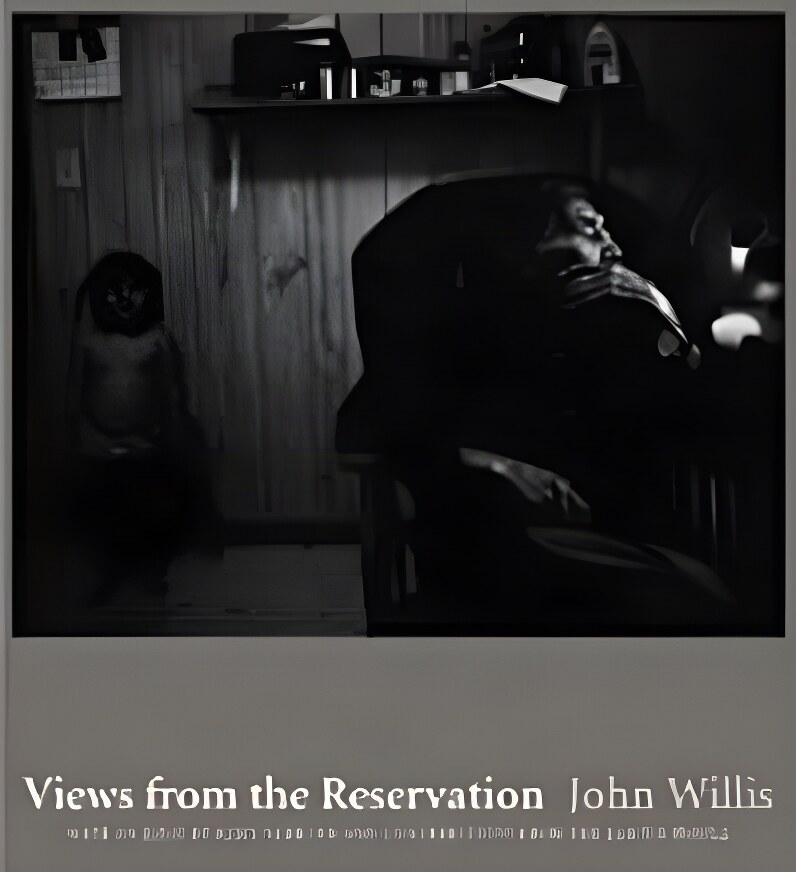
 "Views from the Reservation - Center Books on American Placesby: Willis, John")
 "Views of a Vanishing Frontierby: Ewers, Gallagher, Hunt, & Porter, John C., Marsha V., David C., & Joseph C.")
 "Vision of Splendour, A: Indian Heritage in the Photographs of Jean Philippe Vogel, 1901-1913by: Boer, Gerda Theuns-de")
 "Wagons West!by: Roy Gerrard")


 "Wandering Stars by: Orange, Tommy")


 "Wave of the Sea-Wolf, Theby: Wisniewski, David")
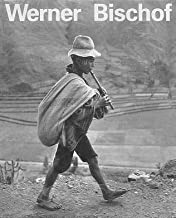
 "Werner Bischof. 1916 - 1954. His Life and Work. Introduction by Hugo Loetscher. Text by Marco Bischof and Guido Magnaguagno. by: Bischof, Marco and Ren")
 "West India Lights by: Whitehead, Henry S.")