Hardcover. NY, Oxford University Press, 1st, 2004, Hardcover, red cloth stamped in gilt, 356 pages. Lacks dust jacket. Provides an exhaustive, accessibly written overview of Bengali goddess worship or Shakti. McDaniel identifies three major forms of goddess worship, and examines each through its myths, folklore, songs, rituals, sacred texts, and practitioners. She traces these strands through Bengali culture and explores how they are interwoven with each other as well as with other forms of Hinduism and other forms of religion. McDaniel also discusses how Shakti practices have been reinterpreted in the West, where goddess worship has gained the values of sexual freedom and psychological healing, but lost its emphases on devotion and asceticism. Clean, bright copy.
Hardcover. Indianapolis/NY, Bobbs-Merrill , 1st U.S., 1971, Book: Very Good, Dust Jacket: Very Good, Non-paginated. Hardcover with dust jacket. Color illustrations by Werner Maurer. very good in unclipped, very good dust jacket.
Hardcover. London, Cornmarket Press Ltd., reprint, 1969, Book: Very Good, Dust Jacket: Very Good, 205 pages + advertisement. Reprint of 1911 edition. Part of series of 50 books reprinted in facsimile from originals in the National Maritime Museum Library. B/W illustrations. Fold-out map at end of book. Dust jacket faded and lightly soiled otherwise clean.
Hardcover. NY, Harper & Brothers, 1st, 1881, Book: Very Good, Dust Jacket: None, Hardcover, expertly rebound green cloth with original gilt and black design inlaid on front cover. New color pattern endpapers, 460 pages, plus publisher's ads. Frontis w/ tissue guard many b/w engravings throughout. Various artists. illustrated tale of the triumphs and tragedies of the formation of the English colonies through the French & Indian War. Light shelf wear, no marking.
Hardcover. NY, Farrar Straus & Giroux, 1st, 2000, Book: Very Good, Dust Jacket: Very Good, Hardcover, 311 pages. A perceptive visitor's report of life on the Pine Ridge Indian Reservation, one of the poorest places in the United States. Profiles the Oglala Sioux living there and along the way a female basketball star. Clean copy.
Hardcover. Bloomington, Indiana University Press, 1st, 1999, Book: Very Good, Dust Jacket: Good, Hardcover in a very good dust jacket with fading to spine and spine edge, 138 pages. "With thematic trajectories pointing both toward and beyond Being and Time, this translation ...is of enormous significance for students of the development of Heidegger's early thought." - Daniel O. Dahlstrom, Boston University. First published in 1988 as volume 63 of Heidegger's Collected Works, "Ontology" follows Heidegger's lectures at the University of Freiburg during the summer semester of 1923. In these lectures, Heidegger reviews and makes critical appropriation of the hermeneutical tradition from Plato, Aristotle, and Augustine to Schleiermacher and Dilthey. Other important themes that are taken up are his turn to the facticity and everyday world of Dasein, his interpretation of human existence in the present historically and philosophically, his understanding of phenomenology, and his repeated insistence on the temporal dimension of interpretation and significance. Students of Heidegger's thought will find initial breakthroughs in his unique elaboration of the meaning of human existence and "question of Being," which received mature expression in Being and Time. Name on front fly leaf, light pencil notations to rear endpapers, 3 pages.
Softcover. Albuquerque, University of New Mexico Press, 1st, 1999, Book: Very Good, Dust Jacket: None, Softcover, oblong format, color photos. The end of the twentieth century represents an unsettled time, and the contemporary Southwest, as seen by Virgil Hancock III in these fifty-two exquisite color photographs, is a strange place full of omens and signs. His images peer beyond the scenery, beyond the tourism-council view of this region as a storied land of golf courses and climate-controlled shopping centers. He gets at the soul of the Southwest, of the nation, and, in his best photographs, at the human condition itself, seizing on the accidental symbols that speak to our yearnings and shortfalls: skyward-pointing arrows and crosses and dreams just beyond reach at Indian casinos, failed department stores, retirement cities. He photographs signs of the violence that has been endemic to the region and shows us ruins, not of the Anasazi or Spanish missions, but of commercialization, scarcely twenty years old, already gone belly-up.
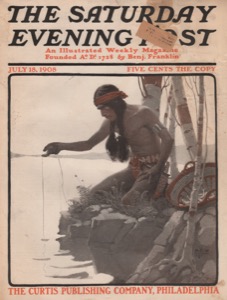
Native American Indian fishing from shore, two-color art by N.C. Wyeth. 10.5 x 13.5", very good, mailing label. Light stain by masthead. PLEASE NOTE: The image shown is a scan of the actual product you are purchasing. What you see is what you get. The sheet may have some imperfections beyond the cropped area shown. You are buying THIS PAGE ONLY- not the entire magazine. Your order will be placed carefully between stiff paper and an acetate overlay, then packed in a rigid cardboard sleeve to prevent bending.
Softcover. College Station, Agricultural and Mechanical College of Texas, 1st, 1939, Book: Good, Dust Jacket: None, 315 pages. Softcover. Previous owners name at top right corner of front cover. Black & white photographs and illustrations. Darkening to spine paper, light surface rubbing to front cover. Clean, unmarked copy.
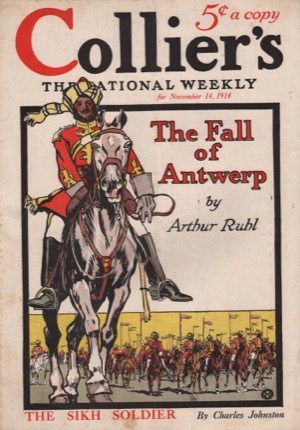
1914, Book: Very Good, Color art of Indian soldier on horseback by Edward Penfield. 10 X 13", very good. PLEASE NOTE: The image shown is a scan of the actual product you are purchasing. What you see is what you get. The sheet may have some imperfections beyond the cropped area shown. You are buying THIS PAGE ONLY- not the entire magazine. Your order will be placed carefully between stiff paper and an acetate overlay, then packed in a rigid cardboard sleeve to prevent bending.
1966, Book: Very Good, Color art by Steinberg of Indians on horseback chasing men on bicycles. 8 3/4 X 12", very good. PLEASE NOTE: The image shown is a scan of the actual product you are purchasing. What you see is what you get. The sheet may have some imperfections beyond the cropped area shown. You are buying THE COVER ONLY- not the entire magazine. Your order will be placed carefully between stiff paper in clear plastic envelope, then packed in a rigid cardboard sleeve to prevent bending.
1974, Book: Very Good, Color art by Suares: winter light, autumn hues, Indian summer, spring fever in bottles. 8 3/4 X 12", very good. PLEASE NOTE: The image shown is a scan of the actual product you are purchasing. What you see is what you get. The sheet may have some imperfections beyond the cropped area shown. You are buying THE COVER ONLY- not the entire magazine. Your order will be placed carefully between stiff paper in clear plastic envelope, then packed in a rigid cardboard sleeve to prevent bending.
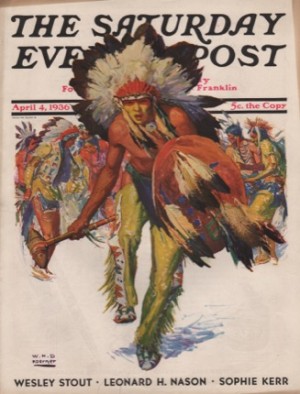
1936, Color art of Native American war dance by W.H.D. Koerner. 10 X 13". PLEASE NOTE: The image shown is a scan of the actual product you are purchasing. What you see is what you get. The sheet may have some imperfections beyond the cropped area shown. You are buying THIS PAGE ONLY- not the entire magazine. Your order will be placed carefully between stiff paper and an acetate overlay, then packed in a rigid cardboard sleeve to prevent bending.
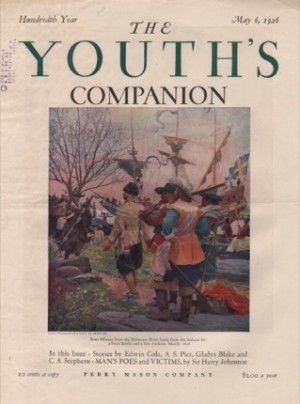
1926, Book: Very Good, Color art: "Peter Minuet buys the Delaware River lands from the Indians for a brass kettle and a few trinkets, March 1638". Painting by Stanley Arthurs. 10 X 13", small printed address. PLEASE NOTE: The image shown is a scan of the actual product you are purchasing. What you see is what you get. The sheet may have some imperfections beyond the cropped area shown. You are buying THIS PAGE ONLY- not the entire magazine. Your order will be placed carefully between stiff paper and an acetate overlay, then packed in a rigid cardboard sleeve to prevent bending.
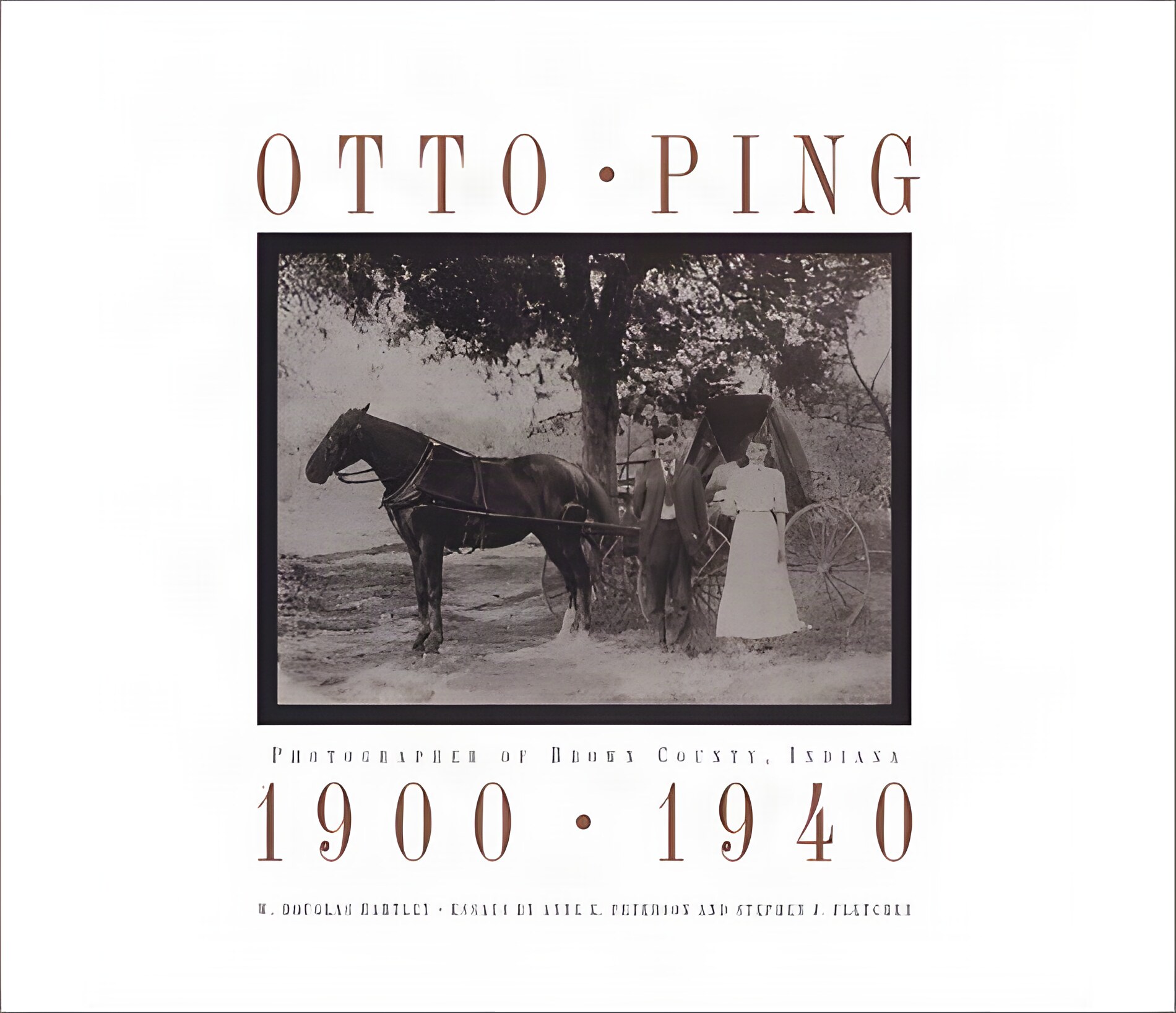
Softcover. Indianapolis, Indiana Historical Society, 1st, 1994, Book: Very Good, Dust Jacket: None, Softcover 96 pages. Otto Ping began taking pictures of the people and places of his native Brown County, Indiana, in 1900 at the age of seventeen in order to make some extra money. He continued doing so for forty years while he worked at such other endeavors as peddling, farming, canning, and chicken raising. Unlike the painters and photographers who came to the county in these years to capture quaint and rustic scenes for sophisticated audiences elsewhere, Ping made his pictures for the people who were in them. Primarily a portraitist, Ping photographed individuals, couples, family groups, and larger gatherings. He had no studio and carried with him no lights or props. His portraits are characterized by hastily thrown up backdrops, stark lighting, and rigid poses. They have a documentary quality, and one senses in the faces that peer from these images the determination with which these people met lives of toil and hardship. Many of the portraits betray a sense of melancholy. Life was tenuous for both young and old, and the photographer often worked against time to provide a family with images of the living before his efforts became memorial. Ping photographed people at work and play. Images abound of stiffly posed groups in front of sawmills, churches, schools, and lodge halls; families in front of cabins or newly framed houses; couples with buggies; and children at play. Clean copy.
Softcover. Ketchikan AK, United States Indian School, 1st, 1950s, Book: Good, Dust Jacket: None, Softcover, stapled pictorial card covers. A chronicle of the Thlingets, Tsimpshean, and Haidias tribes of Ketchikan, Alaska with a map detailing their locations. Approx. 60 pages, line drawings and typewriiten text printed on one side of pages. Illustrated with black-and-white drawings of totem poles, basket designs, hats, fish, canoes, an Indian house, bowl, household box, etc. Topics include: various totem poles, a Legend of the Eagle Clan, tales, basketry, Indian fishing and rights, berries, canoes, gambling, houses, dances, seal and deerskin tanning, Potlatch, prayers, etc. Clear tape on edges of cover, bookplate on inside front cover.
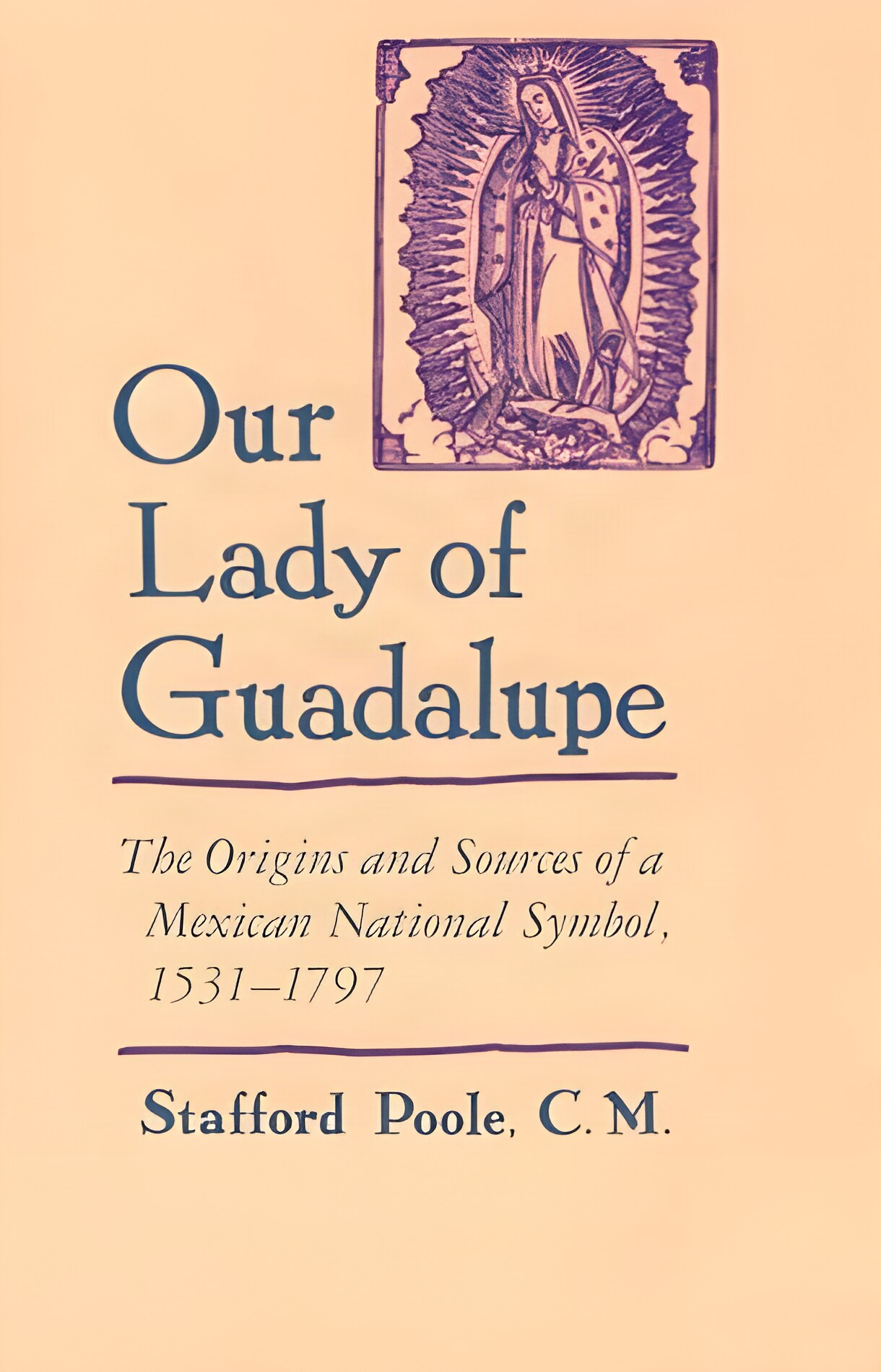
Softcover. Tucson, University of Arizona Press, 3rd pr., 1997, Book: Very Good, Dust Jacket: None, Softcover, 325 pages with index. The devotion to Our Lady of Guadalupe, based on the story of apparitions of the Virgin Mary to Juan Diego, an Indian neophyte, at the hill of Tepeyac in December 1531, is one of the most important formative religious and national forces in the history of Mexico. It has variously been interpreted as the source of Mexican national identity, a means of continuity between the Indian past and Spanish domination, a symbol of national liberation, and a way of evangelizing and pacifying the Indians. The aphorism "Mexico was born at Tepeyac" aptly summarizes its importance. In this, the first work ever to examine in depth every historical source of the Guadalupe apparitions, Stafford Poole traces the origins and history of the account, and in the process challenges many commonly accepted assumptions and interpretations. Small corner clip to front fly leaf, otherwise a clean, tight copy.
Hardcover. Hartford CT, Hartford Publishing Co., 1st, 1869, Book: Very Good, Dust Jacket: None, Hardcover, brown cloth with gilt lettering and design, embossed rules to covers. 524 pages. Detailed records of travel between the Mississippi River and the Pacific coast on the newly completed transcontinental railroad. Includes much information on the Mormons, Salt Lake City, Indians, gold mining, etc. 12 engraved plates and one map. Bookplate on inside front cover, light fading to spine gilt. Solid, clean copy.
Hardcover. NY, Flatiron Books, 2nd pr., 2021, Book: Very Good, Dust Jacket: Very Good, Hardcover in a bright, unclipped dust jacket, 389 pages. Traces the story of the integration of the Cleveland Indians and their quest for a World Series title through four key participants-all members of Baseball's Hall of Fame. They were Bill Veeck, the eccentric and visionary owner of the team; Larry Doby, a soft-spoken hard-hitting pioneer who shattered stereotypes that many Americans had of black ballplayers; ace pitcher Bob Feller who set the template for the athlete as businessman; and Satchel Paige, legendary pitcher from the Negro Leagues too long excluded from professional baseball because of his skin color. Clean copy.
Hardcover. n.p., L.T. Myers, unknown, Book: Very Good, Dust Jacket: None, Hardcover, red cloth covers, 3 color lithographs, many black & white illustrations. Color label on decorated cover. No publisher indicated,(C) by L.T. Myers. Areas of cover show fading, soil.
Hardcover. NY, Frederick A. Stokes, 1st, 1918, Book: Very Good, Dust Jacket: None, Hardcover, terra-cotta cloth with a color paste-down on cover, 263 pages, A collection of 35 Native American animal folklore tales. Wood-lore (or, the ways of wild things) are told in an engaging format - a wise old chief holds evening "story-time" sessions with his very curious grandson, Little Beaver. Running through the linked narrative is the little black bear Moween, of whom Little Beaver is particularly fond. Illustrated with 8 color plates, a color title page and an endpapers drawing by Paul Bransom. Light shelf wear.
Hardcover. NY, Frederick A. Stokes, 1st, 1918, Book: Good, Dust Jacket: None, Hardcover, terra-cotta cloth with a color paste-down on cover, 263 pages, A collection of 35 Native American animal folklore tales. Wood-lore (or, the ways of wild things) are told in an engaging format - a wise old chief holds evening "story-time" sessions with his very curious grandson, Little Beaver. Running through the linked narrative is the little black bear Moween, of whom Little Beaver is particularly fond. Illustrated with 8 color plates, a color title page and an endpapers drawing by Paul Bransom. Light shelf wear.
Hardcover. NY, Knopf, 1st, 2009, Hardcover, 384 pages. Ronsequist writes about growing up in a tight-knit community of Scandinavian farmers in North Dakota and Minnesota in the late 1930s and early 1940s; about his mother, who was not only an amateur painter but, along with his father, a passionate aviator; and about leaving that flat midwestern landscape in 1955 for New York, where he had won a scholarship to the Art Students League. George Grosz, Edwin Dickinson, and Robert Beverly Hale were among his teachers, but his early life was a struggle until he discovered sign painting. He describes days suspended on scaffolding high over Broadway, painting movie or theater billboards, and nights at the Cedar Tavern with Willem de Kooning, Franz Kline, and the poet LeRoi Jones. His first major studio, on Coenties Slip, was in the thick of the new art world. Among his neighbors were Ellsworth Kelly, Robert Indiana, Agnes Martin, and Jack Youngerman, and his mentors Robert Rauschenberg and Jasper Johns.
Hardcover. London, Cartago, 1st UK, 1999, Book: Very Good, Dust Jacket: Very Good, Hardcover, 224 pages. Color and black & white photography by Nicholas Sapieha. By studying a period of nearly four centuries and examining houses over the entire region of Goa, this lavishly illustrated book, with architectural drawings, attempts to define the specific identity of Indo-Portuguese architecture. It is possible to observe, particularly during the 17th and 18th centuries, a progressive cross-influencing of Indian and Portuguese aesthetic tastes: the resulting mixture has produced a fascinating style of architecture, which this text has captured with more than 200 color photographs.

 "Offering Flowers, Feeding Skulls: Popular Goddess Worship in West Bengalby: McDaniel, June")
 "Old Car, Theby: Borchers/Werner Maurer, Elisabeth")
 "Old Country Trade of the East Indiesby: Coates, W. H.")
 "Old Times in the Coloniesby: Coffin, Charles Carleton")


 "Open Range and Parking Lots: Southwest Photographsby: Hancock, Virgil and Gregory McNamee")
 "Origin of Indian Corn and its Relatives - Texas Agricultural Experiment Station - Bulletin Number 574 - May 1939, Theby: Mangelsdorf, P. C./R. G. Reeves")
 "ORIGINAL VINTAGE MAGAZINE COVER: New Yorker Oct. 15 1966 - Indians on horsebackby: Saul Steinberg (Illust.)")
 "ORIGINAL VINTAGE MAGAZINE COVER: New Yorker Sept. 23 1974 - Seasons bottledby: Suares (Illust.)")

 "Our New West. Records of Travel Between The Mississippi River and the Pacific Ocean. Over the Plains Over the Mountains Through the Great Interior Basin Over the Sierra Nevadas To and Up and Down the Pacific Coast... Including a full")
 "Our Team: The Epic Story of Four Men and the World Series That Changed Baseballby: Epplin, Luke")
 "Outdoor Life and Indian Stonesby: Ellis, Edward S.")
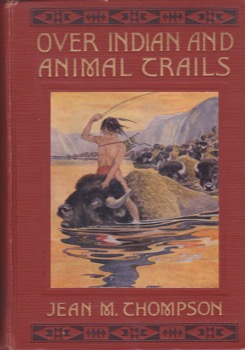
 "Over Indian and Animal Trailsby: Thompson, Jean M. and Paul")
 "Painting Below Zero: Notes on a Life in Artby: James Rosenquist and David Dalton")
 "Palaces of Goa - Models and Types of Indo-Portugese Civil Architectureby: Carita, Helder")