Hardcover. Garden City, NY, Doubleday Page , 1st, 1911, Book: Good, Dust Jacket: None, 436 pages. Hardcover with stamped illustration of a moose head on front cover. Green covers show moderate wear on edges with fraying, fading and light soil. Gutter cracked in multiple places, but still complete. Illustrations throughout done by author. Page block has well worn edges. Light foxing to frontispiece tissue guard, first few pages.
Hardcover. New York, Rizzoli, 1st, 2006, Book: Very Good, Dust Jacket: Very Good, 262 pages. Hardcover with dust jacket. Sunfading to spine. Minor soiling to dust jacket. An otherwise very clean, unmarked copy with only minor edgewear. Rooms celebrates some of the most luxurious and bold interiors around the globe and the creative sensibilities of the people who inspired them. Beautifully presented through the sumptuous photography of Derry Moore, the 12th Earl of Drogheda, who has photographed some of the world's most spectacular houses as well as some of the most notable personalities in their homes, this lavish publication captures the dramatic spirit of such vivid figures as famed early twentieth-century interior designer Elsie de Wolfe, contemporary design legend Renzo Mongiardino, and the legendary decorator Nancy Lancaster. Moore revolutionized interior photography with his technical acuity, his keen aesthetic eye and his impeccably good taste. This vision culminated in an inspired collaboration with Joseph Holtzman, founding editor in chief and art director of the celebrated and controversial magazine Nest, and one of the great tastemakers of our age. This long-awaited book features a remarkable array of spectacular interiors, ranging from Charleston, the famed haunt of the Bloomsbury group, to India's Falaknuma Palace, Pauline de Rothschild's London residence, and Chatsworth Hall, Derbyshire, the grandest of English country houses.
Hardcover. La Jolla CA, Green Tiger Press, 2nd pr., 1986, Book: Good, Dust Jacket: None, Hardcover, illustrated boards, no dust jacket. Rover and Coo Coo is a story in the traditional style of story telling, a story that was told to generations of the Hay family around an open fire in winter or on an open porch in summer. It takes place when Indiana was a frontier, and Charles Hay left his family in their log cabin and went to the distant mill to have his corn ground. The adventure takes place in the dark forest with a chase by hungry wolves, and Charles' faithful hounds saving the day. There are beautiful and clear descriptions of the surroundings in those pristine times. The illustrations of the highly acclaimed artist, Tim Soliday, bring it all alive. In the end Charles is safe with his wife and two small children, and he speaks of nature and how all creatures have a place in the larger picture of the oneness of the world.
Softcover. Montclair, NJ, Montclair Art Museum, 1st, 2005, Book: Very Good, Dust Jacket: None, Paperback. 90 pages, color and b&w illustrations. An exhibition catalog, not published in hardcover.
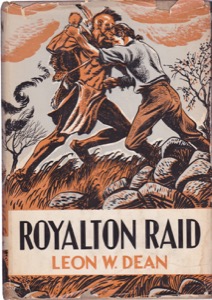
Hardcover. NY, Rinehart & Company, 2nd pr., 1949, Book: Very Good, Dust Jacket: Poor, Hardcover in very worn, chipped dust jacket with tape repairs, 241 pages, frontispiece by Edward Shenton. Novel based on the historic 1780 Indian raid on Royalton, in the White River Valley of Vermont. No markings.
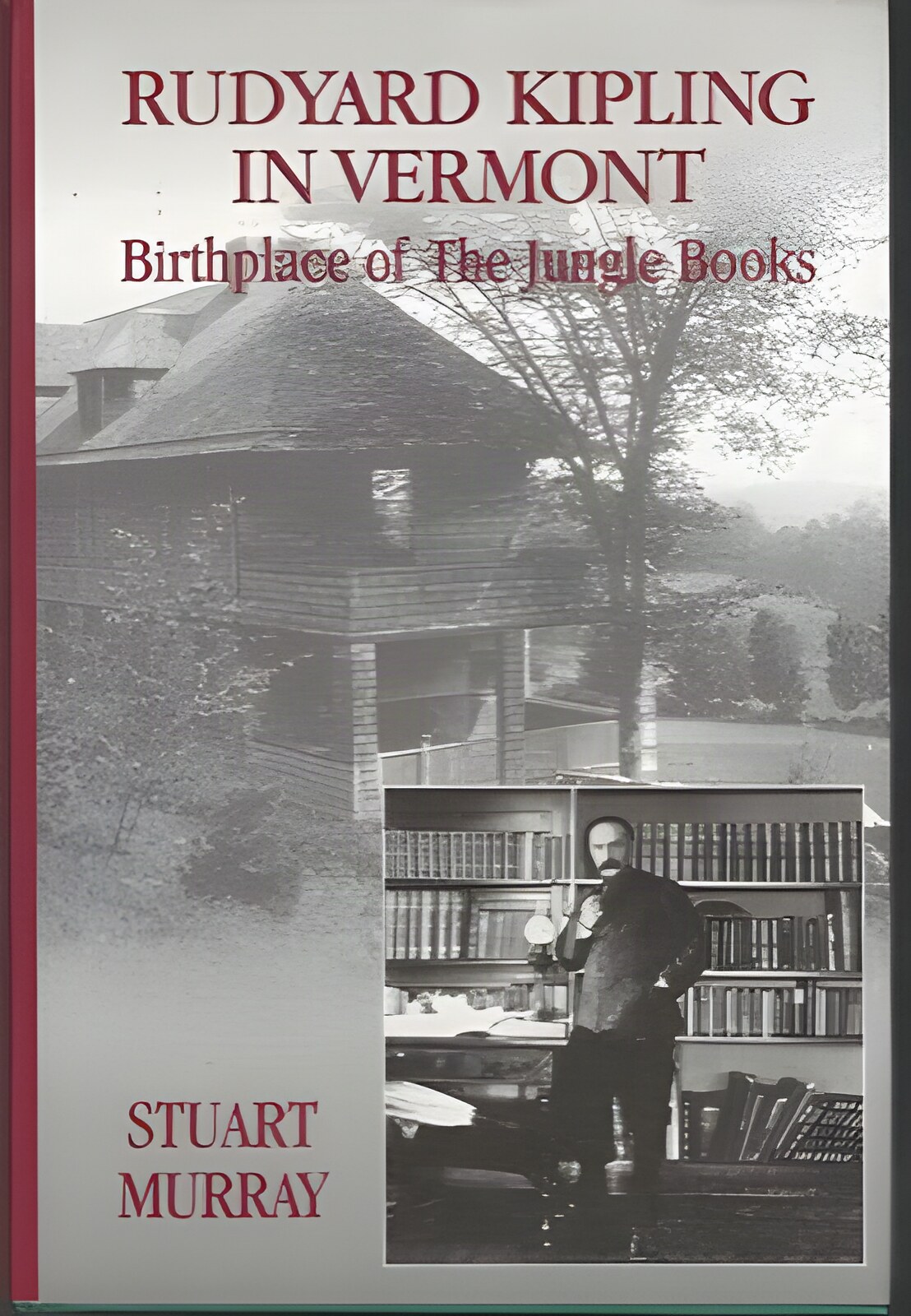
Hardcover. Bennington VT, Images from the Past, 1st, 1997, Book: Very Good, Dust Jacket: Very Good, Hardcover in a bright dust jacket. Rudyard Kipling in Vermont tells the story of the dynamic years 1892-1896 with Kipling's own letters and memoirs, selected excerpts from his poetry, and the words of those who knew and admired him. More than thirty illustrations illustrate the little-known tale of a time he said "would be blessed to me for all my life." Kipling was born in Bombay, India, and was a prolific writer. He received the Nobel Prize for Literature in 1907. He married an American wife and moved to the village of Brattleboro, VT. He only lived in Vermont for four years. But during that time he wrote his famous "Jungle Book" series. Family troubles forced him to move and the large estate he lived in over looking town fell into disrepair. Clean copy.
Softcover. Ithaca NY, Cornell University Press, reprint, 1990, Book: Very Good, Dust Jacket: None, Softcover, 309 pages. A major contribution to the cultural and literary history of the Victorian age, Rule of Darkness maps the complex relationship between Victorian literary forms, genres, and theories and imperialist, racist ideology. Critics and cultural historians have usually regarded the Empire as being of marginal importance to early and mid-Victorian writers. Patrick Brantlinger asserts that the Empire was central to British culture as a source of ideological and artistic energy, both supported by and lending support to widespread belief in racial superiority, the need to transform "savagery" into "civilization," and the urgency of promoting emigration. Rule of Darkness brings together material from public records, memoirs, popular culture, and canonical literature. Brantlinger explores the influence of the novels of Captain Frederick Marryat, pioneer of British adolescent adventure fiction, and shows the importance of William Makepeace Thackeray's experience of India to his novels. He treats a number of Victorian best sellers previously ignored by literary historians, including the Anglo-Indian writer Philip Meadows Taylor's Confessions of a Thug and Seeta. Brantlinger situates explorers' narratives and travelogues by such famous author-adventurers as David Livingstone and Sir Richard Burton in relation to other forms of Victorian and Edwardian prose. Through readings of works by Arthur Conan Doyle, Joseph Conrad, H. Rider Haggard, Rudyard Kipling, John Hobson, and many others, he considers representations of Africa, India, and other non-British parts of the world in both fiction and nonfiction. Clean, bright copy.
Hardcover. NY, Doubleday, Doran & Company, 1st, 1928, Book: Very Good, Dust Jacket: None, Hardcover, orange cloth with red decoration, 279 pages. B&w, some color illustrations by Will Crawford. Previous owner's bookplate on inside cover, otherwise a clean, tight copy.
Hardcover. NY, Doubleday Doran, 1st, 1928, Book: Very Good, Dust Jacket: Good, 279 pages. Hardcover with dust jacket. Color, black & white illustrations by Will Crawford. Dust jacket with some heavy chipping.
Hardcover. NY, Clarion, 1st, 1995, Book: Very Good, Dust Jacket: Very Good, Hardcover. Color illustrations by the author. Light edgewear and creases to dust jacket. All rivers in India are sacred, and the Ganges most of all. Every year, more than one million Hindu pilgrims journey to Benares to renew themselves in its waters. Caldecott Honor medalist Ted Lewin joined the pilgrims at the river's edge for an experience he describes as one of the most unforgettable of his life. His luminous watercolors and simple, evocative text brilliantly capture the traditions, beliefs, and colorful pageantry of the devout and their ancient city.
Softcover. Chicago, Indiana Society of Chicago, 1st, 1940, Book: Very Good, Dust Jacket: None, Softcover, illustrated wrappers with red plastic comb binding. 40 full-page b&w cartoons by various artists, all honoring McCutcheon at the 29th Annual Dinner of The Indiana Society on Dec. 14, 1940: Fontaine Fox, Webster, Fitzpatrick, Milton Caniff, Shoemaker, Chester Gould, many others. Cover by Paul Plaschke. Bright, clean copy. Scarce.
Chicago, Wilcox and Follett, 1st, 1944, Book: Very Good, Dust Jacket: None, Hardcover, orange cloth covers stamped in black. B&W illustrations by Milo Winter. 189 pages. Small bookstore stamp to front end papers otherwise very good. An "action-packed adventure story based on authentic history of early Illinois" set during the Black Hawk War. Clean copy.
Hardcover. NY, Thomas Dunne Books/St. Martin's Press, 1st, 2001, Book: Very Good, Dust Jacket: Very Good, Hardcover, 384 pages, b&w illustrations. In 1830 a Yamana Indian boy, Orundellico, was bought from his uncle in Tierra del Fuego for the price of a mother-of-pearl button. Renamed Jemmy Button, he was removed from his primitive nomadic existence, where life revolved around the hunt for food and the need for shelter, and taken halfway round the world to England, then at the height of the Industrial Revolution. Clean, in a bright dust jacket.
Hardcover. London, Evans Brothers Limited, 1st, 1965, Book: Very Good, Dust Jacket: Very Good, 270 pages, hardcover with dust jacket. The study of two of the most primitive tribes in Latin America. Foxing and light soiling to top copy edge. Light rubbing to top and bottom board edges. Rubbing and mild wear to dust jacket. Faint foxing to front endpapers and flyleaf. Many b&w photos throughout.
Hardcover. Indianapolis, Bobbs Merrill , 1st, 1924, Book: Very Good, Dust Jacket: None, Hardcover, red cloth with gilt lettering. Previous owner's signature on front end paper. Otherwise clean.
Softcover. Calcutta/Chicago, Seagull/University of Chicago, 1st, 2018, Book: Very Good, Dust Jacket: Very Good, Softcover, flexible cloth in a bright dust jacket. An elaborate catalog published by Seagull Books, a venture begun in Kolkata in 1982 by Naveen Kishore, a theater practitioner. They focus on world and Indian literature in English translation, serious non-fiction, culture studies, performance studies, art and cinema. 372 pages illustrated in color. Clean copy.
Hardcover. Cambridge MA, Zoland Books, 1st, 1995, Book: Very Good, Dust Jacket: Very Good, Hardcover in a bright, unclipped dust jacket. A collection of short stories, most of them set in Indiana, focuses on the meddling of fact and fiction and includes a dozen satiric - but also sympathetic - tales written in the persona of Indiana's famous son, Dan Quayle. Clean copy.
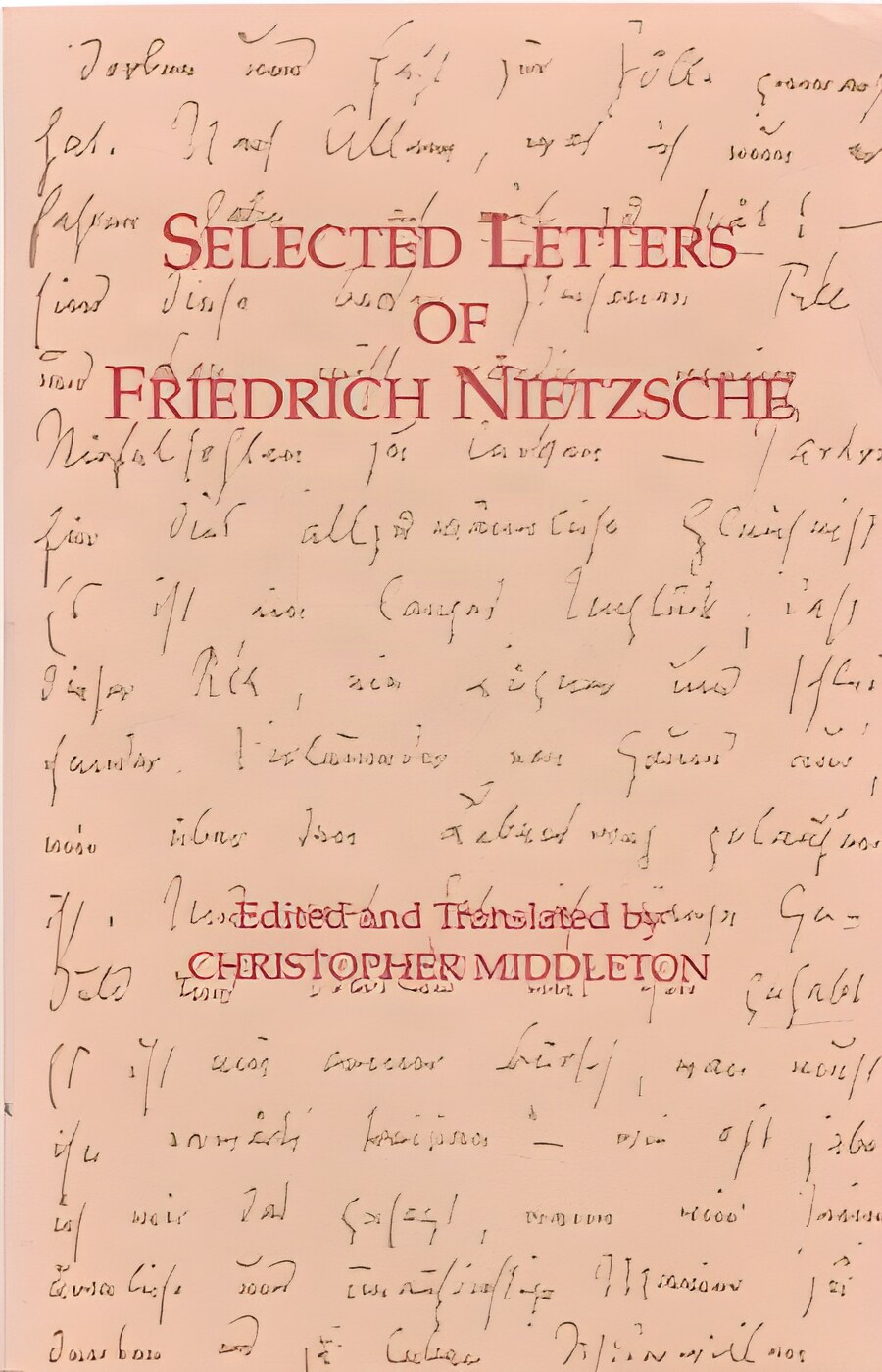
Softcover. Indianapolis IN, Hackett Publishing, reprint, 1996, Book: Very Good, Dust Jacket: None, Softcover, 368 pages. This collection of more than two hundred of Nietzsche's letters offers a representative body of correspondence on subjects of main concern to him--philosophy, history, morals, music and literature. Also included are letters of biographical interest which, in Middleton's words, mark the stresses and turnings of his life. Among the addressees are Richard Wagner, Erwin Rohde, Jacob Burkhardt, Lou Salome, his mother, and his sister Elisabeth. The annihilating split in Nietzsche's personality that has been associated with his collapse on a street in Turin in 1889 is described in a moving letter from Franz Overbeck which forms the Epilogue. Index. Light cease to front cover, otherwise clean, bright copy.
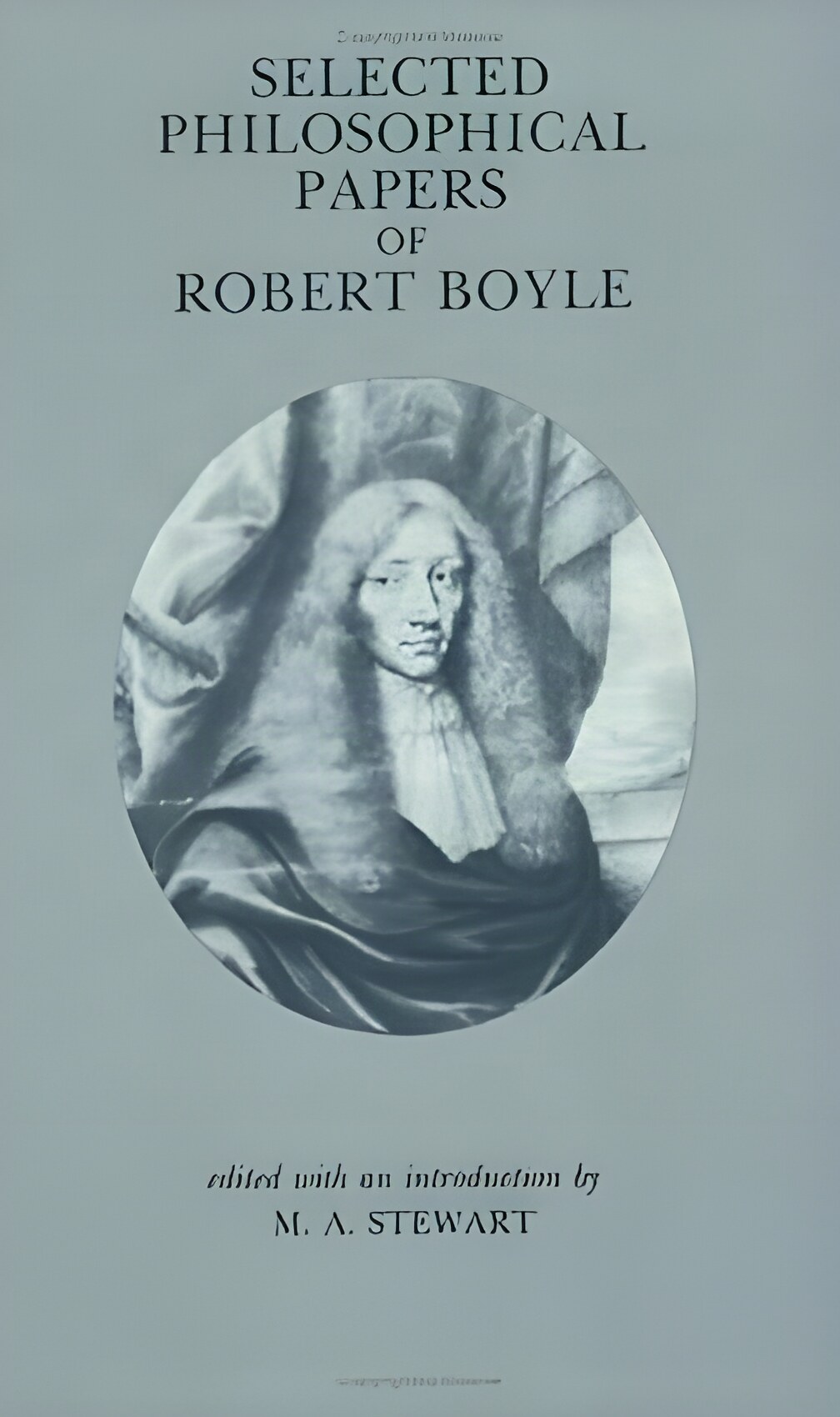
Softcover. Indianapolis, Hackett Publishing, 2nd pr., 1991, Book: Very Good, Dust Jacket: None, Softcover, 256 pages. "The availability of a paperback version of Boyle's philosophical writings selected by M. A. Stewart will be a real service to teachers, students, and scholars with seventeenth-century interests. The editor has shown excellent judgment in bringing together many of the most important works and printing them, for the most part, in unabridged form. The texts have been edited responsibly with emphasis on readability. . . . Of special interest in connection with Locke and with the reception of Descarte's Corpuscularianism, to students of the Scientific Revolution and of the history of mechanical philosophy, and to those interested in the relations among science, philosophy, and religion. In fact, given the imperfections in and unavailability of the eighteenth-century editions of Boyle's works, this collection will benefit a wide variety of seventeenth-century scholars."
Hardcover. Norman OK, University of Oklahoma Press, 1st, 1961, Book: Very Good, Dust Jacket: Good, Hardcover, in a edgeworn dust jacket, 270 pages. Color frontis, 115 b&w plates. Considers the life and work of American artist (and soldier) Seth Eastman (1808-1875). Follows his dual career at the Military Academy, and in Florida, Minnesota, Texas, and Washington. Includes a chronology and a fairly well-detailed checklist of works - oils, water colors, drawings, and lithographs and engravings after Eastman. The authoritative work on this fascinating artist.
Hardcover. Boston, Gambit , 1st, 1973, Book: Very Good, Dust Jacket: Good, Hardcover in a worn, chipped dust jacket. Emissar of Charles the First, second governor of Massachusetts, pillar of the Protectorate, and victim of Charles the Second, atypical Puritan and passionate lover, Sir Harry Vane was a man of peace who initiated genocide in the New World and found martyrdom in the Old. His experience reaches from Indian wigwam to royal palace. This is an unparalleled picture of a formative age which is with us yet. Clean copy.
Hardcover. San Francisco, Chronicle Books, 1st, 2000, Book: Very Good, Dust Jacket: None, Hardcover, gray boards with a dark brown cloth spine and a pictorial label on the cover. No dust jacket issued. Legendary for his massive photographic undertaking, The North American Indian, Edward Sheriff Curtis (1868-1952) recorded much more than portraits of Native American tribespeople. Among his huge body of work are numerous images of all manner of native dwellings: tipis, hogans, huts, cliff houses, adobes, and many more that are far less familiar to the public eye. Though people are largely absent from these photographs, each image speaks volumes about the lives and lifestyles of the tribes to which they belonged. Other structures such as tombs, religious buildings, granaries, and totem poles are also featured prominently, further glimpses into ways of life that were in the process of disappearing. Taken from the Dan and Mary Solomon collection,Sites & Structures: The Architectural Photographs of Edward S. Curtis is the first book of Curtis photographs to explore these dwellings and structures, faithfully reproduced from the original prints and gravures.
Hardcover. New York, Harper Collins, 1st, 2007, Book: Very Good, Dust Jacket: Very Good, Hardcover in a very good dust jacket. Non-paginated. SIGNED BY ILLUSTRATOR WENDELL MINOR ON TITLE PAGE. Full color illustrations. Clean, bright copy.

 "Rolf in the Woods: The adventures of a boy Scout with Indian Quonab and Little Dog Skookumby: Seton, Ernest Thompson")
 "Roomsby: Moore, Derry")
 "Rover and Coo Cooby: John Hay/Tim Solliday")
 "Roy Lichtenstein - American Indian Encountersby: Stavitsky, Gail and Twig Johnson")
 "Rumbling Wings and Other Indian Talesby: Parker, Arthur C.")
 "Rumbling Wings and Other Indian Talesby: Parker, Arthur C.")
 "Sacred Riverby: Lewin, Ted")
 "Saga of a Hoosier Boy: A Collection of Pictorial Tributes by the Contemporaries of John T. McCutcheonby: Cleveland (Ed.), Chester W.")


 "Sandy and the Indiansby: Friskey, Margaret")
 "Savage : Life & Times of Jemmy Button by: Hazelwood, Nick")
 "Savage and the Innocent, Theby: Mayberry-Lewis, David")
 "Scarlet Iris, Theby: Thompson, Vance")
 "Scriptural Ecclesiastical and Historical View of Slavery from the Days of the Patriarch Abraham to the Nineteenth Century Addressed to The Right Rev. Alonzo Potter by:")



 "Seth Eastman: Pictorial Historian of The Indian by: McDermott, John Francis")
 "Sir Harry Vane: His Life and Times 1613-1662by: Adamson, J. H. & H. F. Folland")
 "Sites and Structures: The Architectural Photographs of Edward S. Curtis by: Solomon, Mary/Slemmons, Rod")


 "Sitting Bull Remembers (SIGNED BY ILLUSTRATOR)by: Turner, Ann/Wendell Minor")