Hardcover. NY, Viking, 1st , 1995, Book: Very Good, Dust Jacket: Very Good, Unpaginated. Hardcover with matching dust jacket. SIGNED BY KALMAN on title-page. Illust. in color by Kalman. Clean, tight copy with light edgewear to covers.
Hardcover. Chicago, Rand McNally & Co., 2nd pr., 1935, Book: Very Good, Dust Jacket: None, Hardcover, black cloth with a bright pictorial label on front cover. Five color plates by Paul Strayer (one repeated on cover label). 320 pages. Clean copy.
Hardcover. London, G. Bell and Sons, reprint, 1951, Book: Good, Dust Jacket: Good, Hardcover, 215 pages, with illustrations by Jack Matthew. Dust jacket edge wear and tear, chunks missing from spine edge, otherwise, very clean and tight copy.
Hardcover. Underwood Books, 1st, 2008, Hardcover in a pictorial slipcase. Fantasy art's most popular painter was also one of the most popular comic book illustrators during the industry's golden age. Telling Stories: The Classic Comic Art of Frank Frazetta celebrates the rare and largely forgotten stories created five decades ago by this iconic artist. These jungle adventures, true-life tales of heroism, and dreamy love stories not only exhibit the skill of a master craftsman but also provide tantalizing glimpses of where the young artist's career would ultimately take him. This collection includes his complete Thunda tales and best romance works like "Untamed Love," "Empty Heart," "A Love of My Own," "The Wrong Road," and "Too Late for Love." These romance stories, often overlooked, feature some of Frazetta's finest works with shapely women, nude statues, and implied sensuality. Also featured are his heroic works such as Heroic Comics, White Indian, and the long-running series ME, alongside Squeeze Play, his one and only solo-drawn story for EC. Additionally, there are rare SF stories such as Captain Comet and Judy of the Jungle, along with his best and most obscure late 1940s works. Still in publisher's shrinkwrap.
Hardcover. NY, Simon and Schuster, 1st, 1948, Book: Good, Dust Jacket: None, Hardcover in glossy pictorial boards. Fifty-two stories and rhymes inspired by the myth of the Old West, illustrated by the Swedish-American illustrator who remains best-known for his work on the Walt Disney movie Snow White and the Seven Dwarfs. A Giant Golden Book, 9-3/4 by 13 inches. 96 pages. First edition (4th printing, with code "D195195" on the inside front cover). There is a child's name on the blank page opposite the title page. NOTE: the spine cover has chipped away exposing the staple paper binding otherwise the pages are fresh and bright and the binding is tight.
Hardcover. Washington, Government Printing Office, 1st, 1893, Book: Good, Dust Jacket: None, 822 pages, b&w illustrations, several color plates. Olive green cloth covers w/ gilt lettering on spine, gilt design of Native American bust on front cover. Clear plastic dust jacket. Light wear to edges and corners; rubbing to rear cover. Rear hinge cracked and separating. Foxing to edges. Else pages clean and tight.
Hardcover. San Francisco, Chronicle Books, 1st, 1996, Book: Very Good, Dust Jacket: Very Good, Hardcover in a bright dust jacket, 344 pages. Includes the following essays: Painted and Block-Printed Cloths, Cloths Decorated with Gold & Silver Leaf / Roller-Printed Cloths, Tie-Dyed Cloths / Woven Cloths & Embroideries / History of Indian Textiles, by Zahid Sardar / etc. Color illustrations throughout. Foreword and afterword by Kokyo Hatanaka; Clean, bright copy. DUE TO WEIGHT, DOMESTIC SHIPPING ONLY.
Hardcover. NY, Macmillan Company, 1st, 1959, Book: Very Good, Dust Jacket: None, Hardcover, tan cloth covers, 286 pages, map endpapers, b&w illustrations. Lionel Casson, the renowned authority on ancient ships and seafaring, has done what no other author has: he has put in a single volume the story of all that the ancients accomplished on the sea from the earliest times to the end of the Roman Empire. He explains how they perfected trading vessels from mere rowboats into huge freighters that could carry over a thousand tons, how they transformed warships from simple oared transports into complex rowing machines holding hundreds of marines and even heavy artillery, and how their maritime commerce progressed from short cautious voyages to a network that reached from Spain to India. In the process he corrects cherished but erroneous beliefs. Ancient warships, he shows, were never manned with slave rowers; ancient merchant-men did not stick timidly to the shore; and ancient craft were well able to sail against the wind. Embossed stamp to dedication page, otherwise clean, No dust jacket.
Hardcover. New York, William Morrow & Co, 1st, 1992, Book: Very Good, Dust Jacket: Very Good, 160 pages. Hardcover with dust jacket. Very clean, unmarked copy with some minor shelfwear to dust jacket. This beautiful book is a spectacular overview of McCarthy's exciting Western work, presenting colorful paintings from his fine art career. Color illustrations throughout.
Hardcover. Texas A&M University Press;, 1st, 2003, Book: Very Good, Dust Jacket: Very Good, Hardcover, 276 pages. Tom Lea was a realist who painted things as they are, but just happened to see more of what they are than most of us do. A muralist, painter, book illustrator, World War II artist-correspondent, historian, novelist, and humanist, Lea died in 2001 after creating in some sixty years a corpus of work that has captivated those who know it. This volume makes available the full range of his vigorous work. Old admirers of Lea's talents will delight in this presentation, and a whole new generation will be awed by the unique contribution he has made. A Southwesterner from multicultural El Paso, Lea gave new vision to the misunderstood lands often thought of as barren wastes. As Kathleen G. Hjerter says in her foreword, in his paintings "the desert's melded colors are vibrant under many subtle gradations of light; the mesas and mountains reach up to a sky enormous enough to hold everyone's soul." But it is not just the southwest. its life and lore that Lea knew. Any subject he portrayed in picture or words (he wrote several outstanding books, including The Wonderful Country) he first researched minutely. Thus, he brought marvelous detail to his portrayal of the Mexican bullfighter, the Australian ranches and Texas cattle of the King empire, and the Indians, pioneers, and ranch hands of his own corner of the world. In the Second World War, as an artist-correspondent for Life magazine, he captured both the weaponry and the emotions of war. On assignment in China he developed a love for that land that gave him not only many subjects for paintings but also his favorite and, in later years, most characteristic medium: Chinese ink applied with a fine brush. This is a heavy and oversized book and will require extra shipping. International customers please ask for a shipping quote before purchasing.
Hardcover. NY, Oxford University Press, 1st, 1998, Book: Very Good, Dust Jacket: Very Good, Hardcover in a very good dust jacket with fading to spine, 403 pages. The concept of the atom is very near scientific bedrock, touching first causes, fundamental principles, our conception of the nature of reality. This book is a translation from the French of a history of atomic thought and theory, from ancient Greece to the present day. Pullman grounds his coverage of scientific theory always in the religious and philosophical context of the times, covering the whole period of Western civilization, including in passing the major scientific philosophies of the Muslim world and India. The transition of atomism from a philosophical position to an experimental science, in the mid-19th century, is well handled, and the coverage is nicely rounded out by a treatment of the first visual proof of atoms' material existence by direct microscopic imaging of individual atoms about 10 years ago. Name on front fly leaf otherwise clean.
Hardcover. New York, Golden Press, 1st, 1991, Book: Very Good, Dust Jacket: None, Hardcover, glazed boards, 61 pages. Color illustrations by Gene Biggs. Clean copy.
Hardcover. NY, Rodale, 1st, 2003, Book: Very Good, Dust Jacket: Very Good, Hardcover in a bright, unclipped dust jacket. While The Big O: My Life, My Times, My Game will not disappoint basketball purists longing for Oscar Robertson's play-by-play of favorite games, the attraction of this autobiography is Robertson's perspective on the evolution of the sport and on the racial struggles that were the context of his formative years. Called by many basketball experts the greatest all-around player ever, Robertson earned an astonishing array of honors including an Olympic gold medal, 12 NBA All-Star appearances, the NBA Rookie of the Year award, and the 1964 NBA MVP award. Most remarkably, Robertson remains the only player in basketball history with a triple-double season (double-digit averages for scoring, rebounds, and assists). While Robertson could have easily candy-coated this impressive record for his retrospective, he devotes large sections of his book to the racial battles he faced off court, and his final chapters recount his controversial efforts as an NBA union leader to create free agency, a pension plan, and disability protection for players. In telling his life story, he lays bare the racism and mistreatment he suffered at the hands of individuals and institutions throughout his career, from the Mayor of Indianapolis and Cincinnati University to the NBA and CBS Sports. At times, his critiques can seem excessive (e.g. his discussions of the distortions in the film Hoosiers, while interesting, are repeated a bit too often), and some sections (like his attempts to compare himself to contemporary players) border on self-indulgence. Yet, he seems justified in arguing that his achievements--largely accomplished on second-rate teams, against a back-drop of unprecedented racial strife, and before the modern era of sports-media saturation--are easily underrepresented. In the end, The Big O offers a complex, human portrait to complement a spectacular sports career.
Softcover. Norman OK, University of Oklahoma Press , reprint, 1996, Book: Very Good, Dust Jacket: None, Softcover, 167 pages. After nearly 200,000 African-American soldiers fought in the Civil War, Congress enacted legislation to authorize regiments of cavalry and infantry for service in the West. The Ninth and Tenth cavalries won fame as "buffalo soldiers" in the Indian wars, nearly overshadowing the critical support role of the Twenty-fourth and Twenty-fifth infantries. Now Arlen L. Fowler brings to light the story of African-American infantry service from 1869 to 1891 in Texas, Indian Territory, the Dakotas, Montana, and Arizona.
Hardcover. NY, Farrar Straus & Giroux, 1st, 1985, Book: Very Good, Dust Jacket: Very Good, Hardcover in a bright dust jacket, SIGNED BY AUTHOR on the half-title page. In 1942, Ruth and Simeon must leave their missionary parents to escape the perils of war, and Ruth learns much about human nature and life as she and her brother make the dangerous trip through China to India. Clean copy.
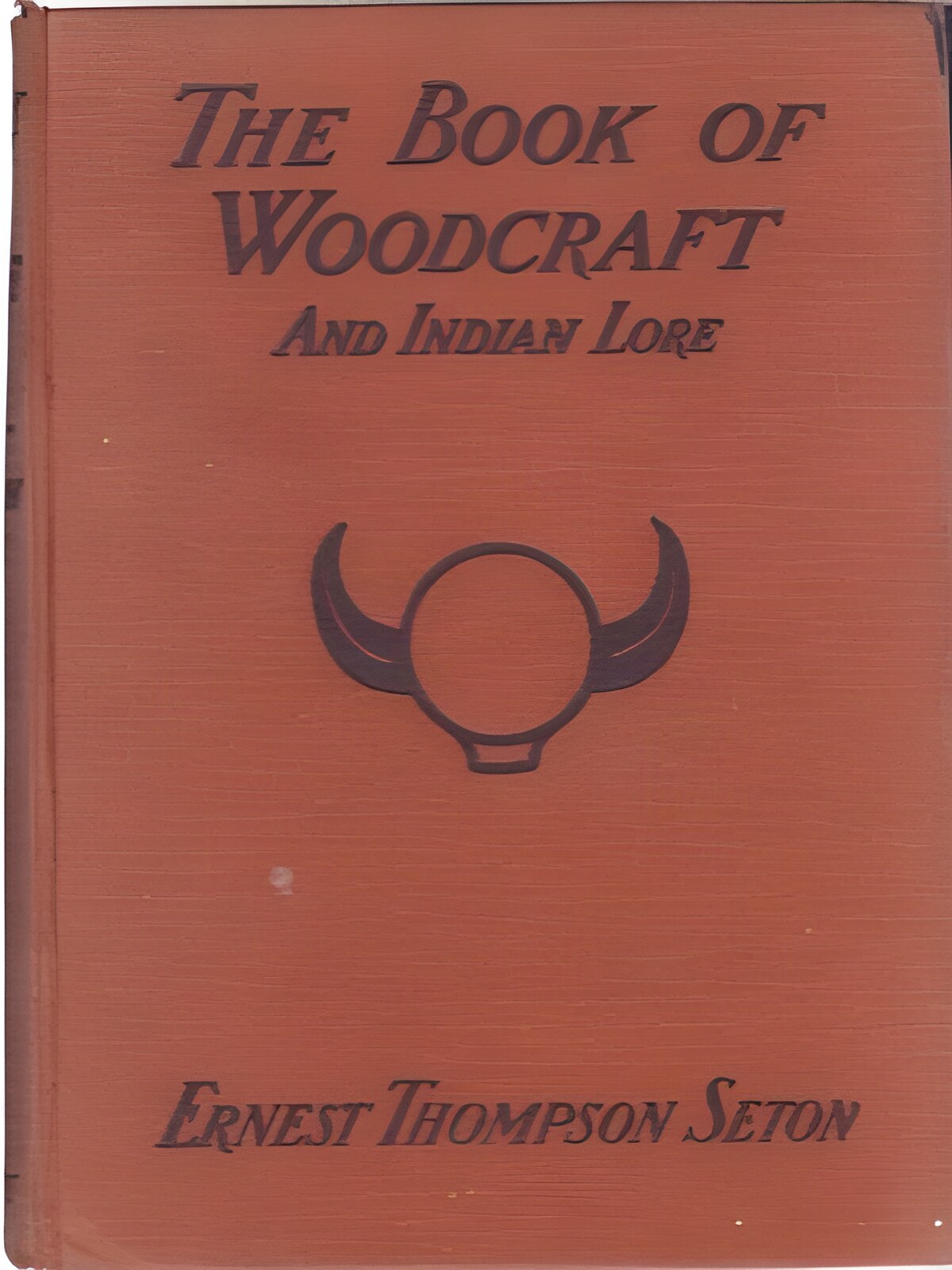
Hardcover. London, Constable, reprint, 1927, Book: Very Good, Dust Jacket: None, Hardcover, tan cloth stamped in black on spine and front cover, 567 pages. Over 500 drawings by author, whose life work is the development or revival of Woodcraft, that is outdoor life in its greatest sense, as a school for manhood. He defends Indians and their traditions, as he sees them as a model for outdoor life. Clean copy.
Softcover. Cambridge UK, Cambridge University Press, 1st, 1970, Book: Very Good, Dust Jacket: None, Softcover, 310 pages. One of the incidental consequences of the success of British arms in eighteenth-century India was the appearance of a number of publications which reflect the intense curiosity of contemporary Europeans about strange peoples, their manners and religions. Of the three principal religions of India, Hinduism attracted the most attention. European contact with Islam was several centuries old, while few travellers could identify Buddhism with any certainty. This book reprints some of the most significant English contributions to the early European understanding of Hinduism. Paper covers with light wear.
Hardcover. Norman OK, University of Oklahoma Press, Revised Ed., 2003, Book: Very Good, Dust Jacket: Very Good, Hardcover in a bright dust jacket, 319 pages. B&w illustrations. A well-researched and authoritative study of 'negro' soldiers who wished to remain in the United States Army following the Civil War. They were eventually organized into the Ninth and Tenth Cavalry Regiments their service in controlling Indians on the Great Plains during the next twenty years was as invaluable as it was unpraised. With Bibliography and Index. Clean copy.
Hardcover. NY, Avon Books, 1st, 1995, Book: Very Good, Dust Jacket: Very Good, Hardcover in a bright dust jacket. It begins in a near future New York City, when Antar, a low-level programmer and data analyst for a large bureaucratic concern, comes upon the lost and battered I.D. card of a man he once knew--a man who vanished without a trace some where in the teeming excess of Calcutta, India, several years before. Strangely compelled, Antar initiates a search into the facts behind the disappearance of the enigmatic L. Murugan, and is unwittingly drawn into a bizarre alternate history of medical science. Clean copy.
Softcover. McGill-Queen's University Press, reprint, 1987, Book: Very Good, Dust Jacket: None, Softcover, 913 pages, b&w illustrations, maps. Trigger's work integrates insights from archaeology, history, ethnology, linguistics, and geography. This wide knowledge allows him to show that, far from being a static prehistoric society quickly torn apart by European contact and the fur trade, almost every facet of Iroquoian culture had undergone significant change in the centuries preceding European contact. He argues convincingly that the European impact upon native cultures cannot be correctly assessed unless the nature and extent of precontact change is understood. His study not only stands Euro-American stereotypes and fictions on their heads, but forcefully and consistently interprets European and Indian actions, thoughts, and motives from the perspective of the Huron culture. The Children of Aataentsic revises widely accepted interpretations of Indian behaviour and challenges cherished myths about the actions of some celebrated Europeans during the "heroic age" of Canadian history. In a new preface, Trigger describes and evaluates contemporary controversies over the ethnohistory of eastern Canada.
Hardcover. Washington DC, Counterpoint, 1999, Book: Very Good, Dust Jacket: Very Good, Hardcover, 642 pages. Hailed in 1849 as "a new department in the literature of civilization," the slave narrative forms the foundation of the African American literary tradition. From the late-eighteenth-century narratives by Africans who endured the harrowing Middle Passage, through the classic American fugitive slave narratives of the mid-nineteenth century, slave narratives have provided some of the most graphic and damning documentary evidence of the horrors of slavery. Riveting, passionate, and politically charged, the slave narrative blends personal memory and rhetorical attacks on slavery to create powerful literature and propaganda.The Civitas Anthology presents the seven classic antislavery narratives of the antebellum period in their entirety: The History of Mary Prince, a West Indian Slave , the first slave narrative published by a woman in the Americas; The Confessions of Nat Turner , written when Turner was asked to record his motivation for leading the bloodiest slave revolt in U.S. history; The Narrative of the Life of Frederick Douglass , an international bestseller and the first narrative to fashion the male fugitive slave into an African American cultural hero; The Narrative of William W. Brown , an account that explored with unprecedented realism the slave's survival ethic and the art of the slave trickster; The Narrative of the Life of Henry Bibb , the story of the struggles of the most memorable family man among the classic slave narrators; Running a Thousand Miles for Freedom , a gripping chronicle of one of the most daring and celebrated slave escapes ever recorded; and Incidents in the Life of Slave Girl , a dramatic text that exposed the sexual abuse of female slaves and pioneered the image of the fugitive slave woman as an articulate resister and survivor.Born out of lives of unparalleled suffering, the slave narrative captures all the bravery, drama, and hope that characterized the African American struggle against slavery. From these beginnings came some of the most influential novels in American literature, for the works of writers such as Harriet Beecher Stowe, Mark Twain, and Toni Morrison owe much of their power and social resonance to the slave narrative tradition. The Civitas Anthology gathers the most important narratives in this tradition into one volume for the first time, an indispensable resource for scholars, students, and general readers. Clean copy.
Hardcover. Minneapolis, University Of Minnesota Press, 2nd pr., 1989, Book: Very Good, Dust Jacket: Very Good, Hardcover in a bright dust jacket, 228 pages, color and b&w illustrations. The haunting cry of the loon has for centuries fascinated people living in or near wilderness in northern parts of the world. The loon's call, its ability to dive, and its distinctive black and white feather pattern appear again and again in the myths and legends of North American Indians. There is included a disc recording of common loon vocalizations. Clean copy.
Softcover. Washington DC, Smithsonian Institution, 1st, 1945, Book: Very Good, Dust Jacket: None, Softcover in gray wrappers, 244 pages, 20 full page photo plates on slick paper. 33 text figures. 1 map. Errata slip tipped in. Owner's small sticker on inside cover otherwise clean.



 "Tekhi's Hunting: A Story of the Naga Hillsby: Holmes, Winifred")


 "Ten Little Indiansby: Alexie, Sherman")
 "Tenggren's Cowboys and Indians (A Giant Golden Book)by: Kathryn Jackson, Byron Jackson/Gustaf Tenggren")
 "Tenth Annual Report of the Bureau of Ethnology to the Secretary of the Smithsonian Institution, 1888-'89by: Powell, J. W.")



 "The Art of Frank C. McCarthyby: Kelton, Elmer")

 "The Big Golden Book of the Wild West - American Indians, Cowboys, and the Settling of the Westby: Ingoglia, Gina")
 "THE BIG O: My Life My Times My Gameby: Robertson, Oscar")
 "The Black Infantry in the West, 1869")
 "The Bombers' Moon (SIGNED COPY)by: Betty Vander Els")
 "The British Discovery Of Hinduism In The Eighteenth Centuryby: Marshall, P. J. (Ed)")
 "THE BUFFALO SOLDIERS: A Narrative of the Black Cavalry in the Westby: Leckie William H. & Leckie Shirley A.")


 "The Civitas Anthology of African American Slave Narratives by: William L. Andrews; Henry Louis Gates/editors")

 "The Contemporary Culture of The Cahita Indians. Smithsonian Institution, Bureau of American Ethnology, Bulletin 142. by: Beals, Ralph L.")